Wilderness hunts are no joke; bad things can and do happen to good people. A twisted ankle, an air taxi grounded by foul weather, sudden illness or a winter storm can leave a hunter stranded and in need of proper gear to survive. The word “survival” congers up images of Rambo knives and lean-to shelters, but it doesn’t have to. Today’s backpacking, camping and survival products offer hunters the ability to survive worst-case scenarios without the skills of Jim Bridger.
Survival Kits
Every hunter should carry a basic survival kit that contains at least a knife, a fire starter and a signaling device. We cover this topic in more detail here.
Food
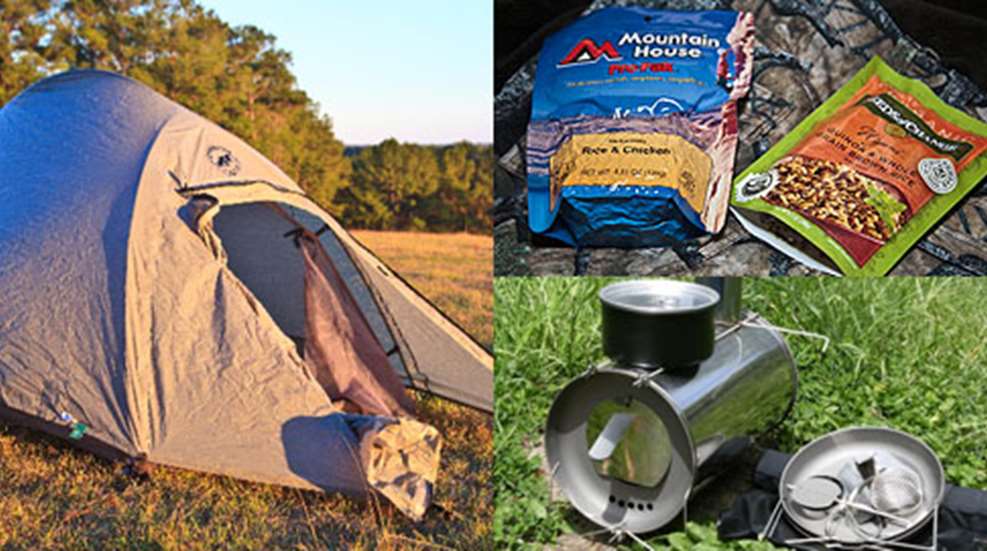
A hunter should carry enough food to survive (not necessarily thrive) beyond the intended time frame of the hunt. Let’s say the Super Cub that’s supposed to pick you up on day six of your Caribou hunt doesn’t show up until day nine due to unforeseen events. Assuming you don’t have a pile of caribou meat to hold you over, wouldn’t it be nice to have an extra meal or two in your pack? Backpacking foods like Mountain House and Hawk Vittles are light, convenient, have a long shelf life and are packed with calories to keep you running. Adding two more meals won’t add much weight to your load but could mean the world if things go wrong. For the truly weight-obsessed, you can’t beat an extra few ounces of oatmeal.
Shelter
As with food, your shelter should take into account the worst-case scenario. Just because it’s 60 degrees at the trailhead doesn’t mean that a blizzard isn’t on the horizon. With today’s lightweight shelters and sleeping bags, there’s really no excuse not to be prepared. My Big Agnes Seedhouse tent (pictured) weighs less than 3 pounds and packs up to about the size of a football, but many bivy sacks and tarp shelters are even lighter and smaller. Anything that will keep you dry and away from the wind is worth its weight in gold. A good, synthetic sleeping bag is a must for anything but a tropical climate. My choice is the Kifaru Regulator which is warm, light and dries quickly.
Water
Being hungry is miserable, but it will take a long time to kill you; you can’t say the same about thirst. Dehydration is a serious threat in survival situations, so you must be prepared to collect, store, and filter water. Animals require a water source so, unless you’re hunting desert species, there’s likely a viable water source in the area. The Gravityworks filter system from Platypus doesn’t require any pumping, you just fill one bag with dirty water and hang the system until the other bag fills with clean water—pretty simple. Purification tablets are a handy option, and there are even products on the market that use UV light to kill pathogens in drinking water.
Heat
A fire is the staple of any camp, but hunts in the mountains or tundra can take place where little to no firewood is available. Even if you’re surrounded by wood, you can’t bring a traditional campfire inside your tent during foul weather. Gas stoves for backpacking are incredibly efficient for cooking but lack the fuel capacity to sustainably heat a shelter. Some innovative designs like the Titanium Goat (pictured) and the Kifaru Para Stove are packable wood stoves that allow you to cook and heat your shelter with small quantities of wood. These products weigh 2 pounds or less and could help keep you alive in a small shelter during a blizzard.
First-Aid
Always carry a small first aid kit when you venture beyond civilization and learn how to use it. Not every hunter needs to be an EMT, but things like knowing where a tourniquet should be applied can save you or your buddy from wearing a toe tag. A hunter can build his or her own aid kit or purchase a commercially available kit like those from Adventure Medical Kits. In addition, a small blister kit containing moleskin, band-aids and duct tape can save a hunt for the soft-footed among us.
Communication
Cell phones have spoiled us with the ability to always stay connected, but they rarely work in the real wilderness. Many of us book hunts in faraway places to get away from our cell phones, but having the ability to call for help if you’re lost, injured or sick is something that we should not ignore. Satellite phones—a staple of hunting in Africa—are an option for wilderness hunts and can be purchased or rented. Another option is the Spot 2 device that uses GPS technology to communicate with civilization. The device lets you send custom messages and has an SOS feature that sends a distress signal to an emergency response center. The device also allows friends and family back home to locate your position online to track your progress.
Tools
A multitool like a Gerber or Leatherman will get you pretty far in a pinch, and the addition of a small folding saw or hatchet makes the task of cutting and splitting firewood much easier. Tools are heavy, so I wouldn’t recommend much beyond that as things like hammers and pry bars can be improvised.
Throwing a survival kit in your pack is not where survival preparation ends. Proper mindset and appropriate gear can prevent bad luck from becoming a crisis. The phrase “Hope for the best but plan for the worst” is a smart one to follow in this context.