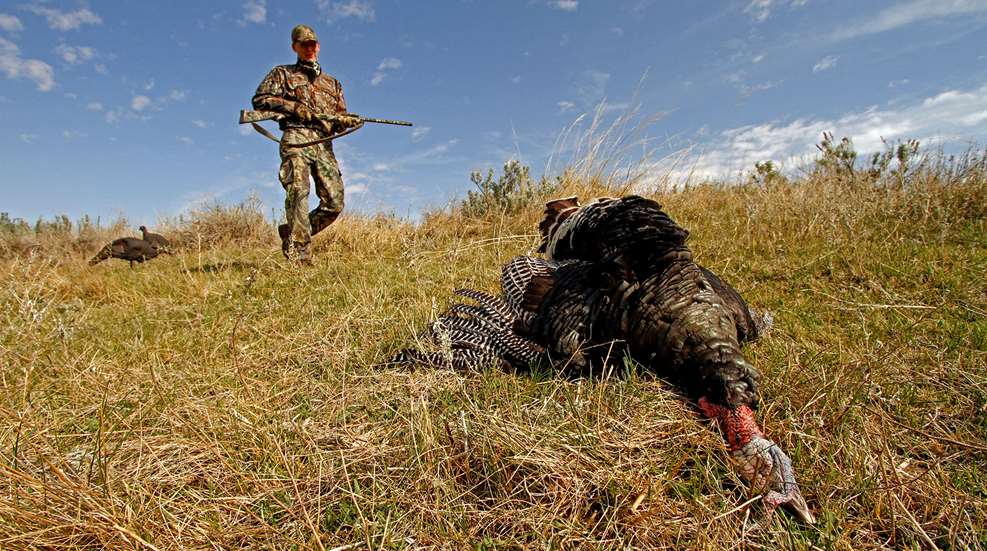
Given a choice in recent decades, wildlife biologists usually preferred managing wild turkeys and spring hunting seasons than overseeing whitetail herds and autumn’s deer seasons.
Why? Because turkey hunters are generally happier than deer hunters, even though most turkey hunters also hunt deer. Wisconsin, in fact, documents those happiness differences with annual postseason surveys by the state’s Department of Natural Resources. Each year for over the past three-plus decades, Wisconsin’s turkey hunters basically said the same thing: “Everything’s good! Don’t ever change!”
That attitude also prevailed in 2021, even after Wisconsin’s spring turkey season generated its lowest success rate (17 percent) since 1984 (15.5 percent), and its lowest harvest (37,266) of the new century. The 2021 harvest, in fact, was down 30 percent from a state record 52,880 in 2008.
Despite those low marks, Wisconsin hunters rated the spring 2021 season a “6.6” on an overall satisfaction scale of 1 to 10, down only slightly from the historical average of 7. As usual, the most vital factors in determining satisfaction were seeing turkeys, hearing gobbling and calling in birds.
Wisconsin’s turkey hunters also reported few access problems, with 78 percent saying it was “very” to “somewhat” easy finding places to hunt. Further, even though only 8 percent of hunters thought there were more turkeys than in 2020, most (73 percent) wanted no change in permit numbers. Maybe that’s because the flock still allows them to be choosy. That is, 54 percent of hunters passed up the first legal turkey they encountered within range, with 84 percent saying they wanted a better shot or held out for an adult gobbler.
In contrast, Wisconsin hunters are notoriously grumpy about deer hunting. Consider the November 2000 firearm deer season: Despite shooting a record 528,494 deer and a second-best 171,753 antlered bucks (only 138 fewer than the 1995 state record), only 28 percent of Wisconsin’s hunters rated the 2000 season’s quality as “high” while 31 percent rated it “low.”
Turkey Totals Down
One of the nation’s top turkey biologists, however, doesn’t view Wisconsin as a reliable indicator of nationwide turkey hunting satisfaction. Professor Mike Chamberlain at the University of Georgia said turkey numbers are declining across much of the country, and satisfaction varies by region. In fact, hunter satisfaction has declined overall in the U.S., with more state wildlife agencies seeking or implementing ways to reduce turkey harvests without reducing hunter happiness.
“Bird numbers are still pretty good in Wisconsin and the upper Midwest, and Wisconsin still offers a multiple-bird season bag limit,” Chamberlain said. “But hunters I talk to see issues with bird numbers in most places. They’re calling on agencies and biologists to do something about it. That’s not a model for hunter happiness and turkey-management job satisfaction.”
What can agencies do? Some are reducing their season bag limit, which has long been three turkeys in many Eastern and Southern states. Georgia, for example, recently reduced its season bag to two birds.
“I expect more states to move that direction, rather than stay put or increase it,” Chamberlain said. “When you explain the situation to hunters, they’re generally willing to try something. Before Georgia made its change, our surveys the previous four years showed 70 percent of hunters favoring bag-limit reductions. They were experiencing the same things biologists were documenting. They weren’t hearing as much gobbling, and they knew we had to do something. They were willing to give a little bit.”
One-Bird Limits?
Some states, in fact, have studied Michigan’s longstanding one-bird limit, which began with the state’s first modern turkey hunting season in November 1965. Michigan then opened its first spring season in 1968 in several northern counties in the Lower Peninsula, and now offers spring hunts statewide.
“Michigan has been a model for the one-bird season bag limit, but that’s not an easy choice for many states,” Chamberlain said. “If you go to a single-bird limit, you risk reducing interest, which means fewer people buying hunting licenses to fund turkey-management work; and less spending on ammo, travel, food and lodging. Those aren’t small considerations for any state wildlife agency.”
Likewise, Chamberlain doesn’t see an easy path to increasing turkey numbers nationwide, no matter what tweaks or changes wildlife agencies try.
“We’re in a new normal for turkey populations,” Chamberlain said. “We’re not going to see the numbers we saw 20 years ago when states finished their turkey restoration programs. The U.S. landscape is dramatically different now. Most turkeys live on private land, and agencies can’t stop people from selling, developing or using their property for things other than wildlife habitat. They can reduce bag limits, and look for other ways to reduce annual harvests, but they can’t make many widespread changes, or promise largescale population increases.”
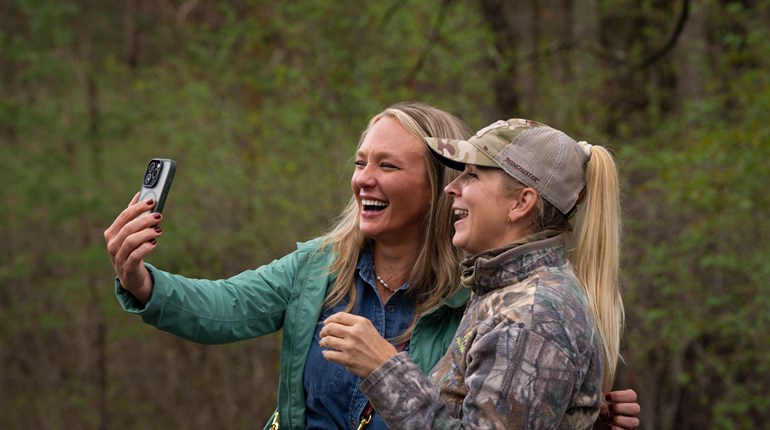
Still, Chamberlain isn’t pessimistic. He thinks more hunters today are aware of turkey populations and the challenges turkeys face. After all, more people now hunt other states, and follow each other on social media.
“Today’s hunters have more opportunities than ever to share pictures and firsthand observations with each other,” Chamberlain said. “Some people see social media as a negative, but it’s also a positive. Because of it, more people are paying attention to the challenges turkeys face. The hunting community is giving turkey research and management more traction.”
Accepting Sacrifice
Alaina Gerritts, an uplands biologist with the Wisconsin DNR, sees similar awareness among hunters. Wisconsin hunters recently supported opening the turkey season one week later each spring. Their support grew as researchers documented declining flock sizes when gobblers get killed before the breeding season peaks. Starting in 2017, Wisconsin changed its spring season opener to the third Wednesday of April, causing that date to vary from April 15 to 21 rather than April 8 to 14.
“Hunters really liked those earlier openers, but they realized shooting gobblers before peak breeding disrupts reproduction and reduces long-term numbers,” Gerritts said. “As hunters better understood the reasons behind later starts, the more they supported change.”