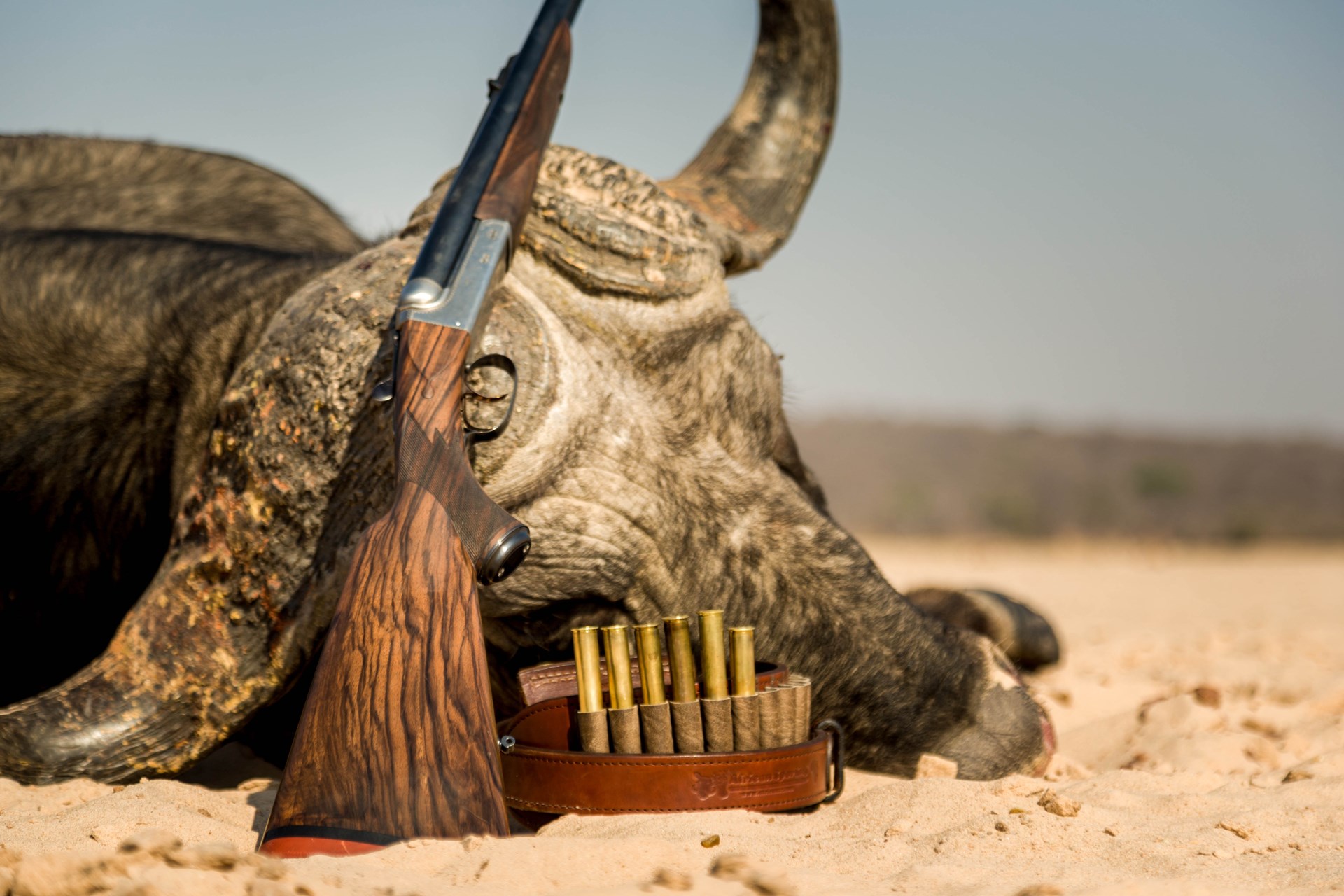
We’d been running along the riverine thicket, trying to get just ahead of the herd of Cape buffalo feeding on the very edge of the Sengwa riverbed, when tracker Proud Ndlovu froze like a statue. The three of us dropped to our knees nearly in unison, as the herd fed from left to right in front of us. “Nyati doumi hapa,” PH Brian van Blerk whispered as the thick-bodied bull stepped from behind a jesse bush. With my left elbow on my left knee, I settled the bead of the Heym 89B 470 NE on his shoulder, and broke the right trigger. The bull rocked and dropped, giving the classic death bellow, as BvB said with utter surety “there’s his brother, take him.” The left trigger broke, and a 500-grain solid hit the bull hard, but he staggered at the back of the fleeing herd. A few moments later, and with one long-distance shot in the sand riverbed, the second bull was done and dusted. It had been a great week on safari, ending in an amazing experience with my then-new double rifle.
It was not my first or last hunt with a double rifle, as I’ve used them on several continents, in different chamberings, for a wide variety of game. While I am primarily a bolt-action rifleman, the double rifle holds a very special place for me, and much of the fascination can be romantic; it is also a very practical rifle in a number of situations. It is immediately associated with the golden age of African safari and Indian shikar, yet the modern production rifles might be the best we’ve ever seen. What is it about the double rifle that makes it so appealing, even to a younger generation of hunters? Let’s take a look.

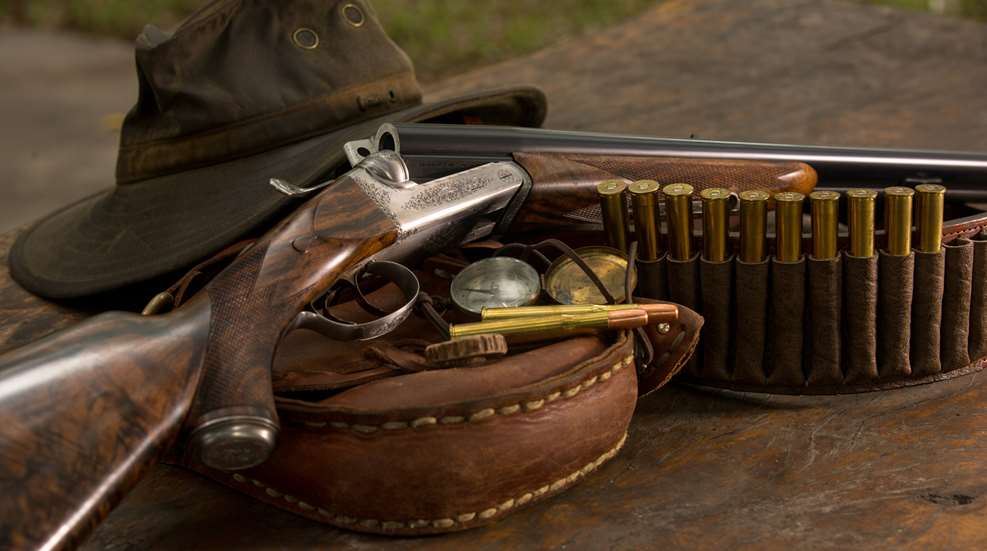
The double rifle, like the double shotgun, offered more firepower than did the singleloaders in the muzzleloading era. Considering the time it took to load the rifle, an immediate second shot must’ve seemed like a miracle. Fast forward to the era of exploration, when ivory hunters would venture into the unknown in order to make their fortune with a minimal amount of gear, and the double rifle wasn't only a fantastic option for two fast shots, but because most rifles had two locks and two triggers in addition to a pair of barrels, you had an instant backup rifle in your hands. If one barrel/lock/firing pin/trigger went down, you had a backup in the other barrel etc. To the Victorian- or Edwardian-era hunter, this gave a definite advantage. In that era between the World Wars, the double rifle was considered a status symbol, as the cost of construction and the price tag alone made it an elitist item; those turn-bolt guns were considered less-than-civilized, in spite of the attractive tag. It is the wide array of hunting books and stories of this era which kept the double rifle alive.
I vividly remember an argument in a movie theater lobby with a girlfriend who dearly wanted see whatever romcom was playing, when I saw the movie poster for The Ghost and The Darkness, with actor Michael Douglas shouldering a double rifle. Needless to say, I went to see that movie. While I am well aware of the historical inaccuracies, the double rifle made a striking image in that movie. And let’s face the facts: picking up a proper double rifle is an amazing experience. Owning one is altogether next-level, and taking that gun on safari is the stuff of dreams.
Bolt vs. Doubles
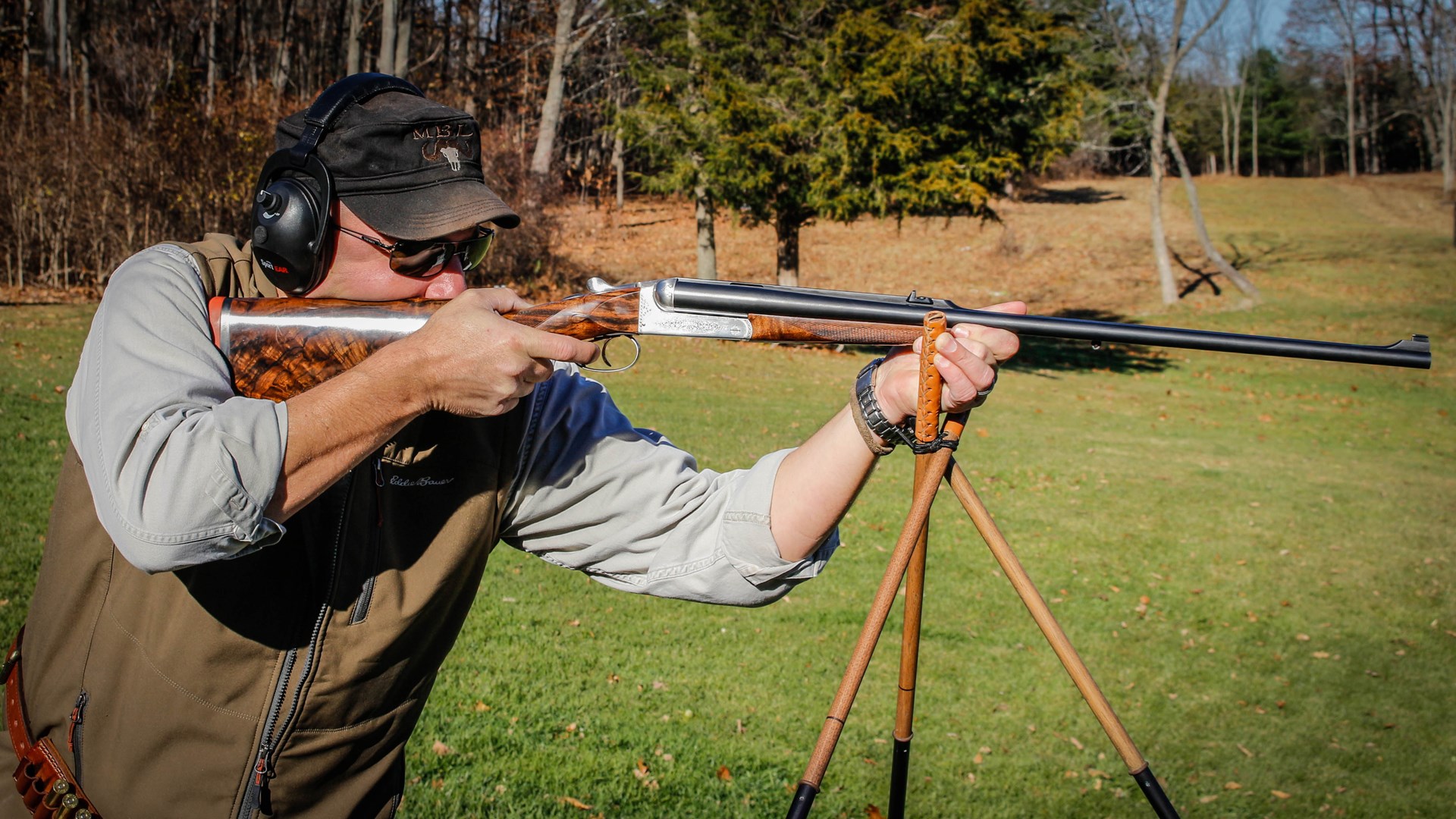
When it comes to the discussion of the pursuit of dangerous game at close quarters, the age-old argument of bolt-action rifle vs. the double rifle will rear its ugly head. “The second shot of a double is faster than a bolt, but the bolt’s third shot is always faster.” This is a true statement, but the question remains as to whether or not you’ll need a third shot. Considering the cartridges for which the majority of double rifles are manufactured—the .450-400 3-inch Nitro Express, the .450 NE, the .470 NE and the .500 NE—you might tend to think that two well-placed shots in rapid succession could sort the issue. Nonetheless, the bolt crowd will always insist that the double is unnecessary, and the double crowd tends to look down their nose a bit. Truth be told, a proper rifle of either design is a worthy tool for hunting any and all species. I’ve taken Cape buffalo and elephant with both a Heym Express and a Winchester Model 70, and I've taken a number of different species from Cape buffalo to whitetail deer with a double rifle of some sort. As a visiting sportsman who doesn’t have the job of cleaning up messes as a Professional Hunter does, the actual need for a double rifle might not be as apparent. That said, there have been a good number of situations—say tracking elephant or buffalo in the thick stuff where distance are measured in feet, or following a wounded leopard or lion—where I was more than grateful for the .470 double in my sweaty hands. But while I can say that you can find a bolt-action rifle for around $1,500 that is perfectly acceptable for any safari, even a deal on a decent used double will run about 10x that figure. If your budget is like mine has been for most of my life, you might rather spend the money on the experience than the gun.
Triggered
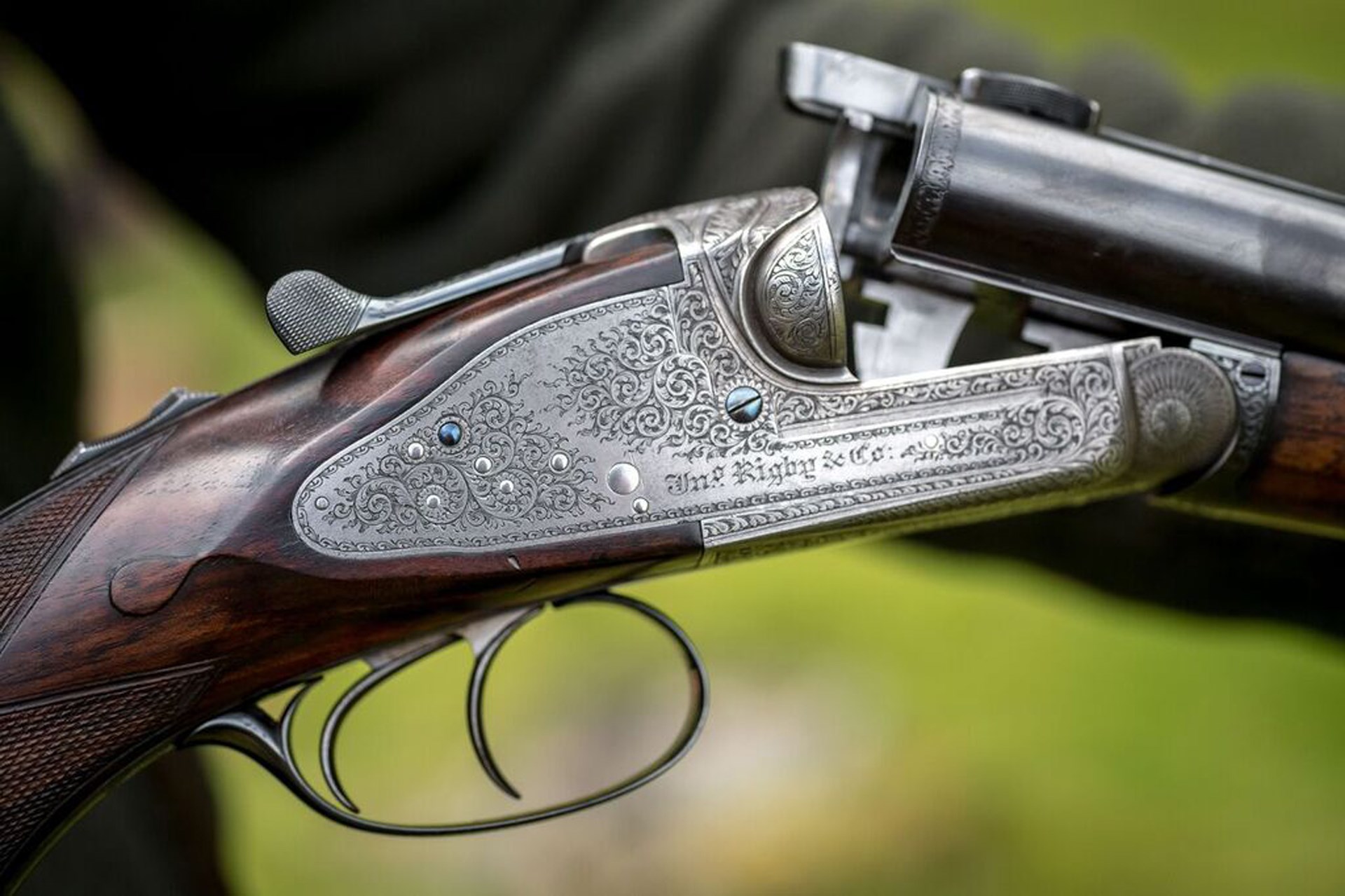
I like double rifles with two triggers, hearkening back to the idea of still having one working barrel should something fail. The vast majority of doubles are made with the right trigger forward of the left trigger, designed for a right-handed shooter. However, those unfamiliar with dual triggers run the risk of ‘doubling’—inadvertently pulling both triggers at once—and with a big-bore rifle this can be hellacious. Some recommend pulling the rear trigger (left barrel) first to avoid doubling the rifle, but this feels unnatural to me. Instead, I recommend purchasing a good set of snap caps and spending hours becoming intimately familiar with the feel of the triggers of your double, until you can’t go wrong. I also prefer a double rifle with two triggers over those with a single trigger, in case something should happen to one of the triggers in the wilds.
Optics
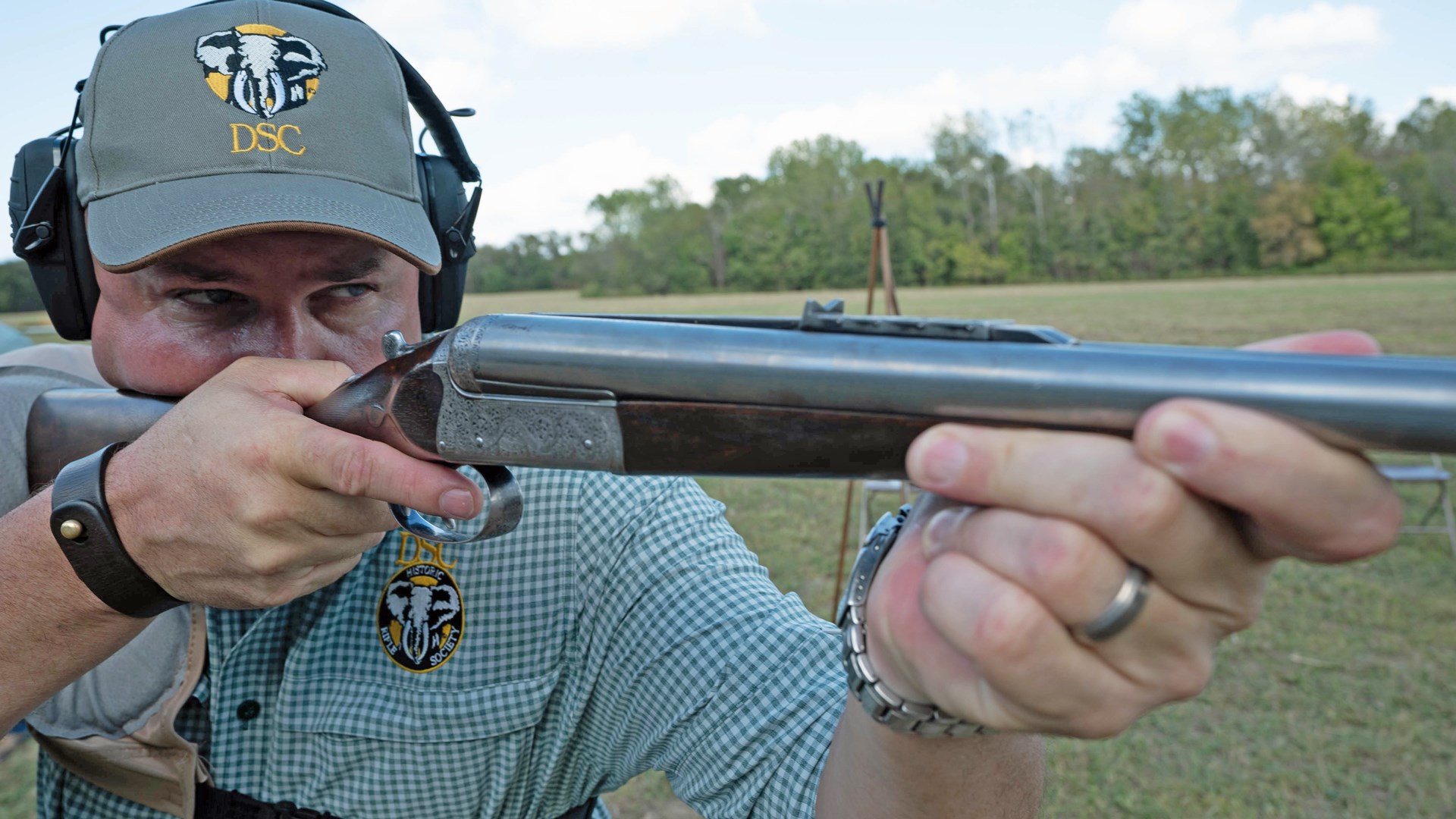
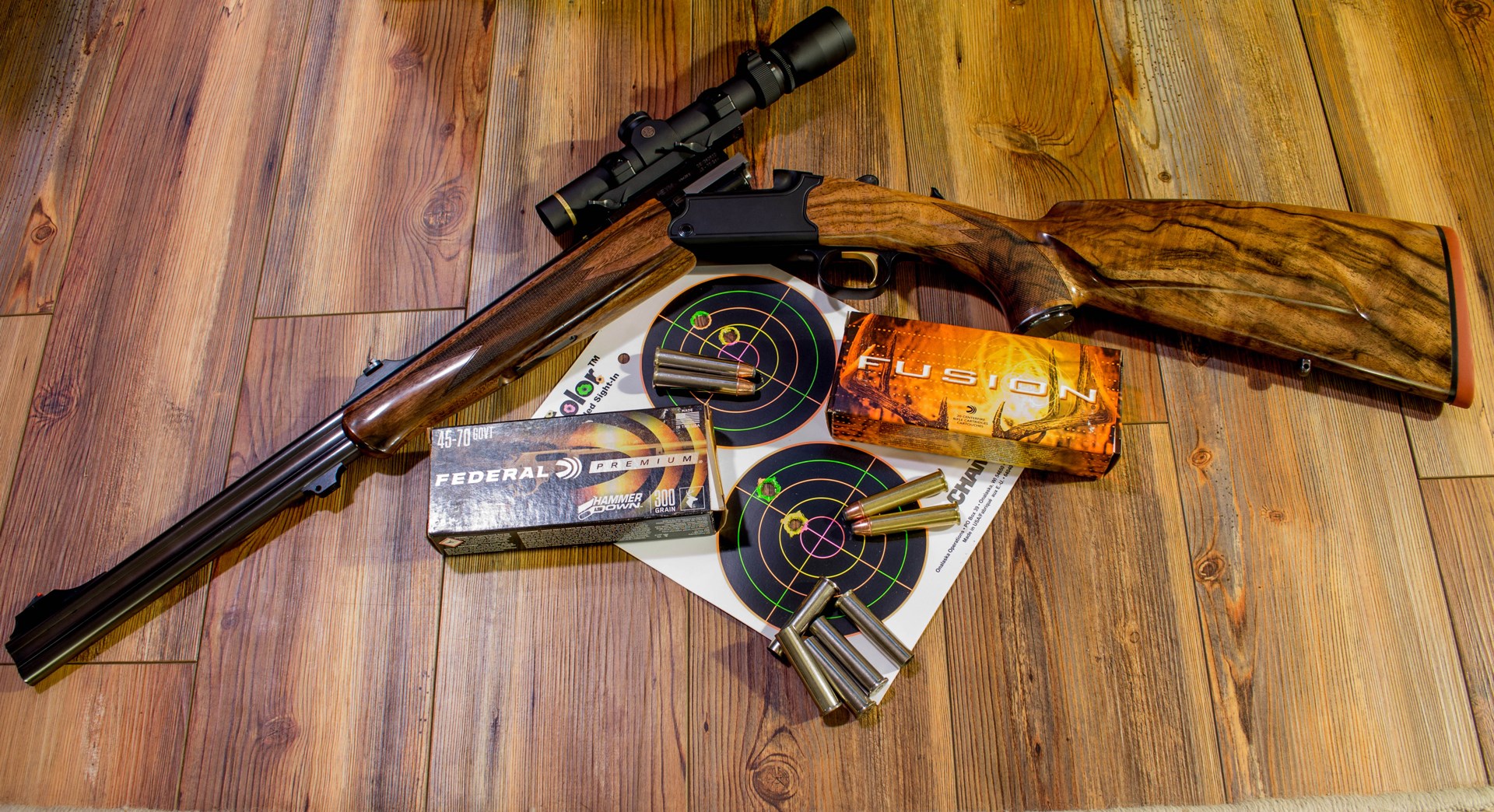
Iron sights are the most popular sighting system on double rifles, usually consisting of a brass bead front sight and the wide 140-degree ‘V’ rear sight. While I've had great success with that set up on my Heym double, my eyes are aging, and I’m admittedly not as proficient with them as I once was. A riflescope on a bolt gun has become the norm, and the magnification and single focal plane enhance accuracy as well as shot opportunities. But mention putting a scope on a double rifle, and most folks will look at you as if you wanted to draw a moustache on the Mona Lisa. A proper double rifle has a unique balance to it, and a riflescope can definitely affect that balance. The diminished field of view can be a detriment as well, especially at the short distances at which the doubles are often used. I'm not a real fan of a scope on a big bore dangerous game double, but one of the red dot sights is a whole different story. I really like the Trijicon RMR and the Leupold Delta Point Pro, as they are lightweight, rugged, and don’t hinder the field of view or balance of the rifle. In my opinion, the red-dot reflex sight is the ticket for a big-bore double, if irons don’t work for you; they offer a finer aiming point than a 10- to 12-MOA front bead, and don’t require multiple focal planes. For those doubles chambered for smaller cartridges, like the 7x57R, 8x57IRS or .300 H&H Flanged, a scope in quality detachable mounts will certainly give the gun more flexibility. I’d recommend picking a scope that can be mounted low to the bore, as nearly every double rifle is stocked for iron sights.
SxS or O/U
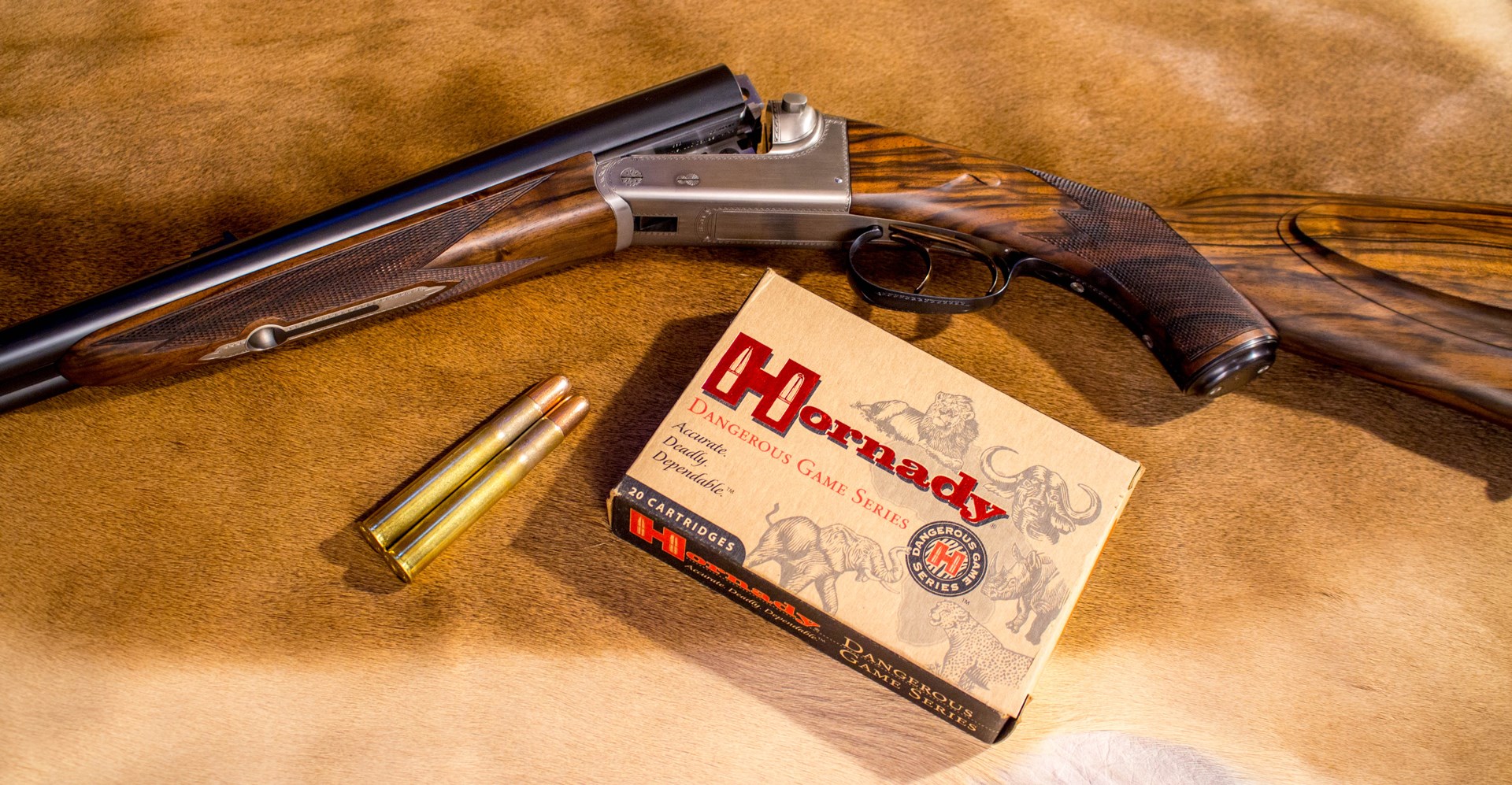
While the classic double rifle is in side-by-side configuration, there are a number of stack-barrel options that can be a ton of fun to shoot and hunt with. I had a great deer season using a Heym Model 26B in .45-70 Government, topped with a low-power scope, using it to take a mature buck in the Catskills. The lack of a receiver and barrels on the shorter side made that rifle a great choice for hunting from a blind, and it was wonderfully accurate. I've also spent some time at the SAAM course at the FTW Ranch using a Krieghoff stack barrel in .458 Winchester Magnum, with great results. They might feel a bit unorthodox at first, but they are worthy for use in the field, for sure.
Box lock or Side Lock?
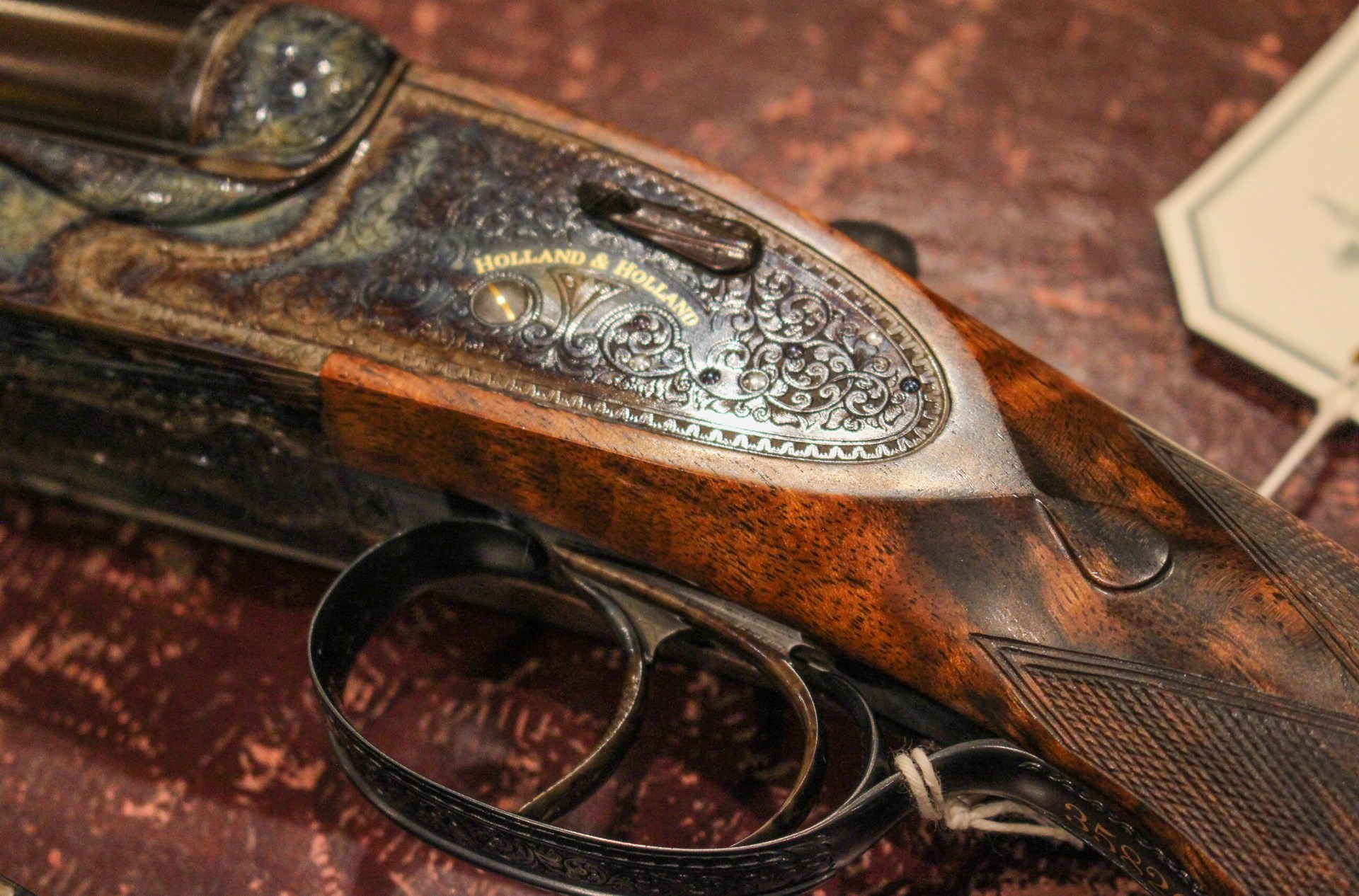
The style of double is a personal choice, and entire books have been written about the benefits and drawbacks of each. The side lock is a classic, for sure, but requires a more complicated mechanism than does the box lock, and the locks can be changed in the field if need be. Box locks see more wood removed from the center of the stock, and the side locks need more wood removed from the sides of the rear stock. Structurally, I’d say the box lock is a stronger design, but the side lock rifles tend to be the favorites of collectors of truly high end guns. My Heym is a box lock with the Greener crossbolt for additional strength, and I am more than happy with that gun. I wouldn’t turn down the opportunity to use either design.
The Cost of Doubles
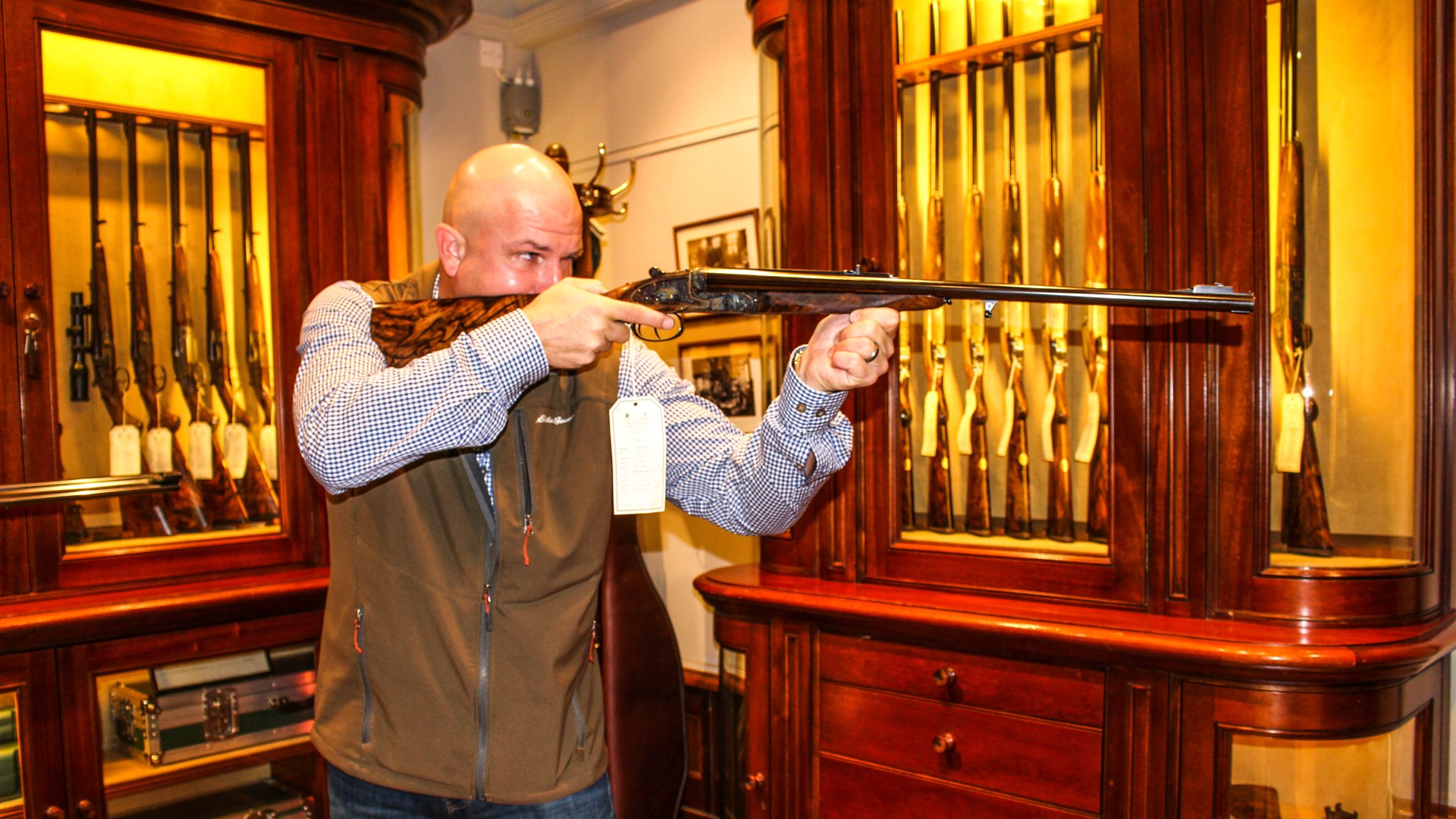
This is a tough factor, as a double rifle’s price tag can range from mid-to-high four figures to well into six figures. I have spent time with both ends of the price spectrum, and there are some features worth paying for. Yes, a Holland & Holland Royal is a fantastic rifle, and yes, you wouldn’t have to work too awful hard to find one with a $500,000 price tag, especially when we’re talking about a gun with many hours of custom work. However, I can’t say that gun will function any better than a Rigby, Westley Richards or my Heym. Like high-end luxury cars, certain brands have a strong following, and many are viewed as a status symbol. Some were used by our hunting heroes, while others represent a ‘workingman’s tool’, giving the shooter a perfectly serviceable firearm, albeit with a lesser-known name, like Army & Navy, Charles Boswell or Cogswell & Harrison. I settled on a Heym because I felt it gave me the greatest value; it is built like a tank, carries many of the features of the famous British guns, and has the German attention to mechanical precision. I’d say that finding a reliable gun that fits you properly (that last feature might be one of the most important), and is in your price range is the most important.
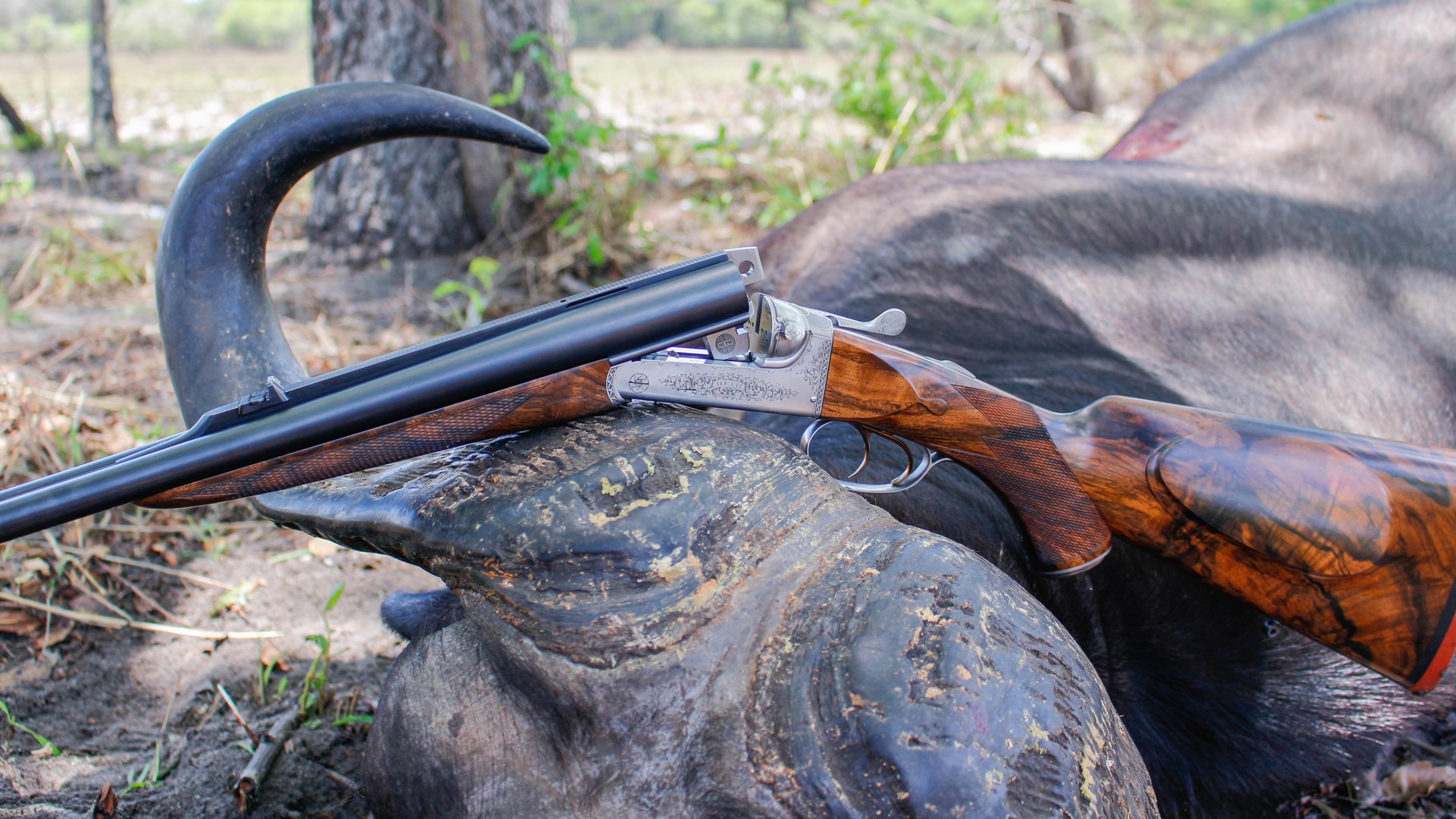
The double rifle is a specialized tool which can be very effective, yet realizing the limits, advantages, quirks, and qualities are important before you make that healthy investment. You might pass up a shot that you’d take with a bolt-action or single-shot gun with a modern scope aboard, but the up-close-and-personal experience can be very rewarding. Try as many different brands as possible before you buy, and get an idea for what fits and feels best. I have a feeling you might make a new best friend.
Most Popular