The historic lever gun, modern optics, fancy ammunition, and suppressors all in one hunting unit. Should that even be allowed? Welcome to the clash of old versus modern.
Lever-Action History
Lever-action rifles have a story that runs deeper than most hunters ever stop to think about. Long before the Henry and Winchester names became part of campfire conversations, Horace Smith and Daniel Wesson were working on early repeating-firearm ideas that would eventually shape an entire category of rifles. In 1854, they filed a patent for what they described as a repeating magazine firearm. It was not perfect, far from it, but it was the beginning of something important.
Those early designs, including the Jennings rifle and later the Volcanic, introduced concepts that are still part of lever guns today. The tubular magazine, the idea of cycling rounds quickly, and the balance of a rifle that could be carried easily and brought to the shoulder without thought were the genius of the design. The Jennings struggled with reliability, and the Volcanic was held back by its ammunition, but the foundation was there. Innovation rarely comes in a straight line. It is built through trial and error and persistence.
The Volcanic design eventually found its way into the hands of Oliver Winchester, and with further development by Benjamin Tyler Henry, it became something much more refined. The Henry rifle of 1860 was a major step forward, and from there, the Winchester lever guns carried the concept into hunting camps, ranches, and battlefields. Over time, the lever-action rifle became more than just a tool. It became part of North American history.
What is interesting is how that original idea has stayed relevant. Even as bolt actions, semi-automatics, and long-range systems took over much of the hunting world, the lever gun never really went away. It remained a symbol of simplicity, reliability, and connection to the past.
Modern Lever Gun
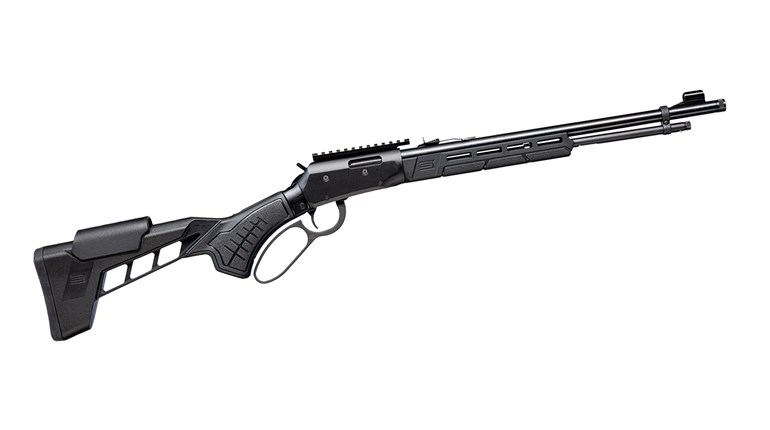
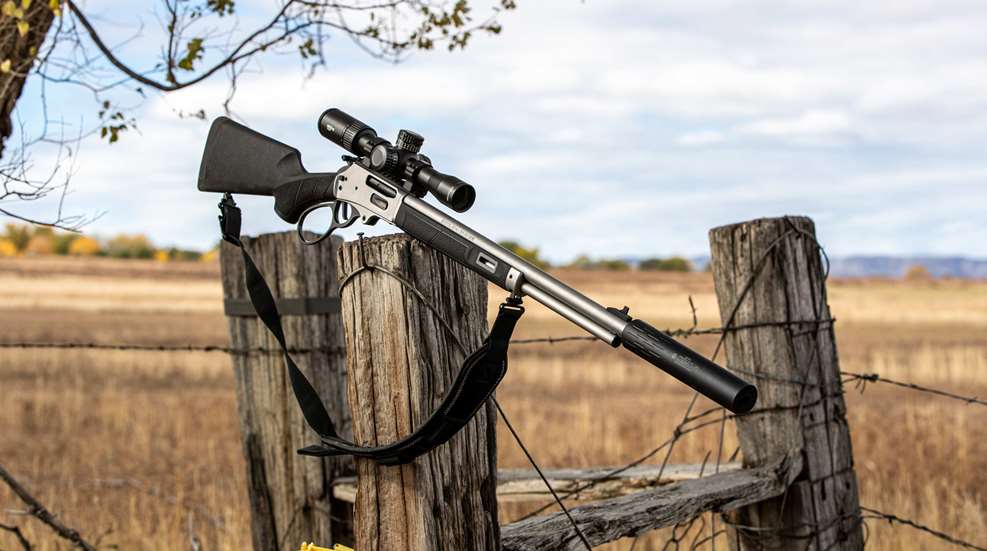
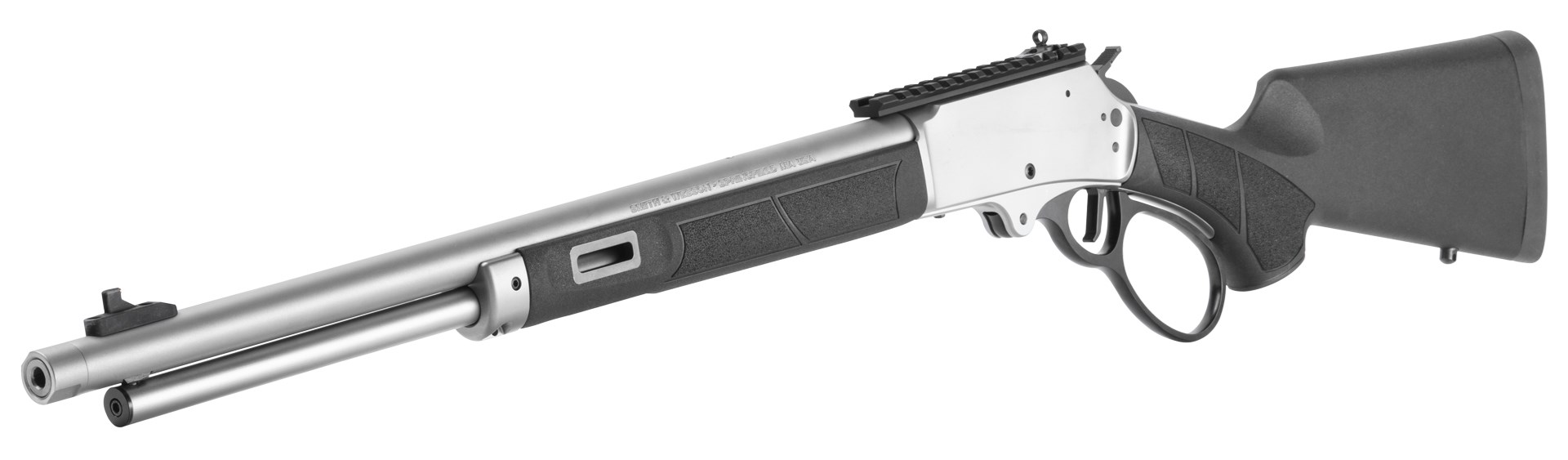
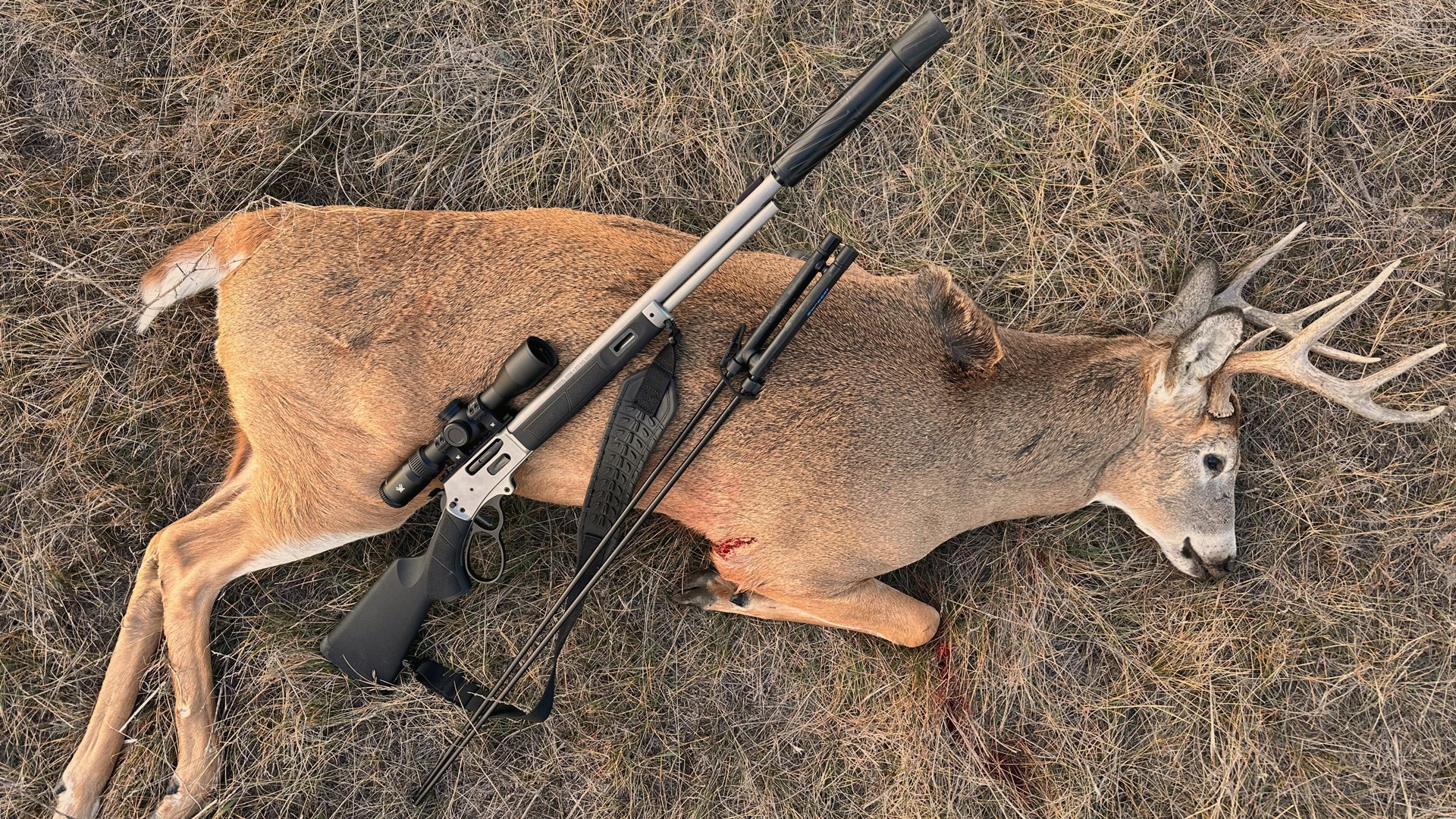
That is where Smith & Wesson’s Model 1854 Stealth Hunter fits in today. The name itself is a direct nod to that original patent, a way of recognizing where it all began. At first glance, the rifle looks like it belongs to another era. The lines are clean and familiar. It carries the profile of a classic lever action, the kind of rifle that feels at home in a saddle scabbard or leaning against a tree at camp.
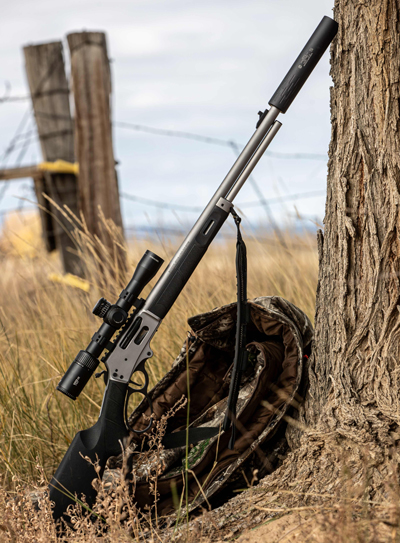
Pick it up, and that feeling continues. It balances naturally. It comes to the shoulder without effort. The lever cycles smoothly, with a motion that feels instinctive if you have spent any time with this style of rifle. It is everything you expect from a lever gun, and that is exactly the point.
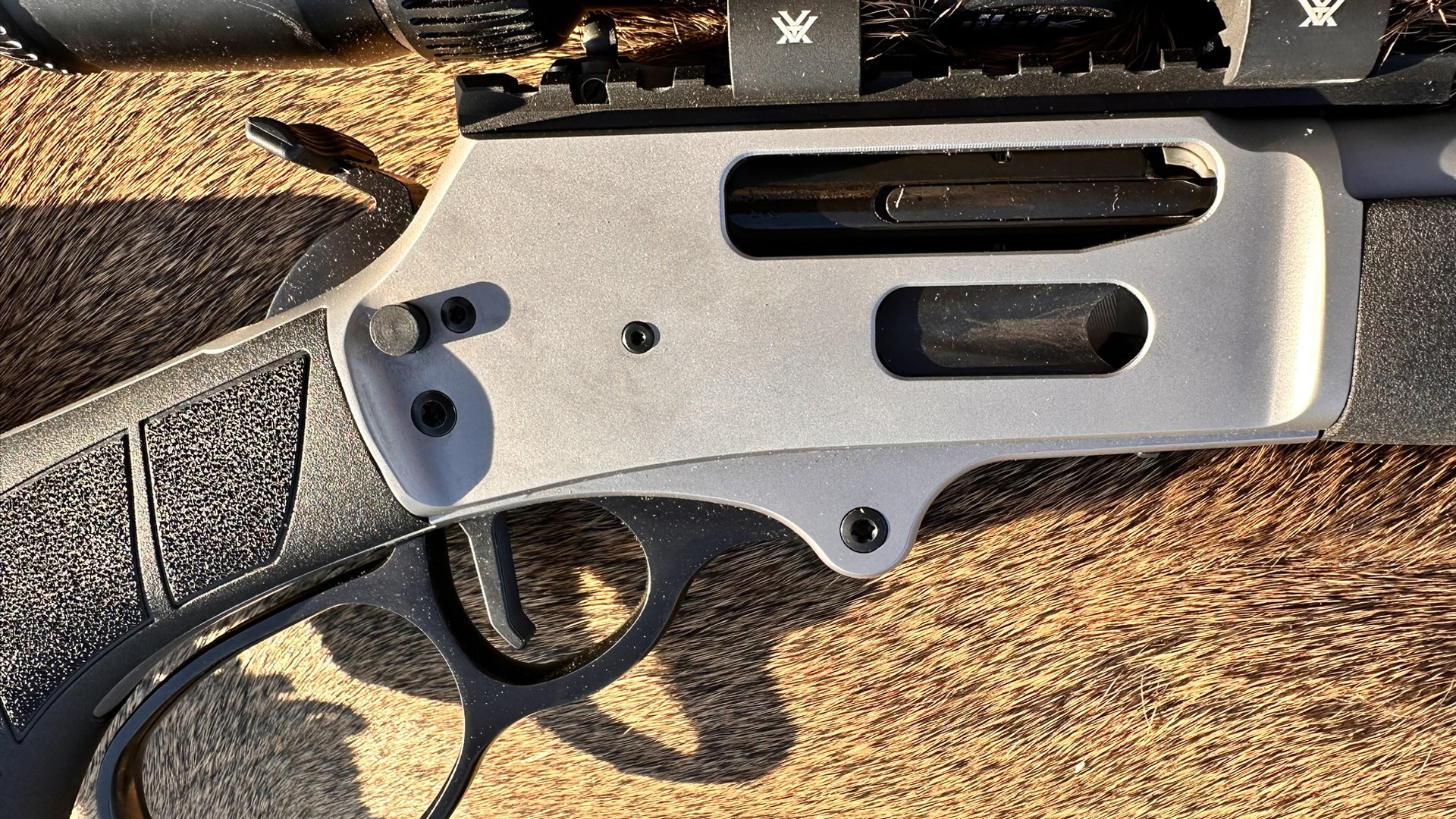
But spend a little more time with it, and the modern touches start to stand out. The barrel and receiver are built from stainless steel, which immediately adds durability in harsh conditions. Snow, rain and cold temperatures are part of late-season hunting, and having a rifle that can handle those elements without concern matters. The synthetic stock and fore-end add to that practicality. They are tough, weather-resistant and built for real-world use, yet shaped in a way that does not take away from the rifle’s traditional look.
The action itself is smooth and consistent, and the large-loop lever makes it easy to operate, even with gloves on. That might seem like a small detail, but in cold November weather, it makes a difference. The flat-faced trigger is another modern upgrade that stands out. It breaks clean, with a consistency that you do not always associate with lever guns, and it adds a level of precision that complements the rest of the rifle.
Then there are the features that quietly bring the rifle into the modern hunting world without changing its identity.
Optical Advantage
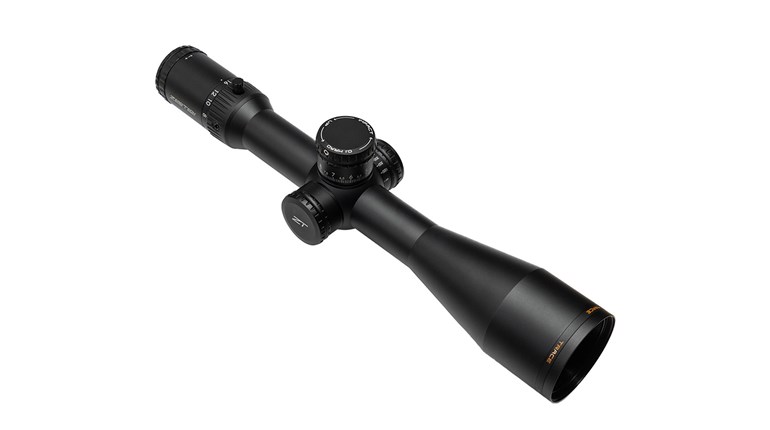
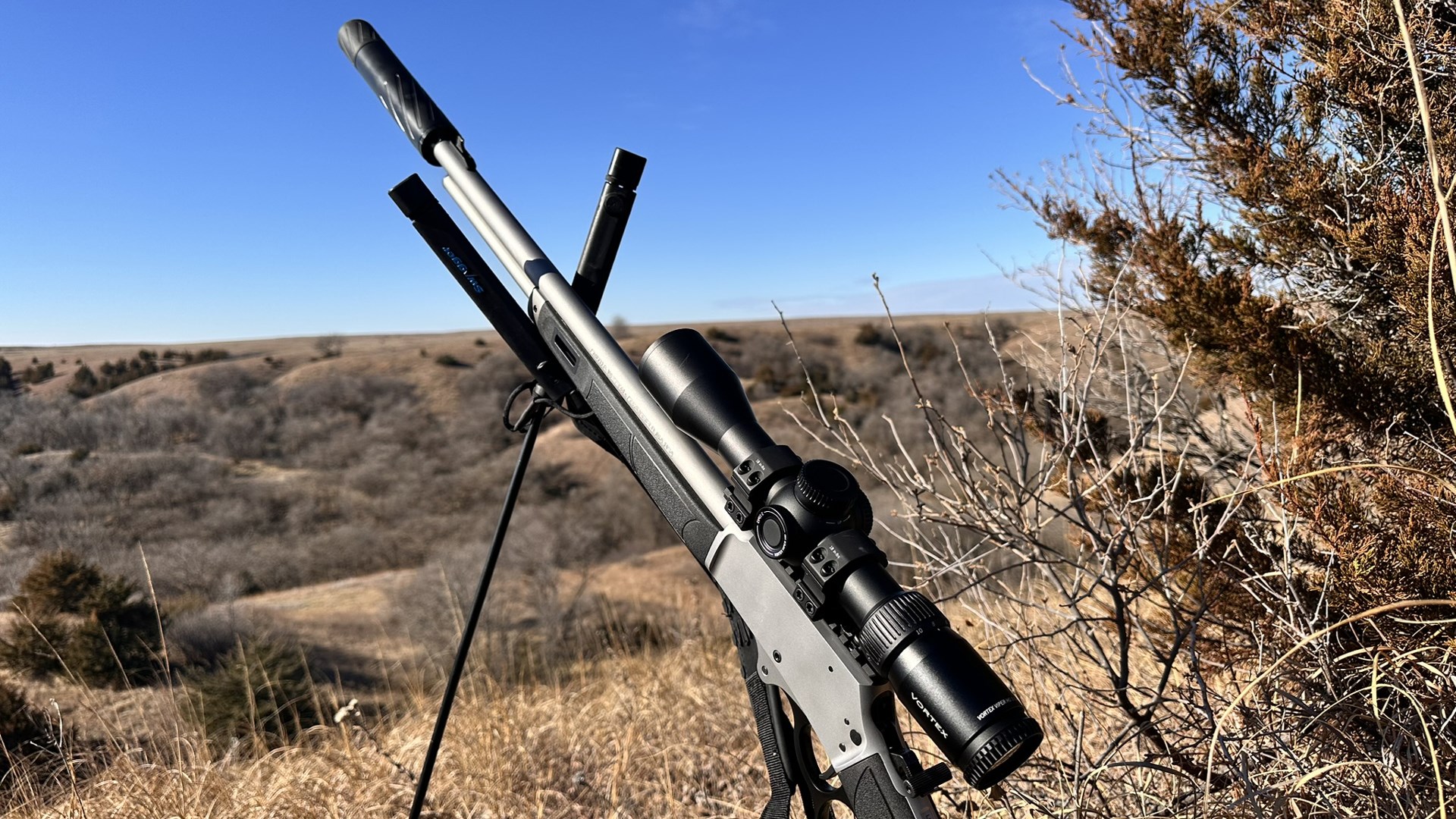
A top rail allows mounting optics, and pairing the rifle with a Vortex scope gives you a clear, dependable sight picture ready for deer hunting. It does not feel out of place. Instead, it feels like a natural evolution, giving you better visibility and accuracy without taking away from the rifle’s character.
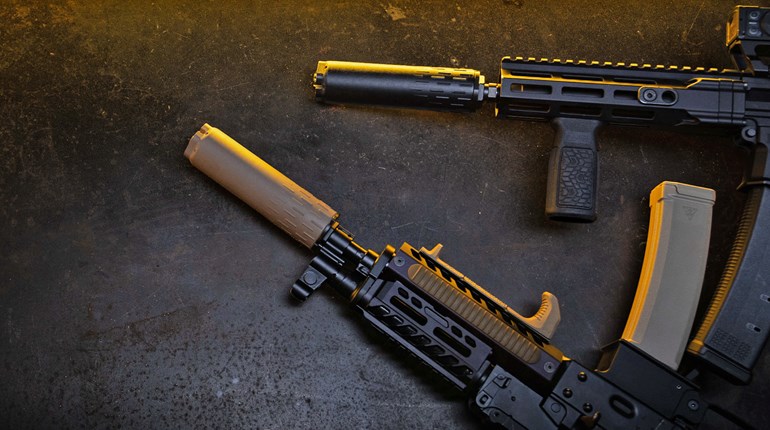
The barrel is threaded, which opens the door to something that creates an interesting contrast. Adding a suppressor to a lever-action rifle chambered in .30-30 is not something you would have seen even a couple of decades ago. It is a combination that bridges generations of technology. The suppressor reduces recoil and noise, making the rifle more comfortable to shoot and easier to stay on target. It is a modern solution applied to a classic design, and surprisingly, it fits.
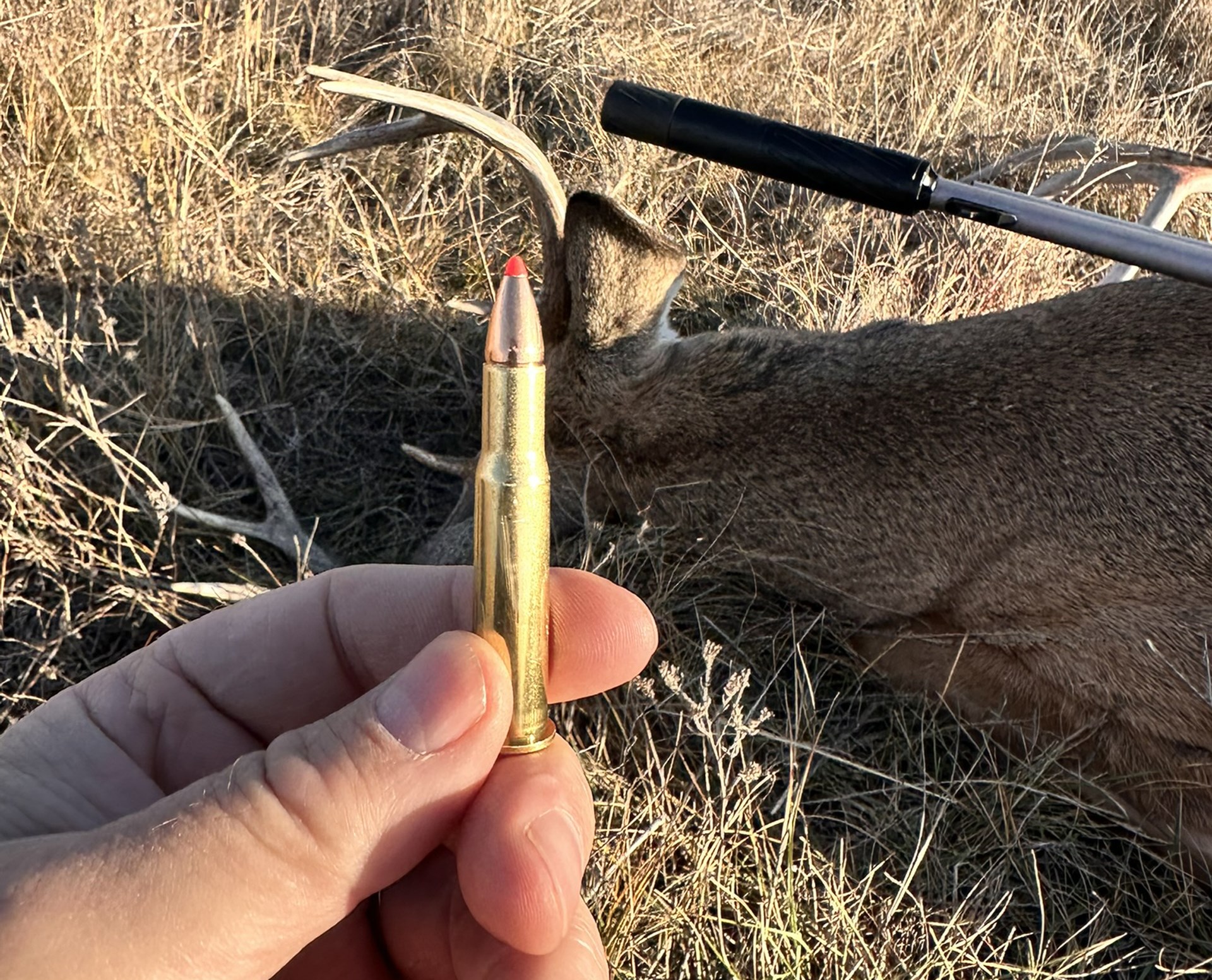
Lever-Action Ammo
The ammunition completes that picture. Hornady’s lever-action specific rounds, built with flexible tips, allow for safe use in tubular magazines while improving ballistic performance. It is another example of how modern engineering has enhanced a traditional platform without changing what makes it work.
Deer Don’t Like It
The technology and advantage elements came together on a South Dakota deer hunt in November, when the rut was in full swing, and the landscape felt alive with movement. November in South Dakota has a way of pulling you in. The air carries a bite, the kind that reminds you winter is not far off. The land stretches wide, broken by deep river valleys and rolling prairie. Whitetails are on their feet, moving hard between bedding areas and food sources, using the terrain like a map they have followed their entire lives.
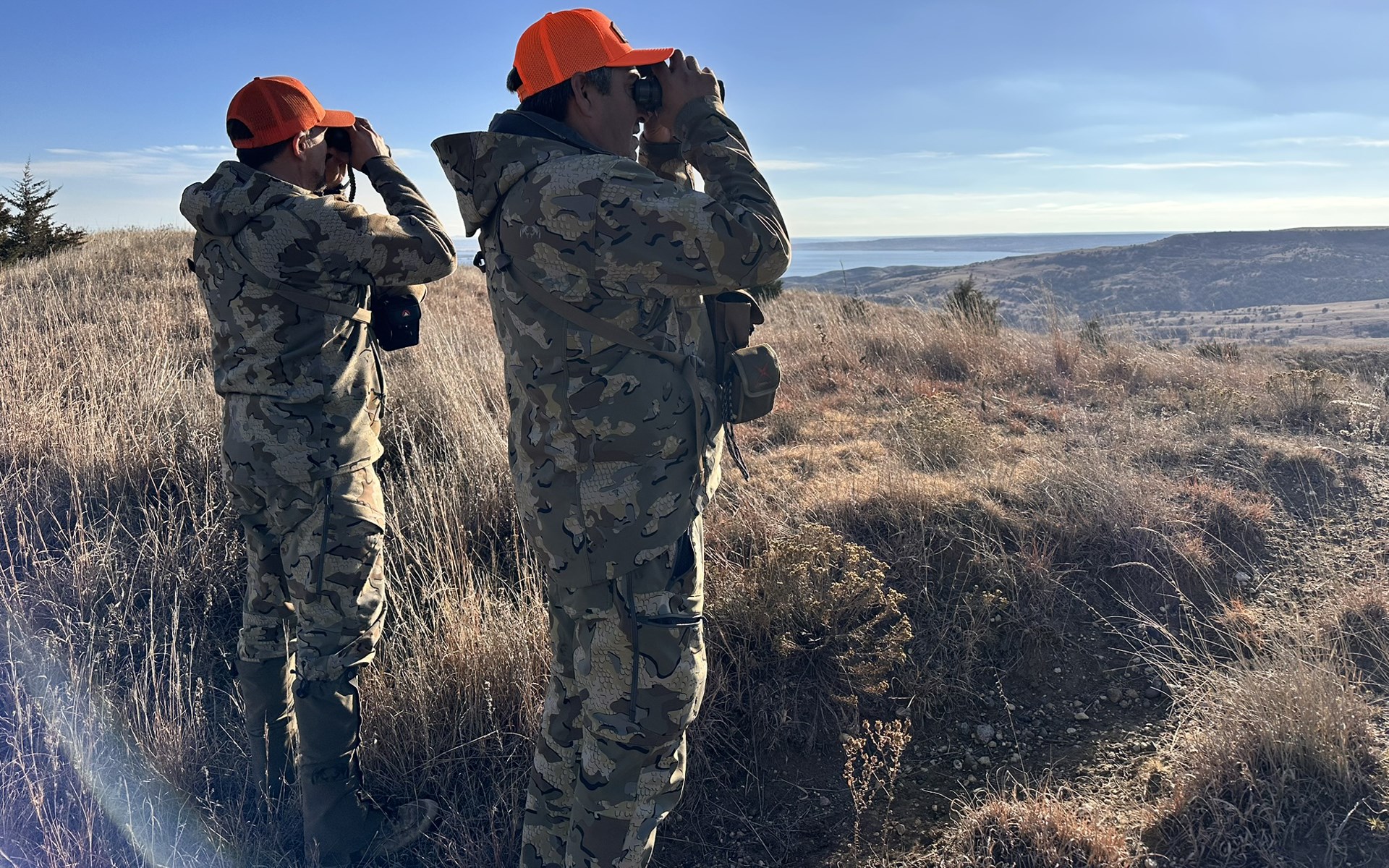
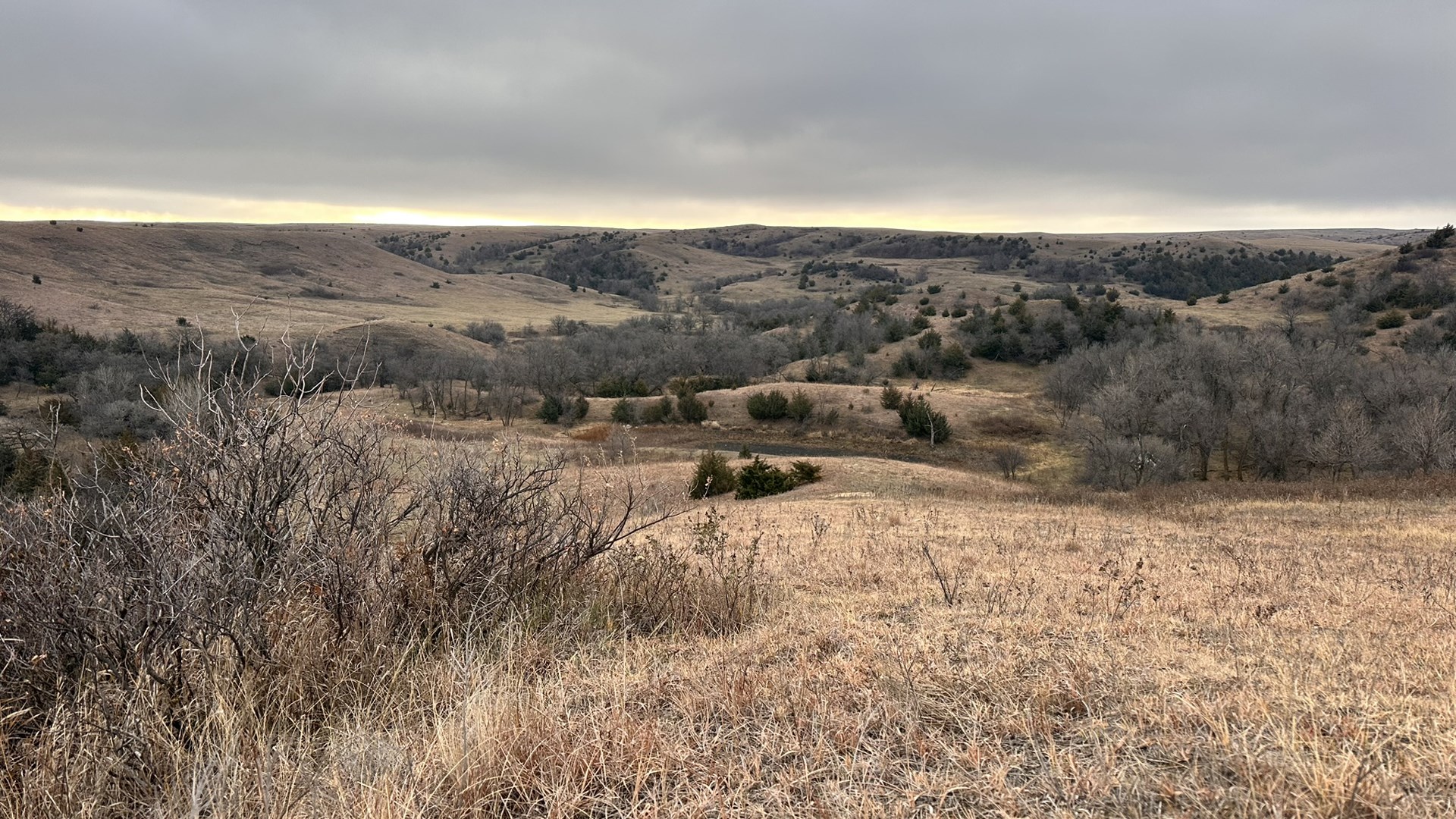
We started the hunt overlooking a deep, scoured valley that cut through the country. From that vantage point, you could see the entire system unfold. East-facing slopes catching the first light, west-facing banks holding shadows, and pockets of brush and timber connecting everything together. It was the kind of place where deer could move without being seen, slipping through cover and appearing when you least expected it. The morning passed quietly, though. No deer showed themselves, and as the sun climbed, we knew it was time to change tactics.
Dropping into the river breaks, the terrain shifted quickly. What looked open from above turned into a maze of cuts and hidden pockets. It did not take long before we started finding deer. Does moving through cover, small groups feeding and then the bucks. Some solid whitetails, the kind that make you slow down and study them, and even a few larger mule deer that we could only watch. Not having a tag for those muleys added a layer of discipline to the hunt.

We made a plan for the evening, focusing on a couple of whitetail bucks that were worth the effort. As the day cooled, we set up along the edge of the breaks where the terrain flattened into open prairie. Beyond that, a harvested cornfield stretched out, still holding enough residual grain to attract wildlife.
The birds told the story first. Pheasants erupted from the grass with sharp cackles, and groups of sharp-tailed grouse lifted off and glided toward the field. It was a clear sign that the evening movement had started.
I set up with the wind in my face, watching a draw that climbed out of the steep country and leveled off into the prairie. It was the kind of spot where deer could appear at any moment, slipping out of cover and into the open.
Nearby, an old survey marker sat embedded in the rock, worn by time. It was a reminder that people had been marking this land long before any of us ever hunted it. That sense of history seemed fitting, given the rifle in my hands.
I settled in, expecting a long sit with hours of watching, waiting for that last bit of light when deer tend to move. But, as any seasoned deer hunter knows, the rut does not always follow a schedule. With the sun still high, I caught movement long before expected. A buck stepped out of the draw, head up, moving with purpose. He paused briefly, scanning ahead, then started across the open.

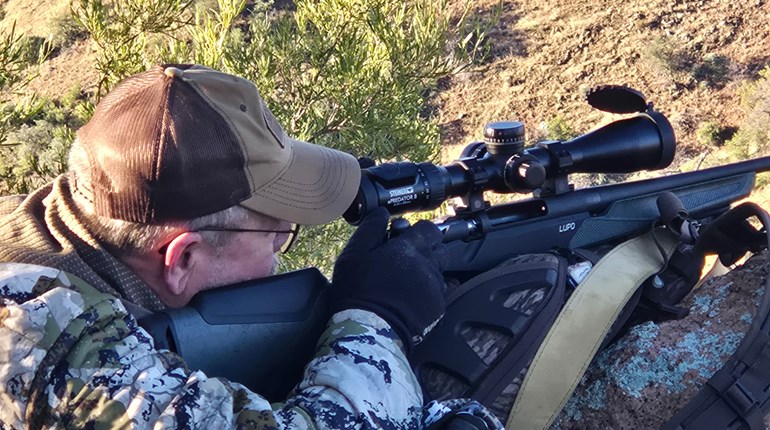
Everything slowed down except my heart rate. I brought the rifle to my shoulder, found the buck in the Vortex optic, and slowly clicked off the safety. The setup felt natural. Old design, modern tools, working together. The extra weight of the rifle with suppressor was supported on shooting sticks for a solid hold. The shot broke clean. Instead of the sharp crack you might expect, the suppressor softened the sound, more of a subsonic .22. The impact was clear and the buck dropped quickly; just like that, it was over.
Standing there afterward, looking across the valley and the open prairie beyond, it all came together. The rifle's history, the modern upgrades that improved its performance, and the hunt itself are all tied into one moment.
It was a reminder that progress does not mean leaving the past behind. The designs that started in the mid-1800s still have a place today. They still work. They still deliver. At the same time, there is value in embracing new technology. Better optics, improved ammunition, and features like suppressors can enhance the experience without taking away from it.
That hunt proved something simple but important. You do not have to choose between old and new. You can carry both. You can respect the history of a lever-action rifle while taking advantage of modern advancements.
In the end, it is not about technology alone. It is about the experience. The connection to the land, the hunt, and the traditions that brought you there, and the firearm. And sometimes, bringing the past and present together makes that experience even better.

Learn More: Choosing the Right Suppressor
If you are considering adding a suppressor to your rifle, it is worth taking a little time to understand which one fits your setup and hunting style. The Banish 30-V2 is a good example of a modern suppressor built with versatility in mind, but the real advantage comes from knowing what to look for before you make a decision.
A good place to start is with the manufacturer. You can visit the Banish Suppressors website to get a closer look at specifications, materials and how the suppressor is designed to perform in the field. It gives you a clear understanding of what you are getting and how it compares to other options. Another useful resource is Silencer Central, where you can learn more about purchasing, paperwork and the overall process of owning a suppressor.
When you start comparing options, focus on how the suppressor will work with your rifle. Weight and length play a big role, especially on a short, quick-handling firearm like a lever gun. You want something that keeps the rifle balanced and easy to carry, not something that adds unnecessary bulk out front.
Materials are just as important. Lighter materials like titanium help reduce overall weight while still providing the strength needed for regular use in tough conditions. Sound reduction is often what people think about first, but it is also about comfort. A good suppressor softens the report, reduces recoil and makes it easier to stay on target for follow-up shots.
You also need to make sure the suppressor matches your barrel. Threading and mounting systems have to line up properly, so compatibility is key. Some suppressors are built to handle multiple calibers, which can be a big advantage if you plan to use it across more than one rifle.
At the end of the day, a suppressor should feel like it belongs on your rifle. When you choose the right one, it becomes part of the system, improving the way the rifle handles and performs without taking anything away from the experience.

Muddy DV8 Morph System
When conditions change and deer are on the move, your clothing needs to stay quiet, comfortable and adaptable. The Muddy DV8 Morph system is ideal for the hunt, with pants, a jacket and a vest that use ultra-quiet fleece to eliminate noise, helping you stay undetected whether you are in a stand or on the ground. A water-resistant finish sheds light moisture, while the flexible fit and articulated design keep you moving without restriction.
The layering system works together to give you warmth when needed without adding bulk. The lightweight shirt adds comfort and breathability as a base layer, rounding out a setup that handles everything from mild days to cold sits.