by
Support NRA American Hunter
DONATE
** When you buy products through the links on our site, we may earn a commission that supports NRA's mission to protect, preserve and defend the Second Amendment. **

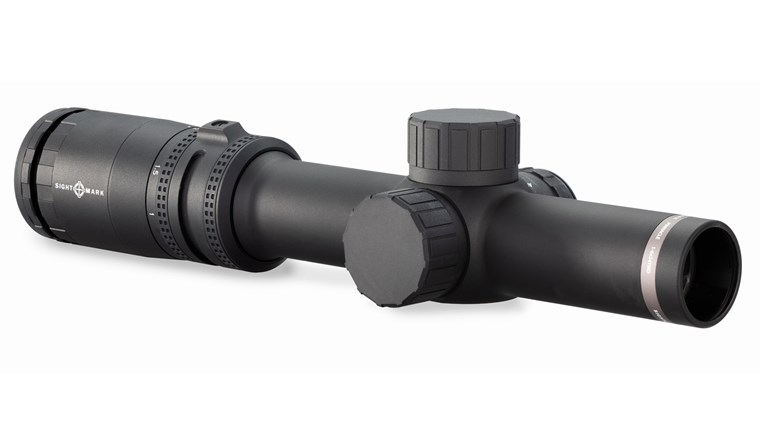
Designed with the North American deer hunter in mind, Trijicon has introduced the new Huron series of riflescopes. These optics will feature a satin finish, up to 100 m.o.a. of adjustment in 1/4-m.o.a. clicks, either a 30 mm or 1-inch main tube, and include 1-4X 24 mm, 2.5-10X 40 mm, 3-9X 40 mm and 3-12X 40 mm models. The scope's Easy-Focus Eyepiece contributes to an extra-wide field of view for better awareness in the field, combining with anti-reflective, anti-scratch and fully multi-coated glass for better light transmission and less distortion edge-to-edge. Huron models are available with Standard Duplex, German #4 and BDC Hunter Holds reticles, all in the second focal plane. For more information, please visit trijicon.com. MSRP: $650-699
Additional Reading:
Review: Trijicon REAP-IR Mini Thermal Riflescope
Top 10 New Riflescopes of 2019
Review: Trijicon AccuPower 1-8x28
Review: Trijicon RMR
10 Things You Didn't Know About Trijicon
Additional Reading:
Review: Trijicon REAP-IR Mini Thermal Riflescope
Top 10 New Riflescopes of 2019
Review: Trijicon AccuPower 1-8x28
Review: Trijicon RMR
10 Things You Didn't Know About Trijicon