“Let’s give it one last hurrah tonight,” I said to Chad, “then let’s try to get out of here first thing in the morning.” I figured that if I were to be sitting around in the smoke worrying, I might as well be sitting in the smoke worrying in a bear blind. “The burning pinewood should make a good cover scent, anyway,” I said. Chad nodded his head in agreement.
“It might also make for a good story,” he said smiling, as I began gathering my gear for the hour-long boat ride to the bait site. “And if you do get a bear, I know what the title will be.”
A black bear bait site deep in the Canada bush can be a very dreamy place–surreal even—without all the smoke. Thanks to the insulating properties of thick evergreen forest and a spongy floor of pine needles, it’s totally quiet and muffled save for the occasional chirp of a chipmunk or the chatter of a magpie. Many places up there, there’s no cell service, and mighty few airplanes overhead. In my experience, it’s normally a great place to reflect. And that’s exactly what I was doing as I sat there, alone, miles from camp while looking at the smoke from the approaching forest fire, my eyes and lungs burning, all while wondering why my sensibilities had even allowed me to get here in the first place. And of course, that’s when a shiny black ball of waddling fur filled my view just 12 yards in front of me—so close in fact that I was afraid to even cock the hammer of my CVA for fear of spooking it. The other question I asked myself just then was … why in the heck were the baits so close to the blind?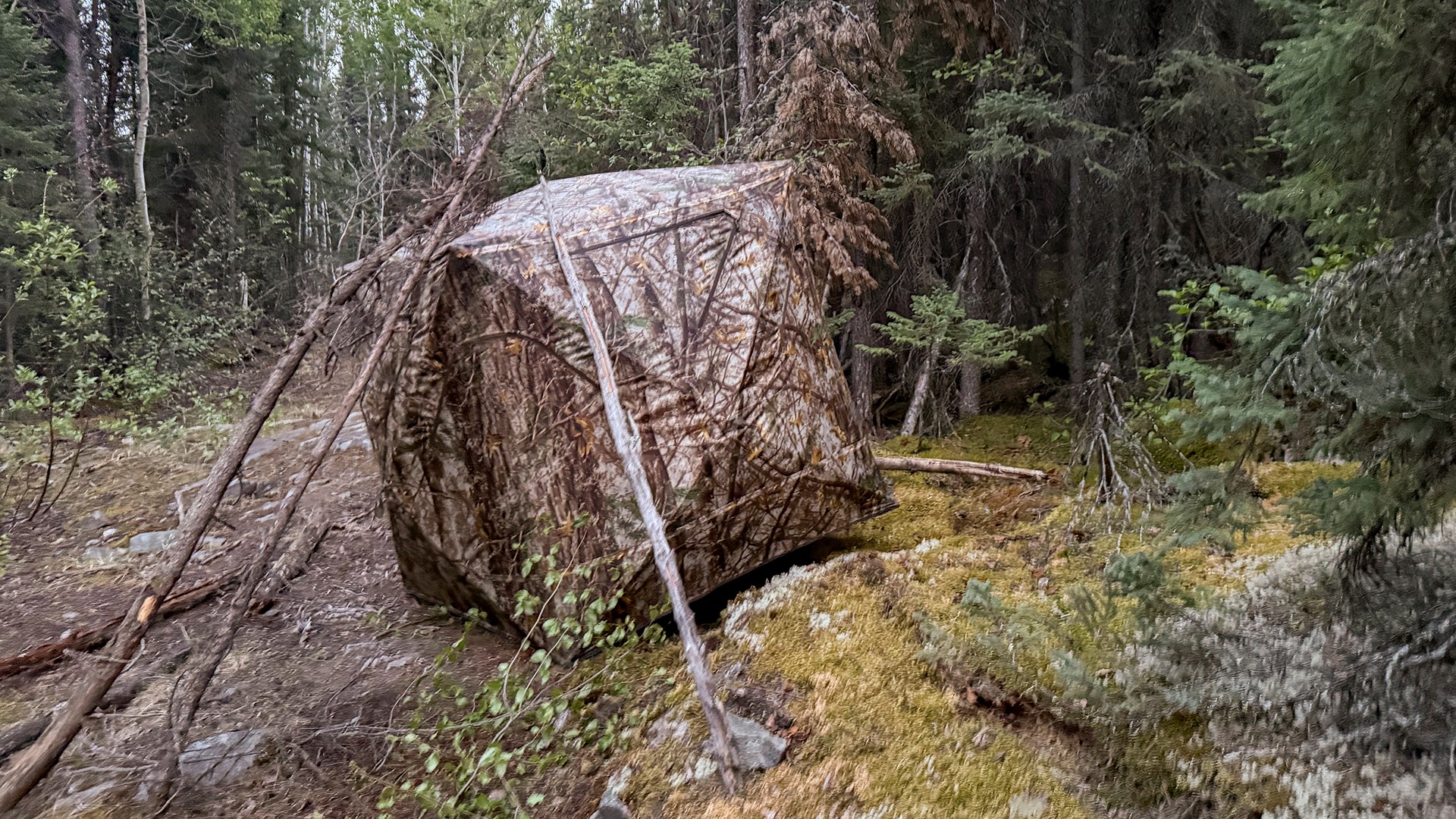
A muzzleloader, though absolutely deadly inside 150 yards, has two traits that can significantly raise the excitement level when hunting potentially dangerous game at ultra-close range: first, it emits a blinding cloud of smoke that lingers seemingly forever after a shot on big game; and secondly, even with all the modern accoutrements such as a speedloader pre-charged with pellets and a PowerBelt bullet famous for its ease of loading, it takes me at least 20 seconds to reload under the best conditions and possibly triple that if my hands are shaking like a thoroughly caffeinated Parkinson’s patient.
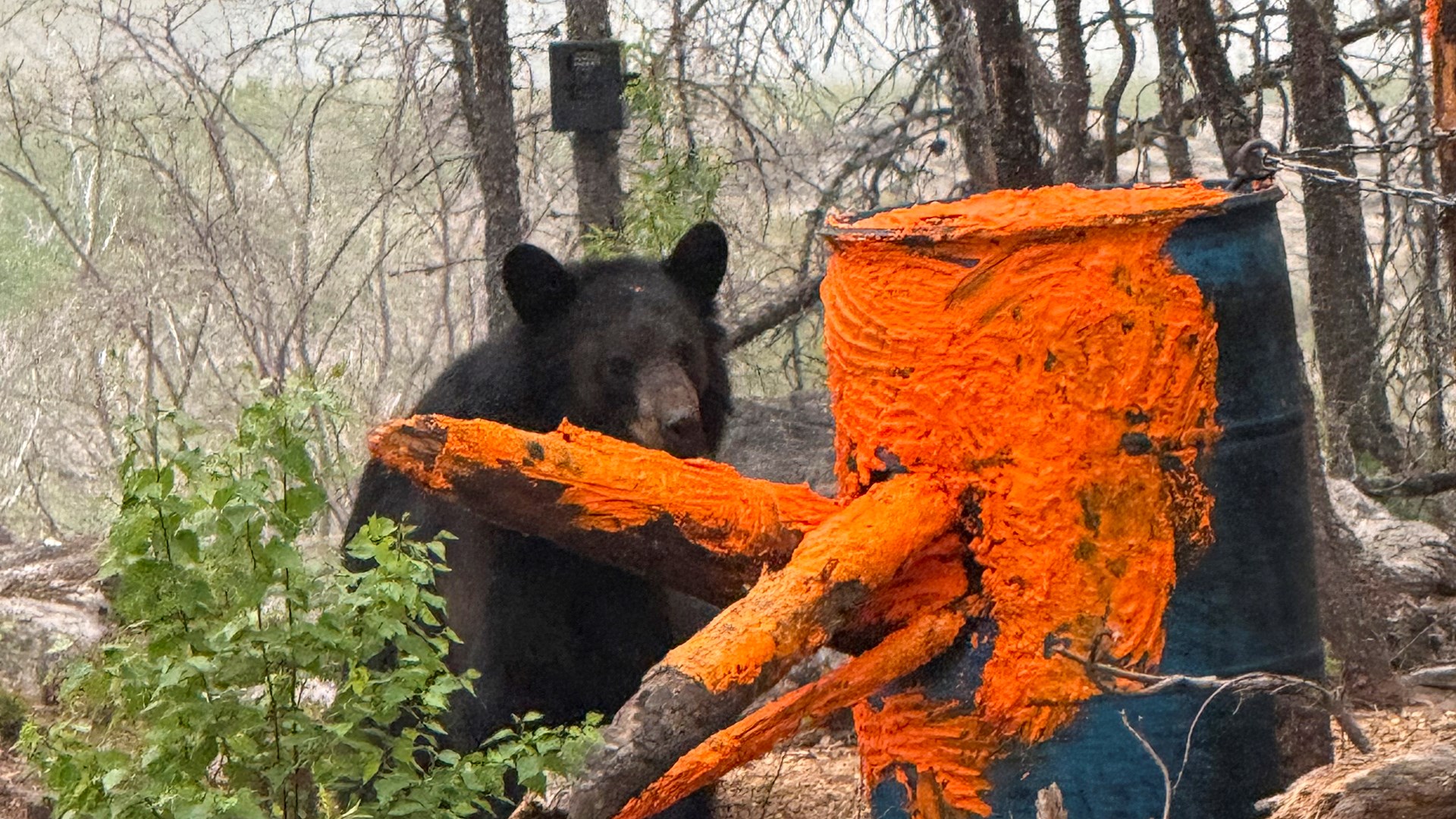
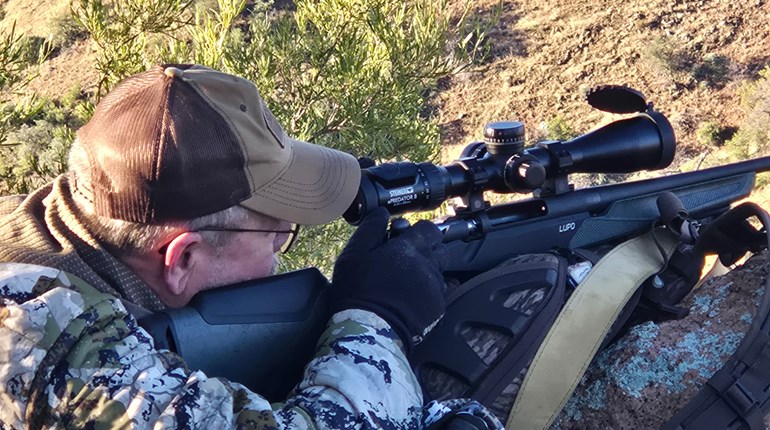
Now I’m no black bear expert but I’ve dealt with the animals enough to respect them but not overly fear them … except perhaps when they are 10 yards away and wounded. I also know they are very tough to judge, but the one that was now looming before me just looked big. Wiry, spider-like bowlegs, a sweeping belly, smallish-looking ears, etc. So without wasting more time I leveled the rifle as the bear was tussling with the bait, put the Konus’ illuminated reticle on the bear’s massive, quartering shoulder and squeezed the trigger.
Immediately I was blinded by the cloud of blue smoke as I rose to my feet in order to reload. But before I could even remove the rifle’s ramrod, I glanced up to see the bear charging straight toward me in a blind, bloody rage. So I guess now is as good of a time as any to answer the question I was asking myself just 30 seconds prior: How did I get here? Here goes … .
Have you ever “cliffed out” while hunting? I presume most Westerners know the meaning, but my flatland ilk may not, so humor me here. The term refers to the situation one literally gets himself into when a seemingly obvious path down a mountain is easy-going at first, but the more one commits to it the steeper and more treacherous it becomes, often terminating in a slippery, narrow cliff near the bottom that dumps into the type of waterfall that only Rambo can survive. It’s at this point you realize that going down is impossible, and that you can’t easily get back up either. Cliffed out.
Folks like us sometimes get ourselves into these situations due to a lack of intimate knowledge of the land, because there is only so much a GPS can tell you. But I’d argue that more often it’s due to our own desire to go forward toward adventure rather than to concede to the circumstance and retrace our steps. To retreat: How boring is that? It seems to me that strange forces other than gravity pull us forward into the unknown, even if there’s a good possibility of it being much more dangerous than the known. I am no physicist, but I believe these mysterious forces are called wanderlust and bravado. Specifically in this case, it was our overwhelming desire to hunt bears and catch big fish that, uh, may have contributed to our cloudy judgment.
“Yo Chad,” I said into my cell phone soon after touching down in Saskatoon and heading to customs with my gear. “I’m hearing all kinds of chatter about the wildfires now. Sounds like they’re right near where we’re going—and spreading fast. Is the hunt still on?”
“I talked to our guide about an hour ago,” said Chad Schearer, a longtime hunting guide himself who has operated for more than 30 years in Montana. I’ve hunted with him many times over the years, trusting him with my life on several occasions. By now it’s in his nature to be aware of such hazards. He, his wife, Marsha, and his father had driven his F-350 from central Montana to pick me up and continue north for some springtime bear hunting on Reindeer Lake in northeastern Saskatchewan. We’d planned to hotel it in Saskatoon that night to get a fresh start in the morning, considering the formidable drive.
“Outfitter says we should be good,” he paused, “ ... if we can make it to camp.” At that moment I felt my own eyebrows pop up like toast from a toaster.
Having hunted the Reindeer Lake area before with Chad several years back but failing to kill a bear, I was all too familiar with the grueling seven-hour drive over mostly washboard gravel roads that make my kidneys recoil just thinking about them, even now. But what were a few bumps in the road for the chance at hauling a second-chance bear out of the woods and catching a boatload of pike on the fly? And here’s where the cliffing out effect kicked in.
For the next 12 hours we cut across section-line roads, backtracked when needed, detoured, zigged, zagged, juked around smoldering hotspots, endured long standstills where the roads were closed, and conversed with active fire squads who kept warning us that even if they decided to open the roads to let us pass, they couldn’t guarantee they’d be open again if and when we decided to turn around.
In our defense, fire and smoke is tricky when you can’t actually see flames. Forest fires can ebb and flow greatly depending on the wind, just as they can change directions on a dime; sometimes they crawl while in the next instant they fly at 30 mph across the landscape, sealing the fate of living things before anything knows it’s in danger. Obviously if the smoke was ever so thick that we couldn’t see our hands in front of our faces, we would flee, but that’s seldom the case, because fire is sneaky.
To turn around and head back south toward Saskatoon was often not advisable either, or even possible in spots where the high winds had caused the fire to kick back up and hop the road behind us. Sure, a truck with its windows rolled up is safe for a few minutes with fire on both sides of the road—but a wreck, an empty gas tank or a wrong turn could spell doom. Keep in mind that the cell towers were down by this point, so we didn’t have great intel about what was happening around us, and that was most likely the reason we continued … because we didn’t actually know how bad it was. The last we’d heard from our outfitter, Quentin Smith, was that we’d be safe once in camp. So with no guarantee of safety even if we turned around, we kept motoring forward, often driving right past flames and through pockets of heavy smoke. Once we’d pass a section of road, sometimes it would be closed behind us, almost like a series of cattle chutes that ultimately steer the cows to the stockyard. Or so it seemed.
While stopped at a lakeside camping area for fuel and fresh intel, we were advised to stay there for the night to see what the wind and fires would do before pushing on. But about the time we got comfortable, we received word that the forest service was going to open the road for a brief period to let people through. So we hastily loaded up and again pressed on, finally making it to camp on Reindeer Lake that evening. At that point, though the nearby Cree First Nations village of Southend was mostly evacuated, the scene wasn’t too bad. The camp was on a peninsula, and though it was smoky outside we weren’t overly concerned and indeed we were just happy to be off the road. After all, we had a contingency plan that was based on using the camp’s boats, food and fuel to seek refuge on one of the lake’s 5,550 islands if the fire overtook camp. So we did what any bear hunters would do: We got ready to go bear hunting.
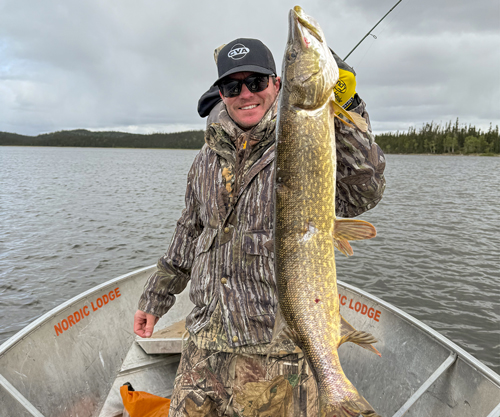
But the next morning was too smoky to hunt. Luckily the cabins had been updated with mini-split systems so there was a level of air filtration that made camp bearable—when the generator was running, because the power was out. And when the wind shifted, temporarily clearing much of the smoke from the lake, we fished instead, experiencing great success despite our bloodshot eyes and lungs that felt like we’d each sucked down a carton of Camels.
The next few days featured much of the same routine: We were stranded in bear camp with not a lot of bear hunting going on. Meanwhile all around us, the wildfire was only getting worse.
Now, dear reader, I don’t believe I’m normally the type to give up on a hunt—and neither is Chad—but it was becoming more evident that the conditions were downright awful and that our desire to hunt had very possibly outweighed our sense of survival in the first place. So when Quentin got word from the sat phone suggesting that there may be a window to escape the following morning, we all agreed that it was just about time to concede … just about … . I figured I’d give it one last hurrah, assuming we could see through the smoke well enough to navigate to the bait site and to actually hunt once there.
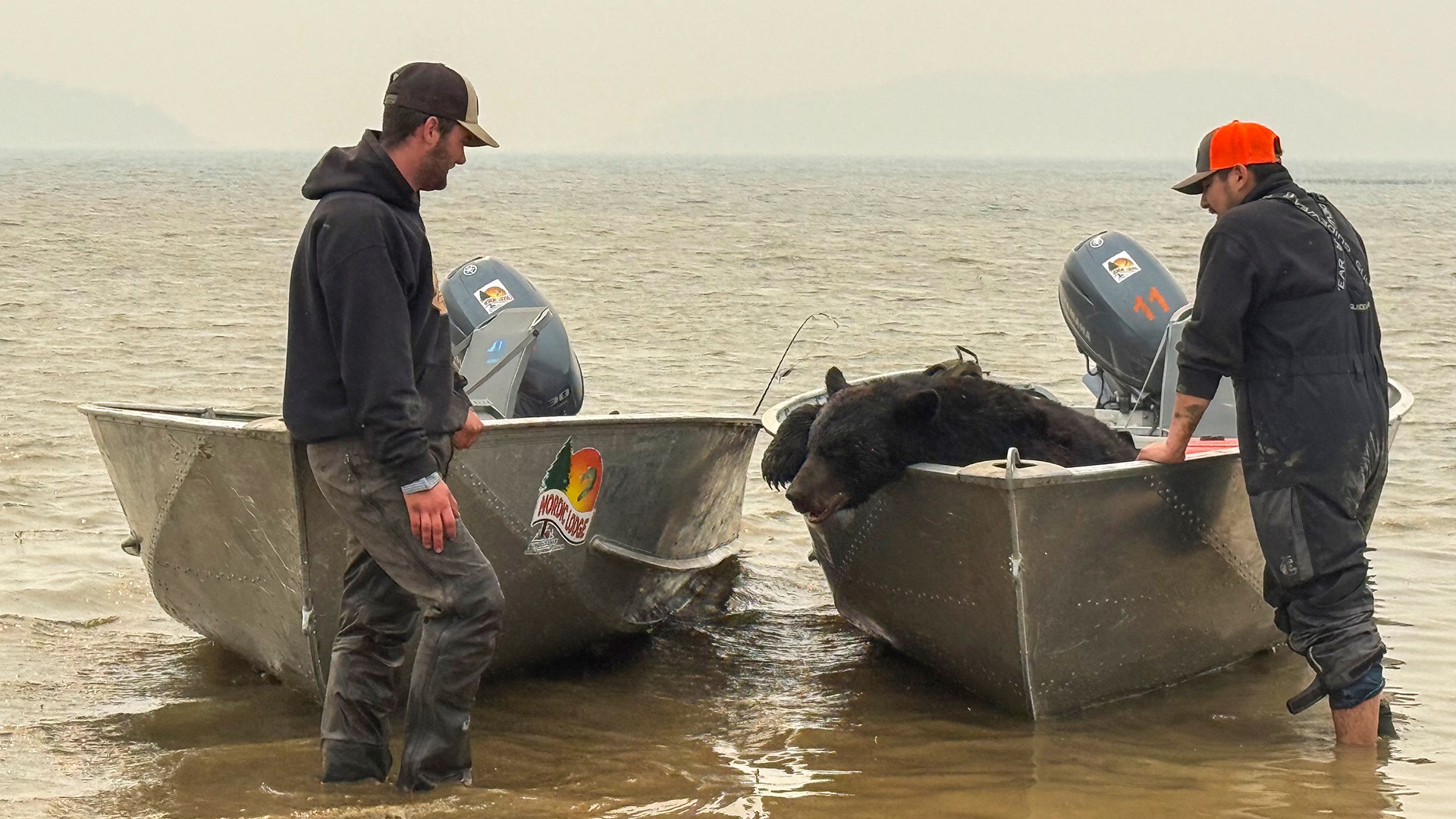
The standard mode of transportation around reindeer lake, of course, is a 16-foot john boat with a 40 hp Honda four-stroke outboard, a spare can of fuel and, most importantly, a native guide who grew up on the lake and can navigate its extremely treacherous waters even at night … or, I hoped, in smoke. Normally, you’d think GPS or Google Earth would save you, and it would for general navigation, but GPS is no good for micro navigation while slaloming through thousands of granite boulders that jut from the cold water like spikes on a Doberman’s collar. They are the widowmakers of the region.
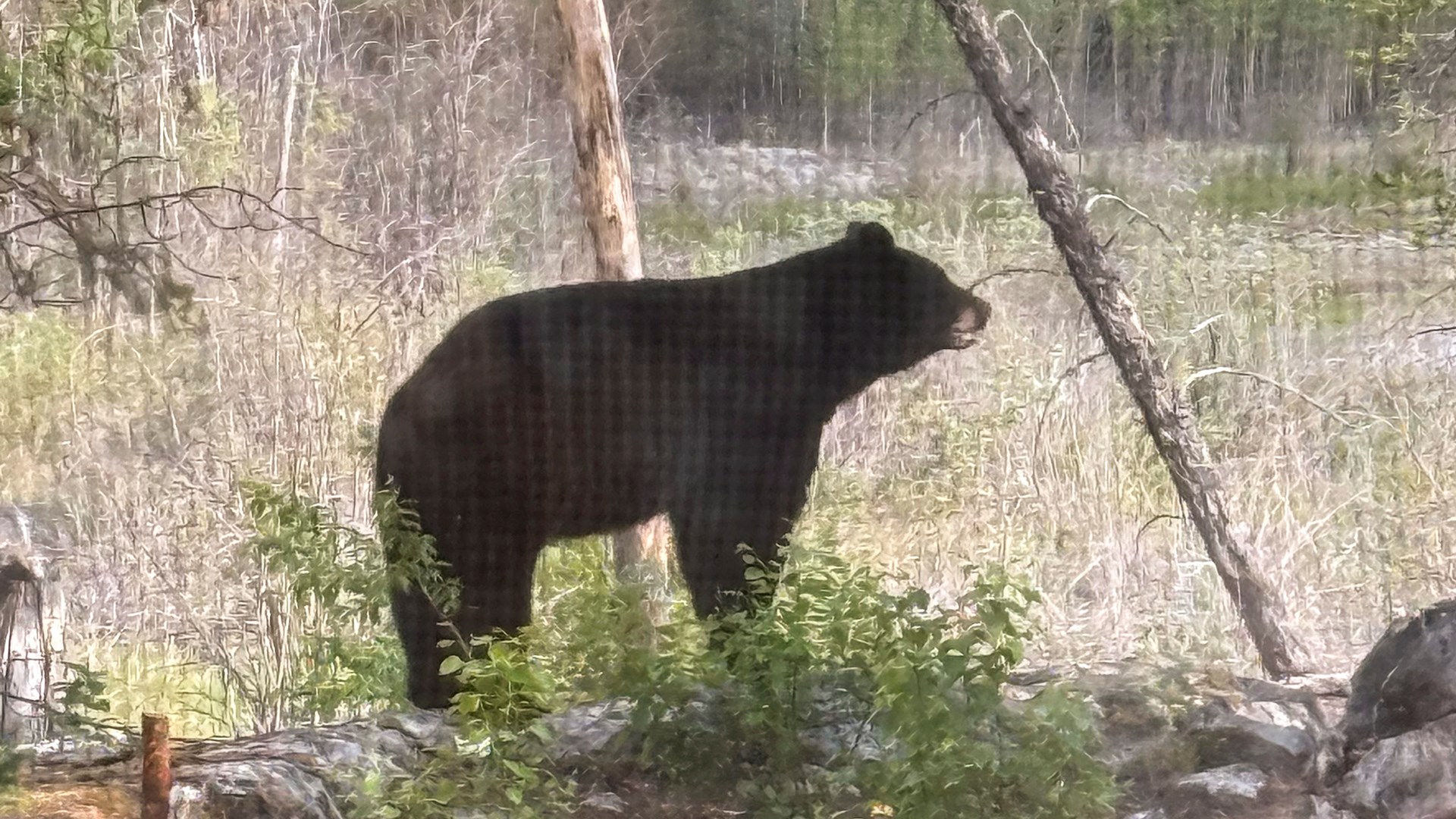
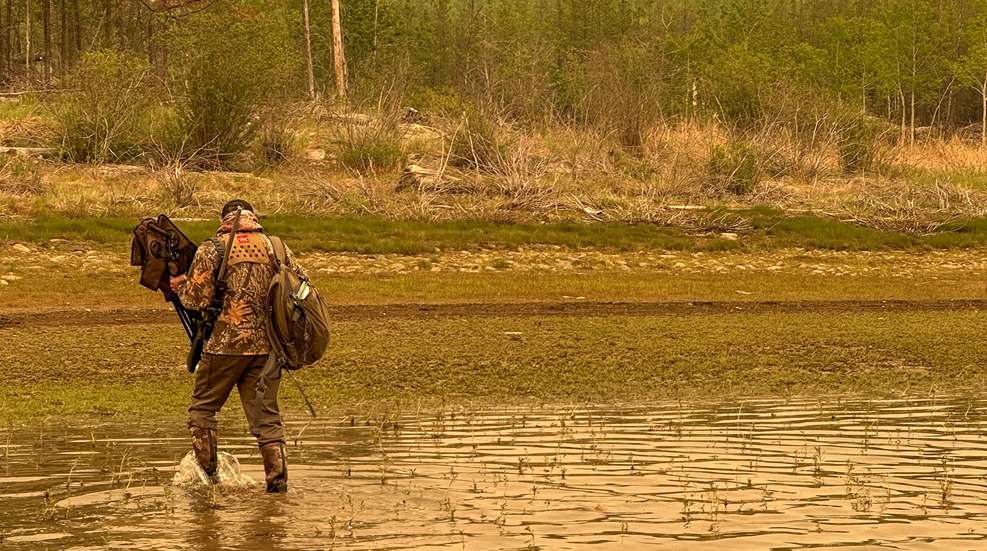
At any rate, motoring to my bear blind—selected by Quentin because he’d seen a big bear on camera there—meant running flat out for 45 minutes until arriving at the dam, at which point the boat was trailered and pulled overland to the upper end of the lake where it would be relaunched. After another 20 minutes of boating toward a peninsula, my native guide, Robin Okema, dropped me off in knee-deep water where I trudged as silently as possible to my ground blind. I remember the sky being an eerie yellow color as the smoke filtered the sunlight.
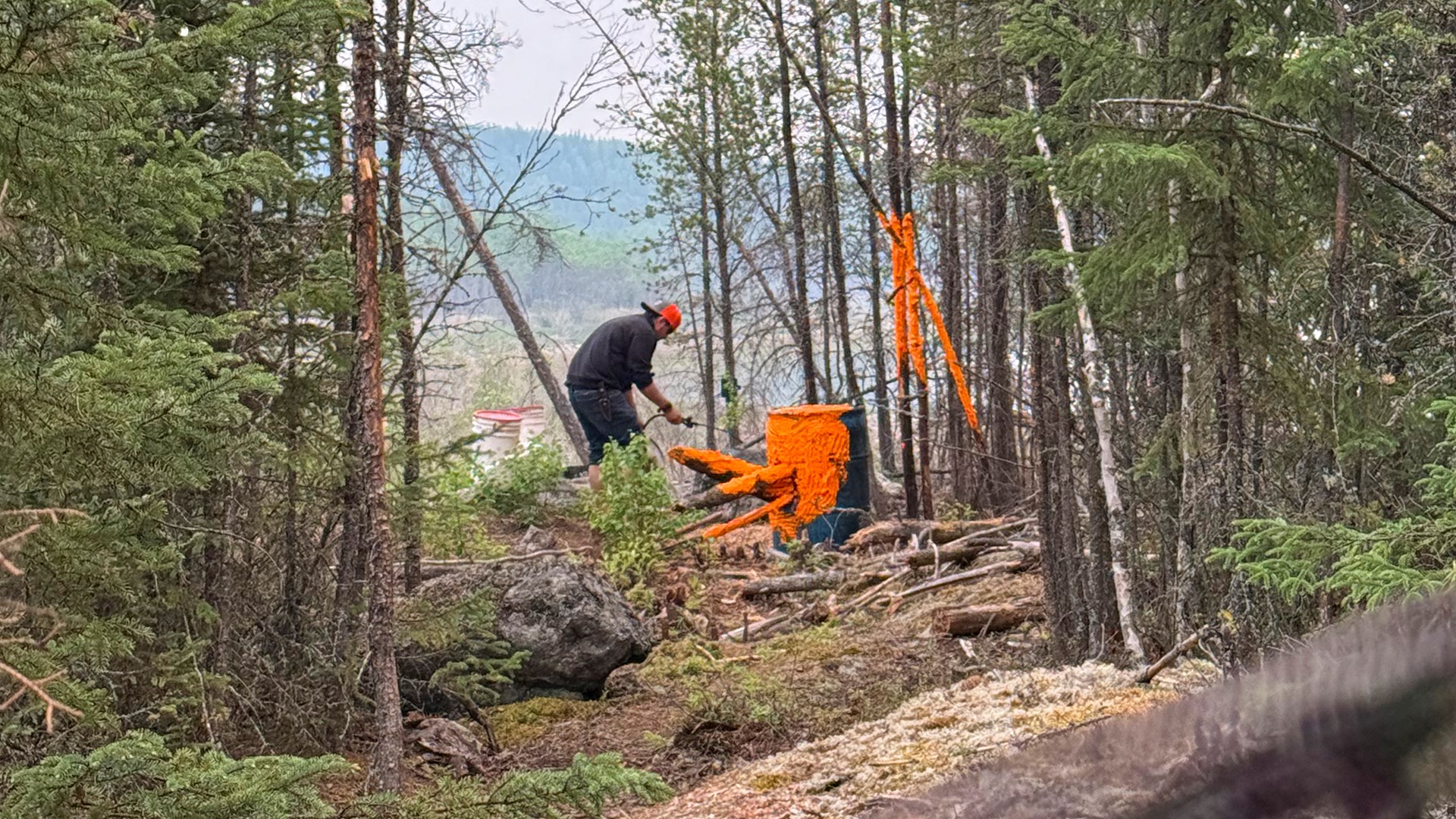 A big old boar is a master of survival but not of its stomach. Bears are suckers for sweets like oats and honey and creamy orange cake frosting ... and for protein like a beaver carcass.
Some hunters, especially those Western types who love to spot and stalk, might find hunting from a bear blind with 20 yards of visibility akin to torture. But for some reason I love it. I love the anticipation of a big, dominant bruin ambling in, silent as a bobcat, so big, rude and menacing in demeanor yet so outwardly curious and interesting to watch all at once. Keep in mind, a big boar can be 20 years old, and by that time clearly a master of survival. What they are not masters of, what ultimately kills many of them each year, are their stomachs; they are suckers for sweet baits like honey, oats and last week’s donuts. But what they really crave is protein—protein in the form of an extremely ripe and greasy beaver carcass like the one I was watching when that giant bear appeared from the smoky pines mere steps in front of me and the barrel of my muzzleloader. That’s when I pulled the trigger and the real excitement began.
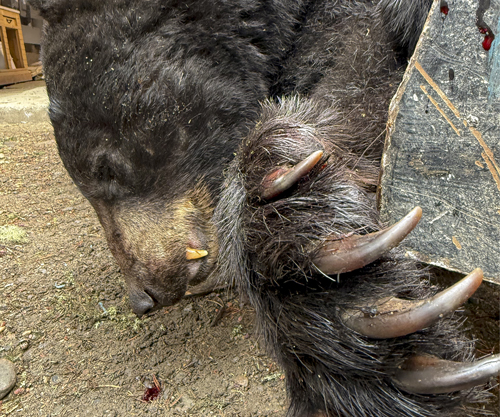
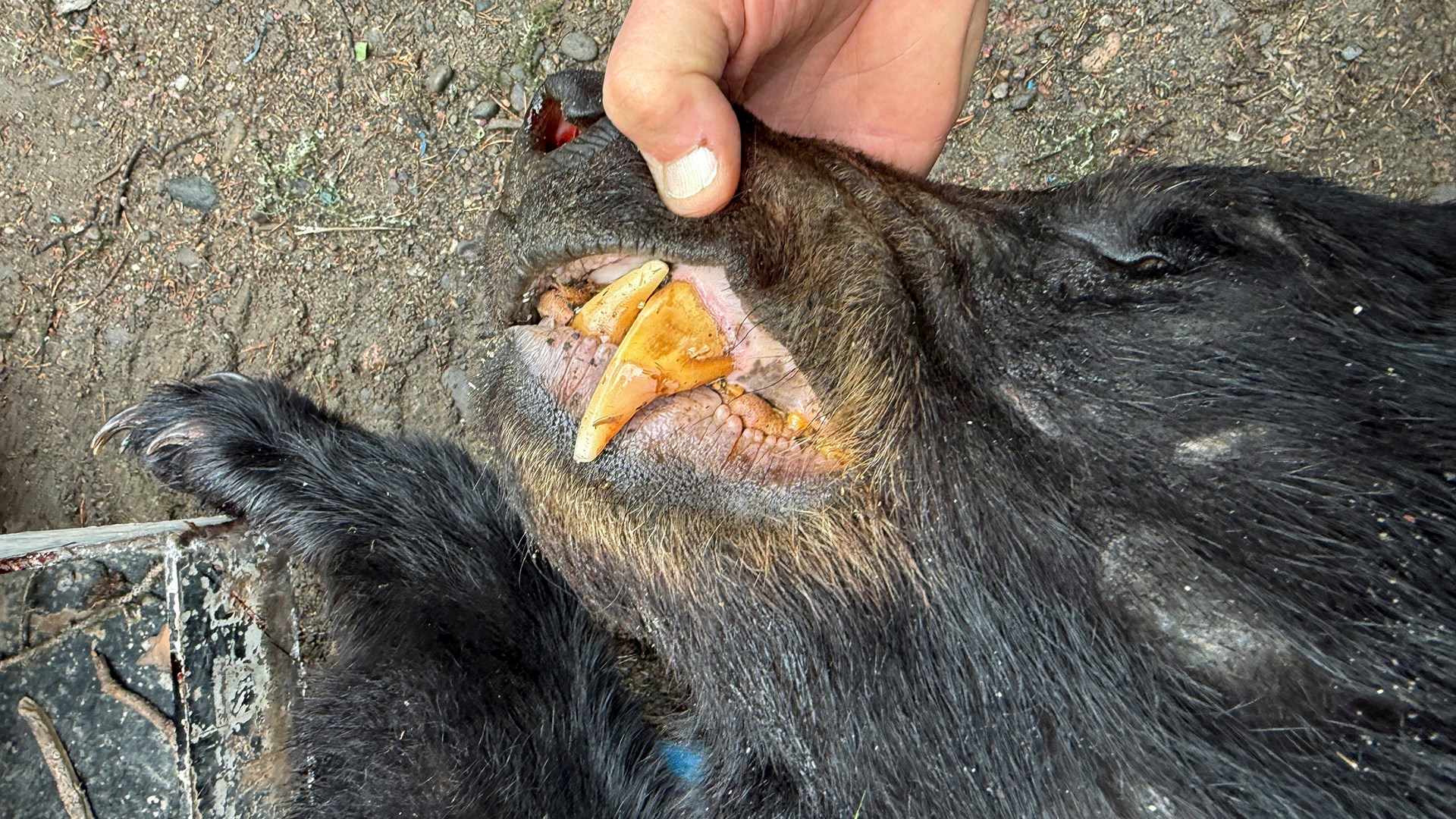
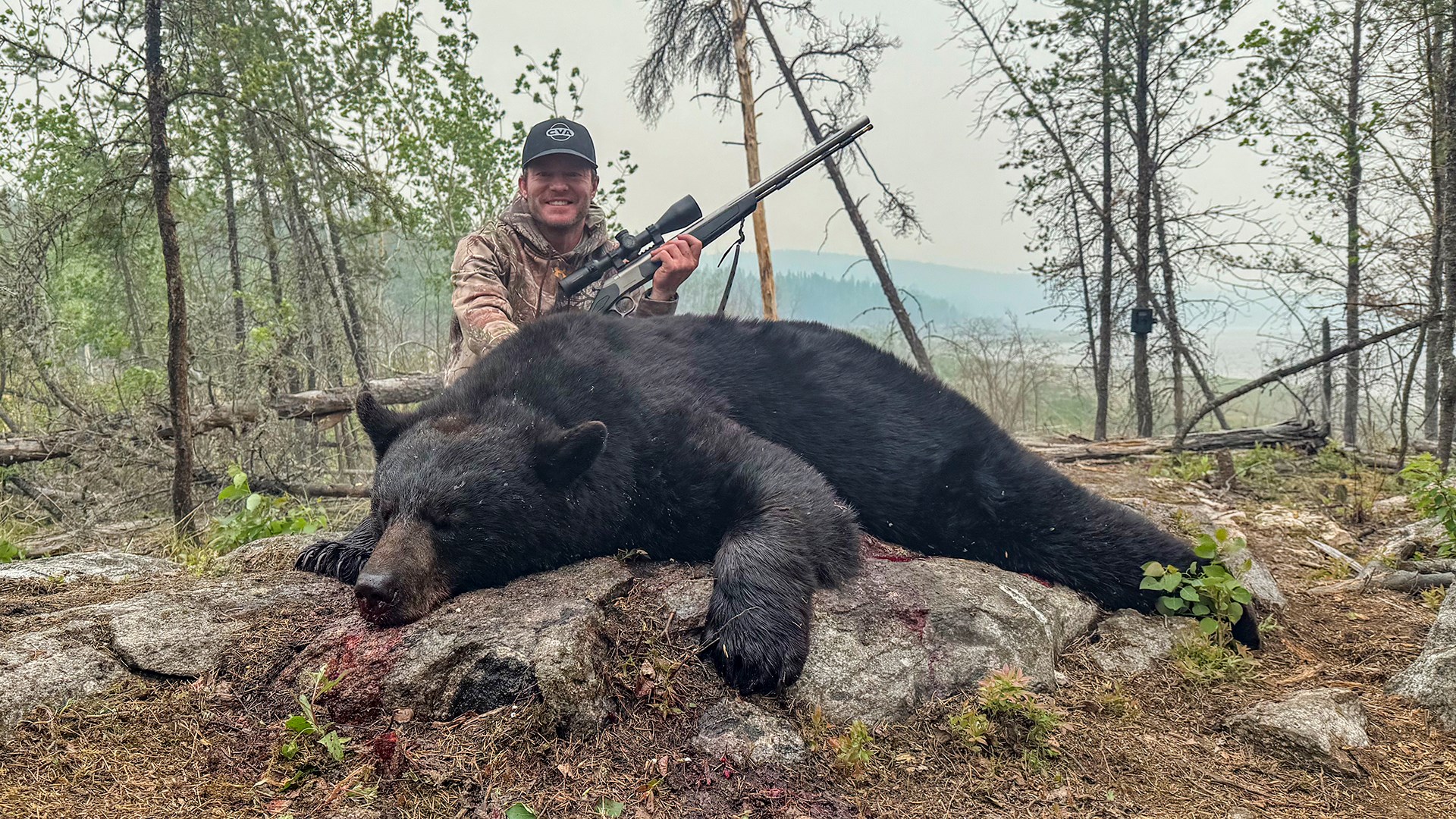
When the bear ran toward me through the cloud of gunsmoke I could see that he was not well, but in seconds he was three steps from me, snapping and thrashing around wildly. The 285-grain, .50-caliber slug had destroyed the big boar’s lungs, as evidenced by the blood pouring from its mouth. I do not revel in an animal’s death, and so hoped for his swift end, which luckily for both of us came mere seconds later just in front of me. After allowing a few minutes to let the cathedral-like silence reclaim the woods, I knelt beside the beast and thanked him, then looked toward the horizon that was filled with fresh, yellowish smoke. The wind had shifted again, this time toward me, and I knew I had to get out of there. Luckily Robin had heard the shot echo across the water and immediately began motoring my way. When he saw me emerge from the pines and walk to the shoreline he pulled up. As quickly as possible we gutted the magnificent black bear and laboriously loaded him into the john boat.
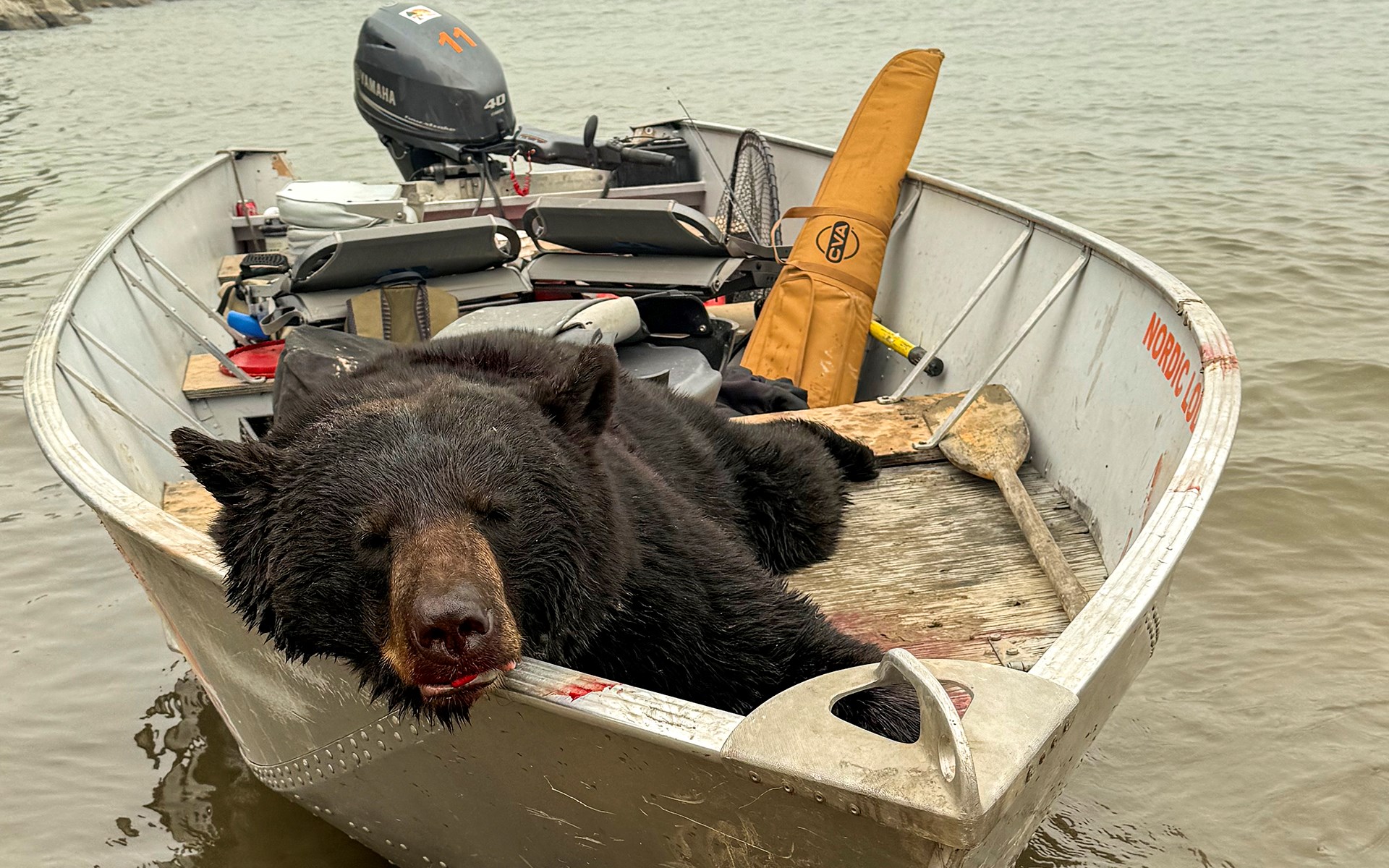 It’s no mean feat to get hundreds of pounds of jelly, er, bear out of the backcountry, especially when the chore involves a boat ride and a portage.
Back in camp, near the skinning shed, Chad looked over the old boar admiringly then at the smoke that engulfed the lake. “Well,” he said, “assuming we make it home safely, I know what you’ll call your story.”
“I know exactly what you’re thinking, and I’m not naming it that.”
“What’s wrong with Smokey the Bear?” he said, laughing.
“Smokey is dead,” I said, “and we aren’t too far from it ourselves. So grab a knife and let’s get out of here!”
Loaded (from the Muzzle) for Bear
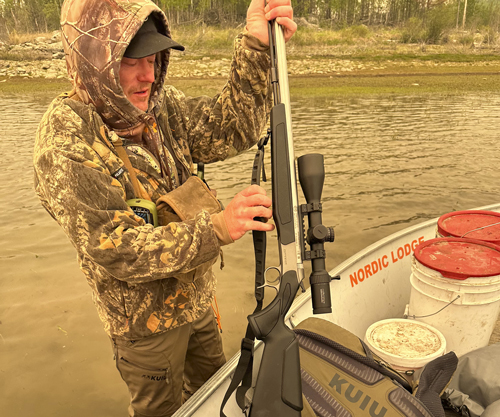
Not only do I like hunting bears, deer and elk with muzzleloaders for the added challenge of making one shot count, I’ve had great results with them. Truth is, when ranges are kept reasonable—say, inside 150 yards—there’s very little difference between a muzzleloader and a modern rifle.
For this hunt I chose CVA’s Optima in-line muzzleloader. Although it’s not overly fancy, its straightforward design has everything you need to maximize a muzzleloader hunt, yet it remains very affordable. It’s made of stainless steel so you don’t have to clean it every hour on the hour like smokepoles of old—but when you do clean it, a hand-removable breech plug and break-open design make it a simple process. Loaded with two 50-grain White Hots pellets, it will send a .50-caliber, 285-grain PowerBelt bullet at 1700 fps for roughly 1,830 ft.-lbs. muzzle energy. That’s straight bear magic. Perhaps most importantly, every CVA I’ve shot has proven accurate, and if some time is taken to test load combinations to find one it favors it can be a large-caliber tack-driver, capable of 1.5-inch groups.
If you just love to hunt regardless of the tool used, adding a muzzleloader to your kit can increase your big-game season by several weeks in most states. I recommend an affordable CVA Optima, or CVA’s newest addition, the compact, 18-inch-barreled Crossfire, to every hunting buddy. cva.com