I’ve heard plenty of guys talk about wild hog hunting as if they can just ride around and shoot ’em from the truck like cattle. Certainly, anyone can get lucky sometimes, but unless you are a Texas land baron with thousands of acres to roam it doesn’t happen all that often.
Meanwhile, when professional eradicators speak of killing hogs, they’re generally referring to the use of mass-catch traps, helicopters and dogs—all deadly methods, but hardly practical for the occasional hog hunter. And that is why perhaps the next-best method—using thermal optics to hunt hogs over bait at night—has become the tactic of choice for plenty of American deer hunters looking for something else to shoot. Certainly it’s fun, effective and ever-more affordable compared to just five years ago.
Yet this article is about something else: It’s about hunting mature wild boars like we hunt most other bona fide big game—in daylight hours, on the ground, with traditional weapons. Done this way, I find hog hunting to be one of the most exciting and challenging hunts imaginable. Even better, it can be done year-round in most places, without the expense of a license, and that’s why, as a sportsman and not a farmer, I consider wild hogs to be a bonus and not a burden.
About Hogs
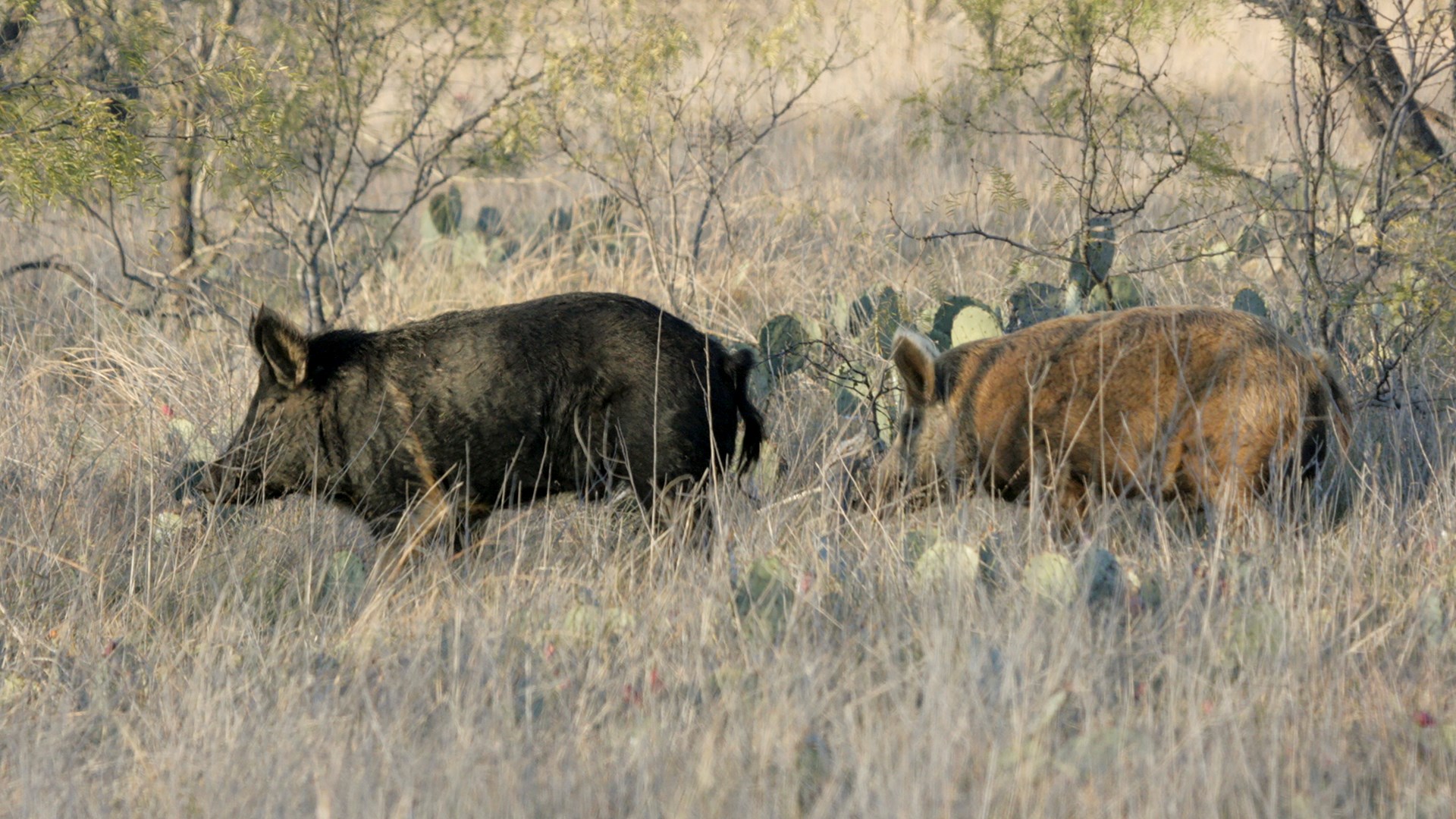
Wild hogs are smarter than dogs, have noses many times more powerful than deer and they’re conditioned to avoid humans 24/7. This makes them one of the wariest critters on the continent, right up there with crows, big cats and coyotes. While there are plenty of scientific studies on the amazing olfactory systems of pigs, I’ll spare you the data and instead relay a few of the many instances I’ve witnessed in 35 years of dealing with them constantly on a family ranch in Oklahoma, anecdotes that have convinced me that mature wild boars are one of the gamest animals on the planet, despite their non-game classification.
“Hope y’all have plenty of freezer space!”—I’d often say that or something similar in a group message to my hunting buddies just before our annual deer camp. “Seeing tons of hogs on cams. Bring plenty of ammo!”
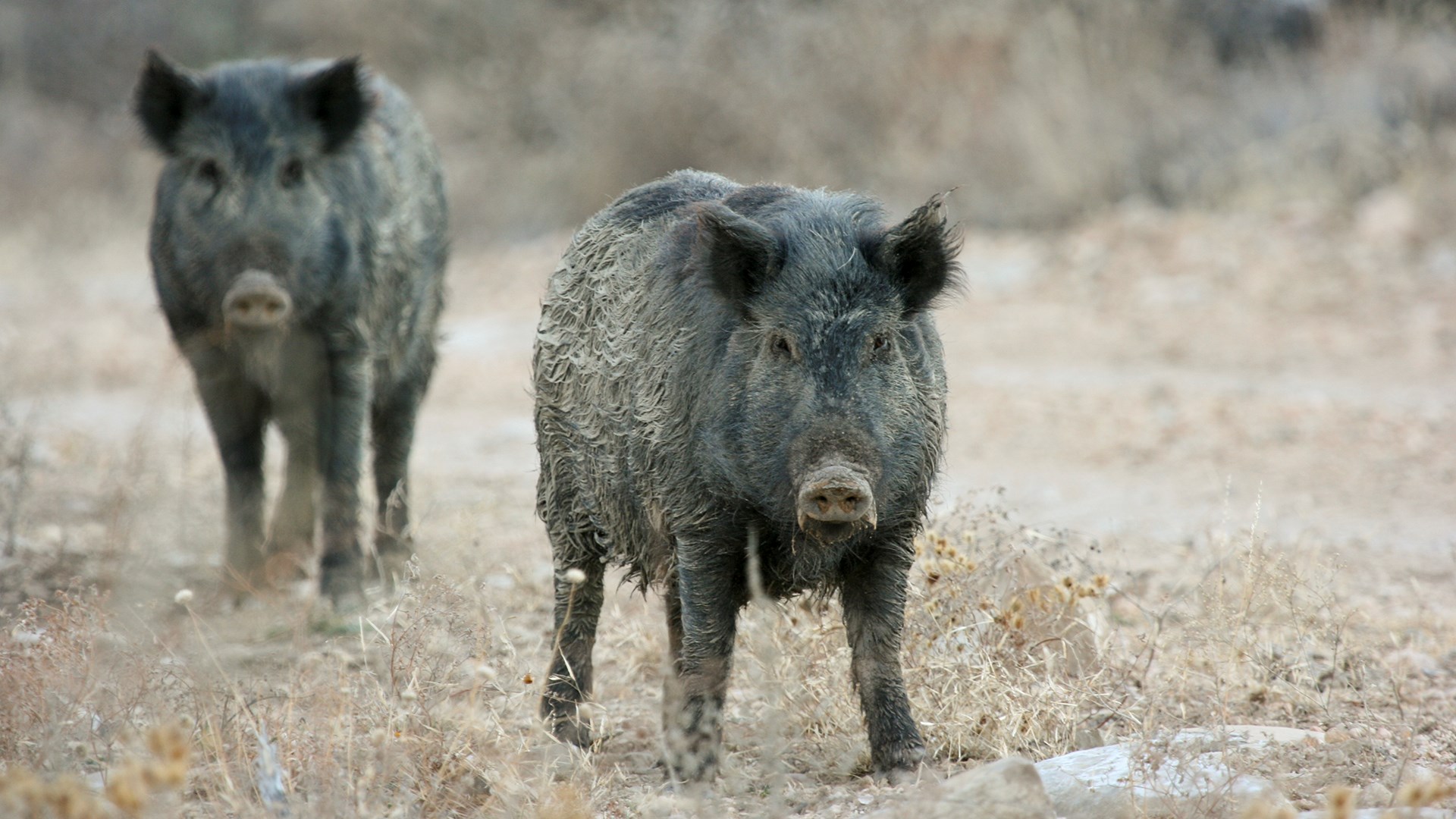
But then something strange always happens when my buddies arrive and begin dispersing by truck, foot and ATV each morning before dawn to deer hunt. Almost immediately, I cease seeing hogs on the cameras during daylight hours, and I don’t hear the volley of gunshots I was expecting. The deer? They still come around to the feeders and food plots and we generally kill a few. One isolated year could be a coincidence, but after 25 years in a row it’s clear to me that hogs are much more sensitive to the increased human presence than are deer, and they act on their fears by moving out or laying low. Nowadays my buddies roll their eyes when I mention all the hogs I’ve been seeing on camera before deer camp.
Secondly, several years ago while fishing a farm pond, my dog Jones busted into a sounder of pigs—sows and babies—and one of the little piglets ran directly at me. I snatched it from ole’ Jones’ snapping jaws, but now I had a problem on my hands: a baby wild pig! After locking Jones in the garage, I tried returning the piglet to the woods where her family had gone, but she’d just follow me back to the truck each time I tried to leave. So I kept her. And I learned a lot.
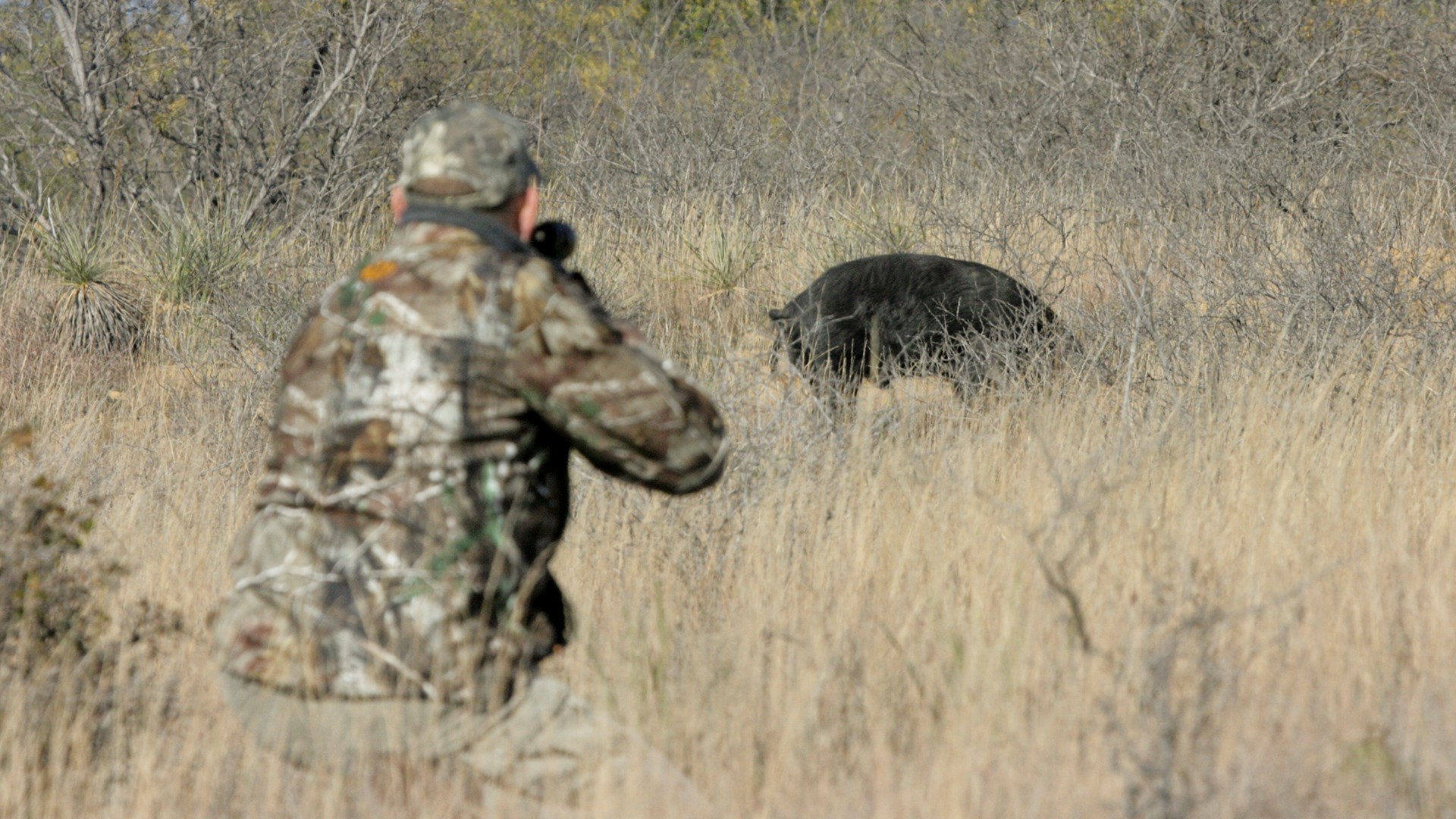
Junebug was like a happy dog, only smarter, more stubborn and with a bigger appetite. One day I needed to move this half-grown pig to a friend’s pasture while I went on vacation, so I set out a live-catch trap in the front yard and baited it with corn. When that cage door slammed shut behind her and she discovered she was trapped, she nearly destroyed it as she savagely tried to break free. And that was the last time I ever trapped Junebug; she could no longer be tricked into it again, no matter the quality of the food with which I tempted her. My dogs, on the other hand—I can trap them over and over. To me this explains why when I shoot at a group of hogs, I’ll seldom see that same group again for weeks or even months. Wild pigs learn fast, and their memories are excellent.
Finally, I hunt deer nearly every day of the archery season beginning in mid-October. Plenty of days I can and do kill hogs when one ambles near my stand. This is a product of me knowing natural game trails in my woods, sneaking to my stand, and always being aware of the wind. But trying to bait in an old, mature boar to a specific place is much tougher. Just like mature deer, old boars don’t get old by being dumb and reckless; in areas where hogs are hunted relentlessly they learn to trust their incredible sense of smell before leaving cover or entering suspicious areas.
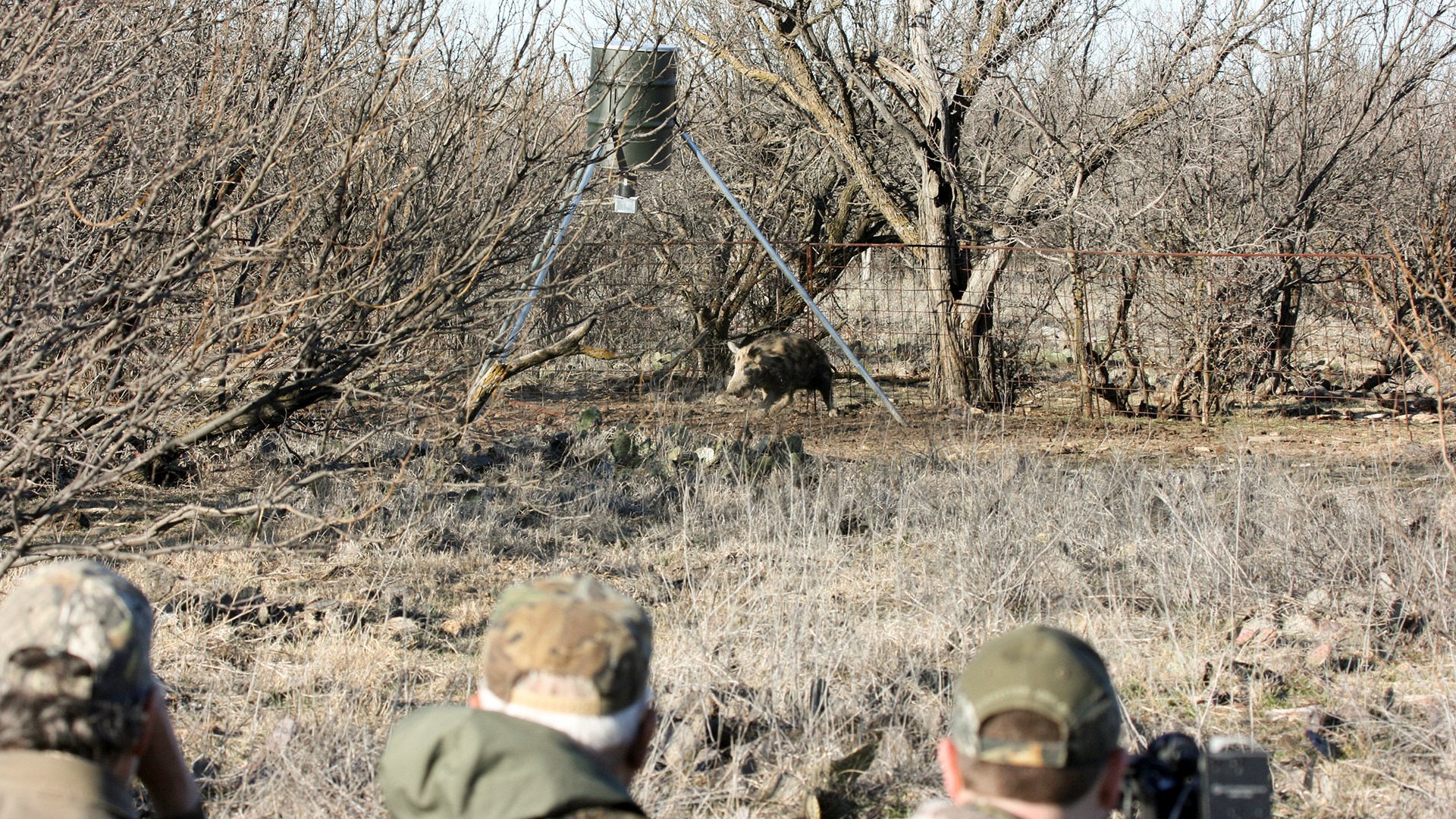
Often when I’m deer hunting—and seeing deer in front of me—I’ll hear a boar grunt 50 to 100 yards away, in the cover of woods near the bait. (Big boars tend to grunt as they walk, as a product of their sheer bulk.) But instead of coming straight in, they’ll almost always circle around the bait while remaining in cover in an effort to smell everything in the area. Each time they stop to test the wind they also listen intently for a full minute or more. When they finally get downwind from me, the jig is up. It happens time after time.
Rest assured, these anecdotes aren’t to imply that wild pigs are some sort of super-creature impervious to human deception. Hundreds of thousands get killed each year as they bumble into the shooting lanes of deer hunters and as they root up crop fields at night. But big wild boars are a different animal than the youngsters. These wise, armor-laden warriors are one of this continent’s most challenging quarries when hunted on foot, in cover, with bow or gun. Here’s how I do it.
Snow Tracking
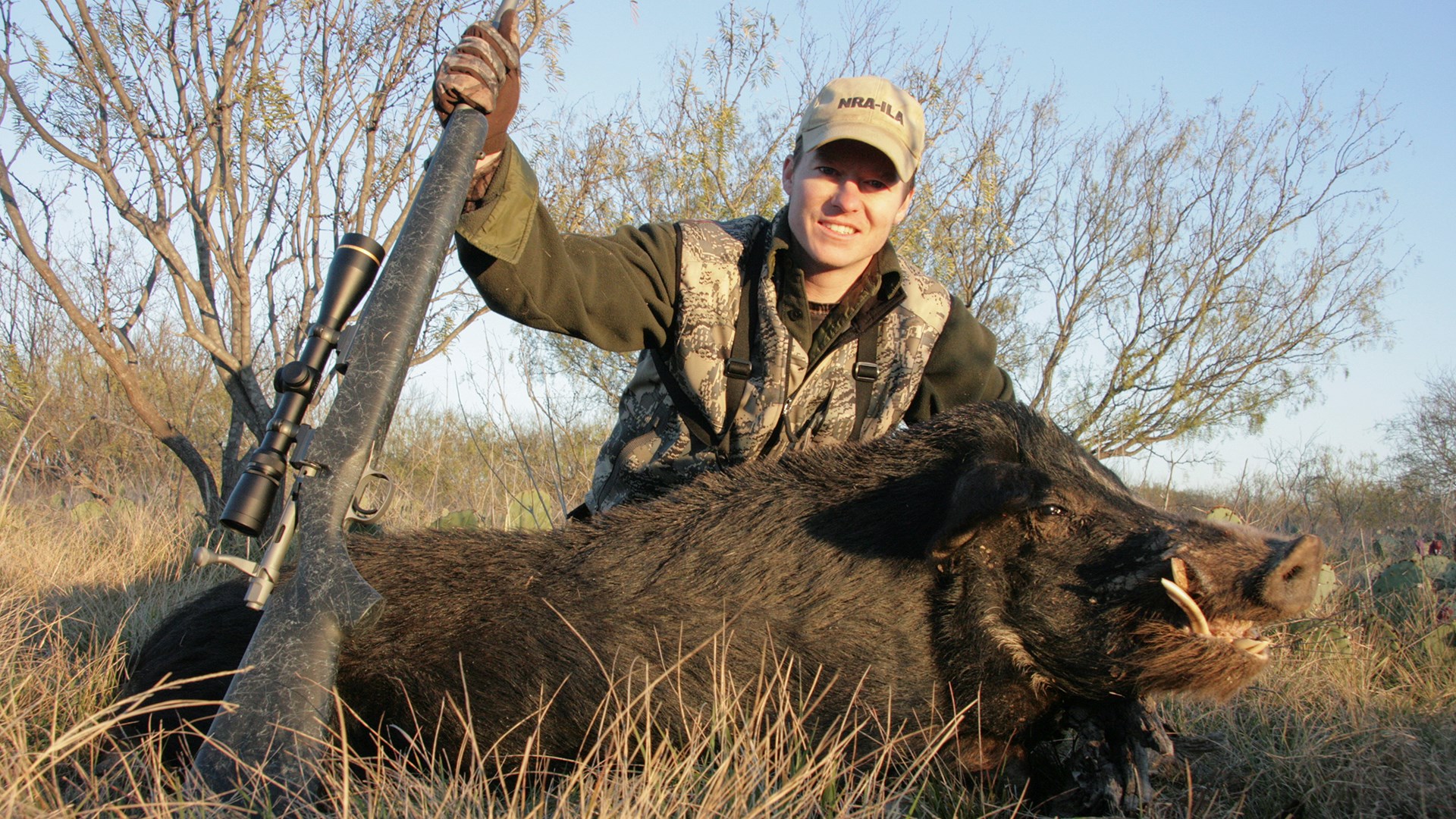
There is no better time to hunt big wild boars than in the late season, after the deer rifles have been cased, when there’s snow on the ground. In the hot months, big boars spend the vast majority of their time off their feet, lying up in shady cover waiting for the slight break in temperature that darkness brings. But like every outdoor-dwelling mammal, cold weather causes hogs to expend more energy as the body tries to maintain its internal temperature, and so they will be on their feet searching for food much more in cold weather. Combine this with the fact that what was once thick cover is now thin, and that their big dark bodies are easy to spot on snow makes them much more vulnerable than usual. Where there is fresh snowfall, my favorite way to hunt them is to track them.
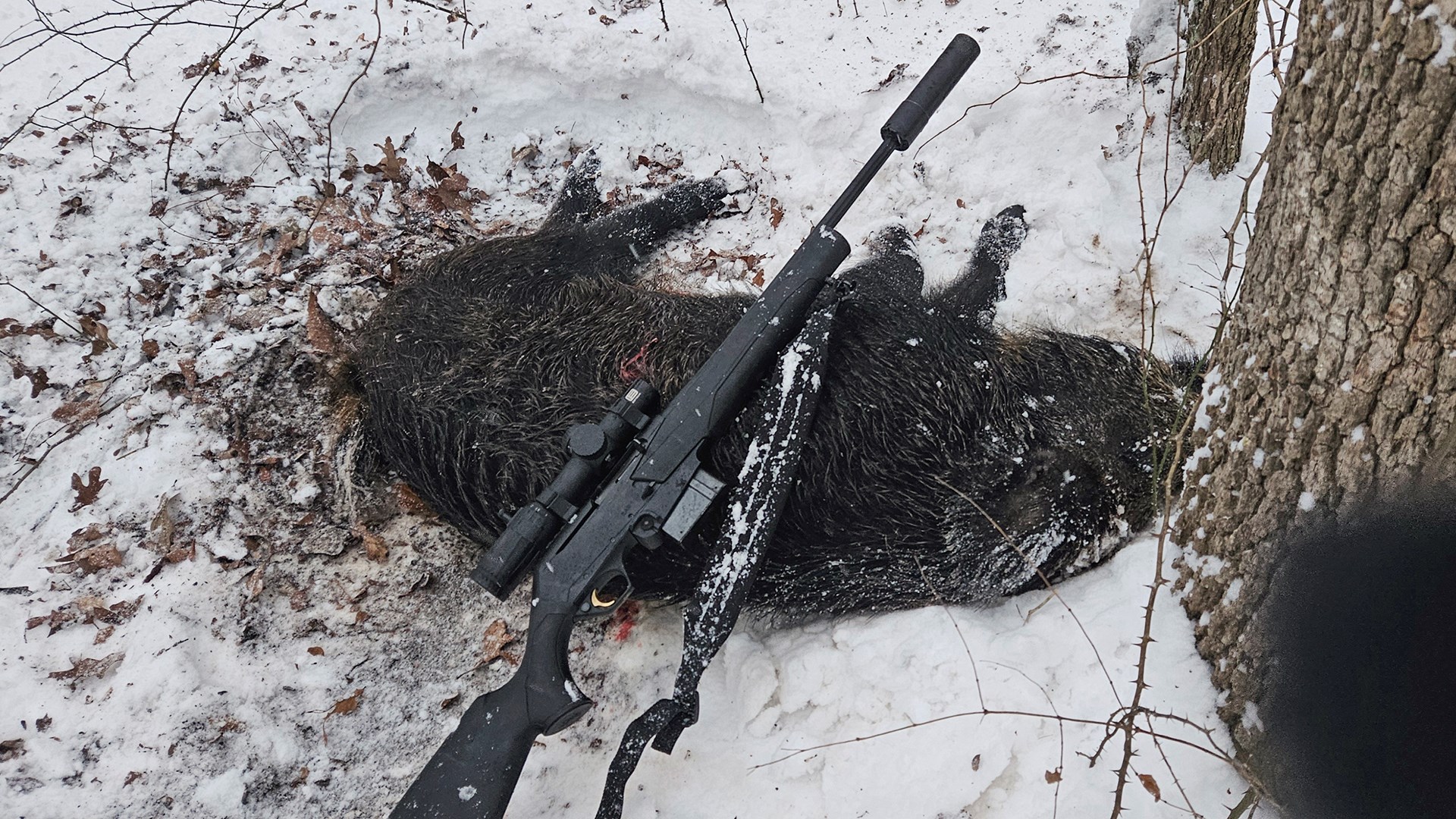
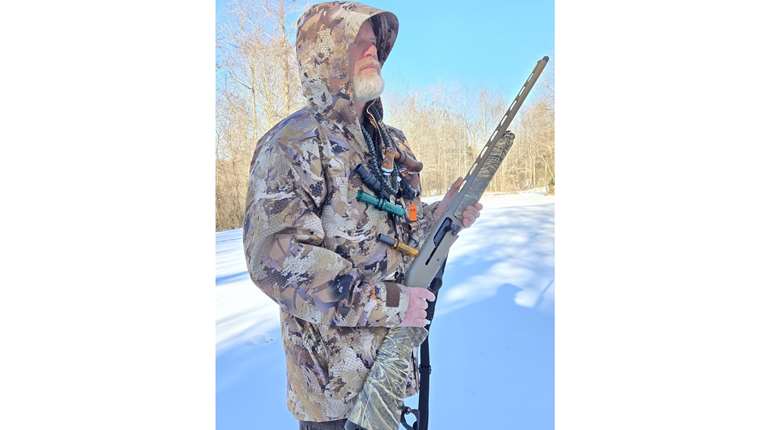
Wait for a snowy night and get out after first light so you can see. Approach any place of thick cover that is known to hold hogs from the downwind side. Hike into the wind while keeping your head up to scan with your eyes as you search for tracks. Pig tracks feature two hooves, like deer, but are more rounded. When you find a single line of tracks indicating one animal, and the track is about the diameter of a coffee table coaster, it’s likely a big, solitary boar. With the wind in your favor, begin following it doggedly but carefully. It’s likely that you’ll catch up to the boar in a couple hours or less because an undisturbed boar on a cold winter day spends most of its time rooting for food with its head down—not traveling. His senses will be heavily impaired as he forages, due to the noise of his own rooting. The key is seeing him before he sees you. Then, while keeping your eyes on the boar, time your stalk so that you move only when his head is down in a snow hole, behind a tree or facing away (Stalking 101). I’ve killed a pile of big, solitary boars like this, and it never fails to remain fun.
Use Your Ears
I purposely continue to bait my deer stands well after deer season for the purpose of hunting hungry hogs. However, at this time the hogs will almost exclusively come to the bait after dark because over the course of the last three months they have learned the woods are generally less dangerous at this time.
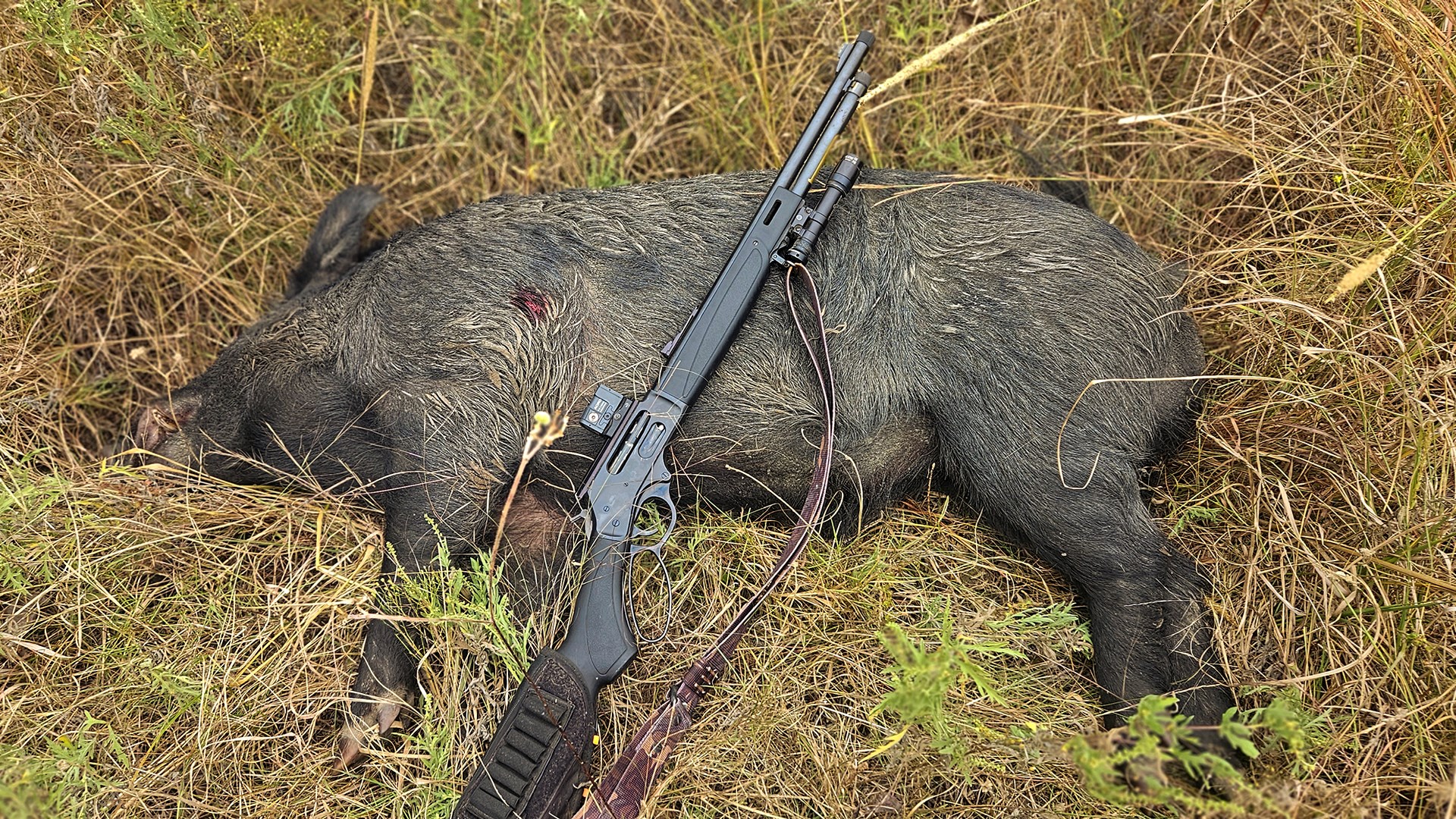
As I previously stated, big boars often make grunts and subtle noises as they walk through the woods, whereas a family group of sows and piglets is downright loud as they constantly spar, squeal, root and mess with each other. The point is, you can hear them. After the deer season I’ll sit on my deer stand, but if I hear a pig I won’t wait to see if it comes in; rather, I’ll go to it.
When stalking a wild pig in cover—if you can hear it—it’s best to try to get in front of it rather than attempt to sneak up from behind. But it all depends on the wind. If you can hear him grunt two or three times, you can often determine the direction the boar is headed. Then move to where you think he is going and set up an ambush. If you’re hunting near bait, you can generally assume that he is attempting to circle the bait, so set up on his circle, and adjust your position accordingly based on any new information you receive. It’s a very sporty tactic, especially with a bow.
Nighttime Tech Hunting
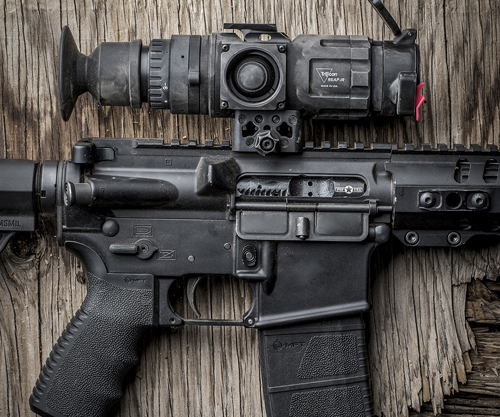
Finally, for nighttime hunting, the mistake I see plenty of hunters make is not having enough patience, mainly either because they are not that serious about killing hogs or they’ve underestimated their quarry. But if you are serious about taking a big boar, think of it just like you would a big buck: Would you drive around looking for a big buck hoping to get lucky? No, you’d sneak to a likely location such as a food plot then sit there quietly, with the wind in your favor, as you look and listen. It’s the same thing with hogs. Although they certainly feel safer at night and therefore are more active, they have keen hearing; if they hear a truck or ATV they will not often continue to feed in that direction. A big wild boar will either hunker down, now privy to danger, or slink off the other direction.
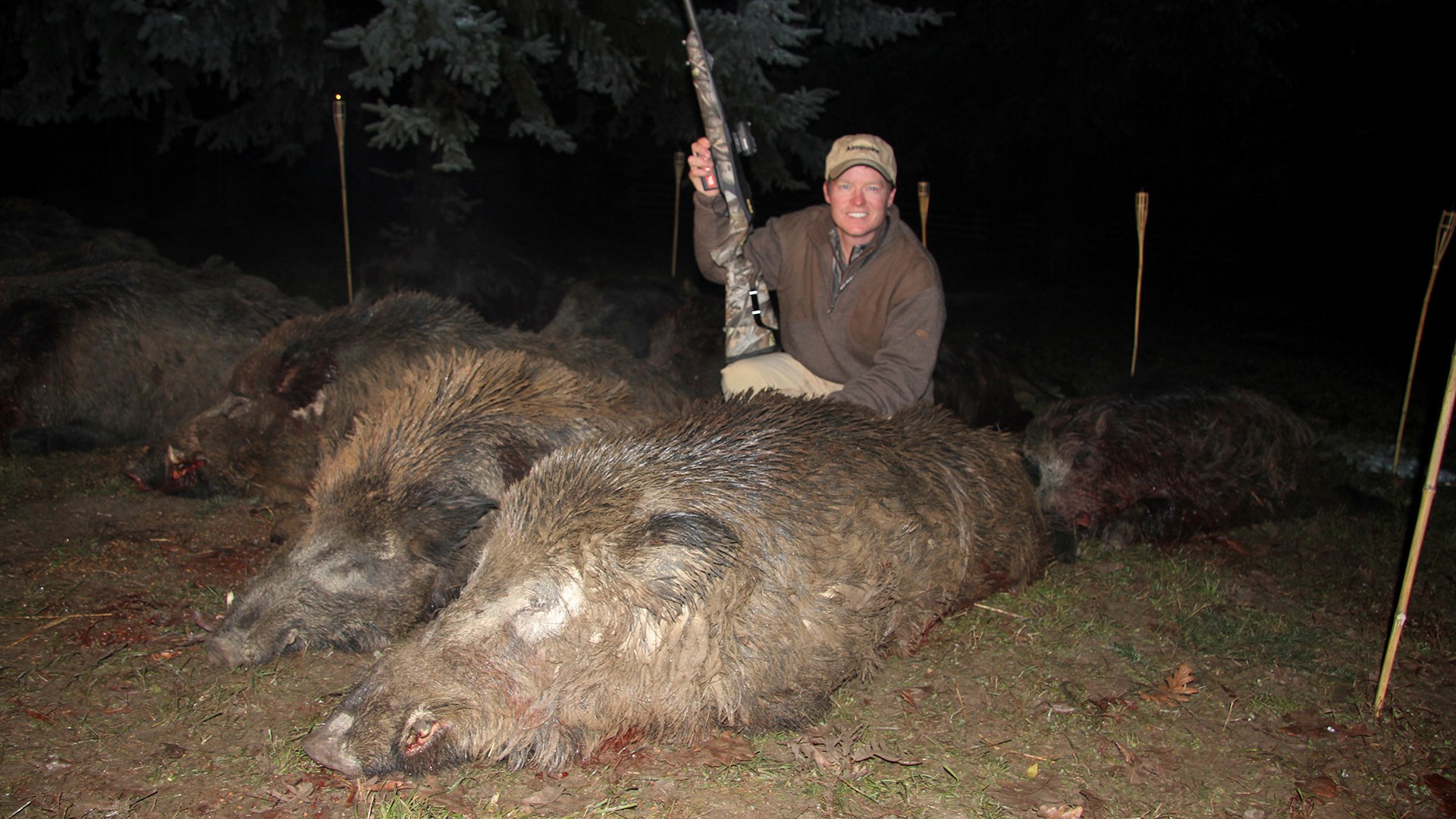
The point is, modern technology such as thermal scopes, timer-based deer feeders and cell-based trail cameras can be deadly tools for killing the wariest of wild boars; just don’t let these tools override pure hunting skills. Sure, I think riding around at night with guns “looking for hogs” (where legal) is great fun, but there are better methods for actually killing them. So if hunting and killing a big wild boar is your goal, try this: Park the truck a half-mile or more away from where you intend to hunt; get the wind right before sneaking in; set up quietly; watch and listen. Then use all the technology at your disposal to hammer one.
Use your ears before your shooting skills when stalking in cover. Big old boars make grunts and subtle noises as they moveÑuse that to find one and then try to get in front of it for a shot.
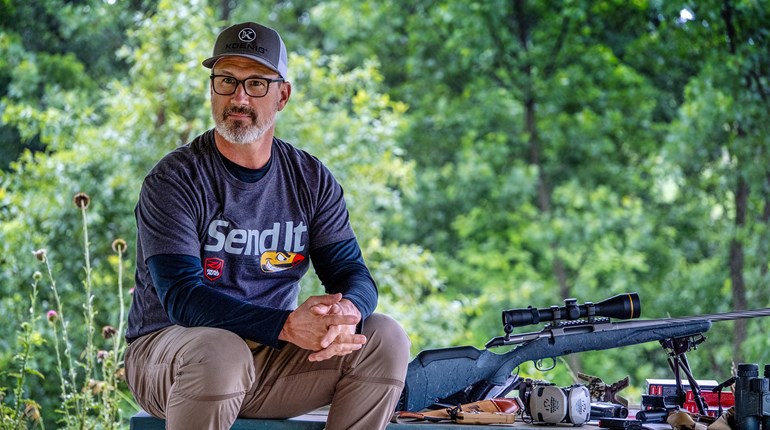
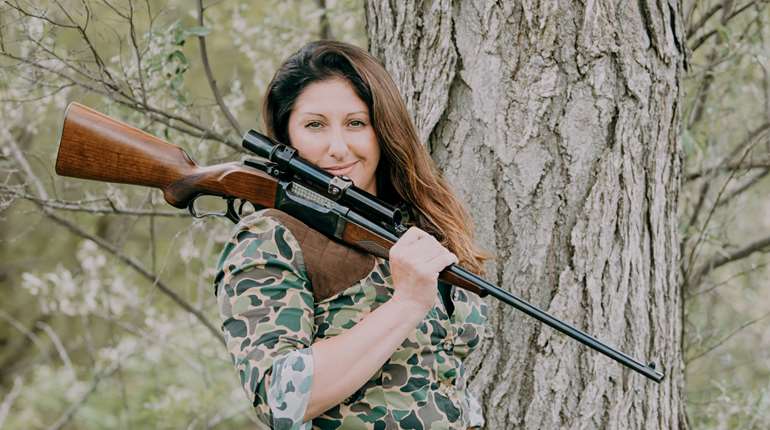
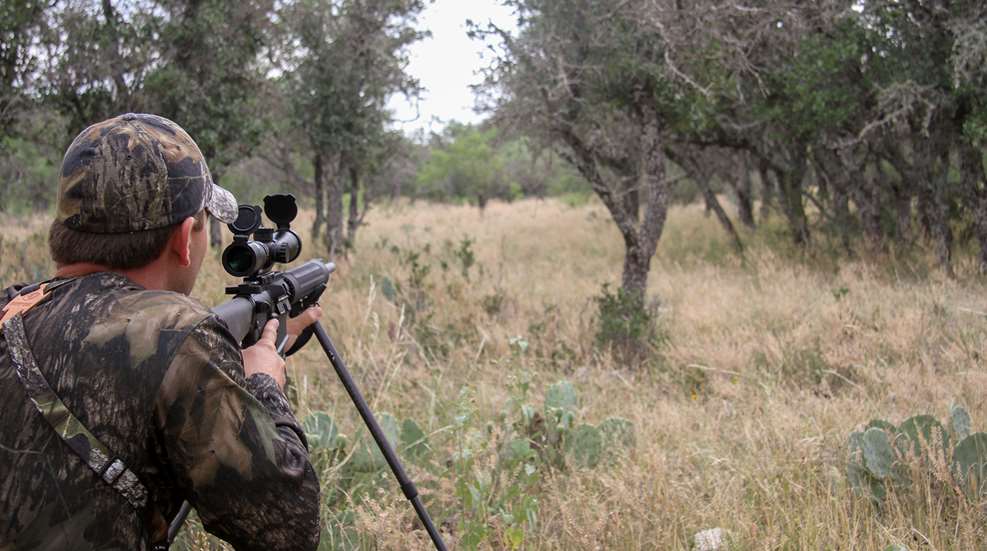
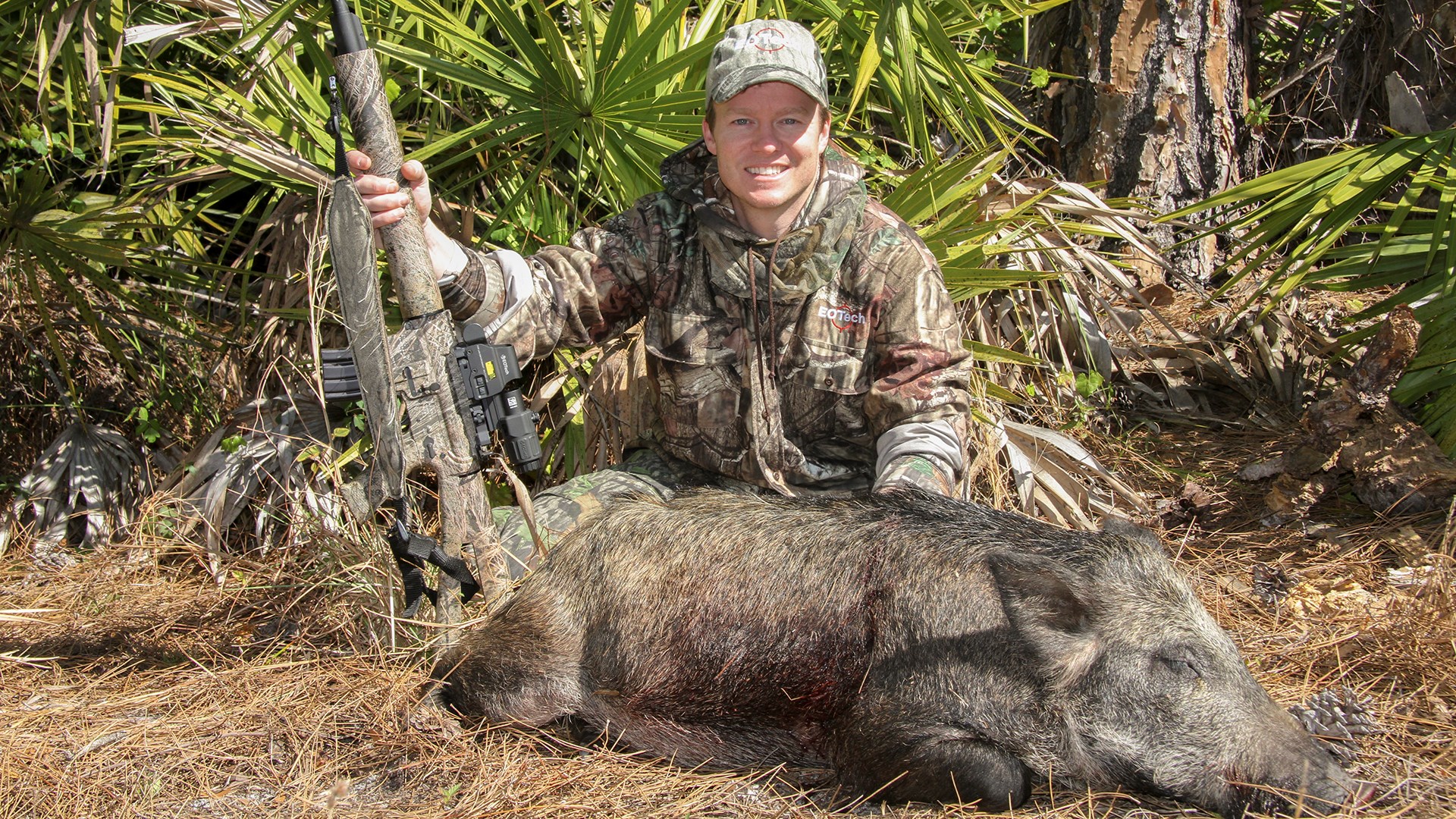
The author has used them all: bolt actions, lever actions and semi-auto ARs. But these days he likes a Browning BAR MK 4 DBM Hunter for pigs (see sidebar). Whatever you shoot, use quality bullets.
Hog Hammers
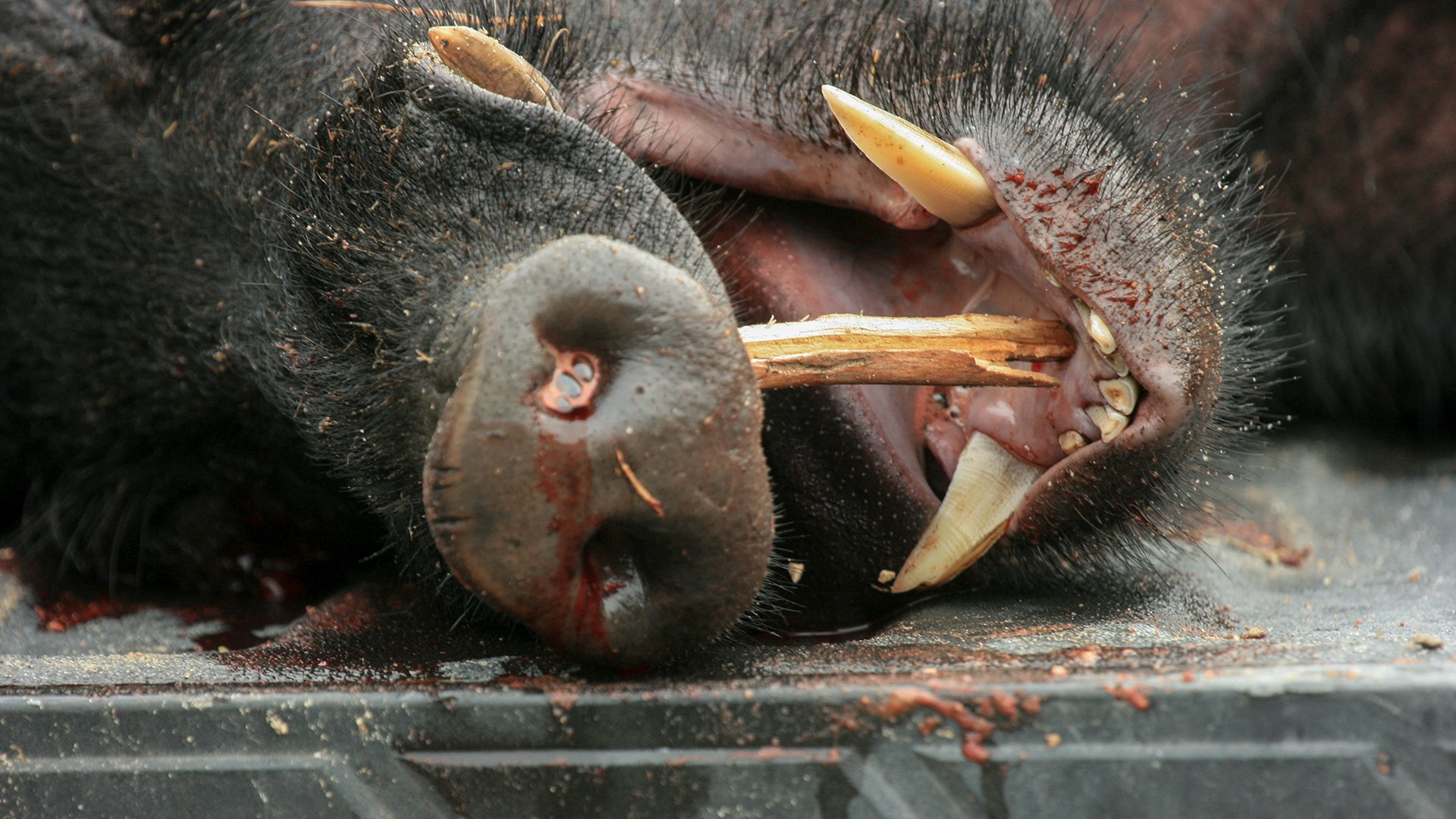
Certainly, nearly any rifle can be used to kill a pig if shot placement is perfect and the range isn’t silly. But there’s a big difference between the average wild pig that weighs 60 pounds and a giant wild boar that weighs 275. The former can be killed with a .223 through the shoulders while the latter’s gristle shield is capable of repelling .223, 9mm and .45 ACP bullets and subsonic .300 Blackouts. (Trust me, I’ve tested it.) So when I talk about ideal calibers for hogs, I’m talking about the outliers, not the averages, because I think it’s better to be overgunned than undergunned if a truly big boar lands in your crosshairs.
What this means, quite boringly, is that any legitimate deer rifle, stoked with a quality controlled-expansion bullet, will do for big wild boars. A .243 Winchester with a quality bullet will kill any hog on the planet at moderate range. The 6.5 Creedmoor is perfect. Personally, I’ve killed more pigs with a .308 Win. than anything, because this is what I most often use.
More important than caliber, however, is the bullet chosen. Big hogs have thick hides and, like bears, contain lots of fat that plugs bullet holes. So I prefer bullets that lean toward penetration over expansion, because I like exit wounds for easy blood trailing. For this reason, I lean toward the all-copper bullets such as the Hornady CX, Barnes TSX, Black Hills Dual Purpose and similar, though any decent deer hunting bullet will work.
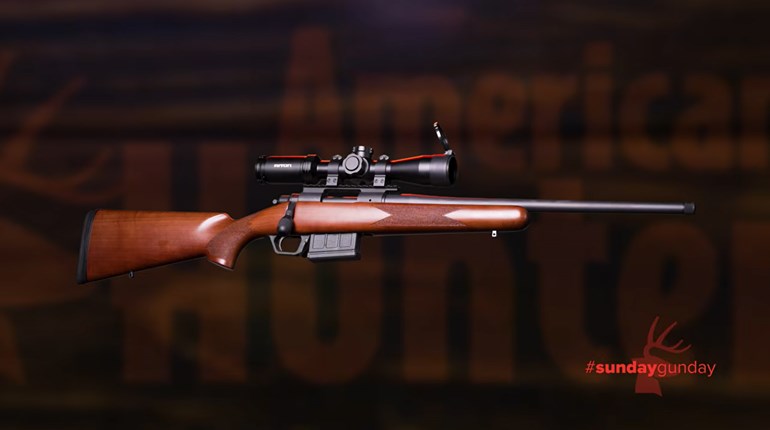
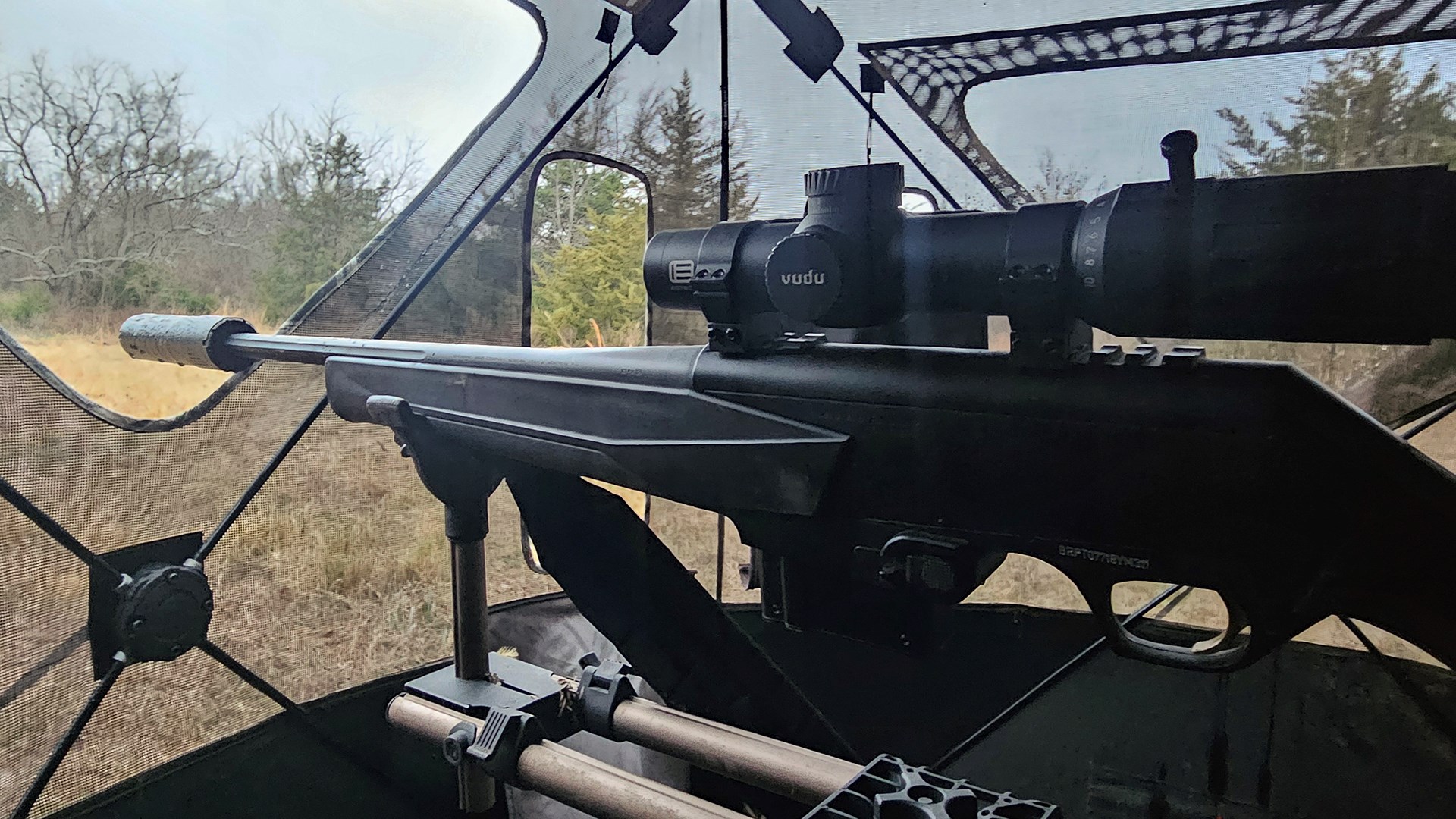
What’s my go-to hog rig of choice? While I’m a huge fan of ARs in general, I find they are generally loud (in terms of loading and manipulating) and a little clumsy in the woods, thanks to their sharp angles, compared to more traditional hunting guns. But I do love the semi-automatic capability. So for these reasons I prefer a Browning BAR MK4 DBM Hunter in .308 Win. that I had threaded (see below). Its 18.5-inch barrel makes it handy in the woods and in ground blinds even with a Silencerco Evo suppressor attached. It holds 10 rounds, has never jammed and it shoots sub-MOA groups. I mounted an EOTech 1-10x28 Illuminated scope on it for its versatility (at 1X it functions like a red-dot sight) and, as such, there is not much I can’t do with this rifle, including taking multiple pigs from a group when they take off after the first shot. browning.com