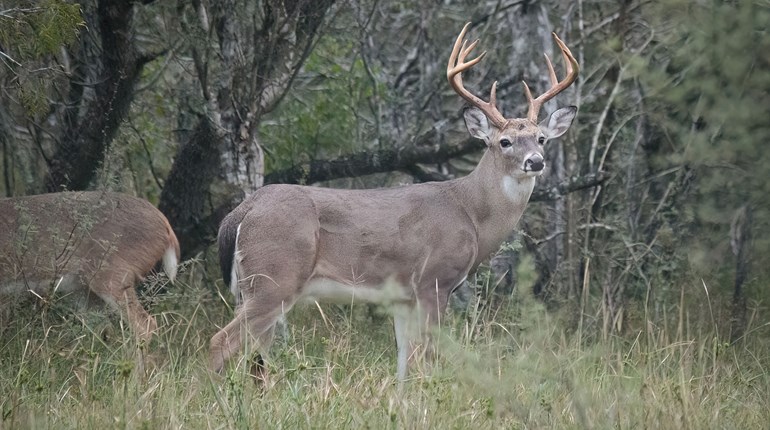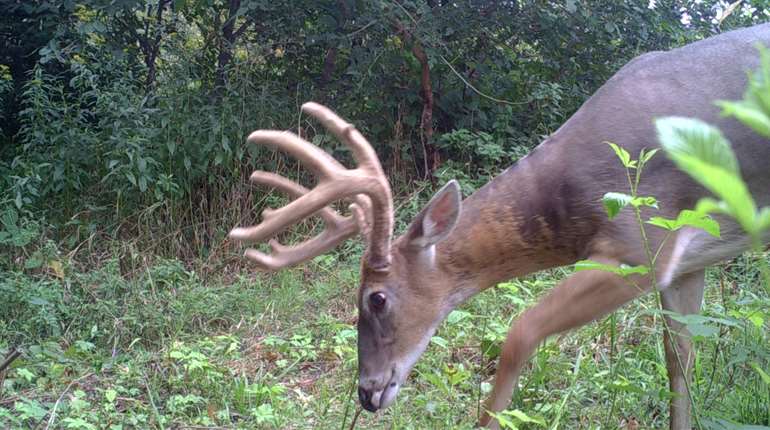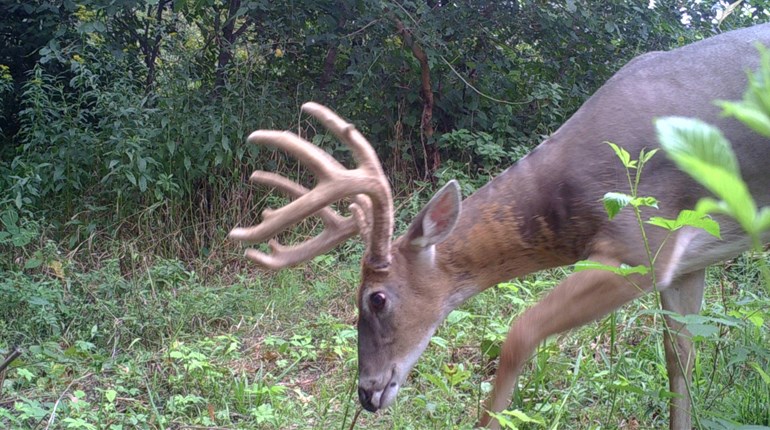
A friend who pilots commercial ships up the Hudson River asked me why there were suddenly so many dead deer floating down the tidal river. He is not a hunter, and has been moving ships up this wide river to Albany and back again for decades.
Another friend who is an engineer for a regional power company and who is also not a hunter asked me why he kept finding dead deer in ponds under the powerlines. He was concerned that the ponds were poisoned and considered calling the state wildlife department.
I told both of them that there was a bad outbreak of EHD (Epizootic Hemorrhagic Disease) that was slaughtering the local deer herd. I explained that deer suffering from EHD experience high fever and dehydration, so they tend to look for water to drink. This is why deer killed by EHD are often found in or near water during outbreaks.
They both asked if they should be concerned. I explained that they had nothing to fear. For several reasons, EHD does not impact people. It is transmitted by biting midges and often ends with the first hard frost. I added that it is normal. While localized die-offs can be significant, EHD generally does not cause long-term regional population declines, as deer herds typically rebound within a few years. This is partly because surviving deer do develop antibodies for the virus.
Both seemed relieved, but I wasn’t. I knew a local outbreak was occurring that September, but this sounded worse than I thought. I went to check for deer tracks along several deer trails that come from a long swamp and overgrown riparian area and cross a ditch that is about 12-feet deep. The trails are bottlenecked in and out of the steep drainage and the mud near the bottom is always filled with tracks upon tracks.
I was dismayed to see that the first two crossings didn’t have any tracks in them. The last had a single set of tracks from a young deer. I knew EHD more typically kills mature deer—it can take the mature bucks right out of the local gene pool—but I did not expect to only see one young survivor in a place where there had long been dozens.
My scouting effort was hardly scientific, but nevertheless I knew the deer stands I had in that swamp should be left alone for a few seasons. I would check back and, in the meantime, would hunt in other places away from the water on ridges in a different part of the county, as the midges that cause these die offs hatch from stagnant water sources.
This occurred in 2021. The local deer population is now, unscientifically (as it is based on my counts of tracks), better half of what it had fallen to in 2021. It is rebounding, but if I had not previously scouted and obtained access to other properties, I would have been out of luck. State deer biologists will—and they said this to me—tell you that the impact from EHD tends to be very local. My state did not factor the EHD impact into their seasons or tag allocations. How could they? One square mile might be devastated, but the next might still have a strong population.
The point is that EHD is something deer hunters across North America need to be aware of. Some notable reported outbreaks in 2025 included:
Ohio: This is currently one of the hardest-hit states. Southeastern counties like Athens, Meigs, Morgan and Washington saw major die-offs.
Indiana: Southern Indiana saw significant EHD outbreaks in parts pf Bartholomew, Jackson, Jefferson, Jennings, Martin, Scott and Switzerland counties. Some antlerless bag limits were reduced for the 2025-26 season due to the impacts.
Maryland: Confirmed EHD cases with the largest outbreaks are in Anne Arundel, Baltimore, Howard, Montgomery and Prince George’s counties.
Michigan: In 2025 EHD was confirmed in Berrien, Calhoun, Cass, Clinton, Eaton, Gratiot, Hillsdale, Ingham, Ionia, Jackson, Lenawee, Livingston, Mecosta, Saginaw, Van Buren and Washtenaw counties.
Illinois: EHD hotspots included areas like Knox, Peoria, Perry, Jasper and Jackson.
Other states: Some EHD cases were reported in parts of Pennsylvania (including western counties and near Maryland), West Virginia, New York (Niagara in 2025, and the lower Hudson Valley in prior years).
EHD outbreaks are often worse during hot, dry conditions that favor midge hatches and cause deer to visit these water sources. For the latest details, contact your local wildlife agency in August and September and do a little pre-season scouting by glassing fields in the evening or setting trail cameras in places that bottleneck deer as they approach agriculture or other nighttime feeding areas.