The kind of event that gets me out of bed in the morning is just how this review came about. I enjoy working with the gun and ammunition combinations that both large and small industry members produce. But once in a while, I get to see a wish of my own granted. That's most satisfying, especially when it involves a unique and reliable product like this one. But it also came with a twist I was not expecting!
It all started a few months ago when I had a conversation with Nick Mohn. He is the Lead Technician and all-around expert on the TNW Firearms caliber-convertible Aero Survival Rifle (ASR). I've worked with the company for several years now and found their takedown pistol-caliber carbines (PCC) to be rugged, reliable and enjoyable to shoot. Since we were heading into the new year, it was a good time to check in with Nick to learn more about soon to be released features and models.
I learned that barrels with threaded muzzles for sound suppressors and other accessories are now a standard feature for all calibers. Available thread rates include 1/2x28, 9/16x24 and .578x28 TPI, depending on the caliber. Match grade triggers, which shave about a pound off of the pull weight, are now available either installed at the factory or sold separately.
The company is now shipping the ASR with the patent-pending UB1, or Universal Bolt Assembly. This bolt assembly is fitted with a unique spring loaded cartridge guide in addition to the extractor. They work together to align centerfire pistol cartridges of different sizes with the firing pin. In short, the UB1 automatically adjusts to fit the full range of calibers the company offers.
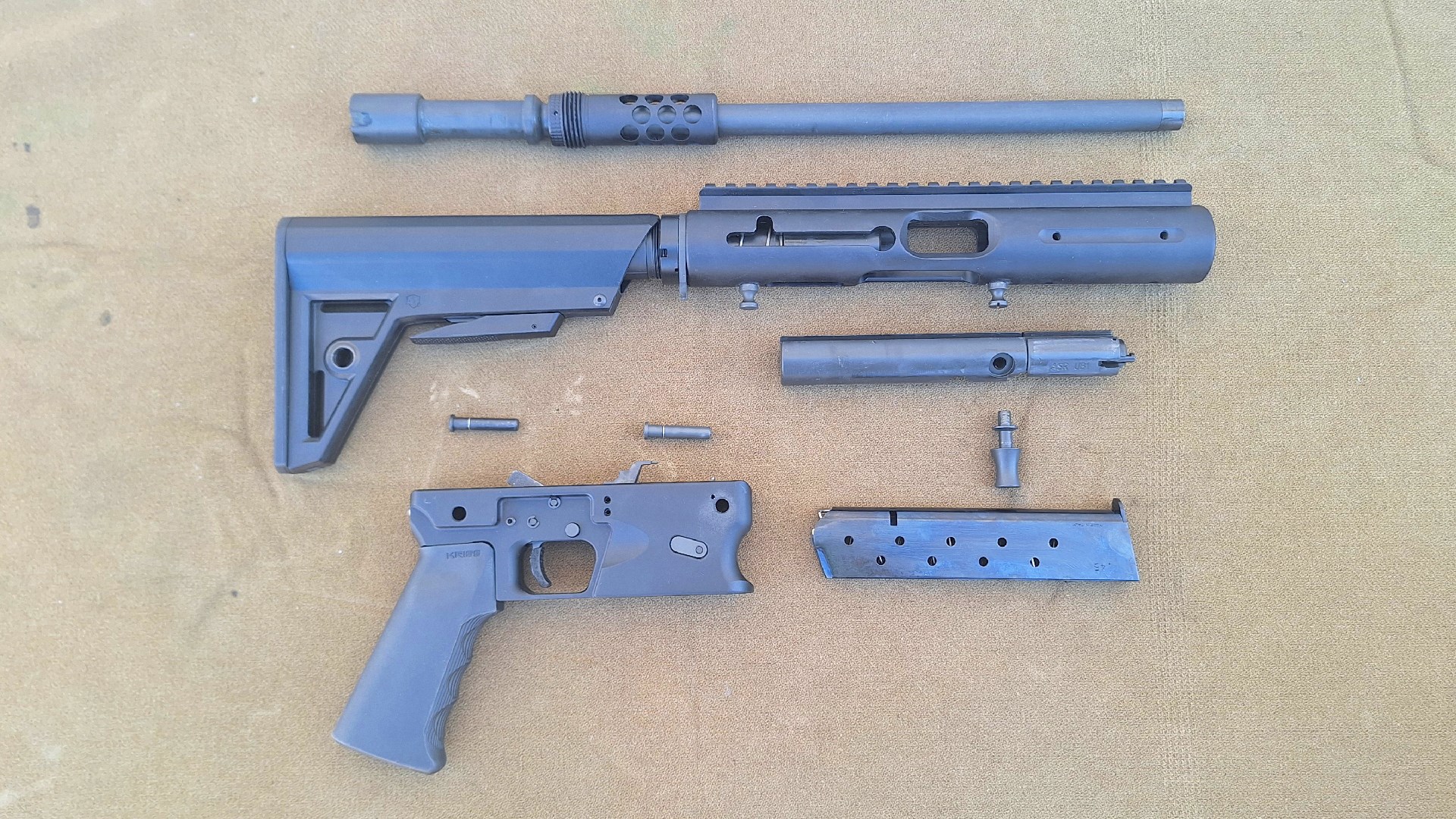 It used to be that the ASR had to be field stripped in order to convert it from one caliber to another.
The UB1 eliminates the need to swap out the bolt face. If you want to convert your completely unloaded carbine from say 9mm to .40 S&W, just loosen the barrel nut of the installed barrel, remove it from the receiver and twist in the new barrel. Install a .40 S&W magazine in place of the 9mm and you are ready to go. With one of these bolts installed, caliber conversions take less than a minute without any tools required.
But I learned one more thing that made my ears perk up just as much as the UB1. It was about a new lower receiver that was in the works. Most ASRs ship with lowers configured for Glock-pattern, double-stack magazines. They had one lower for the standard-frame magazines (9mm, .40 S&W) and another for the large-frame magazines (10mm, .45 ACP). The only exception up until now that I'm aware of are some of the early rimfire models sized for Remington 597 10-round rifle magazines. With the launch of the Glock G44 .22 LR pistol, those lowers were discontinued.
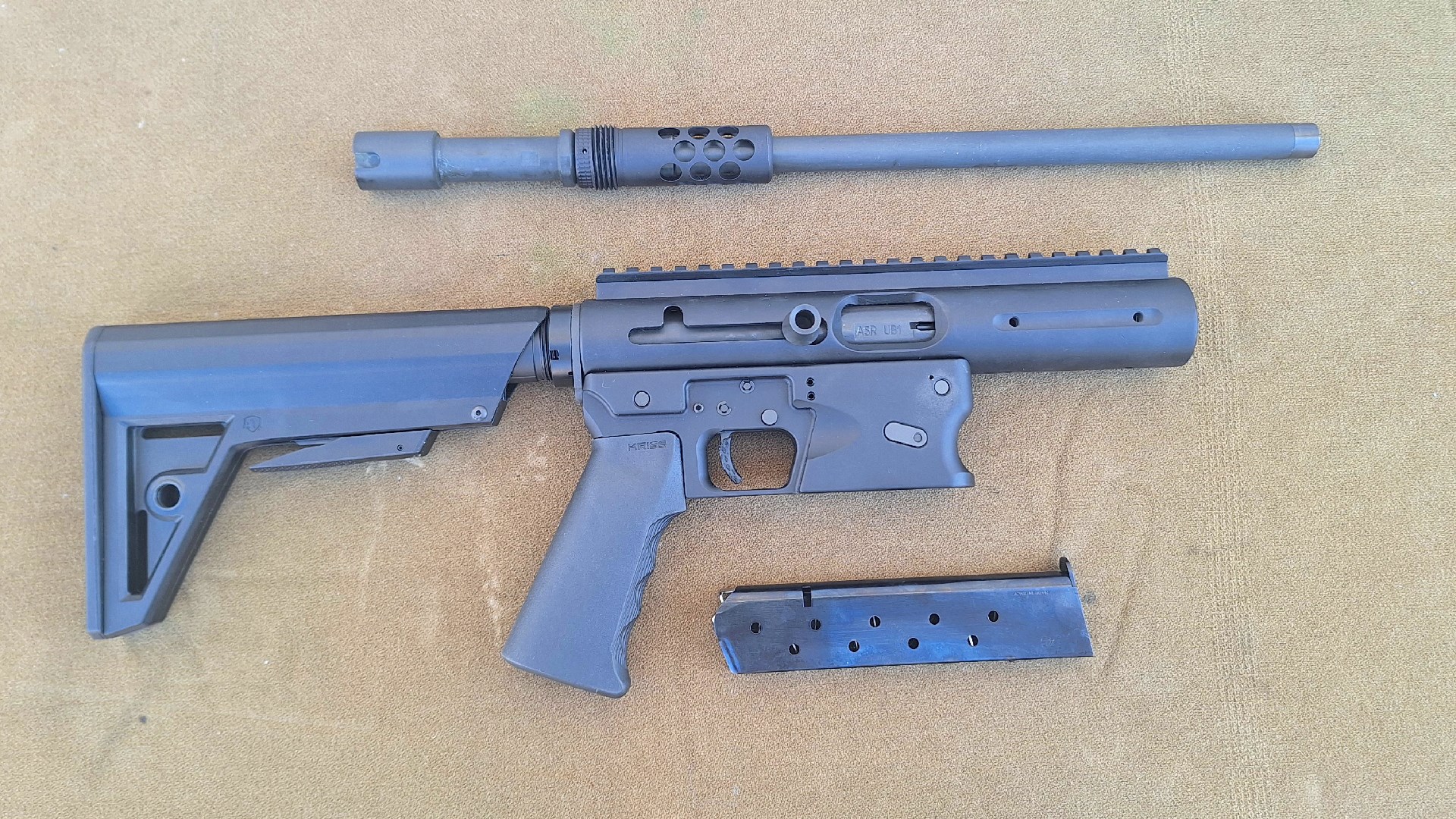 Today, with the UB1 Bolt, only the barrel and magazine need to be removed and swapped for a caliber conversion.
But the new lower was something I had not expected—a magazine well sized for single-stack 1911 pistol magazines! With the popularity of double-stack 9mm pistols and long guns dominating the market place, PCCs chambered for .45 ACP have become uncommon. And those that accept 1911 compatible magazines have always been scarce. So this is exciting news, especially since .45-caliber 1911s are not going away any time soon.
Not long before Nick and I met over the phone, I had been wringing out a steel-framed 1911 chambered in 10mm Auto as a trail gun. Without really meaning to, I whipped out the most dreaded phrase with which gun designers are mercilessly flogged, especially when their hard work on a new product comes to fruition. It usually goes something like this, ‘Yeah, that's really cool, but ... wouldn't it be great if ... (insert pitch for dream gun here).’
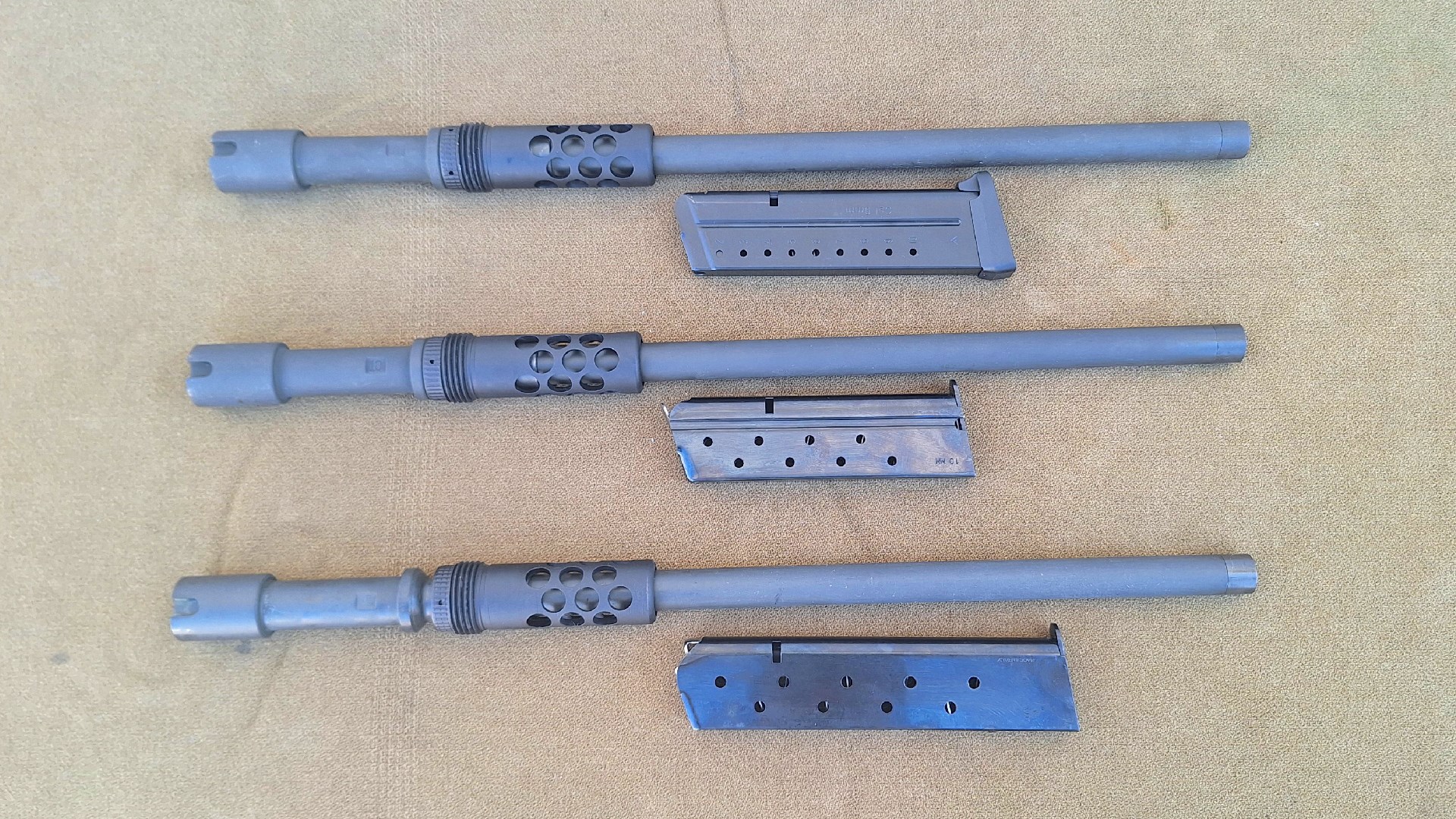 This 1911 ASR was shipped as a three caliber kit with barrels and magazines for 9mm, 10mm Auto and .45 ACP.
In this case, I said I would love to work with the 1911 ASR … but I would really like to see one chambered in 10mm Auto. I had worked with a Glock-magazine fed 10mm ASR in the past with positive results. The idea of being able to pair a 1911 trail gun with an ASR, both of which could be fed out of the same boxes of ammunition using the same magazines, was quite appealing. Now, I expected Nick to give the suggestion a friendly dismissal like ‘That's a good idea but it will have to be some day down the road … maybe.’ That's what usually happens when gun geeks like me hit manufacturers up with gun model wishes.
But Nick surprised me. He said he would look things over and get back to me in a few days. And when he did, the answer was yes, they could make a 1911 ASR chambered in 10mm Auto! In fact, the numbers worked out to include all of their standard calibers that have been used in 1911s, including 9mm, .357 Sig and .40 S&W. They would be happy to send me a test gun with three caliber conversion barrels and magazines. I said a 9mm, .45 ACP and 10mm kit would be a great fit for this evaluation.
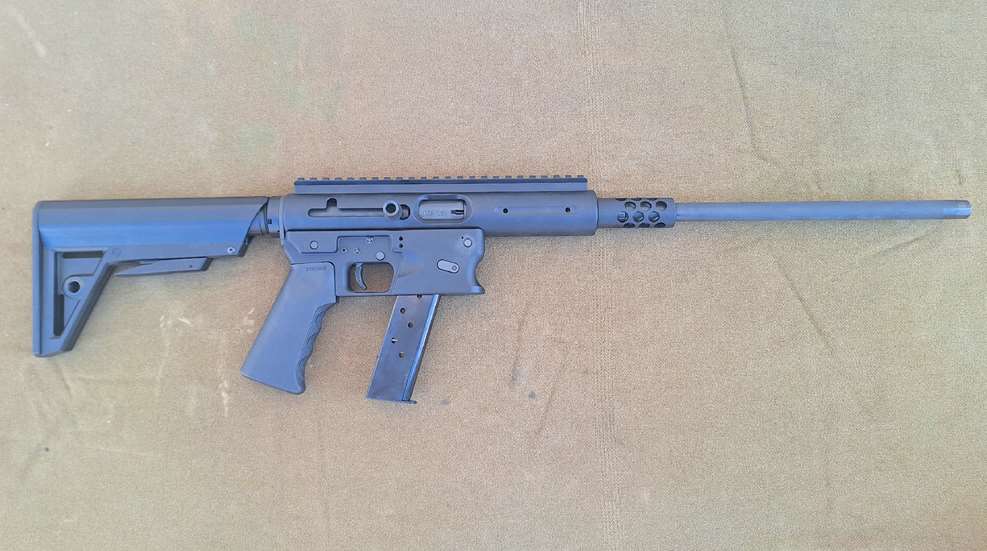
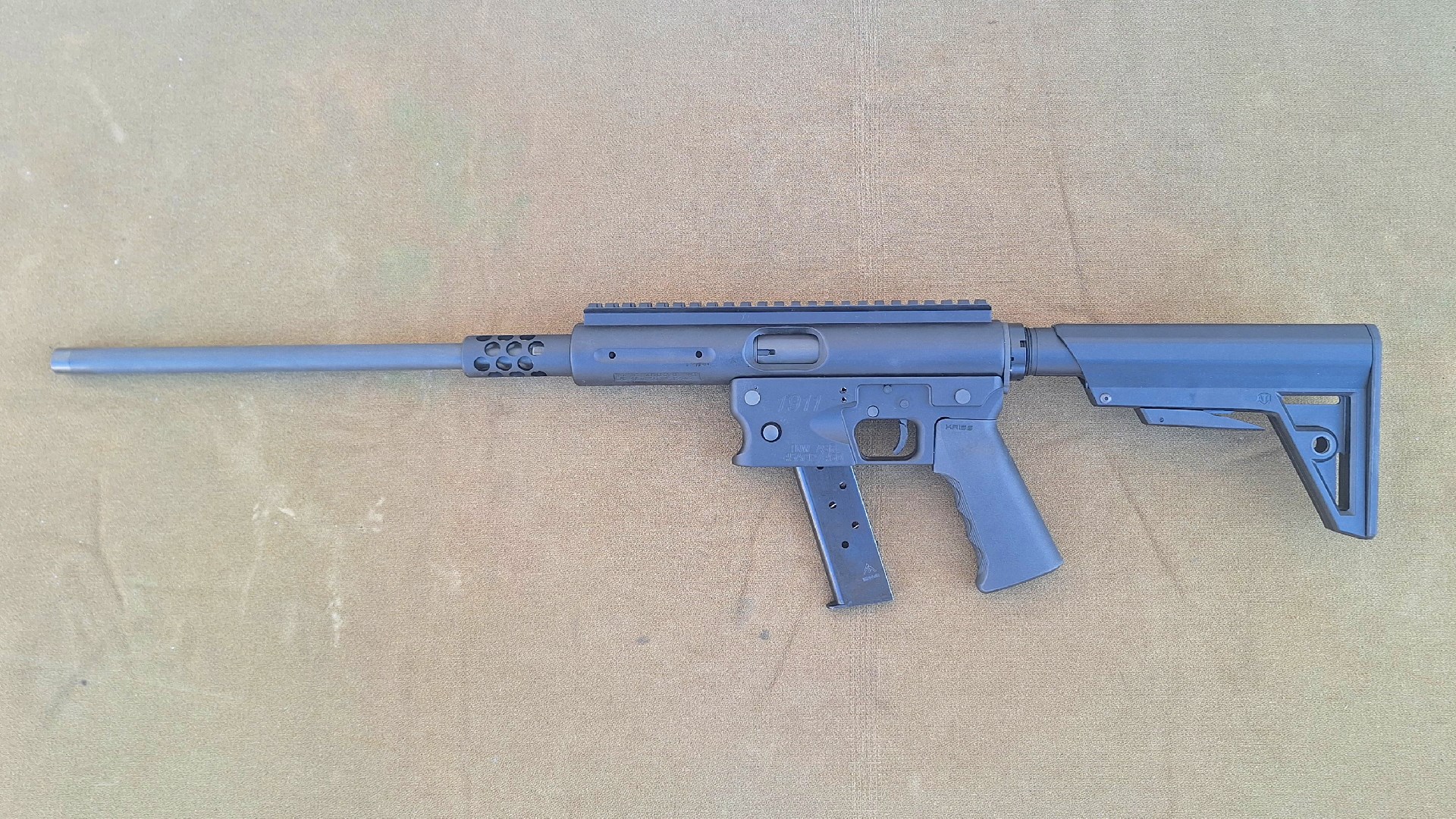 This version of the ASR weighs in at 5-lbs. 9-oz., unloaded.
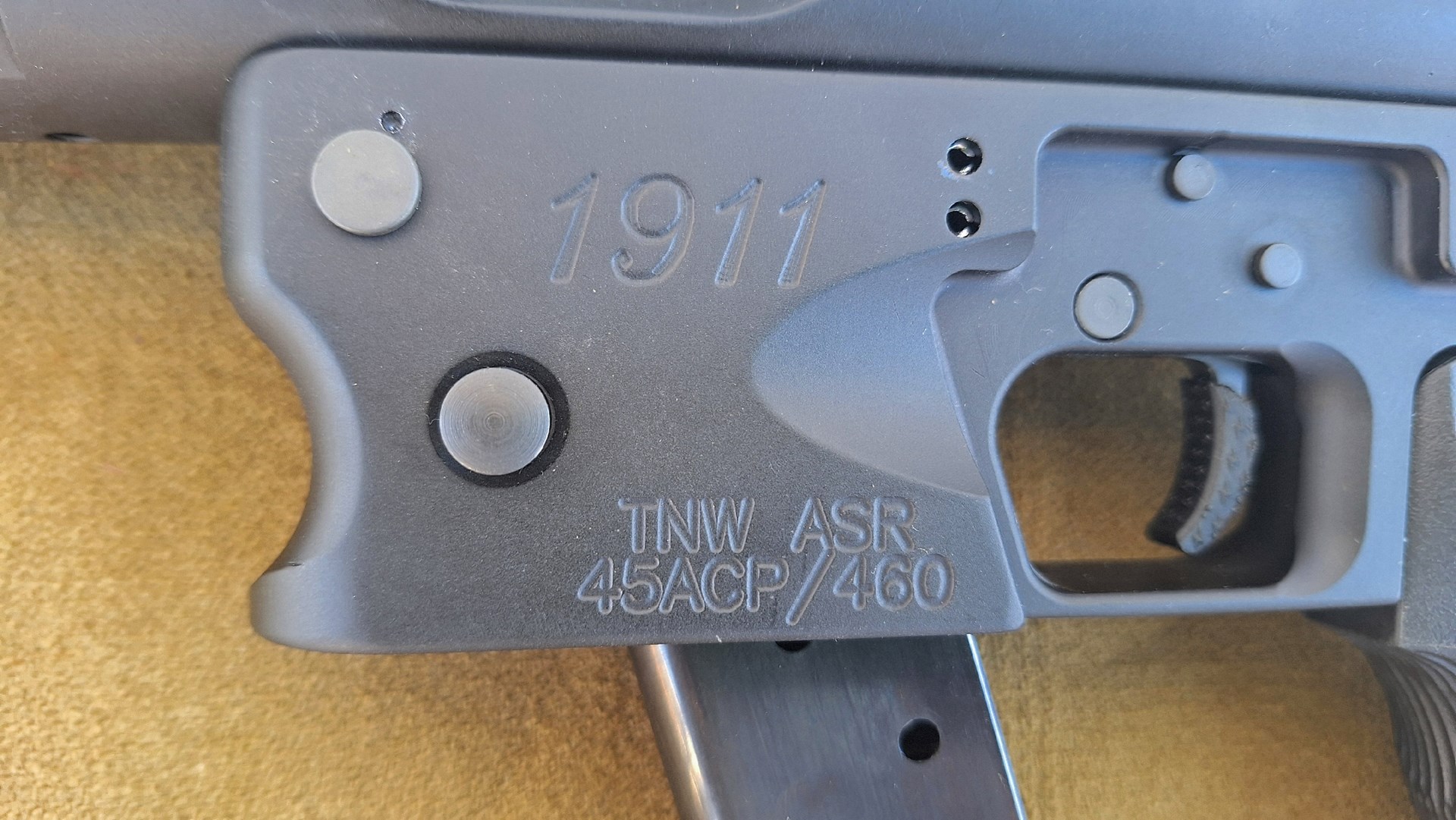
I eagerly awaited the 1911 ASR's arrival. I had a plan in mind for the review. But when I took the gun out of the box, the new 1911 lower gave me an unexpected surprise. The Glock-magazine ASR I worked with a few years shipped with a lower that was stamped '10/45' to indicate the use of large-frame magazines. However, this 1911 ASR lower was stamped ‘.45 ACP/460.'
I was right back on the phone with Nick. Hey, umm, does the .460 marking on the receiver mean this ASR is rated for up to .460 Rowland? The answer was a grin inducing yes, it is! I didn't know until then that .460 Rowland had been added to the ASR's standard caliber list.
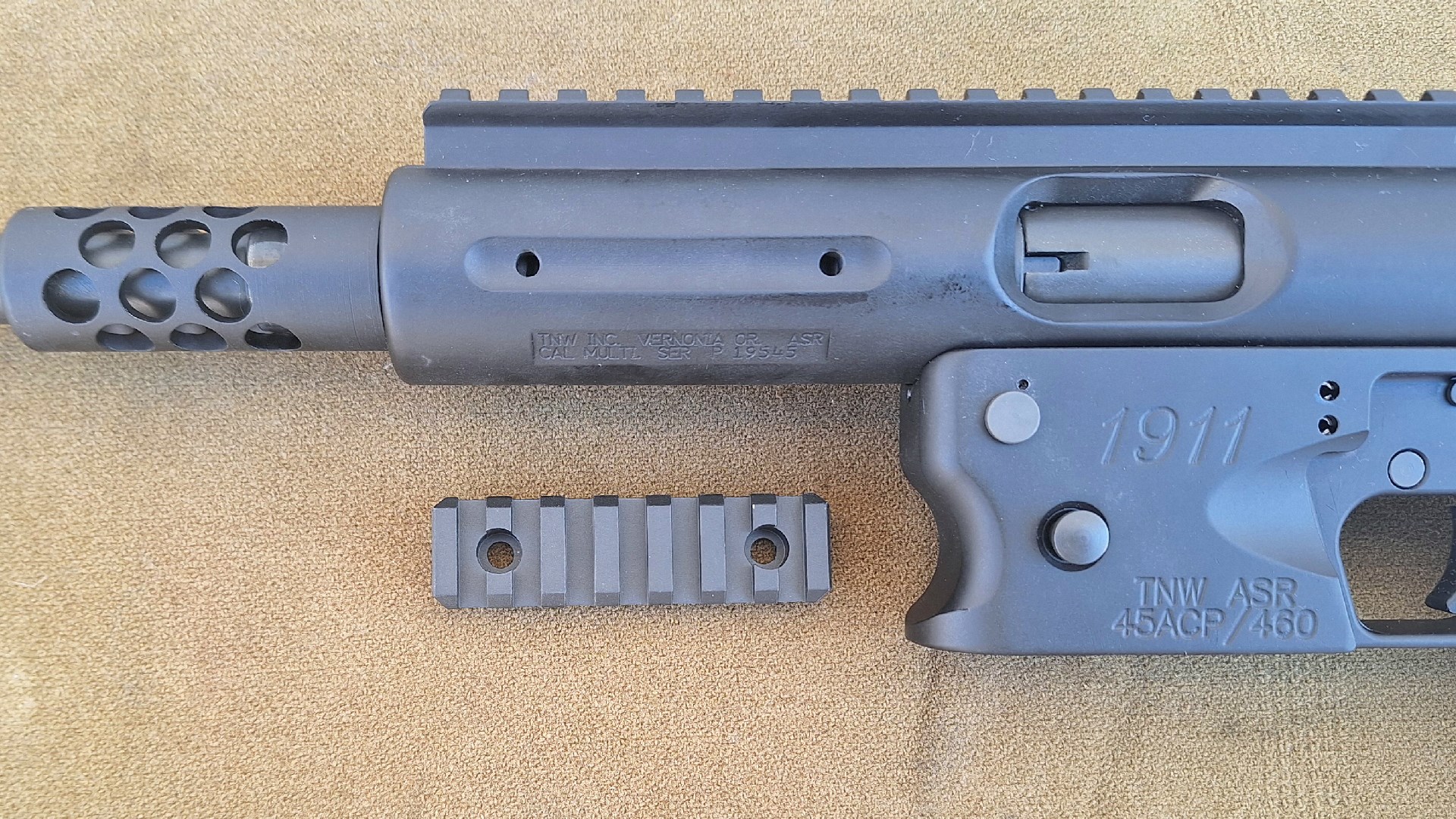 A removable accessory rail for the fore-end is provided.
For those who are unfamiliar with the cartridge, the .460 Rowland is a proprietary round, developed by Johnny Rowland, based on the .45 ACP. The parent cartridge operates at a SAAMI maximum pressure of 21,000 psi with +P loads ramping up the pressure to 23,000 psi. The .460 Rowland operates at up to 40,000 psi resulting in bullet energy levels within the .44 Mag. performance range. Recognizing that this amount of pressure could cause some 1911 pistols to detonate, the .460's cartridge case has been lengthened by about 0.057 inches (1 mm) in order to prevent it from chambering in standard .45 ACP barrels. To shoot it, a barrel with a chamber reamed out specifically for .460 Rowland is required.
Knowing that this ASR could operate at .460 Rowland pressure levels, my next question to Nick was this: Do you think I could use the .45 ACP barrel that came in the kit to shoot the .450 SMC loads from DoubleTap Ammunition? He responded that the TNW team had yet to test the cartridge and asked if I could provide some data. I pulled together a set of performance numbers for Nick and Tim Bero, Founder and President of TNW Firearms, to consider.
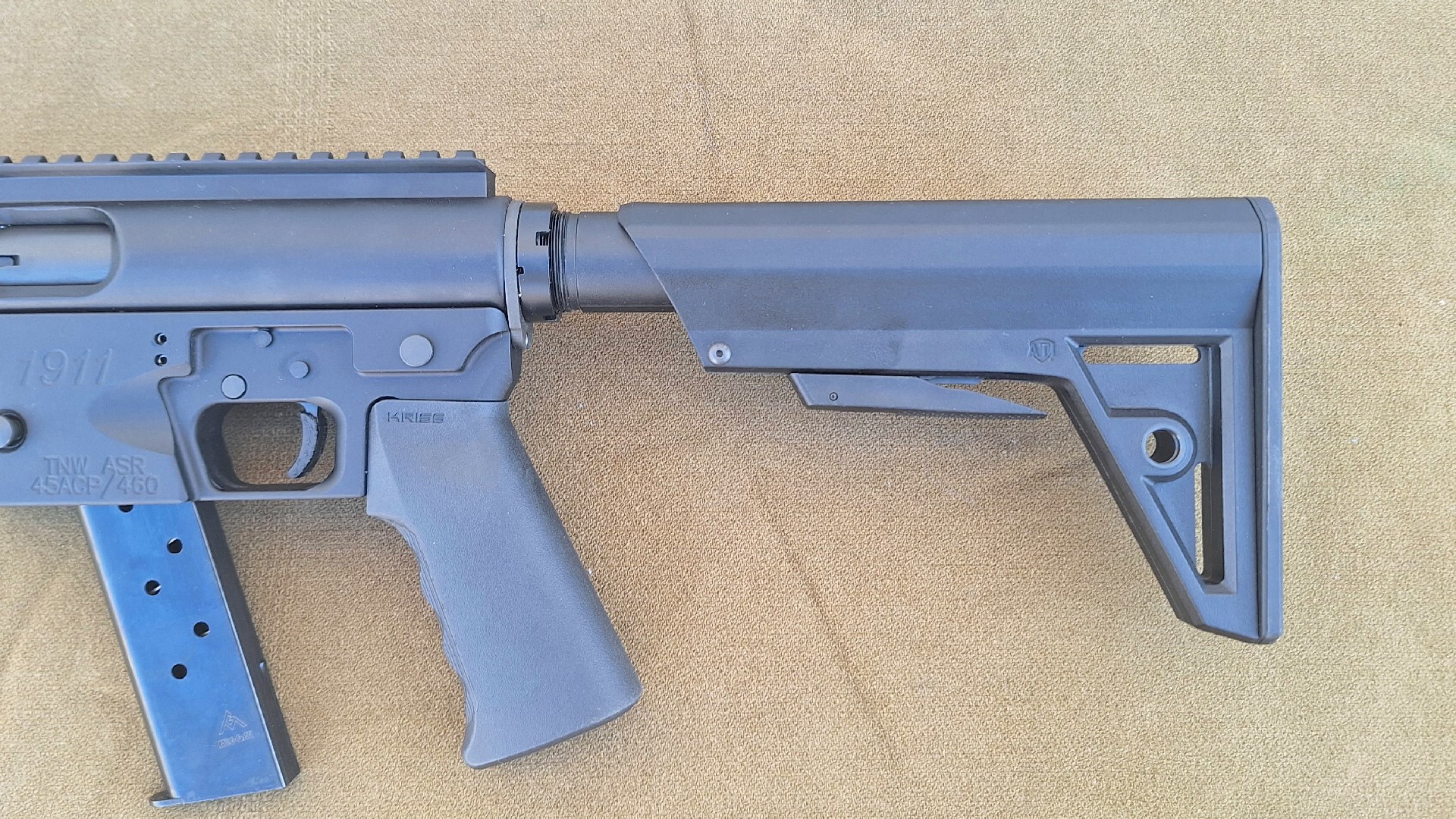 The AR-15 style buffer tube is outfitted with a 6-position shoulder stock.
Last year, I worked with the .450 SMC cartridge for the first time using a retired LEO Glock Gen 3 G21 SF outfitted with a beefed up recoil spring (click here to see the review). Sporting the same external dimensions as the .45 ACP, the .450 SMC cartridge’s pressure levels top out at 32,000 psi. This places its pressure level potential squarely in between those of the .45 ACP and the .460 Rowland. When fired from the Glock's 5-inch threaded barrel, bullet energy levels for the .450 SMC were on par with those of 4- to 6-inch barrel 10mm Auto pistols.
Since 10mm Auto ammunition can exhibit a notable boost in performance when fired from carbine-length barrels, I wanted to find out what the .450 SMC would do when fired from the ASR's 16.25-inch barrel. With the .450 SMC generating 8,000 PSI less pressure than the .460 Rowland, this ammunition would be operating well within the ASR's safe-pressure limits. After looking over the numbers, Tim gave this range test a thumbs up. To the best of my knowledge, this was the first formal test of this caliber and platform combination. And I was not disappointed!
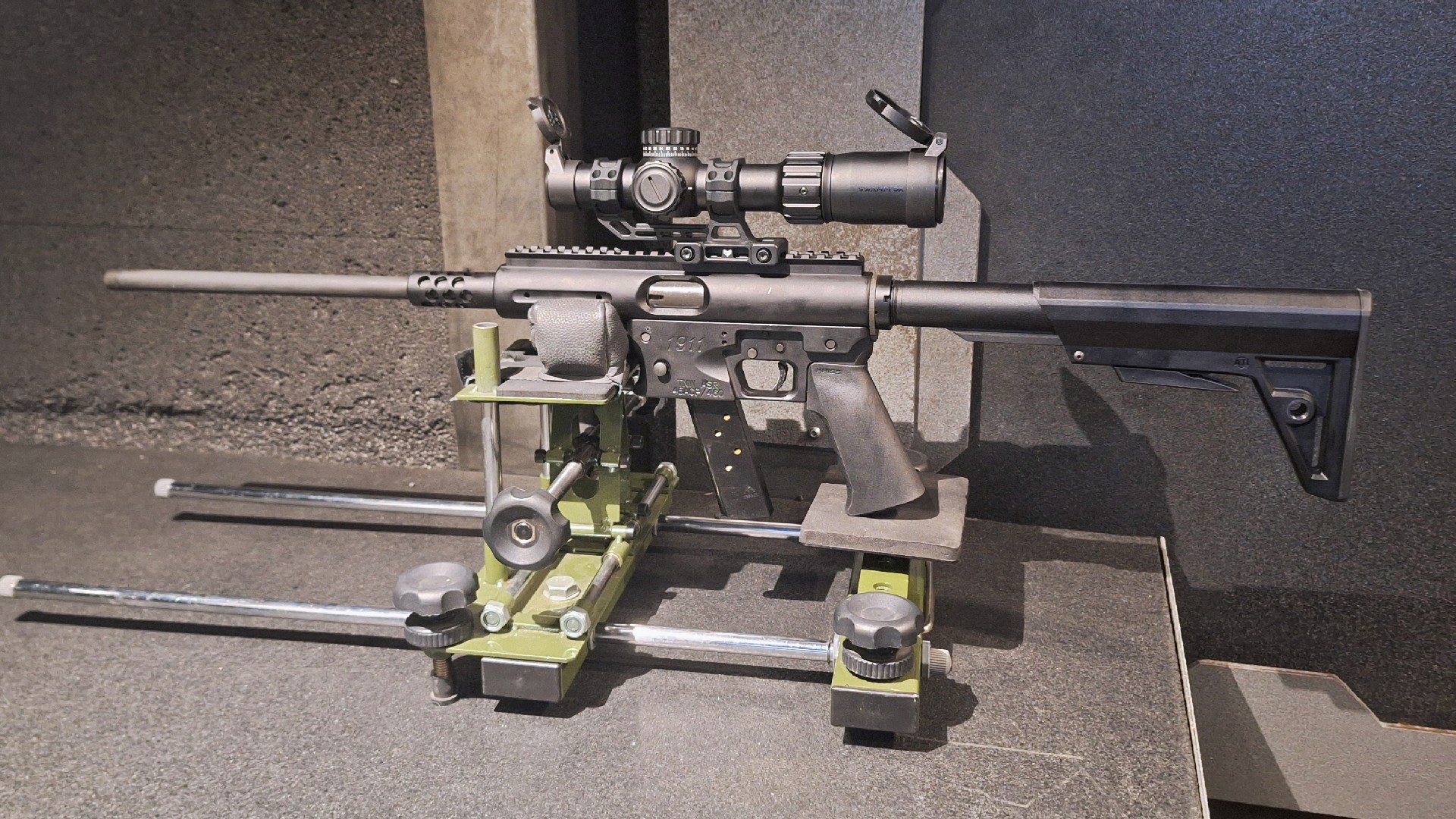 The ASR was topped off with a Swampfox Tomahawk II LPVO scope for testing.
At the shooting range, the 1911 ASR was put through its paces using the 10mm Auto and .45 ACP caliber conversions with the Mec-Gar USA brand 1911 magazines provided with each caliber-conversion barrel. A few more blued Mec-Gar magazines, along with a couple of stainless steel Check-Mate magazines, were added to the test set. For the informal and formal testing, this carbine was topped off with a Swampfox 1-4x24mm Tomahawk II Low Power Variable Optic (LPVO; #THK14241-BF) mounted to the gun using this company's CNC-machined 7075-aluminum cantilever Freedom mount (#FCM-30-M). It proved to be an ideal fit for both caliber conversions. But be prepared to sight the scope in again when you switch calibers. In fact, switching from standard bullet weights to light-bulleted loads of the same caliber can shift the point of impact enough to warrant scope adjustments as well.
The ASR and the magazines operated properly throughout the course of testing. The only ammunition related issue was a couple of failures to feed from one of the .45 ACP magazines when loaded with a particularly wide-mouthed .45-caliber hollow point. It was the first two rounds out of that particular magazine. But with all other magazine and ammunition combinations it was smooth sailing.
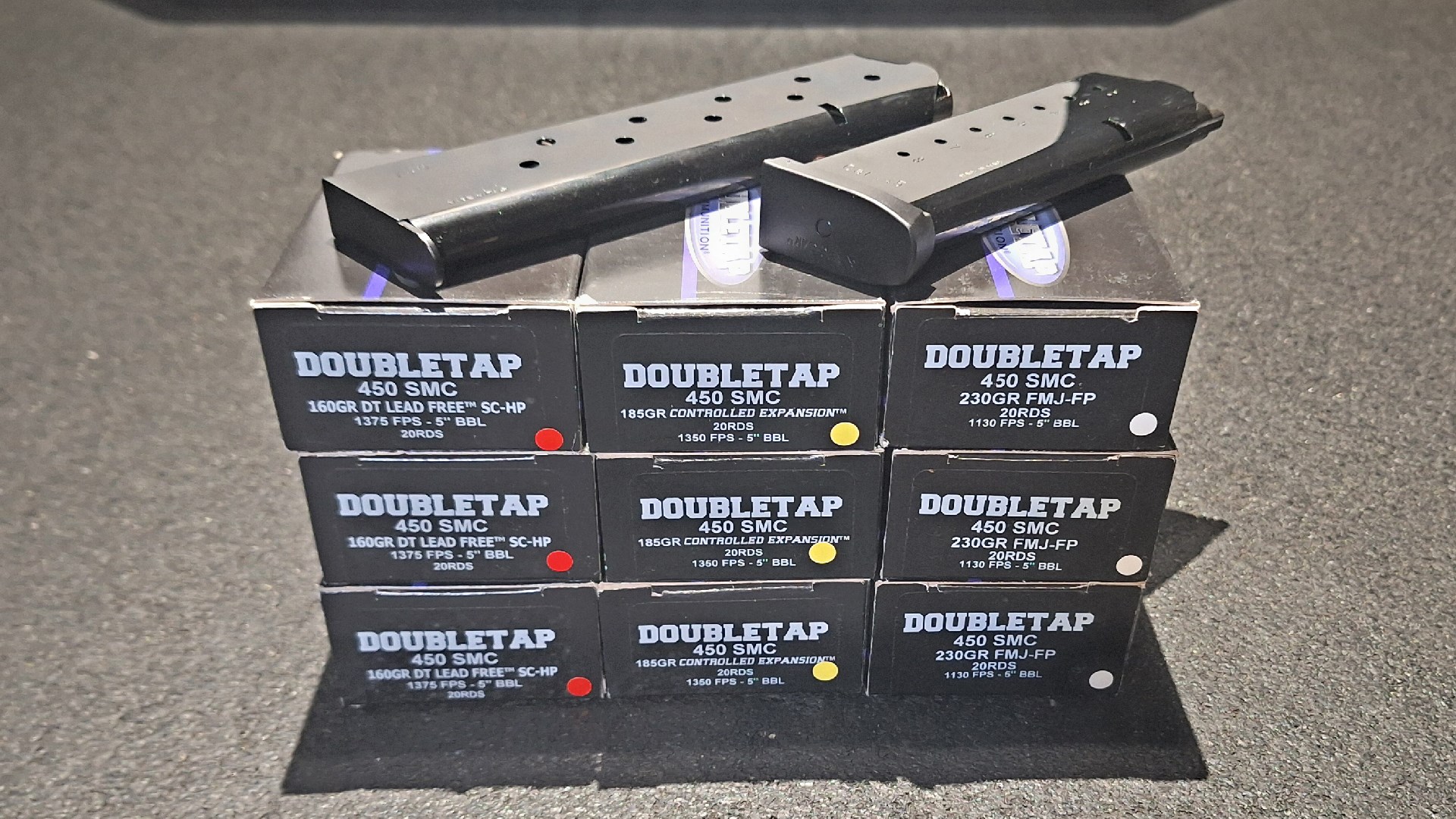 Formal performance testing was conducted using the .45 ACP barrel stoked with DoubleTap Ammunition’s .450 SMC loads.
Weighing in at 5 lbs. 9 oz., unloaded, most of the ASR's weight is centered in the receiver set. This gives it a handy and well-balanced feel. This particular gun was outfitted with a single-stage match trigger at the factory for a 3-pound trigger pull. Shooting this gun in its 10mm configuration, the levels of felt recoil were moderate and comfortable to work with. When switched over to the .45 ACP barrel and loaded up with .450 SMC, the recoil was still in the moderate range but there was a noticeable uptick in the kick.
Formal bench-rested accuracy testing for the .450 SMC ammunition was conducted by firing three 3-shot groups with three loads into paper targets posted at a distance of 50-yards. A Garmin Xero C1 Pro chronograph was used to measure bullet velocities for 10-shot strings. Here are the results:
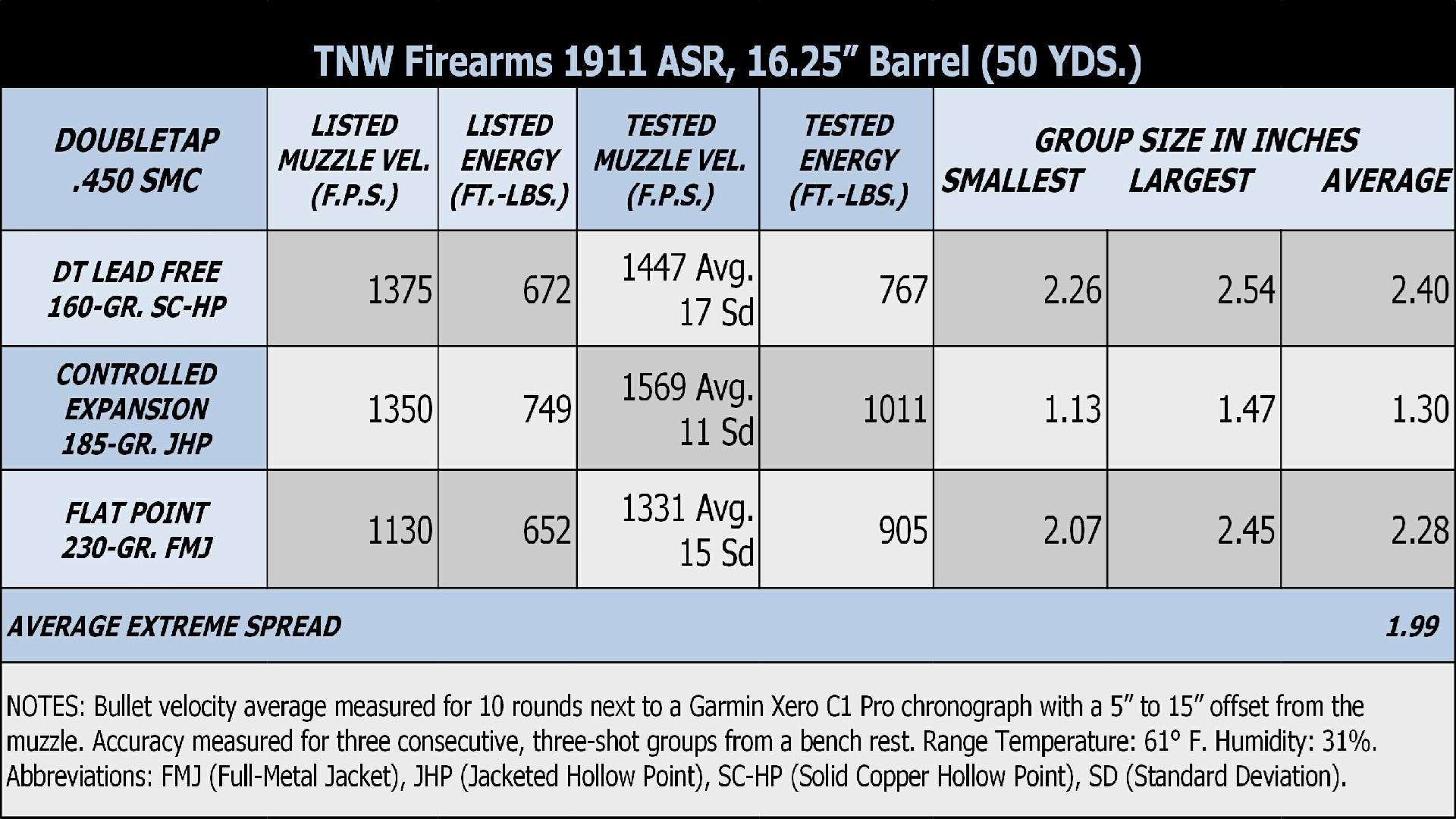
In the course of conducting three-load testing with many guns over the years, different rounds tend to distinguish themselves in one way or another. It often plays out that one is the fastest, another more accurate and one is the hardest hitting. In this case, just one of the loads took home all three trophies.
All three DoubleTap .450 SMC loads gained between 72 to 201-fps. when compared to their already-speedy listed pistol velocities. I had hoped that the 160-grain all-copper hollow point and 230-grain full metal jacket loads would have formed tighter groups than I saw during this range trip. But it turned out that the ASR's favorite round was the controlled-expansion 185-grain jacketed hollow point.
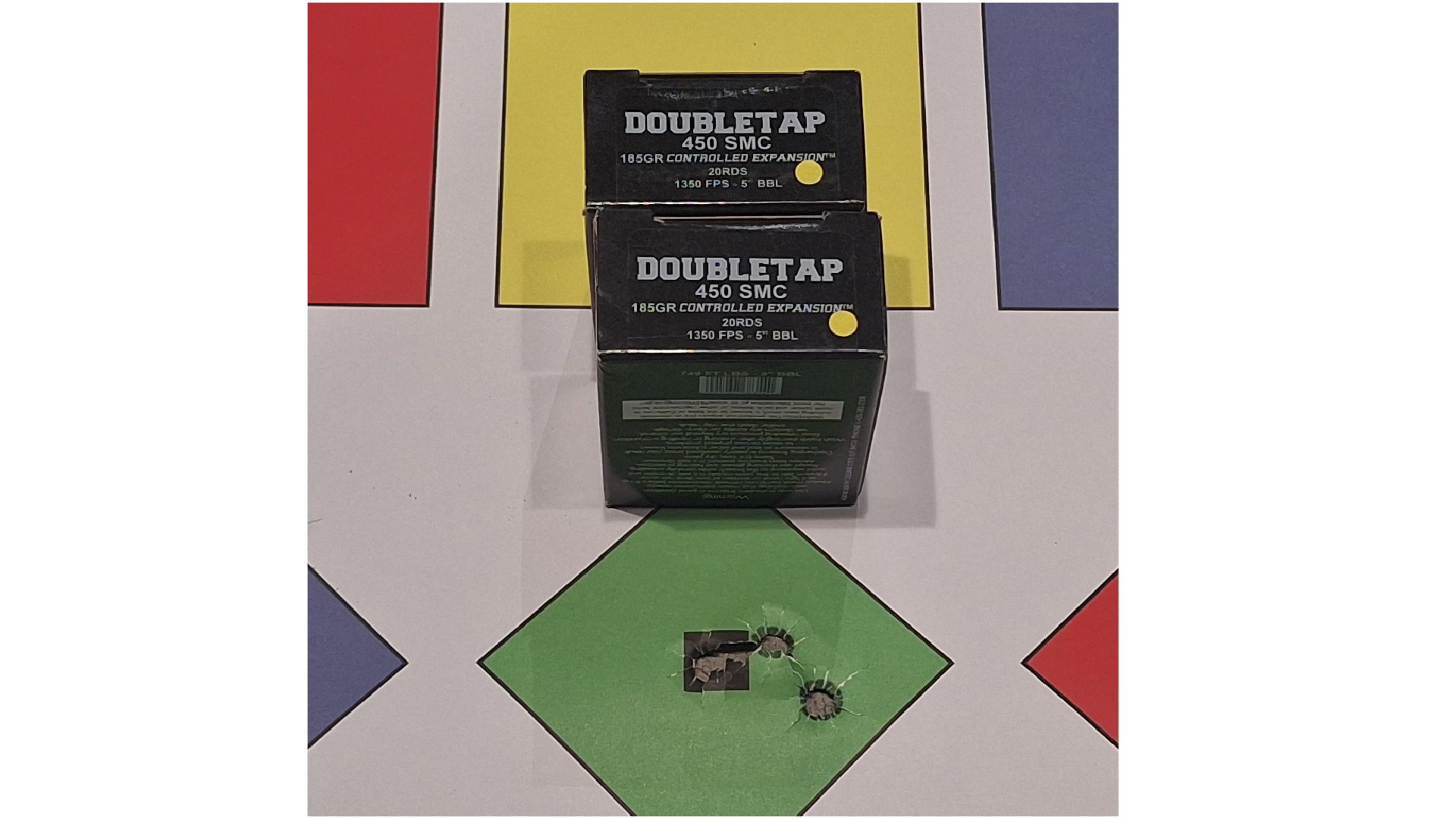 The best 3-shot group of 1.13 inches was fired using the 185-grain hollow point load.
In the case of the .45 ACP version, some folks may find that just one caliber configuration will fill their needs. This configuration can be fitted with a sound suppressor, and stoked with standard sub-sonic .45 ACP loads, for quiet shooting, loaded with .45 ACP +P rounds for self defense and ramped up for outdoor applications using .450 SMC. There's no need to swap out the barrel and magazine, just the ammunition. It was exciting to see my wish for ASRs that can fire 10mm Auto from either Glock or 1911 magazines granted within weeks of making it. That is a rare thing. But the added twist of a .450 SMC capable platform was the product I didn’t even know was possible. Throw in the 9mm barrel and you have package that will fill almost ever shooting role a PCC can fill.
The TNW Firearms ASR series of carbines and pistols just keep getting better. The company is making smart choices to keep their guns up to date while expanding their options in directions that other PCC makers neglect. They are providing useful upgrades without making the mistake of tweaking the proven features, materials, and manufacturing processes that have been in place since the gun's launch in 2012.
TNW Firearms ASR 1911 Multi-Mission 3 Caliber Package Specifications
- Manufacturer: TNW Firearms
- Action Type: blowback operated; semi-automatic; centerfire carbine
- Chambering: 9mm, 10mm Auto, .45 ACP
- Receivers: milled billet 6160 aluminum, hard-coat anodized finish
- Barrel: 16.25" Parkerized 4140 chromoly steel, 9/16-24 TPI threaded muzzle
- Rifling: six-groove, 1:10” RH twist
- Capacity: 8+1 1911-pattern magazine
- Sights: none; integral optics rail
- Trigger: single-stage, 3-lbs. pull (as tested)
- Overall Length: 29.75" to 33.50"
- Length of Pull (LOP): 9.50" to 13.50"
- Weight: 5-lbs. 9-oz. unloaded
- Accessories: owner's manual
- MSRP: starting at $874