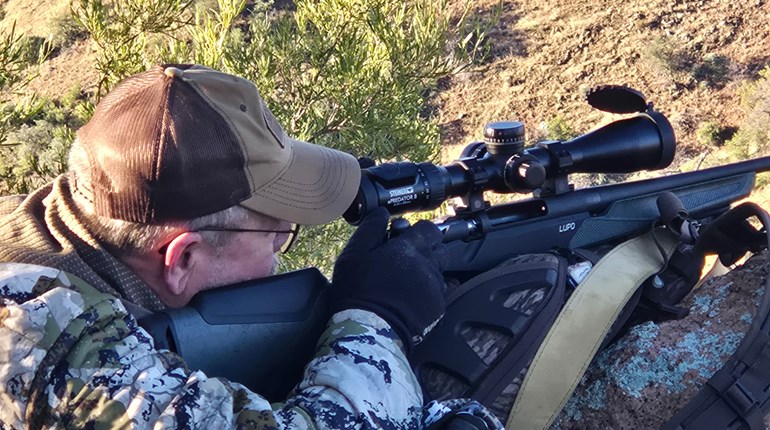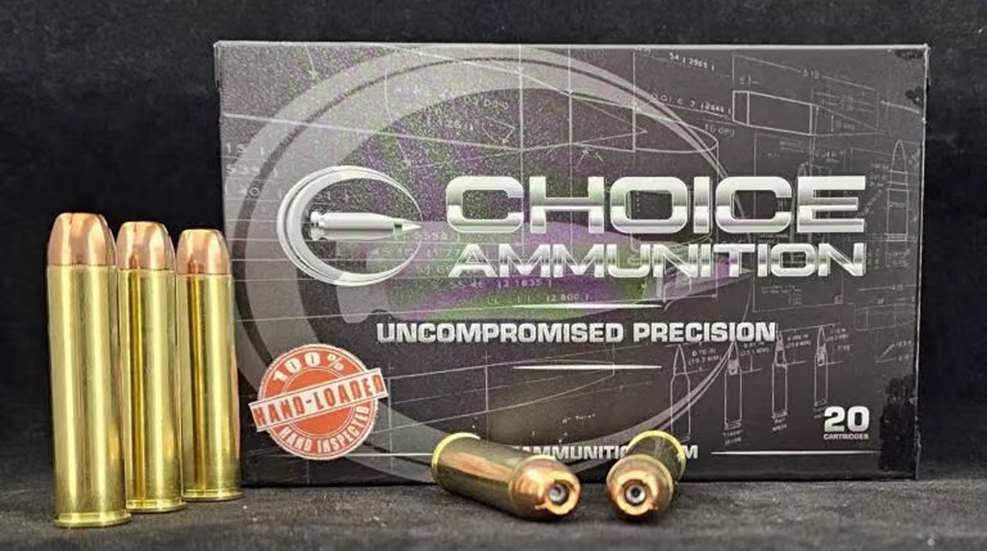
If ever a handgun cartridge deserved the title “magnum”, the .460 Smith & Wesson Magnum is it. In the cartridge world, magnum is defined as a cartridge which provides a performance level exceeding the norm, and that is a perfect way to describe S&W’s big .460: it is at the top of the heap in the .45-caliber handgun cartridge family.
America has loved their .45s since the 1870s, when the .45 Colt and the .45 Schofield cartridges came onto the scene. These served our armed forces, save a brief hiatus at the end of the 19th century, with the .45 ACP coming onto the scene early in the 20th century. Dick Casull—gunsmith and cartridge wildcatter—along with Duane Marsh and Jack Fullmer, began to experiment with high-pressure .45 Colt cartridges in the mid 1950s, and by 1958 had developed his .454 Casull. It would take nearly four decades for the cartridge to be commercially available, but when it did, it offered a huge advantage over the traditional .45 Colt loads, and even over the modern, hotter Colt offerings. The Casull gained a positive reputation among serious handgunners, surpassing the revered .44 Remington Magnum. But the .45s weren’t done growing yet …
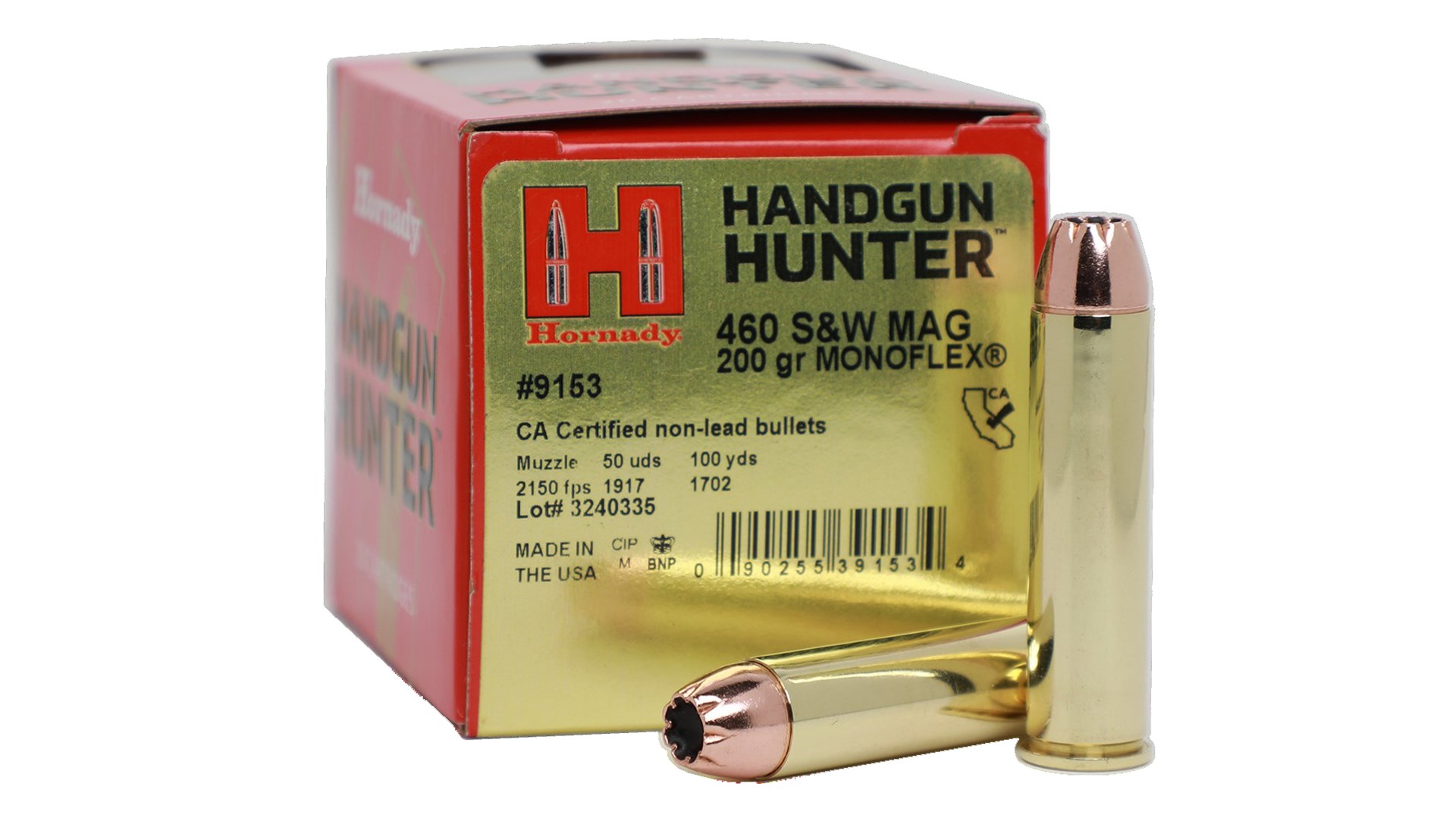
In 2005, Smith & Wesson teamed with Hornady to produce a new magnum cartridge designed for their huge X-frame revolver: the .460 Smith & Wesson Magnum. Essentially, the cartridge is a longer .454 Casull, though there are several dimensional differences and key features which make it unique. The rimmed case uses a large rifle primer—where the .454 Casull uses a small-pistol magnum primer, and the .45 Colt uses a large-pistol primer—and features a rim measuring 0.520 inches. The case measures 1.800 inches, with a cartridge overall length of 2.275 inches. The common 0.452-inch diameter handgun bullets are employed for the big .460 S&W.
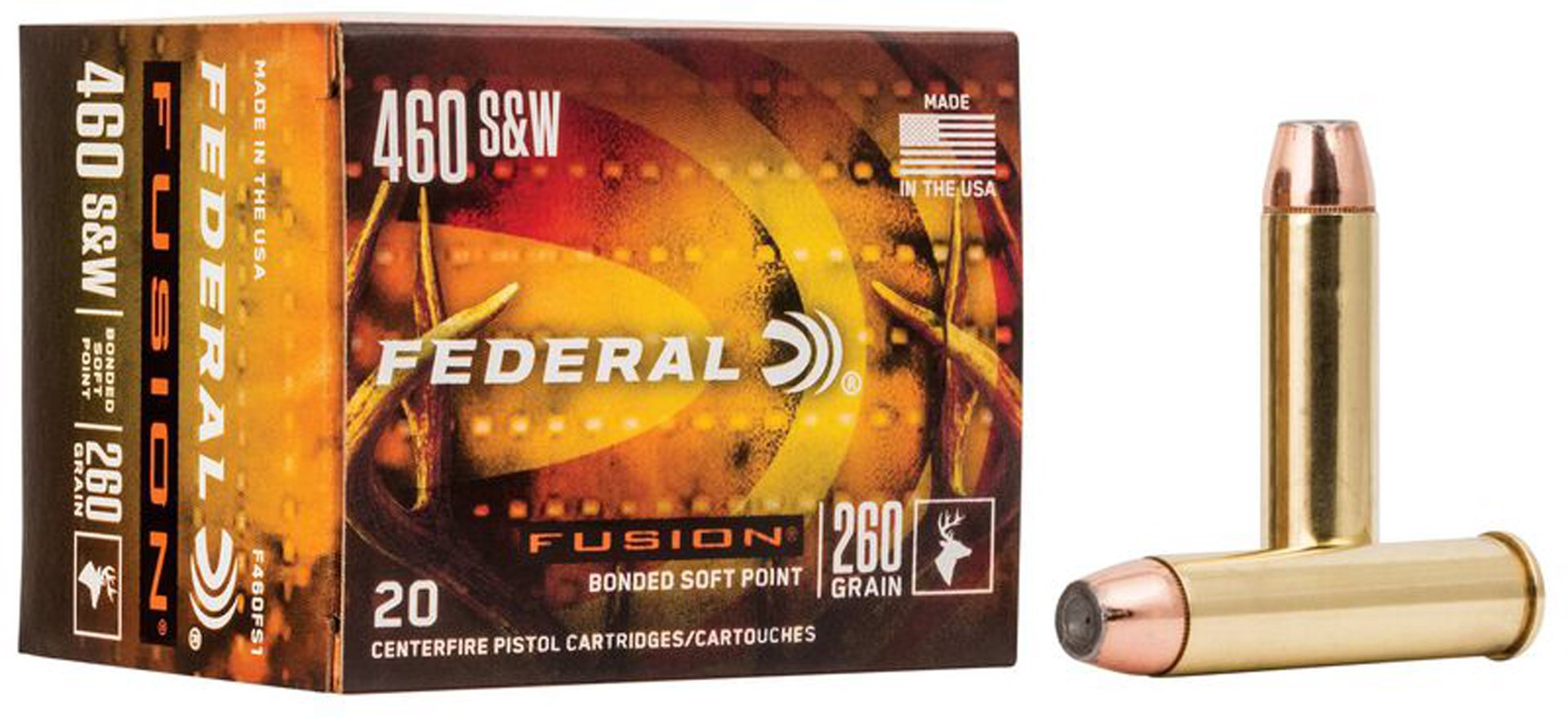
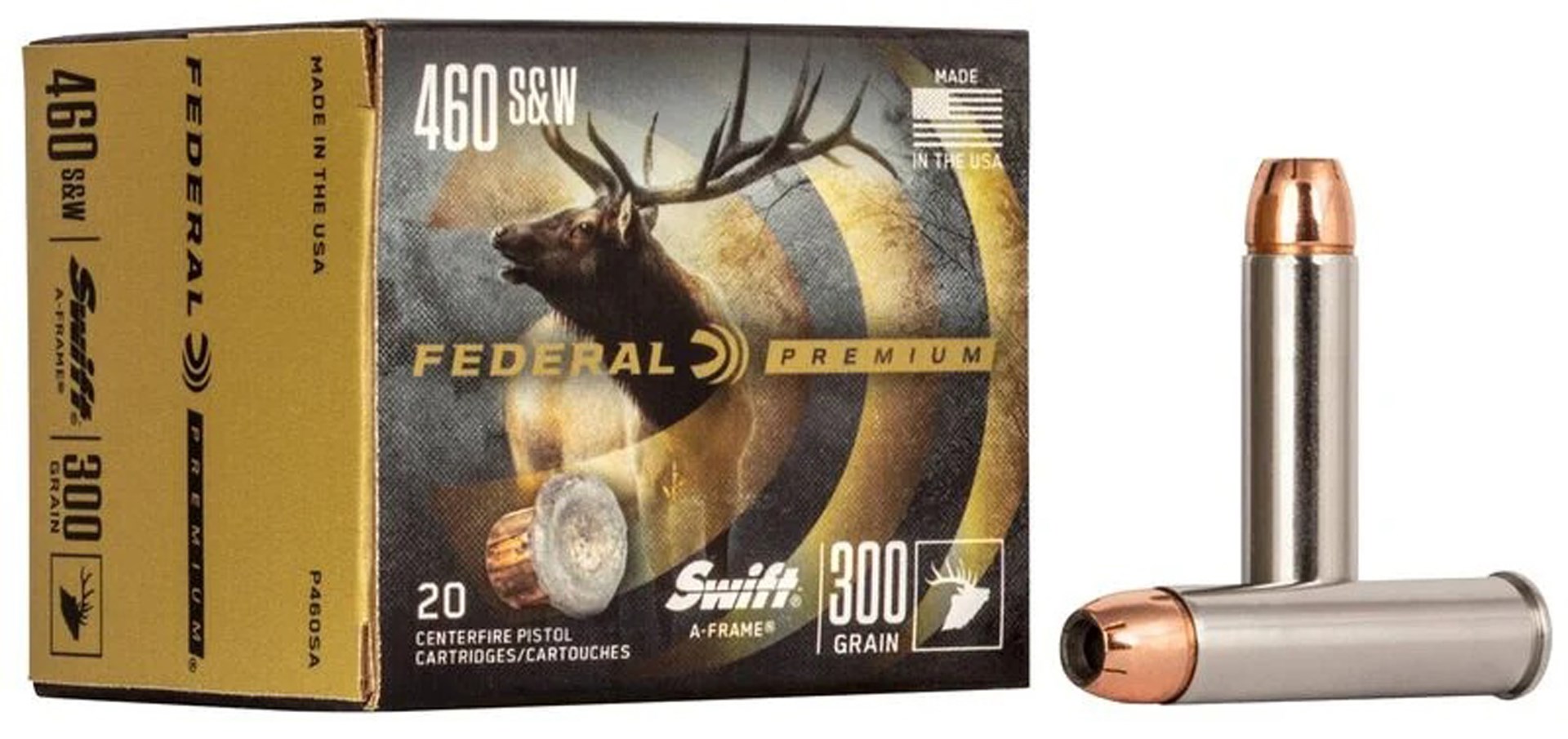
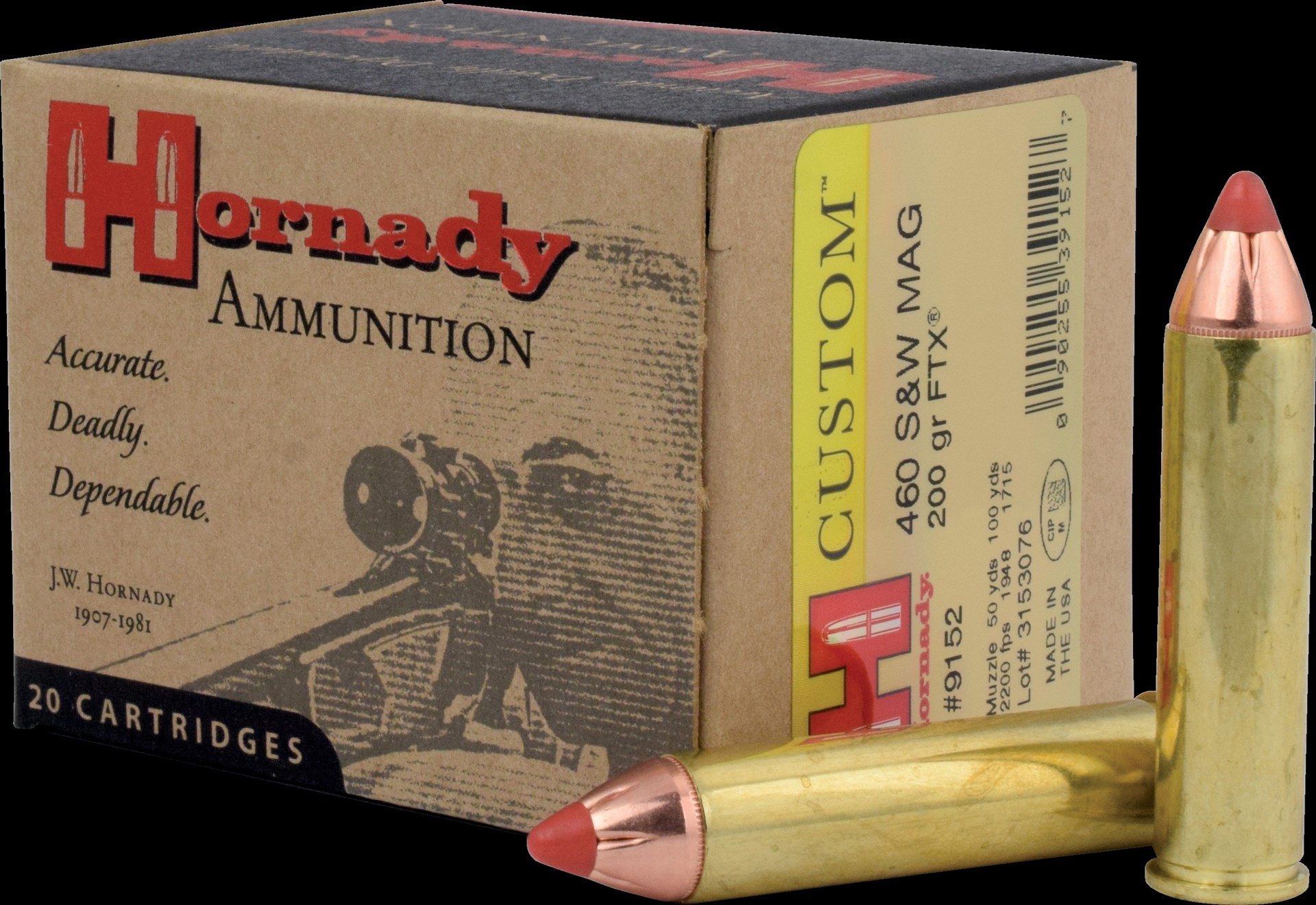
The .460 Smith & Wesson operates at a maximum chamber pressure of 65,000 psi, the same as the .454 Casull, but the larger case and heavier powder charge results in a significant velocity increase. Looking at the factory ammunition, Hornady has a pair of loads, Federal Premium offers a trio of choices, and you’ll find some niche stuff from companies like Buffalo Bore and Choice Ammunition. The 200-grain FTX load from Hornady’s Custom line leaves the muzzle at 2,200 fps, and can be zeroed at 100 yards, dropping 3.4 inches at 150 yards, and 10.8 inches at 200 yards. At the muzzle, this load generates 2,149 ft.-lbs. of energy, retaining nearly 1,700 ft.-lbs. at 100 yards, 974 ft.-lbs. at 150 yards, and 747 ft.-lbs. at 200 yards. If heavier and slower suits you better, Federal Premium offers their 260-grain Fusion bonded core bullet, and the 275-grain Barnes XPB monometal, at 1,600 fps and 1,670 fps, respectively, for 1,478 ft.-lbs., and 1,703 ft.-lbs. of energy. Hornady goes even heavier, offering their 300-grain DGH (Dangerous Game Handgun) bullet in the new BackCountry ammunition line; Choice ammunition loads the Hornady XTP at 1,576 fps; and Federal gives the option of the uber-tough Swift A-Frame—the wicked bonded-core and partitioned design—at 300 grains, leaving the muzzle at 1,700 fps for 2,040 ft.-lbs. of energy. If that’s not enough, and you can handle the recoil, Buffalo Bore loads 300-grain jacketed flat nose bullet to a whopping 2,060 fps, generating over 2,800 ft.-lbs. of energy. And regarding that recoil, even the 4 ½-pound X-Frame revolver can test the strength of your wrists, especially with those hotter 300-grain loads. But there are other means to mitigate recoil, especially for practice sessions.
Just as the .45 Colt can fire .45 Schofield ammunition, and the .454 Casull can also fire .45 Colt and .45 Schofield, the .460 Smith & Wesson Magnum can fire not only the ammunition designated for it, but all the three shorter cartridges. So to familiarize yourself with that big X-Frame, those mild .45 Colt loads—with the nice round-nose lead 255-grain bullets at a sedate 800 fps—should offer nearly no recoil in a 72-ounce handgun. Even the .454 Casull loads, like the 260-grain Fusion load from Federal at 1,350 fps or so, should feel like a reprieve from the recoil levels generated by the .460 S&W Magnum ammo. In the end, however, if you want to manage the .460 S&W Magnum—even in a 4½-pound revolver with a ported 7½-inch-barrel and a five-shot cylinder—it’s going to take practice and a considerable amount of range time to become proficient with it. Once you feel confident, you can head to the field with what is literally a hand cannon; this thing surpasses many of the lighter loads suitable for the Trapdoor Springfield rifles in .45-70 Government. This is no “sweet shooting” handgun cartridge, nor is this a piece you strap on your belt and carry comfortably all day long; this is unbridled horsepower, built for those who appreciate such things. If you subscribe to “go big or go home” this should be at the top of your list of potential handgun cartridges.