The idea of a bullet lacking lead core is a relatively new one, yet it’s a sound design. I know many old-timers who refuse to embrace the monometal concept; they trust the older and long proven cup-and-core bullets. The history of bullet design is interesting; we as hunters have always striven to use a bullet tough enough to give the penetration that will reach the vitals, yet one that will expand enough to destroy a good amount of tissue along the way for a quick and humane kill. Bullet failure is a bad thing, as John Nosler experienced when his .300 Holland & Holland failed to kill a bull moose in the mid 1940s; the bullets were too frangible for the impact velocities.
Randy Brooks, then owner of Barnes Bullets, had the idea of preventing premature bullet breakup by removing the lead core altogether, and constructing an expanding bullet out of copper, usually reserved for the jacket or gilding metal. He used a deep hollowpoint, scoring the interior of the bullet for expansion. His X-bullet—named for the expanded appearance of the recovered bullet—made quite a splash. Being all-copper, his bullet was much longer when compared to a traditional cup-and-core bullet of the same caliber and weight. Another noted attribute of these new monometal bullets is that the lighter weights within a given caliber will give a terminal performance similar to a heavier bullet of cup-and-core designs. Many noted hunters will attest to the fact that, as an example, a 150-grain .30 caliber bullet will kill in a similar fashion to a 180-grain .30 caliber cup-and-core bullet. The lighter bullet can be driven faster, while virtually eliminating the risk of unwanted bullet breakup. Whether or not you’re a fan, these monometal bullets are here to stay, especially with the State of California issuing a ban on lead-core ammunition. Let’s take a look at my own top five monometal expanding bullets, based solely on my own experiences.
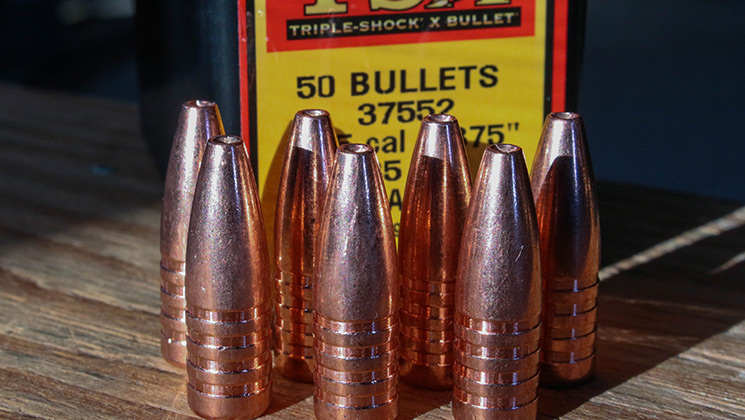
Barnes TSX and TTSX
Mr. Brooks’ original design—the X-bullet—was met with mixed reviews. They shot very well in some rifles (none of mine) and very poorly in others (all of mine). Those who used them on game also gave mixed reports, with some experiencing a lack of expansion. The X-bullet would simply whistle through an animal, much like a solid would. There were also pressure problems (the longer design giving a longer bearing surface), as well as a copper fouling issue. All of that has been corrected with the development of the TSX (Triple Shock eXpanding) and TTSX (Tipped Triple Shock eXpanding). Deep grooves are cut into the bullet, to reduce bearing surface and combat copper fouling, and have increased the accuracy of the bullet. I much prefer the TTSX bullet, as that plastic tip will guarantee expansion and help prevent the risk of the hollowpoint being pinched shut under impact. If you get a load that shoots well with a TSX or TTSX bullet, use them with confidence, as they offer fantastic terminal performance. I just had the pleasure of shooting a .30 Nosler rifle from Hillbilly Custom Rifles, that would put three 175-grain Barnes LRX-BT (the long range TSX bullet) into ½-MOA groups. That’s a damned-fine combination.
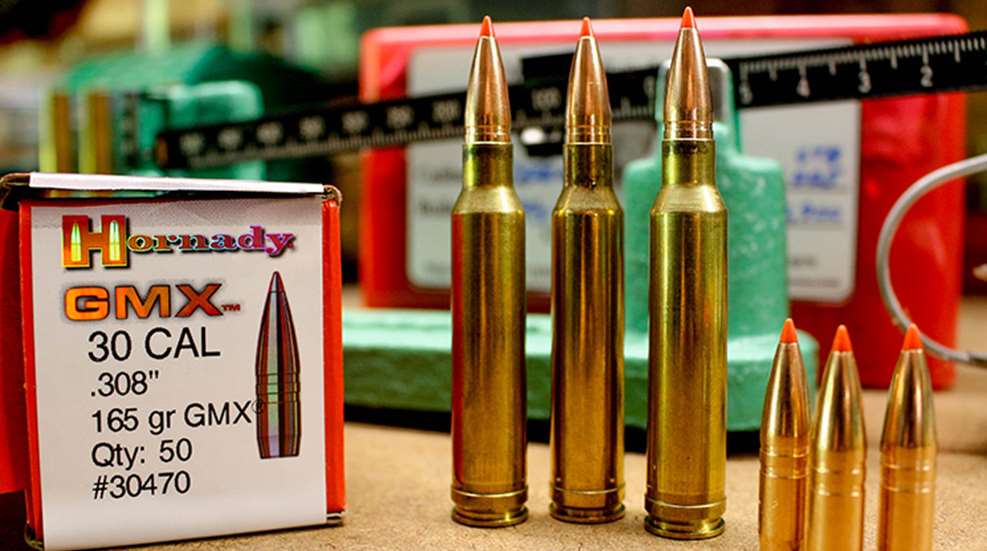
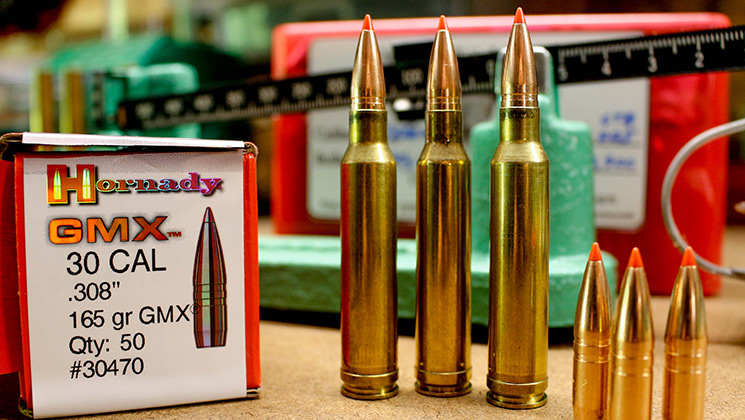
Hornady GMX
With its signature red tip and sleek ogive, the Hornady GMX (Gilding Metal eXpanding) represents a high-weight retention, high Ballistic Coefficient bullet that has given excellent accuracy in many of my rifles. Most GMX bullets, excepting a handful, are a boat tail design, and that red polymer tip is used to initiate expansion. They are available in calibers from .224” to .375”, and I feel these bullets work well in the most popular hunting calibers like .270, 7mm and .308; my .300 Winchester Magnum likes the 165-grain GMX, and I wouldn’t hesitate to use that bullet on anything shy of the great bears here in North America, and it would make a nice plains game bullet in Africa.
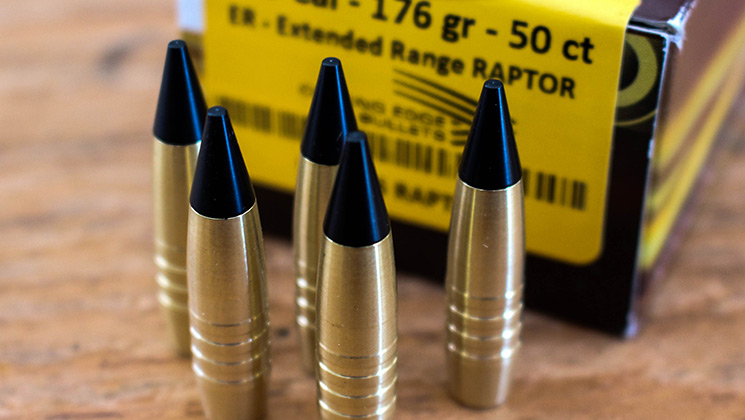
Cutting Edge Bullets Raptor
This is a relatively new company, but I’ve become a huge fan of their products. Their Raptor bullet is an all-copper hollowpoint, turned on a lathe for great consistency on both geometry and weight, available with and without a polymer tip. The ogive of the bullet is designed to break into blades upon impact, and those blades cause lots of impact trauma, resulting in a star-shaped wound channel that penetrates 8-12”. The base of the bullet stays at caliber dimension, and gives deep penetration in a straight-line path. This combination is fantastic, and I’ve used it in several calibers, on several continents. A couple examples: My wife used the 230-grain Raptor in her Legendary Arms Works .375 H&H, on sable, impala and warthog. While this bullet is definitely on the light side of the spectrum, it worked perfectly. All three were one-shot kills, and both wound channel and penetration were perfect. I took the 150-grain .30 caliber Raptor in my .300 Winchester, to take kudu and waterbuck. Both are large animals, weighing in somewhere between our caribou and elk. I’m happy to report that I took both with no issue, and even with a muzzle velocity of 3,350 fps, penetration was no issue.
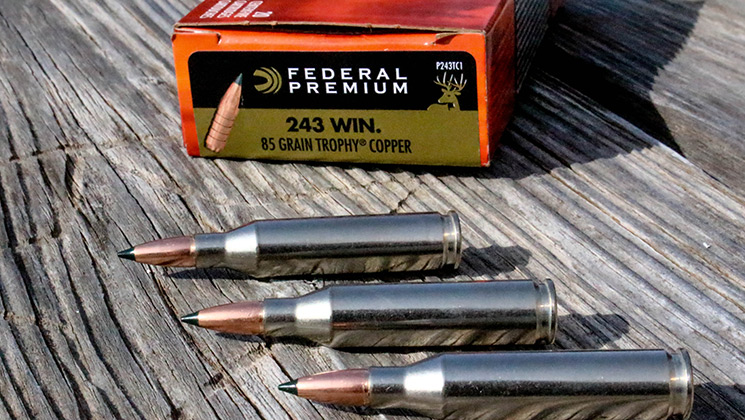
Federal Premium Trophy Copper
Using an all-copper hollowpoint design, with a polymer tip which serves not only to initiate expansion, but to increase the Ballistic Coefficient, the Trophy Copper bullet from the Federal Premium line of ammunition certainly performs. These bullets are not only accurate, but often have a weight retention up into the 90% range; perfect for a quick humane kill. My own best whitetail to date came from a free-range hunt in the western part of Texas, using a Savage Lightweight Hunter in .243 Winchester, with 85-grain Trophy Copper projectiles. The tall racked seven-pointer made his appearance at 125 yards—certainly not a very long shot—but that little 6mm bullet literally dropped him in his tracks. He never even twitched. It was the only time I’ve hunted deer with a 6mm cartridge, but boy, it made a believer out of me. If you are looking to flatten the trajectory of your chosen rifle, you can feel confident using a Trophy Copper bullet on the lighter side of the normal choices, driven to a higher velocity. They’ll hold together for you.
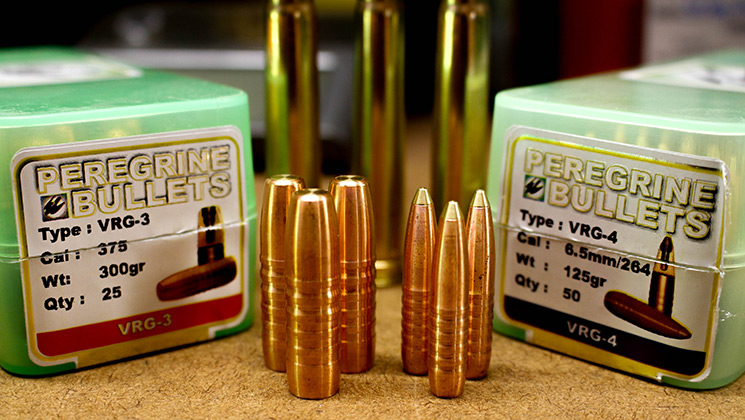
Peregrine Bullets Plains Master and Bush Master
Peregrine Bullets, hailing from the Republic of South Africa, have a real pair of winners here. The Plains Master is a copper bullet with a bronze tip, in a spitzer configuration, with a boat tail for a high B.C., while the Bush Master has the flat meplat that dangerous game hunters love so much, with a bronze, flat insert to initiate expansion. Below those bronze tips, Peregrine uses an air space, and using the principle of compressed air to guarantee bullet expansion. I know they shoot well, and I’ll be taking these on safari before you know it. Numerous reputable Professional Hunters—including esteemed elephant hunter Johan Calitz—have shown me how well they work on large game, and I know they’ll deliver the goods in our North American calibers. They are consistent and accurate, and all the field reports are positive. Separate from many other bullet designs, even Peregine’s flat point bullets feature a boat tail, to ease in the loading process and slightly bump the Ballistic Coefficient. I’ve definitely found a new toy.
If you’ve already embraced the monometal technology, you probably know most of the bullets I've listed here. If you haven’t, you’d be doing yourself a favor if you did. They can change your ideas on the applicable caliber/bullet weight discussions that have been repeated for fifty plus years, and sometimes that’s a good thing.
Want to read more from Philip Massaro? Check out the stories below:
• Top 5 Subsonic .22 Long Rifle Loads
• The Most American Rifle Cartridge
• Tips for the Traveling Hunter
• How to Choose a Gun Safe
• Best Gun Cases for the Traveling Hunter
• An Ode to the .30-06 Springfield
• Top 5 Boutique Bullet Companies
• Top 5 .22 Long Rifle Loads
• 5 Reasons Round-Nose Bullets Are Still Cool
• Top 5 Dangerous Game Loads
• Top 5 Turkey Loads
• 5 Rifle Cartridges That Need to Make a Comeback
• Top 5 Safari Calibers
• 5 New Year's Resolutions for Hunters
• What Your Favorite Rifle Cartridge Says About You
• America's Most Wanted Cartridges
• America's Strangest Game Laws
• What Your Favorite Rifle Cartridge Says About You, Part II
• Top 5 Overrated Rifle Cartridges
• Top 5 Underrated Rifle Cartridges
• 5 Cartridges You Might Not Know About
• Top 5 Wildcat Cartridges
• An Ode to the Ruger Mini-14
• Top 5 Hog Loads
• Top 5 Deer Bullets
• Why .30-30 Winchester Will Never Die