For several years, just about everyone in my life has heard about how I wanted to try hunting. Since I work in the firearms industry, I know many hunters, but I didn’t grow up hunting, and I’ve always been focused on defensive-handgun training. Yet I started to feel like it might be an important skill to be able to pass on to my son, and once that seed was planted, it grew past the point of ignoring.
For the average suburbanite, however, learning to hunt is not as easy as learning defensive handgun. You typically can’t just go take a skills class down at the local range and then be hunting by yourself the next week. I did take my state-approved hunter’s education course, and that’s certainly valuable. But when it was over and I tried to take the next steps, I found myself with about 300 tabs open in my browser trying to sort through regulations, jitters from entirely too much coffee in an attempt to understand said regulations—and still no idea how to go about anything. I asked the hunters I know, too, of course, but nothing ever fully materialized.
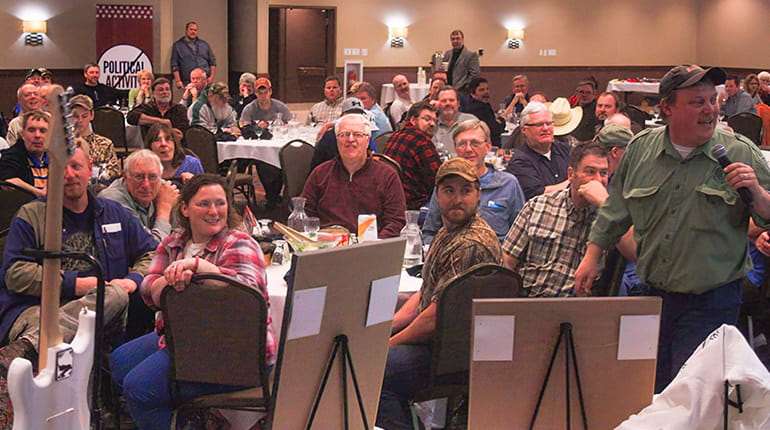
So, when I was told I had been invited to a writer-specific hunt in Nebraska, put on by Arterburn Outdoors—and that the hunt was called “Beyond Hunter’s Education,” I was thrilled. The curriculum promised mentors who would go over everything from sighting in the rifle to cooking the whitetail doe we would presumably harvest with their help. Exactly what I needed, in other words.
I flew into Omaha the morning of Oct. 5, a Monday. Several of the participants arrived at nearly the same time, so we met up and drove a few hours to the camp, situated on private land just outside Hebron. If you don’t know Hebron, they’re apparently “famous” for having the largest covered porch swing in the U.S., but it wasn’t large enough to see from the camp, so I’ll just have to make a separate trip for that someday. (Our little group also made the local paper, the Hebron Journal-Register, so I think nearly every day might be a slow-news day).
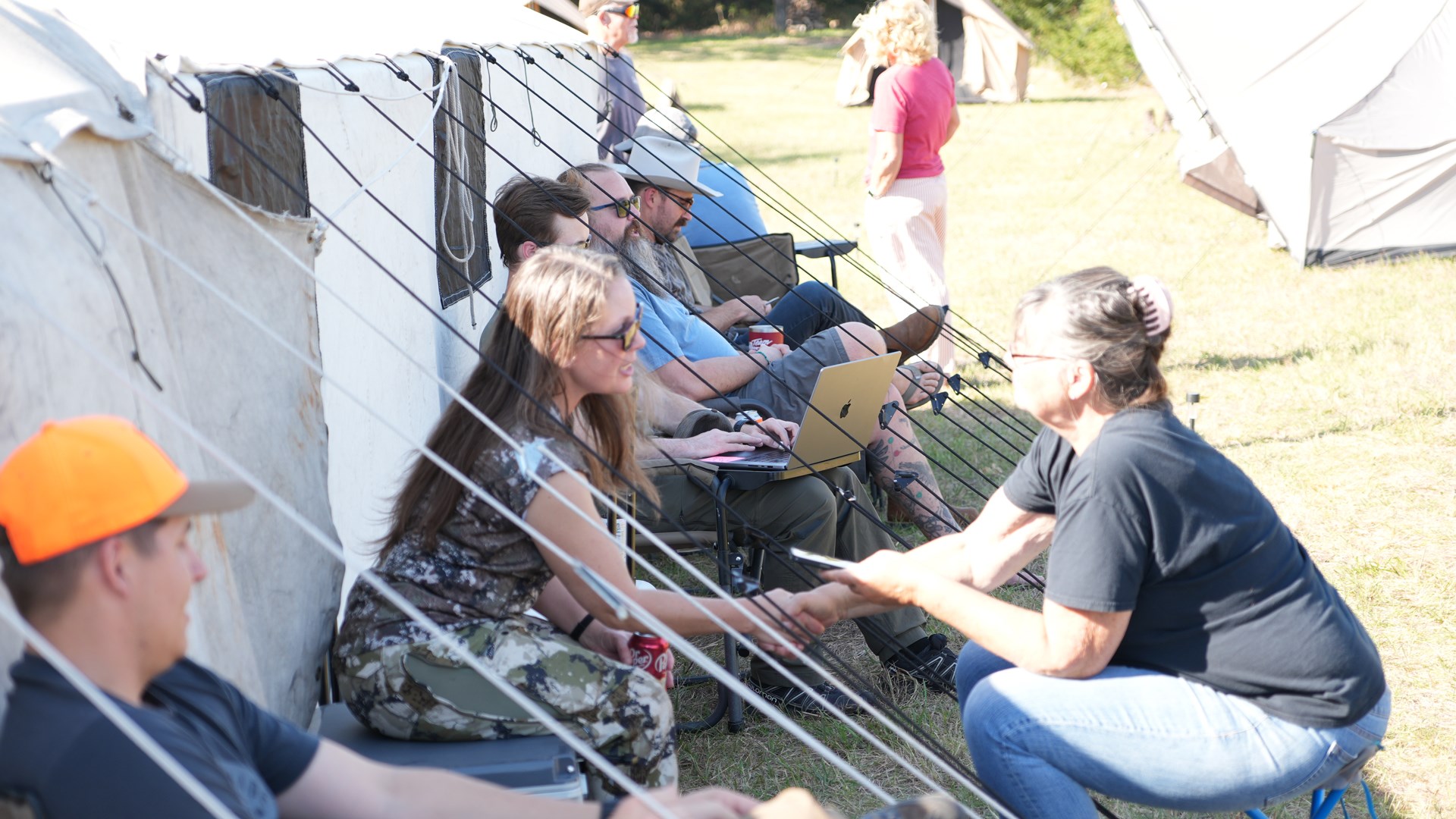 Photo by Joe Arterburn, Arteburn Outdoors
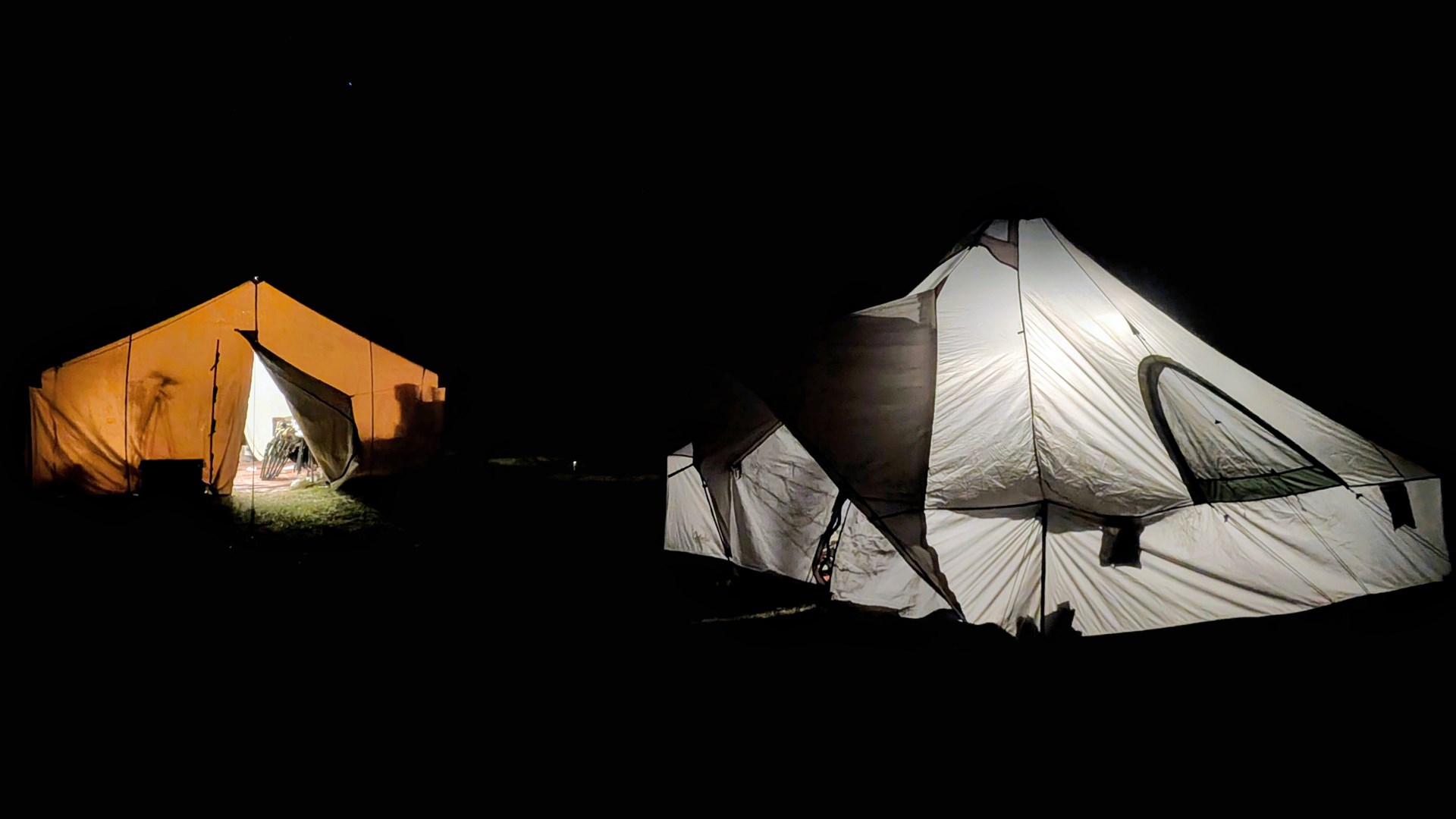
Arterburn had a veritable army of helpers finalizing the arrangements when we arrived, and I found to my delight a roomy tent with a rather posh setup, including a cot, Nemo sleeping pad and sleeping bag, a folding table, and even a Lion Energy power bank to keep my things charged and to plug in a light bulb. Useful stuff just kept rolling my way, too, the most critical of these being the bug-repellent sprays and lotions from Sawyer Products. (Without those, I think I might’ve tapped out well before the camp was over.)
Tuesday, the curriculum got rolling, starting of course with safety. The next discussion, on hunting and conservation, opened my eyes to how serious a lack of wise culling can be to a deer herd. I’d heard of chronic wasting disease, but not of bluetongue, and I hadn’t realized how much effort went into the state’s evaluation of herd numbers and ecological impacts as they determine what hunting regulations would be in effect and exactly where—plus of course how Pittman-Robertson funds enable all of this evaluation. This is why we could hunt antlerless deer with a rifle within a mile or so of the Little Blue River at the time, and no farther. The sheer number of rules to consider when trying to learn to hunt is a significant barrier, unfortunately, but it helps to know there are rational reasons for them.
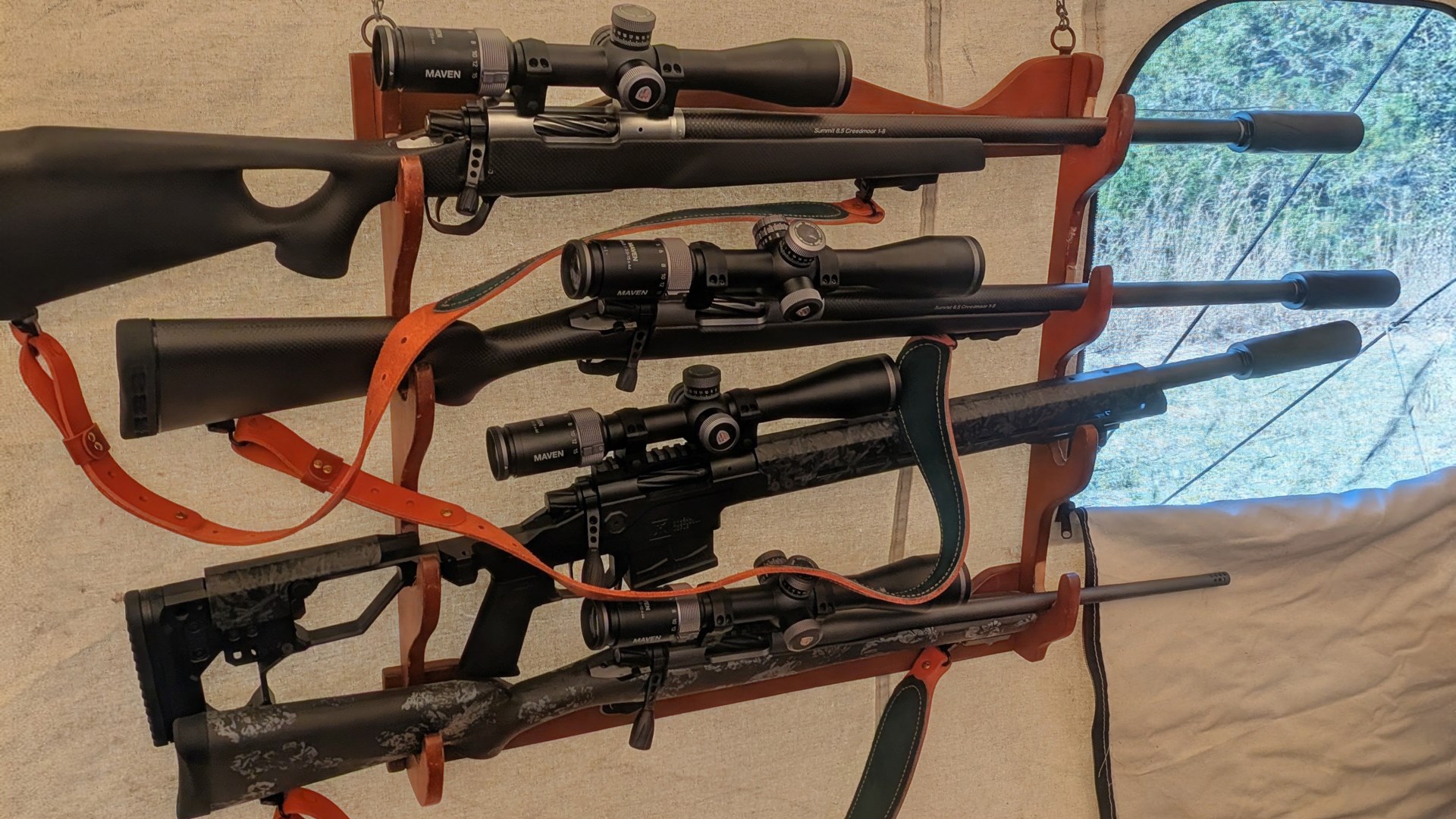
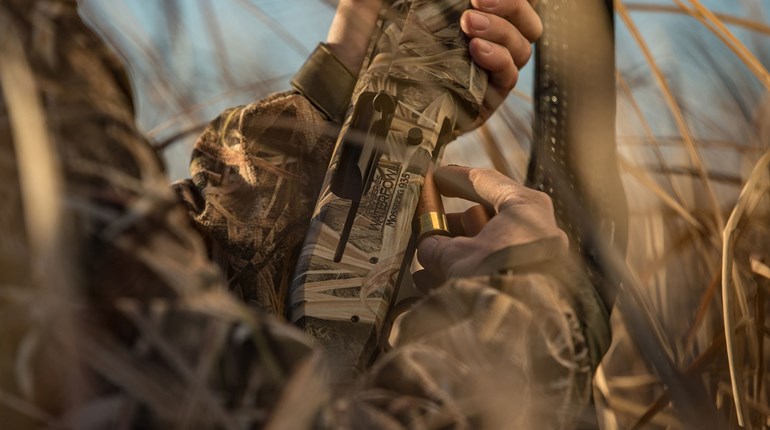
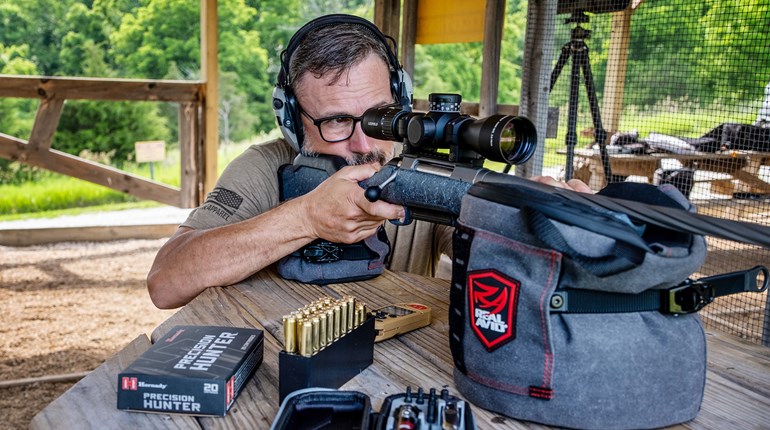
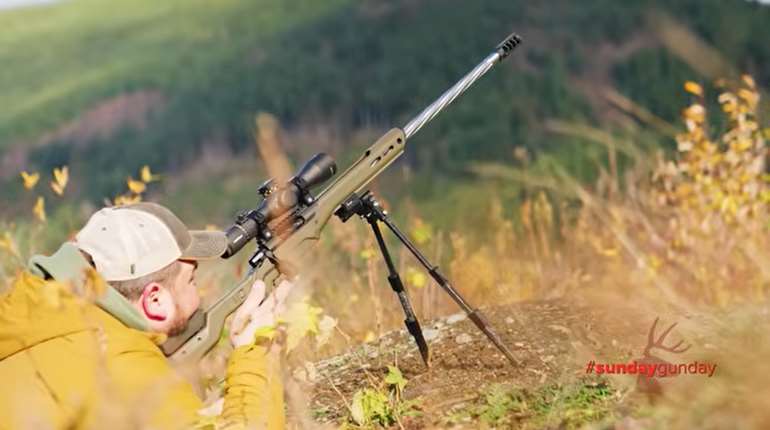
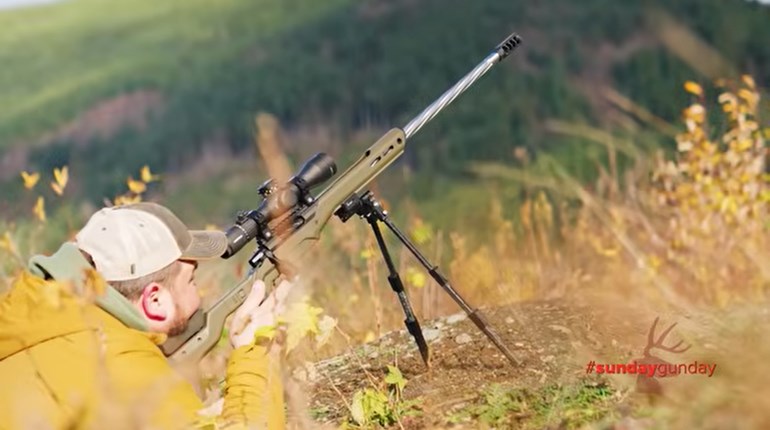
Firearms, ammunition and optics were next discussed. We were all going to be using Christensen Arms 6.5 Creedmoor rifles, Banish suppressors (except on my rifle, a Mesa, which I ended up using since it was a little smaller), Hornady Precision Hunter ammo and Maven optics. The presentation on why hunting-specific ammunition matters was particularly enlightening. Accuracy was an obvious need for such ammo, but I’d never considered how important it would be to have the round expand without disintegrating in the animal—that, after all, is not precisely the goal of defensive ammo. We also covered shot placement—another important presentation for my novice self, as I’d never really considered what the shot might do beyond killing the animal as humanely as possible. You want the shot’s path to avoid the guts and to not destroy much of the usable meat, which is obvious now, but I’d had no reason to think all this through before.
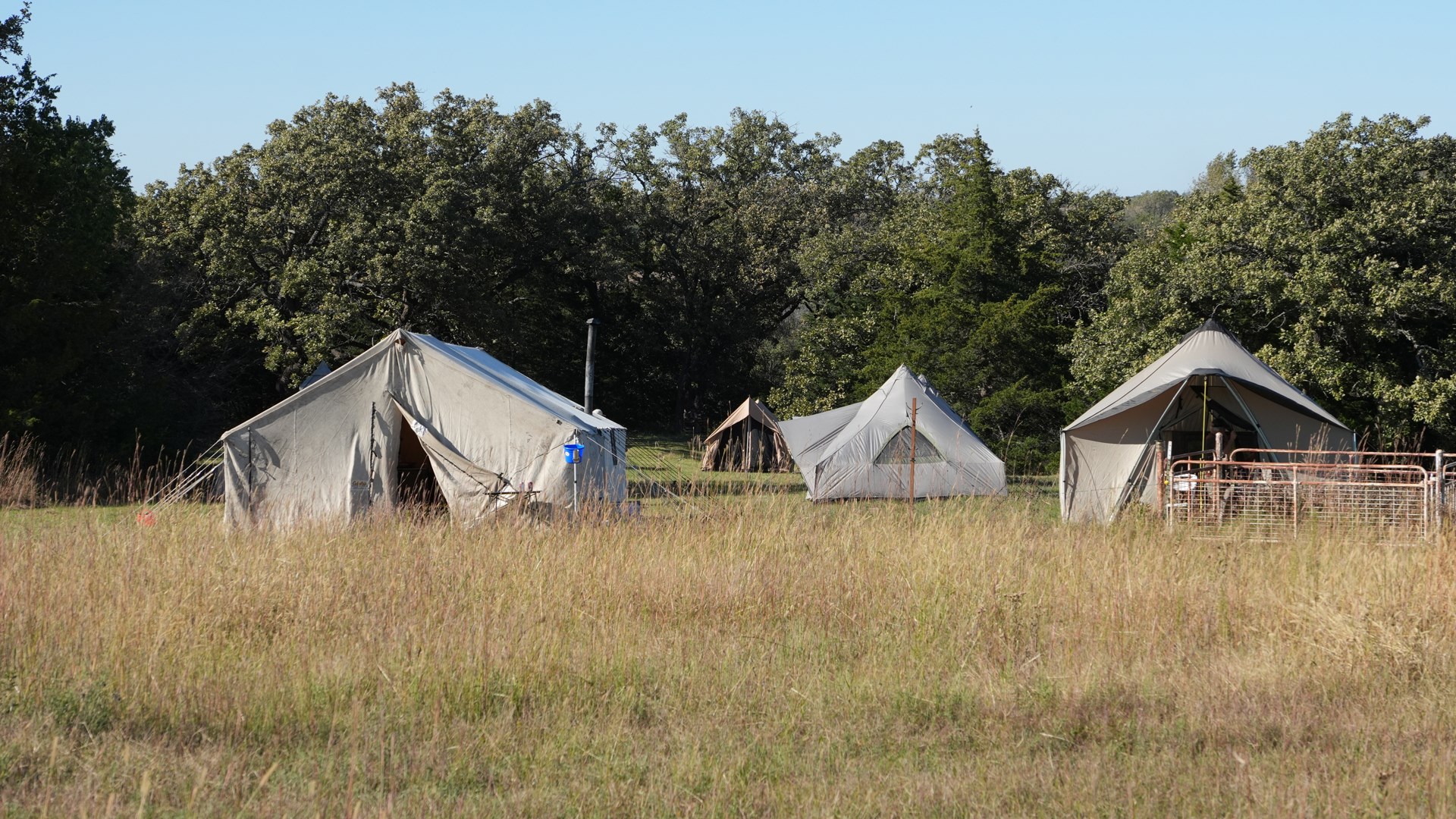 Photo by Joe Arterburn, Arteburn Outdoors
Maps and cameras were up next. I was highly impressed with the onX Hunt app, which had layer upon layer upon layer of useful information for hunters, with about 220 countries included. I’m perhaps not expert enough to identify what is most useful to most hunters, but I was able to pin my blind location in relation to the camp, to see the terrain in 2D, 3D, satellite, topographical or a hybrid, to get information about public and private hunting lands, and to get an excellent level of detail on weather, wind direction, etc. You can also tie in the Moultrie trail cameras, so you can see even more clearly what’s happening with the wildlife. To me, though, the onX SOS feature is the best part—when you add that to your subscription, you can send a request for help to a preprogrammed set of numbers with your coordinates, from anywhere your onX covers, and it includes insurance to cover the (typically extremely expensive) rescue.
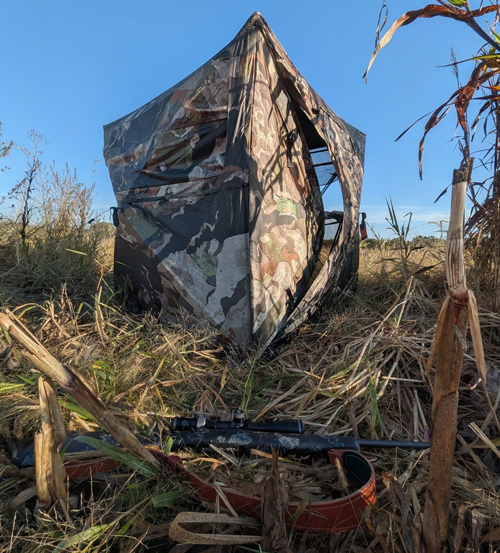
We discussed many more things and sighted in the rifles that day, but I won’t bore you with every detail. That evening, my mentor, Brooks, and I headed to a blind. We named our team “hot mess,” possibly because despite every effort to prepare me, I was awkwardly carrying about 20 things in my arms, having failed to bring a small pack with me. I’m also quite short at 5 feet, so trying to carry such an awkward bundle while trying to quietly hike along a tree line and then into a cornfield in the near-dark was … challenging.
That’s yet another thing I hadn’t considered: Deer will avoid human-shaped silhouettes and anything that looks too out of place, so that’s why you don’t turn on the headlamp or walk directly to the blind and also why you need good camo patterns on both your person (thanks, King’s Camo!) and on the blinds themselves. I also found that harvesting corn leaves behind very sharp stalks, so quality boots (thanks, Danner!), camo that won’t tear and good balance matter.
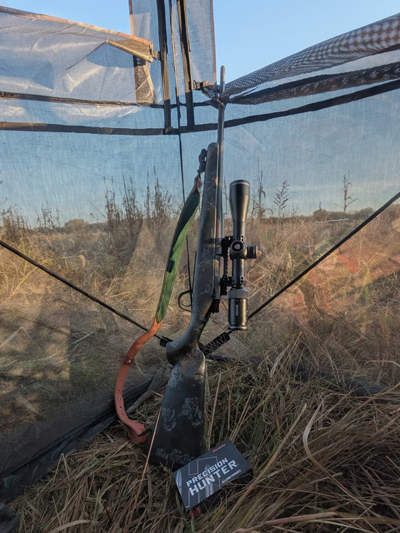
Once settled, Brooks helped me learn to spot deer, having me get them in the scope and follow them that way even though I had no intention of shooting any at the 250 yards or so distance where I saw them. This was wise, because I struggled with the limitations of using a tripod—even the flexible Spartan Precision tripods we had—in a tight space and had some trouble getting the perfect view in the scope, so the practice really helped. One doe did finally come in at 50 yards and kept broadsiding me beautifully, but this was just after the time I was allowed to shoot. (I’m not saying this deer was mocking me … but it certainly felt like it.)
A few other writers managed to get their harvest that evening—one of them clocking his an astonishing 11 minutes after setting up. I got to see, then, how late people needed to stay up to deal with those successes, and I thought it would be better to get one in the morning if I could.
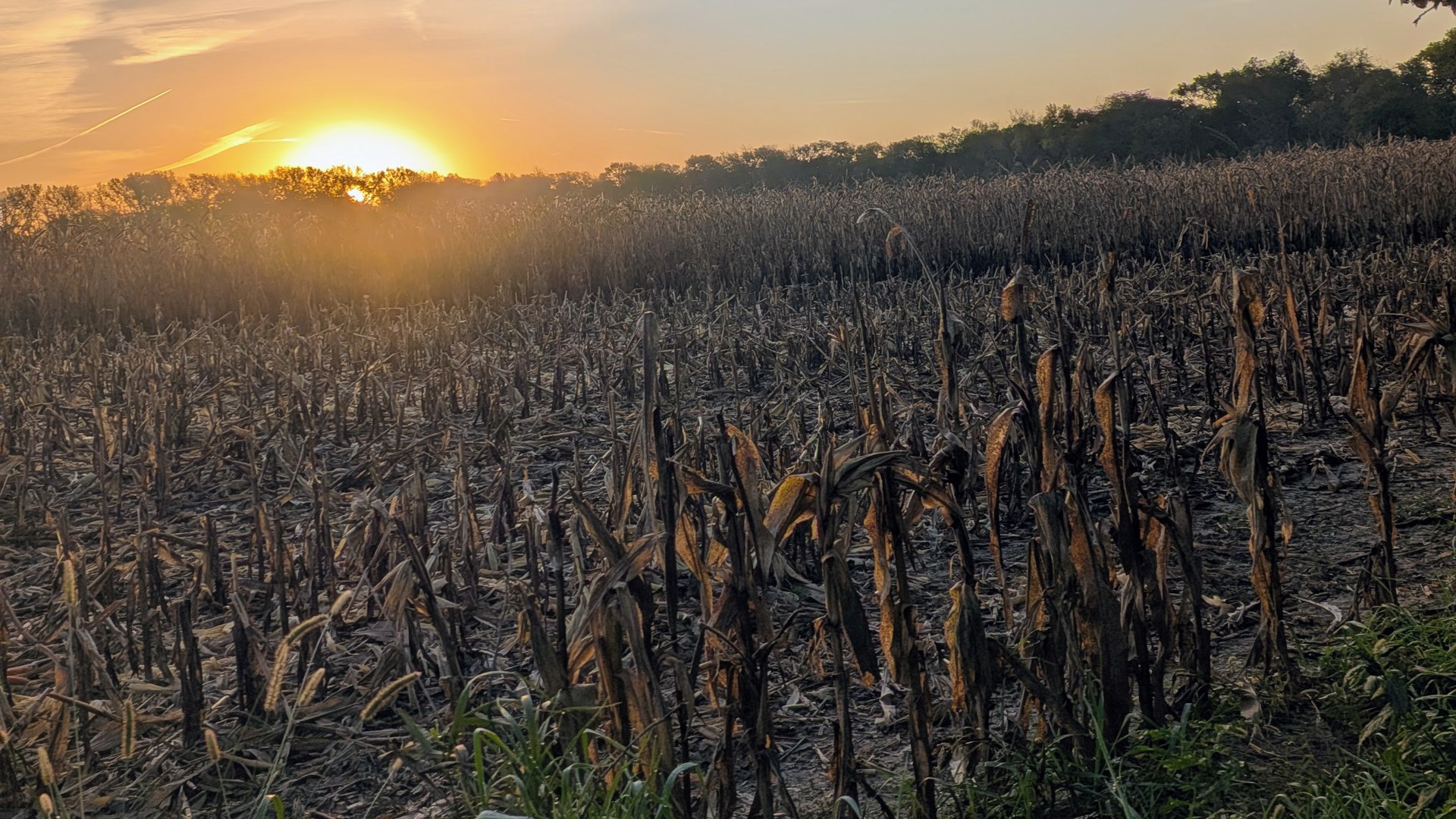
We went back to the same blind the next morning, spotting a few at distance again, but with no luck. That evening, I tried a different blind and similarly spotted some deer without a good shot.
I only had one day left.
Thursday morning, Brooks and I went to a blind near an alfalfa field. This was a very different setup, situated right against the trees from which the deer would exit to get their field breakfasts. We again quietly hiked in, got ourselves settled in the blind—and promptly made a racket when Brooks’ chair dumped him over into me. Despite his falling as quietly as one probably ever could, I thought our chances just might be ruined.
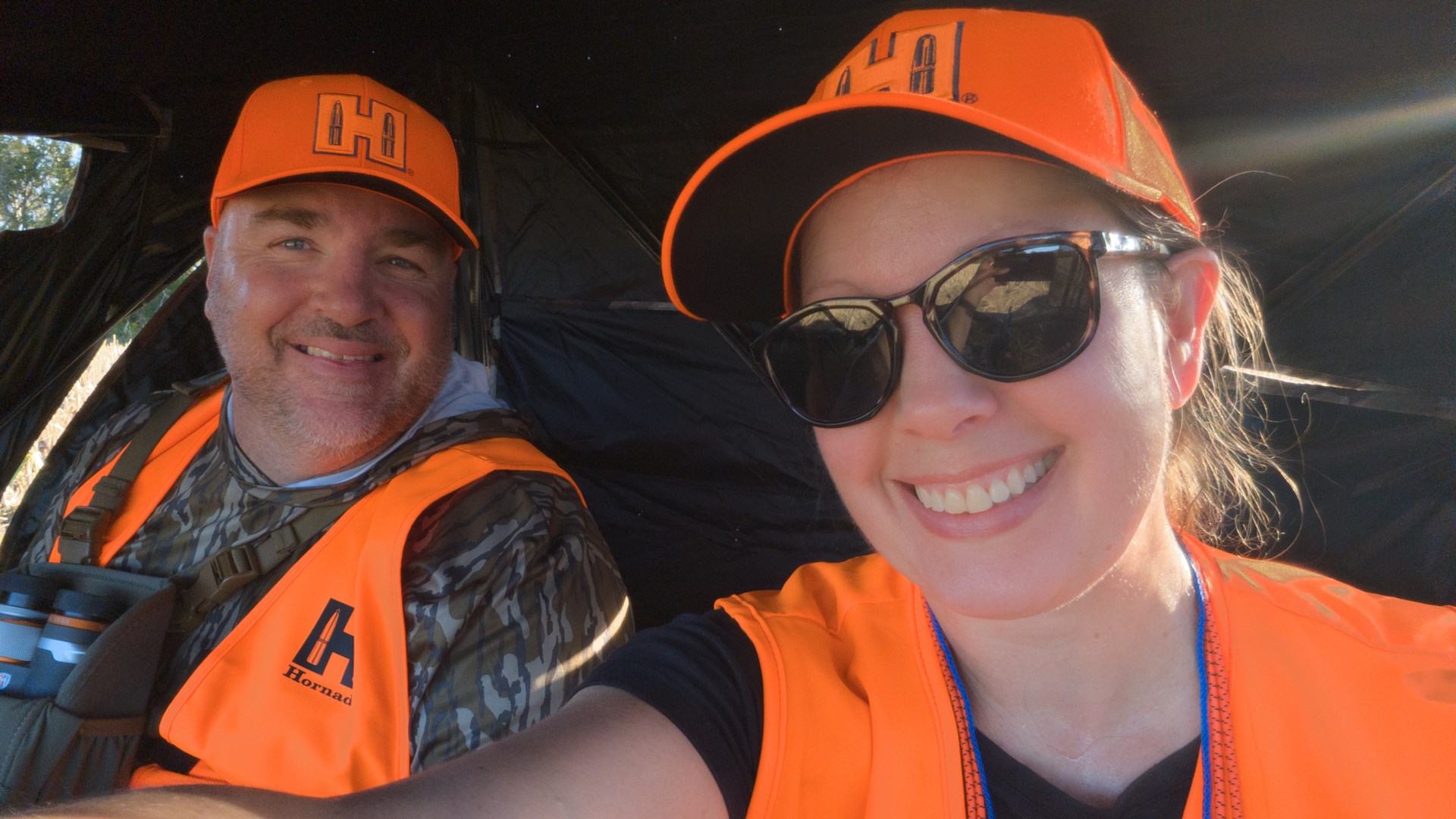
Yet just about 20 minutes later, a doe crept out of the trees and went into the alfalfa field. I discovered as I tried to track her in the scope that we had a “peekaboo” arrangement: I could see her between clumps of vegetation for not very long each time and never got a perfect shot on her. But then there was another doe. And another, with a yearling tagging along. At about 7:15 a.m., one of them placed herself in a window of vegetation at about 40 yards from the blind and, though she wasn’t perfectly broadside, she was barely quartered toward me.
I took the shot.
Immediately, a tsunami of adrenaline hit me. I sat stunned, not even tracking the deer. Luckily, Brooks was ready and watched her run about 80 yards before toppling.
We sat in the blind for about 15 minutes. This is for safety, to avoid walking up on a thrashing deer should they not expire quickly. I began to question everything: Did I get a clean shot? Should I have taken it? Did I even aim at the right deer (maybe I had the yearling in my sights without realizing it)?
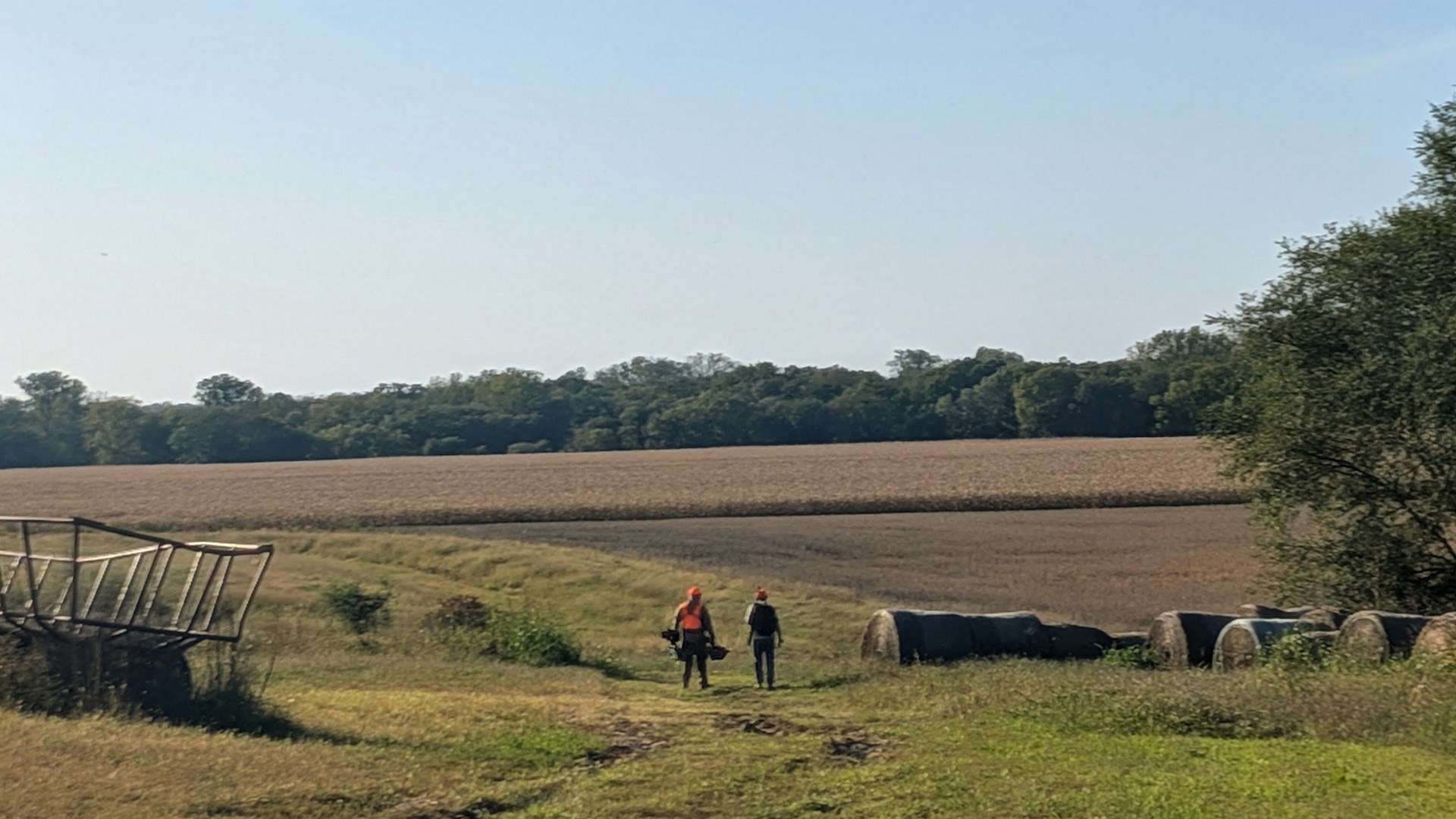
We finally exited the blind and tried to track blood. There was very little—ramping up my anxiety. Brooks saw the doe long before I did. The deer’s natural camouflage works well, after all, and he had height and experience advantages. I was practically on top of it when I finally saw it. I was relieved to see I’d shot it cleanly in the heart, and I was amazed that she’d still run 80 yards after (someone explained to me later that this is what a “dead run” really means).
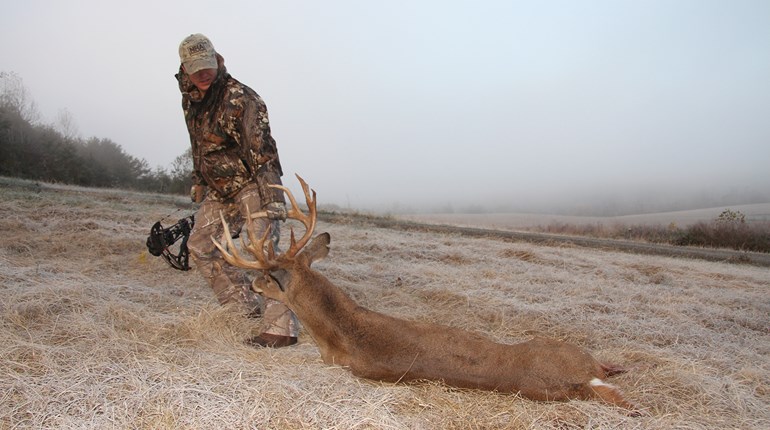
The moment was emotional, with both relief and a faint dismay competing for first place. I needed to take pictures to document the experience, and that time was also filled with those emotions, but eventually it was time to quarter the deer.
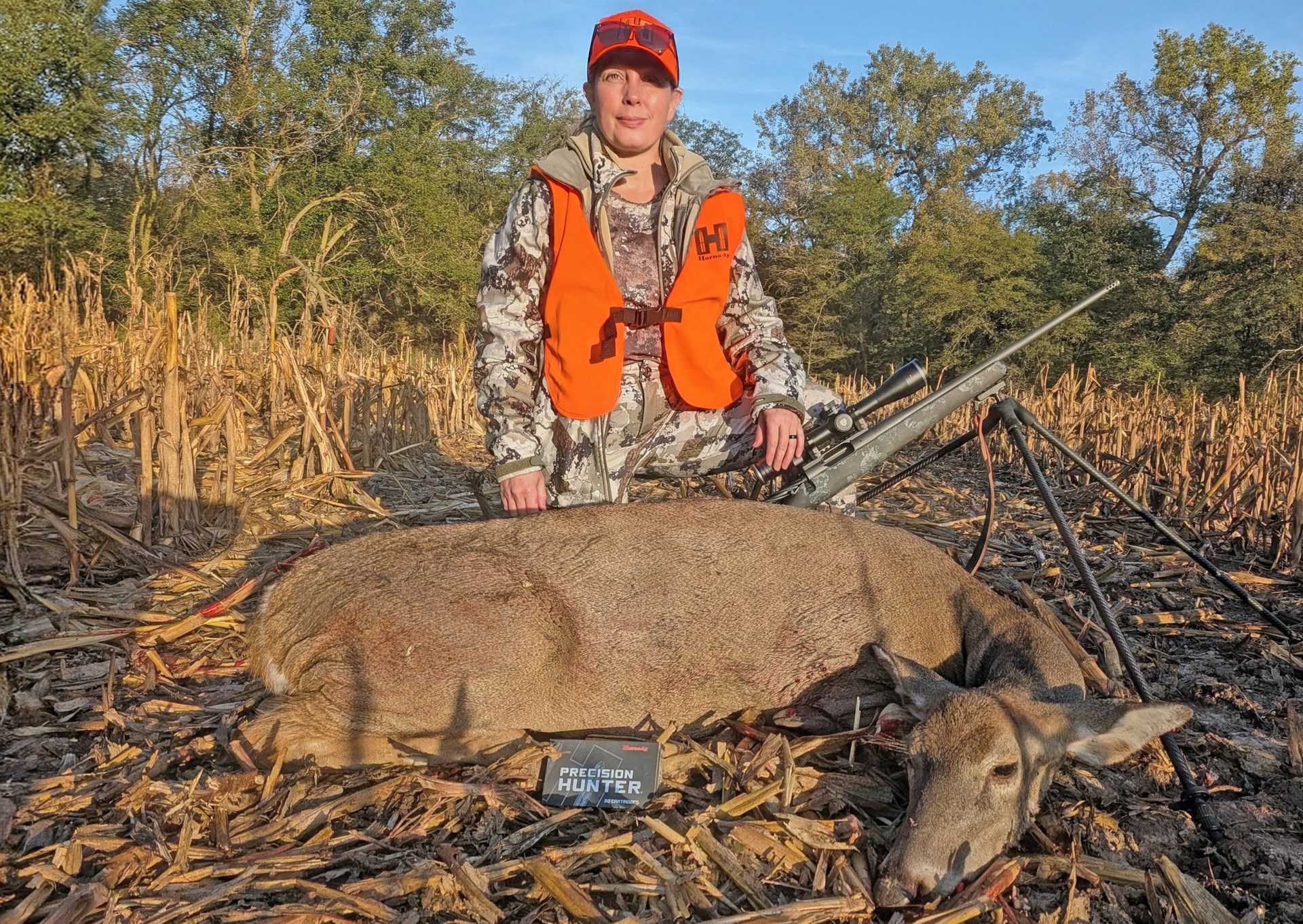
This was the real moment of truth for me. How would I handle this? I’m a suburban girl who has always had her meat nicely packaged up. I’m also the person who can’t look when my own blood is being drawn—I’ve been known to nearly faint in some medical contexts. Yet I also strongly believe I have no business hunting if I can’t handle this part of the process. That’s my own bias that I’m not judging anyone else with, but my reasons for wanting to hunt have as much to do with self-sufficiency as anything else. Plus, I’ve been told that processing as quickly as possible makes a big difference on how the meat tastes.
Shockingly, once we began, I was completely fine. I felt better, in fact—the deer suddenly shifted to venison in my mind. I was grateful and happy that this meat would be put to good use, and I was curious about the process. Because we were quartering, I didn’t encounter the more disgusting portions of the body—i.e., we avoided the guts entirely—so I think that helped. It also helped that Brooks knew the process very well and of course did most of the work, though I tried to help as much as I could. (How much did I help? Well, we’d been provided with Outdoor Edge pocketknives with replaceable blades, and I never felt that I had to replace my blade, but Brooks did have to replace his twice. I think his first blade had some use before we began, though, whereas mine was shiny new. So perhaps I did nearly a third of the work.)
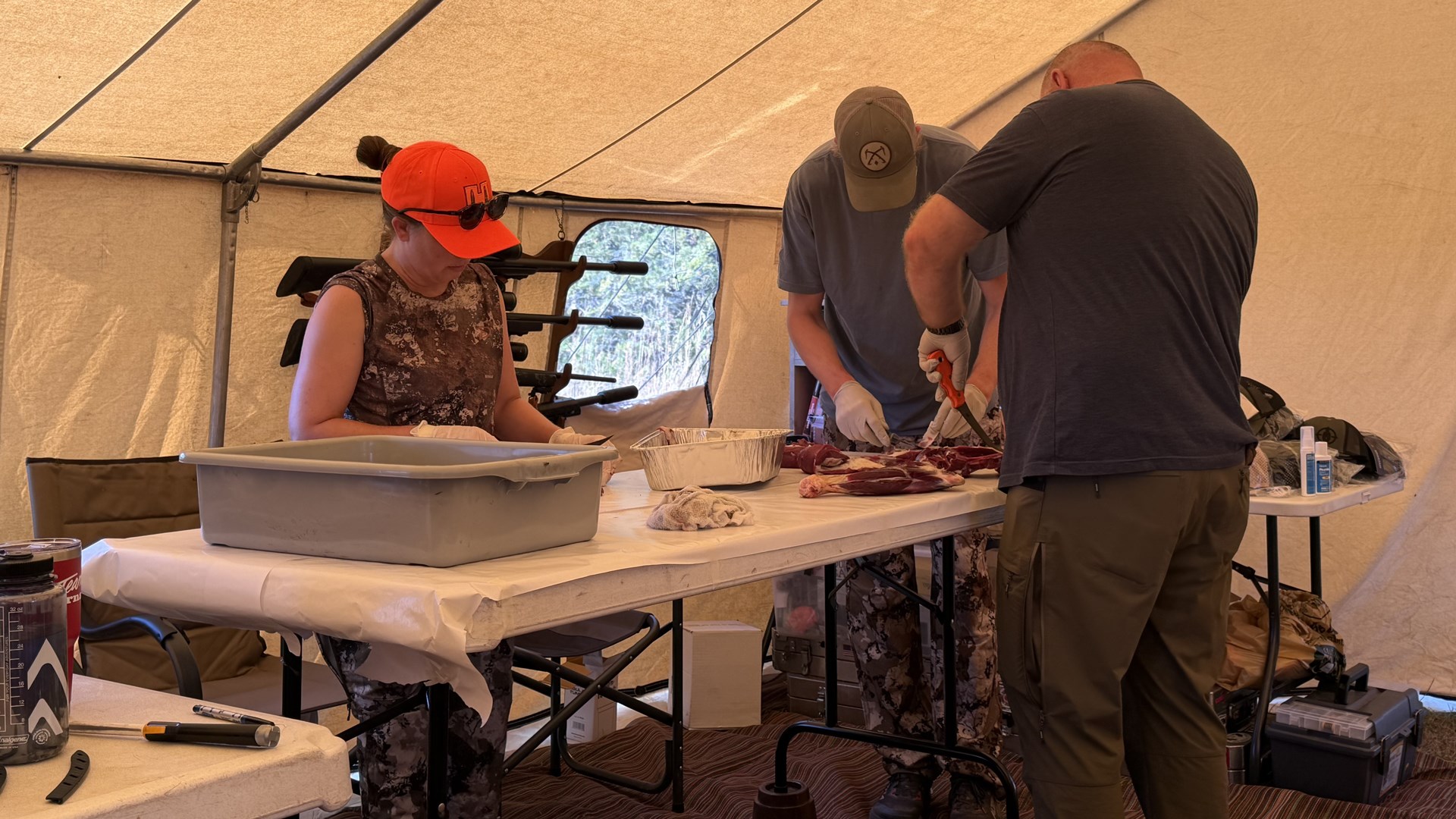 Photo by Travis Avery
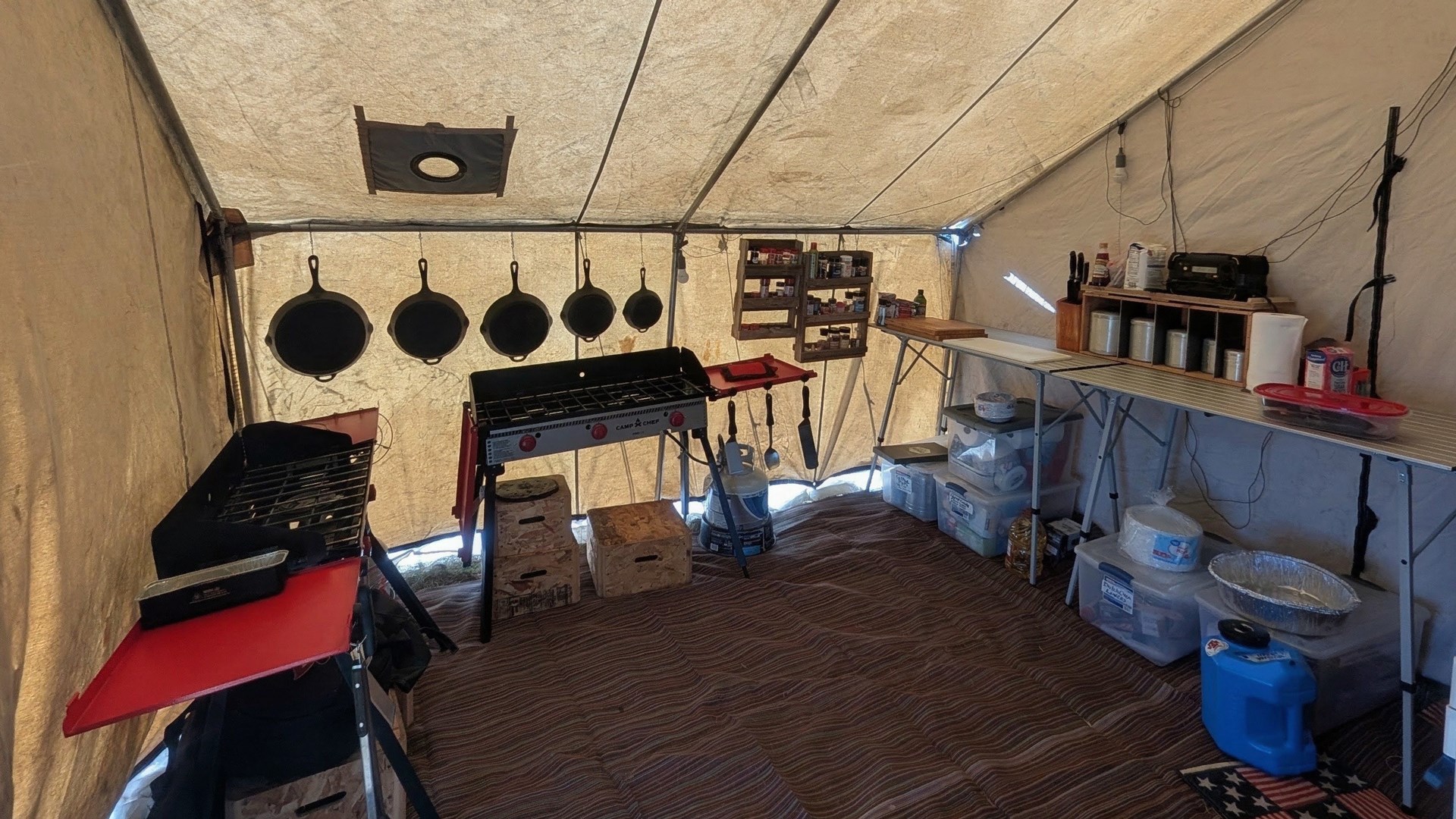
We took the quarters back to camp and finished the processing, turning them into usable (and recognizable) cuts of meat. In true “hot mess” fashion, one of the table legs gave way, but I managed to grab the tub of steaks before it slid to the floor. I imagine some of the meat I take to be ground up by a butcher may have a bit more camp dirt in it than I would prefer, but it will be put to use regardless. We vacuum-sealed it all and packed it into coolers to freeze for my flight the next day—it was yet another new experience for me to be checking in 30 lbs. of meat, but it was clearly business as usual for the counter staff.
Reflecting back on my experience, a few key things strike me:
1. The “Good ol’ boys” are really great.
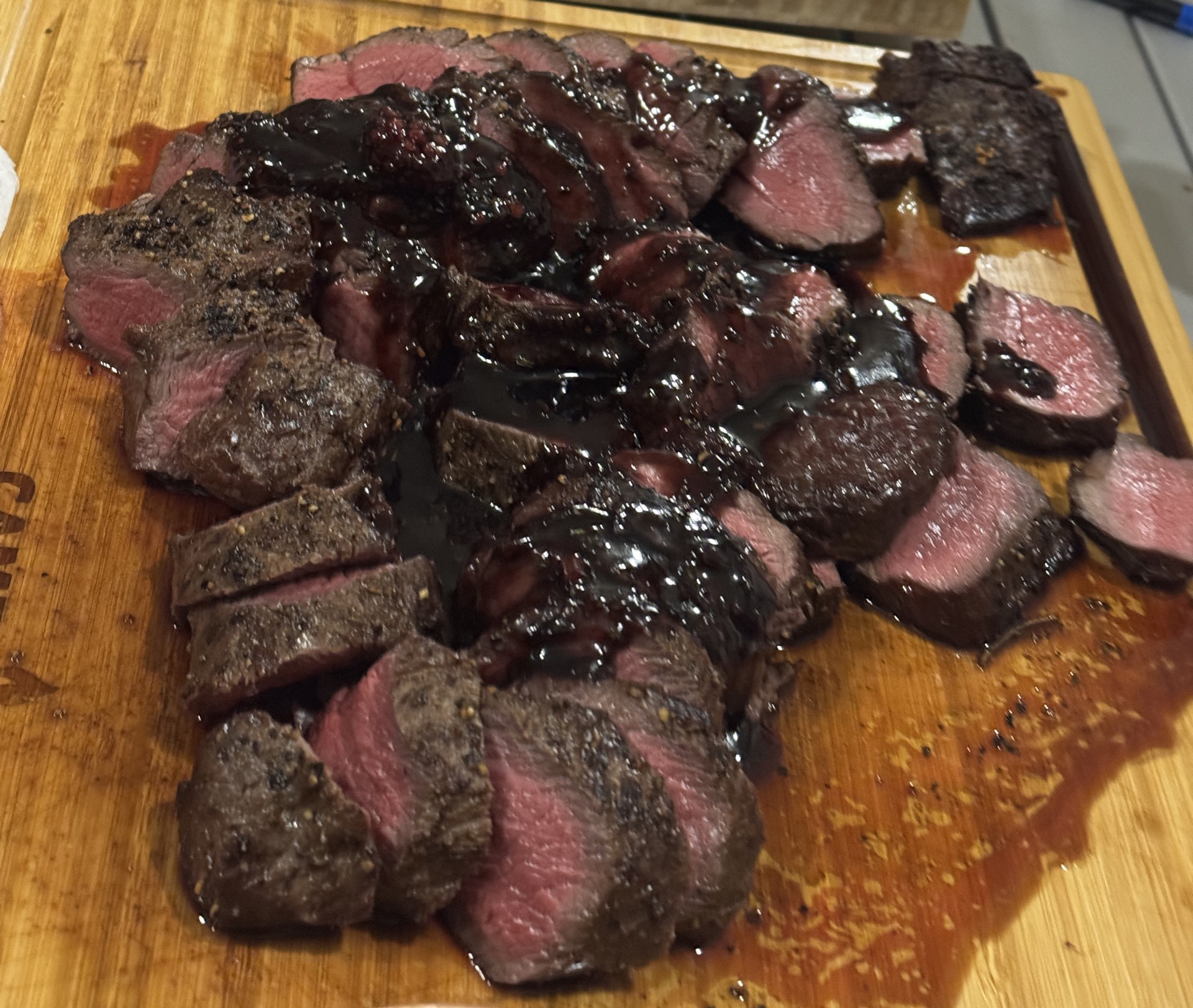
Yes, this particular set of mostly the good-ol’-boy variety was being paid to help the writers, but wow, did they ever work hard. They cooked, they cleaned, they hauled, they hiked us into deer blinds, they answered every ignorant-novice question thoroughly, they sat patiently in silence to help us harvest a lot of meat with very little for themselves. (I did donate some backstrap to the group meal on the evening of my harvest, which the ever-talented Brooks turned into a masterpiece steak with a blackberry wine-reduction sauce.) Even more importantly, these folks care deeply about every aspect of what they’re doing. They each clearly understood the conservation aspects of hunting, and they were all conscientious almost to the extreme.
2. Patience is key.
Hiking into the blind evening and morning, trying to be quiet the whole way, sitting in said blind for hours, and seeing many deer that you can’t shoot for one reason or another could be a very frustrating experience with the wrong attitude.
3. The essentials are more essential than you think.
A good set of camo, a great pair of boots, long-lasting bug killer/deterrent, good knives, etc.
4. Hunting is personal and emotional.
I suddenly care very deeply about how that next steak or chili comes out in a way I never have. It feels disrespectful or even sacrilegious to make anything less than excellent.
5. It’s hard work, but also not overly difficult.
(Well, except for sorting through the seemingly endless regulations.) Of course, I had a lot of expert help, but once I’d seen it all done, I knew I could someday do it all myself if I keep at it. That’s important, because my real goal is to eventually become the mentor—to be able to pass this kind of knowledge down to my son and anyone else who wants to learn.
Overall, the experience was incredible. If you’re a not-so-country gal (or guy) with any interest, then let me affirm that yes, you should try hunting. Seek mentorship if you can—keep asking those you know, seek out groups dedicated to helping new hunters, or book with a guide who will also teach you. Your state will also have resources to help. I, for one, am hooked. In fact, I’ve already signed up for my next mentored hunt (this time with Sisterhood Outdoors) at my own cost to help me lock in these skills—and of course to get more delicious venison in my freezer—and I’d love to see more of us suburbanites out there.