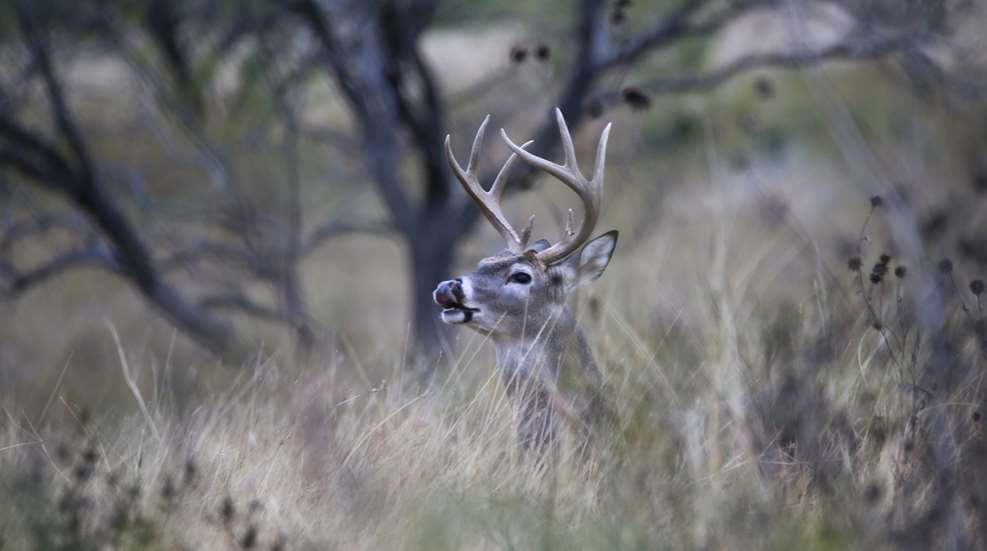
Nature is amazing. Nature is beautiful. Nature is … cruel. Odd way to begin an article, right? But the topic of this article encompasses all of these traits. Today we are going to discuss mature whitetail bucks and how and why they interact with each other before and during the annual rut.
I have used the term “pecking order” in reference to gobblers establishing their dominance in the breeding cycle. This term can also refer to how bucks do the exact same thing. Establishing the right to breed is something bucks MUST do each fall.
As the rut approaches, before the first whiff of estrous, bucks have been tinkling antlers in small, short, non-aggressive shoving matches. These encounters are just preparation for much more serious fights that are coming. Some of these fights end in death.
I saw my first shoving match this year on September 21st. Two young bucks that I estimate to both be a year and a half old, spent 15 minutes sparing and pushing each other around the food plot. They were so young I wonder if they even knew why they were playing this little game. I give that to instinct.
On October 5th I saw two older bucks, 2 and half year olds, repeat the same, non-aggressive process. These bucks are just feeling each other out as tests of strength and stamina.
This is typical, pre-rut, behavior. That is exactly why lightly rattling antlers in October can be so effective. Every buck on the farm wants to have one of these shoving matches with every other buck on the farm prior to the rut. Hence, establishing the pecking order.
As estrous kicks in, the fighting temporarily subsides. Mature bucks are trying to lock-down hot does and they are staying right on them. These big boys will avoid fights now, focused more on breeding. However, less mature, satellite bucks who are further down in the pecking order, are cruising looking for any date they can find.
Another piece of deer biology information that can be useful to you is how bucks recognize each other through scent. As these October shoving matches are taking place, the bucks forehead glands are secreting scent that is picked up by the other buck. This is the same scent that bucks leave on trees as they rub the velvet off their antlers and rub trees to mark their breeding areas. When a buck comes across a tree rub, he instinctively knows exactly which of his male compadres made it.
So, as the rut hits its peak, I stop rattling, mostly. I still keep my rattling antlers with me. Allow me to explain why: most hunters think the peak rut is the best time to rattle because this is the time in the season when they either see or hear the most aggressive buck fights. That’s true, but let’s think about why.
Two satellite bucks cross paths looking for any date they can find. These bucks may be carrying racks of 150-inches, or better. They are not with does because of their place in the pecking order. They both now want to establish their dominance over the other one just in case a doe becomes available. They are not thinking about this process or reasoning about it. They cannot do that. They are merely reacting to instinct.
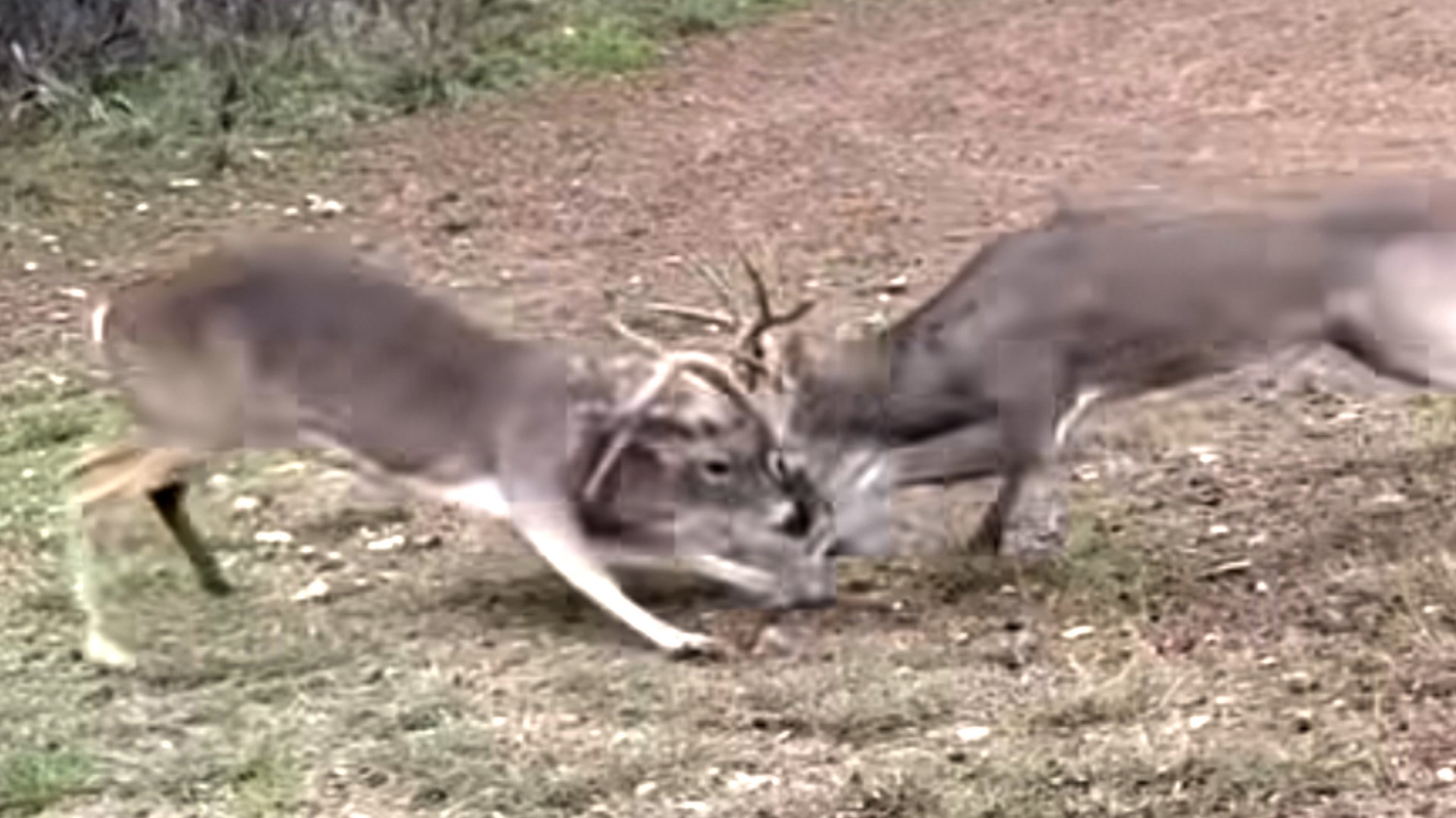 Buck fights are much more common than most hunters think. They do not happen in broad daylight very often.
Now the fight is on. Hard, heavy, serious and often long. It is loud and very easy for a hunter to recognize. It is also very easy for the Alpha buck, trailing a doe, to recognize. His first instinct is two not to go and take his hot doe to a fight where two other bucks are dueling. Instead, he will herd her in the other direction to totally avoid the other two males.
Makes sense, biologically. But that is exactly why I carry my rattles in the rut. If I hear one of these battles taking place, I want in on it. The minute the fight stops, I start rattling hard and heavy. This is much different rattling than I did in October when I merely tinkled the antler tips. I am aggressively rattling now, and grunting. because I want the winner of the fight I just heard to come seek me out for another confrontation.
I am not too proud to take a 150-inch satellite buck. I realize I have mentioned antler size a couple of times now. That may be more important to some hunters than others. One key factor to keep in mind is, the Alpha buck may not be the biggest buck on the farm … but he is certainly the toughest.
So now for the cruel part that mother nature plays in this scenario. Bucks can get their antlers locked up during these fights and death is a consequence. More than once I have come across the devastation of locked antlers. It’s ugly. It’s unfortunate. And it’s natural. It is just like my Grandpa Guy Roux told me; “Vultures and coyotes have to eat, too.”
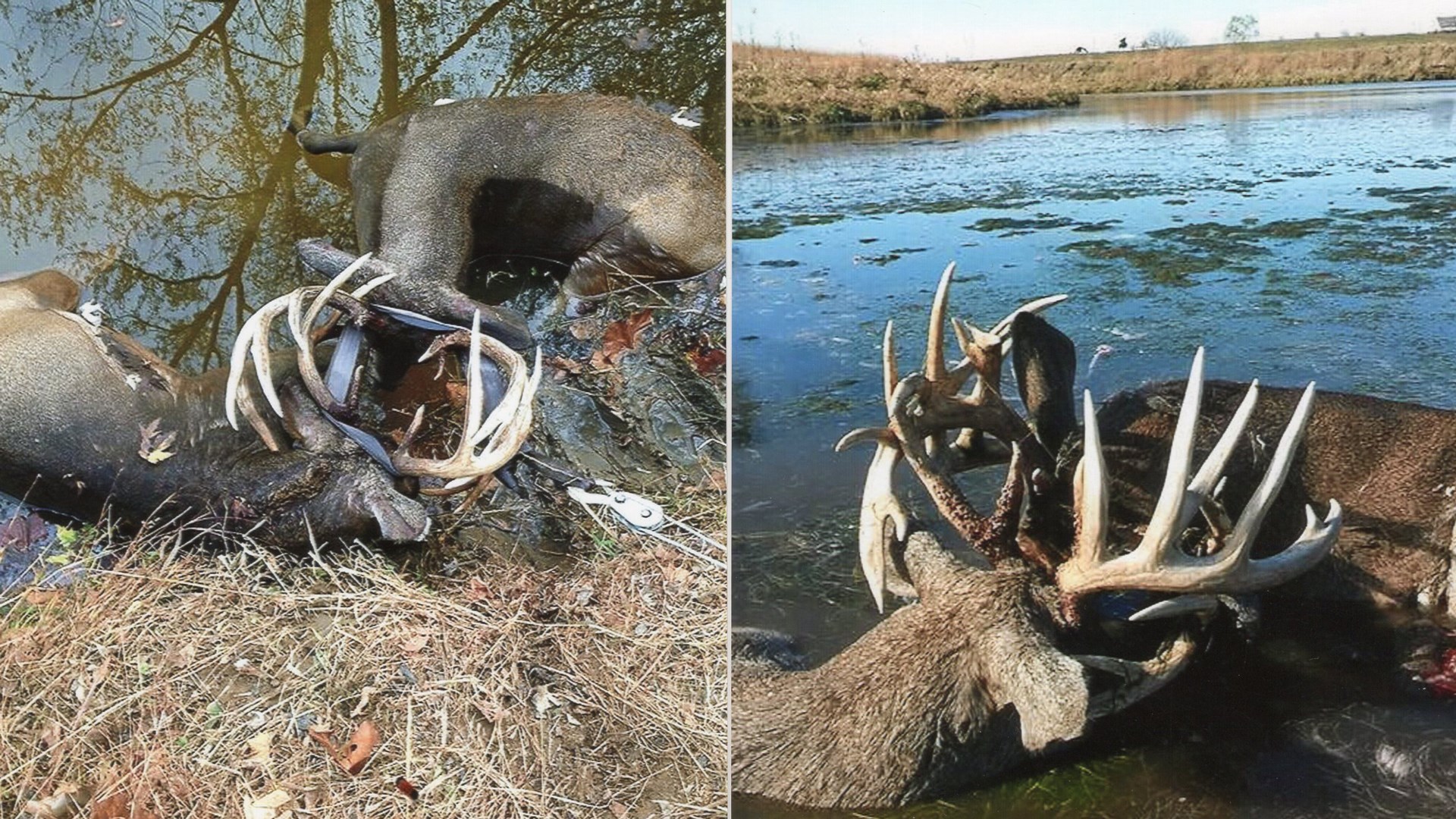 One of the unfortunate outcomes of the whitetail rut is the natural order of things that man cannot control.