By Jim Heinbaugh, Manchester, Pa.
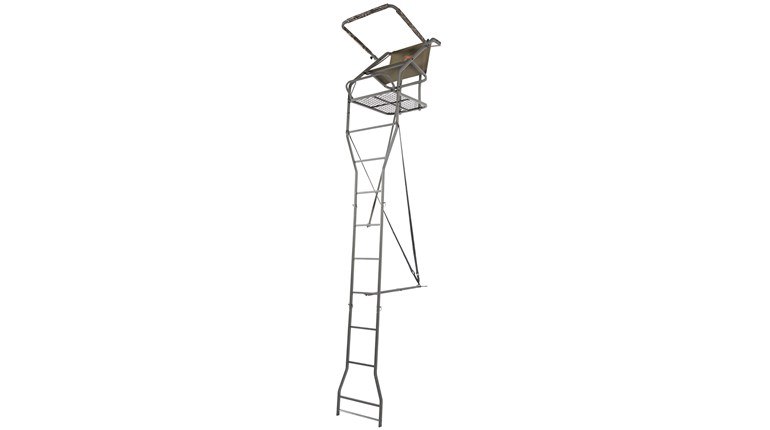
It was 40 degrees on Monday, Oct. 29, 2018. It was also archery season in Somerset County, Pa., and my favorite time of the year. I had been hunting the same “Point” treestand off and on for the last two weeks trying to take a half-decent 9-point mountain buck that I had captured on camera numerous times. At around 5:15 p.m., I noticed a buck coming in at about 80 yards, feeding as it walked. Even with my binocular, I could not get a definitive look to confirm it was the 9-point because of some real thick brush. The buck took more than 30 minutes to walk those 80 yards, and my anxiety came and went in that half hour.
When the buck entered an opening in the brush, my plans seemed to systematically take a turn for the worse. The first issue, realized at full draw of course, is that I could not feel my anchor point because of my face mask. So, I pushed my face mask down with the knuckle of my thumb and found my anchor point. The second issue, which I’ve heard of other hunters encountering, had to do with the binocular hanging from my chest. Within a millisecond of releasing my arrow I knew something was not right. The binocular hit me in the chest with a loud thump, and my broadhead made the loudest whack I have ever heard when it hit that buck.
The buck went down immediately, but I realized what I had done. The bow string caught the corner of the binocular and launched it forward and then back into my chest. I hung up the bow and looked at the buck through the binocular. From what I could tell, the buck was not breathing or moving at all.
For a brief period of time I thought it was over and done, but as soon as that thought began to settle in, the buck got up and bolted down through the woods. Once on the ground, I looked for all the evidence I could find—an arrow without a broadhead and some blood. With not much to go on, I decided not to push the buck in the dark.
Back to camp I went, feeling as awful as you can imagine, replaying what went wrong and wondering why I was not butchering that buck. As it turned out, I had a trail camera set up close that captured the action, and based on the images, it appeared as if I’d hit the deer in the neck, which was absolutely not where I was aiming.
When I went to review the scene in better light the next morning I found only five drops of blood. Looking at my arrow, it seemed that the tip insert had been pushed through the side of the carbon shaft, meaning the broadhead was still either on the ground or in the deer. I searched for half the day and became more and more disgusted with myself with every step I took. I never found any clues, let alone a dead deer.
Archery season came and went, and I was now in the field for the first day of rifle season. I was still upset for injuring that buck, and I was also feeling down because for the first time in seven years my son could not come along on the opening day of rifle season. I went anyway, but I was not in good spirits.
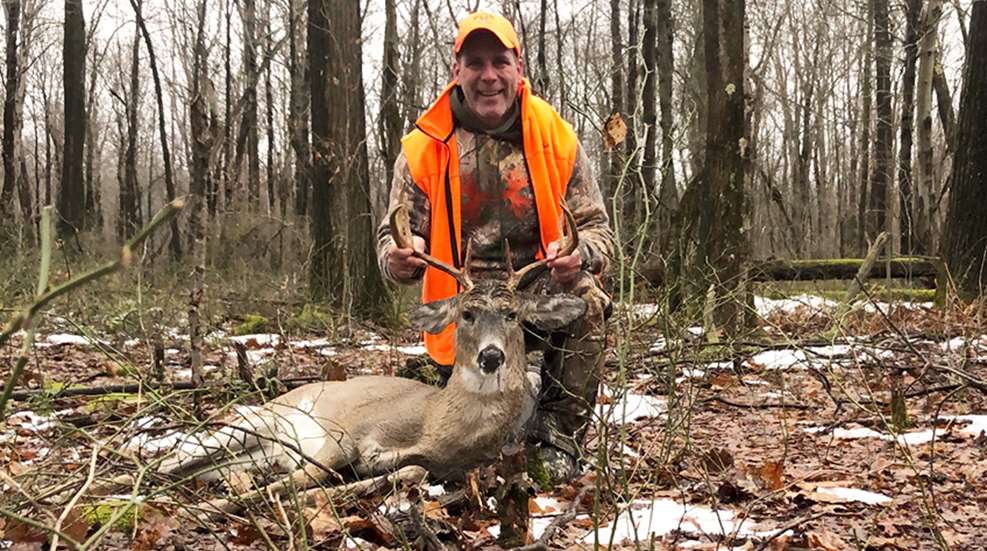
At 3:05 p.m., a legal buck came out chasing two does, and the .30-06 custom-made Mauser took him down in one shot. The first thing I noticed upon recovery was that this buck looked a lot like the buck I hit during the archery season, but it bore no scars, and there was no puss or seepage in the neck area. It was, however, only about a half-mile from where I had shot the buck during archery season.
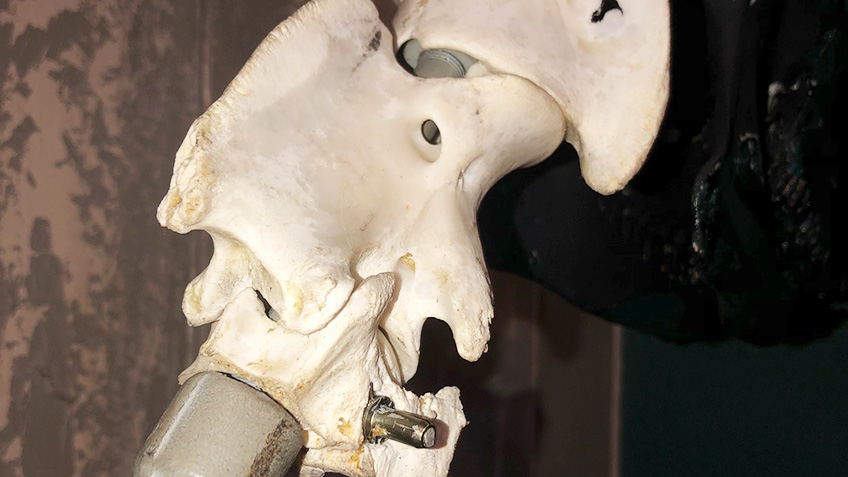
Eleven days later, I decided to clean off the skull to do a European mount and found something shiny in the neck. You guessed it: My Muzzy broadhead was embedded in the third vertebra down from the skull! The tip of the broadhead was sticking out of the bone a quarter of an inch. Unbelievable! Can you fathom shooting the same buck twice? I was ecstatic, relieved and extremely thankful that this buck had come full circle for me.
Do you have an exciting, unusual or humorous hunting experience to share?
Send your story (800 words or less) to [email protected] or to American Hunter, Dept. MH, 11250 Waples Mill Road, Fairfax, VA. 22030-9400. Please include your NRA ID number. Good quality photos are welcome. Make sure you have permission to use the material. Authors will not be paid, and manuscripts and photos will not be returned. All material becomes the property of NRA.