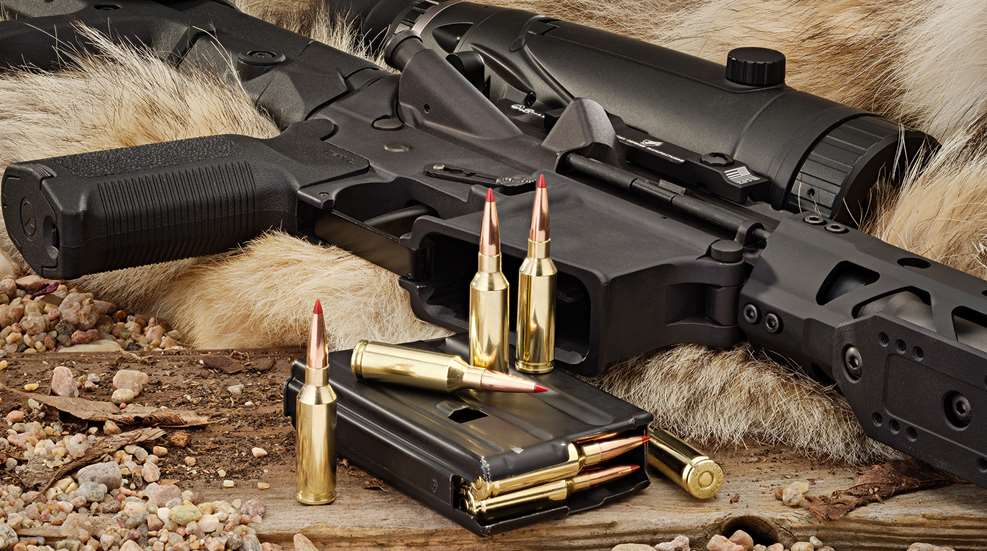
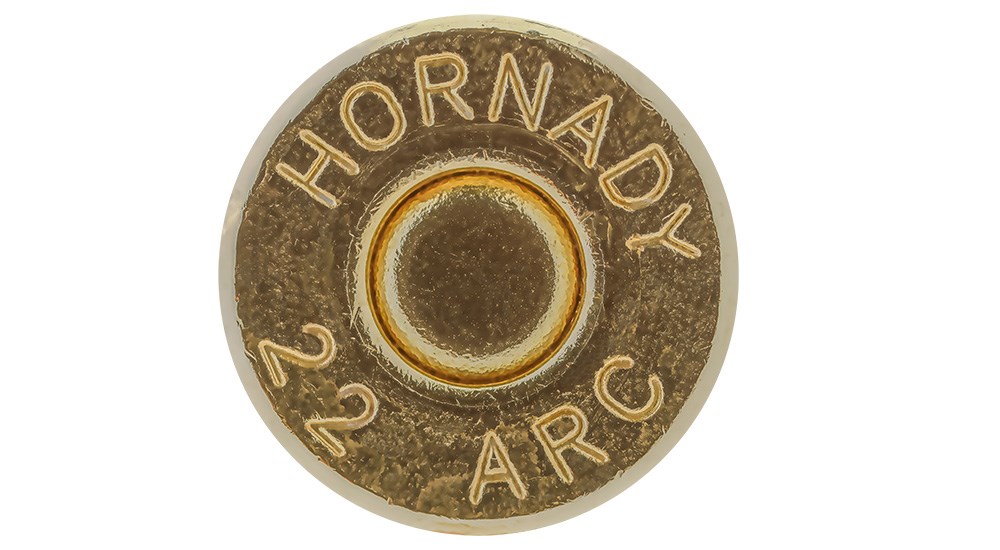
Hornady has been on a very successful run of new cartridge releases, and it seems their latest will follow suit. The 22 ARC, or Advanced Rifle Cartridge, is based on the 6mm ARC and is also designed for optimum performance in the AR-15 platform; it will also shine in a bolt action rifle. Using the same 0.441-inch-diameter case head as the 6mm ARC, the PPC family, and the 6.5 Grendel, the 22 ARC is engineered for use with the long, heavy-for-caliber Hornady bullets with the high ballistic coefficient (BC) values. Like so many Hornady designs, the 22 ARC seems to be designed for best performance at longer ranges.
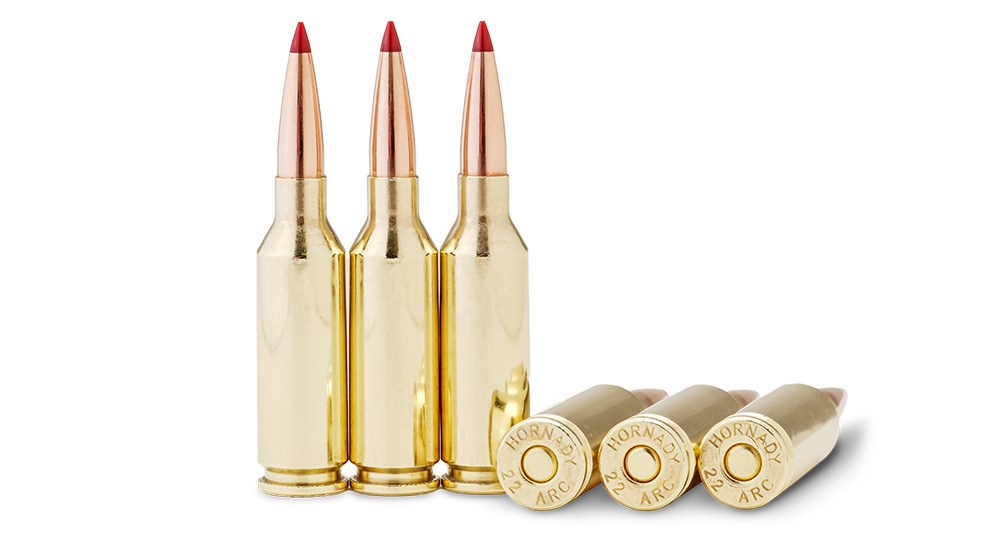
To understand what Hornady is aiming for—pun fully intended—we should take a look at some of the new cartridge’s stats, and how they affect the downrange performance. The case has minimal body taper and a steep 30-degree shoulder to maximize what case capacity is available, and unlike some other modern .22-caliber AR cartridges, the rim is not rebated. With a maximum cartridge overall length of 2.260 inches—the same as the 223 Remington—the 22 ARC’s case length of 1.525 inches allows the use of long bullets; nearly ¾-inch of bullet can sit outside the case mouth. Long bullets are fine and dandy, but they aren’t much good if they can’t be stabilized. And that’s where things get different with the 22 ARC.
The new 22 ARC uses a 1:7-inch twist rate to stabilize the projectiles chosen for this new offering, and that makes a huge difference in comparison to many of our favorite varmint cartridges. For years I’ve been a huge fan of the .22-250 Remington, as it has all the velocity I need, and will handle woodchucks, foxes, coyotes, and nearly any small game suitable for a .22-caliber centerfire would be asked to handle—within moderate ranges. My Ruger M77 MKII uses a 1:12-inch twist rate, which remains very common for this cartridge, and has a difficult time stabilizing bullets heavier than 55 grains. Despite the case capacity of the former wildcat, the 22-.250 Remington is inarguably handicapped by the twist rate of its barrel, especially when looking at long range trajectory and wind deflection values. Many of the modern .223 Remington rifles a tighter twist rate than do the vast majority of the .22-250 rifles, and as a result the lower velocity of the 223 Remington doesn’t pose an issue at longer ranges; the smaller case with heavier bullets will actually outperform the 22-250 Remington. So while the 22 ARC might not be the best choice for launching 35- and 40-grain bullets, for a long-range .22-caliber centerfire it has what you’re after.
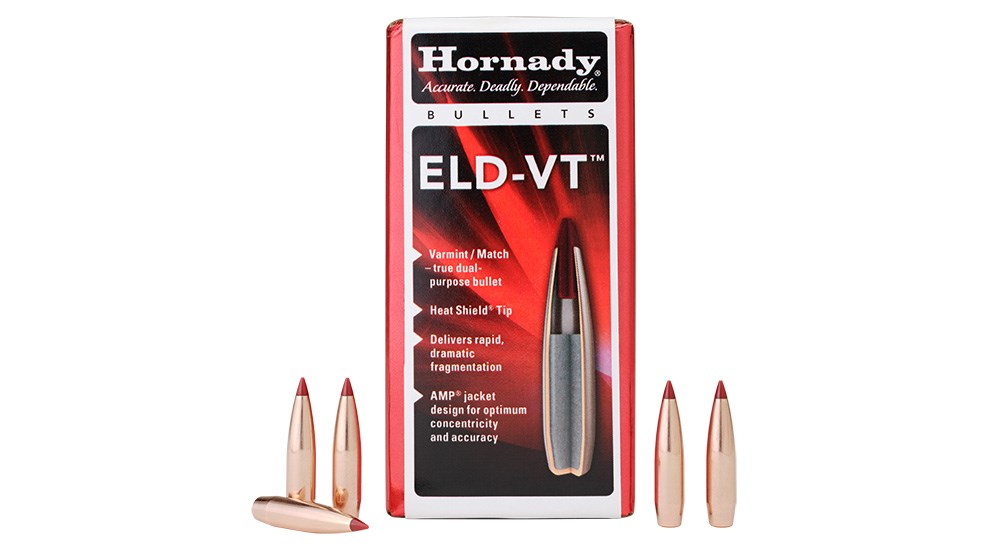
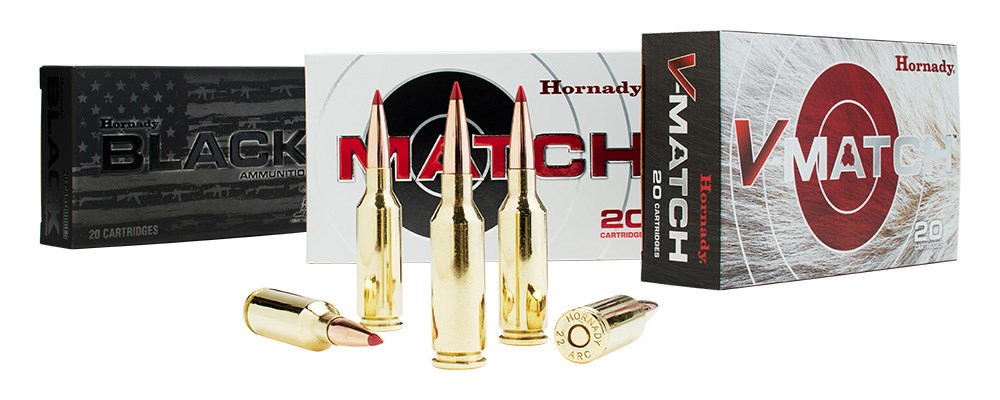
Hornady has announced three loads for the 22 ARC: the 62-grain ELD-VT (more about that in a second) at 3300 fps, a 75-grain ELD Match at 3000 fps, and an 88-grain ELD Match at 2825 fps. Though Hornady doesn’t currently list the BC values for either of the Match, it is rather obvious that these heavier bullets will resist wind deflection and retain energy very well; they are in the ELD line after all. And while these projectiles are technically designed for target work only—paper and steel—it is no secret that a match bullet can be devastating on varmints and furbearing predators alike. But as this is the American Hunter, I feel that the 62-grain varmint hunting load that should be our focus here.
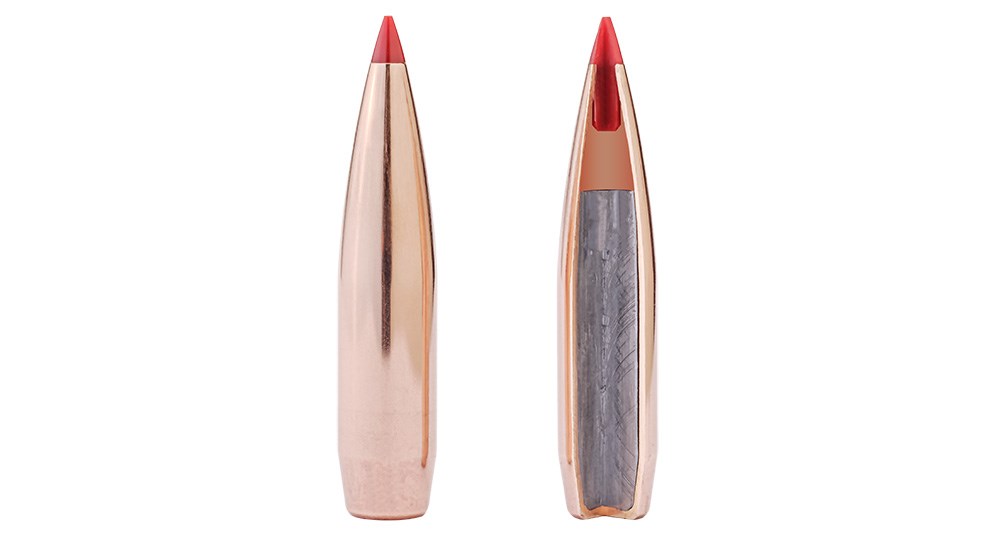
The ELD line—up until now—consisted of the ELD Match and ELD-X; the former is a highly consistent projectile with an excellent BC, capable of hair-splitting accuracy, and the latter is of similar conformation, yet has a jacket designed for good terminal performance. The line is now expanded to include the ELD-VT, a frangible varmint bullet which delivers the same fantastic accuracy as its siblings. Featuring a thinner jacket, and a large hollow cavity under the signature polymer tip, the ELD-VT is built for rapid expansion. Loaded in the V-Match ammunition line, the 22 ARC uses a 62-grain ELD-VT to create the red mist on prairie dogs and woodchucks, as well as sending coyotes to the afterlife.
Hornady has claimed that the 22 ARC rivals the performance of the .22-250 Remington, and I feel that claim is valid. Yes, the .22-250 Remington will assuredly give better velocities, but doesn’t function well in any of the AR platforms. The 22 ARC uses bullets heavier than those of the .22-250—again due to the older cartridge’s twist rate situation—and despite the lower velocities, will hang neck-and-neck with the .22-250 Remington out to 500 yards, and from there will come into its own. The 62-grain ELD-VT has a G1 BC of .395, while a Hornady FMJ of the same weight has a G1 BC of .274; the 55-grain bullets often employed by the 22-250 have a G1 BC of somewhere between .243 and .254, depending on make and model.
I think the closest competition for the 22 ARC will come from the 22 Nosler and .224 Valkyrie, as they both possess some similar traits. The Nosler cartridge doesn’t seem to have taken off as well as anticipated, though it does deliver performance strikingly similar to the 22 ARC; its 62-grain load is within 50 fps, and its 55-grain E-Tip bullet is suitable for deer hunting, if the shooter is patient. The 224 Valkyrie is another .22-caliber speed demon, designed for long-range target work, as well as hunting game as large as pronghorn antelope and whitetail deer; the 90-grain Federal FUSION punches above its weight class. Will Hornady bring out a big game load for the 22 ARC? Time will tell.
Based on the past performance of Hornady’s designs—especially the 6mm ARC—I’ll wager that the 22 ARC will quickly become a favorite of those who want to get the most out of the AR-15 platform, as a long-range target cartridge, as well as a great means of ruining a coyote’s career.