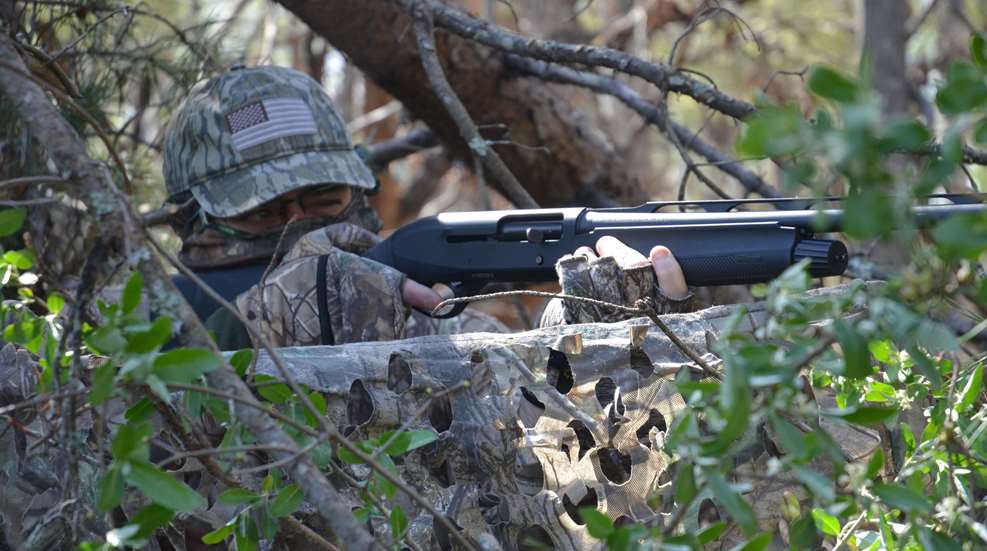
To consistently kill turkeys, and particularly those long-in-the-spur toms, you must defeat their keen sense of hearing and eyesight—particularly the latter. Overcoming their uncanny ability to spot all threats requires melding into the environment. While the newest, snazziest camouflage can help you do so, in actuality, any attire that remotely matches the flora of the locale can do the same. I go the inexpensive route. Why? Camouflage clothing is only one part of what should be a two-prong approach. The often-overlooked component is the use of a blind.
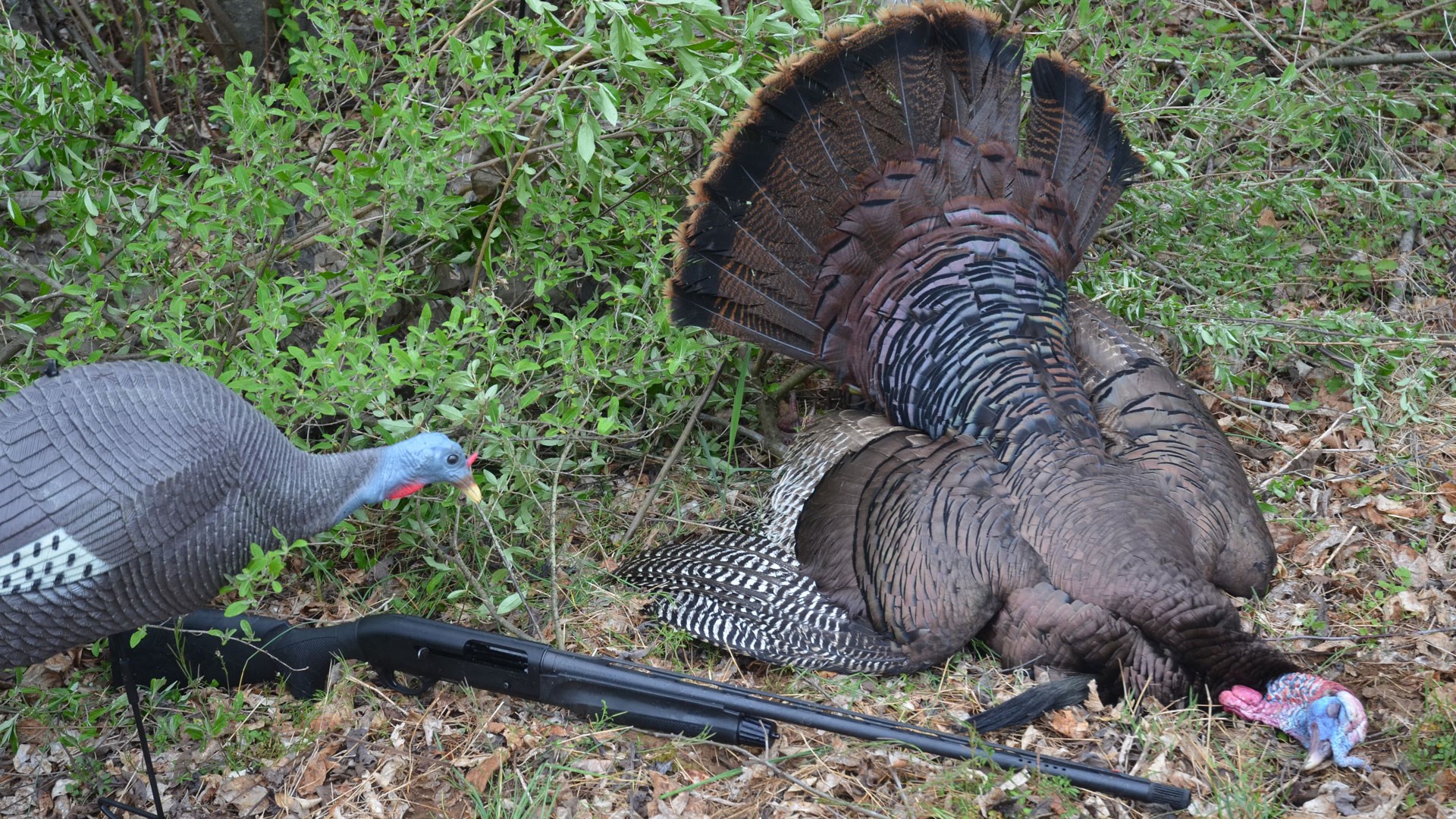
Whether natural or commercially produced, blinds serve to disrupt the human silhouette—or hide you altogether—while also preventing a gobbler from noticing movement. Whilst pursuing an obstinate bird, or when a child or apprentice hunter accompanies you afield, blinds are a godsend. In fact, so beneficial are they in helping fill my tags that it’s now a very rare occasion I don’t quickly erect one before initiating contact with a gobbler to set the wheels in motion.
The type of blind best suited for you depends on several factors, including: location/terrain/distance; hunter strength/physique; duration of hunt; experience of hunter(s); and the presence of children, among other things.
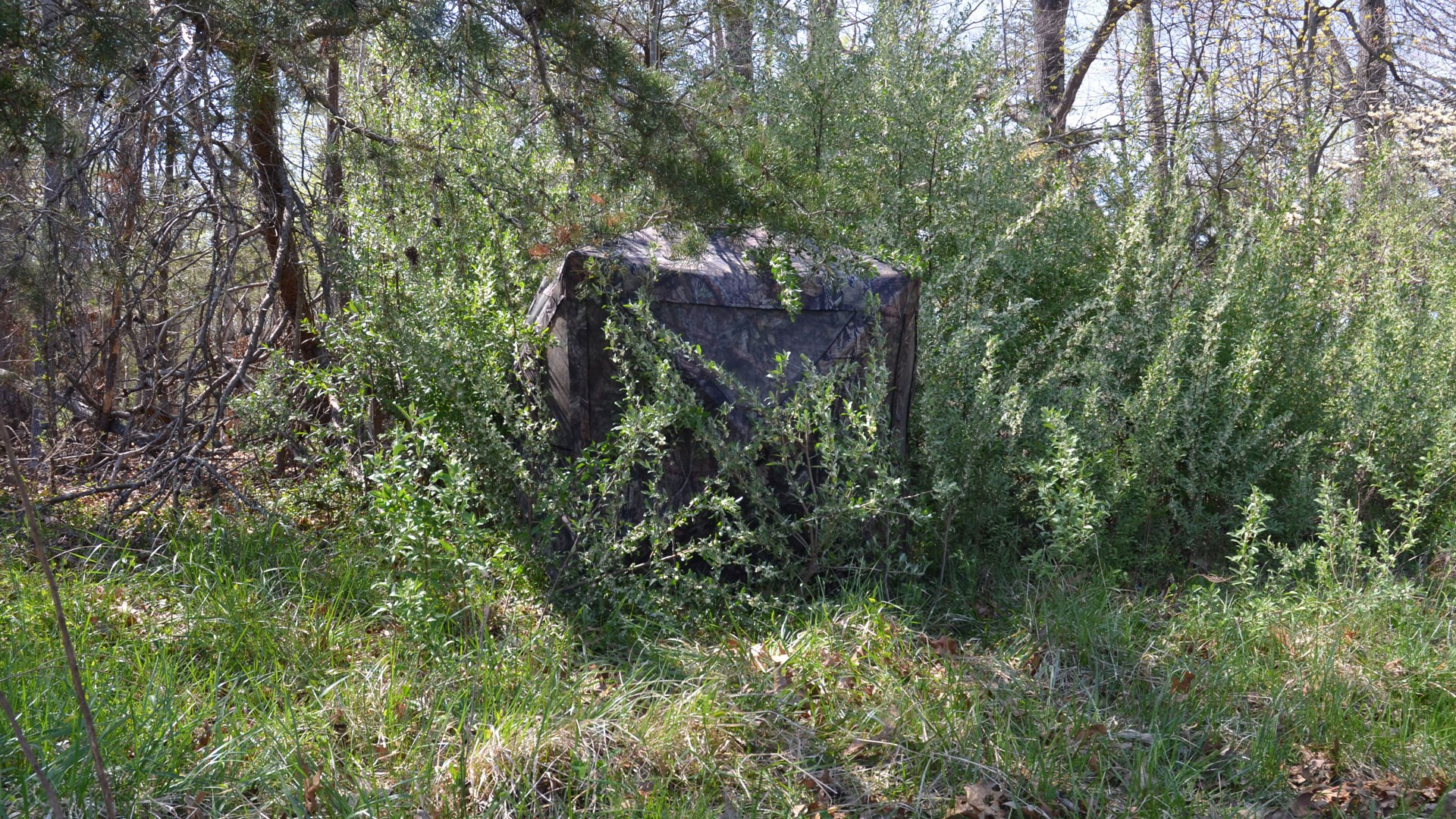
What follows is a guide to help incorporate ground blinds into your turkey-hunting repertoire.
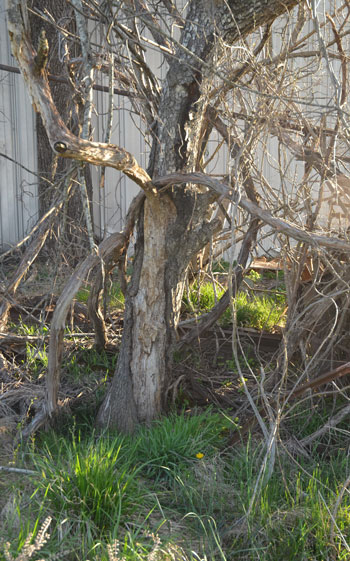
Natural Blinds
A mature, standing or fallen tree, stone fence, or other solid backing to lean against will provide critical support for your back, thereby minimizing discomfort that leads to fidgeting. If said object is wider than your body, it also helps break up your outline and protect your back from approaching, unseen hunters. But there should be a barrier between you and the turkey as well. Doing so interrupts your profile, making it more difficult to detect you.
Unless I can erect an enclosed, pop-up-style blind in an established hotspot in advance, I opt to go the natural route. Why? Typically, during the workweek, I have only an hour or so afield each morning, so things must happen fast—really fast. Being late to work isn’t an option, therefore I approach as close as possible to a boisterous gobbler, and then quickly, quietly, and with minimal movement, construct an impromptu blind. Here’s my method:
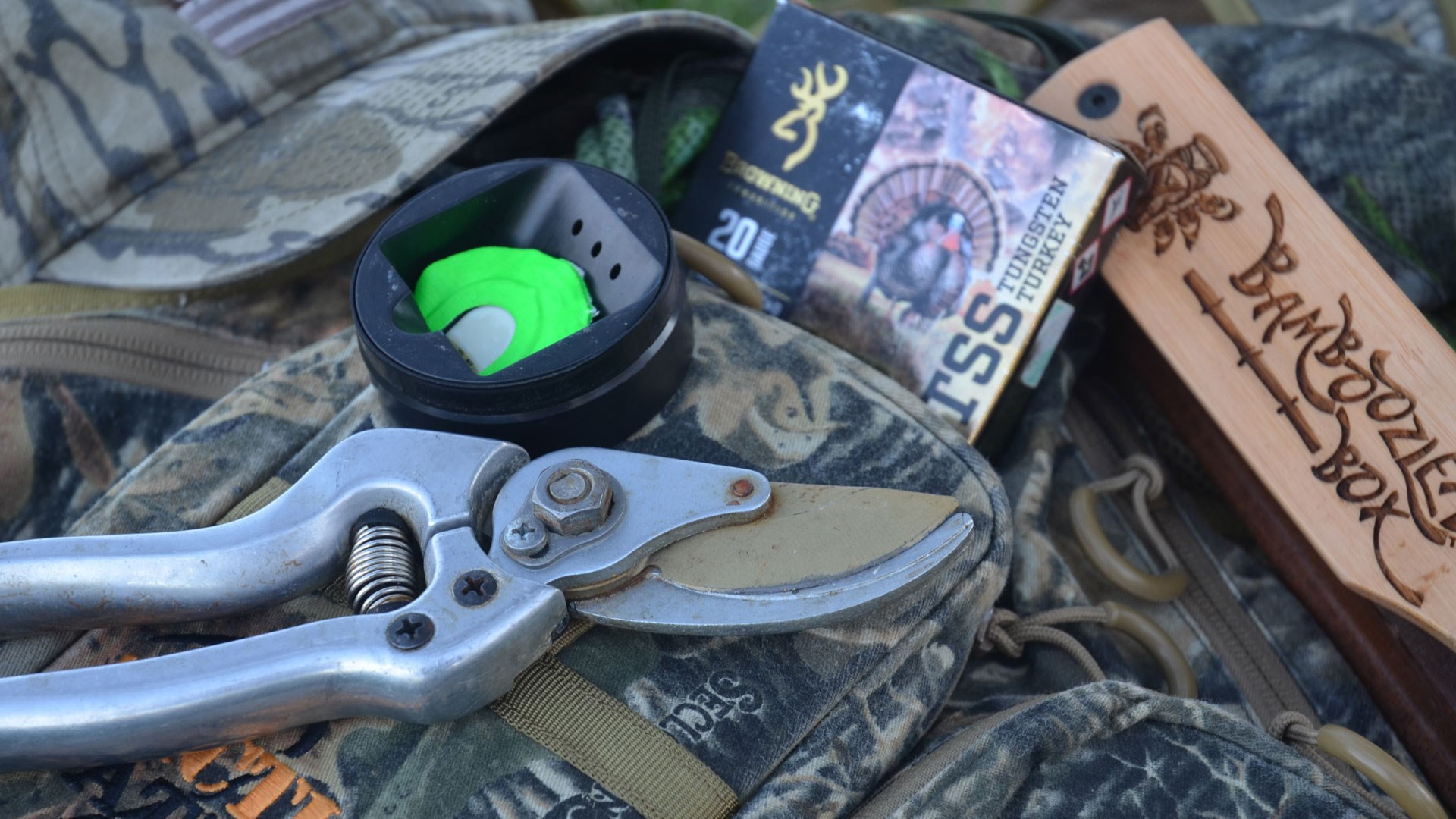
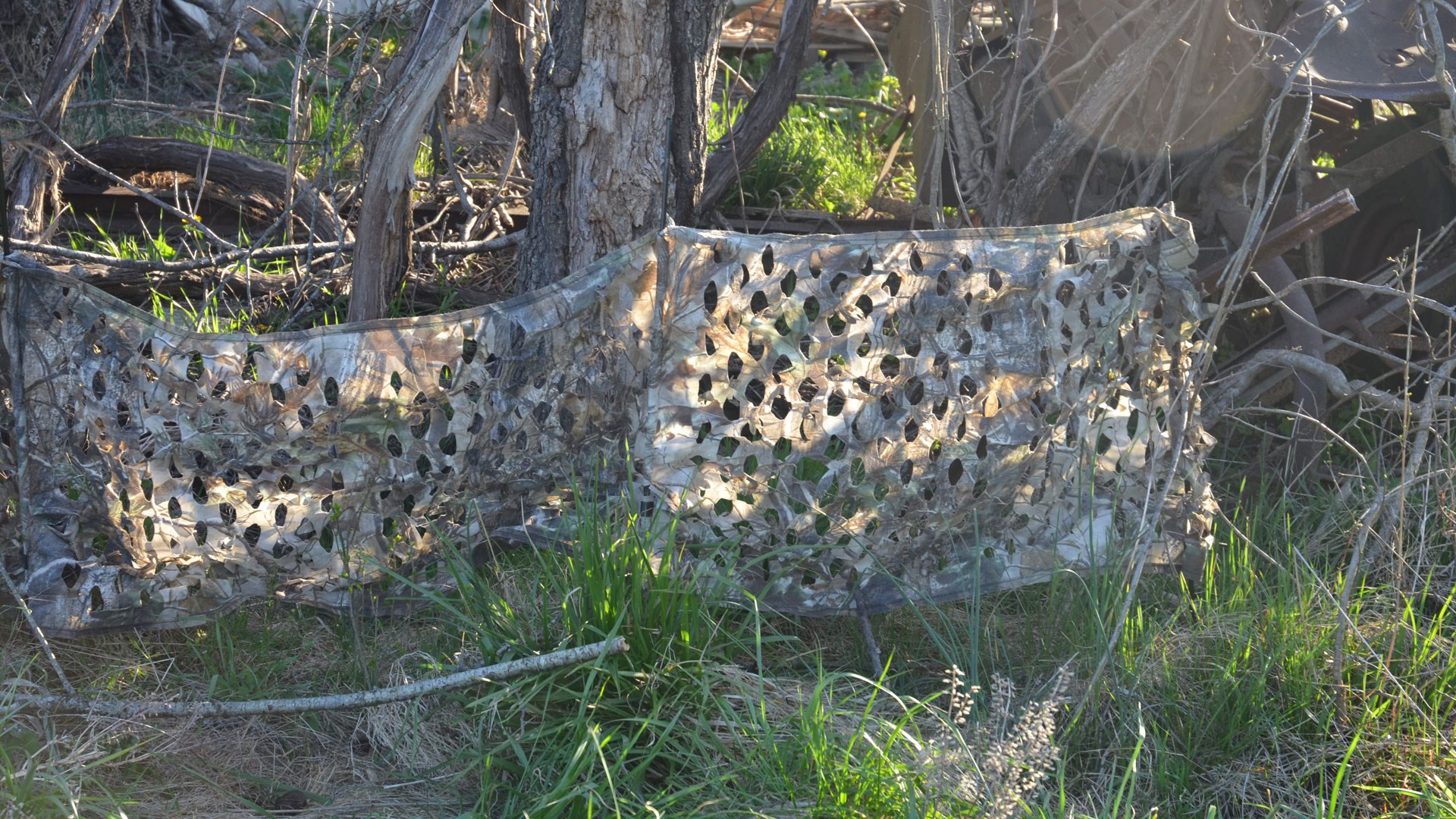
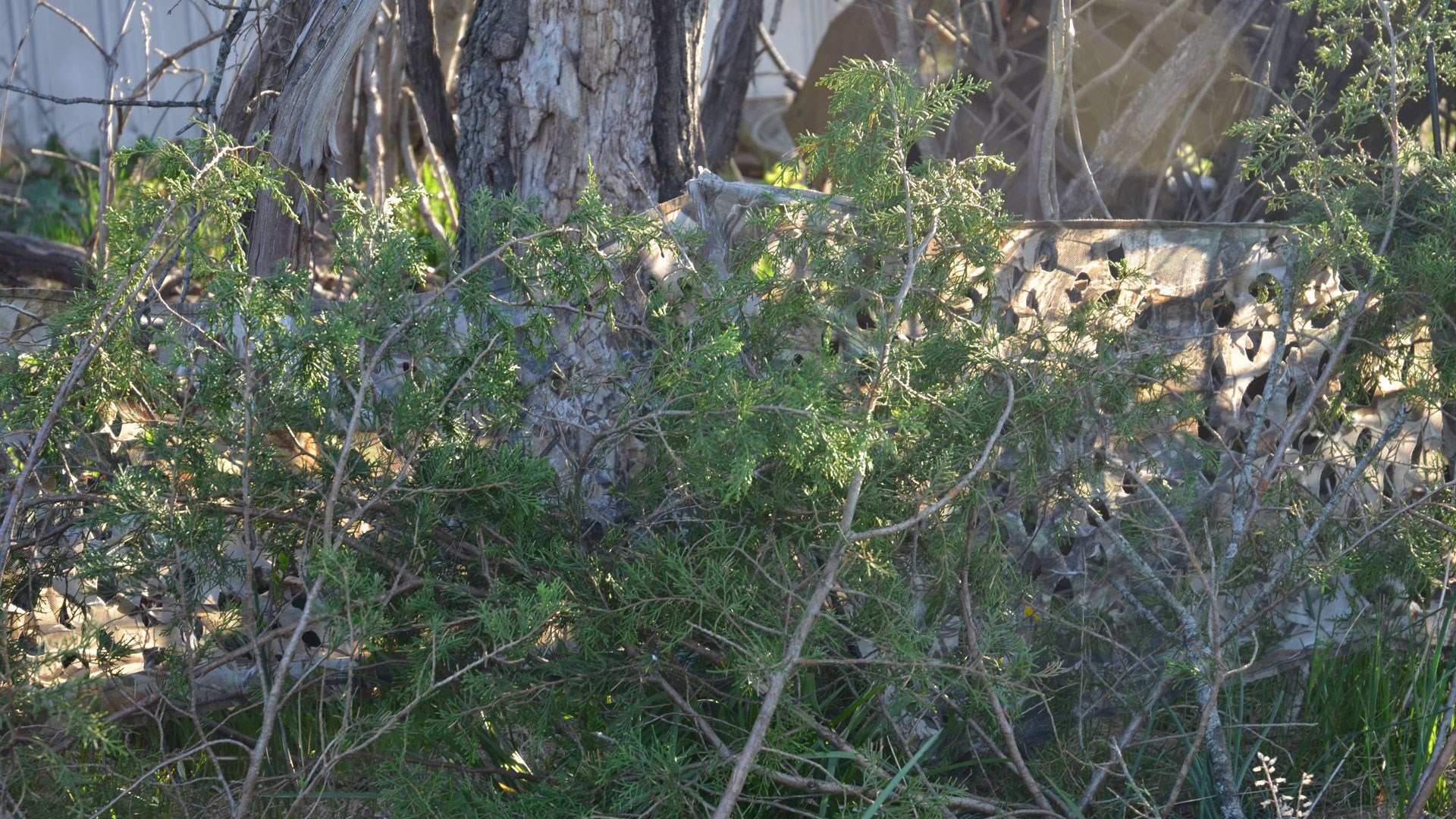
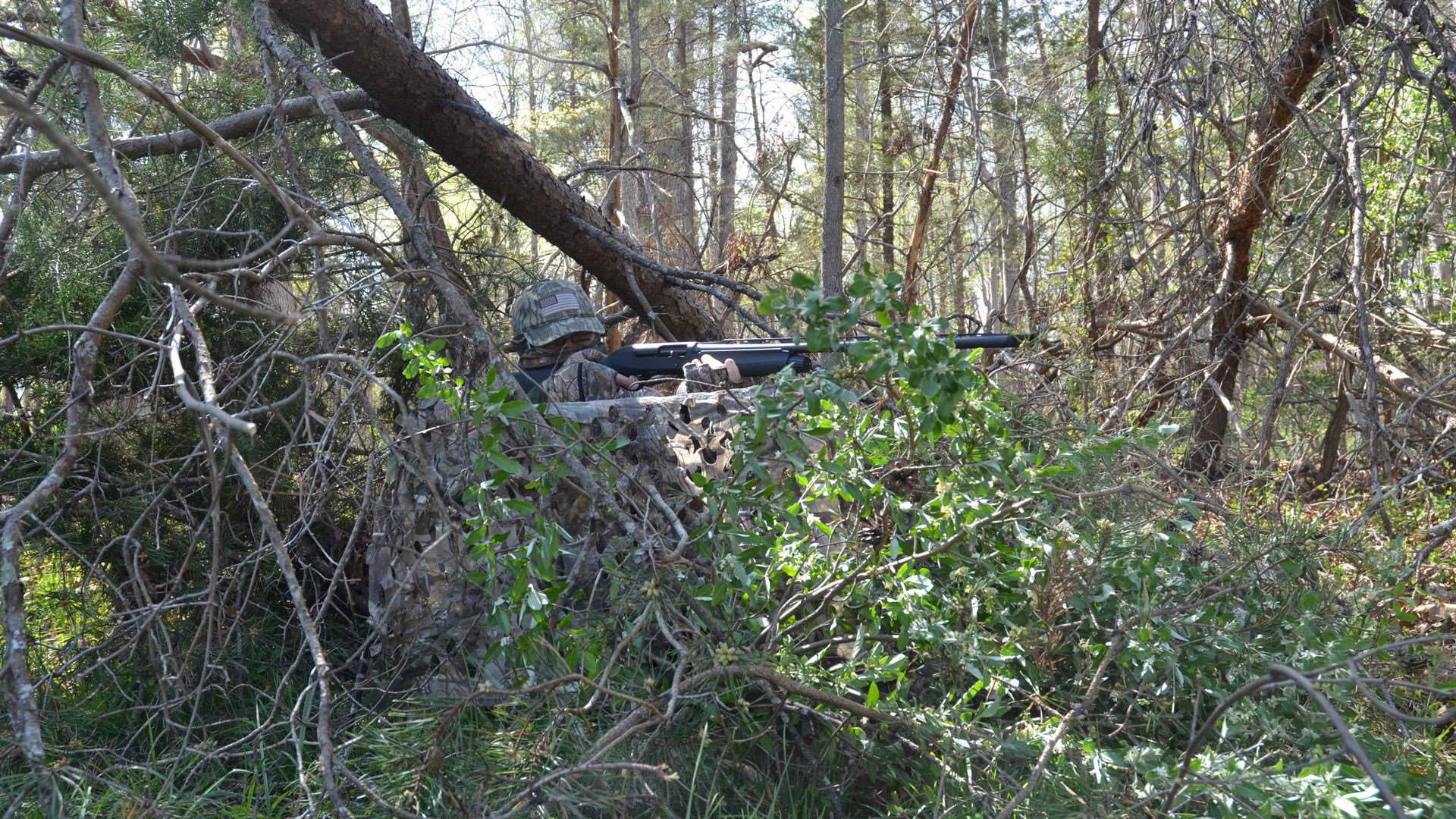
A pruning shear kept in my vest is used to fell small, brushy flora (or their branches), such as autumn olive, cedar, weeds, and similar undesirable plants. Sizable dead branches nearby are scavenged, too—anything natural that can disturb my silhouette. These are then arranged in a semicircular wall in front of me, or preferably, forward of my HS Strut Super Light Portable Ground Blind, which stands 27-inches tall. Exactness in arrangement is unnecessary, and it need not fend off a barbarian horde, either. Just make sure that you don’t build it so high or close that it’ll affect sighting or swinging your shotgun. Between the natural and manmade materials, a motionless hunter can remain undetected by gobblers at spitting distance. I’m not kidding. I know because I’ve had them that close.
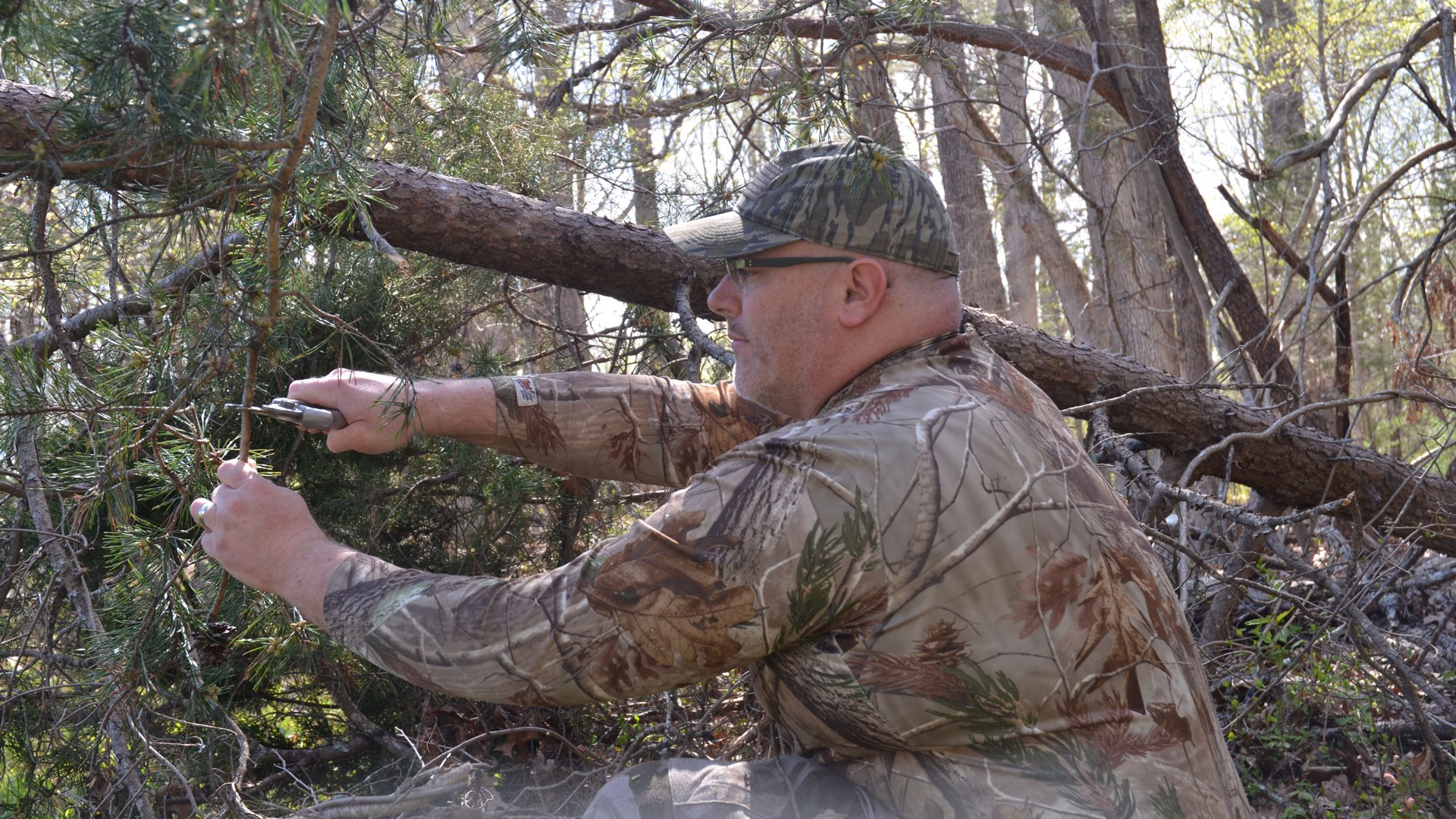
Besides being an expedient means of augmenting concealment in a primo location, natural blinds are inexpensive—really, only a pruning shear is needed, and then only if leafy flora is desired—and the tool (pruning shear) is easily transported. The vegetation stays behind. This makes it ideal for veteran and wide-ranging, run-and-gun hunters. The primary drawback is that not all movement is masked; shift at an inopportune time and you’ll get busted, fast. As such, natural blinds are less useful for those individuals who move a lot or have someone with them that does.
Manufactured Blinds
Mass-produced ground blinds that are suitable for turkey hunting range from the abovementioned HS Strut model (and similar units from other companies), to mirrors (seriously), to omnipresent soft-sided, hub-style ground blinds. There is no shortage from which to choose. Since the former was covered elsewhere, I’ll focus on the latter here.
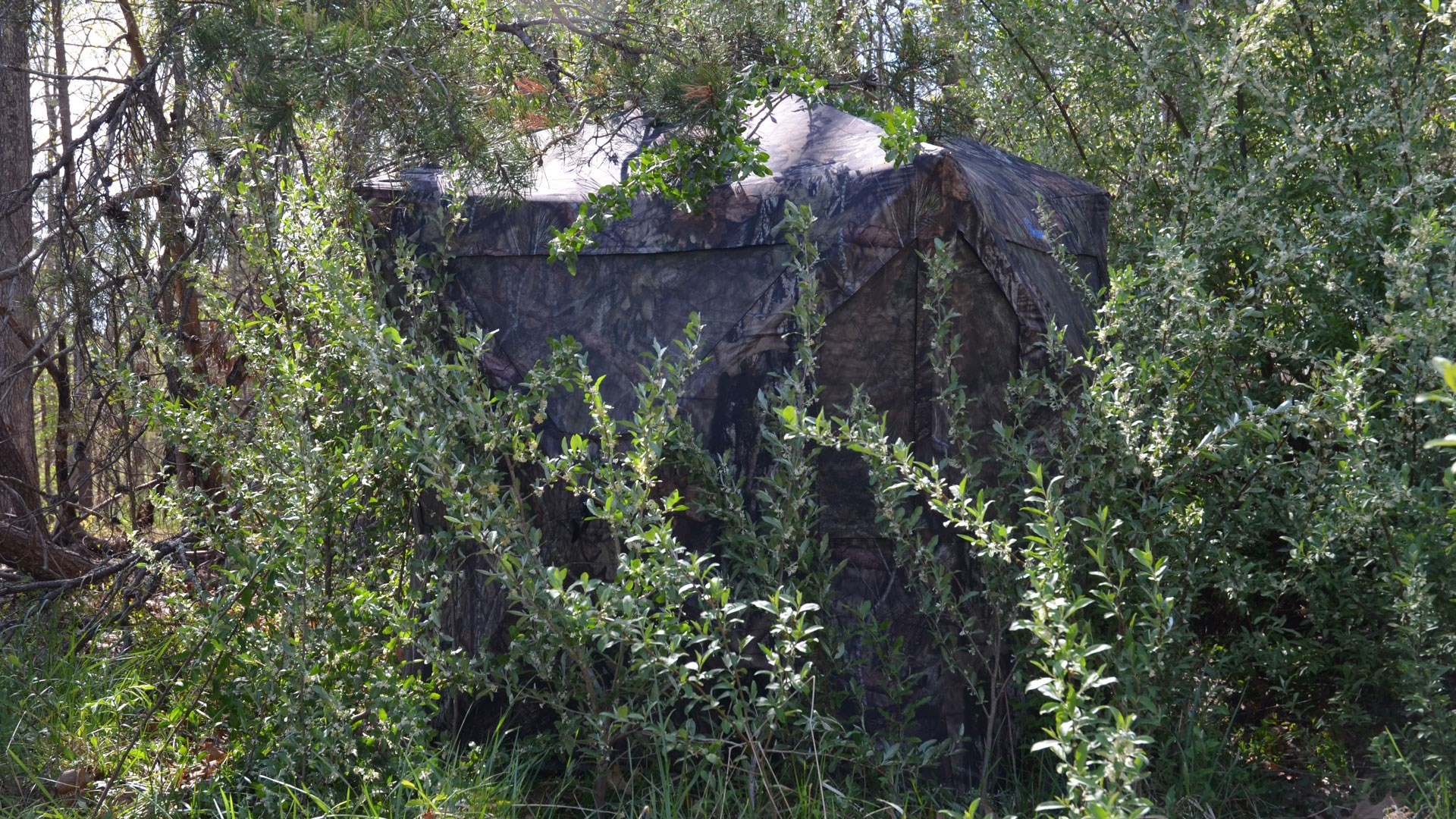
Pop-up-type blinds are a mainstay for big-game hunting—particularly when archery tackle is used, a suitable stand site is unavailable, or during long stints in inclement weather. They nicely pull double-duty for turkey hunting, too. In fact, provided that a blind isn’t exceedingly shiny and is somewhat blended in—or the birds are acclimated to it)—turkeys will pretty much ignore it. Years ago, I had a flock dust within two feet of mine. No cares at all.
Factory made, hub-style ground blinds are a superb tool for the turkey hunter. A well-placed and blended-in unit—combined with a decoy (or multiples) and quality calling—will, undoubtedly, improve your odds of success. How? Outside of the opened window(s) you’re fully enshrouded from a gobbler’s keen eyesight. As a matter of fact, usually only a gross, ill-timed movement will catch a tom’s attention. Because you’re unlikely to be seen, you can relax, stretch, read, play games (silently), etc., and the blind will protect you from foul weather as well. The more comfortable you are the longer you’ll stay afield. That increases opportunity. Lastly, since most movement is undetected, hub-style ground blinds are ideal when a youth is tagging along or is the hunter. When my sons were young, at times I’d spread out a blanket with Legos for entertainment until the gobbler arrived. Worked perfectly.
Low-capacity ground blinds with a small footprint are generally compact when collapsed and lightweight, and thus are easily transported. However, they can become cumbersome if your turkey vest is overflowing with gear (especially multiple, bulky decoys), your shotgun is suspended via a sling, and/or you are carrying a folding chair. The larger models are worse; they’re also physically demanding to carry in tougher terrain. Beyond transport, a problem common to pop-up blinds is that they are quite noisy to set up (don’t try to erect them on a close, rapidly approaching bird), and doing so requires considerable movement. For these reasons, they’re best erected in advance.
Wind, and especially unanticipated gusts, can complicate hunting from a pop-up-style ground blind if the proper precautions haven’t been taken. If not suitably staked and/or tied, the blind essentially becomes a sail and can sway unnaturally, which can spook an approaching gobbler. Remember the old adage about an ounce of prevention … . This issue can be minimized, if not fully resolved, if the hub-style ground blind you purchase has features such as a thicker/heavier fabric, a durable hub-style framework, and the means to secure windows, among others. Simply stated, buy quality.
Portable ground blinds are manufactured by a host of companies in a dizzying number of configurations. Among them are: Primos; Ameristep; Browning; BOG; Rhino; Barronett Blinds; and Primal Treestands, to name a few.
Before using a portable ground blind, remember to double-check your state’s hunting regulations. Laws vary widely about their use. The same can be said of constructing natural blinds—especially if you plan to cut shrubs or small trees on state or federal lands. It’s not universally legal to do so.
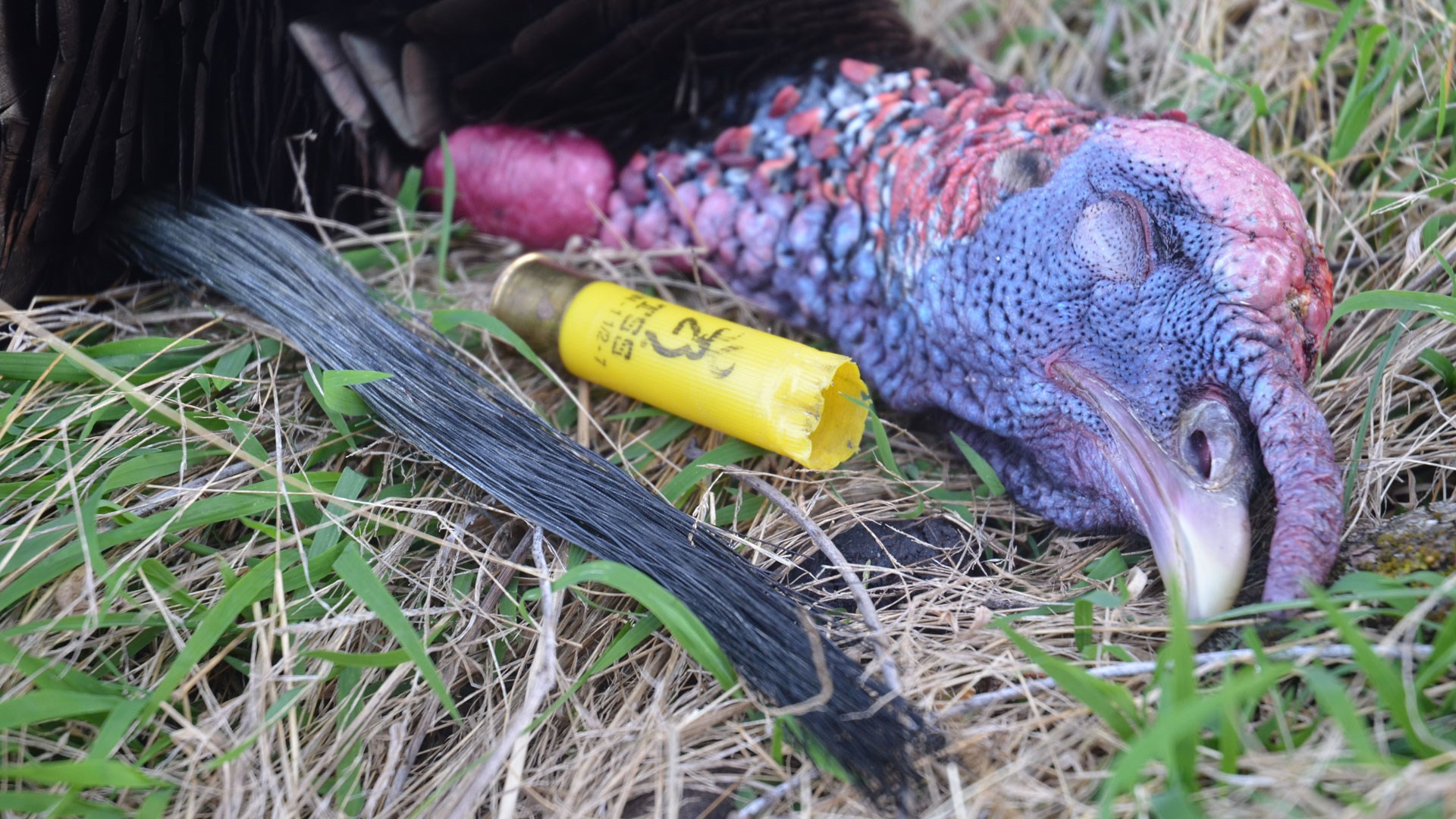
Want to increase your odds of bagging a gobbler this spring? It’s simple; just make yourself undetectable. How? Add a blind to your repertoire.