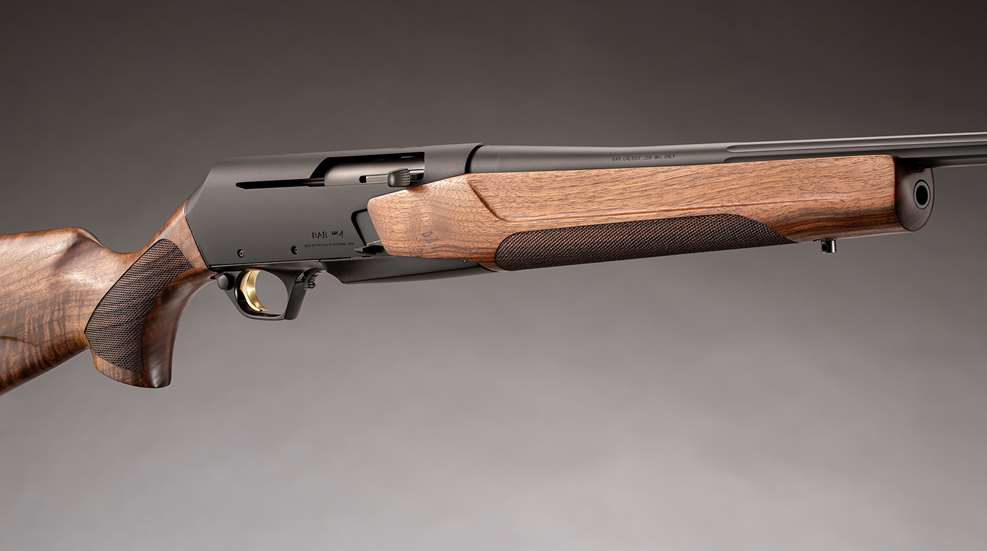
First, the Browning Automatic Rifle addressed in this article is not the renowned 1918 BAR of military fame. I’ve actually seen an American Rifleman editor hunt hogs with a reproduction 1918 BAR. While it was a spectacle to behold, it’s probably not the optimal choice for the deer woods, but hey, who am I to judge? The Browning BAR we’re talking about in this article is the iconic hunting rifle. If you ask most hunters if they’ve heard of the BAR, have ever seen one, or wanted to have one, the answer is likely to be “yes.” Introduced in 1967, this self-loading rifle not only bears the Browning name and logo but in fact was designed by a Browning—John M. Browning’s grandson, Bruce Browning. It’s an interesting historical note that Val Browning, John Browning’s son, was a lieutenant in the U.S. Army during World War I and instructed soldiers how to use the newly developed M1918 Browning Automatic Rifle. That said, despite the family lineage of the modern BAR hunting rifle, the brainchild of Bruce Browning bears nothing in common with the 1918 BAR other than the name. The Browning BAR has gone through a few iterations and design changes over the decades, bringing us to the current generation, the MK 4. While externally the new BAR looks almost identical to the MK 3, there are some important improvements.
For those unfamiliar with the Browning BAR, it is a semi-automatic sporting rifle that is fed from an internal but also detachable box magazine. The magazine is accessible then detachable via a hinged floorplate. Its solid receiver top is made from aluminum and is drilled and tapped for scope mounts. Like most other semi-automatic hunting rifles, the BAR has a two-piece stock with a separate buttstock and fore-end. The MK 4 has push-button QD sling swivel cups, which is great. There are models available with true detachable box magazines, camo finishes, presentation-grade gloss finishes, and the Hunter models with a utilitarian satin finish on the stocks and matte black finishing on the receiver and barrel. Of course, all the models feature the Browning gold trigger.
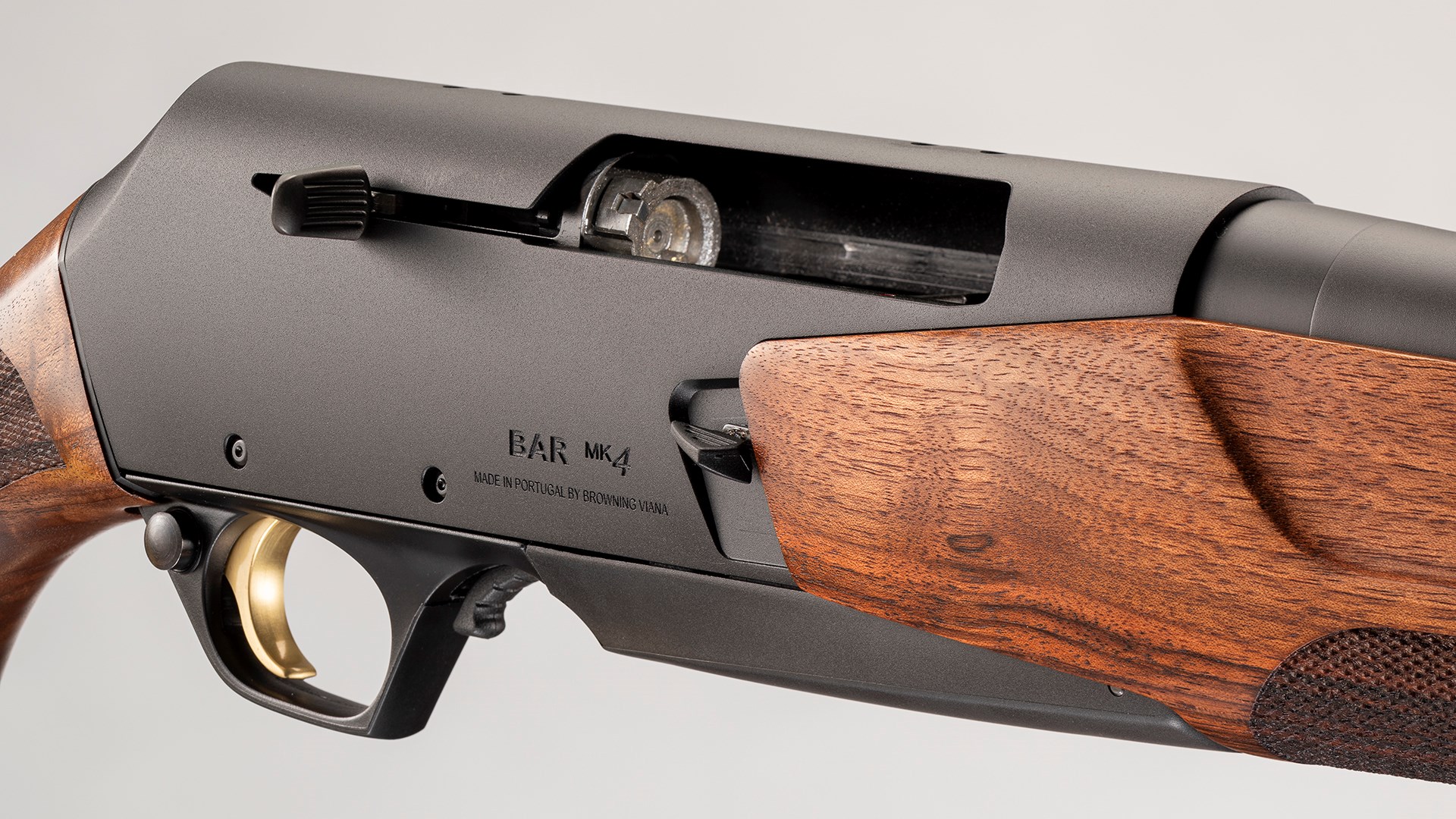
Our sample was the Hunter model chambered in .308 Win. The execution of the features and the finish are excellent. Even for a left-handed shooter such as myself, the controls are intuitive and easy to manipulate. Fine checkering and good ergonomics provide a secure grip, and the operating handle is large enough to easily work with, but not so large it’s obnoxious. Basically, if you have solid working familiarity and muscle memory with semi-auto shotguns you will feel right at home with the Browning BAR. That said, they do have left-hand models available, and if there is a next time for working with the BAR I definitely want that.
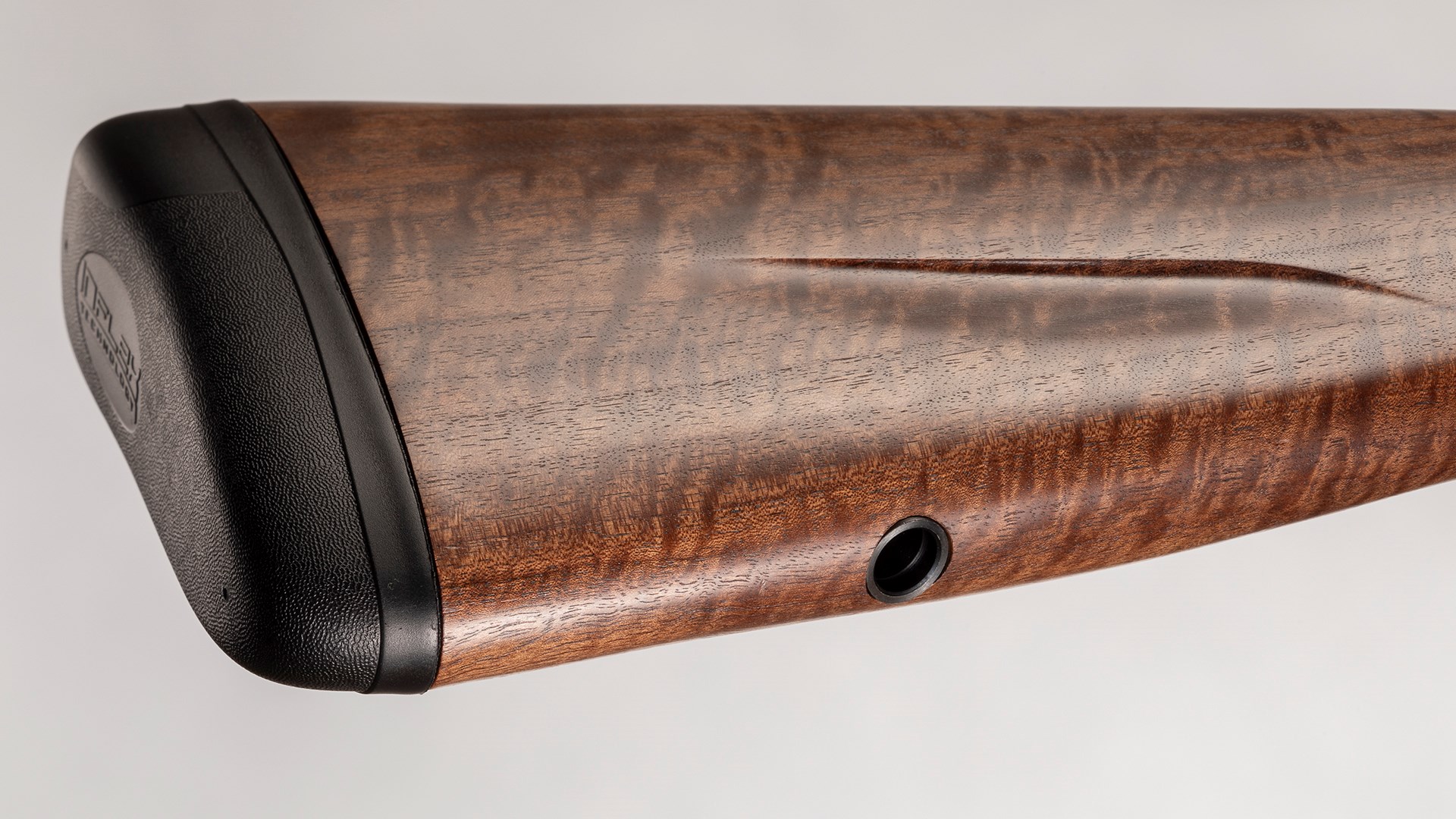
The BAR MK 4 exhibits one important difference over previous versions: The barrel is threaded into the receiver rather than the clamped-in type arrangement of the BAR MK 3. This was a design choice to improve accuracy over previous iterations. It’s important to note that the seven-lug, rotating bolt locks into the barrel, not the aluminum receiver. This barrel and locking lug design, combined with the BAR’s gas system, makes it one of the few semi-automatic hunting rifles able to handle magnum cartridges.
To evaluate the handling, operation and proclaimed improved accuracy, I mounted a Leupold VX-6HD 3-18X riflescope onto a one-piece Picatinny rail. This probably isn’t the scope I’d put on this gun for taking it afield, but I wanted to test the gun, not my eyes, so the higher magnification made sense. I shot ammunition from Hornady, Nosler, Remington and Winchester.
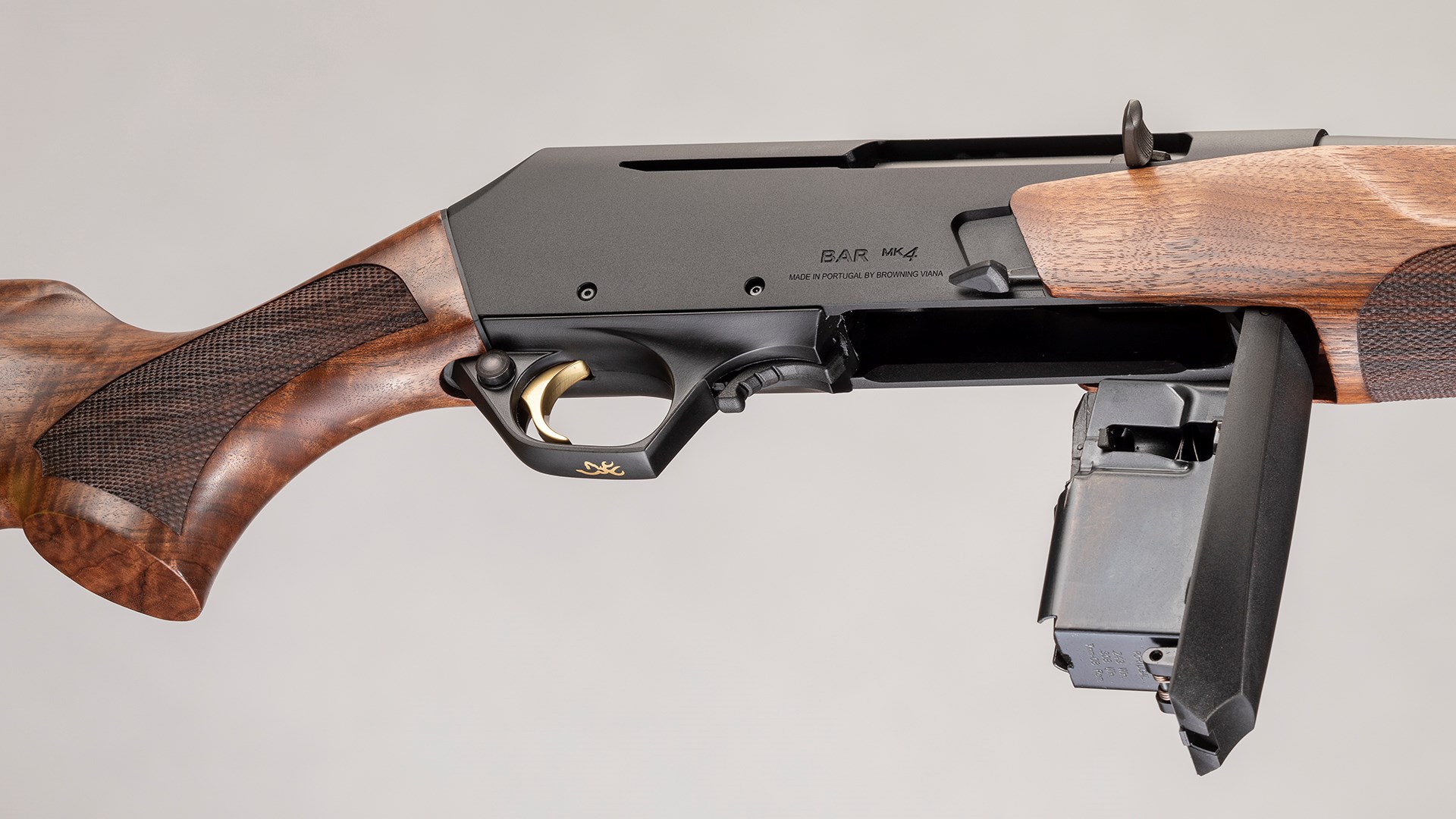 The MK 4 Hunter’s detachable box magazine mounts to a hinged floorplate, making it possible to keep a spare magazine in your pocket for faster reloads.
Operating and shooting the BAR is easy enough. On an empty magazine, pulling the bolt back locks it in place until actuating the bolt release on the right side of the receiver. Pressing the magazine release button at the front of the trigger guard opens the hinged floorplate. It swings down from the back. Rather than a spring and magazine follower jumping out of the action like a drunk jack-in-the-box or cartridges spilling everywhere, the BAR’s detachable box magazine is fixed to the floorplate. This keeps things where they should be. You can load rounds into the magazine while it’s still fixed to the floorplate, or you can remove the magazine to load it or unload it. Taking the magazine off the floorplate is a two-handed operation. You won’t be making any combat-style magazine changes, but it does allow a spare magazine of ammunition to be conveniently carried and loaded easily into the rifle.
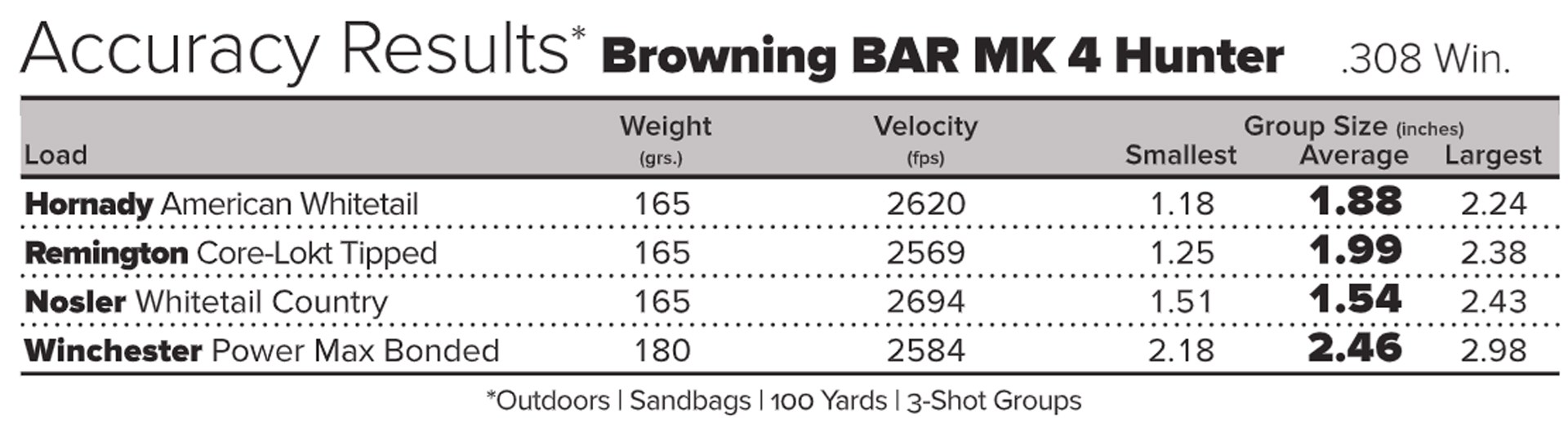
Shooting the BAR MK 4 is comfortable and fun. The weight of the rifle combined with the semi-auto function soaks up recoil, and it handles and points naturally like a shotgun. That’s all for naught if it shoots patterns rather than decent groups. Fortunately, the change to threading the barrel into the MK 4 receiver seems to in fact make the rifle accurate. Groups ranged in size from 1.18 inches to 2.98 inches. Average group size across all the loads and shots was 1.96 inches. This is good, consistent accuracy for a semi-automatic hunting rifle. There is one caveat. Due to the 1:12-inch rifling twist, it did not shoot that well with loads greater than 168 grains.
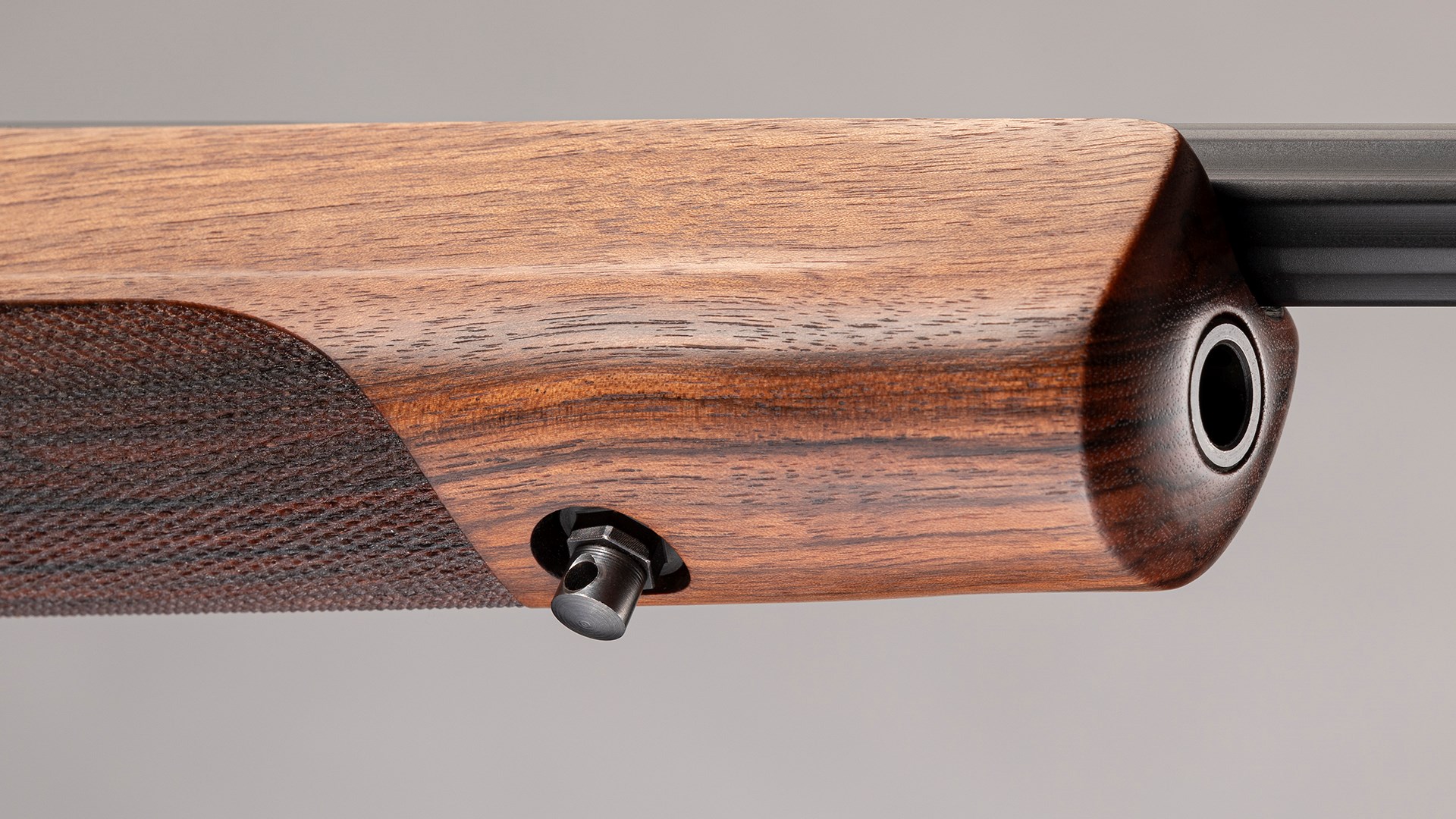 The Browning MK 4 Hunter is a versatile autoloader that sports QD sling swivel cups as well as a traditional sling swivel stud for attaching a bipod.
I like the Browning BAR. I have a soft spot for it given a BAR MK 2 in .243 Win. was one of my father’s favorite deer rifles, and I had plenty of time behind that gun as well. There are only two things I’d change on this rifle.
First, it would be great if the muzzle were threaded to add a brake or suppressor. No, it’s not like the .308 has vicious recoil, but a muzzle brake or a suppressor would make it much easier to stay on target or at least keep everything in the field of view. This is important for a rifle for which one of the main selling points is the ability to make rapid follow-up shots. I would also prefer the twist rate to be 1:10 inch rather than 1:12 to better stabilize heavier bullets. There just isn’t any reason I can see to use a 1:12 twist rate. Otherwise, the rifle is set up quite well for what it is, and what it’s made for.
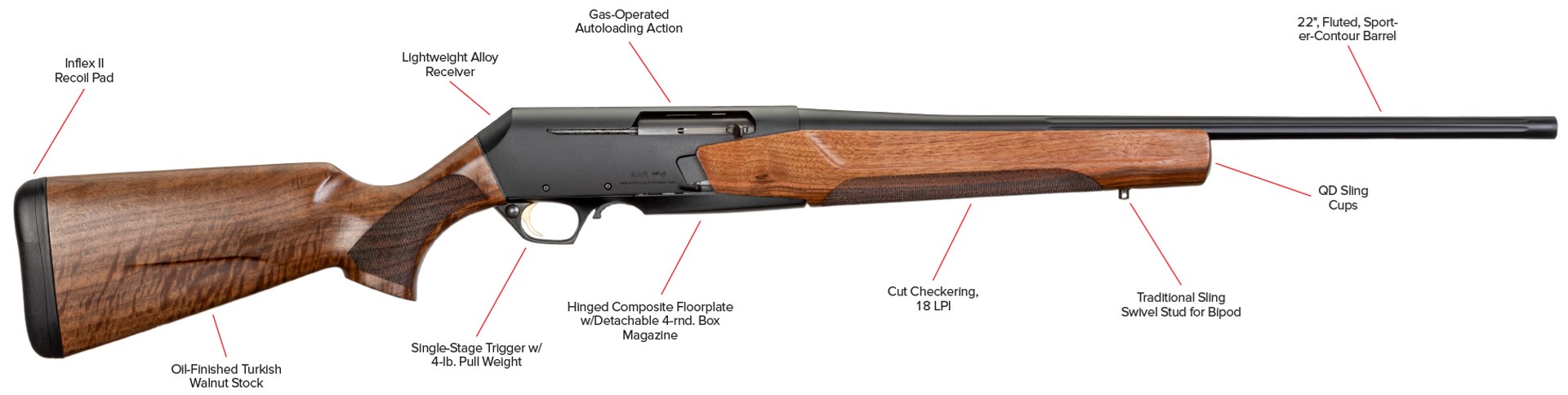
Some semi-automatic rifles have the reputation for shooting as accurately as a Stormtrooper. Fortunately, the Browning BAR MK 4 isn’t one of them. It is more than acceptably accurate for the kind of hunts where you would want a semi-automatic platform. It’s not a precision, backcountry, long-range rifle, and it’s not meant to be. It’s made to be a reliable, easy-to-shoot rifle with smooth ergonomics capable of rapid follow-up shots. The Browning BAR MK 4 would be perfect for use in a stand, blind, thick cover or on driven hunts where quick follow-up shots might be necessary.
 Browning BAR MK 4 hunter
- browning.com
- Type: semi-auto, centerfire rifle
- Calibers: .243 Win., .308 Win. (tested), .270 Win., .30-06 Sprg., 7mm Rem. Mag., .300 Win. Mag.
- Magazine: hinged floorplate w/detachable box; 4-rnd. capacity
- Barrel: 22"; sporter contour; button rifled; 1:12" RH twist
- Trigger: single-stage; 4 lb. pull weight
- Sights: none; drilled and tapped for scope bases
- Safety: cross-bolt
- Stock: straight comb; Grade II Turkish walnut; oil finish; 13.75" LOP
- Metal Finish: matte black
- Overall Length: 43.37"
- Weight: 7 lbs., 2 ozs.
- Accessories: none
- MSRP: $1,639.99-$1,739.99