We could clearly see the herd of Cape buffalo feeding in the small clearing, but the riverine bush had gotten so thick that any further approach had become impossible. We crouched, skirted a thorn bush, and Professional Hunter Mark Jansen indicated he wanted me to use his shoulder as a shooting rest. We made sure we were clear about the bull we wanted to take, and verified the distance of 120 yards. I steadied the Griffin & Howe Criterion as best I could, held right on the point of the shoulder, and a 400-grain Hornady DGX Bonded punched that bull’s ticket to the Great Grazing Grounds in the Sky.

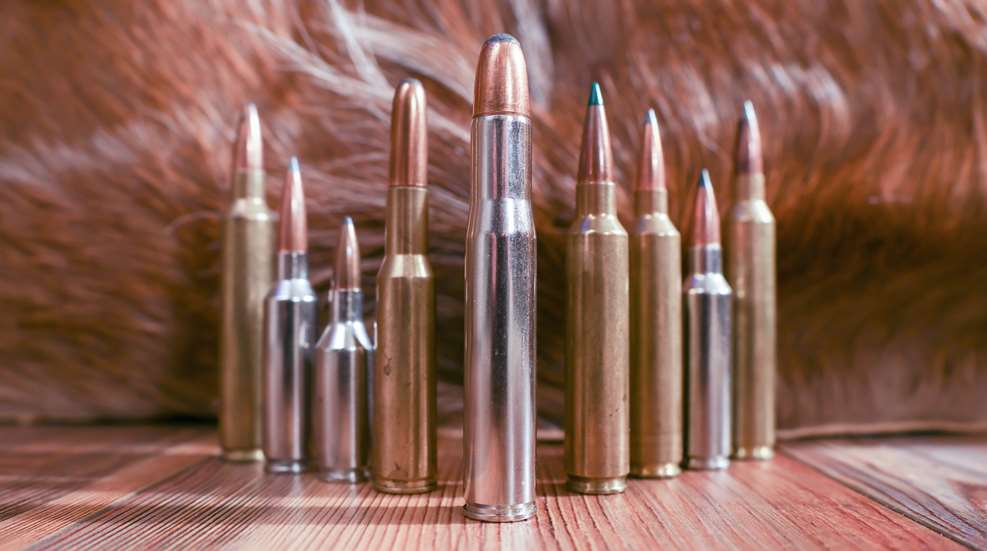
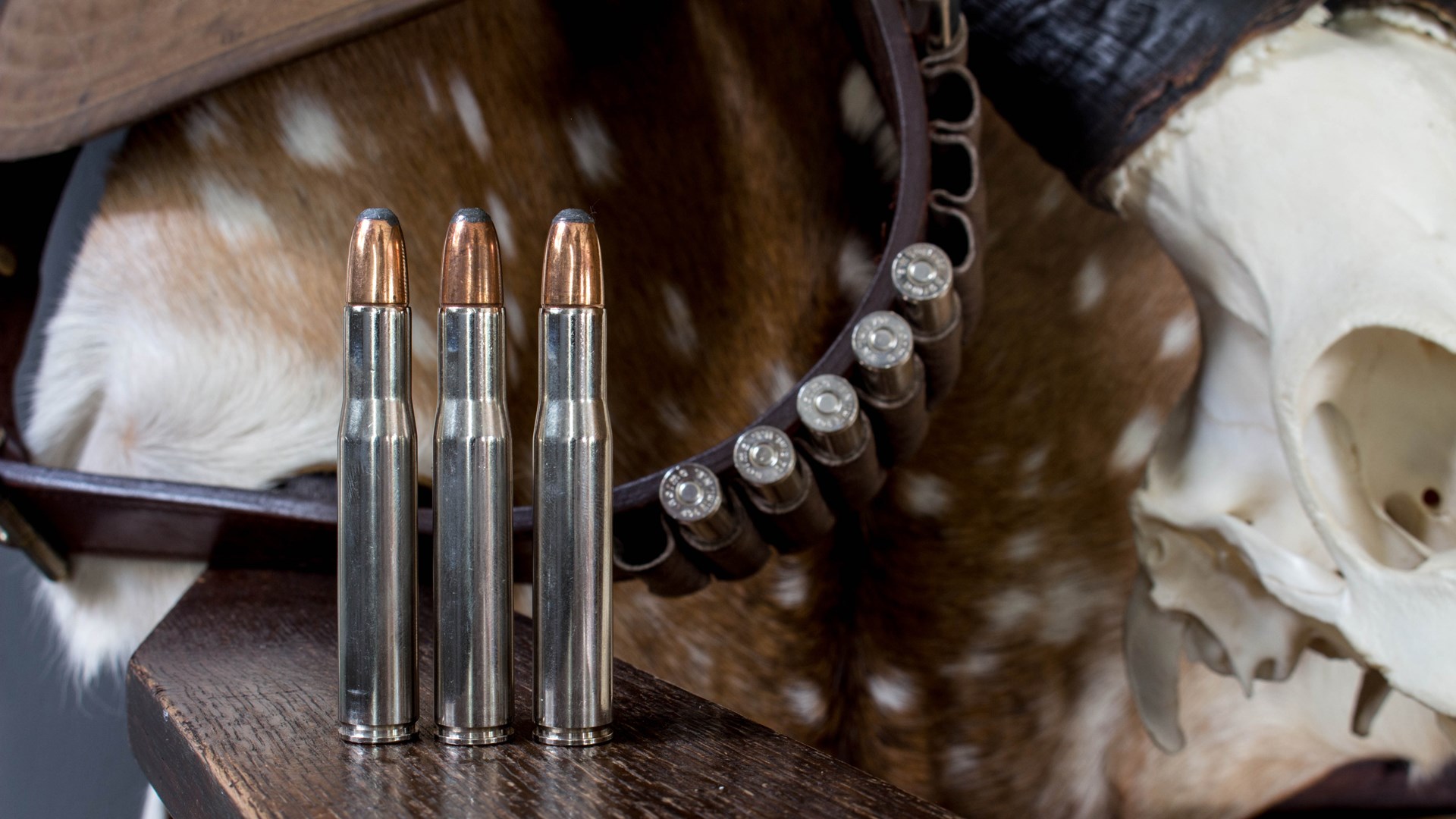
It was certainly not my first experience with the venerated .404 Jeffery—I have been a staunch proponent for over a decade, when I first met the cartridge in a Heym Express rifle—nor would it be my last. The sleek case, with its slight, eight-degree shoulder and understated résumé all appealed to me, but it was my experiences in the game fields around the world that cemented our relationship. And while the average hunter might not have even heard of the classic .404 Jeffery, they assuredly have heard of the children of that fine British cartridge.
The .404 Jeffery dates back to 1905 or 1906, and was supposedly created by W.J. Jeffery & Co. to replicate the performance of the .450/400 3” Nitro Express, but in a bolt-action magazine rifle. In its initial guise, the .404 Jeffery drove a 400-grain bullet of .423-inch diameter to a muzzle velocity of 2,150 fps. In the Vickers rifles, it was issued to the Game Departments of several African countries in the early 20th century for handling problem big-game animals. While the .375 H&H Magnum and .416 Rigby got all the glory, the .404 Jeffery quietly did the heavy lifting. It has had a bit of a resurgence of late (hopefully my efforts have helped that along), with Hornady offering excellent factory ammunition for it, and a number of rifle makers offering it as a bespoke option. I absolutely love the cartridge for dangerous game work, though I've used it for plains game and smaller species. But the offspring of that cartridge—as well as those cartridges which were “highly inspired” by the .404 Jeffery—have gotten much more of the spotlight than the .404 ever did.
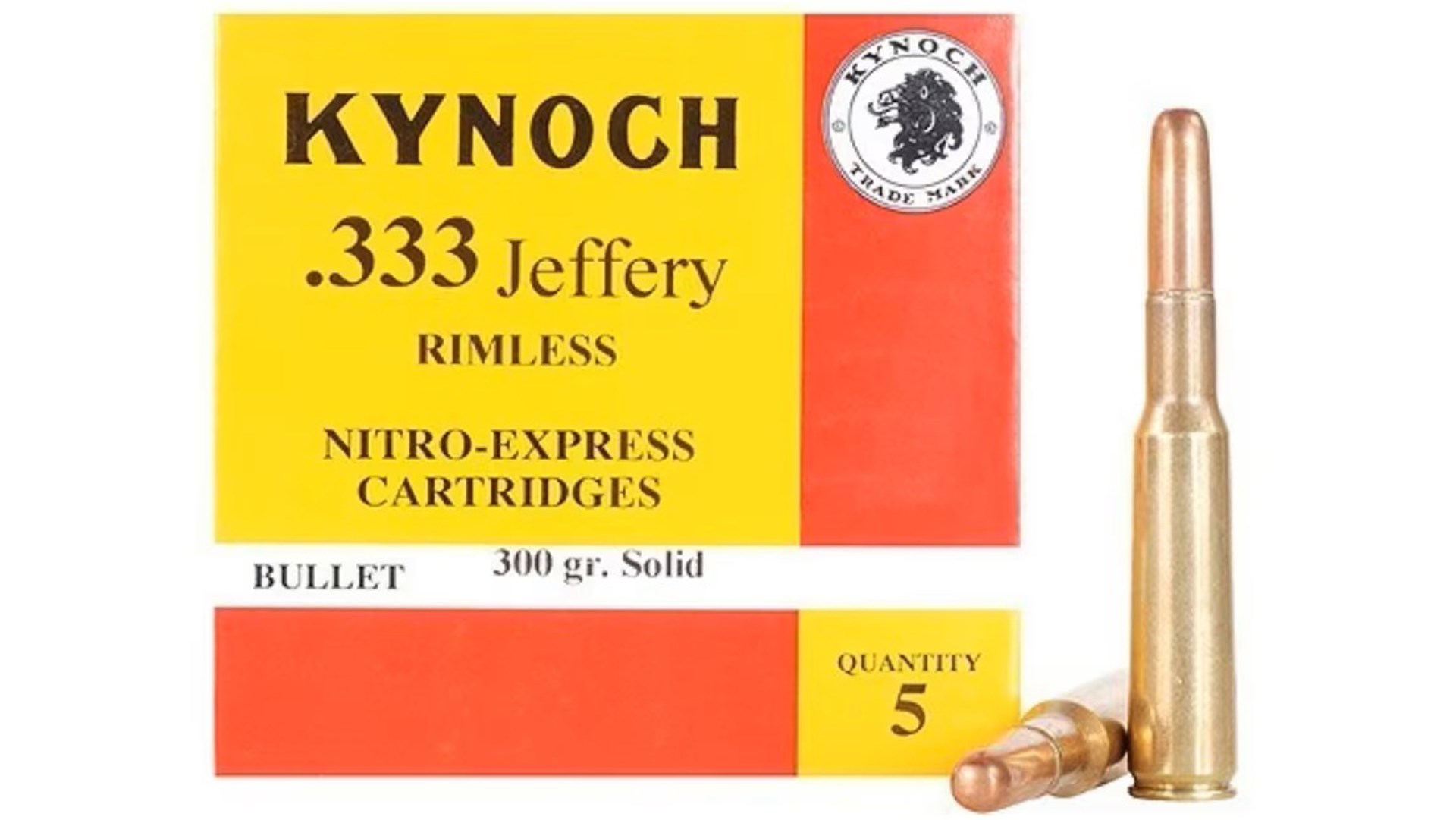
The .333 Jeffery
In 1908, W.J. Jeffery & Co. necked down and shortened the .404 Jeffery case to hold .333-inch diameter bullets, releasing the .333 Jeffery. Designed for plains game and the dangerous cats, the .333 Jeffery drove a 250-grain bullet to a muzzle velocity of 2,500 fps, and a 300-grain bullet to a velocity of 2,200 fps. It was popular for a brief time, even being issued as a sniper rifle in the First World War to combat German steel plates, but it was quickly overshadowed by the .375 H&H Magnum. With its long neck and shoulder measuring roughly 20 degrees, the .333 Jeffery doesn’t bear a whole lot of resemblance to the .404, but it has the distinction of being the firstborn. Today it is a rarity, but those who actually take it afield usually become a big fan.
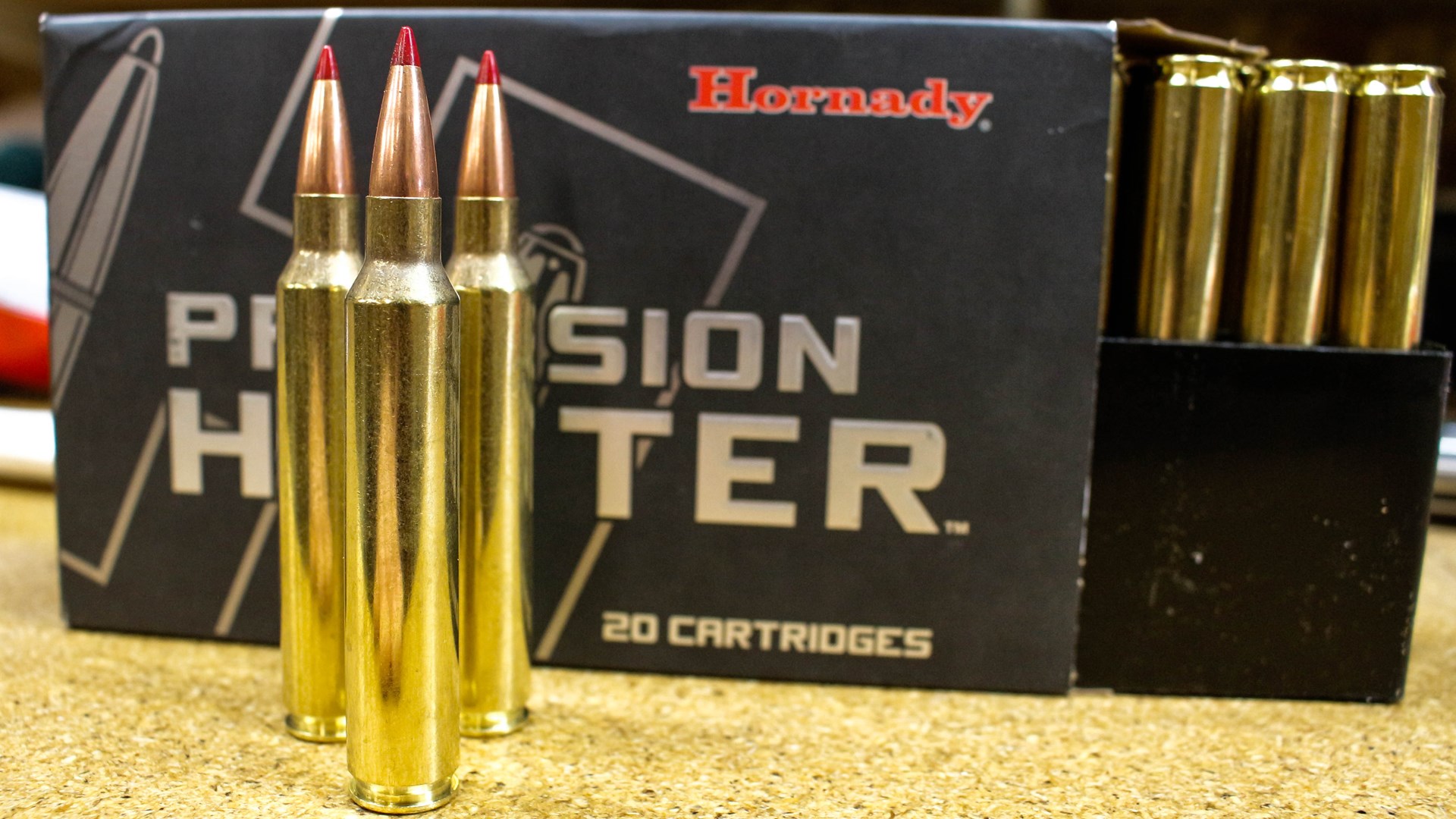
The Remington Ultra Magnum line
Just before the turn of the 21st century, Remington announced the release of the .300 Remington Ultra Magnum, a beltless, rimless cartridge capable of incredible velocity. Now there will those in the know who will be quick to point out that the rim and body dimensions of the Remington Ultra Magnum very slightly from those of the .404 Jeffery, and they are not wrong. The RUM series has a slightly rebated rim measuring 0.534 inches, common to the H&H case family – probably to use the existing bolt face measurements for ease of manufacture – and very little body taper, giving all sorts of case capacity for a huge powder charge. The .300 RUM will drive a 180-grain bullet to nearly 3,300 fps, making it one of the fastest .30-caliber magnums on the market. The .300 RUM was followed by the .338 RUM and the .375 RUM, both released in 2000, and the 7mm Remington Ultra Magnum, released in 2002. Remington also introduced their Short Action Ultra Magnum line, using the RUM case shortened for use in a short-action rifle, The .300 RSAUM was released in 2002, and the 7mm RSAUM one year later.
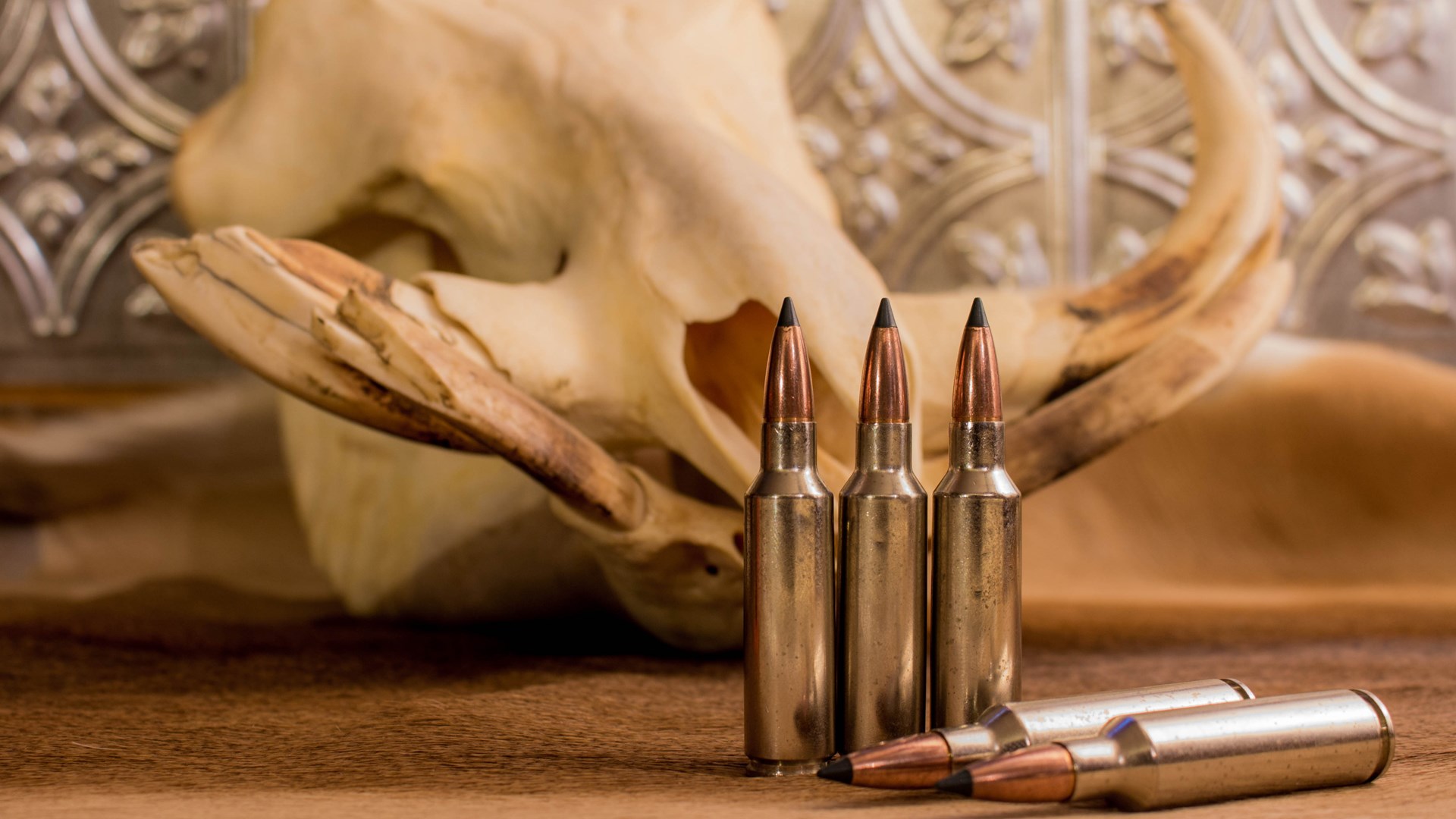
The Winchester Short Magnums
The year 2001 saw the release of .300 Winchester Short Magnum, a short-action cartridge designed to give the ballistic performance of the belted .300 Winchester Magnum. This cartridge came with a bit of a sordid past, as designer Rick Jamison sued Winchester over copyright infringement. Nonetheless, Winchester put the series into production in ’01, with the .270 WSM and 7mm WSM following in 2002, and the 8mm variant—the .325 WSM—coming along in 2005. In 2020, the 6.8 Western—a .277-caliber magnum based on a shorter .270 WSM—was released, using a faster twist rate to stabilize bullets as heavy as 175 grains. Taking things even further, the Winchester Super Short Magnum series—which includes the .223 WSSM, .243 WSSM and .25 WSSM—was released between 2002 and 2004. Short and squat, those WSSMs are about as far a cry from the .404 Jeffery as I believe one could get while still being related. All sport a steep shoulder—between 30 and 35 degrees—to handle the headspace duties, as do all the .404 Jeffery derivatives. Today, the .300 WSM remains the most popular of these cartridges, with the new 6.8 Western hanging on as well.
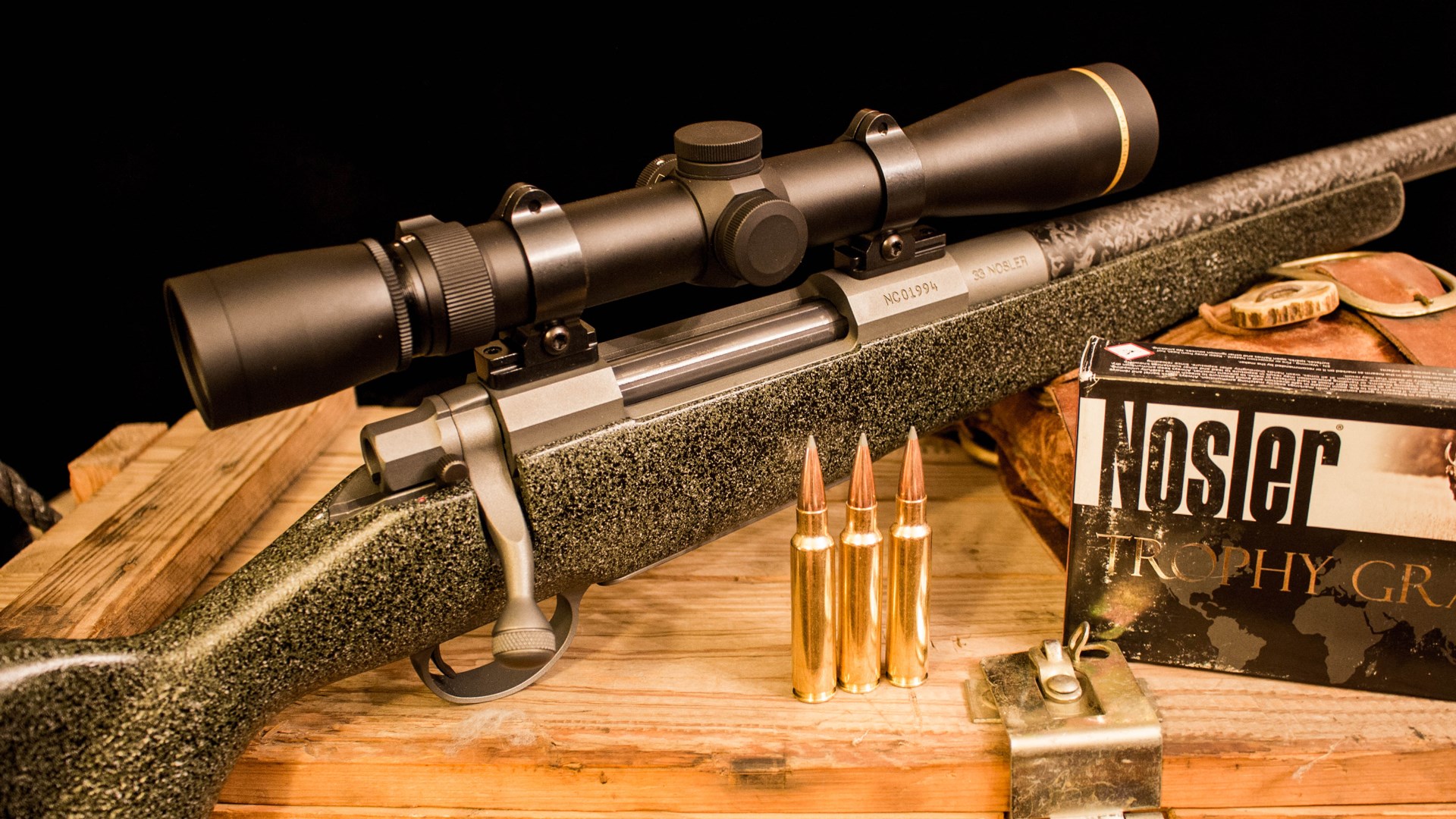
The Nosler Cartridges
John Amos Nosler—grandson of the company founder John Nosler—helped drive the development of Nosler’s proprietary line of cartridges. It has been stated that the Nosler cases were based off the .300 Remington Ultra Magnum (perhaps they're the grandchildren of the .404 Jeffery) but the beltless, rimless design quickly shows the Jeffery DNA. The 35-degree shoulder handles the headspacing, and the very slight taper to the long-action cartridges give plenty of powder capacity. Starting in 2014, the Nosler family would include the 26 Nosler, 27 Nosler, 28 Nosler (the most popular of the lot), the 30 Nosler and the 33 Nosler, all of which can deliver respectable magnum-level velocities, and have been shown to be wonderfully accurate. The 27 Nosler offers bullets weighing up to 165 grains, and the 28 Nosler seems to show the best balance of bullet weights and velocity. I don’t feel there is a bad design in the bunch.
 .404 Jeffery
The Dakota Cartridges
Sadly, Dakota Arms has gone out of business, but once upon a time, their rifles and proprietary line of cartridges were cherished by hunters. The Dakota cartridge lineup—which included the 7mm Dakota, .300 Dakota, .330 Dakota, .375 Dakota and oddly enough, the .404 Dakota—was the brainchild of Don Heath, and was based on the Jeffery case, shortened to fit comfortable in a long-action magazine. Using a 30-degree shoulder (the .300 Dakota used a 32-degree shoulder), and a case measuring roughly 2 ½ inches, the Dakota line used the 0.545-inch case head of the .404 Jeffery instead of the smaller H&H rim diameter that the Nosler cases use. Other than that, the two lines are very similar, with the major exception being that the Dakota cartridges have all but faded from existence.
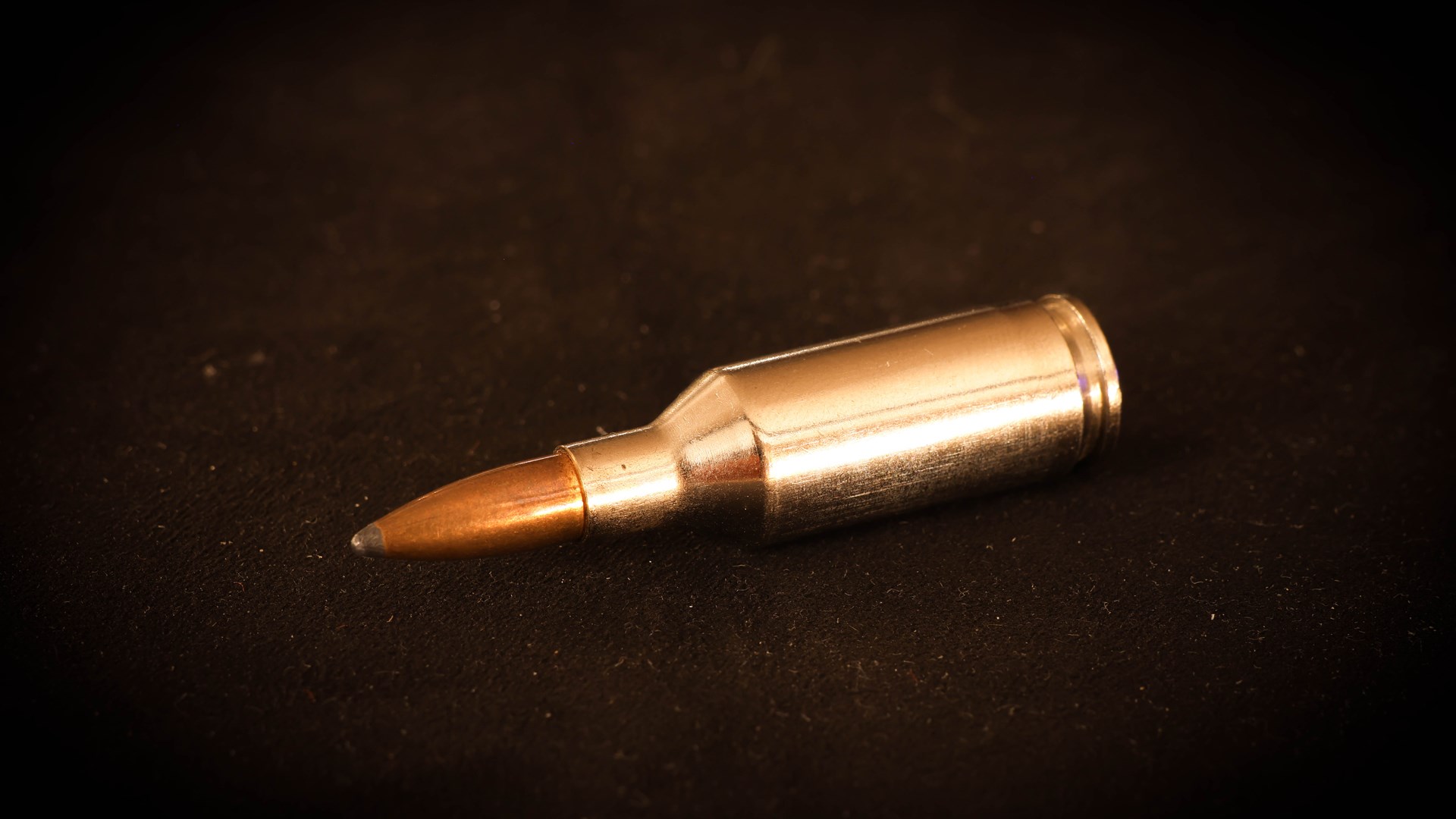 .25 WSSM
The .460 G&A and other oddballs
Over the years, there have been several unsuccessful attempts at getting a wildcat to gain a foothold, but few seem to get it done. Guns & Ammo’s Tom Siatos mated the .458-inch diameter bullets of the .458 Winchester Magnum and .460 Weatherby Magnum with the .404 Jeffery case in 1971, when ammunition for the classic safari rifles was rare as hen’s teeth. In that era, the available cartridges for the hunter of African big game species were generally limited to the .375 H&H Magnum and the .458 Winchester Magnum, along with the correlative Weatherby cartridges. Siatos used a bit of a steeper shoulder—15 degrees—for headspace, and his cartridge would drive a 500-grain slug to a muzzle velocity of somewhere in the neighborhood of 2,400 fps. The odd .460 G&A rifle pops up in conversation here and now, though the ammunition needs to be carefully handloaded. There is also the .450 G&A Short Magnum, a shorter variant of the .460 G&A, and the .400 Tembo, which uses 10mm or .400-caliber projectiles. All of these are sound designs, but perhaps the market wasn't ready for these designs at the time.