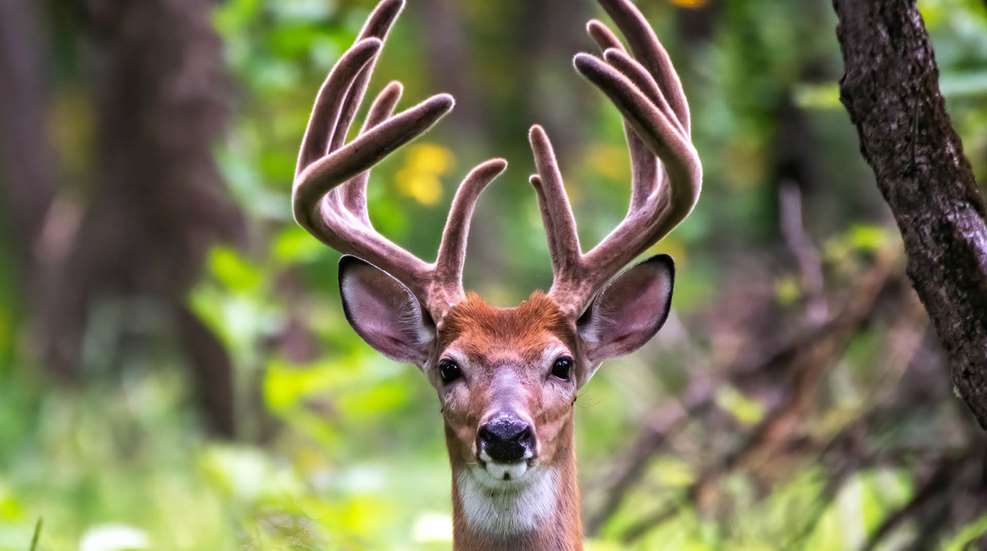
The required number of valid signatures to put a “Right to Hunt and Fish Amendment” on Colorado’s Nov. 3 ballot was reached on Sept. 4. If approved by voters—according to Ballotpedia’s summary—it would add the “…right to hunt, fish, and take fish and wildlife through traditional methods” to the state constitution.
“We’re trying to turn around and make sure that CPW [Colorado Parks and Wildlife] codifies this so that your kids and your grandkids can continue to do this if they so choose,” Dan Gates, executive director of Coloradans for Responsible Wildlife Management, told Fox21News. “Or your neighbor could take his kid out, or if somebody wants to supply an opportunity for their congregation to go out and hunt deer and then turn around and have a barbecue, this is all there.”
Animal extremists were quick to react. A press release issued by Project Coyote on Sept. 8 states, “Our Constitution is a statement of shared values, not a hiding place for cruelty.” On Oct. 12 Friends of Animals issued a statement that read in part, “Colorado’s Constitution is not a trophy room, and wild animals are not targets, props, or ‘resources’ to harvest.”
A Wichita Eagle story that appeared on Oct. 1 puts the debate into financial perspective. “Hunters and anglers in Colorado fund more than 70-percent of Colorado Parks and Wildlife’s $220 million wildlife management budget through the purchase of hunting and fishing licenses, habitat stamps, and taxes paid on hunting and fishing equipment, firearms and ammunition, according to the state wildlife agency,” it states. “Hunting and fishing contribute $3.2 billion to the state’s economy...”
Colorado will join 24 other states that already have constitutional protections for hunting and fishing if Measure 83 is approved by 55 percent of the voters on Nov. 3. The neighboring states of Utah, Nebraska, Wyoming and Kansas are already members of that roster. Florida was the latest to join, in 2024, and Vermont has the honor of being first—having done so back in 1777.
The official language preserves the ability for wildlife managers to continue or enact recovery efforts deemed scientifically appropriate, as well as honor all Federal regulations. Measure 83 states, “The right applies to all species of fish and wildlife managed by the state except nongame species, endangered species or any species that is illegal to hunt under Federal law.”
The Friends of Animals statement on Oct. 12 in opposition of the measure admits, “If passed, state agencies and the General Assembly could still regulate hunting, fishing and wildlife management, but only if the law is ‘necessary’ for sound scientific wildlife conservation and management, public safety, or preserving future hunting and fishing opportunities.”
Colorado voters have a history of passing emotion-based initiatives at the ballot box. They banned bear baiting in 1992. In 1996 the use of steel-jawed leghold and body-gripping traps, snares and poisons for recreational and commercial purposes were outlawed on public land.
Efforts to paralyze sound scientific management have not slowed, either. A citizen-led petition to ban the sale of fur was not approved by the Colorado Parks and Wildlife Commission in July. That decision came only a day after the same body approved a dramatic reduction harvest limits for 17 furbearers (including coyotes). According to a Colorado Sun story, Rebecca Niemiec—a commission at-large member and co-director of the Animal Human Policy Center at Colorado State University—the decision was an effort to, “…maintain social acceptance, to make sure people feel better about hunting and trapping furbearers and about our policy decisions.”
“We are seeing very real threats to the future of hunting in Colorado in the form of persistent petitions, legislation and ballot measures,” said Rocky Mountain Elk Foundation President and CEO Kyle Weaver. “Amendment 83 safeguards protections for hunting and fishing. It also declares hunting and fishing as the primary means in support of sustainable scientific management of wildlife. Those management tools helped create Colorado’s current foundational strength for its wildlife numbers, including the largest elk population in North America.”