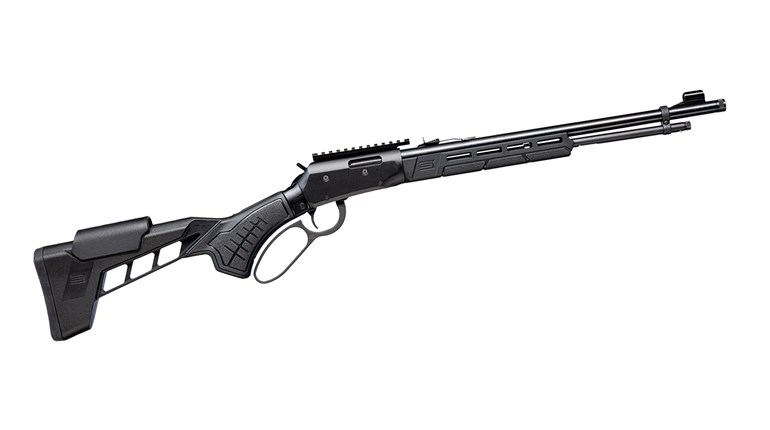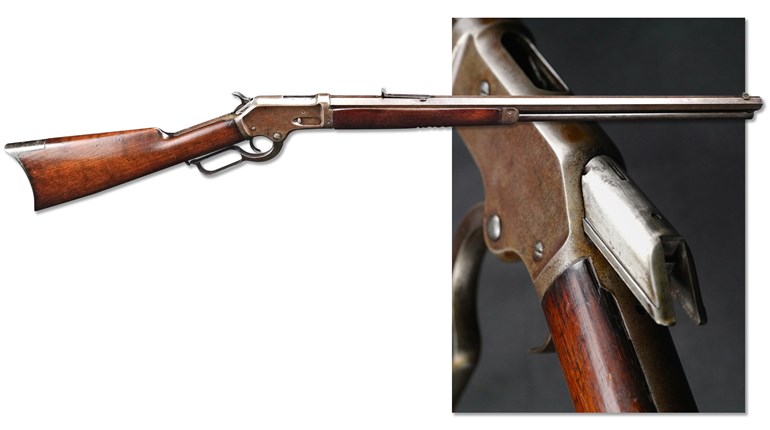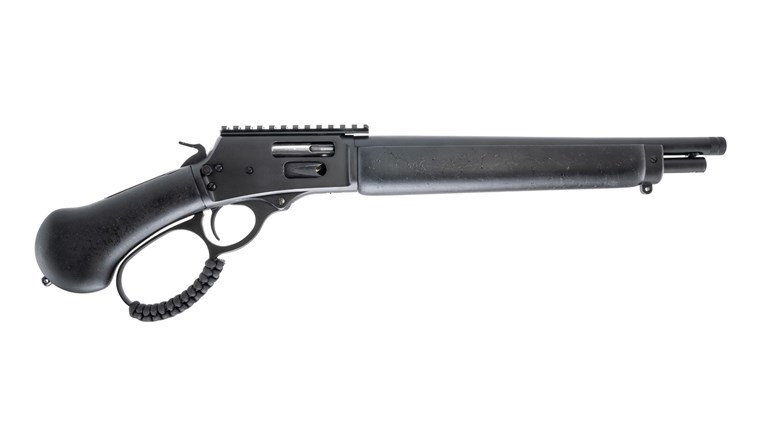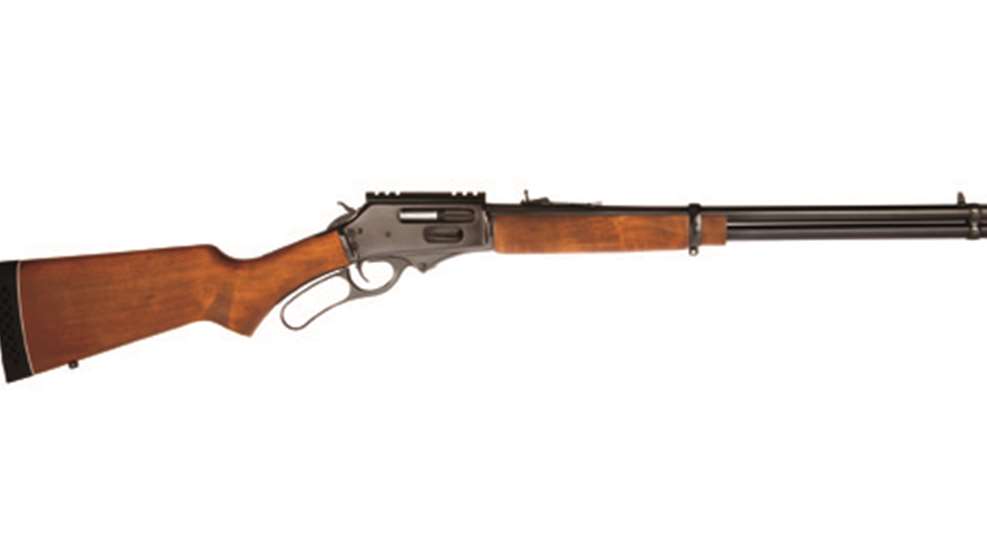
The lever-action is America’s rifle. Sure, we’re living in the time of the AR, which might even be slowly usurping the lever gun. But the AR will never have the storied history or carry the romance of the lever-action rifle. In that vein Marlin’s Model 336 could be considered the dean of lever-actions. Rossi’s Rio Grande could be considered a clone of this classic American hunting arm.
Why would a company set out to copy another manufacture’s rifle? Why didn’t Marlin throw a temper tantrum? There are several reasons, actually.
For starters, the patent on the Marlin 336 design has expired. Secondly, there exist enough cosmetic differences to protect Rossi from any trade dress infringement claims by Marlin. None of this is intended as a slight toward Rossi or Marlin. Imitation is a grand form of flattery: consider the 1911 and AR-15 clones currently available.
Rossi’s Rio Grande lever-action rifle in .30-30 Winchester and .410 bore is available in three configurations. All are facsimiles of the Marlin 336, and each variation comes with a 20-inch barrel. All also have hardwood stocks but the stock on the RG3030BAPG version has a Realtree APG HD camouflage finish. Additionally, a one-piece Weaver-style scope base is shipped with each rifle.
The test rifle was the RG3030SS. As you might guess, the “SS” in the model designation stands for stainless steel, which is used for the barrel as well as all external metal parts to include the two sling swivel studs. The brushed finish and reddish-brown hardwood stock contrast nicely to make an attractive rifle.
Though the Rio Grande is manufactured offshore in Sao Leopoldo, Brazil, it is not exempt from modern liability concerns and thus uses a cross-bolt safety common on modern Marlin lever-actions. While some consider this an abomination, I’ve come to trust and appreciate it. No, it is not 100 percent traditional but neither is mounting a scope on a lever gun. I often do that, and the gun gods have yet to come for me. The beauty of the cross-bolt safety is that by physically blocking the hammer, it is safe. If you don’t like it, don’t use it.
The cross-bolt safety on the Rio Grande has a red ring around its circumference on the left side to indicate that it is in the “fire” position and a green ring on the other side to indicate it is in the “safe” position. When I hunt with a lever gun equipped with a cross-bolt safety, I carry it with the hammer back and the safety engaged. To shoot, I simply press the safety with my trigger finger and I’m ready to start a gun battle with a whitetail buck. If the cross-bolt safety is used in this manner it is as convenient and reliable as the safety on any bolt-action rifle.
One feature I particularly liked on the Rio Grande was the lean and trim fore-end and the slim wrist of the buttstock. Somewhere along the line Marlin began using a lot more wood on its rifles. The result is a thick fore-end and a beefy wrist. On the Rio Grande the forearm is only an inch and a half wide. It feels exceptionally comfortable in your support hand. To me this brings back some of that quick-to-action feel a lever gun should have.
I had no complaints about the rifle’s performance on the range. One hundred-yard accuracy from the bench is about par for the course for lever-action rifles, with averages ranging between 1.75 and 2.75 inches. Sure, there are .30-30 lever guns that shoot better. And some that shoot worse. Regardless, based on the retained velocity and trajectory of the .30-30, a practical maximum range for this cartridge is around 200 yards. Any rifle that will shoot consistent 2 MOA groups is totally sufficient for big-game hunting inside those ranges. If you dream of shooting at critters farther than that, choose a different rifle and cartridge.
There were no functional issues during the test. The rifle was easy to load, the action was easy to work and the trigger was surprisingly crisp, breaking between 4 and 4.25 pounds according to my Timney trigger pull gauge. Please, a round of applause for Rossi for putting a good trigger on a lever gun. In total there were 140 rounds fired through the Rio Grande without a single mechanical issue.
Complaints: There are a few but nothing major. Wood-to-metal fit was good but the white-line spacer and butt pad were a tad oversized. Metal surfaces were also finished well but the lever liked to unlock with a minimal amount of pressure. This required a good grip be kept on the lever while shooting. Otherwise, if the fingers of your shooting hand slightly bumped the lever, the action cracked out of battery and the rifle would not fire. Not a deal breaker but something to keep in mind while shooting the rifle.
Aside from these two issues, I would have liked to have seen lower, steel scope bases, which would not obstruct the open sights when the scope was removed. If this rifle were mine I would replace the high Weaver rail with a set of Weaver Grand Slam bases. With quick-detach rings this would allow an easy transition between scope and open sights.
I don’t particularly like to compare firearms but it's hard not to in this instance. With a suggested retail price of $582, the Rio Grande is about $120 cheaper than a stainless steel Marlin Model 336SS. Actual prices will obviously be less for both. Nevertheless, in this economy a $120 difference is enough to make many hunters side with Rossi. On the plus side, the Rio Grande has a much trimmer wrist and fore-end, which to me makes it more comfortable to shoot and carry. If that appeals to you too, the Rossi Rio Grande—in one of its three configurations—is an affordable lever-gun option. With it, all you’ll need for deer season is a cowboy hat.
Technical Specifications:
Caliber: .30-30 Win., .45-70, .410-bore
Barrel: 20"; six grooves, 1:12" RH twist
Trigger: single-stage; 4- to 4.25-lb. pull weight
Magazine: tubular; 6-rnd. cap.
Sights: blade and bead front, semi-buckhorn adjustable rear; one-piece Weaver scope mount
Safety: cross-bolt
Stock: hardwood
Overall Length: 40"
Weight: 7 lbs.
Metal Finish: blued or stainless steel
MSRP: $582