While the next seven to 10 days don’t rank as the most important in the overall scheme of deer season, it can definitely be worth a hunter’s while to spend time in the woods. Next to busy rut-activity days still several weeks off, I have seen more big bucks during this window spanning late September through early October than any other time of year.
 In much of whitetail country, bucks are on the move. Summertime bachelor groups are splintering, but plenty are still showing up in ag fields to forage on soybeans or leftovers of just-harvested corn. And minus the sheltering cornstalks, many deer are forced to move to new bedding sites. Meanwhile, the season’s first big acorn drops from white, pin, burr, sawtooth and other oaks are hitting the ground in many locales and will quickly pull deer from long distances.
In sum, whitetails, and bucks in particular, are in transition, and the extra activity gives hunters a great opportunity. If you happen to be where there is an open season—South Carolina, Kansas for muzzleloader or bow seasons scattered across the Southeast—those willing to commit time on stand might luck into a roaming wall-hanger. However, that’s tough, unless you’ve learned from experience or have the benefit of fresh trail-cam intel on where to put your stand.
The real benefit, I’m convinced, is in scouting. This transition period gives you a chance to observe your local bucks before they are pressured from full-on hunting activity. Some hunters think of it as “taking inventory.” I’m not so sure how far to take that, because some of these big guys will move out of your hunting area and some new ones will show up later. But come November, most of the dominant breeders will be right back in the vicinity of where you spot them now. Understand, however, the special window doesn’t last long, because of the shift to acorns and because bucks are setting up shop for breeding. In my home turf along the Mason-Dixon line, the transition peters out around October 10.
I prefer not to hunt too aggressively in this period because prime stand locations aren’t as apparent as they are for the pre-rut and rut, and I don’t want to booger things before that happens. I get where I can monitor long spans of edge cover between cropfields and woodlots where acorns are dropping. I may take my bow, but mostly I’m working the binoculars. It’s a time to hatch plans and dream of the kind of encounter that makes deer hunting such an incredible thrill.
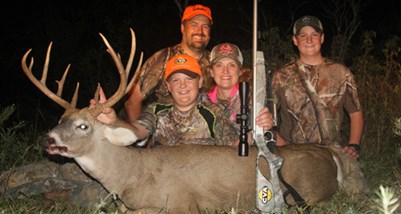
Last week I learned even more about this deer-season milestone from Gene Pearcy, owner of Kansas Whitetail Adventures. Gene’s had great success—big bucks!—putting hunters in the field for 20 years of his state’s unique early muzzleloader season, and as a result he’s got some very pointed ideas on how we can all take advantage. Young Wyatt Schearer (above) son of my friends Chad and Marsha Schearer from “Shoot Straight TV,” killed the best buck on our hunt, and I saw one that might have been even bigger (which, as the saying goes, is another story). In this video, Gene shares his early-season know-how.