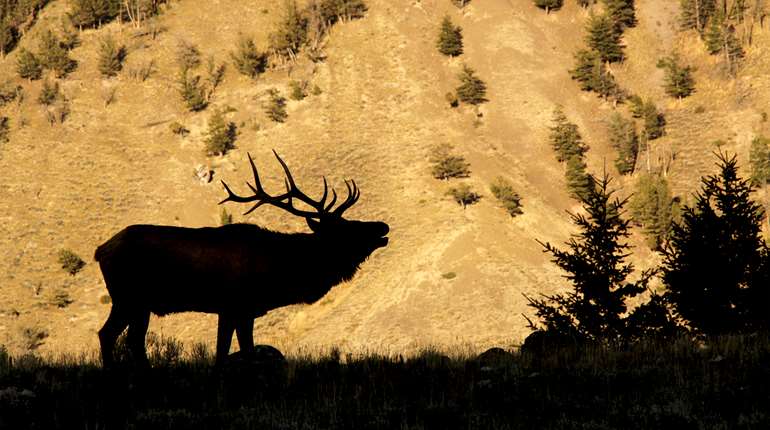
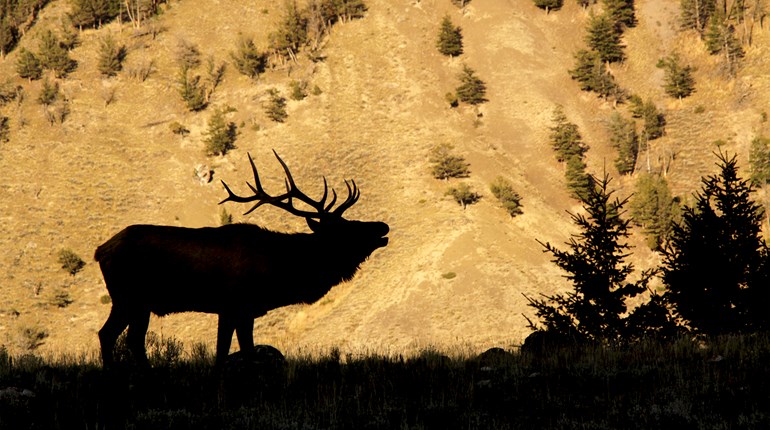
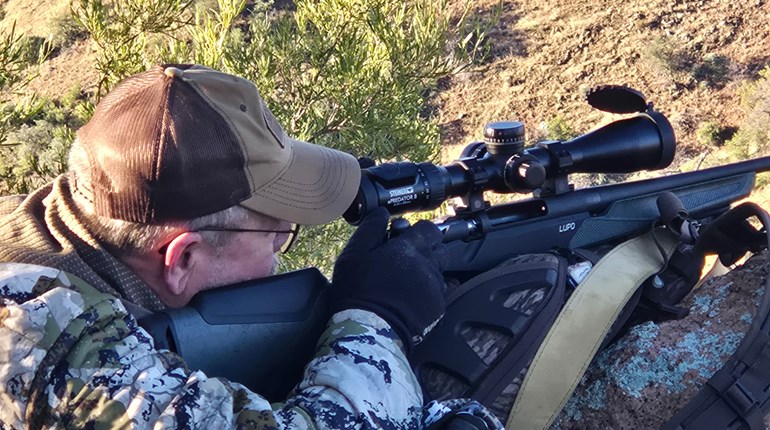
Sure, whitetails hide like rabbits when hunting pressure gets heavy, but they say when you bump elk they’ll walk right over the mountaintop. The thing is new studies show that to be true, but not necessarily. Researchers have been putting GPS collars on elk to find out exactly where they go when the hunting pressure hits. The studies have found that, sure, a lot of elk move to less-pressured private lands and hard-to-access areas, but they’ve also found some elk hiding in overlooked drainages and sections of public land that are tricky to access.
Shy Hiders
A University of Alberta-led research study published in 2012 found an elk’s personality type is a big factor in determining whether it lives through the hunting season. Data collected from GPS collars on more than 100 bull and cow elk in southwestern Alberta determined the elk could be divided into two categories: “bold runners” and “shy hiders.” The bold-runner elk, both cows and bulls, tended to move quickly throughout the study area and preferred to feed in open areas, whereas the shy hiders fed on the sparser vegetation in wooded areas and moved slower and more cautiously during daylight.Hunters killed one-third of the 45 2 1/2-year-old bulls researchers collared. Researchers were surprised when they noted all the bulls killed were previously identified by GPS data as being “bold runners.” Analysis indicated hunters were walking right by the shyer bulls.One thing this tells us is not all elk bolt over the mountaintops for private lands when hunting pressure intensifies. Some quietly find overlooked pockets to hide out in and survive.
Public-Land Hideouts
Shy bulls in the University of Alberta study tended to move into dark timber and wouldn’t expose themselves in daylight. They didn’t, however, necessarily move far away from public-access areas. If they could escape into cover hunters weren’t pushing, they’d simply hide and survive.
Similarly, Brad Petch, a senior biologist with Colorado Parks & Wildlife, says, “Our studies have found that a lot of elk move from public to private holdings to avoid hunters, but they don’t always leave the public lands. The savvier hunters learn to look for overlooked public parcels that abut or are hemmed in by less-pressured private lands. Some of the areas might be blocked off by private lands on two or three sides. You might have to climb around the private lands to access some places.”
Many elk hunters are certain more pain means more gain. Often they’re right, but not always. Land just off trailheads and roads might be hiding a bull. The small draws and drainages that don’t have pack trails crossing through them are worth checking. With public-land hunting, you have to scout the people as much as the elk.
Justin Gude, a wildlife research and technical services bureau chief for Montana Fish, Wildlife & Parks, says, “We’ve found that the bow season doesn’t typically change the movement patterns of elk very much, but the gun season sure does. Once the gun season opens, our studies have found that elk clearly shift to harder-to-access areas and private lands. Many of the areas in southwestern Montana are patchworks of public and private lands. Experienced hunters look for good habitat that hunters miss in the collage of terrain.” OnXmap’s Hunt app, he says, includes map data for private-land-access-program areas, such as from Montana’s Block Management Program.
“The Block Management maps can also be viewed online,” says Gude. (See Block Management maps here) “As hunters scout an area they need to know all the access and pressure points.” There’s a lot to learn. In the 2013 season, about 1,240 landowners enrolled about 7.8 million acres of land in the Block Management Program.
Gude and Petch describe elk habitat not as the vast forests and parks stretching over mountains that it looks like at first glance; it’s a massive checkerboard of private and public lands and various habitats. A hunter who understands this sees the map within the map, they say.
Rules of the Road
In fact, a Montana research study by Gude and others determined that on public lands “the density of roads open to motorized use was the strongest predictor of elk distribution.” Elk tend to avoid places where people find easy access. The study also found that hunting pressure has a greater influence on where elk spend the day than the quality of the habitat.
So when you look over your maps, take access roads into account first. Hunter access via roads had such a profound effect on elk distribution that the study even determined “standards based solely on road densities may be adequate for managing female elk distributions on public lands during the hunting periods in some areas.” That’s a bold statement.
Build Your Skills: That Smell
When you’re on foot hunting for overlooked elk on public lands you’ll know you’ve found them when your nose tells you. In the rut bulls urinate on themselves, and their glands emit pheromones that combine into a musky bull cologne. One important elk-hunting skill is learning to distinguish fresh urine from old. Old urine smells like ammonia and can hang around for days; the fresh stuff is rank and musky.