These days, it's getting tough to find a "secret spot" to hunt elk. Even many back-country areas well away from roads are hunted by outfitters, private individuals and enterprising backpackers. The proliferation of ATVs and four-wheel drive vehicles means that virtually every logging road open for motorized travel during hunting season has more than its share of hunters. Even those special limited-entry hunts are being pounded these days. Truly, there are few “secret spots” any more.
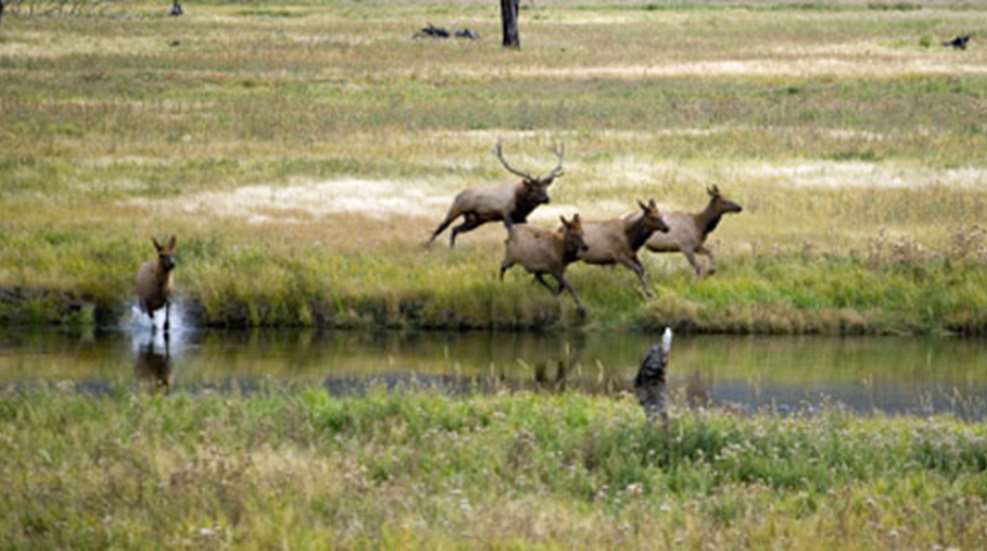
Taken together, that means that there are a whole lot of elk out there that have become hunter-wise. They react predictably to the hordes of humanity—they run scared.
Don't despair. You can still harvest an elk when the pressure's on. To do so, you'll have to modify standard hunting tactics, try a few new tricks and—how do I say this tactfully?—get a bit lucky. Here's a plan.
Finding Elk
When I plan an elk hunt, one of the things I try to anticipate is hunting pressure. Will there be lots of other hunters? Where will they likely be coming from? How will they be hunting? When the people move in, what will the elk do? Where will elk go, and how will they get there?
Like pressured deer, elk often do two things when the pressure increases. One, they become increasingly nocturnal in their movements, doing the bulk of their feeding, watering and traveling either on the cusp of daylight or after dark. And two, they head for the safest places within their range they can find. These are usually dark timber areas found at the bottom of roadless vertical canyons and ravines, jungles of brush on steep hillsides and the like.
To find them, you have to do what they do. That means glassing as early and as late as possible, and be willing to hunt the nasty stuff.
"Unpressured" Pressured Elk
Pockets of solitude, where elk may have moved to after being chased around by other hunters, are excellent places to fill a tag. Sometimes it takes a little imagination to figure them out. Here are two examples.
In southwestern Montana there is an area where elk migrate out of Yellowstone National Park onto national forest lands beginning with the onset of the rut in late August. Hunters understand this, and often line up near the park boundary line anticipating new elk coming onto land open to hunting. The majority of the elk, though, travel after dark, slipping through this gauntlet unseen. They move along the spine of the mountain away from the park border several miles onto roadless areas where access is tough for even the fittest hunter. Once they reach this area, they calm down and begin acting like normal elk again. Hunters who have figured this pattern out are able to slip into the country and hunt these elk without interference from others who continue waiting for those few elk that leave the park during legal shooting hours.
In many western states there are large areas of high-elevation public lands that are fronted for miles by private ranches that refuse to allow public access through their property to the national forest lands. These public land tracts often hold good numbers of elk, especially after hunting season starts on nearby areas that are easily accessible by hunters. How can you gain access to these public land hot spots? Two ways. The simplest, and most painful, is walk into the national forest on obvious public trailheads, then pack the several miles into the mountains behind these ranches. The second involves researching public easements, which are access corridors sometimes found through private lands but lightly publicized, if at all. The local forest service or BLM office may be able to point these out to you, but the surest place is the local county courthouse, where meticulous records of private property ownership and public land access are kept. Plat maps will show you exact borders, which you can transfer onto your own topographic maps. These are invaluable both for access purposes and so you won't inadvertently trespass on private land. You need to know this because you'll probably be hunting close to the property boundary. The elk, more than likely, will be feeding at least part of the time in the rancher's fields, then moving onto public timber lands to bed.
When there are lots of hunters afield, it gets tougher and tougher to fill your tag. Every year, though, a handful of enterprising sportsmen beat those odds and put elk meat in the freezer. Sometimes they just get lucky, but more often than not, they make their own luck by hunting harder, hunting smarter and looking for those precious little pockets of solitude where elk go to escape the horde of blaze orange.
There's no reason you can't do the same thing, too.