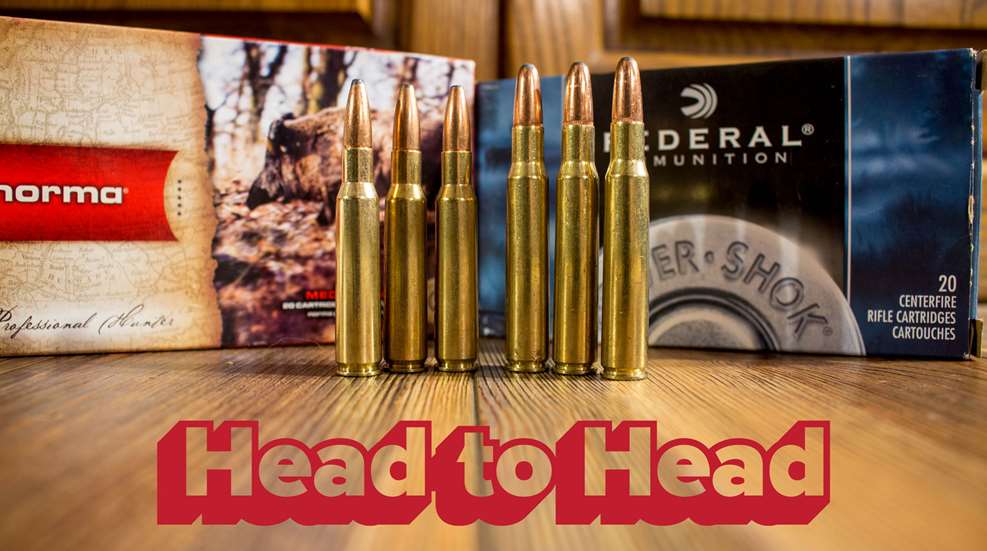
I’ve had more than a few requests for this Head to Head, so I figured it was high time to pit two of the early 20th century’s most popular military cartridges against one another. It’s no secret that a good many of our classic hunting cartridges began life as a military development; even the 150-year old .45-70 Government was bred for war. The 30-40 Krag replaced the .45-70 here in the US; the .303 British was the darling of the British Empire and its numerous colonies and commonwealths; the 8x57mm Mauser served Germany well in the two World Wars; the 6.5x55mm Swedish worked very well in Scandinavian hands; and the U.S. eventually settled on the 7.62x51mm and the 5.56x45mm NATO. But it was Spain’s adoption of the 7x57mm Mauser in 1893, and the 1906 changes to the .30-03 Springfield, which resulted in the ubiquitous .30-06 Springfield, that gave us two of the greatest hunting cartridges ever.
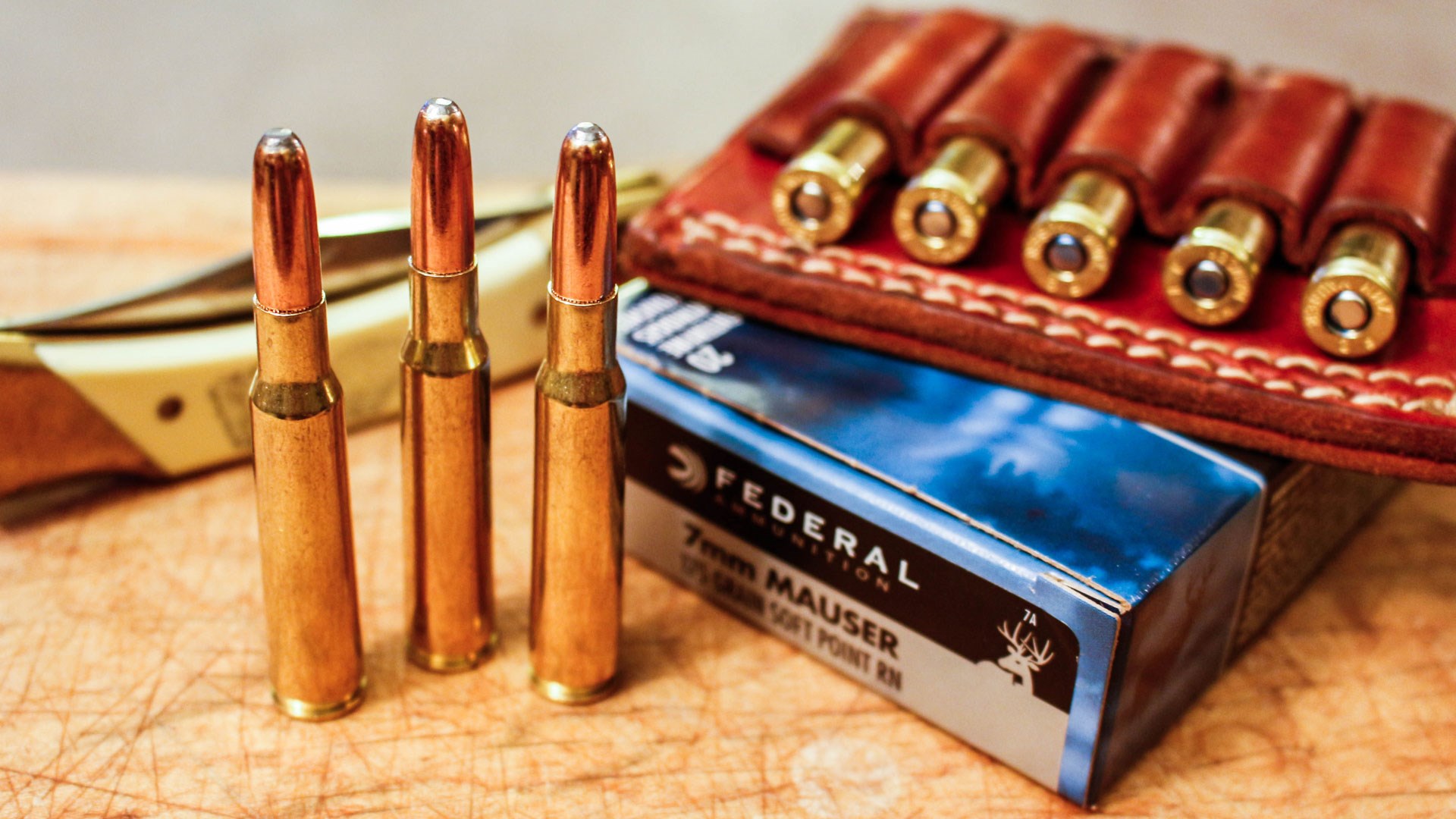
The 7x57mm Mauser was one of Peter Paul Mauser’s shining developments, being designed to function perfectly in the Model 1893 Mauser, yet also being fully compatible with the Model 98 Mauser which came along five years later. Looking at the case design, it possesses the .473-inch base diameter and 2.245-inch/57mm case length which would go on to influence the 8x57mm Mauser, and undoubtedly make a huge impression on the U.S. Army in the Spanish-American War. Being a rimless design, the shoulder (roughly 20 ¾ degrees) handles the headspace duties, and the cartridge worked perfectly in the five-round stripper clips used to quickly load the Mauser rifles. Using bullets of .284-inch/7.21mm, the 7x57mm was initially loaded with a 173-grain bullet at 2,300 fps, generating just over 2,000 ft.-lbs. of energy at the muzzle. In the hunting fields, this heavy-for-caliber bullet, with its great Sectional Density, surely helped the movement to reduce the size of common hunting cartridges at the turn of the 20th century.
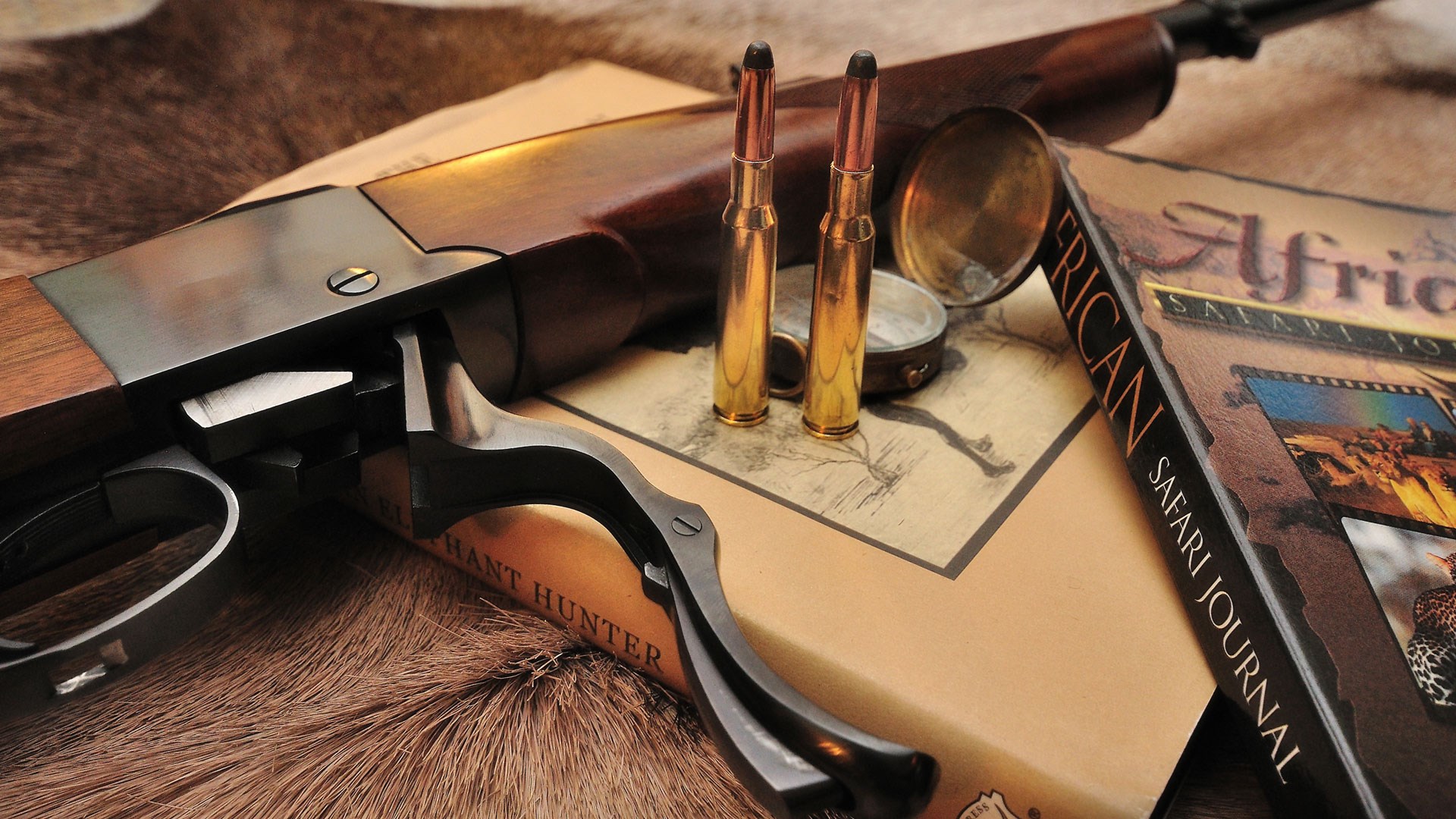
W.D.M. Bell—known as ‘Karamoja’ among the Africans—used the 7x57mm Mauser to take the majority of the 1,011 elephants he took during his ivory hunting years. After using a 450/400 3-inch Nitro Express to take a famous man-eating tiger in northern India, Col. Jim Corbett was presented with a Rigby-Mauser in .275 Rigby, the anglicized version of the 7x57mm Mauser. From Africa to India and all across Europe, the 7x57mm Mauser offered an affordable and effective option for the hunter, as the military ammunition was readily available. Though Bell’s use of the .275 Rigby on pachyderms saw him come away unscathed, the practice is foolhardy, and there are definitely better tools for that job.
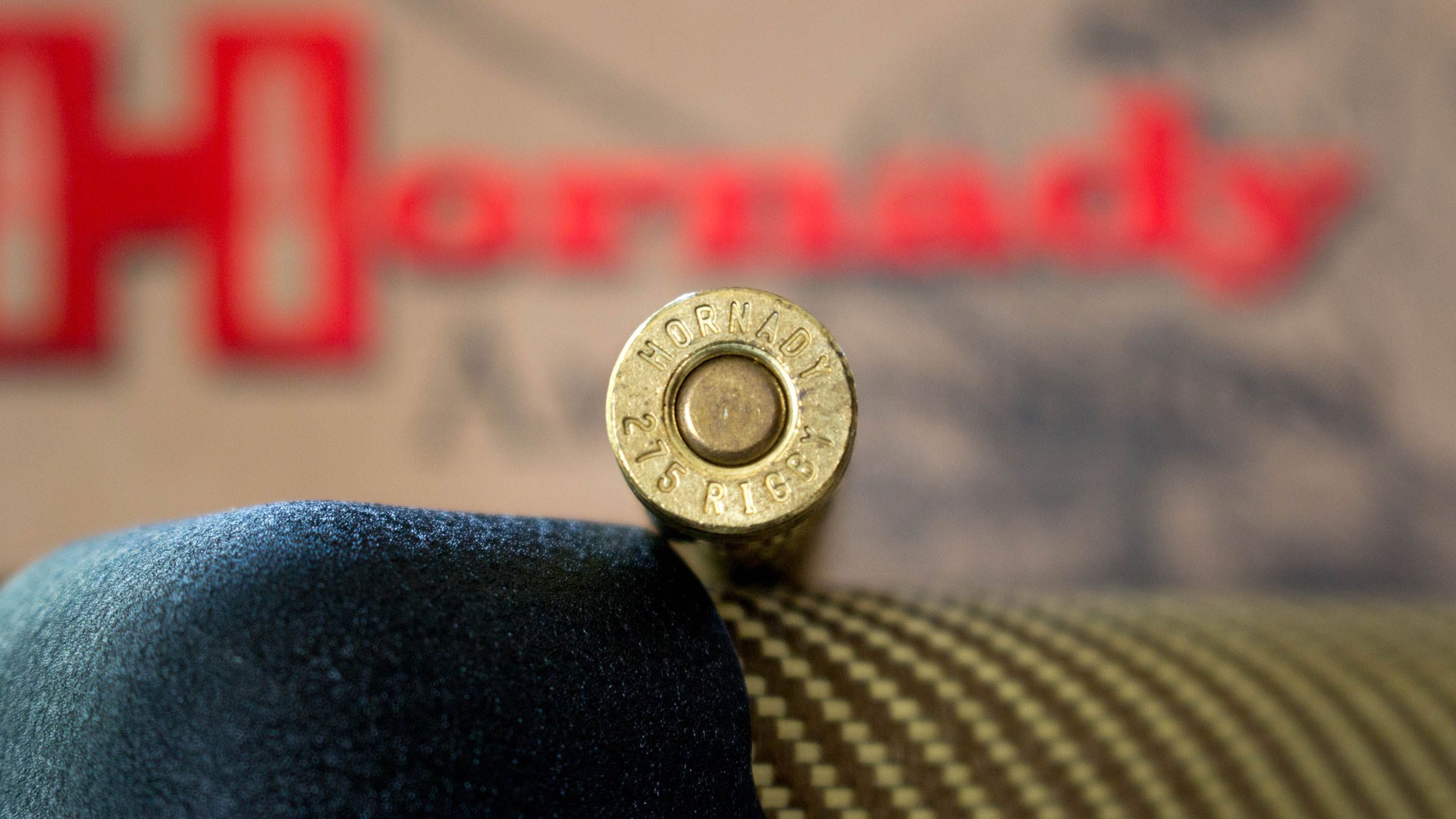
For use on lighter game, specifically those species in the U.K., the .275 Rigby High Velocity (or HV) was developed. The cartridge dimensions and specifications are the same as the standard version, but the chamber’s throat is cut for use with the shorter 140-grain spitzer bullets. Pushing those 140-grain slugs to just under 2,700 fps, the HV load would offer a flatter trajectory and less recoil when compared to the standard 173- to 175-grain load; the hitch is that the heavier bullet will not chamber in a rifle cut for the HV dimensions. But even the standard 7x57mm loads don’t have a terrible recoil level; in fact I find it rather mild.
The .30-06 Springfield was the result of the U.S. Army’s ultimate effort to replace the .30-40 Krag as the chosen shoulder-fired cartridge in the early 20th century. The Krag launched a 220-grain round nosed slug of .308-inch-diameter, at a muzzle velocity of 2,000 fps, and the lighter and faster 7x57mm Mauser showed the shortcomings of our cartridge in the Cuban engagements. The Army Ordinance Department began the revision by switching to a rimless design—the .30-01, thick rim at first, then the .30-03 Springfield—but retaining the 220-grain round nose bullet, albeit with a velocity increase. Using a 2.54-inch case, with a 17 ½-degree shoulder and the .473-inch rim diameter (from the Mauser cartridges), the .30-03 was a definite improvement over the Krag, but the Army wasn’t done yet.
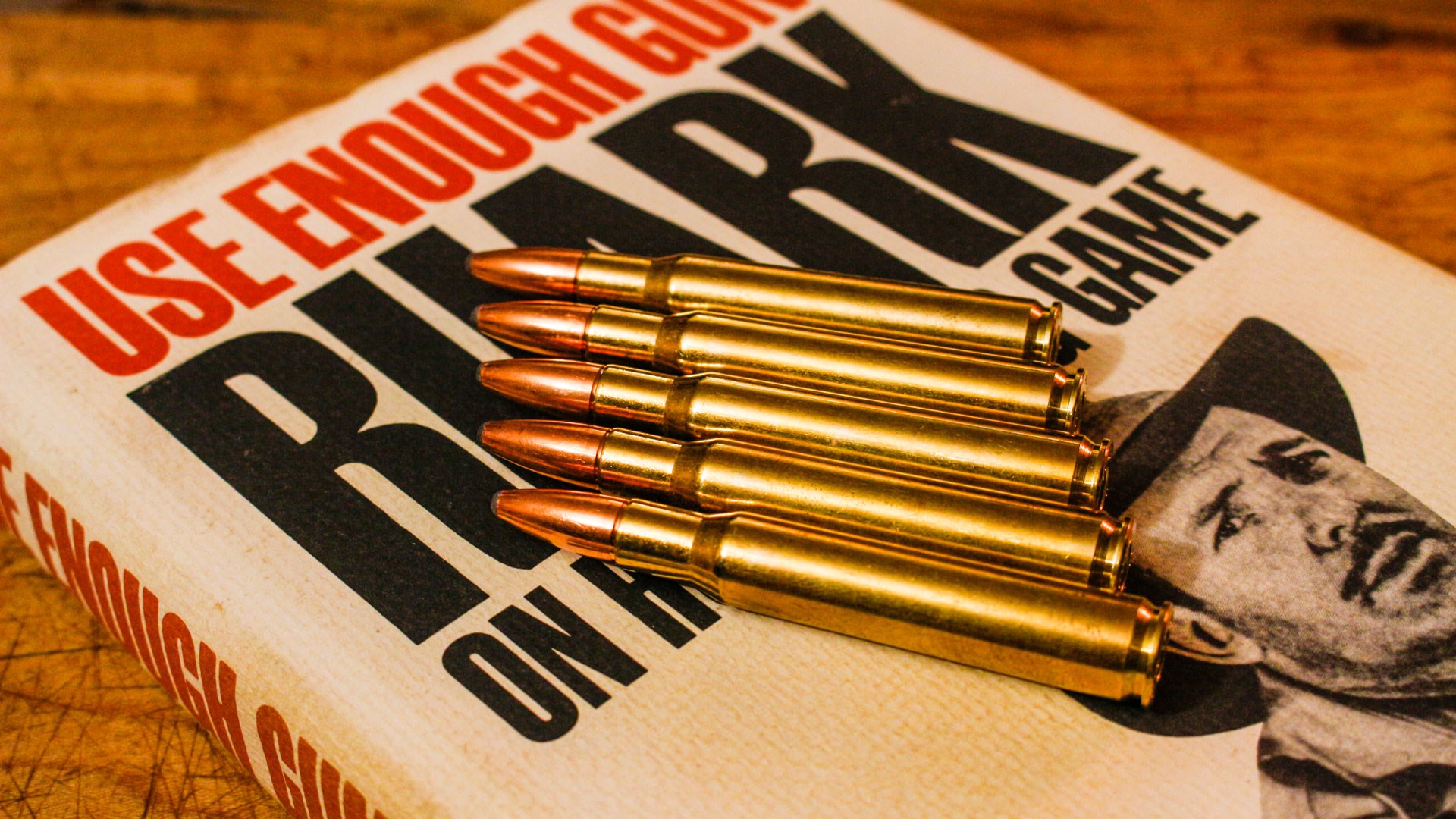
Shortening the case length to 2.494 inches and using a 150-grain bullet at 2,700 fps, the Army introduced the shooting world to the .30-06 Springfield, or the “Cartridge, Ball, caliber .30, Model of 1906” as it was officially known. The cartridge would go on to win two World Wars, chambered in the 1903 Springfield, M1 Garand, M1917 Enfield, and the BAR (Browning Automatic Rifle). It quickly caught the attention of the sporting world and was chambered in numerous sporting rifles; President Theodore Roosevelt took the .30-06 Springfield (and the 30-03 Springfield) on safari in 1909, and it would go on to become a staple among American hunters such as Ernest Hemingway, Robert Ruark, Grancel Fitz, J.Y. Jones and many, many more. Though the military version used the 150-grain bullet, the hunting ammunition has been offered in bullets from 110 grains to 220 grains, with some component bullets weighing in at as much as 250 grains. It will push a 180-grain bullet to 2,700 fps, generating over 2,900 ft.-lbs. of energy at the muzzle.
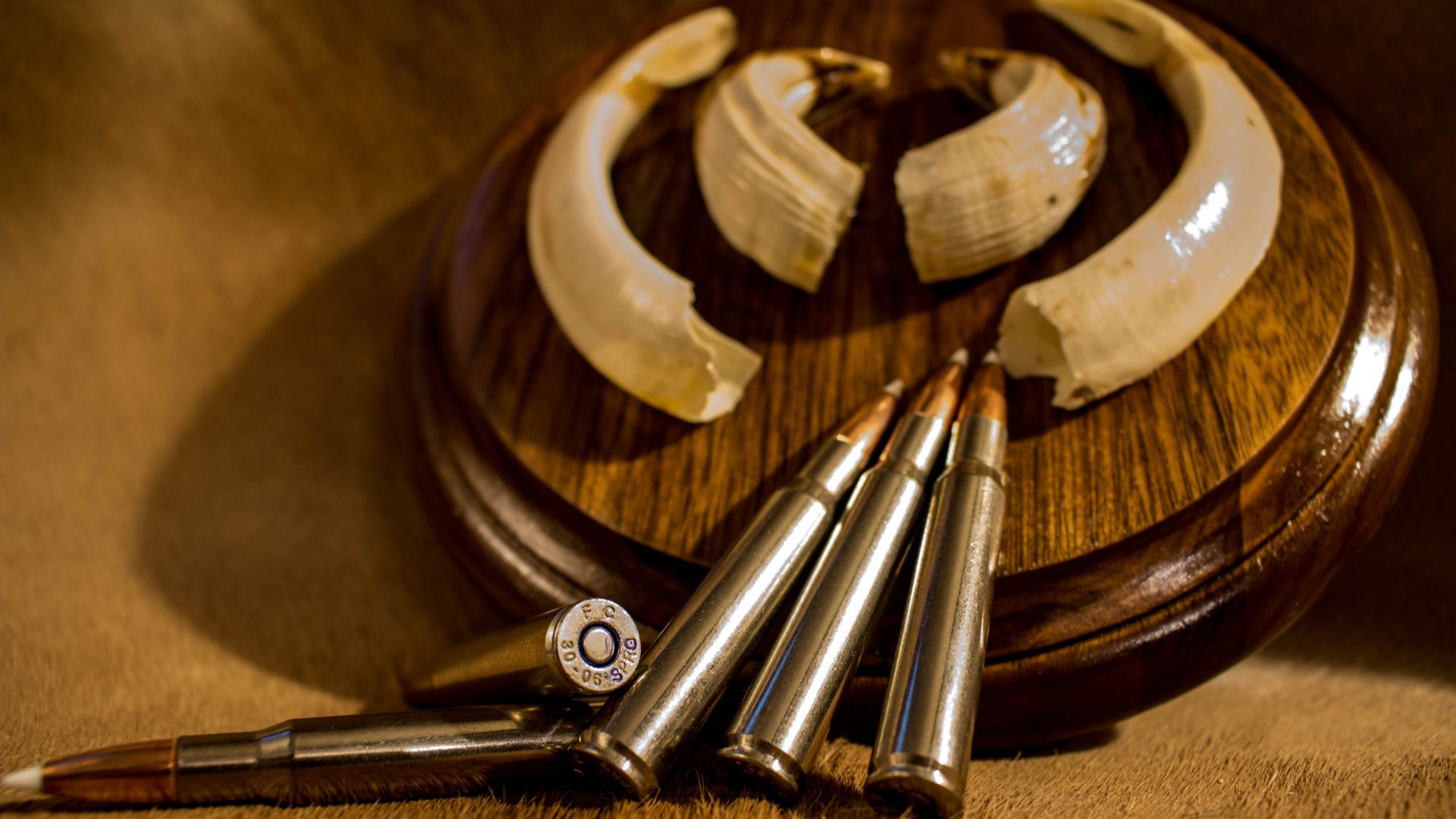
With ammunition and rifle manufactured by nearly every company in the game, the .30-06 Springfield remains among the best selling hunting cartridges to this day. It is fully capable of taking all of our North American game species (though I would personally opt for a larger bore for the coastal grizzlies) as well as the vast majority of African species, shy of the heavyweight dangerous game like Cape buffalo, hippo, and elephant. I don’t find the recoil of the .30-06 Springfield excessive, but it might be a bit much for a youngster or a new shooter.
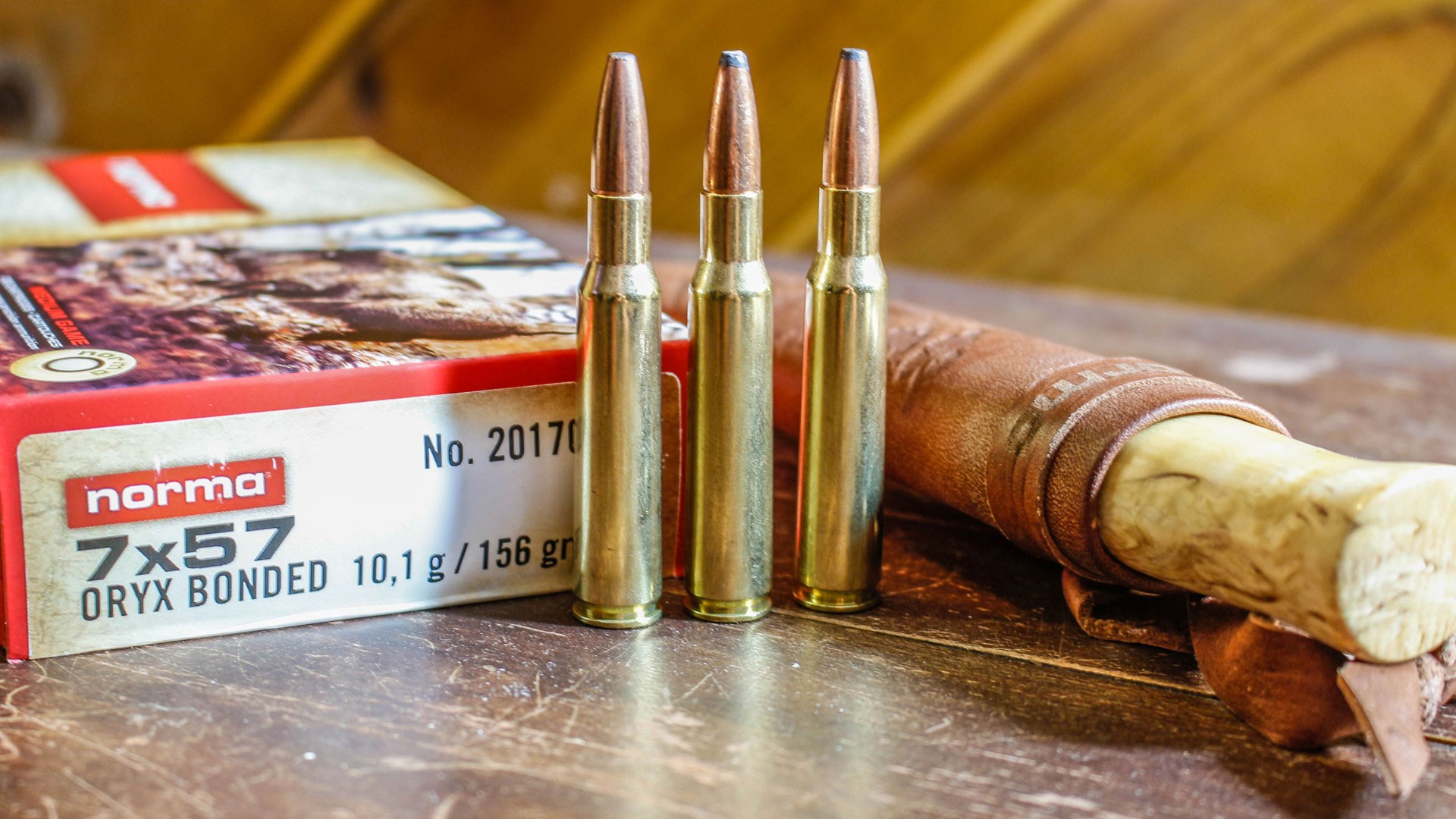
Pitting the two cartridges against one another, we’ve got two classics which remain perfectly viable choices. Both need to be housed in a standard or long action, so rifle weight/size is a moot point. In the recoil department, I find the 7x57mm Mauser to be much easier on the shoulder, but that price comes in the form of velocity. However, I feel the 7x57mm Mauser is a cartridge which can be used to train a new shooter, and with lighter bullets still makes a perfectly viable hunting cartridge; it can be used to take all of the same species as the ought-six, though you might not have the range of the bigger cartridge.
My father gifted me a Winchester 94 in .30-30 Winchester as my first big-game rifle; it was a carbine with a 20-inch barrel, and he wasn't happy about that. He wanted a low-recoil option, but didn’t like the short barrel, and I have often asked him why he didn’t opt for a 7x57mm Mauser, or even a 7mm-08 Remington. His answer was in line with much of America’s thinking: “You start on a .30-30.”
For me, it is tough to choose between these two nostalgic cartridges, as one is as American as apple pie and used by many of my hunting heroes, and the other invokes images of adventure in far-off lands with exotic beasts. The tales of Karamoja Bell and Jim Corbett rival those of Teddy Roosevelt and Ernest Hemingway, and my own hunting experiences with both cartridges have been great.
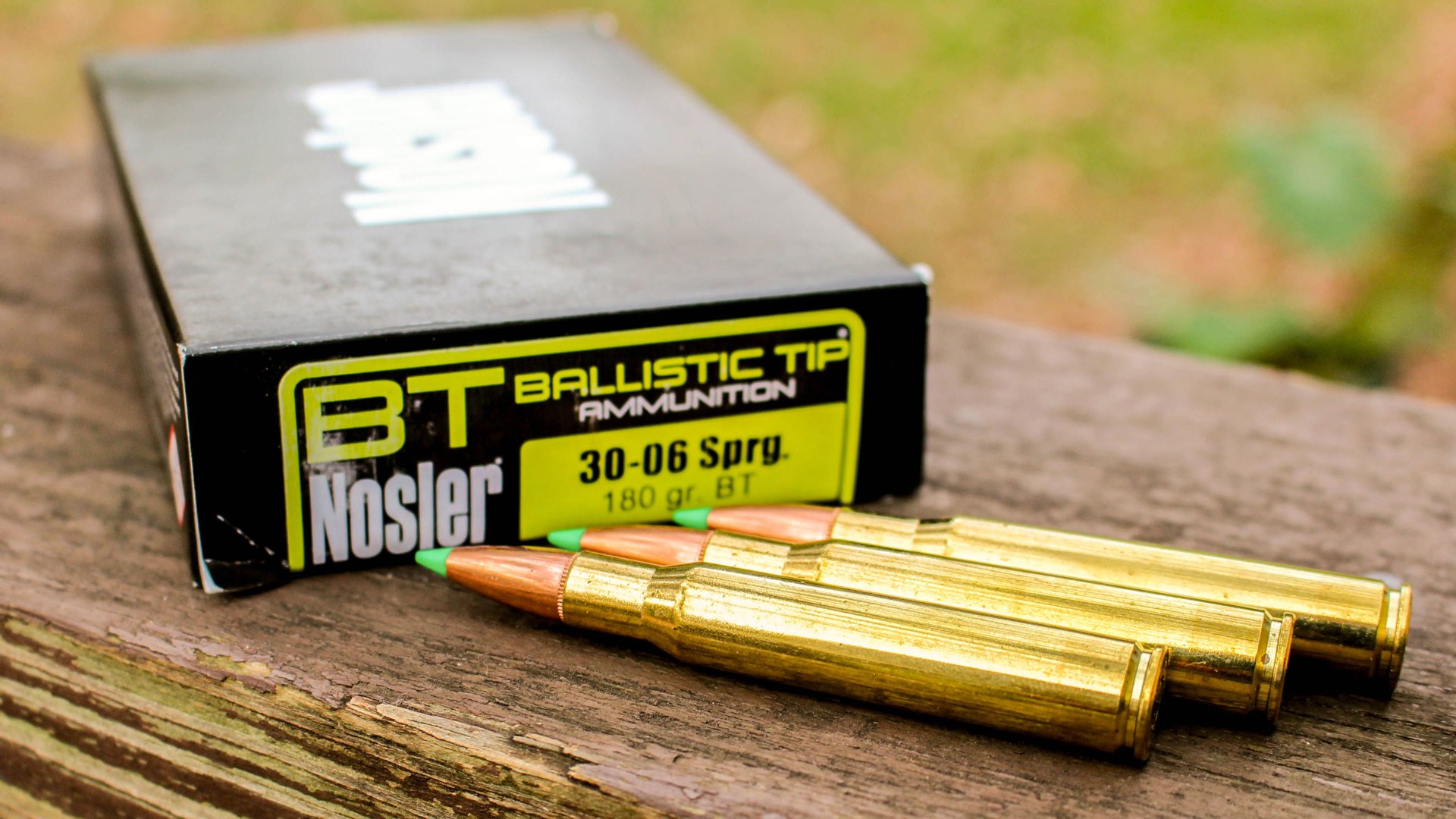
I have to crown the .30-06 Springfield as the champion for a few reasons. One, the variety of bullet weights make the 30-06 a bit more flexible than the 7x57mm, though I will admit the number of hunters taking advantage of this fact is dwindling. The most popular .30-06 loads use the 150-, 165- and 180-grain bullets, and there is a whole bunch to choose from. For the handloader, the possibilities are nearly innumerable, as .30-caliber still remains at the top of the heap, and you could spend a lifetime developing a load with every .30-caliber bullet out there. Not that there aren’t a ton of 7mm slugs, because there certainly are, but the weight range is lesser than that of the .30s.
Two, the number of factory loads for the .30-06 greatly outnumber those available for the 7x57mm Mauser. The latter has at least one load from Winchester, Remington, Hornady (though in the .275 Rigby guise), Federal and Nosler. The ought-six is so readily available that nearly every shop that ever sold ammunition has some form of .30-06 on hand. The rifles so chambered are widely available (in spite of the myriad .308 Winchesters and 6.5 Creedmoors) and there are few hunting camps which would cock and eyebrow at anyone’s choice of a .30-06 Springfield. The 7x57mm Mauser is undeniably cool, but the 30-06 reigns supreme.
Looking for previous installments of our "Head to Head" series? Click here.