When I was 14 years old—and was then shooting a six-wheeled Bear Whitetail Hunter compound bow—I came across Bowhunting October Whitetails in a video store (as some don’t even know what those were, picture people going to shops set up like bookstores, but with empty cases for video cassettes on the shelves). This 1986 bowhunting video featured traditional archers and the twin brothers Gene and Barry Wensel.
My older brother Henry and I watched this video until the store’s late-fee fines began adding up. The advice was good, if basic. Myths about the whitetail rut were then gospel. Disagreeing with them felt culturally dangerous. The Wensels waded through this surreal understanding with practical still-hunting techniques in standing corn and more for whitetails not yet cruising for does.
The advice didn’t help us much on the mountain in upstate New York we were then growing up on, but the stages of the rut they were then outlining practically still apply—though now we know much more about the science behind what is going on.
Pre-Rut of Early October
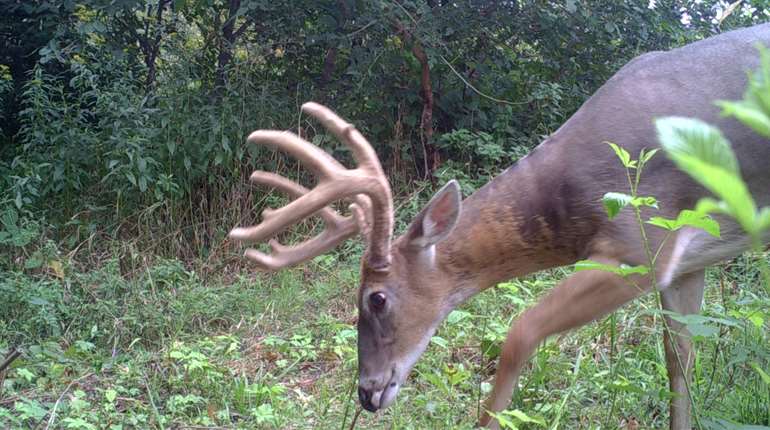
In the pre-rut of early to mid-October, whitetails in much of their range have shifted to mast crops before, perhaps, going to food plots or crop fields. Bachelor groups of bucks have broken or are breaking up and even older bucks might soon move to a new range. It is a time of consistency with regards to bed-to-feed patterns but also of change, as phase transitions into the next and as weather fronts can dampen or increase daylight activity.
What hunters often miss about bucks in this stage is older whitetails often hold back in cover and won’t step out until shooting light ends. GPS-collar studies have shown that bucks at this time might only move a few hundred yards from their beds before darkness falls.
The places to be at this time include areas where white oaks, persimmons, and other nuts and fruits fall in cover near bedding areas. The hardest part is finding ways in and out to stands that won’t bump deer as you slip into a stand site in the afternoon and then sneak away after dark.
Early rubs near white oaks that are actively dropping acorns are the places to look for, but get at least slightly into the cover if you want to target older bucks.
The Late-October Seeking Phase
Bucks’ testosterone is now up. They are increasingly refreshing scrapes and rubbing their antlers on saplings. Younger bucks are now harassing does as the first does approach estrous. The daylight movement of bucks, especially in the morning, is picking up, especially near food sources and travel corridors. Actual breeding is still limited, though some older does come into estrous in October.
The place to be is still in thicker areas where mast crops are producing, but travel corridors for morning stands are becoming better choices. Bucks can be predictable at this point in the rut, but bucks will go nocturnal or shift their patterns if bumped.
The Chase Phase
The first waves of does enter pre-estrus and then estrus in November in much of their range. The peak of the rut varies slightly across the Midwest and East, and can be quite different in the South, but in most of the whitetail’s range the chase phase occurs around November 5-13.
Older bucks are now more interested. They are checking scrapes and does. This is frequently one of the most exciting and productive windows for bowhunters. Now it is time to be in bottlenecks between bedding areas mornings and evenings.
This might even be a good time to pick the ideal day—when the rut and wind is at its best for you—to carry a climber into a “sanctuary” area you typically leave alone.
Peak Breeding Phase
Dominant bucks can be hard to kill during this phase in the rut, as they “lock down” with receptive does for 24-48 hours (sometimes longer) apiece to breed in secluded cover. At this point—say, from November 14-20 or so—the majority of adult does are in estrous.
This is when big bucks—when they are between does—are sometimes spotted in the middle of the day cruising open woods and fields.
The places to be at this time are in chokepoints connecting cover. All-day sits are now a smart tactic. You just never know when a mature buck will leave a doe and start to cruise to find another. You might even see a big buck on an excursion, miles from its usual range.
When it comes to buck movement, this phase of the rut is not as predictable as the earlier stages; however, the biggest buck in your area might suddenly be vulnerable as the buck loses its better judgment and perhaps its head.