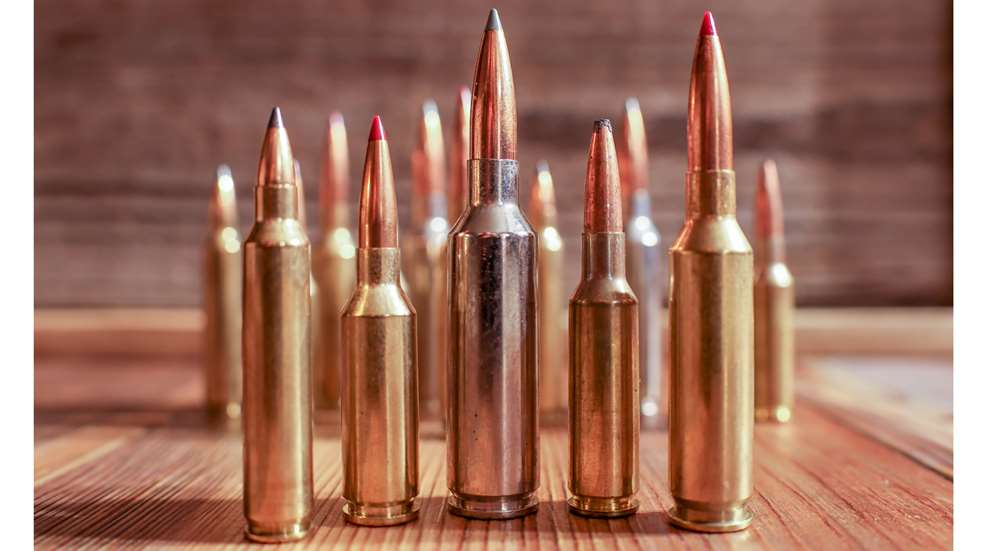
The history of cartridge development is a sordid one, with the market making evolutionary leaps in the period between 1875 and 1925. That half-century might have been the most revolutionary, with a huge number of releases still being used to great effect in the hunting fields to this day. The evolution of the cartridge, powder and projectile saw the established and agreed-upon minimums grow smaller during that period; it would continue to do so throughout the 1950s and 60s.
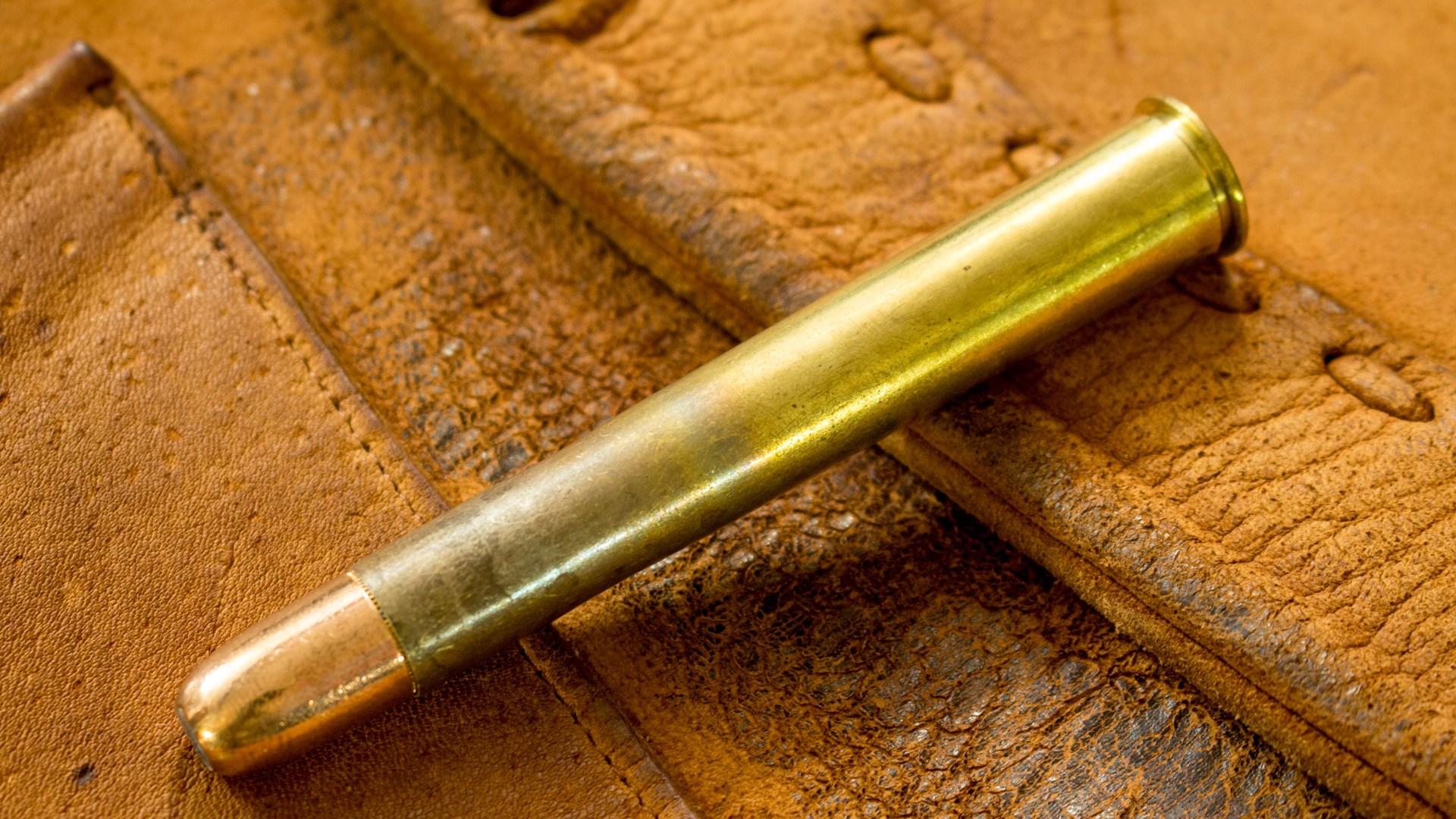 The .450 Nitro Express was once considered an all around hunting cartridge.
If you’re a fan of hunting literature, especially the African stuff, or the exploits and experiments of our past masters like Elmer Keith and Jack O’Connor, this shrinking trend becomes evident, as the technology changed and boundaries were pushed. There was a time when the .450 Nitro Express was considered an all-around cartridge, and the .375 Holland & Holland Magnum was classified as a medium bore. The shift from the .45-70 Government to the .30-40 Krag was huge, and the adoption of the .303 British, as well as the 7mm and 8mm Mauser by European armies highlighted the ‘small-is-better’ mentality. And as the jacketed bullets slowly replaced the pure lead projectiles, hunters around the globe began to establish those guidelines many of us still adhere to today.
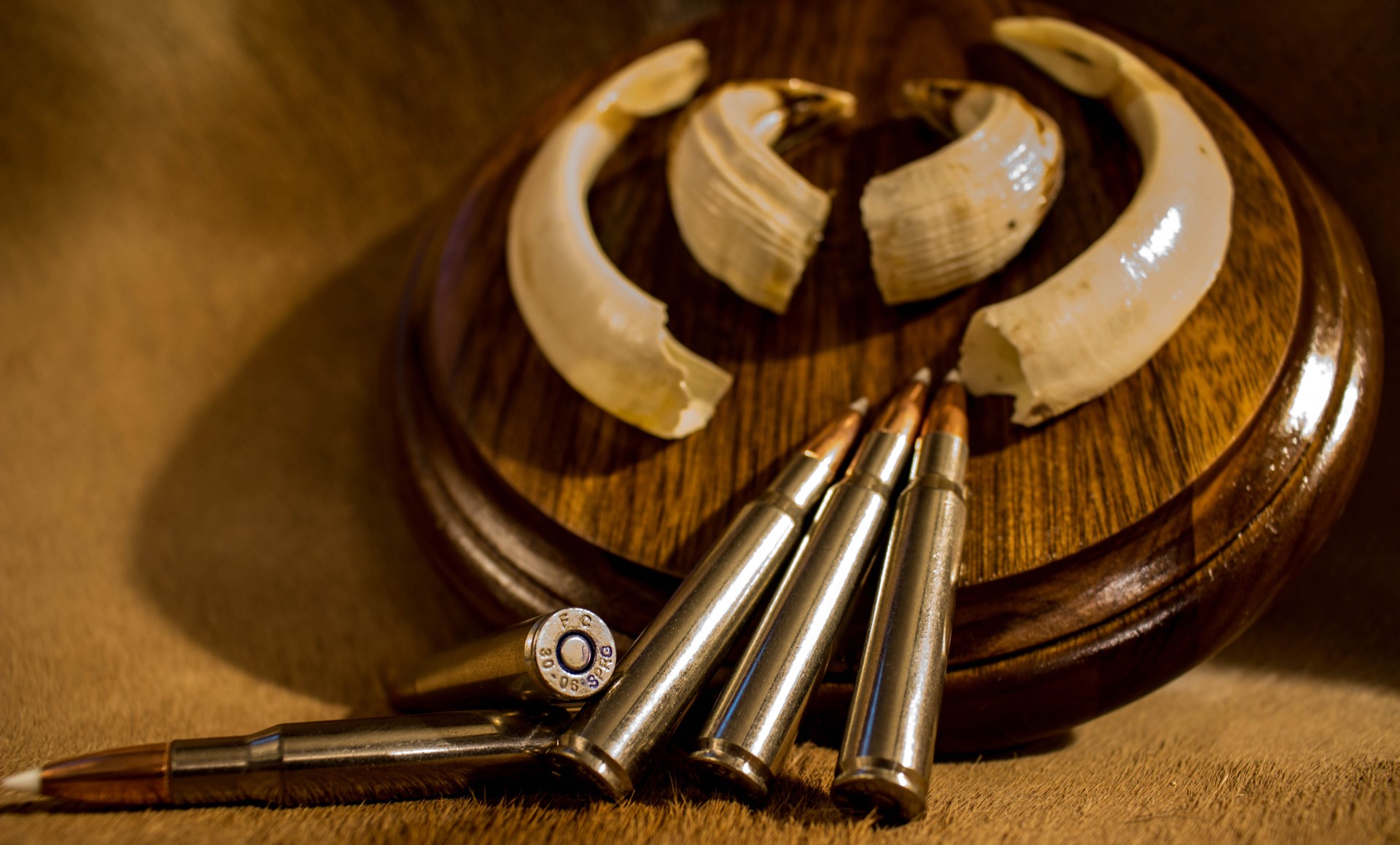 The .30-06 Springfield has been making meat for over a century, and despite many challengers remains a universal hunting cartridge.
W.D.M. “Karamoja” Bell—the famous ivory hunter from a century ago—certainly played a huge role, considering he took a sizable portion of the 1,000 elephants with a 7x57 Mauser/.275 Rigby, and used cartridges as small as the .256 Mannlicher, though he used full metal jacketed projectiles exclusively for the pachyderms. John Burger used cartridges as small as the 8mm Mauser for Cape Buffalo, and the .318 Westley Richards, .333 Jeffery and .350 Rigby Magnum were considered “all-around” hunting cartridges for the open plains of East Africa. Here in North America, our heavy lead projectiles so popular in the lever guns gave way to the jacketed spitzer bullets of cartridges like the .30-06 Springfield, .300 Savage and .270 Winchester, though you’d still find Messrs. Keith and O’Connor waging verbal war regarding whether or not the ought-six was a suitable elk cartridge. The .220 Swift was being hailed (with mixed results) as a speed demon worthy of deer hunting, and the little .243 Winchester and .244 Winchester were hailed for their lack of recoil and ease of shot placement. But there was an issue, one which prompted John Nosler to head to the drawing board: not all the projectiles were capable of handling the tasks assigned. For example, Mr. Nosler met a bull moose who was unimpressed with the cup-and-core bullets he was using in the .300 H&H Magnum. This experience led to the design of the famous Partition bullet.
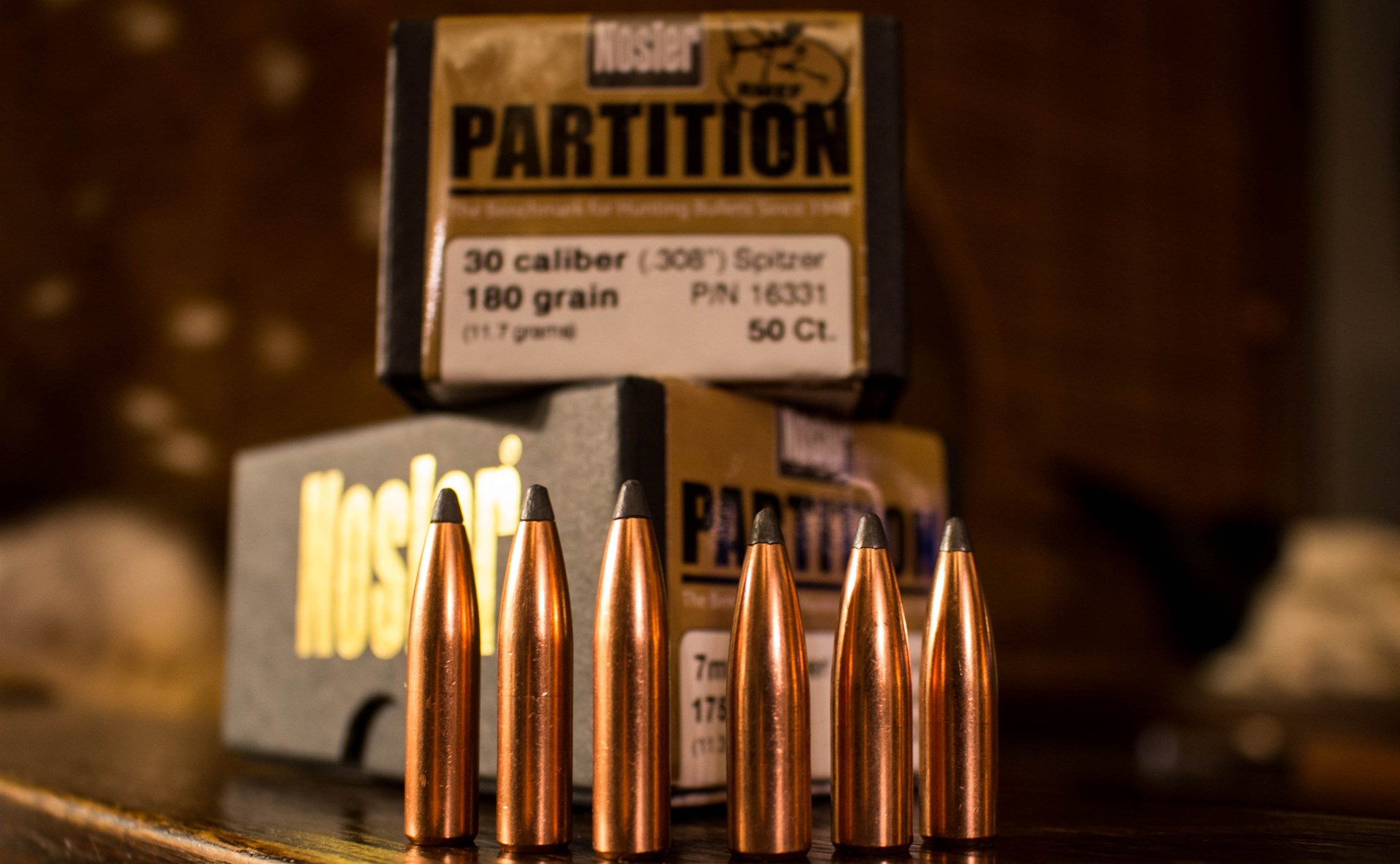 John Nosler’s Partition bullet did a wonderful job at extending the capabilities of almost every cartridge it could be loaded in.
Robert Ruark—famous author of Horn of the Hunter, an account of his first safari in 1953 with Harry Selby—brought a number of rifles to Tanganyika (now Tanzania), ranging from a .220 Swift up to a .470 Nitro Express. His attempt—and subsequent failure—to kill a hyena with a .220 Swift made him swear off the little cartridge, as the 55-grain softpoints at high velocity just weren’t up to the job. Was it the fault of the .220 Swift? Or was it simply the projectiles? I will point to the latter, and go so far as to say that the dramatic improvements in projectile design and construction have absolutely the latest shift to smaller bore diameters in the hunting field.
These days, it is hard to imagine a world without the Federal Trophy Bonded Tip, Nosler AccuBond, Barnes TSX, Swift A-Frame and so many of the premium bullet designs. But I can remember that world, where the concept of a lead-free monometal was absolutely foreign, and bonded-core bullets were just the stuff of legend. So in that world, with the cup-and-core bullets of relatively lower weight and Ballistic Coefficient, the cartridge minimums we’ve come to accept are probably sensible. But with a premium bullet, the .270 Winchester as an elk rifle that Jack O’Connor had to defend no longer needs such a defense.
It is quite obvious that the combination of the construction of our premium projectiles, cartridges capable of holding longer bullets of higher Ballistic Coefficient, and barrels capable of stabilizing those projectiles has resulted in smaller caliber cartridges performing better than ever. For example, I've long used the popular .22-250 Remington to take foxes, coyotes, prairie dogs, woodchucks, and more. The 55-grain bullets are about as heavy as I can go, as the 1:12 twist rate in my Ruger rifle won’t stabilize bullets much heavier than that. While they work fantastic for the small game species I mentioned, I still have a hard time using even a premium bullet of that weight on deer, bear and pronghorns. Yes, I’m certainly aware that over the half-century plus that the cartridge has been around, many folks have done just that, but I want to see a bit larger bore diameter and/or a significantly heavier bullet.
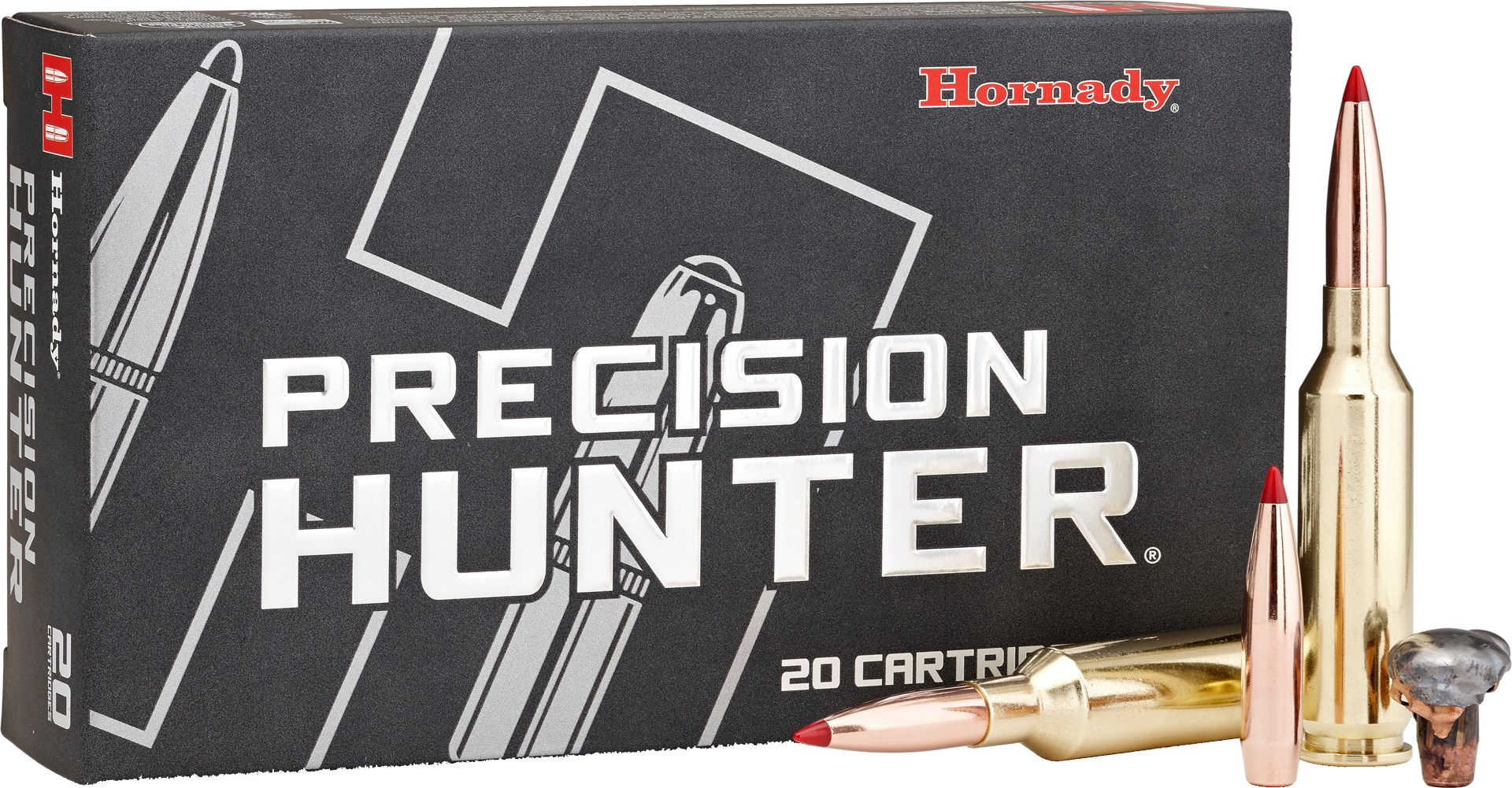 The 6mm Creedmoor uses bullets of higher Ballistic Coefficient than does the older .243 Winchester and 6mm Remington, and that gives it the advantage at longer ranges.
New cartridges like the .22 ARC, .224 Valkyrie, 6mm Creedmoor and the like are currently being loaded with bonded core and monometal projectiles, and are used to take animals as large as moose and grizzly bear. My pal Tyler Freel—an Alaskan native as well as a very talented gunwriter—used a 71-grain McGuire Ballistics monometal bullet in the .22 ARC to take that grizzly, making the point that the lack of recoil assuredly allows for precise shot placement; on that point I cannot disagree. I am very familiar with black bears, but not grizzlies, and while I certainly don’t live among brown bears, I can say that I would absolutely opt for a bigger cartridge with a much heavier bullet. Yet there sits Tyler, grinning from ear-to-ear with his bear. Am I wrong for wanting something heavier? Is Tyler nuts for pursuing the largest predator in North America with such a light rifle? The answer probably lies somewhere in between …
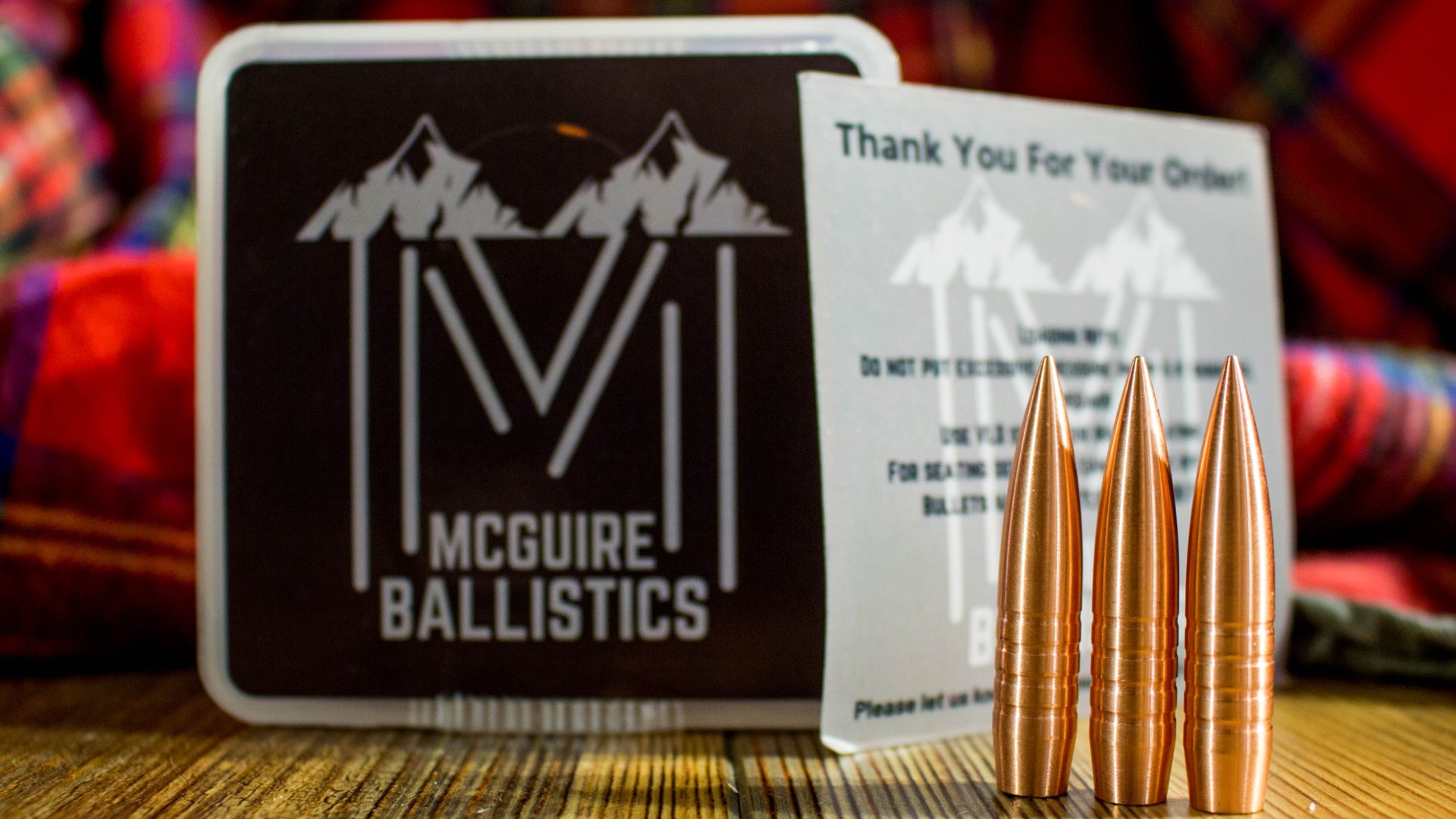 Modern projectiles have really changed the capabilities of our hunting cartridges; the McGuire Copper Rose is an excellent monometal design.
Karamoja Bell theorized a century ago that, regarding elephants, 175 grains in the right spot (the brain) was as effective as 500 grains, and I’ll add to that the fact that Bell was a surgeon with a rifle, and had a perfect understanding of elephant anatomy. His sketches remain a perfect example of various brain shot angles, and though Bell retired unharmed by pachyderms, I am not heading afield with a 7x57 in pursuit of ivory. Mr. Freel even readily admits that the .22 ARC is a less-than-ideal cartridge for visiting grizzly hunters. Both make a very valid point though: shot placement is paramount.
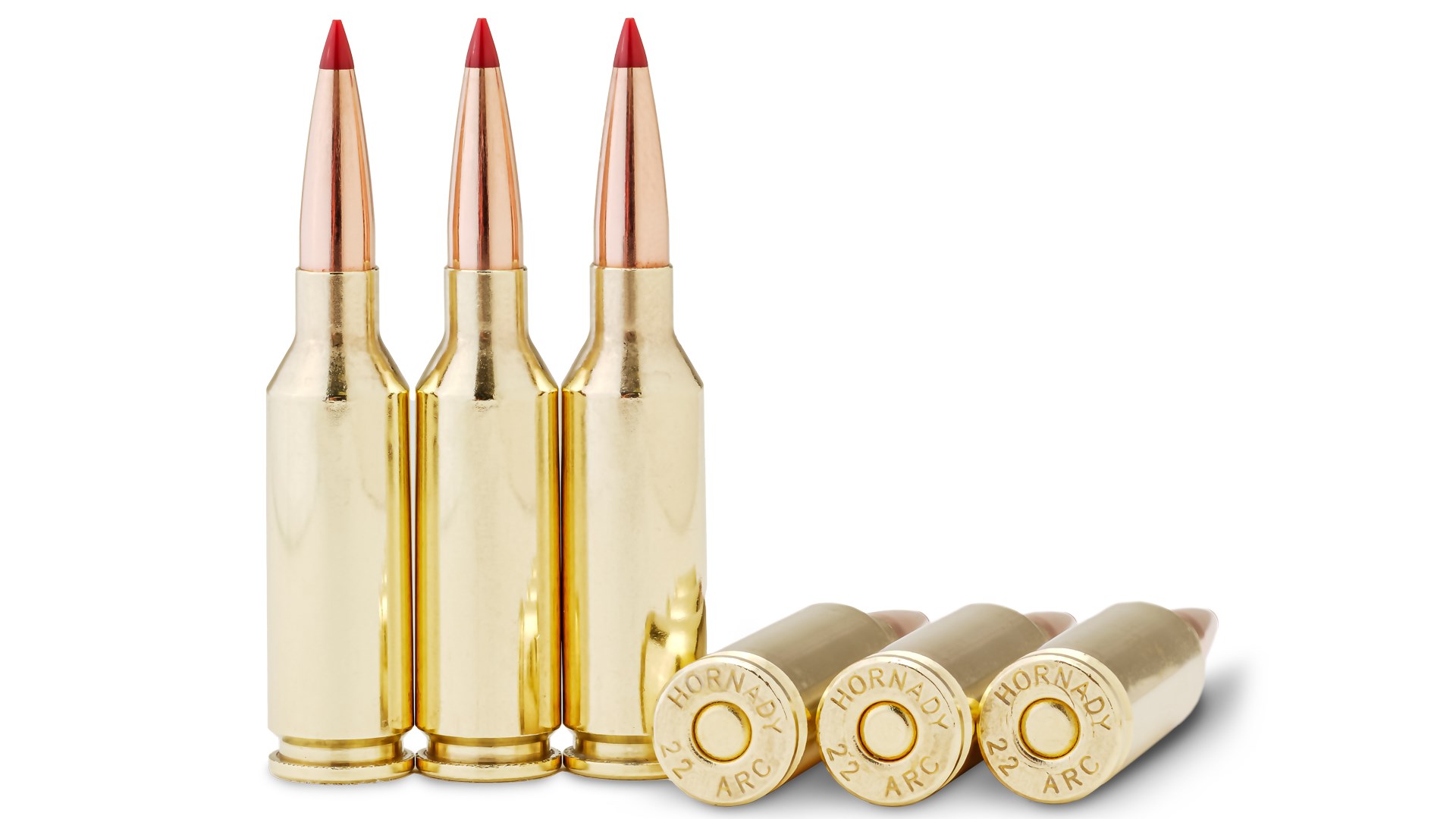
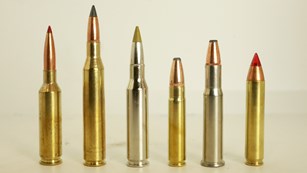
The .22 ARC is a diminutive-looking cartridge, and while it seems to fit the mold for a target/varmint/light game cartridge, it has taken both moose and grizzly bear.
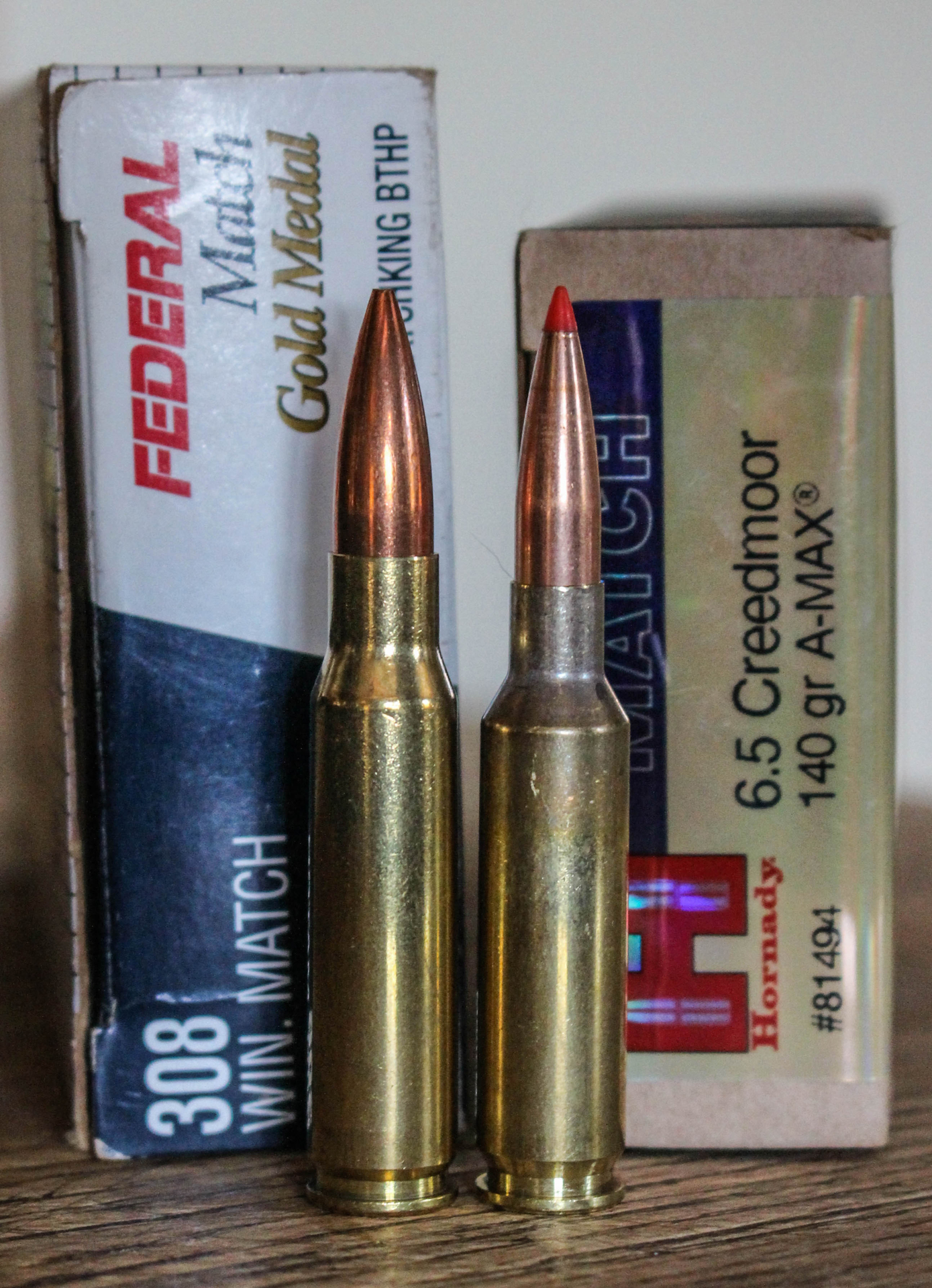
I absolutely concur that the modern projectiles make our existing cartridges just that much more effective. A .30-06 Springfield was a universally-accepted hunting cartridge for all but the African heavyweights a century ago, and modern projectiles simply cement that fact. But to the point of both Walter Bell and Tyler Freel, even the best projectile needs to be properly placed, and that is where the modern cartridges can make a big difference, as the recoil drops off. I’ve long been a proponent of the various .300 Magnums, especially the .300 Winchester Magnum and .300 H&H Magnums, but I was the first to admit that the 6.8 Western offered a very similar performance level at a significant reduction in recoil. Many target shooters came up embracing the .308 Winchester, hailed as one of the finer 1,000-yard cartridges, but I’ll be the first to admit that the lower recoil and higher B.C. values associated with the 6.5 Creedmoor makes it the more desirable long-range target cartridge.
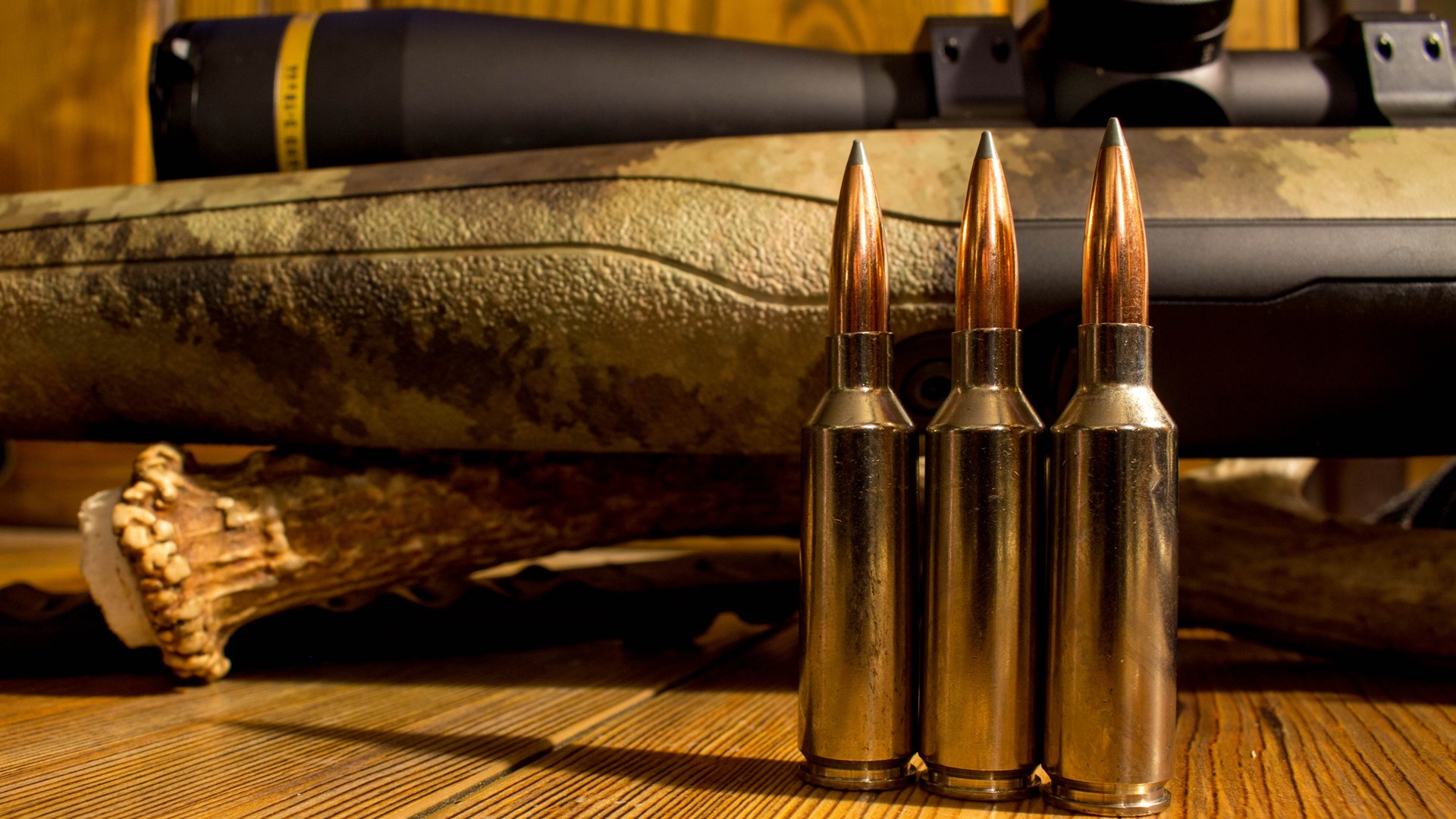 The 6.8 Western is a short-action .277-caliber magnum cartridge, using a faster twist rate barrel to offer bullets as heavy as 175 grains. It can rival the field performance of the 7mm Remington Magnum and .300 Winchester Magnum.
Recoil is one of those points where egos get bruised, where chests get puffed out and often where mistakes are made, especially in cartridge choice. Magnum-mania is a real thing, with the mindset being that if a standard cartridge is good, a magnum cartridge is better. Again, I’ll hammer the point home that the shot must be placed properly. If you can do it with a magnum, fantastic. The additional velocity will certainly increase recoil, and will disrupt your sight picture, making it—to some degree—more difficult to get back on target. I’m not particularly recoil sensitive, but I have pushed the envelope and have been honest with myself to best set my own limits. I don’t want a cartridge that is going to have me even considering recoil when it comes time to make the shot. Rifle fit plays an important role in felt recoil, but it’s hard to argue physics. No matter the culprit, if the rig generates too much recoil for the shooter, it is a poor choice. I’d much rather see that hunter drop down to a lighter-recoiling cartridge with a premium bullet, and get some real-world training in how to use that cartridge in the wind and at varying distances.
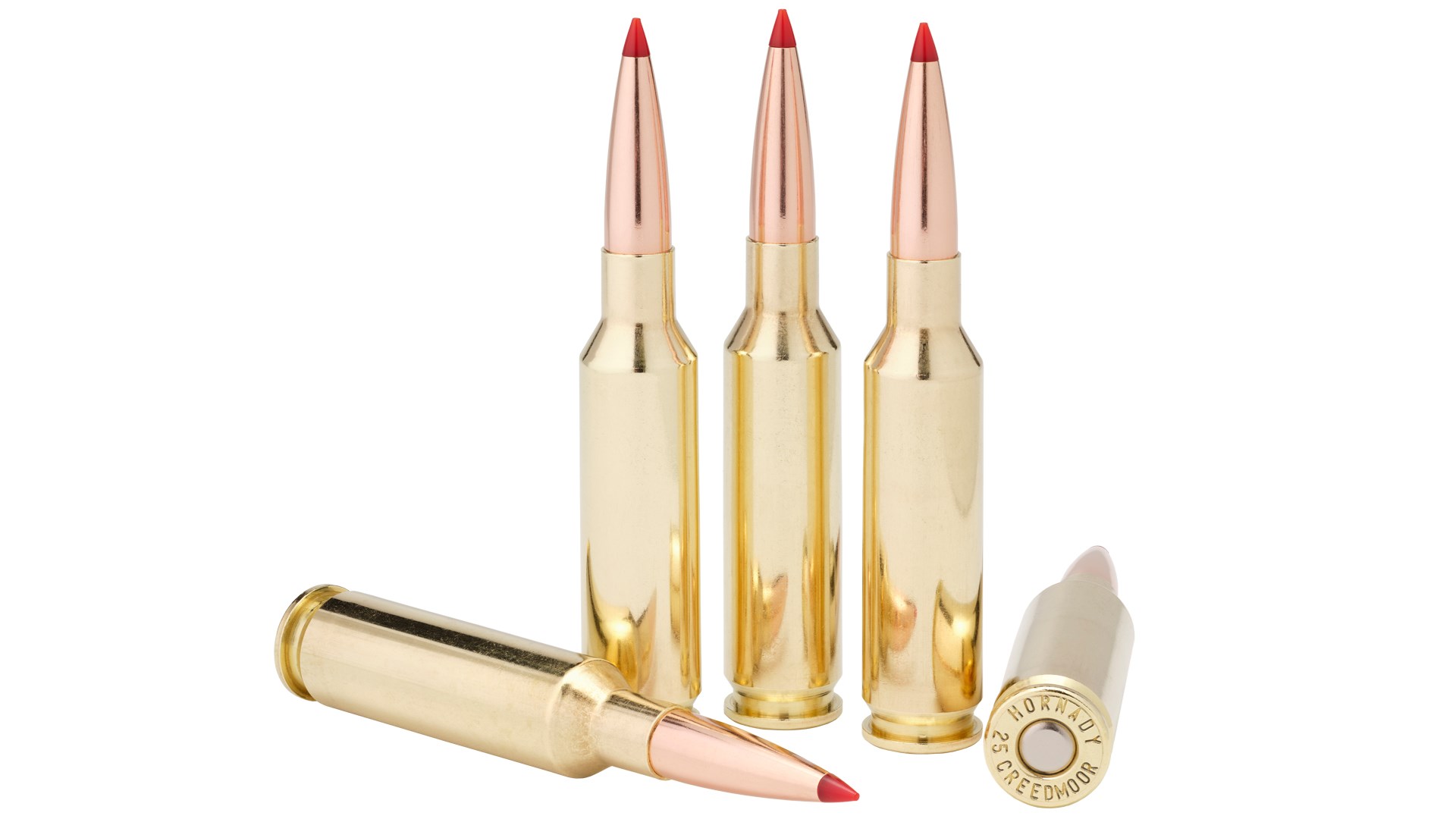 The .25 Creedmoor is another of the modern cartridges which allow for bullet weights higher than the accepted norm, and that will increase the cartridge’s capabilities.
Do the commonly accepted caliber/bullet weight minimums need to be revisited? I say absolutely, as the game has inarguably changed. Is anyone going to go wrong using the old standards? Not if they can effectively handle the cartridges of yesteryear. It seems that every time a new cartridge is released, there is a wave of “I can get it all done with the good old ought-six” comments, and while the comments might not be incorrect, at one point in time the .30-06 Springfield was considered new-fangled technology. I’m not saying you should abandon the tried-and-true for one of the smallest centerfires, but taking a long, hard look at some of the smaller options which get the job done with a bit more efficiency. My pal Randy Flannery, a veteran Maine deer and bear guide at Wilderness Escape Outfitters, has a minimum for his visiting bear hunters: 140 grains. Not a cartridge, or bore diameter, but a minimum bullet weight. While this could be twisted into a low Sectional Density choice, I believe Randy’s goal was to establish the 6.5mm cartridges as the smallest suitable for the black bears. Years ago that might have seemed small, especially when one wanted to be “loaded for bear”, but I think it’s a testament to the changing cartridge environment. The 6.5mm is the old 7mm, the .270s are the old .30s, and the 6mm is the old quarterbore. Even the quarterbores have gotten a facelift, what with the .25 Creedmoor and .25 Weatherby RPM. Yup, things are getting smaller, again. I’d say the best advice is to use the biggest cartridge you can use effectively, and that will require some self evaluation and sincere honesty.