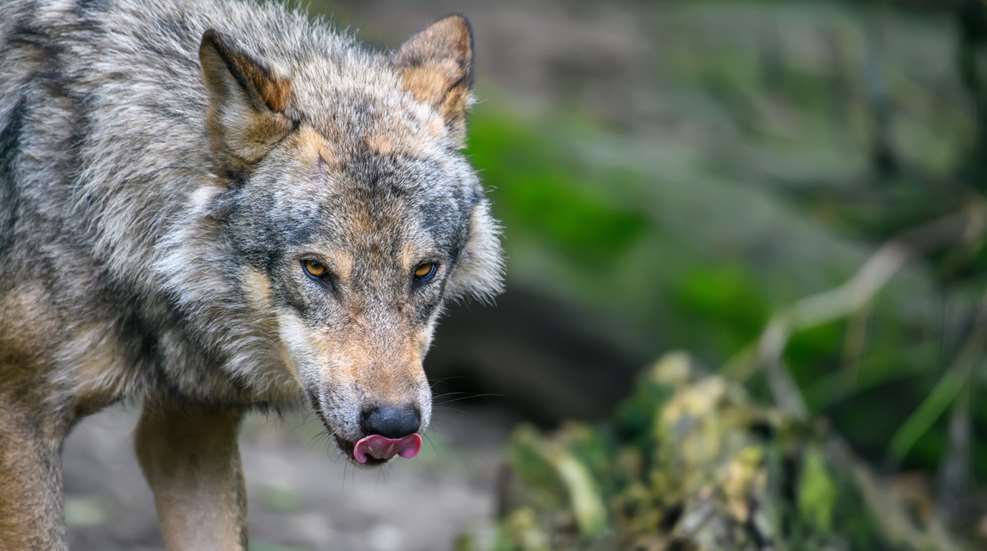
On Sept. 4 President Donald J. Trump issued “Supporting America’s Ranchers,” an executive order that addresses a variety of concerns in the domestic meat supply. Section 3, “Helping Ranchers Combat Predation” includes at least one directive of interest to hunters. It addresses the decades-old controversy over wolves and the Endangered Species Act status that too often hamstrings management.
The section states that within 90 days, “The Secretary of the Interior shall make a determination as to whether the gray wolf and the Mexican wolf have met the recovery criteria for delisting or downlisting under the Endangered Species Act (ESA) and, if he determines that the recovery criteria has been met, shall begin the process of delisting or downlisting them.”
In addition, Federal officials will engage with states—where the wolf population indicates delisting is appropriate—to eliminate any protected status. The directive also mandates an update to the, “….criteria for authorizing lethal gray wolf and Mexican wolf removal and to enable greater emergency responsiveness, including precision targeting, for situations involving predator threats to human safety or threats to domestic livestock.”
Game Populations
Wolves impact game animals, a fact made painfully clear by a story covered by NRA Hunters’ Leadership Forum in 2016. It details how in March of that year, “…a Wyoming wolf pack slaughtered 19 elk in one fell swoop in the elk winter-feeding area near Bondurant, Wyo. According to Wyoming Game and Fish, the elk were killed the previous evening in what was ruled a ‘surplus killing’ by a known ‘rim’ wolf pack that left 17 calves and two cows untouched except for three that were partially consumed.”
The belief that the predators have no negative impact on wildlife largely ignores a potentially lethal side-effect widely observed by ranchers. It was detailed by the Oregon State University Extension Service in July 2025. “Survey responses indicate that ranchers perceive a decline in cow body condition due to increased stress and energy expenditure resulting from depredations by wolves.,” it states. Most game animals store fat to survive winter and running those energy stores off before first snow can have deadly consequences that leave no evidence of canine attack on the carcass.
As for the effectiveness of “humanitarian” efforts to deter livestock depredation, a story published earlier this year by the Agriculture and Natural Resources Department at the University of California reflects how expensive and fruitless they can be. The Golden State’s first wolf pack had begun killing livestock regularly. “By summer, the pack was found near residences during daylight hours and had become dependent on cattle as its main source of food,” it explains. “To reduce the harm this pack was causing to the community, CDFW [California Department of Fish and Wildlife] deployed what they called the Summer Strike Team—a group of biologists, wardens, and CDFW staff—whose goal was non-lethal hazing and deterrence of wolf-related livestock attacks. Yet despite spending 18,000 staff hours over 114 days, the attacks continued to increase, and by October 2025, 92 cows and calves had been injured or killed by the pack. As a result, four members of the pack were ultimately euthanized.” Total cost of the fiasco came to $2.6 million, according to the school’s financial analysis, and only $250,000 of that was contributed to livestock loss.
Human Impact
Colorado reintroduced 10 wolves in late 2023. Their impact has already made headlines.
In March of this year an employee at Nottingham Ranch, which occupies portions of the state’s Eagle and Routt counties, shot and killed a wolf—which had ignored his effort to haze it off with gunshots—sprinting at a small group of cows and calves. If directly threatening livestock or human life, even in Colorado where the predator is considered “endangered,” no charges would be filed under rule10(j), an exemption to the “protection” if the shooting is justified.
Animal extremists quickly claimed the ranch hand should receive the maximum penalty. That’s a year in jail and $100,000 fine. According to a KBHB Radio report the ranch owner is refusing to divulge the employee’s name during the investigation.
My Experience
That story brings back haunting memories from 1998. That’s when Mexican gray wolves were reintroduced to Arizona and deeply religious, close family friend was caught in a similar situation.
He worked for decades for the U.S. Postal Service. My mother was confined to a wheelchair after a stroke and his mail deliveries were the highlight of many of her days. When time allowed, he’d come in and have lunch with her. I visited after work most nights could hear how those visits buoyed her spirits.
My father was a disabled World War II vet, so getting her in and out of a car was a challenge. Ventures were rare and, as any caregiver knows, friends once seen daily slowly vanish in the distance.
When it came time for that rare mailman to retire, he decided the “celebration” should be a simple campout with his wife and two young, home-schooled daughters at a remote spot in Arizona’s mountains. He didn’t know it was close to where they released that first pack.
He was in the tent going over math assignments with his oldest daughter when he heard his wife scream outside. A quick glimpse led him to believe it was a large coyote stalking his spouse and younger child.
He was an avid hunter who knew going defenseless in the remote outdoors wasn’t wise. He grabbed the .243 Win.-chambered bolt action he brought along and walked out of the tent slowly, expecting his appearance would spook the predator off. Instead it began a sprint toward his loved ones so he delivered a single shot.
Then he saw the radio collar. Cell phones were scarce before Y2K, so to report the shooting it required a drive of more than two hours—one way. By the time he made it home to Tucson, Ariz., the news coverage was widespread and extremists were calling for his conviction. Bumper stickers that read, “Real Men Don’t Shoot Wolves” were distributed even before Federal investigators arrived.
I was editor-in-chief of a magazine published by Safari Club International at the time. When he called asking for advice I helped.
Thankfully his name was withheld while the investigation was underway (hopefully still is). So we made the rounds in the dark of the night to visit every writer I knew and trusted. I always left the room to let the reporter or editor hear his side of the story, uncensored. There are not too many people you can trust so implicitly to always deliver the truth. That was followed by radio and TV, the only other outlets available before social media’s dawn.
Somehow my name leaked. I was tailed for a time afterward and daily death threats followed. A group of animal rights radicals began to refer to me as “America’s most notorious outdoor writer” at news conferences.
It came to a grinding halt when I called in a favor from my friend Dave Hardy, an attorney who’s done a ton of good work defending the Second Amendment. He set things straight with the investigators and explained the gaping holes in their case. Ultimately no charges were pressed against a decent and innocent man caught in the ESA’s crosshairs.
Most Popular