The Abbreviated Version
A few months back, I took a road trip through the twisting trails of the Savage 99 (see The Jeep of the Gun World). While I touched on some recognized high points and unique factors that stood out in my mind, there were many scenic turnouts and side roads left unexplored. That changes today. Hop in and let’s take a look at the models that truly make the Savage 99 a life-long adventure.
Every good road trip starts with a vague route and a semi-firm destination. The Savage 99 is no different. The destination? A non-tubular magazine-style lever-gun designed to expand existing bullet options. The route? That’s a little more circuitous.
It’s a path of letters, abbreviations and nebulous distinctions. These delightful little indicators tell devout Savage 99 enthusiasts all sorts of details about configuration and finish options. They can look at a snapshot and tell you what letters make up the model, approximately when it was manufactured and the basic quantity produced. Then there’s the rest of us…

When I first started down the Savage 99 journey, the sheer number of variations was a little overwhelming. So, I did what we in 2026 do best: I explored the internet. Much to my delight, through one of the Savage 99 internet groups, I located something called “The Savage 99 Pocket Reference” by Rory Reynoldson.
After corresponding with Rory and determining this was the missing tool in my Savage 99 research toolbox, I ordered a copy. It arrived one beautiful summer Friday evening just as I was about to take myself out to dinner. Into my purse it went as I set off in search of a smoked Old Fashion and some pulled-pork nachos.
And I began to read… Something fascinating about Savage 99 delineation is that it is just as nuanced and convoluted as it first appeared. My misguided hopes that a book, bourbon and dinner might create some clarity were promptly dashed. Let’s start at the beginning.
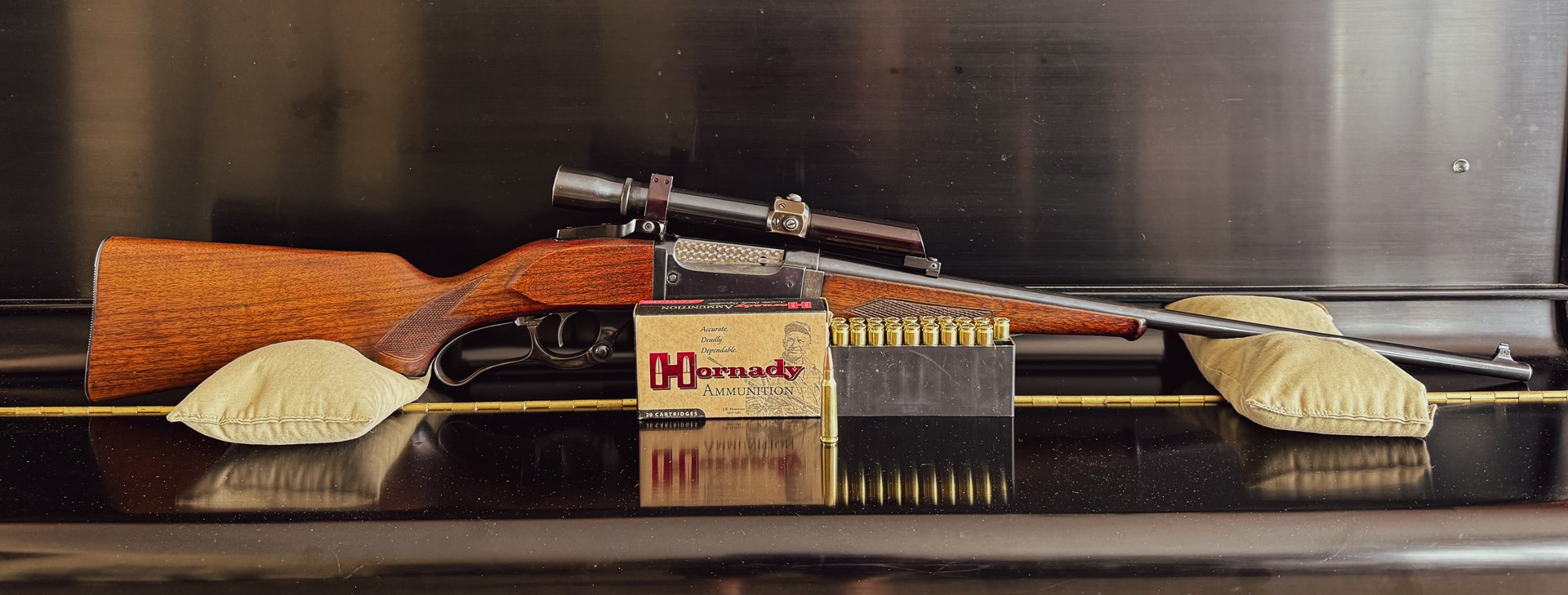
Models, Variations and Random Suffix Fixation
Guess what? Many of the Savage 99 models received their monikers post-production. The delightful array of letters and numbers that 99 collectors rely upon, were actually coined, in part in the 1970s by a man named Doug Murray. His book “The Ninety-Nine” took the telegraph codes used for ordering and transcribed them into the Savage 99 nomenclature we rely on today. This holds true for the 1899 models and not the later occurring, 99 models. These were assigned by Savage.
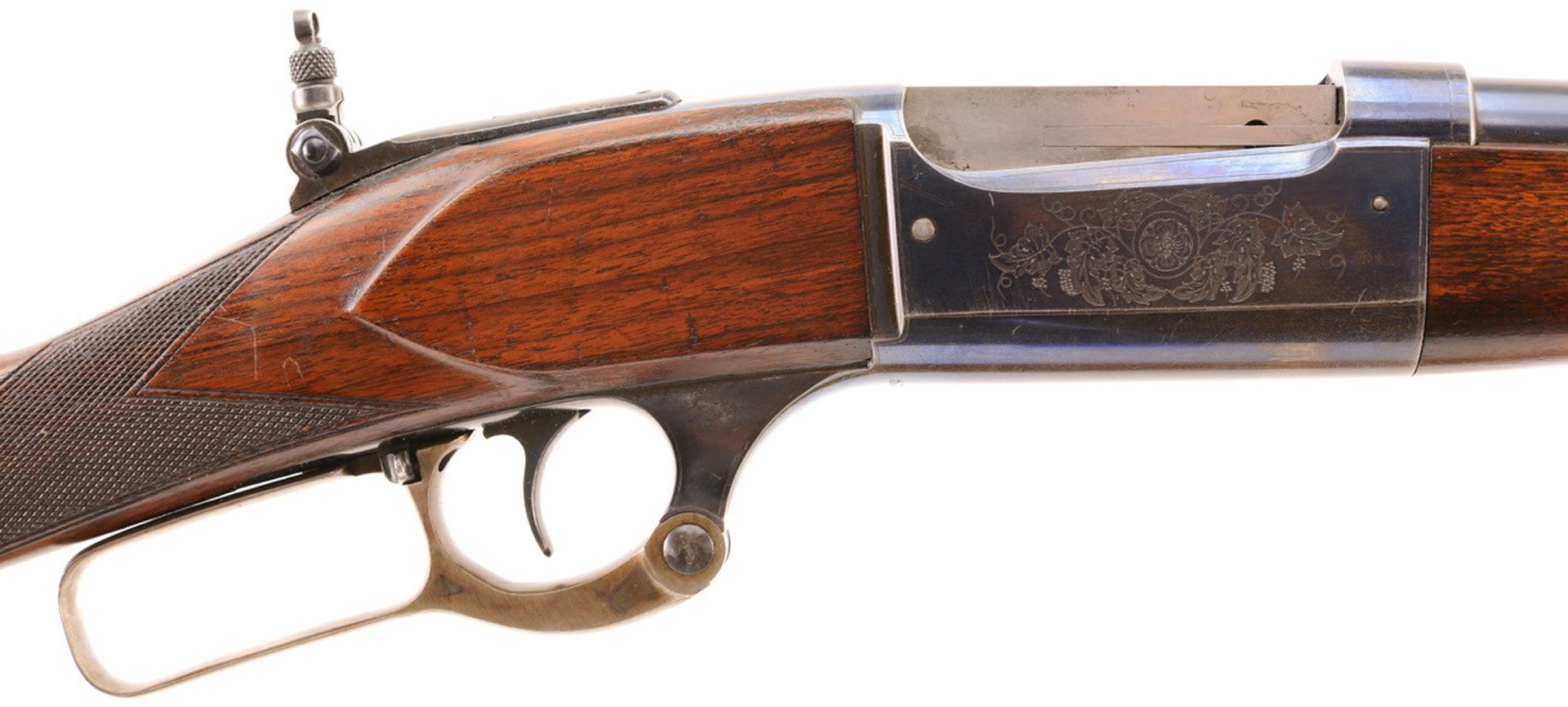
1899 in .303 Savage with A2 checkering and A2 engraving, from the collection of Kurt & Sun Schroyer.
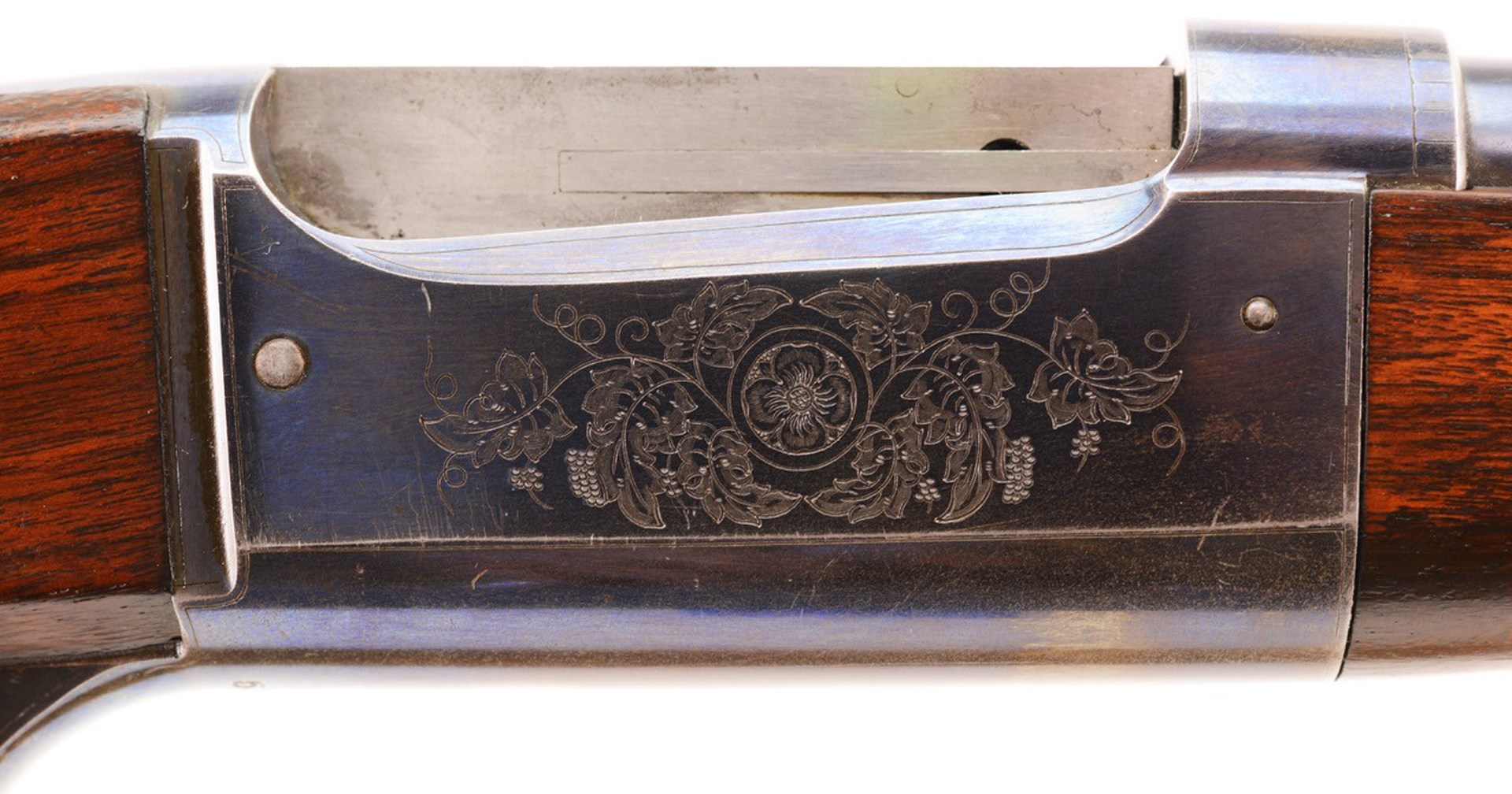
What Makes a Model?
Now that we have established that the letters and numbers are just as confusing and baseless as they appear, let’s look at what makes a model. According to my new pocket reference book, a “Model” is “any catalogued or uncatalogued version made in significant numbers.” So basically, if the same gun got produced in sufficient quantity, it was crowned a model. But wait, there’s more!
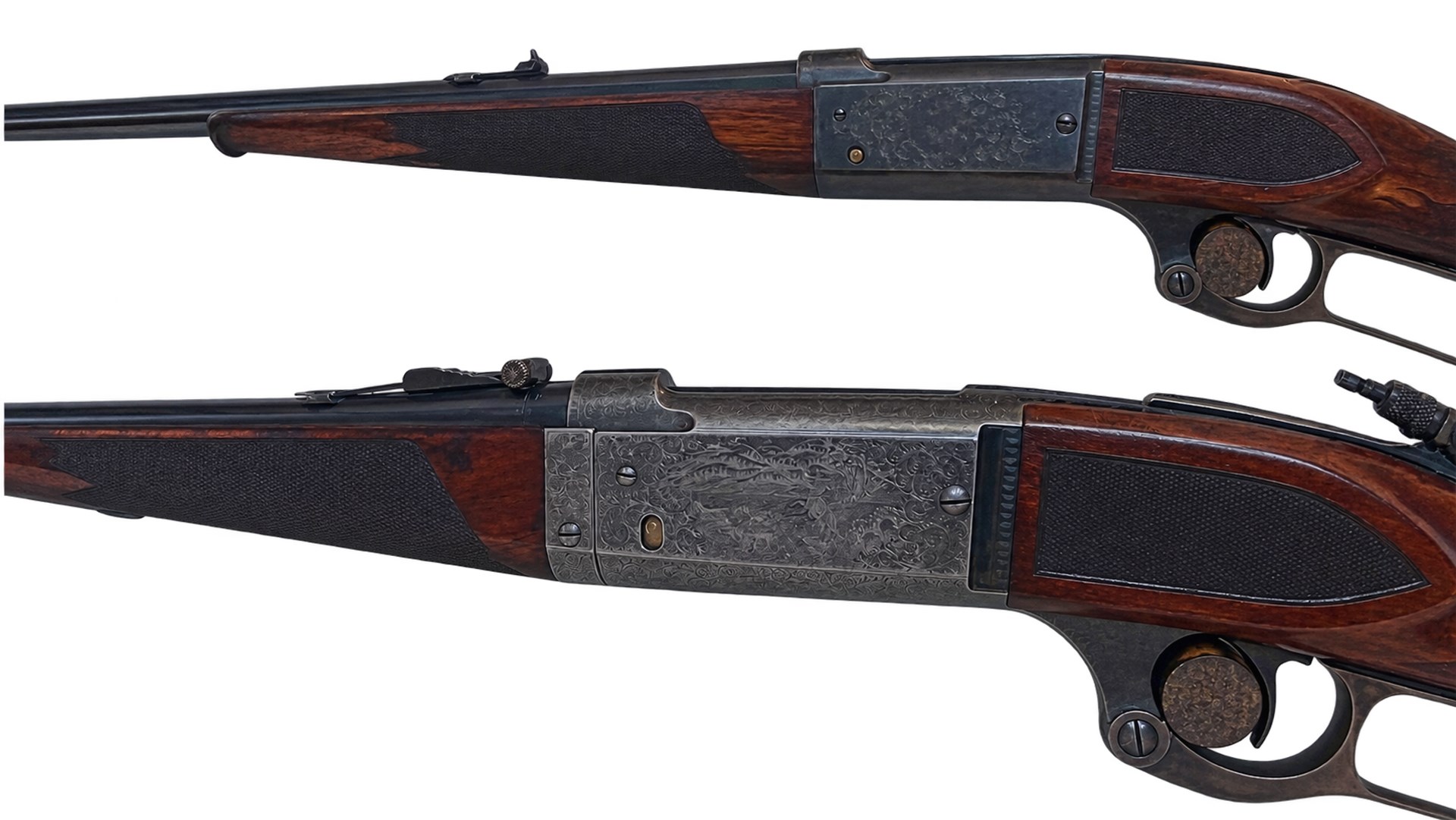
1899 Leader Grade (back) and 1899 .22 Savage Hi-Power Premiere grade (front). From the collections of Kurt & Sun Schroyer, and Jeff Butz.
Styles or Versions
“Styles are variations of a model defined by changes to receiver, stock or major external characteristics,” according to my handy little book from Mr. Reynoldson. A new style consists of things like stock changes, receiver design alterations, checkering patterns or other material shifts. They also have to be produced in sufficient numbers to qualify. Styles track the significant changes to each model from its inception to the end of its production life. A short run of random changes doesn’t appear to qualify as a “style.”
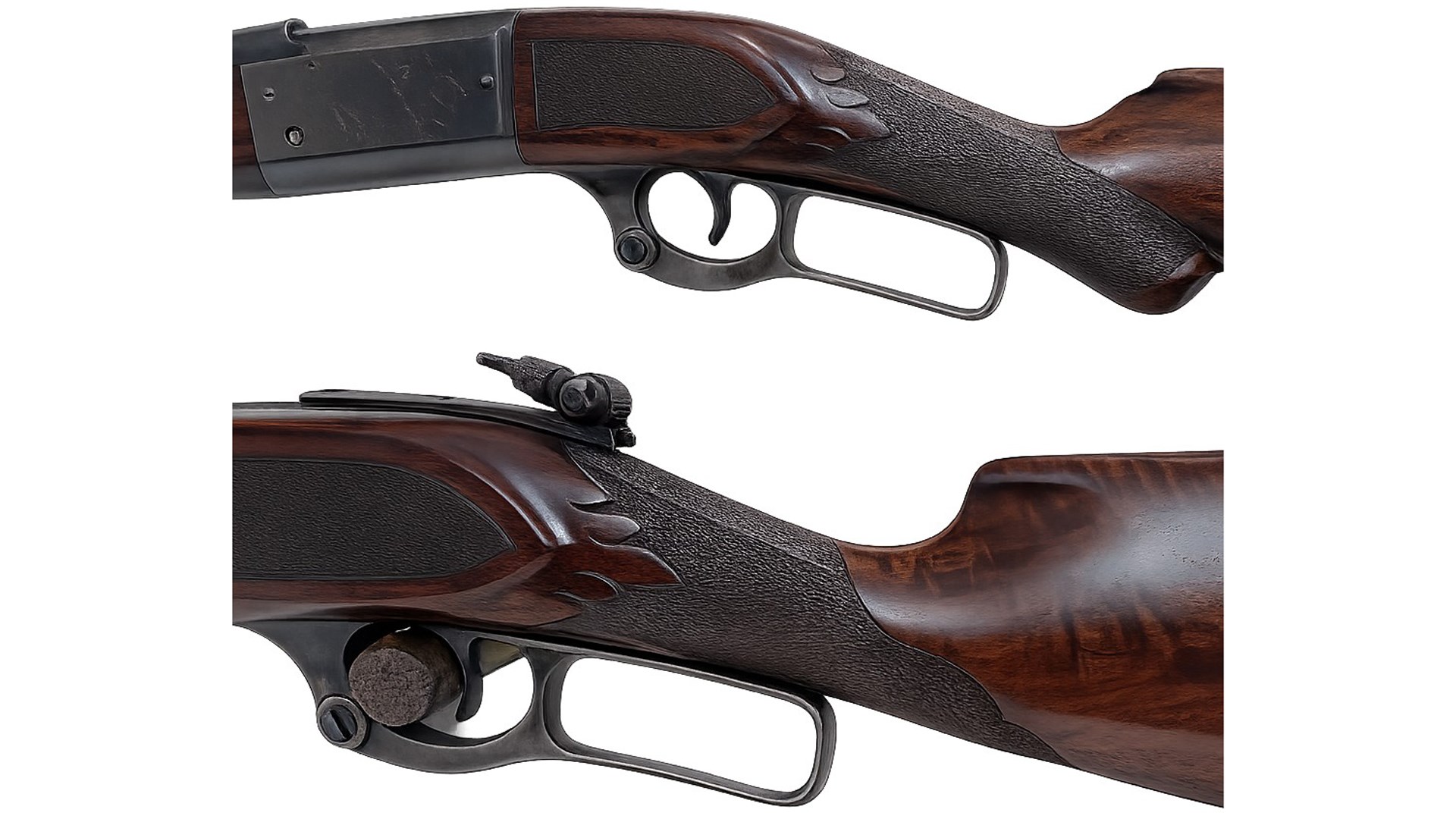
Both examples of flame checkering. From the collections of Kurt & Sun Schroyer, and Jeff Butz.
By now, my grasp of the models, styles/variations and distinctions that make up the Savage 99 is about as muddled as the orange I just watched the bartender squish into submission for the gentleman’s Manhattan down the bar.
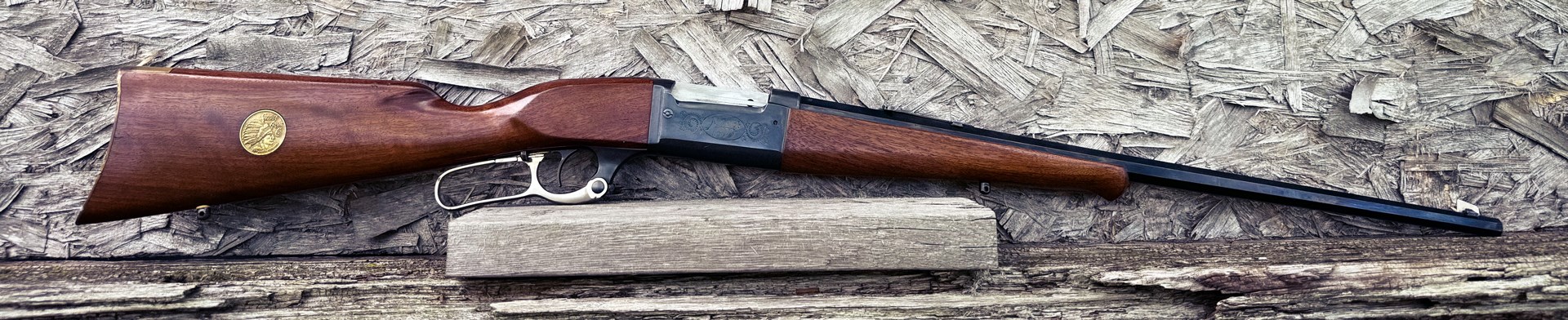 Savage Model 1895
To further muddy the waters, there is a hinge point, from a marketing perspective. For many of us, the vernacular “99” is how one refers to these unique guns from inception to eternity. That’s not entirely correct. Speaking in terms of the Savage 99, the original version was termed “1899” and not “99.” The Savage 1895 was the true predecessor to the 1899/99, but we are confining this little exercise to post-1895 production designs.
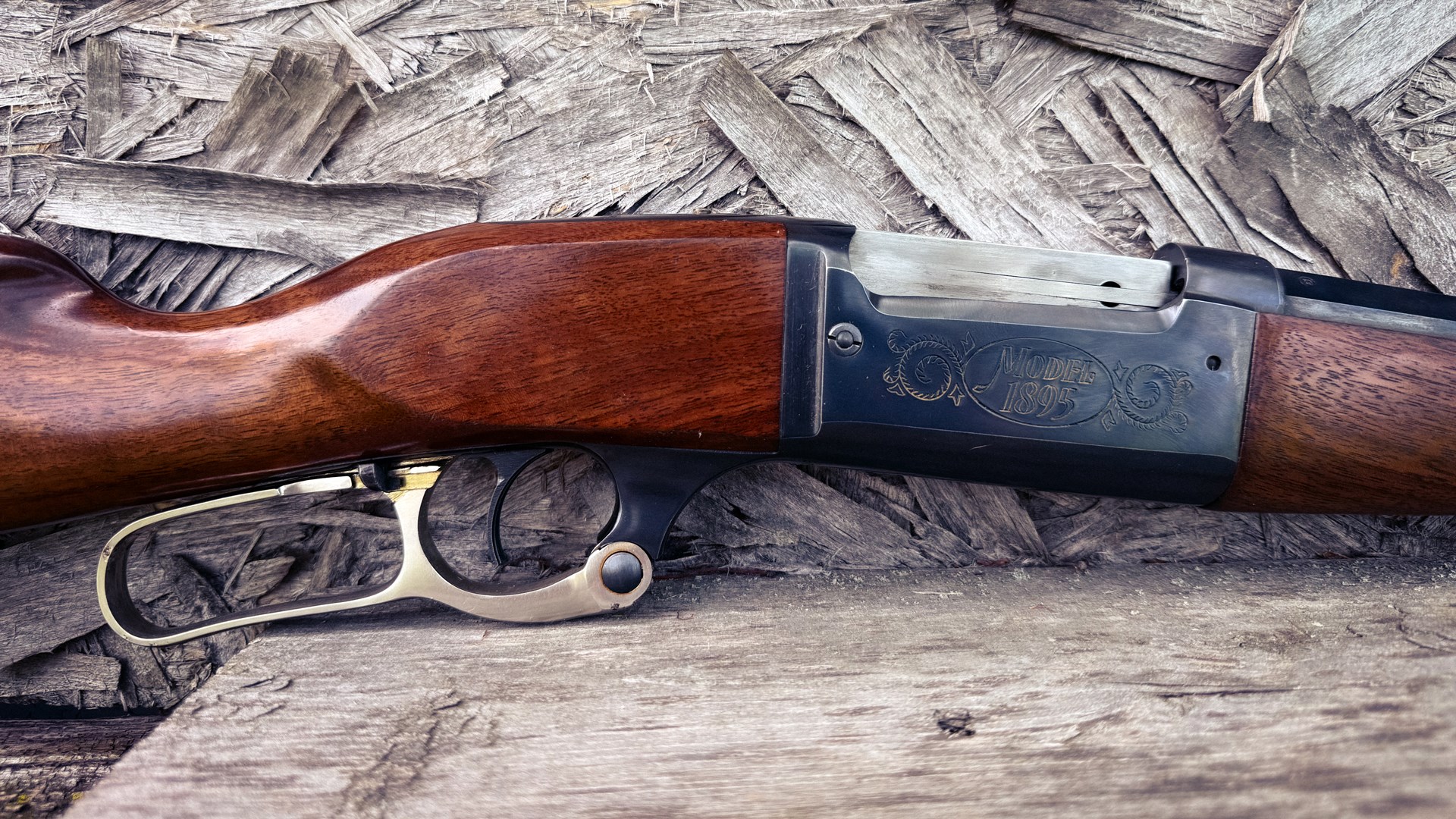 Savage Model 1895 receiver
The 1899 models ran from 1899 to 1921. The 99A came out in 1921 and marked the beginning of the pre-fix “99.” This appears to be a marketing initiative to aid in modernizing the perception of the Savage 1899 (similar to Winchester’s 1894 to Model 94 shift).
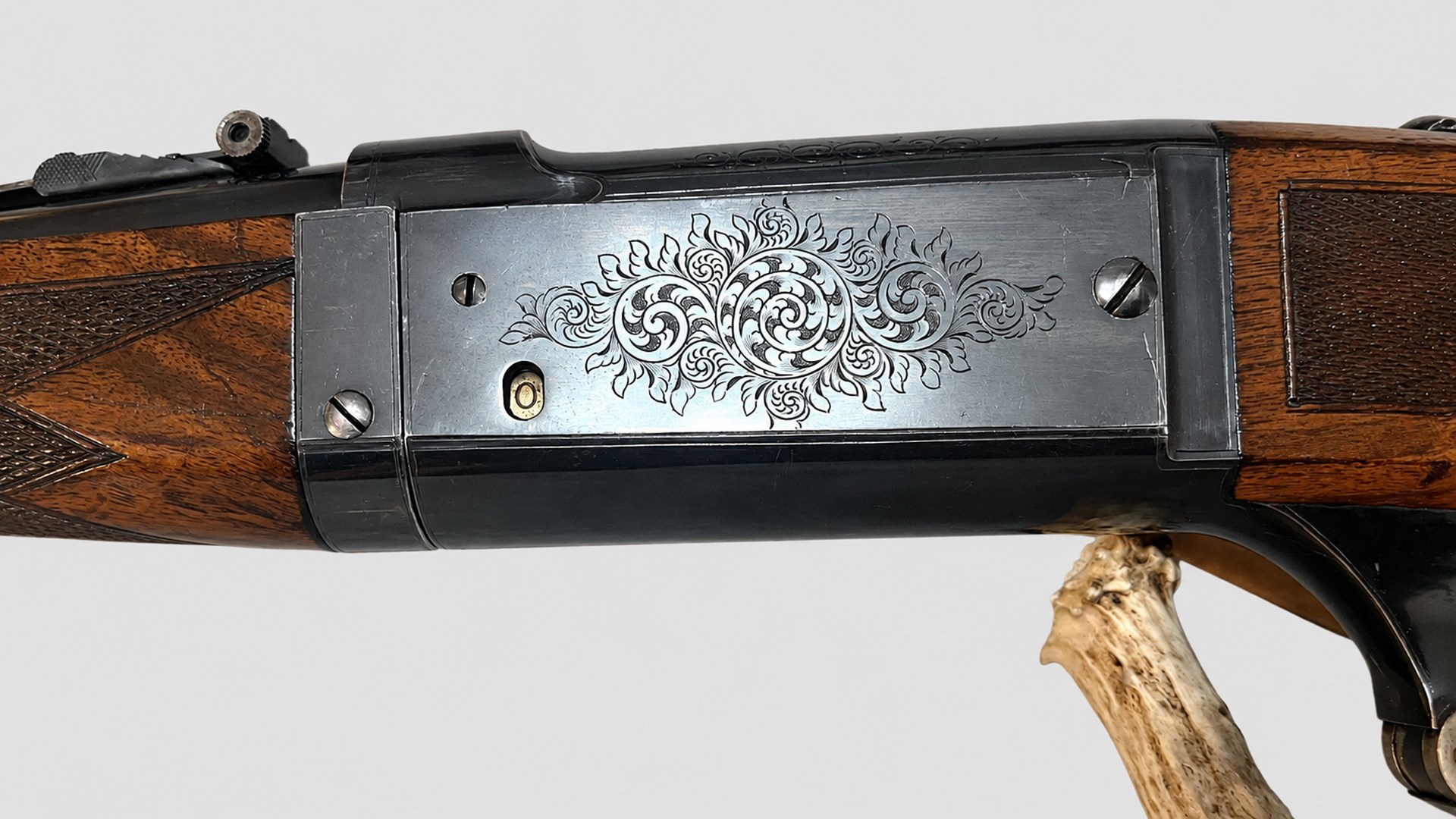 Five point checkering, A engraving, Marlin S pistol grip and thick rubber buttplate–from the collection of Kurt & Sun Schroyer, and Jeff Butz.
The Alphabet Begins with A–and, I guess, so do Savage 99 Models
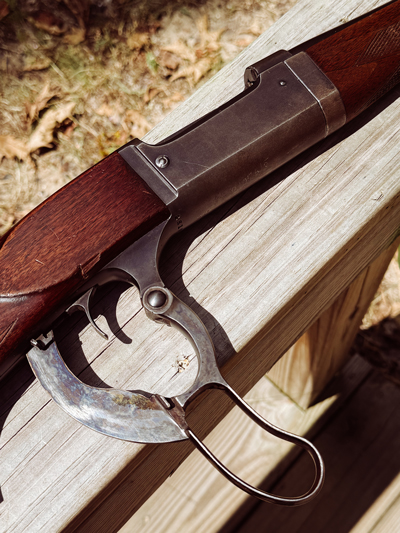
In lieu of models, at time of production, Savage used a cataloguing system based on description. The very first run of 1899s was line itemed as “Sporting Rifle, Round Barrel.” Or, as we know it today, the Savage 1899A. There were a few style variations of this genesis rifle that utilized seemingly random and occasionally ambiguous abbreviation iterations. The first several 1899’s produced are listed below:
• 1899A – Sporting Rifle, Round Barrel
• 1899B – Sporting Rifle, Octagon Barrel
• 1899C – Sporting Rifle, Half Octagon Barrel
• 1899D – Military Rifle
• 1899A SR – Saddle Gun
• 1899F - Carbine
Savage used descriptors for models that were occasionally logical and functional, but sometimes not so much. The addition of the telegraph code transcription created somewhat of an alphabetized chronology that didn’t necessarily correlate to the features of the rifle, as you can see from above sample set.
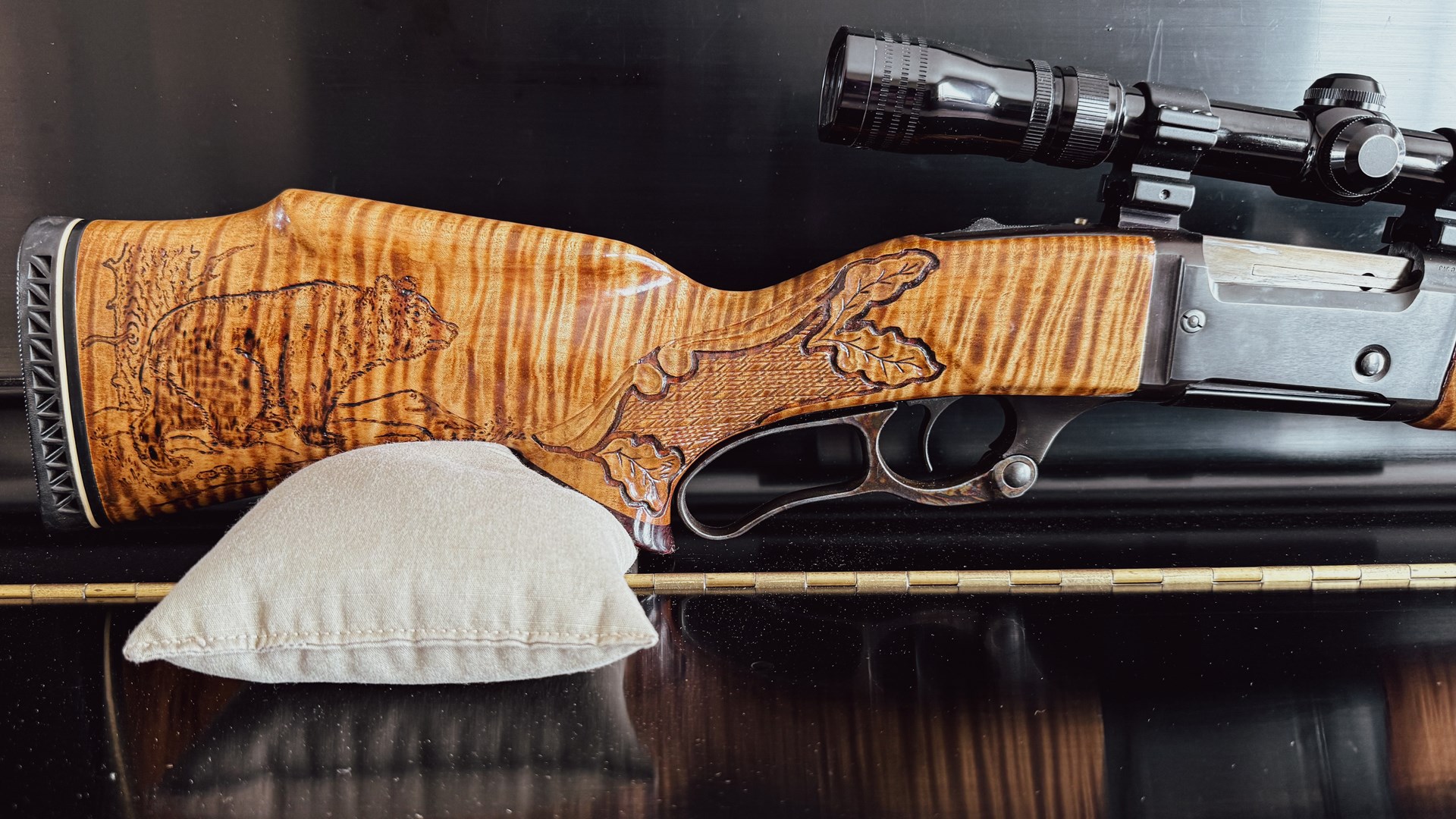
A few years into production, Savage began introducing up-leveled “grades.” Basically, these were standard production guns with special order features. Things like engraving, higher-grade wood, different stock configurations and specific checkering patterns are a few of the distinguishing features of the Graded introductions. Some examples of the Graded models are:
• Leader – The Leader grade has B engraving on both sides – a doe on one side and a falling buck on the other. One variation features an oblong cartridge counter while the other has the round option.
• AB – The AB grade has A engraving with scrollwork on both sides of the receiver. It also has the A5 checkering pattern.
• BC – This grade has A engraving with scrollwork on both sides of the receiver. The A5 checkering pattern appears on the side panels of a standard walnut stock.
• CD – This grade has no engraving but comes with a pistol grip and the A3 checkering pattern.
• Monarch – The Monarch is considered the most elaborate special grade of the 1899’s. With unique engraving and Circassian walnut, it has features not available via any other special-order method. This makes it truly unique among the graded editions.
• Rival – The Rival has E engraving with deer, bear and a hunter featured among the scrollwork on the receiver. With C fleur-de-lis checkering and a Circassian walnut stock it is a definite stand out among the graded models.
• Victor – The Victor grade has D engraving with a matted receiver and scrollwork on both sides. A buffalo and a tiger are featured on opposite sides of the receiver.
• Crescent – The Crescent grade features a matted receiver with C engraving, a leaping stag and a grazing stag. It also has C fleur-de-lis checkering.
• Excelsior – The Excelsior grade is an 1899H that comes with assorted special-order features. It boasts a matted receiver, A engraving, B flame checkering and an American walnut stock.
• Premier – The Premier grade, introduced in 1909, has F engraving, B checkering and extensive scrollwork on both sides. The receiver features a buck and doe on the right side and an elk, buck and doe with a dog on the opposing side.
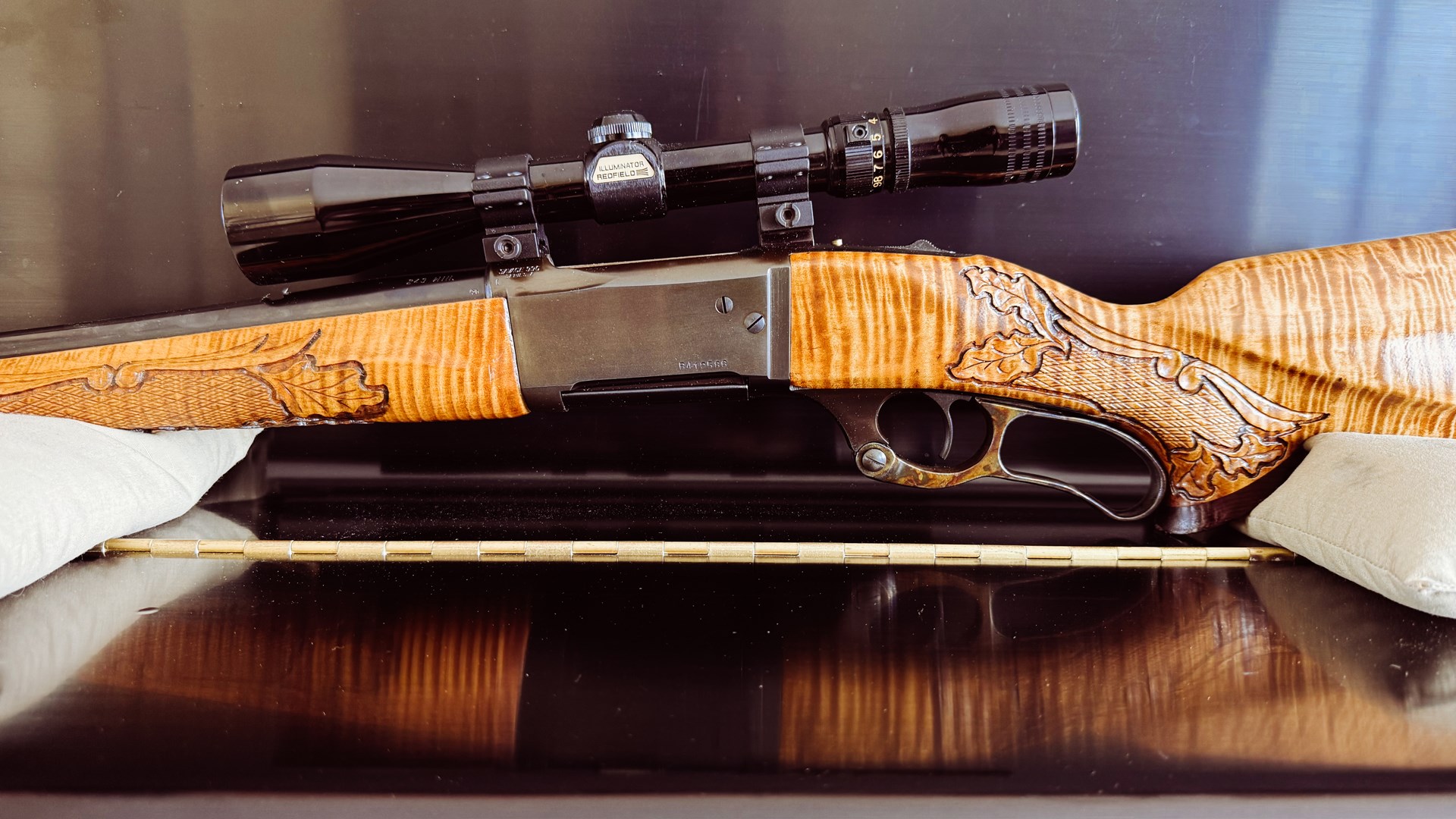
One of the challenges with the “graded” versions is trying to discern if the gun is a standard production that was ordered with certain up leveled features of if it was actually produced in volume as a named grade model. Are you ready for an Old Fashioned yet?
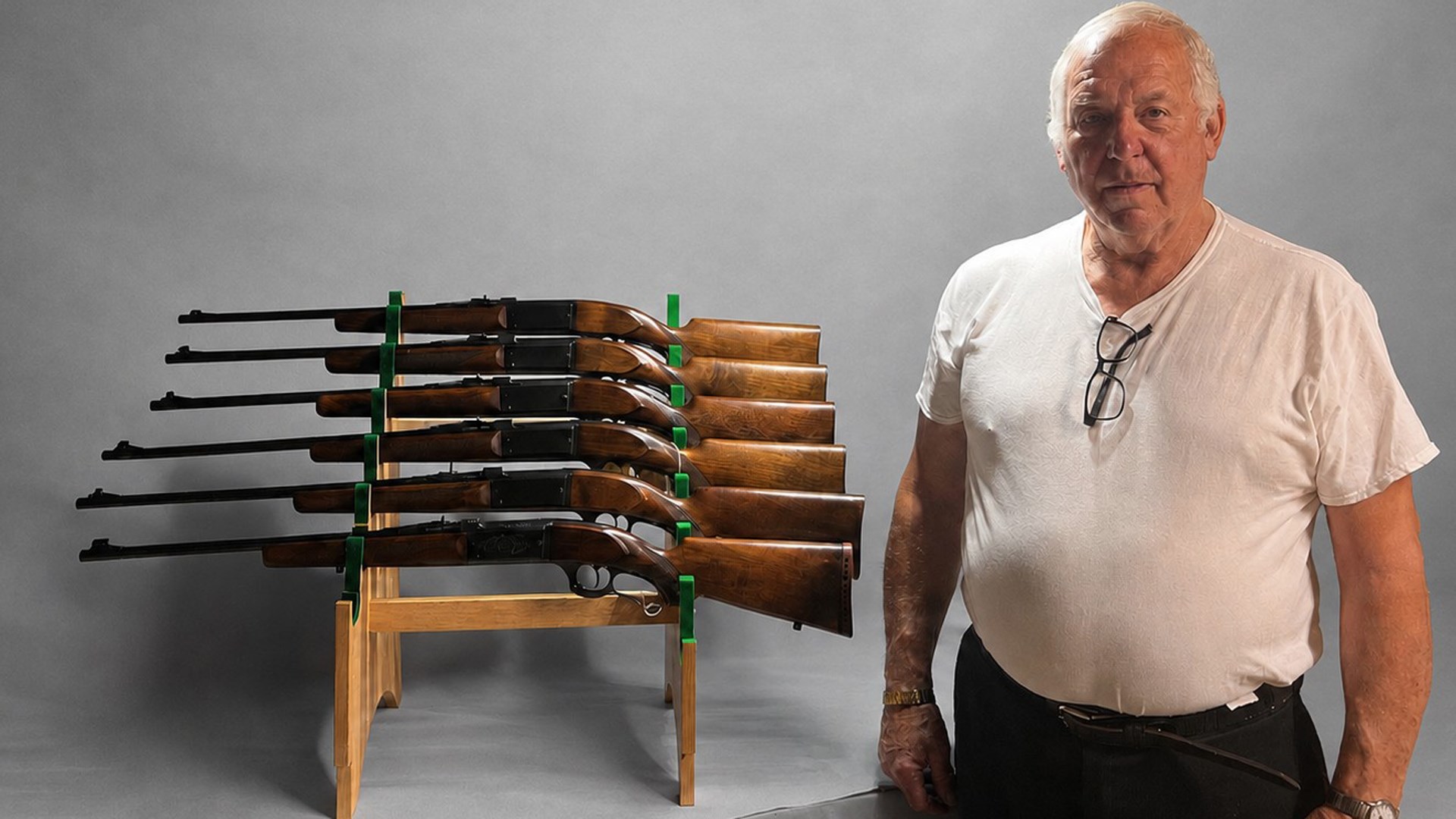 Doug Fuglio and part of his collection of Savage 99 Ts. Top to bottom: .30-30 Winchester; .303 Savage; .250-3000 Savage; .300 Savage; .22 Savage Hi-Point; .250-3000 Savage engraved.
The Highest Caliber
Foundationally speaking, the earliest run 1899s were all in .303 Savage. By 1915, the 1899 was available in the following chamberings:
• .30-30 Winchester
• .25-35 Winchester
• .32-40 Winchester
• .38-55 Winchester
• .22 Savage Hi-Power
• .250-3000 Savage
The Next Chapter–the Savage 99
In 1921, the 300 Savage was introduced and the rebrand to “99” began. The Savage 99 chapter started in 1921 with the 99A V1. This was similar to the 1899A but boasted different features and caliber options. From there, the Savage 99 showed up in 32 models, countless styles and numerous versions.
Of these variations, styles, versions and models, there are a few stand-out features I want to touch on.
The Takedown
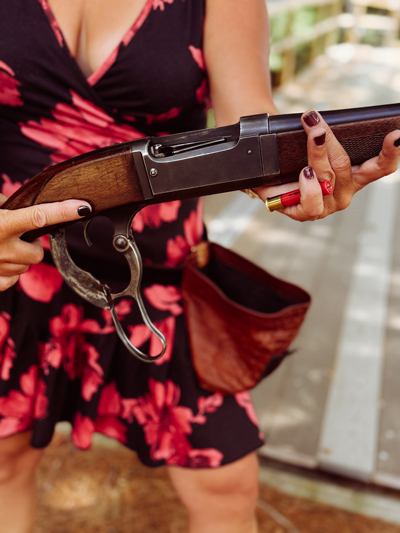
The Savage 1899/99 was ahead of its time in many ways from an innovation perspective. One of these centered around the takedown concept. The takedown models, introduced stylistically as early as the 1899A were a cutting-edge idea for the time. The earliest serial numbers appeared in June of 1906. All take down models could be fitted with .410 barrels, regardless of chambering or bolt face.
Stock Design
The Savage 99 offered progressive stock designs for the time, especially for a lever gun. With thoughtful ergonomics and hunter-friendly comb designs, the Savage 99 took a custom approach to many production-focused firearms. Many of their models offer sub-styles of these types of stocks.
Functional Aesthetics
The Savage 99 is available in multiple checkering-pattern options and styles. For the astute 99 enthusiast, these are instantly identifiable and correlate to models, styles, known variations, timeframes and serial-number runs. For the rest of us, these intricate aesthetics just add to the mystery and confusion of the Savage 99 odyssey.
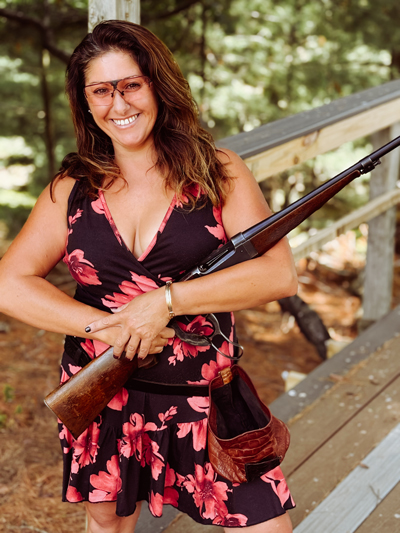
The journey of the Savage 99 is not a mono-dimensional trip with a defined destination. Instead, it is a complex, life-long pursuit wrapped in nuance and gun oil. From dusty estate sales to rustic gun shops across rural America, one never knows when the next Savage treasure might be discovered. With a little knowledge, a good bit of luck, the mind of a detective and the heart of a treasure hunter, you too can experience the thrill of life in pursuit of the Savage 99.
Happy Hunting!
Andi
Special thanks to:
- Rory Reynoldson, author of The Savage 99 Pocket Reference
- [email protected]
- Sun and Kurt Schroyer for their assistance in both expertise and supporting imagery.