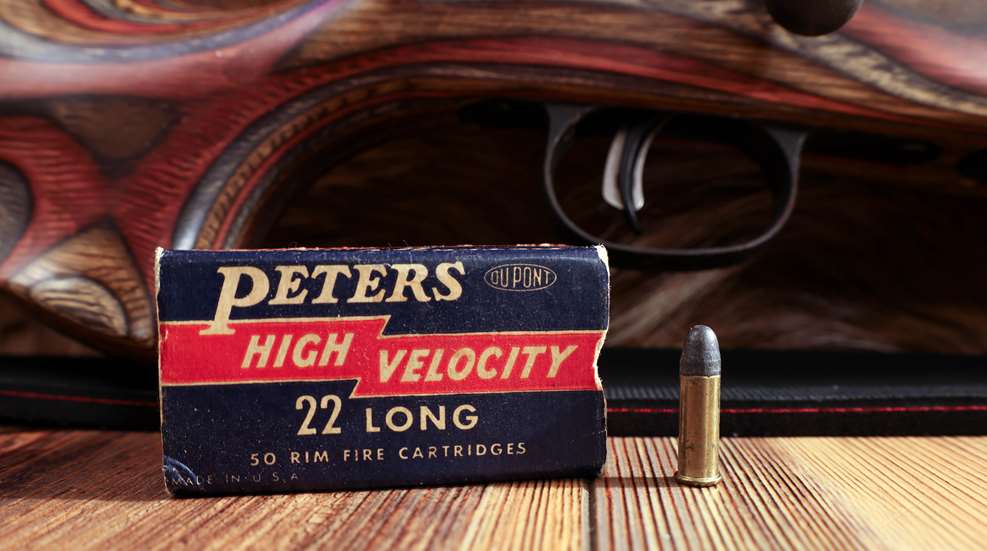
If we could rewind the clock to 1871, before the .45-70 Government and .45 Colt existed, and when cartridges themselves were just establishing a foothold in the shooting world, you’d find a pair of .22-caliber rimfire designs: the .22 Short and the .22 Long. Aptly named, these cartridges would survive well into the 20th century, ultimately being conquered by the .22 Long Rifle cartridge. But in certain situations, the .22 Long cartridge still makes good sense, and actually has a few specialized applications.
The Short came first—in 1857—and was the .22-caliber rimfire until 1871. It was that year when the case was elongated, and charged with five grains of blackpowder, one full grain more than the Short; thus the .22 Long was born. Now, seeing how the .22 Long Rifle has become one of our most popular and most-used metallic cartridges, I will use that as a reference point to describe the .22 Long, though the former is the offspring of the latter. Simply put, the case of the .22 Long and the .22 Long Rifle are identical, as the .22 Long Rifle is nothing more and nothing less than the .22 Long case mated with the 40-grain heeled bullet of the now forgotten .22 Extra Long. The .22 Long case has a rim diameter of 0.278 inches and a body diameter of 0.226 inches, with the case measuring 0.613 inches. The .22 Long uses the same 29-grain projectile as the .22 Short, and has an overall cartridge length of 0.888 inches, while the .22 Long Rifle measures one inch on the nose.
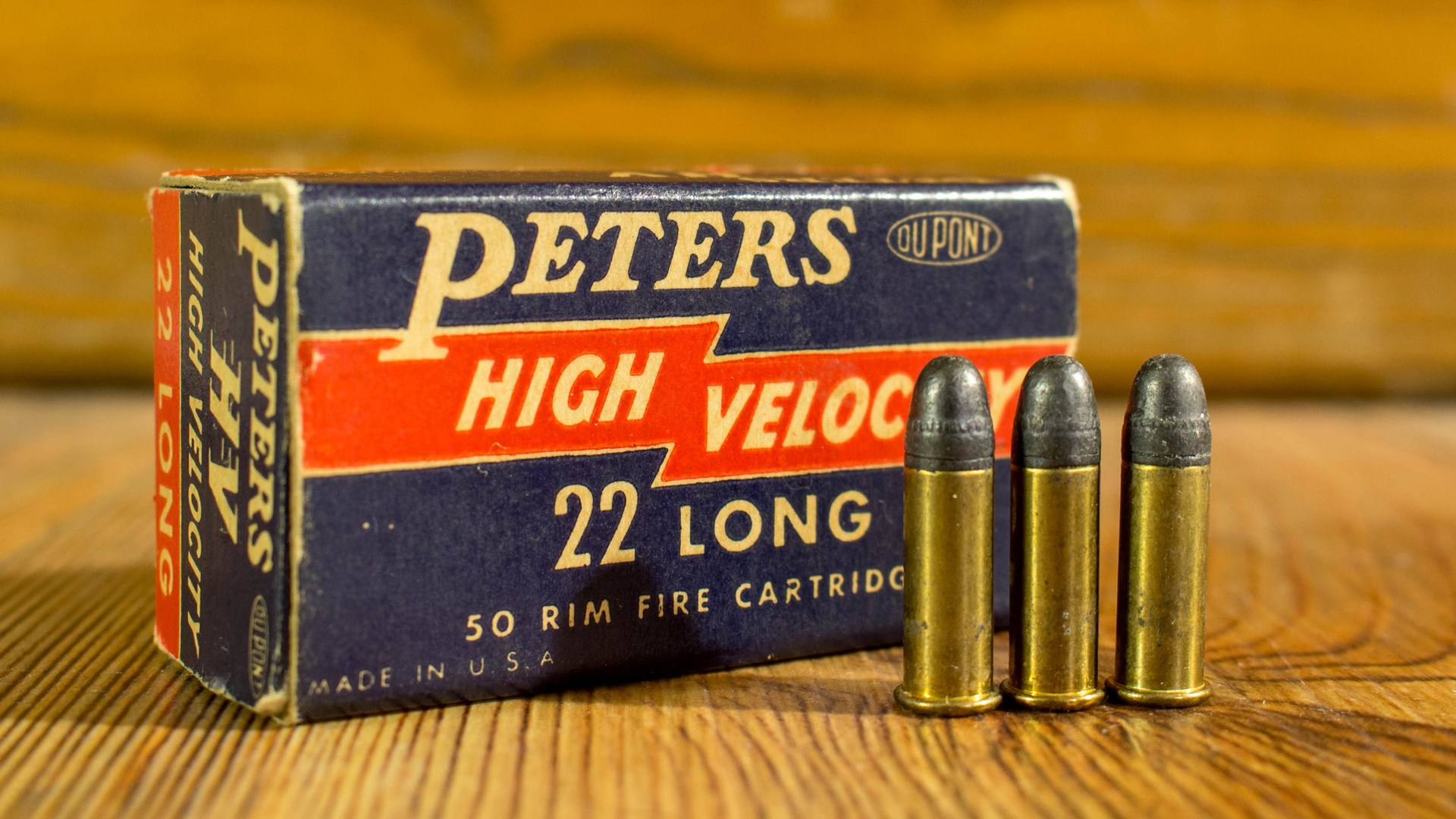
Like the .22 Short and .22 Long Rifle, the .22 Long survived the transition to smokeless powder, and in modern iterations, will push that 29-grain bullet to 1,215 fps. That ballistic formula will see the light bullet strike 3.4 inches high at 50 yards, when the rifle is zeroed at 100 yards. Frankly, I feel that has a bit too much “rainbow”, especially considering that the bullet has lost nearly half of the 93 ft.-lbs. it generated at the muzzle. Rather, I’d surely try keep my shots inside of 50 yards with the .22 Long, leaving the longer shots to either the CCI Stingers or the speedier .22 Long Rifle loads.
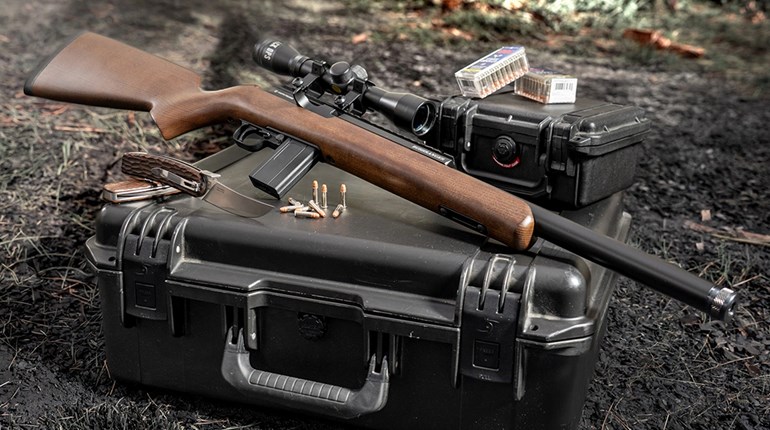
Looking at many of the older rifles and revolvers chambered for the ubiquitous .22 Long Rifle, you’ll see the firearm labeled for use with .22 Short, .22 Long and .22 Long Rifle. The case rim, body, and bullet diameter of this trio are all the same—a heeled .223-inch projectile. Like the .38 Special and .357 Magnum, the .44 Special and the .44 Remington Magnum, or the .45 Colt and the .454 Casull, the shorted cartridges of the same size and girth, but of a different length, can safely be fired in a longer chamber. The reverse is not the same; the .22 Long and .22 Long Rifle cannot be fired in a .22 Short chamber. These days, you’ll find very few guns chambered for .22 Long only, but should you find one so labeled, please do not attempt to fire the longer .22 Long Rifle cartridges in that chamber. Regarding the multitude of .22 Long Rifle autoloaders on the market, the .22 Long may or may not cycle the action, depending on the model.
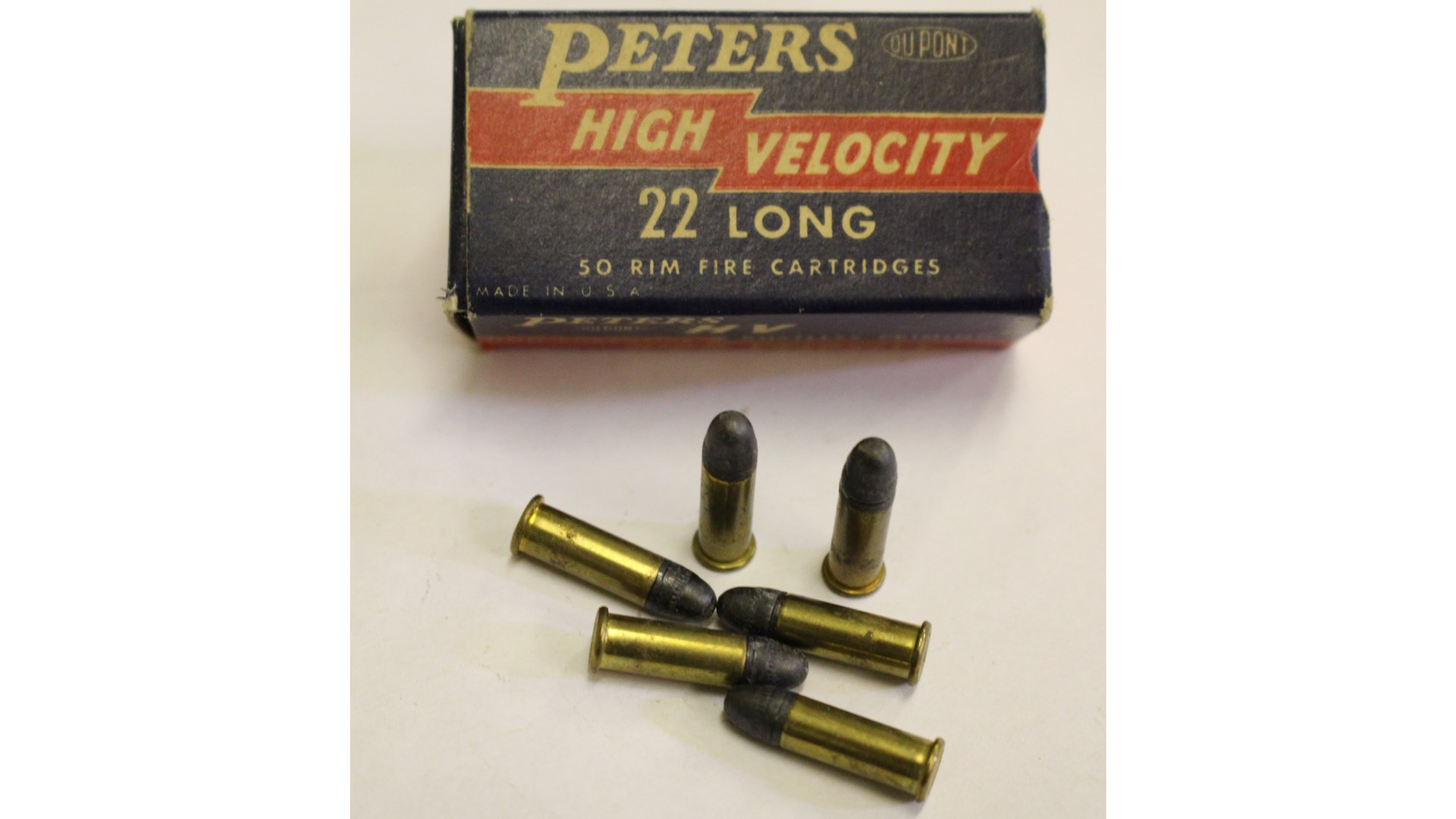
What about those special applications I mentioned earlier? Well, with all the choices we have among the .22 Long Rifle cartridges—and they include subsonic loads, lighter bullet weights, heavier bullet weights, etc.—the .22 Long remains a popular choice among older houndsmen and trappers. The lighter 29-grain bullet at a modest velocity helps mitigate damage to pelts by not over-penetrating, yet still delivers more horsepower than does the .22 Short. I remember my dad, Ol’ Grumpy Pants, relying on .22 Long ammunition in his Ruger Single Six when his redbone hound would have a raccoon treed, and he’d grab a flashlight and start climbing the tree to dispatch the animal. He’d also use the Long on his traplines, in addition to .22 Short ammo.
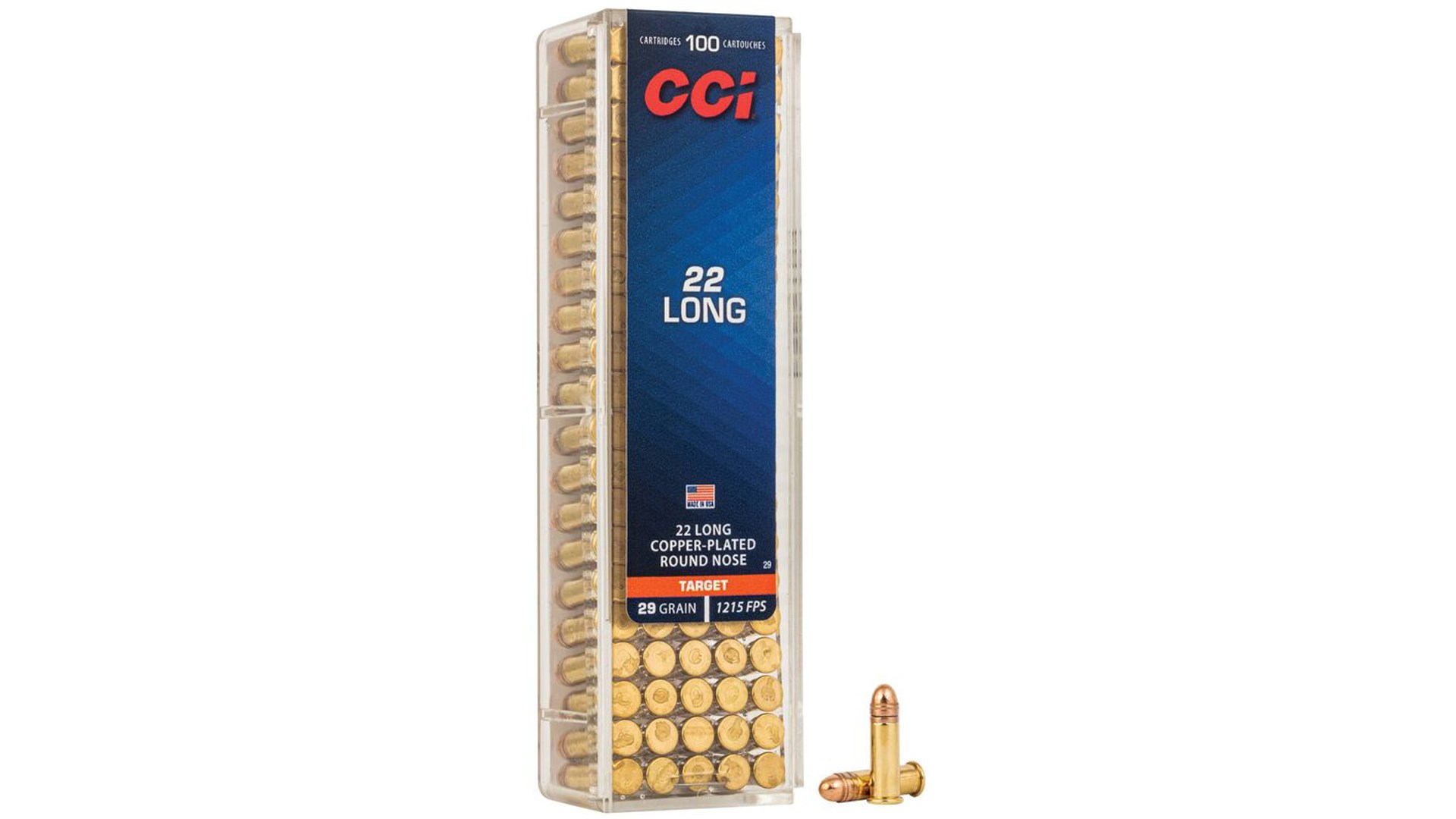
Much like the .22 Long Rifle, there really isn’t any significant recoil generated by the .22 Long, and the report from a rifle or handgun is minimal as well. Has the sun set on the .22 Long? It sure is looking that way, as the only current source of ammunition I can find is a single load from CCI. While that load is—like almost all of the CCI products—an excellent choice, the 29-grain copper-plated bullet is the only option we shooters have. That is a shame, for at the very least, the cartridge which went on to create our beloved .22 Long Rifle should still be celebrated. Or perhaps it is a case of the son superseding the abilities of the father, and the .22 Long will soon be lost to history. At any rate, the .22 Long deserves a place in history, even if just as the father of the .22 Long Rifle.