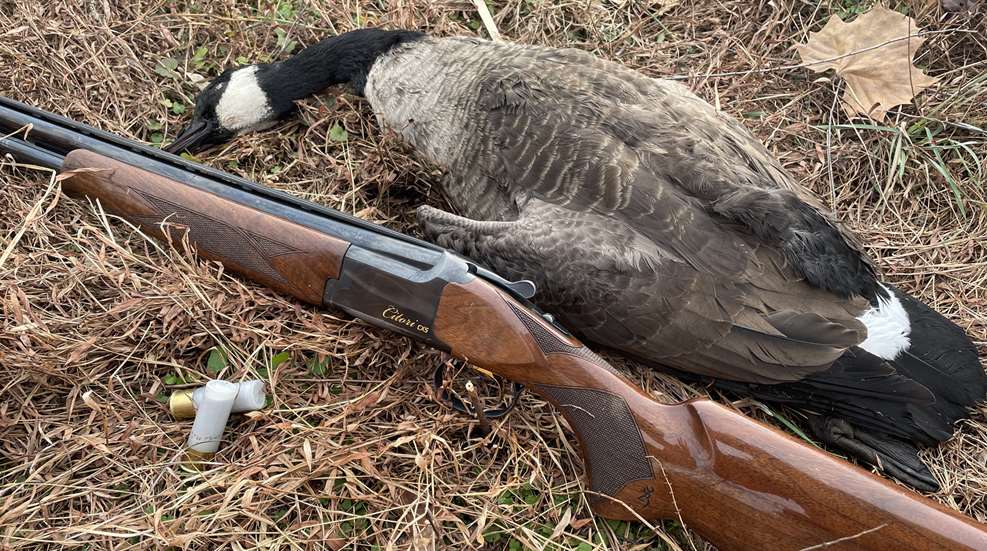
Summary in Short: Aaron Carter takes his audience through the intricacies of shotshells, and how successful goose hunting requires matching shotshell composition to gauge, range, and hunting conditions. Steel can be made to work in 12- and 10-gauge guns with larger pellets and adequate velocity, while bismuth, copper, and especially tungsten improve sub-gauge performance. Shell length, payload, pellet density, patterning, and velocity all matter. Ultimately, there is no universal goose load.
“A confused, messy, or random collection of different things mixed together.” That’s a generic definition of “mishmash,” and it aptly described the 20-gauge shells accompanying me that September afternoon.
After chatting with the landowner, I headed toward the small, hidden farm pond frequented by the local Canada geese. With hours until sunset, I wasn’t in a hurry; however, that all changed in a moment, when I heard the first call. Cresting the hill, they were exceedingly close and approaching fast with wings cupped.
Reaching for my waterfowling bag, I grabbed three yellow shells and dropped the first in the chamber and sent it home, followed by feeding the other two into the tubular magazine. They didn’t stay long; the Benelli M2 was immediately put into action. With the first shot I dropped an oversized goose near the front, while the second “crack” dropped another a few birds back. The third didn’t connect.
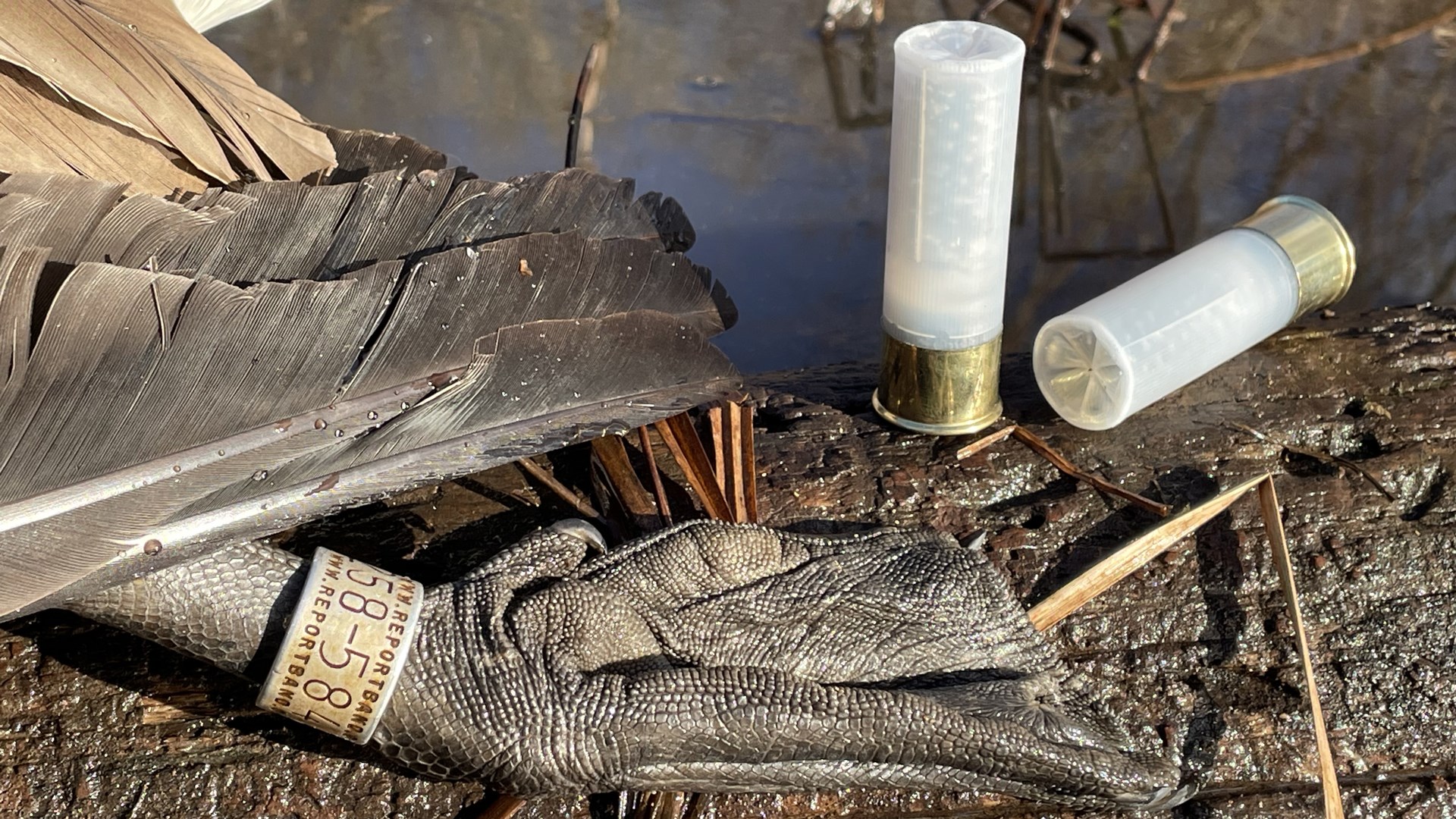
After recovering the geese, I set about to collect the hulls. In doing so, I discovered something interesting. All three shells were different in configuration. Brought to swat distant squirting cripples, the first shot was a Fiocchi 3-inch Golden Turkey TSS load featuring 1 3/8 ounces of No. 9 TSS shot. The subsequent 3-inch Browning TSS Tungsten Turkey round had 1½ ounces of No. 7 TSS shot. The third was an older, 3-inch shell with one ounce of No. 2 steel shot. No follow-ups were needed on the two swatted with the TSS loads. Before the day ended, the M2 had connected with several more geese, including a couple of highfliers skirting the pond. They were collected using handloaded, 3-inch shells with a max payload of No. 2 ITX-10 (tungsten-based shot) from Ballistic Products, Inc.
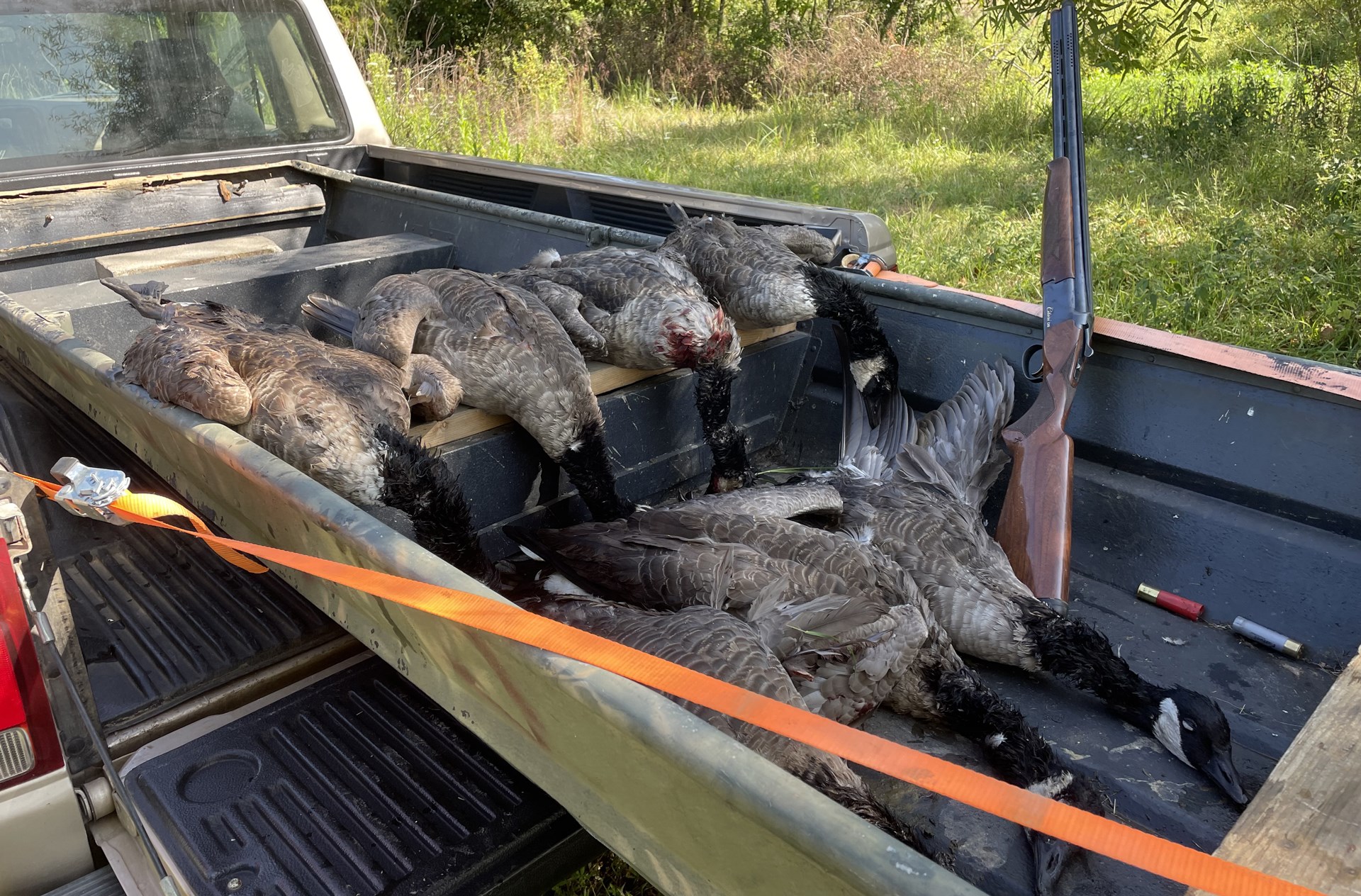
Although the abovementioned shell selection seemed like a grab bag of remnants from myriad hunts, that’s not the case. Instead, they were selected based upon experience and range work. The same applies to all gauges; when it comes to goose hunting, there’s no “one-size-fits-all” solution—hence the purpose of this article.
In the subsequent sections, I’ll share what I’ve learned about goose loads after 30 years of pursuing them, as well as through load development, interviews with industry experts, and extensive range work. Enjoy.
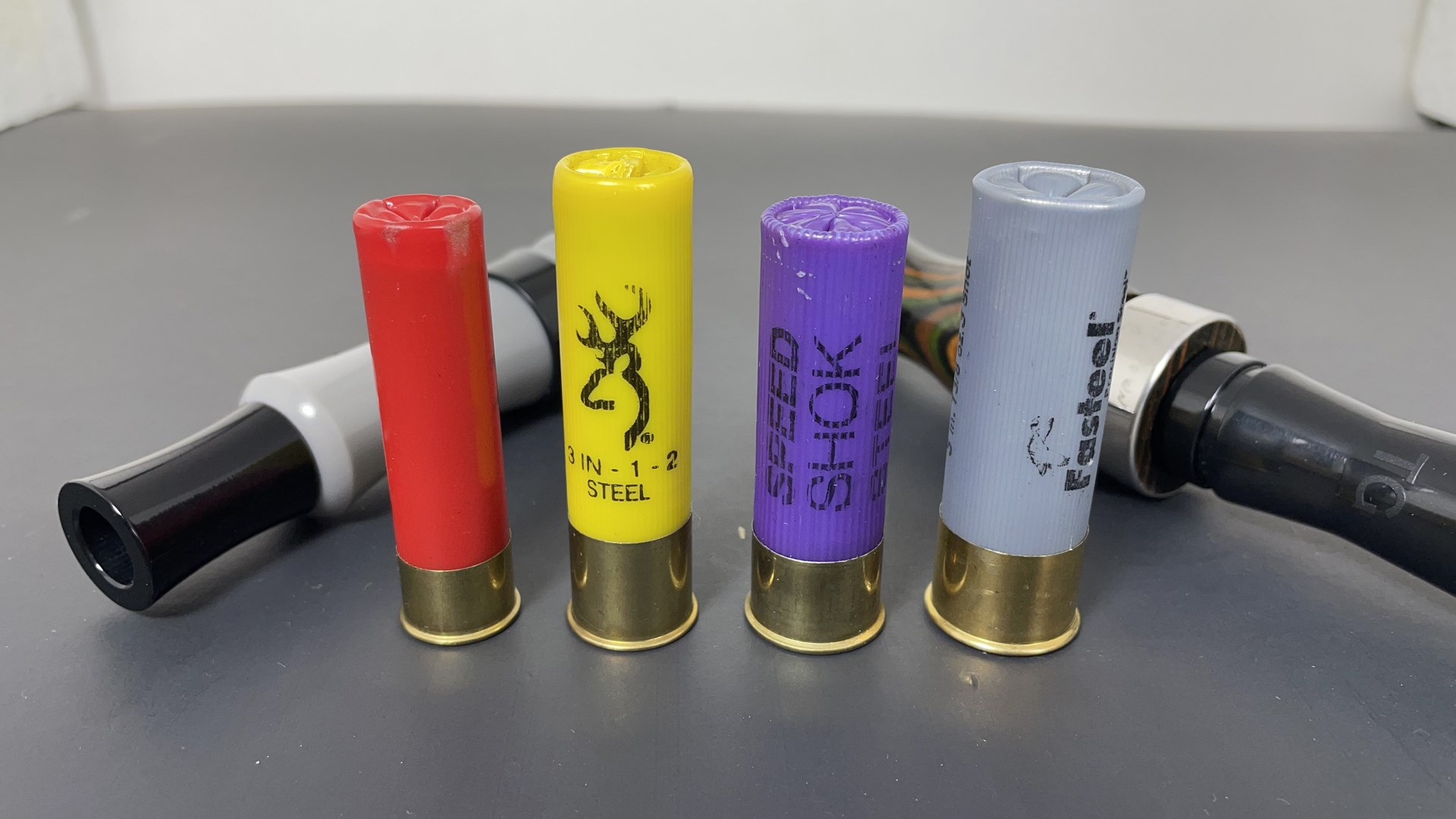
The Shot Type Conundrum, and Dealing with Steel
Regardless of the subspecies, geese are sizeable birds, though most appear puny when compared to the largest one, the Giant Canada Goose. Males of that subspecies are reported to average upward of 14 pounds, and the studs can reach 20 pounds. Combine heft with heavy plumage (especially during the late season), dense muscle, and hearty bone and cartilage, and all geese are tough to ground. Considerable on-target energy and penetration, as well as pellet integrity, are paramount.
Before the nationwide federal ban on lead shot for waterfowl beginning in 1991, lead-alloy No. 2 (and larger) shot were the go-to for the tough birds. Ammunition makers and hunters alike soon discovered that attaining parity with regard to terminal ballistics couldn’t be achieved using steel shot the same size as lead, and that steel as an alternative left much to be desired. Honestly, early bismuth was no better.
With a low density of 7.85 g/cc, shot made from steel decelerate fast—even when exiting the muzzle at elevated velocities—and thus the lightweight pellets hastily shed their energy, too. Overcoming steel’s density disadvantage requires propelling larger pellets (generally one to two sizes larger than would have been previously used with lead) to extra high velocities and keeping shots relatively close. Simple, right? Wrong.
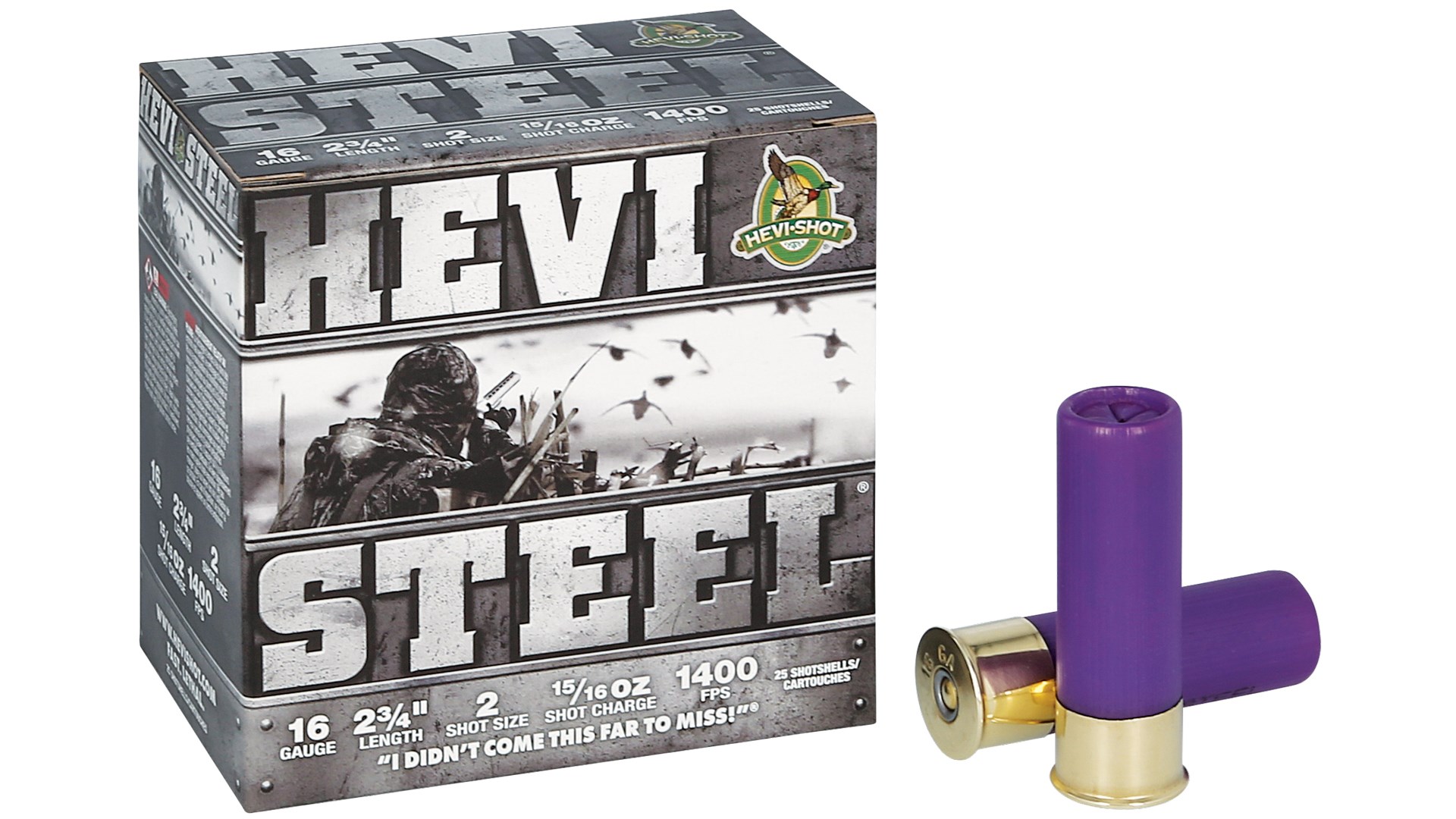
First, large steel shot occupies more space within a shotcup, yet leaves additional unfilled areas between the pellets. That’s wasted potential. Next, with fewer shot on-board, patterns tend to be less dense; pellet-free gaps permitting birds to pass through unscathed become more prevalent. And the larger the shot, the worse it is.
The high volume of propellant necessary to attain high velocities also demands extra space, and thus is competing with the oversized shot to fit within the confines of the hull. It’s especially problematic in 16, 20 and 28 gauge, which already have limited capacities. It’s for these reasons that steel shot adequate in size for hunting geese—No. 2 to T—doesn’t play well with sub-gauges; there simply isn’t enough space.
Sure, sub-gauge loads can be had (or handloaded) with larger steel shot, but they are generally deficient with regard to pellet count and/or velocity, thereby limiting their effectiveness. Number 2s seem to be the largest, sensible choice. Therefore, steel shot that’s suitable for geese is best relegated to the 12 and 10 gauge. In fact, the 3½-inch 12 gauge was created for that very purpose, and the 10 gauge, 3½-inch is renowned for reaching out with large payloads of oversized steel shot. Stick with what works.
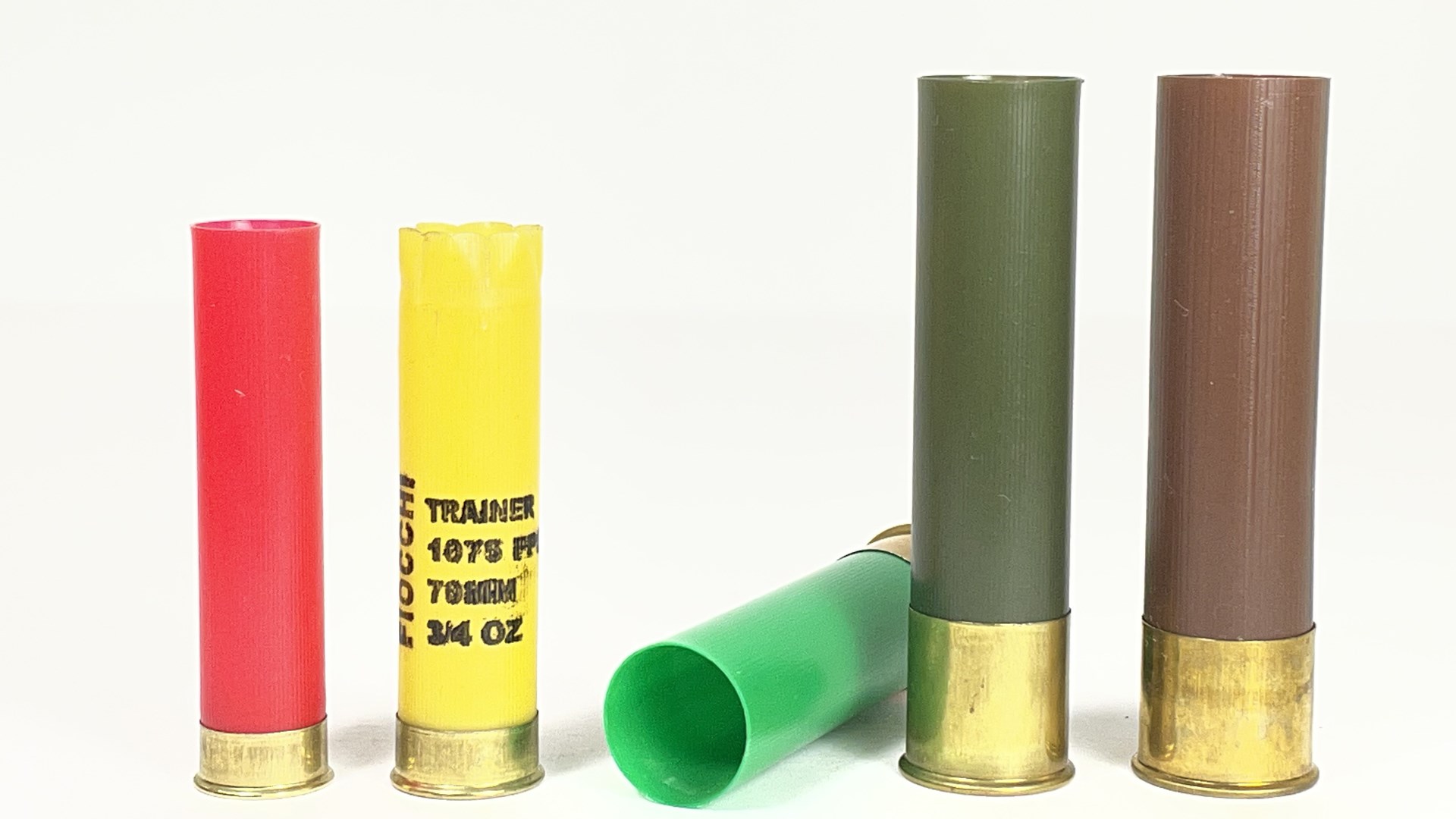
When using a 12 gauge, opt for 3- or 3½-inch shells (if the shotgun is chambered for them), as the latter in particular has significant room for slow-burning propellant and oversized steel shot, as well as a higher maximum average pressure (MAP) to propel the payload fast. Two- and three-quarter shells aren’t as versatile.
In 12-gauge, 3-inch I have long favored No. 1 steel, as it offers excellent pattern density and reach; however, No. 2s will work at closer distances, such as decoying geese, and I’ve found that B is nearly as good as No.1. Personally, I’m not a fan of BB, BBB, F and T, though I’ve killed Canada geese with all of them. Before selecting a larger pellet, though, ensure that it’s legal for use in your state.
If steel is employed in the 16 or 20 gauge for geese, opt for No. 1 or 2 with the heaviest payloads. Also ensure that the load achieves sufficient speed to ensure lethality. That provides the greatest pellet count and penetration potential. Still, keep your shots close.
Non-Steel Alternatives: Bismuth & Copper
Since the abovementioned prohibition on lead, there has been a host of pellet-making alternatives to emerge, offering densities approaching lead or surpassing it. Each has its strengths and weaknesses. Some of the most popular are: bismuth, CIC copper, iron, Tungsten Matrix, ITX (10 and 13), HEVI-Shot (12, 13, etc.), Heavyweight and TSS, to name a few. Some are now only memories, while others are employed each fall and winter.
As mentioned previously, sub-gauges are, and always will be, encumbered by their capacities. Simply stated, their limited internal space reduces the viable shot types that can be used in them. But, alternative shot types help.
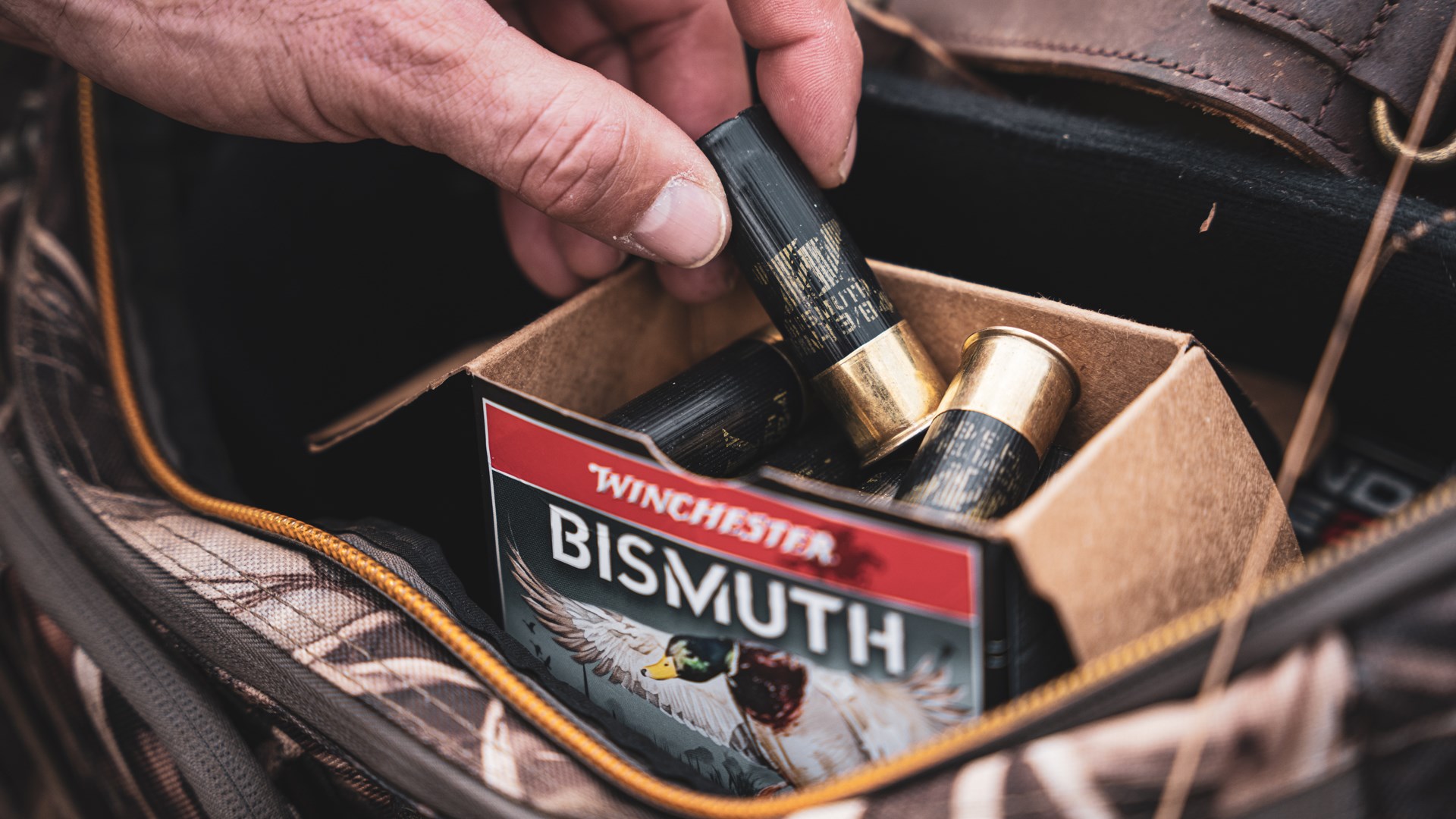
With densities of 9.6 g/cc and 8.9 g/cc, respectively, bismuth and copper shot offer similar ballistics, though the latter is relatively new and, with regards to waterfowl hunting regulations, is a mess. CIC copper is legal due to its coatings. Others don’t appear to be. There are also strict requirements concerning the hull, wad, and labeling. The prudent will study the law changes in advance and check for potential updates. Bismuth has, once again, limited availability and high cost. Given that the metals are approaching the 11.34 g/cc density of lead, similar shot sizes can be used to good effect.
Harkening back to yesteryear, No. 2 shot made from copper or bismuth can be utilized in the 16 and 20 gauge, though No. 3 and 4 will provide a better fit and higher pellet counts. Non-steel, No. 4 shot still packs a wallop when used at reasonable distances. These shot-making materials turn the 16 and 20 into veritable goose getters; not so much for the 28. With the 12 gauge and 10, you can send large payloads of the denser shot downrange, fast.
For more than a decade I’ve been using handloaded and factory bismuth to good effect from 20 to 10 gauge on ducks and geese. If at hand or affordable, I highly recommend it.

Non-Steel Alternatives: Tungsten
Tungsten-based shot stands alone when it comes to shot-making material. A true-game-changer, the inclusion of tungsten into myriad formulations has made the 16, 20 and even the 28 gauge very effective on geese. In fact, when using the heaviest blends (i.e. TSS), a 10 or 12 gauge is unnecessary.
With a density of 19.25 g/cc to 19.3 g/cc (for pure tungsten), the use of the metal in shot-making reduces the pellet size while maintaining heft. A TSS pellet has a similar weight to a lead-alloy pellet several sizes larger. But, there are other advantages to tungsten-laced shot other than heft.
First, the extra-hard tungsten-based shot (when formulated to higher densities, such as TSS), the projectiles maintain their pre-fired shape and pattern very, very tightly—even at long range. Moreover, since they don’t deform, are heavy, and are smaller in diameter, less velocity is experienced and therefore penetration is enhanced. No other shot type comes close. The smaller shot also occupies less space, which is a godsend for the sub-gauges. The only drawback is the elevated cost of TSS and its counterparts.
“Tungsten-based shot” covers a lot of ground (and products). In general, as the percentage of tungsten increases the shot size decreases—for a given weight. The discontinued ITX-10 and Kent Matrix had densities approaching that of lead, and thus similar shot sizes could be used. Original HEVI-Shot had a density around 12 g/cc, while HEVI-13 had, well, 13 g/cc. Federal’s Heavyweight and similar products used a 15 g/cc formulation, while TSS has a target density of 18.0/18.1 g/cc, and thus is the smallest shot for a given weight. The more density, the better it works with a sub-gauge, too.
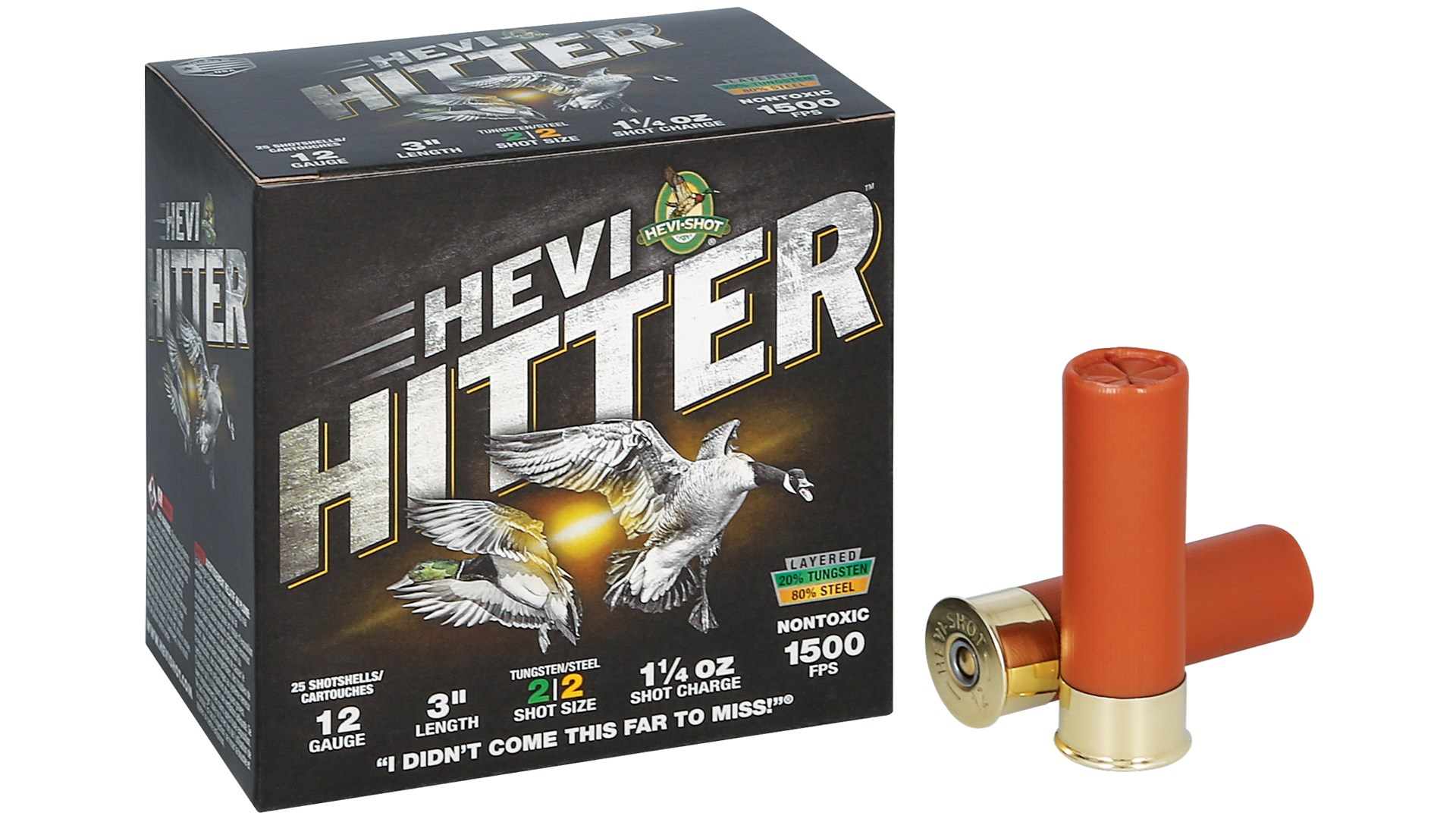
All tungsten-based shot types will drop even the largest geese, provided that they’re of the appropriate size. However, those denser than lead work the best. If you’re shooting 40 yards or further, opt for them.
Starting with 12 g/cc, even No. 4s are detrimental to a goose’s wellbeing, and when 15.0 g/cc (Heavyweight and similar) is used, No. 6 and 7 will crush a distant goose. When it comes to TSS and similar, I prefer No. 7s—the same that I use for spring gobblers. Nothing hits big birds with the same oomph as that shot type and size. It’s also a perfect fit for the 16, 20 and even 28 gauge. But, the 15.0-grain shot options are nigh as good.
If 12 g/cc density shot (i.e. HEVI-Shot) is selected, stick with No. 4, 2 or BB, depending on the distance. They all work well, though I favor the 2s. Pass-shooting geese? If legal, give HEVI-Shot’s Dead Coyote with T-sized shot a whirl. Trust me, it’ll reach out and bring the birds to bag.
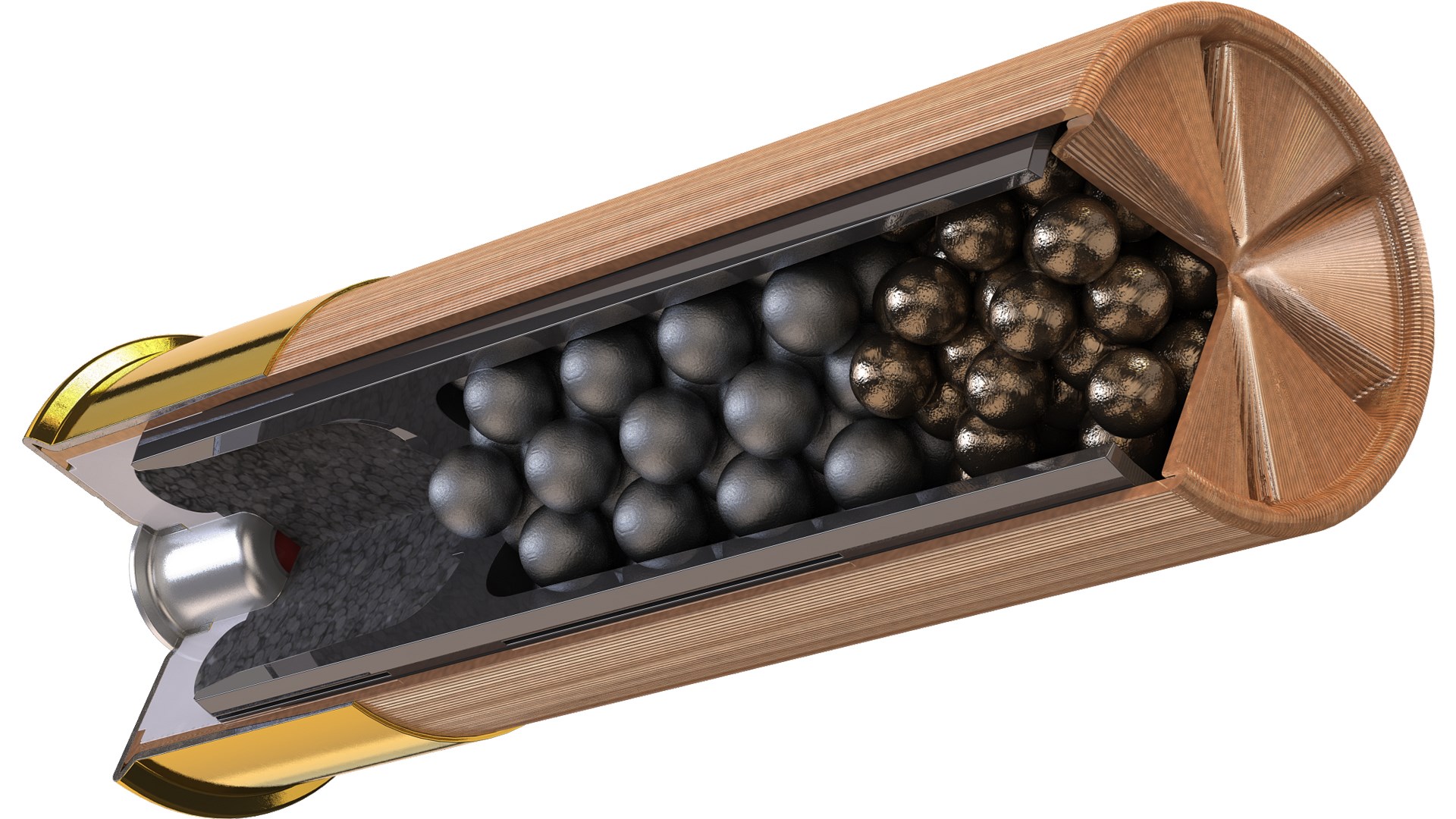
Tungsten-based shot can be used alone—though it’s very costly—or teamed with steel or another alternative, lead-free shot type. In 12 gauge I often pair No. 7 TSS with No. 1 steel for geese and I’ve never been left wanting. Such “duplex” loads are more challenging to achieve in sub gauges due to larger non-tungsten-based shot.
If tungsten-type shot along is preferred, opt for HEVI-Shot or similar, which has a density of 12.0 g/cc and is more effective than lead but not prohibitively costly. As for shot sizes, for 12-gr.cc No. 4, 2 and BB work wonders, though HEVI-Shot’s Dead Coyote T shells hit like a freight train on distant passers.
Shell Length & Velocity
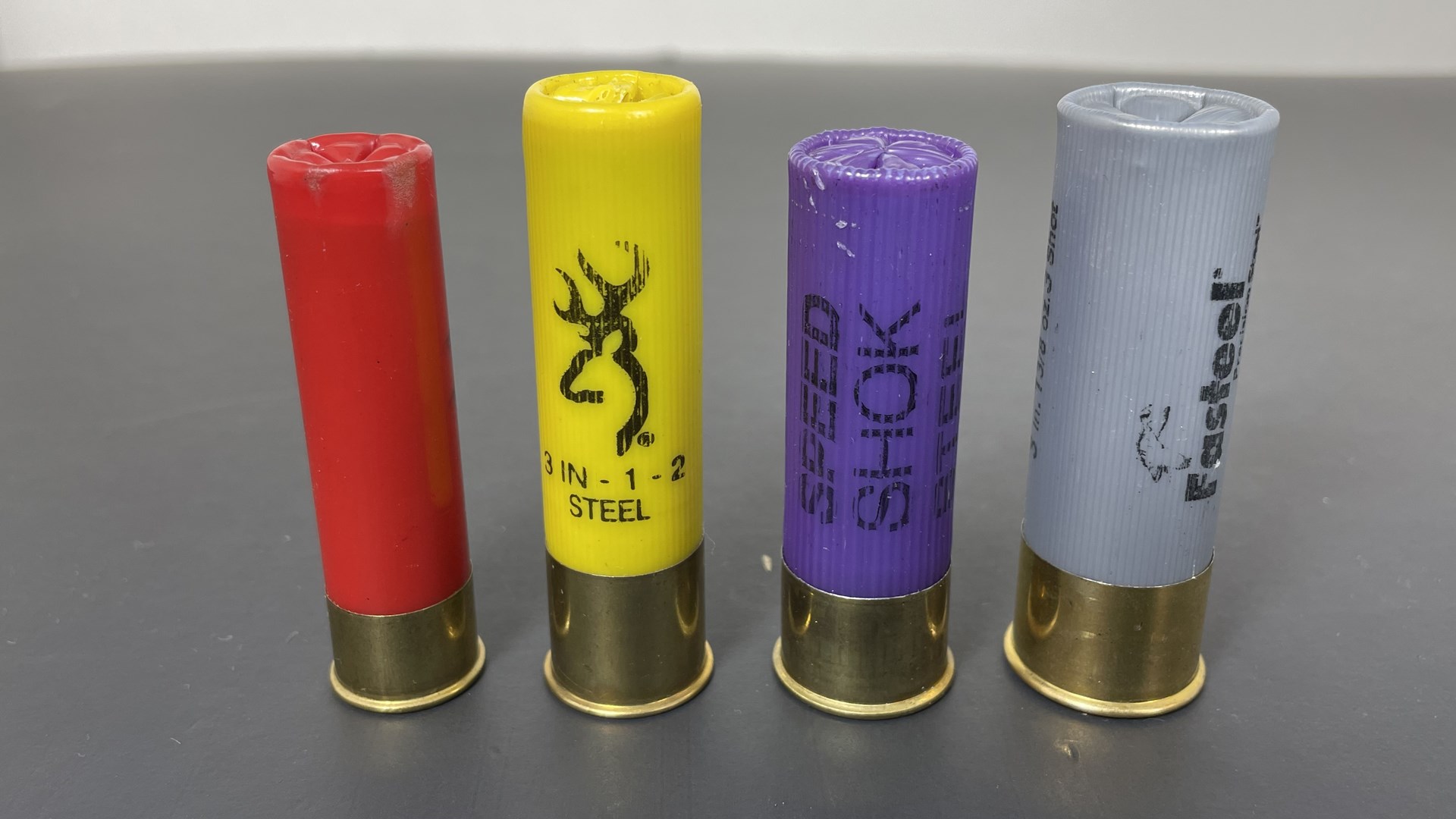
When it comes to goose hunting, there’s no substitute for space—again, unless TSS or another ultra-dense shot type is used. Capacity gives you extra pellets and/or additional room for propellant to increase the velocity. Both assist in anchoring geese. Therefore, when a 3-inch variant is available and fits your gun, opt for it—especially if old-school steel is selected. This is especially important for the 28 and 20 gauges, which can be had in 3 inches. With only 2¾-inch shells available in 16 gauge, there’s no other option. In 12 gauge the 2¾-inch shell works well with most non-steel shot types.
Velocity is critical when it comes to steel, so opt for a load that attains from 1,300 and 1,500 fps I prefer those between 1,350 and 1,450 fps, as extra-high velocity only beats you down physically and increases the wear on your shotgun. Ultra-high velocities generally have lackluster patterns, too. Copper and bismuth would benefit from slightly faster velocities due to their densities being less than lead. When it comes to tungsten-based shot equaling or exceeding the density of lead, high velocities aren’t required. The shots’ heft helps maintain its momentum further.
Thanks to technological advances in shot-making, nigh all gauges are capable of killing geese. However, it requires attention to load composition and ballistics. Using what you learned in this article, you’ll be better prepared for the upcoming goose season.