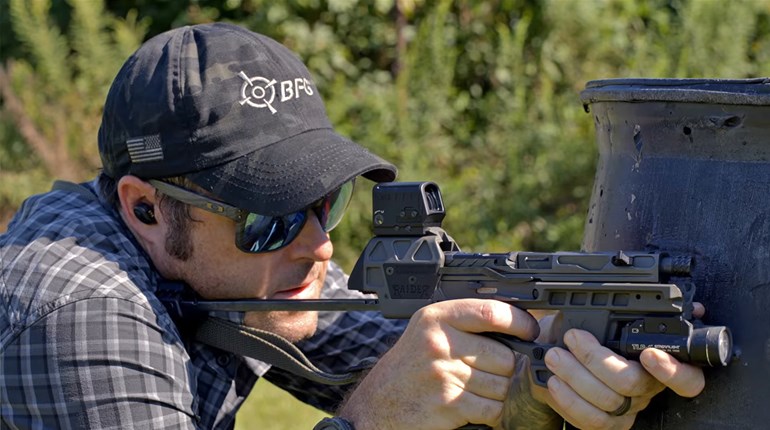
To serve those areas of the Midwest where the law prescribes the use of centerfire cartridges which meet specific caliber, construction or length restrictions, several cartridges have been allowed or developed to make the deer hunter’s life easier. The .45-70 Government, 444 Marlin, .38-55 Winchester, 450 Bushmaster, and several straight-walled cartridges surely offer an advantage over the shotgun slugs of the recent past, but hunters yearned for something with a bit less recoil and a flatter trajectory.
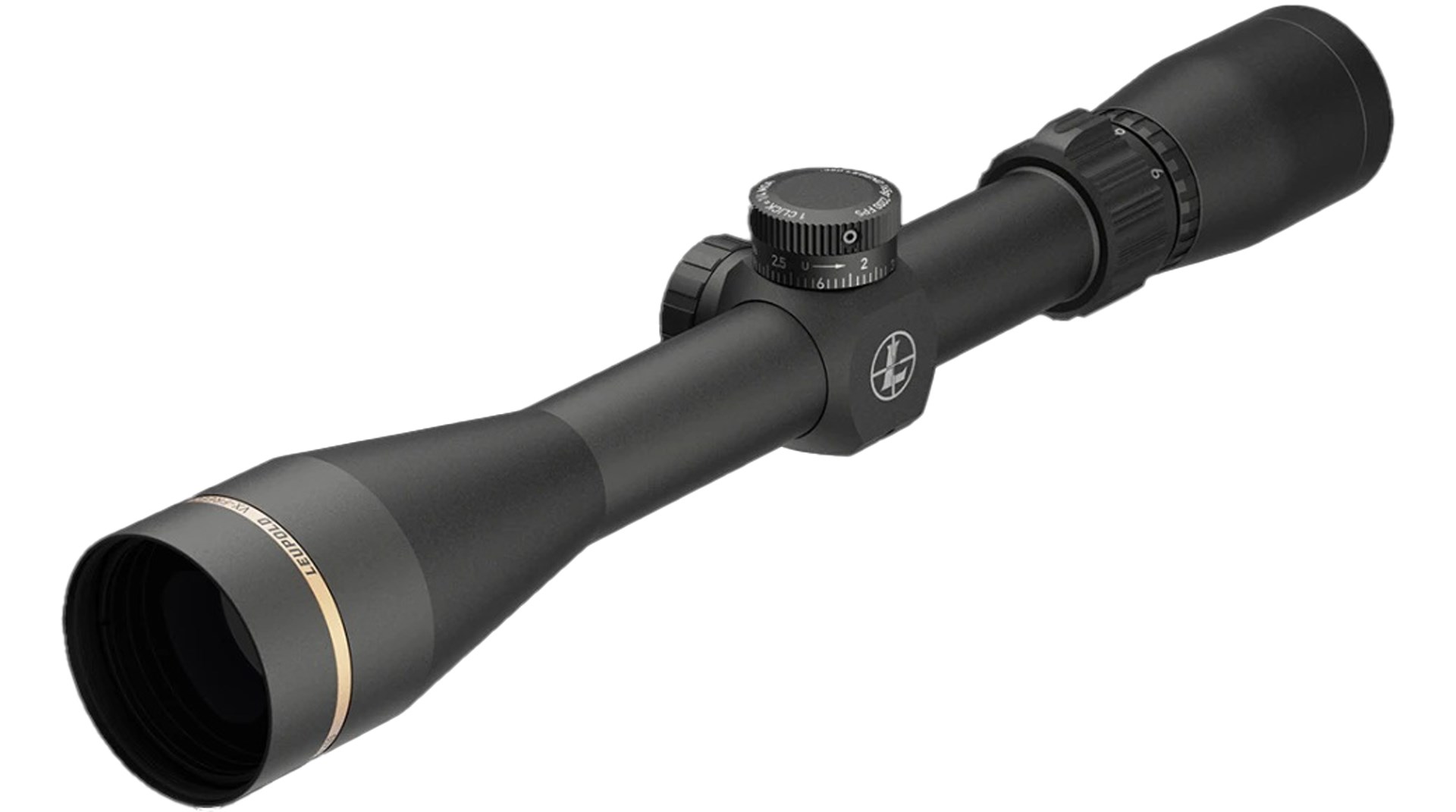
Winchester answered the call, firstly with the 350 Legend, followed by the 400 Legend, and both have proven to be effective deer cartridges, though I have admittedly had trouble with shots out past 200 yards. It wasn't the fault of the cartridge; it was an errant rangefinder reading in low light, and a shot that went well under the buck’s belly. No harm, no foul, but I was immediately interested in the announcement from Leupold that they’d mated their VX-Freedom 3-9x40mm riflescope with their BDC system, offering elevation turrets for three of the most popular of the straight-walled cartridges: the 350 Legend, the 400 Legend and the 450 Bushmaster. Meet the Leupold VX-Freedom Straight Wall 3-9x40.
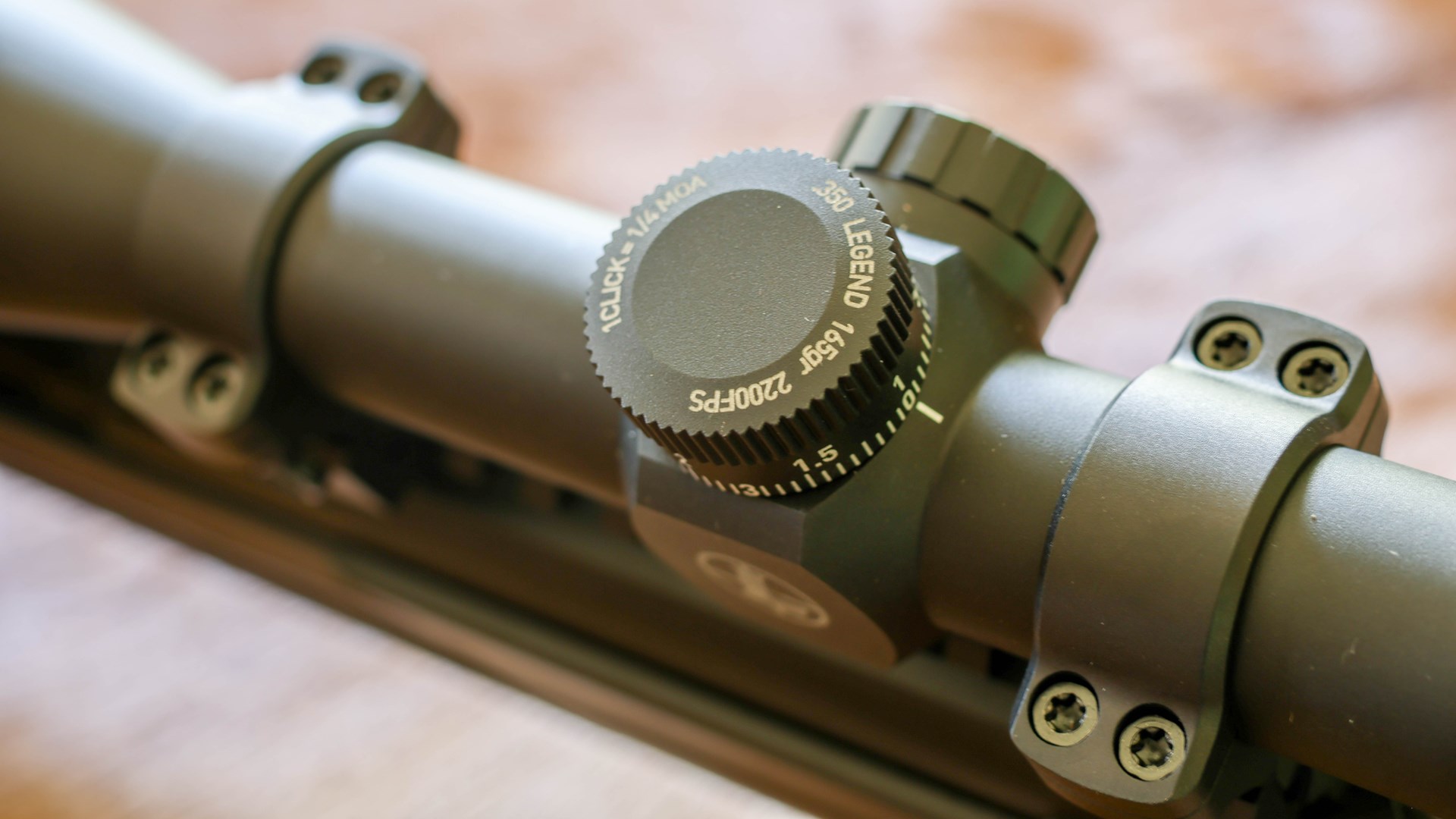
Now if you’re still unfamiliar with the idea, Leupold has taken the most popular loads for the three cartridges above-mentioned, and marked the elevation turret in correlative yardage, in addition to MOA graduations. What this does is allow the shooter to zero the rifle at 100 yards, remove the turret and align the “1” mark with the hash below the turret, then simply range their target, dial the appropriate distance and hold directly on the target for elevation. It is the same concept used in the Leupold Custom Dial System, but in this instance, the turrets are precut based on specific ammunition. The 350 Legend dial is based on a 165-grain bullet at 2,200 fps, the 400 Legend turret is based on 210-grain bullet at 2,200 fps, and the 450 Bushmaster load specifies the 250-grain Hornady FTX bullet at the same muzzle velocity. I've used this system in a number of different Leupold scopes, for a number of different cartridges, and I’ve found it to be an extremely useful tool in the hunting fields, having taken game animals out to 650 yards with it.
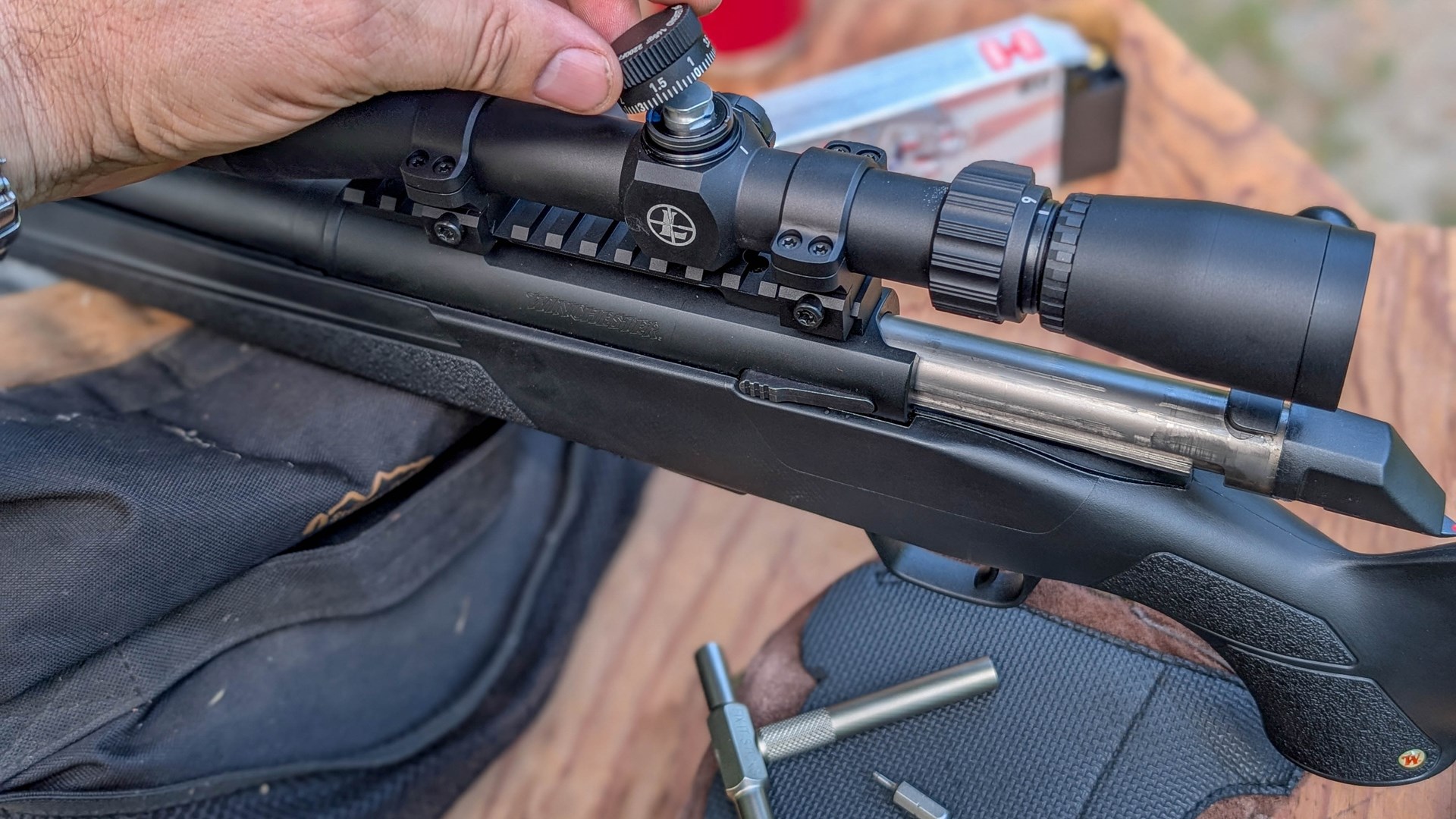
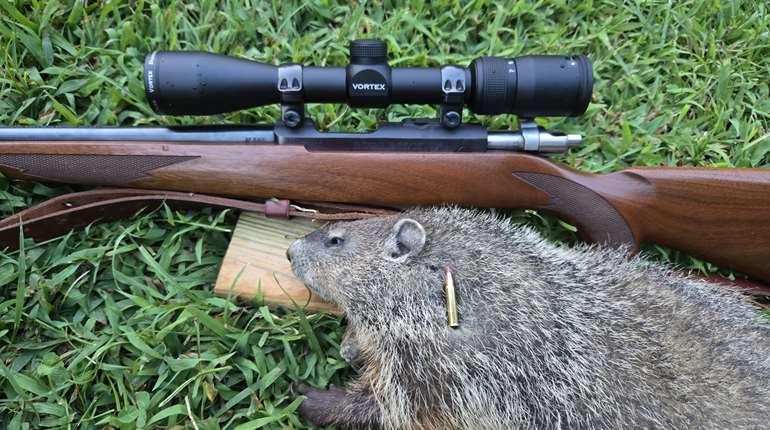
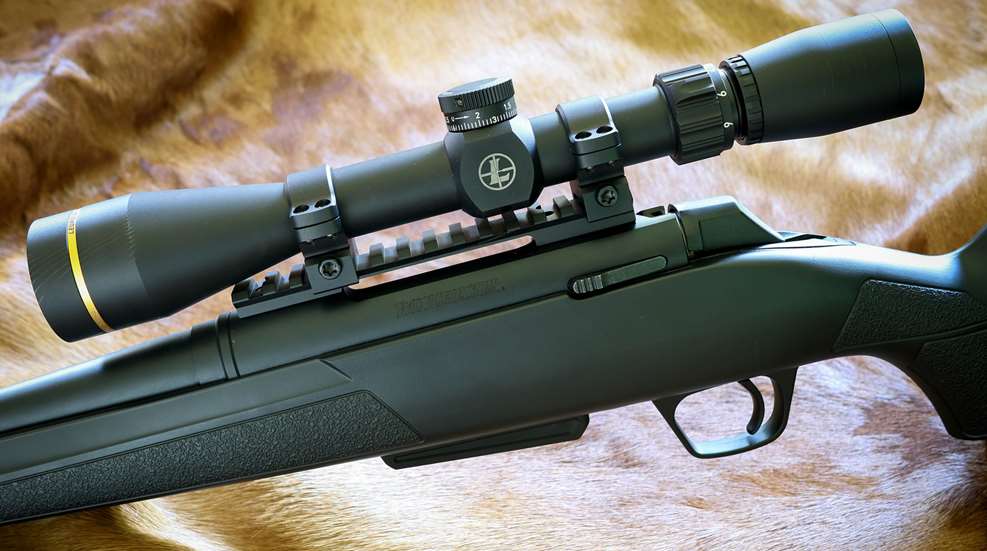
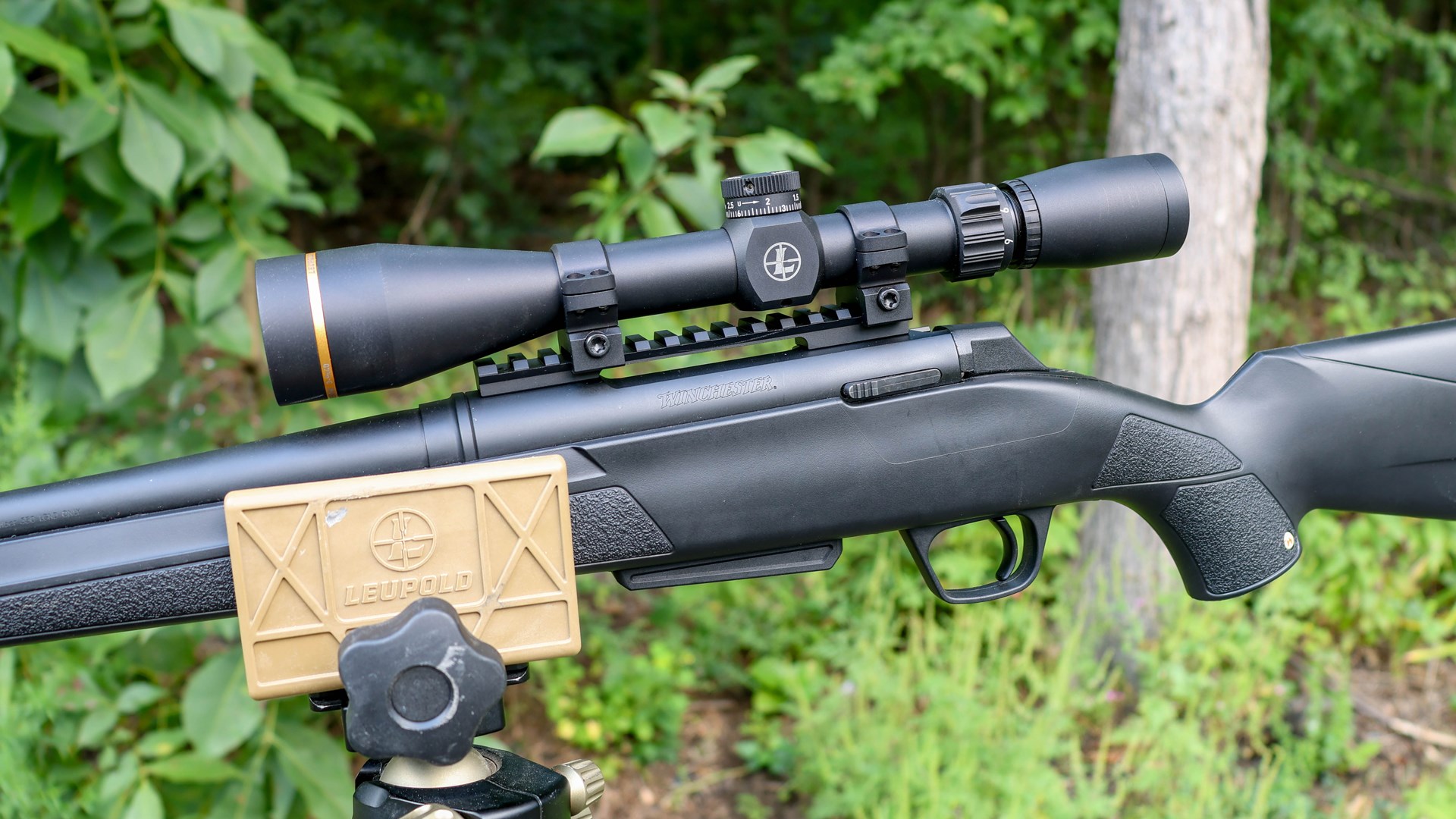
The VX-Freedom scope is Leupold’s entry level model, but still offers a crisp, clear image in a reliable package, and the 3-9x40mm model represents one of the most popular ranges of variable magnification. I set the scope in Leupold rings, atop a Winchester XTR rifle chambered in 350 Legend. The scope features a capped windage adjustment, a finger-adjustable elevation turret (completely adaptable to the Custom Dial System, should you want another dial for a different load) with zero-stop, and a second focal plane Duplex reticle. With a one-inch maintube, 40mm objective lens and a rear ocular measuring just over 1 ½ inches, the VX-Freedom can be mounted nice and low to the bore, allowing for good cheek weld. Measuring 12 ½ inches and weighing in a 12.2 ounces, the scope won’t ruin the balance of your hunting rifle. The scope offers 60 MOA of total adjustment for elevation and windage, though the setup of the elevation turret allows for 14 MOA of adjustment once the turret is set up with the zero stop. For the 350 Legend turret, this equates to roughly 375 yards, where the bullet has slowed to 1,215 fps, retaining just 540 ft.-lbs. of energy. So, from the point of view of the deer hunter who might want a bit more energy for a clean kill, the elevation turret has plenty of useable adjustment.
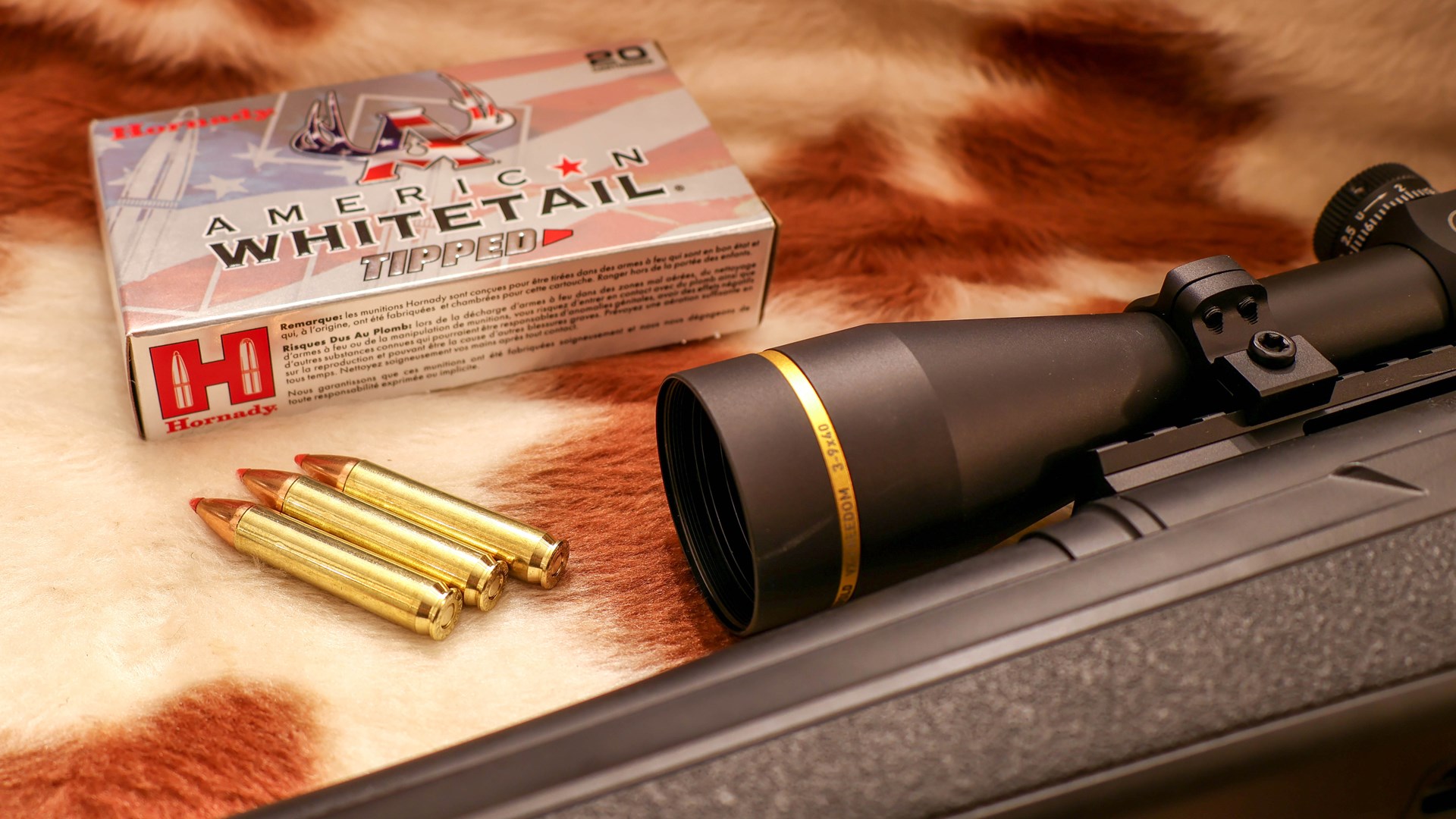
Looking at the cartridge’s function for a brief minute, you’ll find that the Hornady 165-grain FTX load dips under the mythical 1,000 ft.-lb. mark at 200 yards, where the bullet is still cruising at 1,600 fps, but has just 943 ft.-lbs. of energy. And using a 100-yard zero, you’ll see that bullet drop 2.7 inches at 150 yards, and 8.3 inches at 200 yards. Walk it out to 250 yards and it’ll drop 17.3 inches (this is where I got into trouble with a 400 Legend and that errant rangefinder reading). So the value of a properly calibrated turret should be easy to see.
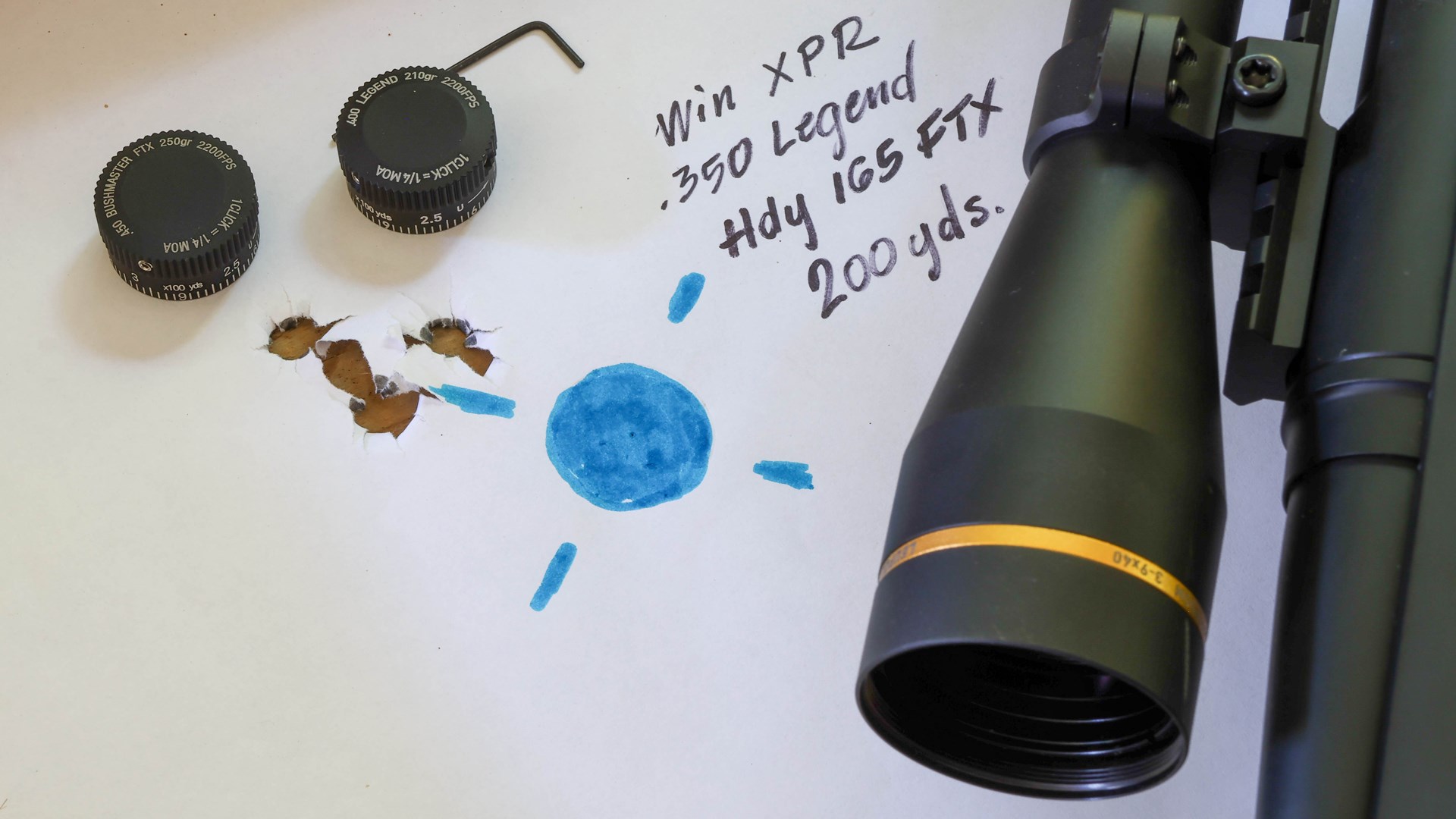
I zeroed the rifle at 100 yards, and then used the provided Allen wrench to loosen the pair of set screws on the elevation turret to properly align the turret, setting it to “1” for 100 yards. I noticed my Garmin Xero C1-Pro displayed a slightly higher muzzle velocity than indicated on the ammo box; where the Hornady box showed an even 2,200 fps, my rifle was registering an average of 2,232 fps. Three-shot group sizes averaged just under one-MOA. I then backed off to 150 yards, turned the dial to read “1.5”, and printed another series of groups. The average group was at the top of the one-inch bull. Lastly, I backed the bench off to 200 yards—the furthest my little range can offer—tweaked the elevation dial and let fly. The groups printed about 1 ½-inches high, and about the same amount to the left, but surely still within a deer’s heart. Bottom line: the Leupold BDC turret worked fine with the Hornady ammo. I tested some Browning and Nosler 350 Legend ammo, both featuring a 180-grain soft point at an advertised 2,100 fps (again my rifle was slightly faster), and at the 200-yard mark the groups averaged about one inch below the bullseye. That accuracy is plenty for any shot on a whitetail deer or similarly-sized animal at that distance.
The VX-Freedom glass delivers well above its price point; it is set to be parallax free at 150 yards, and throughout my time spent with it and other similar models, I had a clear, crisp image, even with 50+ year old eyes. For $399.99, you get a rock-solid optic with a magnification range that will serve you well in a number of hunting situations, and is extremely simple to employ; please do not forget Leupold’s Lifetime Guarantee. No Christmas tree reticles, no physics equations, just an uncluttered, bold Duplex reticle, and an elevation turret that makes life as simple as possible. Range the target, turn the dial, squeeze the trigger, and make the memories. I don’t feel this system will encourage shots beyond the capabilities of the average hunter; rather I feel it aids in the ethical taking of an animal, taking the guesswork out of the trajectory issue with the straightwall cartridges, and allowing the hunter to use the scope in conjunction with the now-common rangefinder to make solid hits.
Most Popular