Turkeys. Those awkward-looking birds that can—especially when the season is closed—act like one of the dumbest species on the planet, will certainly turn the table on a hunter when the season is on. Those of us that enjoy pursuing those iridescent gobblers will certainly take any possible advantage we can get, from the best camouflage, to the most pristine calls, to guns with chokes tighter than a drum. Even our shotshells have made a definite progression from Grandpa’s paper-hulled loads of No. 4 lead shot.
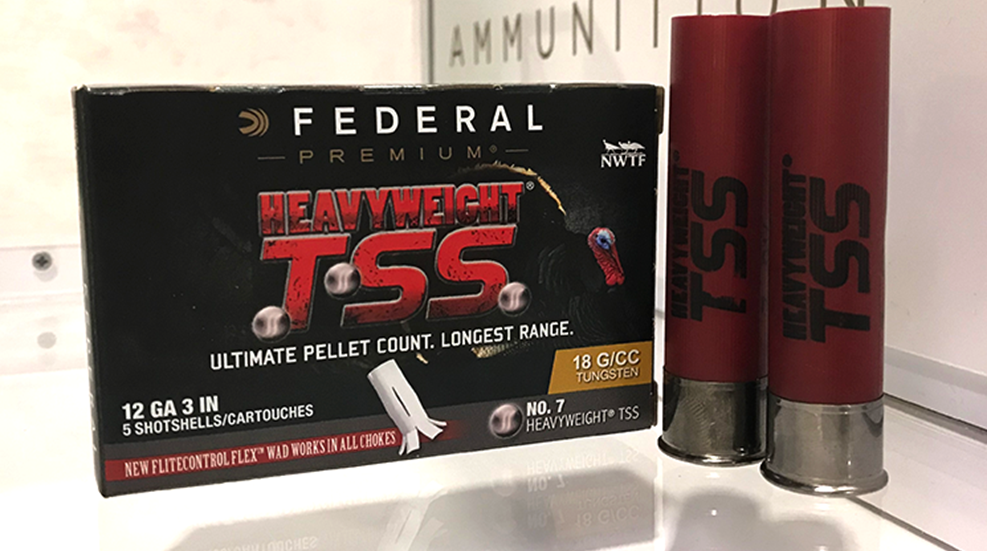
Federal Premium has been at the forefront of turkey ammunition for quite some time, and with good reason: some of the guys over there are absolutely nuts for turkey hunting. New for 2018, Federal introduces their Heavyweight TSS shotshells, using the Tungsten Super Shot pellets, and a different mindset. When I started hunting turkeys in the mid-1980s, heavy payloads of large shot were completely en vogue, but that seems to be changing. The TSS pellets are an alloy comprised mostly of tungsten, and according to Federal, are 56 percent denser than lead. This translates to better retained energy downrange, which correlates to more kills. Furthermore—to deviate from the older mindset—smaller shot sizes can be utilized to get the job done. Again, as a youth, the 7 ½, 8 and 9 shot was reserved for clay birds and maybe ruffed grouse. When made of the TSS alloy, it makes a perfectly viable tool for gobblers. Smaller shot equates to more pellets downrange, increasing the chances of a solid hit, and I’ll take all the little advantages I can get.
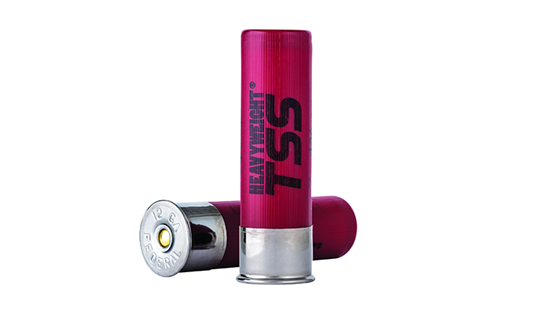
The Federal Heavyweight TSS uses the Flitestopper wad—proven to be effective in both the Black Cloud and 3rd Degree line—and is designed around loads of either No. 7 shot or No. 9 shot. It’s available in 12-gauge 3-inch (1 ¾ oz.), 12-gauge 3 ½-inch (2 ¼ oz.), 20-gauge 3”-inch (1 ½ oz., No. 7) and even in .410 bore (13/16 oz., No. 9). While hunting turkeys with a .410 may seem out of the realm of sanity, I bet it won’t be long until you see guys doing it, especially the experienced, patient hunters looking for a challenge.
The MSRP is $29.95 to $49.95 per 5-round box, with a portion of the proceeds going to the National Wild Turkey Federation.
For more information, go to federalpremium.com.