The Browning name is a staple in the firearms community; it’s impossible to deny that John Moses Browning had an incredible effect on the development of many of our iconic designs. The Browning label—and its associated Buckmark logo—has long stood for dependability and reliability, and those traits have extended into the new line of Browning ammunition.
Revealed at the 2016 SHOT Show, Browning is now making centerfire rifle and pistol ammunition, as well as rimfire ammo and shotshells. The initial offerings cover the most popular calibers, in many popular bullet weights and shot sizes. But, as I’ll explain shortly, there are some innovative surprises, as you might expect from Browning.
Centerfire Rifle Ammunition
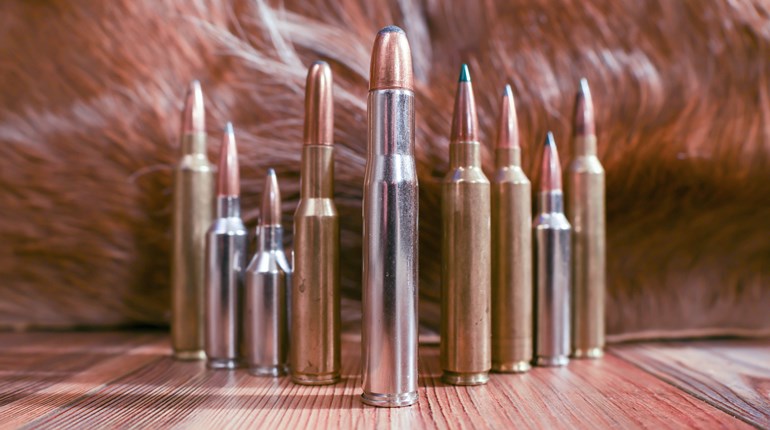
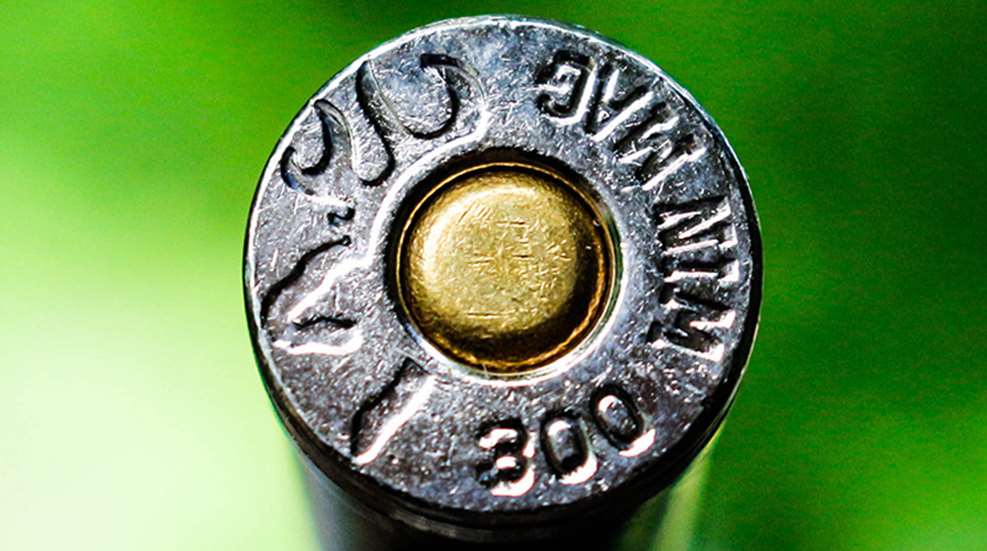
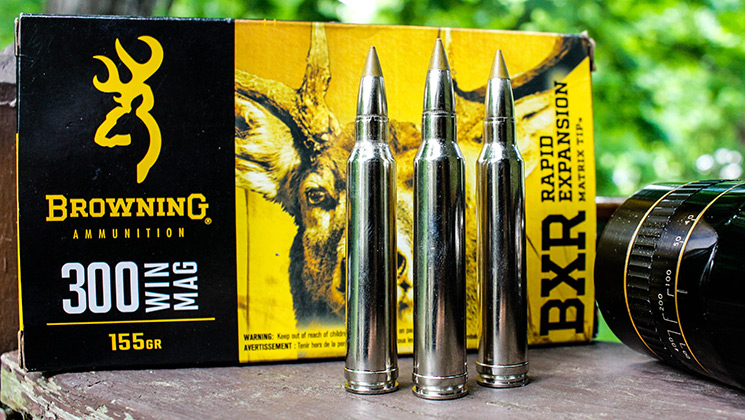
Browning offers two bullet types in its centerfire ammo line: the BXR and the BXC. The BXR is their ‘deer’ bullet, in that it is designed for rapid expansion, giving the terminal performance that works very well on deer and deer-sized game. Available in .243 Winchester, .270 Winchester, .30-30 WCF, .308 Winchester, .30-’06 Springfield, .300 Winchester Magnum and .300 WSM, the BXR line gives good velocities to generate the hydraulic shock that switches the big whitetails to the ‘off’ position. The 97-grain 6mm bullet and the 134-grain .270 bullet are common weights, but all five of the .30s use a 155-grain bullet, which are a touch on the light side for the magnum cartridges. Nonetheless, these bullets will suffice for deer and the like, and the .300 Winchester ammo shot very well from my trusty old Winchester Model 70. The group average was right around ¾” for five, three-shot groups, with the best printing ½-inch, and velocities were within 20 fps of the advertised 3,260 fps. That is a lights-out deer and pronghorn combo.
The BXC is a different ballgame altogether. It is Browning’s controlled expansion bullet, and was designed with big game in mind. The core is bonded to the jacket, for high weight retention, and the Terminal Tip is engineered to initiate expansion. Combine that with bullet weights on the heavier side of the halfway mark for a caliber, and you’ve got a winning combination. The BXC line loses the .243 and .30-30, but picks up the 7mm Remington Magnum, to give a decent selection of the most popular cartridges used for North American large game.
Rimfire Ammunition
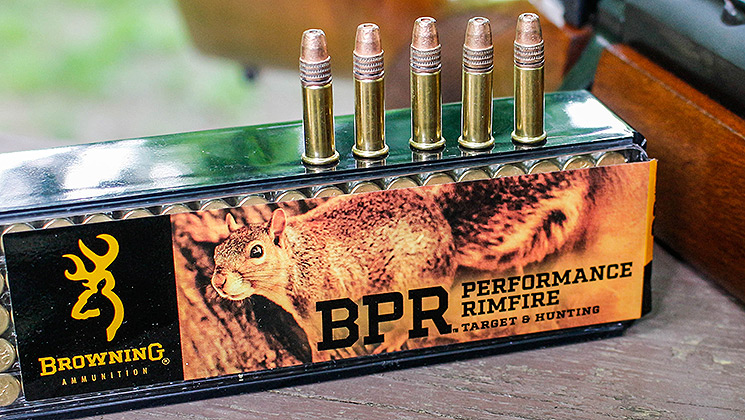
I love shooting .22 Long Rifle; my Ruger 77/22 is one of my favorite rifles ever. I got my hot little hands on a couple hundred rounds of Browning BPR (Browning Performance Rimfire) ammunition—the 40-grain lead hollowpoint variety at 1,435 fps—and immediately took it outside for a thorough test drive. Firstly, it was very accurate—among the most accurate rimfire ammo I've shot—and the velocity was spot on from the barrel of my bolt action Ruger. Second, the terminal ballistics are exactly what I was looking for: instant death on the varmints. You see, Grumpy Pants (my dear father) is losing the war he’s fighting with the chipmunks and red squirrels (they’ve destroyed wiring harnesses and the soffits on his barn), and I played the role of mercenary. The Browning BPR ammo—at that wonderfully higher velocity—worked perfectly. Finally, we’ve turned the tide of the invasion. The segmented hollowpoint produces serious wound channels; and that equates to quick, humane kills.
Handgun Cartridges
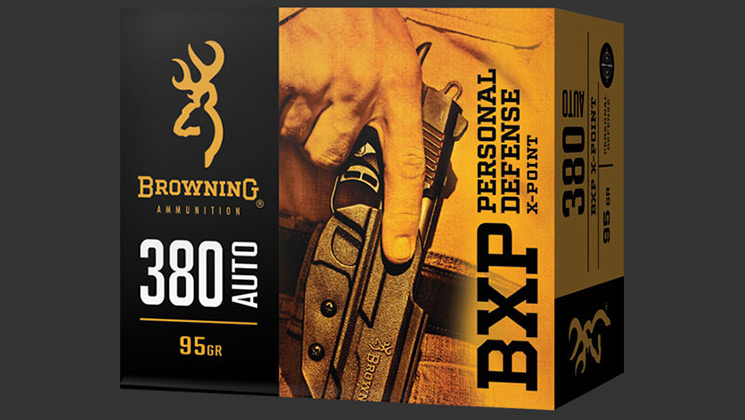
In addition to some excellent practice ammo for the pistol crew, Browning offers the BXP line: a series of personal defense ammunition. It’s quite obvious that Browning took its time in the development of this ammunition line before putting their label on it; it is anything but the run-of-the-mill stuff—it is a unique series of projectiles, befitting the prestigious name. The Browning X-Point bullet is a well-designed bullet, available in the common semi-automatic pistol calibers. .380 ACP, 9mm Luger, .40 Smith & Wesson and the proven .45 ACP are all represented here, in common bullet weights, but designed for consistent expansion and penetration. The X-Point will shed some of the bullet’s weight should a barrier—such as sheetrock or other internal structures—be hit, to minimize the possibility of striking an unintended target with maximum force. They are loaded in black nickel cases, for smooth feeding and extraction—essential in a high-stress defensive situation. The BPT (Browning Performance Target) line uses matching bullet weights in a full metal jacket configuration, so you can practice with a consistent bullet weight and recoil level, with the advantage of the cheaper FMJ loads.
Shotshells
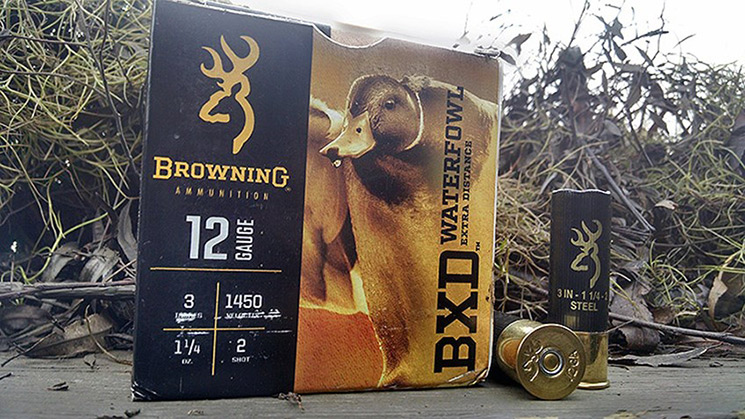
Long famous for shotguns bearing names like Superposed, Citori, and Sweet Sixteen, the Browning line of shotshells offers something for any type of shotgunner. Available in 12, 16 and 20 gauges, the BXD, or Browning Extra Distance, is available for the upland bird hunter as well as those who prefer the pursuit of waterfowl. The Browning Upland ammo will give the pheasant and partridge hunter the ability to reach those fast-flushing birds, at the edge of sane distances, while the Waterfowl ammunition uses plated steel-shot to settle the score with teal that seem to mimic the flight pattern of the F16s, in addition to the slow, heavy Canadian honkers. I love the fact that Browning took the 16-gauge crowd into consideration; though they may be few, they are devoted, and respect the sixteen immensely.
In this age of gimmicky brand lending, I honestly didn’t expect the Browning line of ammo to perform as well as it did; and I’m glad I was wrong. I would take their products into the hunting fields confidently, as the Browning firearms have been carried for decades.