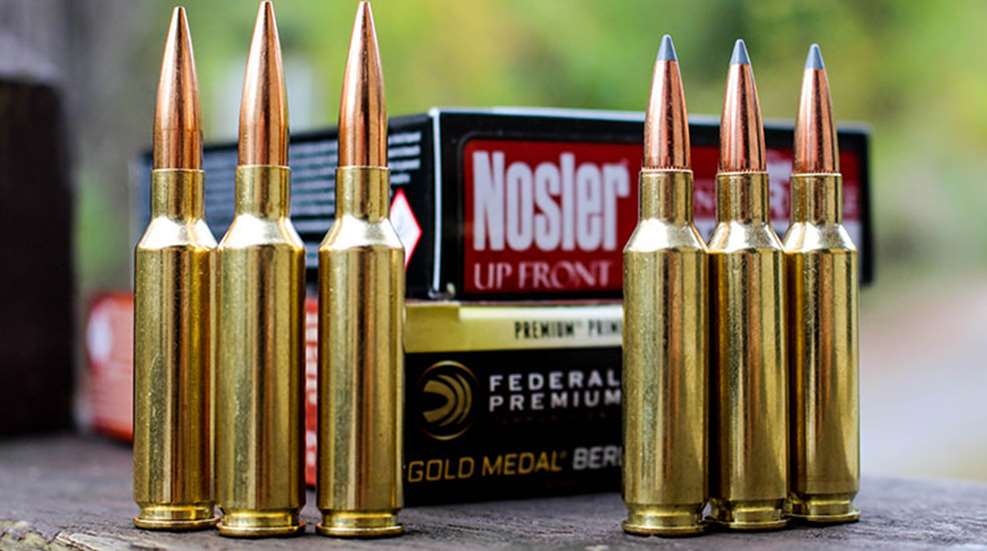
Cartridge development is a rather funny thing. Sometimes, an answer can lie in front of our eyes, unnoticed, for quite some time. All it takes is a clever means of bringing it to the public’s attention and being in the right place at the right time. Our own 7mm Rem. Mag. has its (undeniable) roots in the .275 H&H Magnum—the .416 Rem. Mag. bears an uncanny resemblance to the .416 Hoffman, and I know many shooters who never uttered the phrase “six-five” before they associated it with the word “Creedmoor.”
As Americans, we’ve had an on-again-off-again affair with metric bullet diameters. There was a metric designation in this bore diameter, namely the 6.5mm Rem. Mag., but we seem to prefer to convert to the decimal portions of an inch, like the .264 Win. Mag. and the .260 Rem. Nonetheless, the Creedmoor put those two words on our lips—and with good cause.
 The Creedmoor has its roots in a relatively unknown cartridge—or one that is more than likely destined for obscurity—the .30 T/C. Thompson/Center paired with Hornady to develop a cartridge that would fit in a .308 Win. length action, actually deliver velocities on par with the .30-’06 Sprg. and presumably end the argument regarding the two cartridges once and for all. While the .30 T/C actually did that—on paper at least—the older, more popular cartridges had roots that ran deep, and the .30 T/C was unable to get a foothold, withering on the vine.
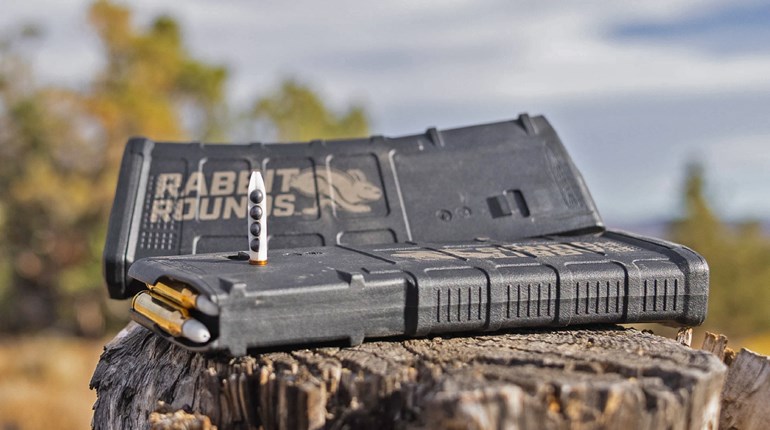
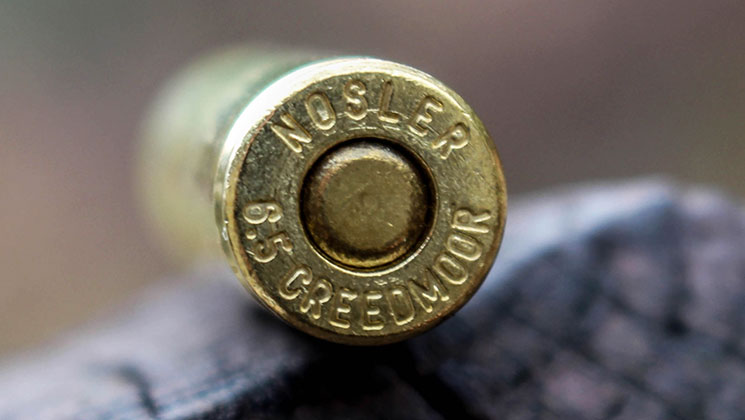
When that .30 T/C cartridge was necked down to hold the wonderful 6.5mm bullets, the 6.5 Creedmoor was born. The goal was to have a cartridge which maintained the 0.473-inch case head diameter—so it would run well in the AR-10 platform—yet a case shorter than the .308 (and the .260 Rem.) to allow those long, lean 6.5mm bullets to be seated out far enough and still function through the AR magazine. The result worked perfectly, delivering low recoil, yet enough horsepower to drive the high B.C. 140-grain bullets to a muzzle velocity of just over 2,700 fps.
But the AR-10 platform—as good as it is—is not the only style of rifle that mates well with the Creedmoor. In a bolt gun, target shooters found that the Creedmoor came unto its own, making what may be the ultimate low-recoiling long-range cartridge. It’s been used to hit steel targets out to 2,000 yards and beyond, and I’ve personally used it to 1,600 yards, and can attest to its accuracy potential.
What makes it so good? Why does it seem to rival the .308 Win. as the king of the long-range cartridges? Well, the reasons are two-fold. The first lies in the time-honored performance of the 6.5mm bullets. Remember I said cartridge development was a fickle thing? The 6.5x55 Swedish Mauser and the 6.5x54 Mannlicher-Schoenauer have been driving the long 6.5mm bullets with exceptional sectional density figures for well over a century, though that has gone relatively unnoticed by American shooters. With a twist rate capable of handling such long bullets, the 6.5mm bore is perfect for the same bullets that the Creedmoor has made famous. Those bullets resist both the effects of gravity and wind deflection extremely well, offering a flat trajectory and the ability for a shooter to minimize the effects of wind. The ability to retain velocity keeps the Creedmoor with 140-grain match bullets in the supersonic range out to around 1,150 yards, while the .308 Win. with 168-grain match bullets hits the transonic window at about 975 yards.
Secondly, the very design of the cartridge lends itself to becoming instantly shooter-friendly. A 30-degree shoulder gives good headspacing, and a neck measuring 0.285-inch in length gives excellent neck tension. Though the Creedmoor has just about the same cartridge overall length as the .308 and .260, it allows those bullets—very long in order to obtain that high Ballistic Coefficient—to be properly seated on the parallel shank of the bullet, not driven deep into the case as the .260 requires.
Although the Creedmoor is an excellent long-range target cartridge, it also makes for an excellent hunting cartridge for almost all game south of elk and moose. There are many good hunting bullets available for the Creedmoor, like the 143-grain Hornady ELD-X, the North Fork hollowpoint, the Swift Scirocco, Nosler AccuBond and others. But inside hunting ranges, I highly doubt you’ll see a noticeable difference between the Creedmoor and the 6.5x55 Swede or the .260 Rem.
Is it the greatest thing since sliced bread? Yes and no. If the long-range target game is your bag, then there’s every reason to own a Creedmoor. If you’re looking for a hunting rifle, there’s nothing wrong with it, but I feel you’d be equally well-served by the 6.5-284, 6.5x55 Swede, or .260 Rem. If you like the speedier cartridges, the .26 Nosler and .264 Win. Mag.—while harder on barrels—will suffice. There’s something to be said for a short, efficient case for someone who shoots often and at high volumes, and the Creedmoor is definitely that. To me, that’s where the Creedmoor shows its capabilities.
Looking for previous installments of Behind the Bullet? We've got you covered.
• .300 Remington Ultra Magnum
• 7mm Remington Magnum
• .470 Nitro Express
• .280 Remington
• .300 Winchester Magnum
• .270 Winchester
• .222 Remington
• .45 ACP
• .404 Jeffery
• .44 Remington Magnum
• .243 Winchester
• .338 Winchester Magnum
• .357 S&W Magnum
• 6.5-284 Norma
• 8x57 Mauser
• .38 Smith & Wesson Special
• 7x57mm Mauser
• 9 mm Luger
• .35 Whelen
• .454 Casull
• .375 H&H Magnum
• .45 Colt
• .22-250 Remington
• 10mm Auto
• .308 Winchester