The 2019 SHOT Show saw the release of the latest cartridge from Winchester: the 350 Legend. Dubbed by Winchester as the “fastest straight-walled hunting cartridge in the world,” the 350 Legend certainly seems to be designed to fill a particular role in those states which limit big-game hunters to straight-walled rifle cartridges. Ohio and southern Michigan are just two examples of areas where the shotgun slug has been replaced by straight-walled cartridges like the .45-70 Government, .444 Marlin and, more recently, the .450 Bushmaster. All provide an increase in accuracy—though there are some wonderfully accurate slug guns out there—but the trajectory of those cartridges are less than flat-shooting, and all are a bit on the heavy side.
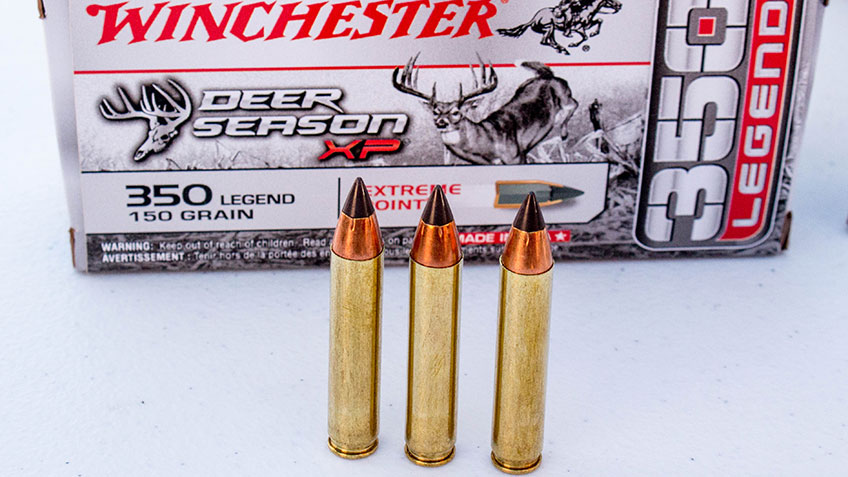
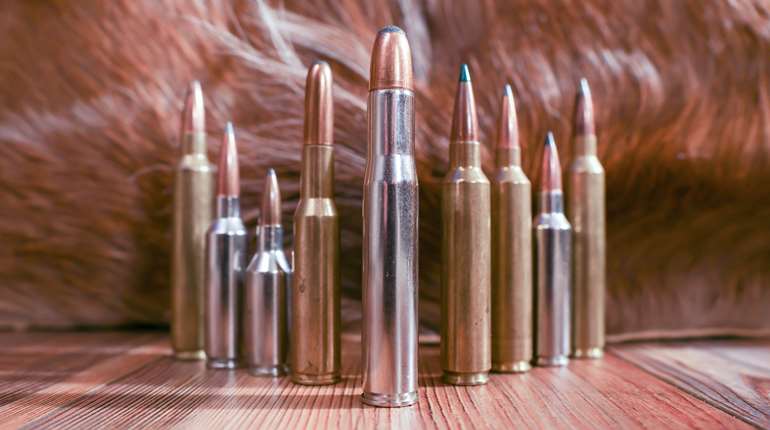
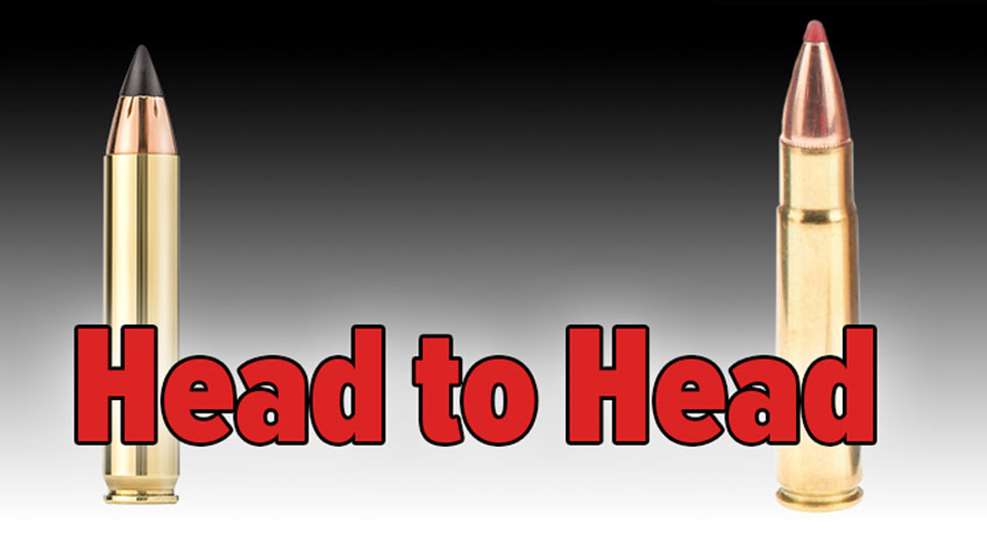
Enter the 350 Legend. Using the same case head diameter of the .223 Remington at a length of 1.71-inch, the 350 Legend uses a .357-inch diameter bullet, for a combination that is very easy on the shoulder while being effective downrange. Winchester claims the cartridge has 20 percent more penetration and 20 percent less recoil than the .243 Winchester, yet that comparison – though it may be perfectly viable – didn’t exactly translate well to me. Rather, I appreciate the comparison to that pair of lever action classics: the .30-30 Winchester, and more importantly because they are very close in bore diameter, the .35 Remington.
Now, in this comparison, I will freely admit that the .35 Remington is not legal for those areas for which the 350 Legend was designed, as the .35 Remington is a bottle-necked cartridge, but there has been quite a bit of rumbling among those hunters who appreciate the short to mid-range cartridges, about whether or not the switch to the new cartridge is worthwhile.
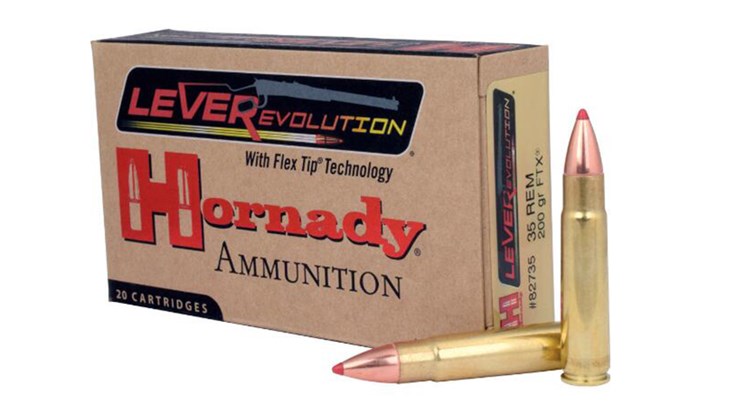
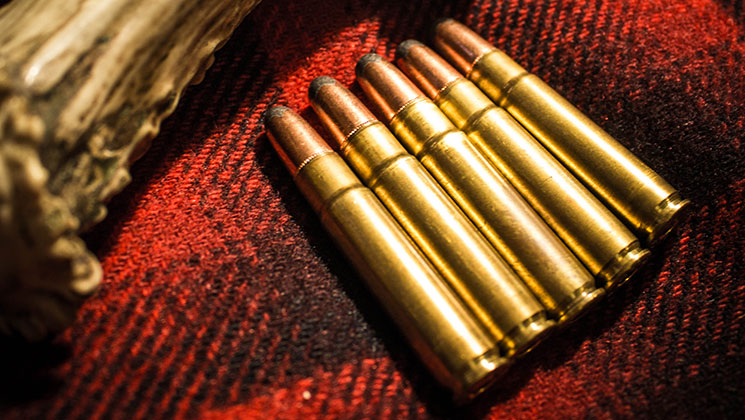
The .35 Remington was one of a quartet of cartridges released by Remington in 1906, and it was chambered for the Remington Model 8 autoloading rifle. In the lever-action Marlin Model 336, the cartridge became a favorite of eastern deer and bear hunters, giving plenty of knockdown power in a compact and affordable package. Using the lighter .358-inch diameter bullets weighing 150 to 200 grains, the .35 Remington gave enough power to cleanly take a deer, bear or similar sized animals, without pounding the shooter’s shoulder to jelly. It wasn't and isn’t a long-range cartridge, but at distances inside of 125 to 150 yards, the .35 Remington surely gets the job done. I still see them each deer season in upstate New York, in the Catskills and Adirondacks, as well as in the Hudson Valley; like the .30-30 Winchester, the .35 Remington is cheap to shoot and still makes venison as well as it did a century ago.
The new 350 Legend has the benefit of modern engineering, and the fact that it wasn’t designed specifically for a tubular magazine. The straight-wall, rimless design requires that the cartridge headspaces off of the case mouth—much like a .45 ACP or 9mm Luger—but the use of spitzer bullets certainly gives an advantage out beyond the 100-yard mark. The Deer Season XP load from Winchester, using the 150-grain load at 2325 fps still has 903 ft.-lbs. of energy at 200 yards, dropping 7.5 inches when using a 100-yard zero. The .35 Remington load using the 150-grain Core-Lokt obtains just about the same muzzle velocity, with a bullet having a lower B.C. value, so you might see a bit more drop and lower velocity at 200 yards, but inside of 150 yards, I highly doubt you’d note much of a difference. Winchester’s 160-grain Power Max gives very similar performance, though with a bonded-core hollowpoint bullet.
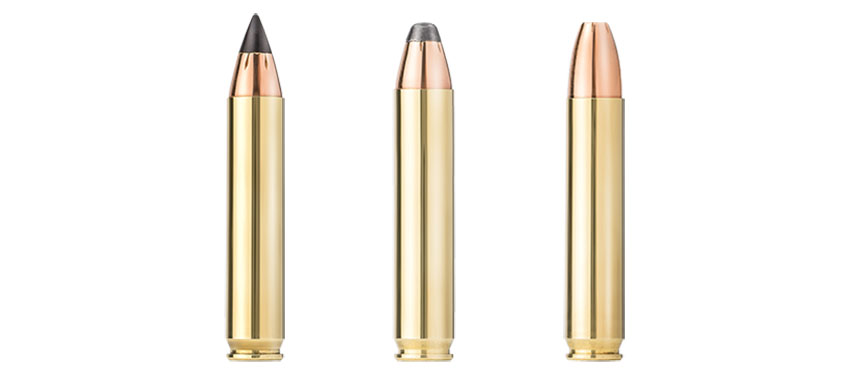
The 350 Legend has a 180-grain Power Point load, though no 200-grain load as the .35 Remington does. Comparing the two in spite of the weight difference, you’ll see the 350 obtaining 2100 fps at the muzzle, and the .35 Remington cruising along at 2080 fps; not a whole lot of difference, though I’d have to give the edge to the .35 Remington for a bit more sectional density with the slightly heavier bullet.
Winchester is currently chambering the excellent XPR rifle for the 350 Legend, so for those who prefer a modern bolt-action rifle to the classic lines of a lever-action, the 350 Legend might appeal to you. I can certainly see the Midwest deer hunters making a switch to the 350 Legend over any of the .40 to .45 caliber cartridges, as the 350 Legend offers the Goldilocks ‘just right’ formula: a good balance of striking power and ease of shooting. I tried three of Winchester’s five loads at SHOT Show’s Industry Day at the Range, and all were a pleasure to shoot and plenty accurate.
Which cartridge wins? Not unlike the real estate market, the answer lies in location, location, location. If I were a Midwest hunter, I’d dive on top of the 350 Legend, as it gives what I consider to be the most bang for the buck. Outside that area, I feel that the sheer number of rifles chambered for the .35 Remington will assure a steady supply of good ammunition, fulfilling the role the .35 was designed for.
I’ll end with this idea: irrespective of whether you like the 350 Legend or not, I’m glad to see that Winchester took the needs of those Midwestern deer hunters into consideration, and developed a cartridge just for them. Well played Winchester; we all need to work together.
Looking for previous installments of our "Head to Head" series? Click here.