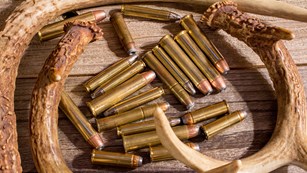
The 7mm bullet diameter has certainly etched its name in the shooting history books, and in spite of our American love affair with the .308″ diameter, the Sevens have a staunch following here. It seems that nearly every case shape, length and configuration that has been offered or adapted to the .30s have also seen a 7mm counterpart; while the actual differences may be slight, it seems worthwhile for the ammunition manufacturers to take the trouble to develop cartridges on both diameters.
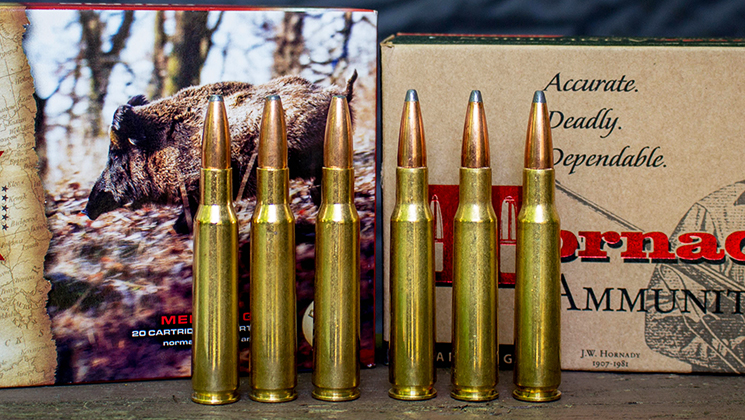
All 7mm cartridges owe a tip-o’-the-hat to the 7x57mm Mauser. Developed in 1892 as a military cartridge, Peter Paul Mauser’s brainchild certainly made a splash among the ballisticians and military minds of era; even our own beloved .30-06 Springfield shows definite ties to the Mauser design. John Rigby and Co. adopted the cartridge—rebranding it the .275 Rigby—and with it many hunters around the globe faced the largest and most dangerous creatures that ever walked. W.D.M. ‘Karamoja’ Bell used his .275 Rigby—with 173-grain solids—to take the majority of his 1,011 elephants. Col. Jim Corbett was gifted a .275 Rigby and used it to dispatch many Indian man-eating tigers and leopards. The 7x57 was a staple among those who lived in colonial Africa; the late Finn Aagaard related the story of the family’s 7x57 having a barrel that was shot out on game, not targets.
The beauty of the 7x57mm Mauser is the balance of low-recoil and field performance. Though the muzzle velocities and energy figures are less-than-dazzling in comparison to modern magnums, the 7x57 has been making meat season after season. It has only benefitted from modern powders and bullet designs, and while some of the factory loads are on the mild side—in deference to the older rifles that are still with us—in a modern hunting rifle, the faster factory loads and handloads will certainly make the cartridge shine. It has the common .473″ base diameter, a shoulder steep enough for good headspacing, yet gentle enough for easy feeding, and enough case capacity to launch the heavier 160- and 175-grain bullets to respectable velocities.
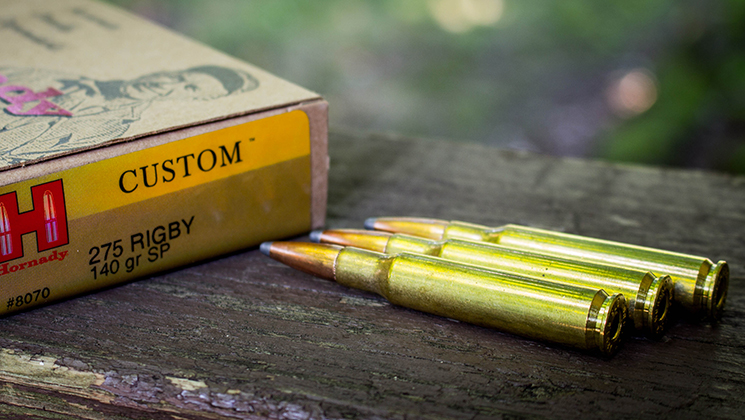
The 7mm-08 Remington was introduced by Big Green in 1980 after existing as a wildcat since the late 1950s. It is simply the .308 Winchester case necked down to hold 7mm (.284″) bullets, and that’s not a bad thing at all. Both the 7mm-08 and its parent have a well-deserved reputation for accuracy, as well as being easy on the shoulder. While a bit shorter than the Mauser design—57mm vs. 51mm—the Remington cartridge operates at a higher pressure, and therefore matches or sometimes exceeds the Mauser velocities. It lives up to the accuracy claims, and is on par with the 7x57mm Mauser in the recoil department. It fits perfectly in the short-action rifles, and while many were produced with shorter barrels—between 18 ½″ and 20″—lowering velocities a bit, a 22″ barrel will take full advantage of the case capacity. My own Tikka T3 Lite is a handy, portable rifle, and is a perfect choice for whitetail and black bear in my native New York, as well as most North American species.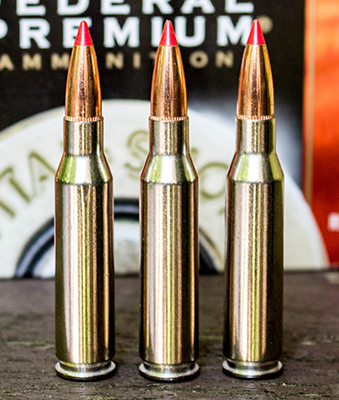
Both cartridges can use the full gamut of 7mm bullets—from 120 to 175 grains—though looking at the modern factory loads, you’ll see the 7x57mm Mauser is generally loaded with bullets on the higher side of the spectrum from 140 to 175 grains, while the 7mm-08 Remington is loaded with lighter bullets, topping out at the 160-grainers. Comparing availability, you’ll see many more loads for the 7mm-08 Remington than for the 7x57mm Mauser, though with rifles like the Rigby Highland Stalker coming recently onto the scene, I think we may see a resurgence of factory loads for the older cartridge.
Velocity data for the two cartridges may, at first, appear to favor the 7mm-08 by 150 fps or so, but keep a close eye on the length of the test barrel; I've found that the factory loads do favor the 7mm-08, but only slightly when using the same length barrel. Personally, my experiences have shown me that the 7mm-08 Remington has shown better accuracy than the 7x57mm Mauser, though I certainly have met exceptions to that rule in both cartridges. As far as hunting accuracy is concerned, I feel both are fine choices for a hunting cartridge.
So, which wins the contest? Well, in this particular instance, I believe it will depend on whether you’re looking at it from a purely practical point of view, or whether the nostalgia and history of a cartridge plays into your decision. Citing practicality, the 7mm-08 Remington makes a whole lot of sense, as the availability of ammunition—as well as the wide selection of rifle choices—gives the newer cartridge an edge. If, like me, you appreciate the nostalgia associated with a cartridge, the case is easily made for owning and hunting with the classic 7x57mm Mauser (or even cooler, a .275 Rigby), as it immediately conjures images of those adventurers of the early 20th century in far-off, unsettled lands relying on the German cartridge for survival.
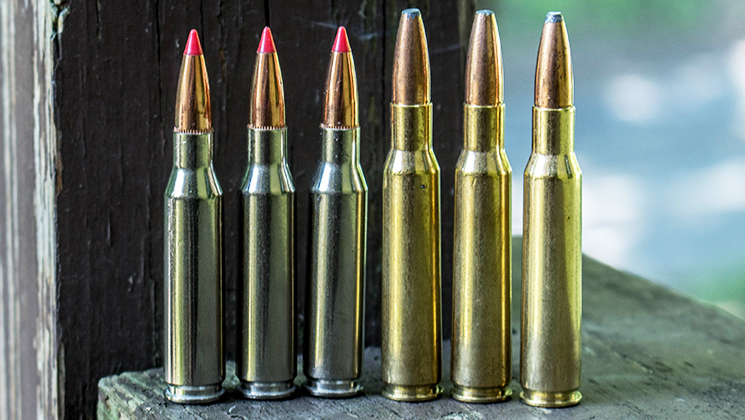
In this instance, the nostalgia gets the better of me. I will admit that after spending some time with my 7mm-08 Remington, I do have a new appreciation for the efficiency and performance of the cartridge, but when someone takes a 7x57mm Mauser out of their rifle case, I’m immediately drawn to it. I suppose the allure of a 126-year-old hunting cartridge and all the classic stories associated with it tips the scales in its favor, and sometimes there’s more to it than paper ballistics indicate.
Looking for previous installments of our "Head to Head" series? We've got you covered.
• .25-06 Remington vs. .257 Weatherby Magnum
• .338 Winchester vs. .375 H&H Magnum
• .30-30 Winchester vs. .35 Remington
• .257 Roberts vs. .250-3000 Savage
• .270 Winchester vs. .280 Remington
• .35 Whelen vs. 9.3x62mm Mauser
• .416 Rigby vs. .416 Remington Magnum
• .308 Winchester vs. .30-06 Springfield
• .22 Nosler vs. .224 Valkyrie
• .300 Win. Mag. vs. .300 WSM
• .223 Remington vs. .22-250 Remington