I looked through the spotting scope and answered Dave deMoulpied’s question. “Half-inch apart; send the third one.” That third one printed one inch from the other two, making a 1 ½-inch group at 200 yards, and a very happy shooter. I, on the other hand, was experiencing a torn heart as a result of being very happy for a close friend who’s rifle proved to be wonderfully accurate, and on the other hand the remorse of having sold that rifle to my best buddy. Ah well, it went to a good home, and I still get visitation rights.
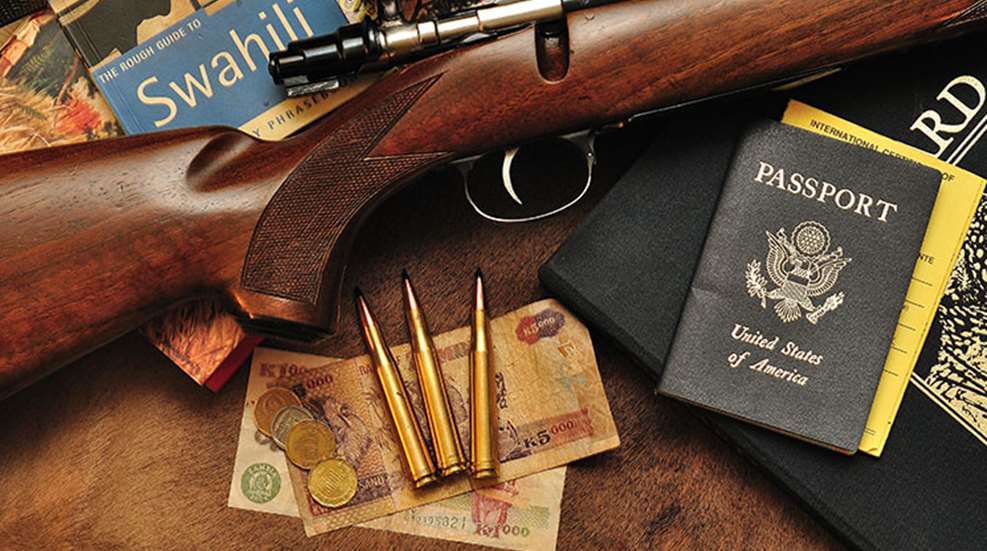
 The rifle? A 1959 Colt Coltsman, with a barrel inscription that reads simply ‘.300 Magnum.’ In 1959, there was no other .300 Magnum—save the .300 Weatherby—than the .300 Holland & Holland Belted Magnum; the .300 Winchester Magnum was still four years away and the H&H ruled supreme. Released in 1925, the .300 H&H—or Super .30 as it is also known—was the fourth cartridge from Holland & Holland to wear that now-famous belt of brass, after the .375 Velopex, the .275 H&H and the workhorse .375 H&H. It caught on well, offering a significant increase in velocity over the .30-06 Springfield, and was available in the American-made Winchester Model 70 in 1937. Two years prior, Mr. Ben Comfort used the .300 H&H to win the Wimbledon Cup at the Camp Perry shooting matches, using a custom handload. Yup, the .300 H&H was, is and always shall be a shooter.
In our era of ever shrinking cartridges (one day they’ll look like a bullet sitting on top of a dime), we have obtained H&H velocities in .30-06 and .308-length cartridges, but there remains something very special about the design that Holland & Holland released over 90 years ago. Its sloping shoulder (the Super 30 uses an 8˚-30′ shoulder) makes for extremely easy feeding, and though the 2.850-inch case requires a magnum-length action, using a classic cartridge like this is pure joy to a guy like me. It’s surprisingly easy on the shoulder—much more so than the .300 Weatherby—yet achieves velocity just behind the .300 Winchester Magnum, and with some handloads I’ve beat it. As a hunting round, it is a wonderful choice; unlike many of the larger capacity .300 magnum cases, the .300 Holland & Holland works very well with some of the lighter bullets, including the stubby 125-grain pills. It also can take full advantage of the heavier 200, 210 and 220-grain slugs, making it a perfectly viable choice for all North American game, and all African game shy of elephant, lion, buffalo and hippo.
As a deer/antelope cartridge, I like the 150 and 165-grain bullets, though you may want to consider the premium designs, especially if impact velocities may be high due to a close shot. For elk/moose/bears, the 180-grain bullets absolutely shine. Muzzle velocities run between 2875 and 2950 fps—enough to deliver a very useable trajectory, and the higher B.C. designs will resist wind deflection very well. Were I to take a Super .30 after the big bears of Alaska, I’d want a premium bullet of 200 or 220 grains, as those beasts can take a hammering, though many have fallen to a properly placed .30 caliber bullet.
Though the Super .30 has most definitely been pushed out of the lead role among .30 caliber magnums by the .300 Winchester, there are still some good factory loads available for it. The Federal Premium Trophy Bonded 180-grain load is wonderfully accurate, as is the Hornady Dangerous Game series featuring the 180-grain InterBond bullet. Nosler’s Custom Line and Trophy Grade ammunition offer the full gamut of their excellent bullets, loaded very well in pristine cases.
Handloading the .300 H&H is no problem; a good large rifle magnum primer and a healthy dose of medium to slow-burning powder and you’ll find the accuracy rather quickly. Mr. deMoulpied’s load was built around the 180-grain Swift Scirocco II and a goodly amount of Alliant’s Reloder 22, sparked by a Federal GM215M primer. It’ll maintain sub-MOA groups out to 300 yards—the furthest we’ve tested it—and is one helluva hunting rifle.
I’ve often thought that a hunter could easily take any and all game in the world with cartridges released before 1926, and I still believe that to be true. While I have fully embraced a few newer designs—the 6.5-284 Norma, the .300 Winchester Magnum and .416 Remington Magnum among them—I believe that 1925, the year both the .300 H&H and .270 Winchester were released, represented a landmark year in cartridge development, and most everything else has been a refined design of an old idea.
In a practical sense, the .300 H&H may pose an issue to those who want to ensure they can find ammunition in every Mom & Pop store in the backwoods. But to the hunter looking for something different—something classic, cool and yet effective—the .300 Holland & Holland is an excellent choice.
Looking for previous installments of Behind the Bullet? We've got you covered.
• .25-06 Remington
• .30-06 Springfield
• 6.5 Creedmoor
• .300 Remington Ultra Magnum
• 7mm Remington Magnum
• .470 Nitro Express
• .280 Remington
• .300 Winchester Magnum
• .270 Winchester
• .222 Remington
• .45 ACP
• .404 Jeffery
• .44 Remington Magnum
• .243 Winchester
• .338 Winchester Magnum
• .357 S&W Magnum
• 6.5-284 Norma
• 8x57 Mauser
• .38 Smith & Wesson Special
• 7x57mm Mauser
• 9 mm Luger
• .35 Whelen
• .454 Casull
• .375 H&H Magnum
• .45 Colt
• .22-250 Remington
• 10mm Auto
• .308 Winchester