In the dim light of a Nebraska dawn, the gobbler had walking uncaringly past my hen decoy as if he had better offers elsewhere. I took the snub personally and set a grand plan in motion, hoping to make an end around and intercept him again. Merriam’s are notorious for traveling long distances and I had a good idea where this one was going. As soon as he moved around the butte, I went the other direction to head him off the pass.
I knew the path he was on, but wasn’t sure exactly how far along, so I sent out a quiet yelp, one that was interrupted with a gobble so close the reverberations shook in my chest. I made a dash for the closest pine before deeming its location wrong for an ambush, and then stumbled around for a second choice before finally jumping behind a line of yuccas. Steadying the shotgun on my knee, I waited for the red head to pop from the draw in front of me. And waited. And waited until I could no longer take the suspense. My forlorn yelps went unanswered. The tom had either heard the mad scramble, or topped out and seen this stupid human acting like an idiot. Had I simply stood in place and pulled the trigger, I’d be back at the truck already instead of nursing a bruised ego.
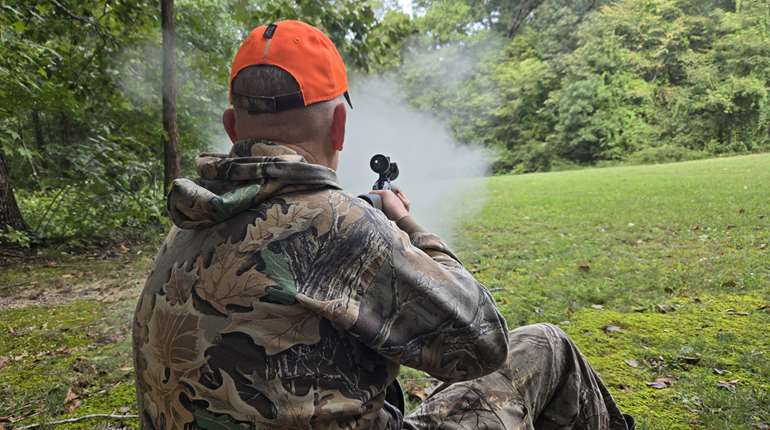
The Golden Rule of turkey hunting says you can only kill a turkey while sitting down. While this is the preferable position, like all rules, it’s made to broken. In fact, on many occasions, sitting down can almost guarantee you won’t kill a bird. Heavy cover, steep hillsides or a bird so close his gobble practically knocks your hat off are just a few instances where it’s better to stay standing and take that tom on your toes.
The first step in shooting a turkey while standing is resisting the urge to sit down. The notion a hunter must be on his butt, backed up to a tree has long be ingrained in the sport, and yes, it’s often the smartest place to be. It’s also the safest, especially during prolonged calling sequences. But for the run-and-gun hunter, or the guy who strikes a bird so close it will arrive in a few minutes or less, staying upright is preferable over the chance of spooking the bird or getting into a position from which it’s impossible to shoot.
Anytime a hunter is setting up on a hot bird, it’s important to quickly assess the situation. If proximity or terrain prevents the ideal seated set-up, stay standing instead. First, slowly and quietly move to the nearest tree or bush large enough to break up your silhouette. If you think you can keep your shot clear, move behind cover, but generally it’s better to stand with your back against it, with your left shoulder (if you’re a right-handed shooter) quartering to the direction the tom was last heard.
Once you’ve taken your spot, the challenge is keeping the shotgun in a ready position so you can fire at the first opportunity the tom presents. If he’s still a distance away, that means keeping the gun at low-ready to rest your arms, but a close bird will require shouldering the gun and aiming it towards the area the bird is expected to appear. We all know a gobbler can hang up, so having a monopod or other rest tall enough to shoot from shoulder height is invaluable in this situation. Primos Trigger Sticks work well and have enough adjustment to go from sitting to standing quickly and easily.
Just like anytime a tom is approaching, resist the urge to call unless you need to renew its lagging interest or redirect him to your position. You won’t be able to disguise any movement, so diaphragms calls are a must when shooting standing and be sure to note that sounds travel farther when you’re standing up and are often louder. Practice until you can accurately produce subtle calls such as soft purrs and quiet locator putts with your mouth call.
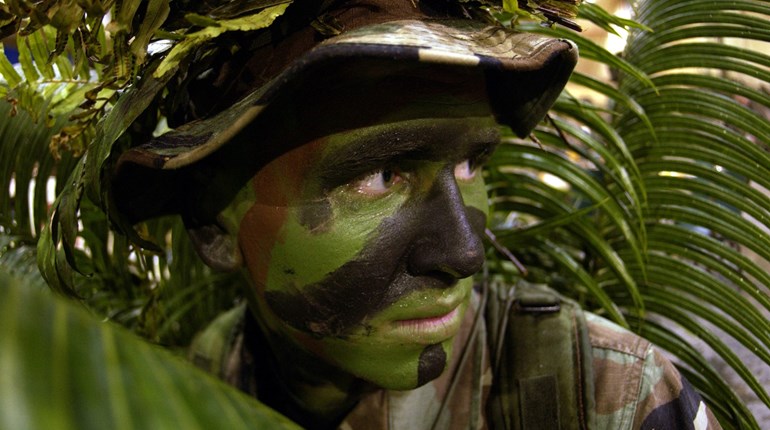
Although good camouflage is a real boon in this situation, when the gobbler does appear, you’ll only have a few moments before he gets nervous and bolts. Shoot as soon as you have a clean shot. Hopefully, you’ve chosen correctly and are already aiming when he crests the ridge, but if not, it’s time to get creative. There are two schools of thought when it comes to swinging on a strutter. I’ve seen both work, but it really comes down to gauging the gobbler’s reaction beforehand. Either adjust your aim very slowly, or swing on the bird quickly and shoot before he bolts. Contrary to popular opinion, I’ve actually found the latter to work better, as a tom will often pop his head up for an instant before running. Also, be prepared for a flush and aim accordingly. There is no shame in shooting a called-in bird on the wing if necessary.
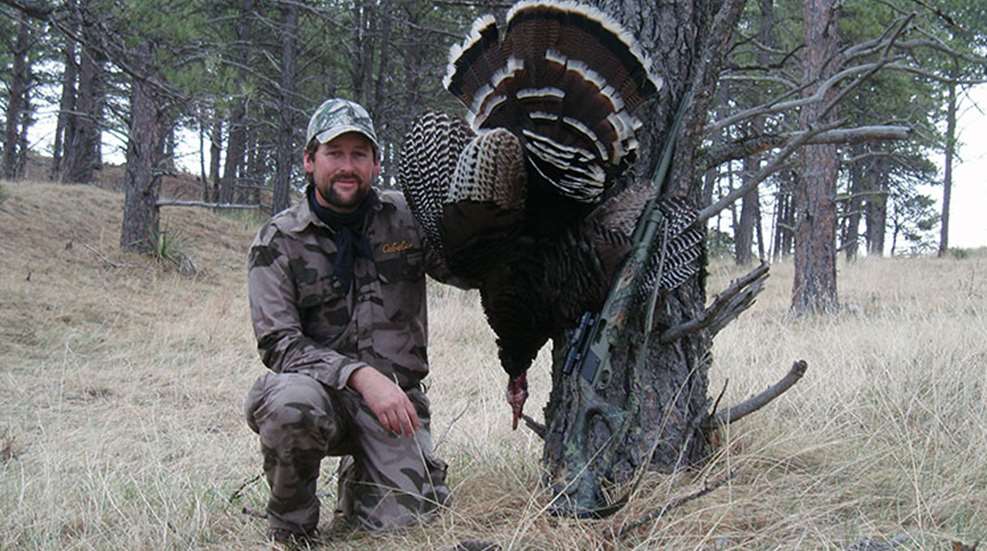
Surprisingly, I got a second chance on the busted bird in Nebraska. Instead of pouting, I tailed the tom, following the direction I guessed he had ran. Thirty minutes later, he had forgotten his fear and gobbled aggressively to my yelping. Instead of sitting down on the steep hillside, I stood against a tree and, at the exact moment he came around a thick group of pines, pulled the trigger and punched my tag, all while on my toes.