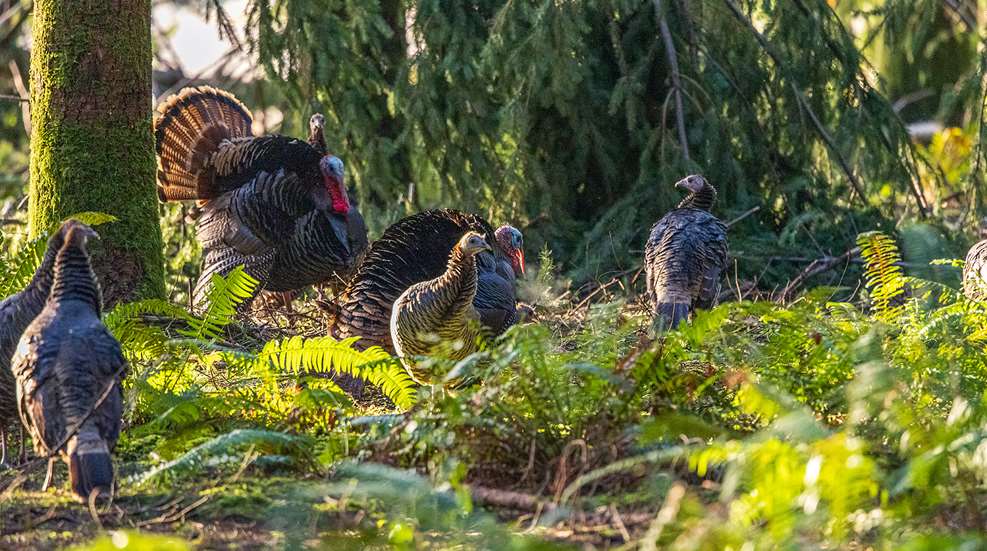
Early on Valentine’s Day, a cellular trail camera notification popped up on my phone. A 10-second video revealed love was in the air amidst the turkey woods. The forest was wet. It was 41 degrees. Toms were strutting.
I began physically scouting the area, found seven toms and more than 40 hens, both winter flocks. On Feb. 21 I watched a tom breed two hens. I increased the number of trail cameras. Breeding appeared steady through mid-March. Lots of rain fell in those weeks, along with frosty mornings. But the toms kept at it, confirming photoperiodism was driving the breeding process.
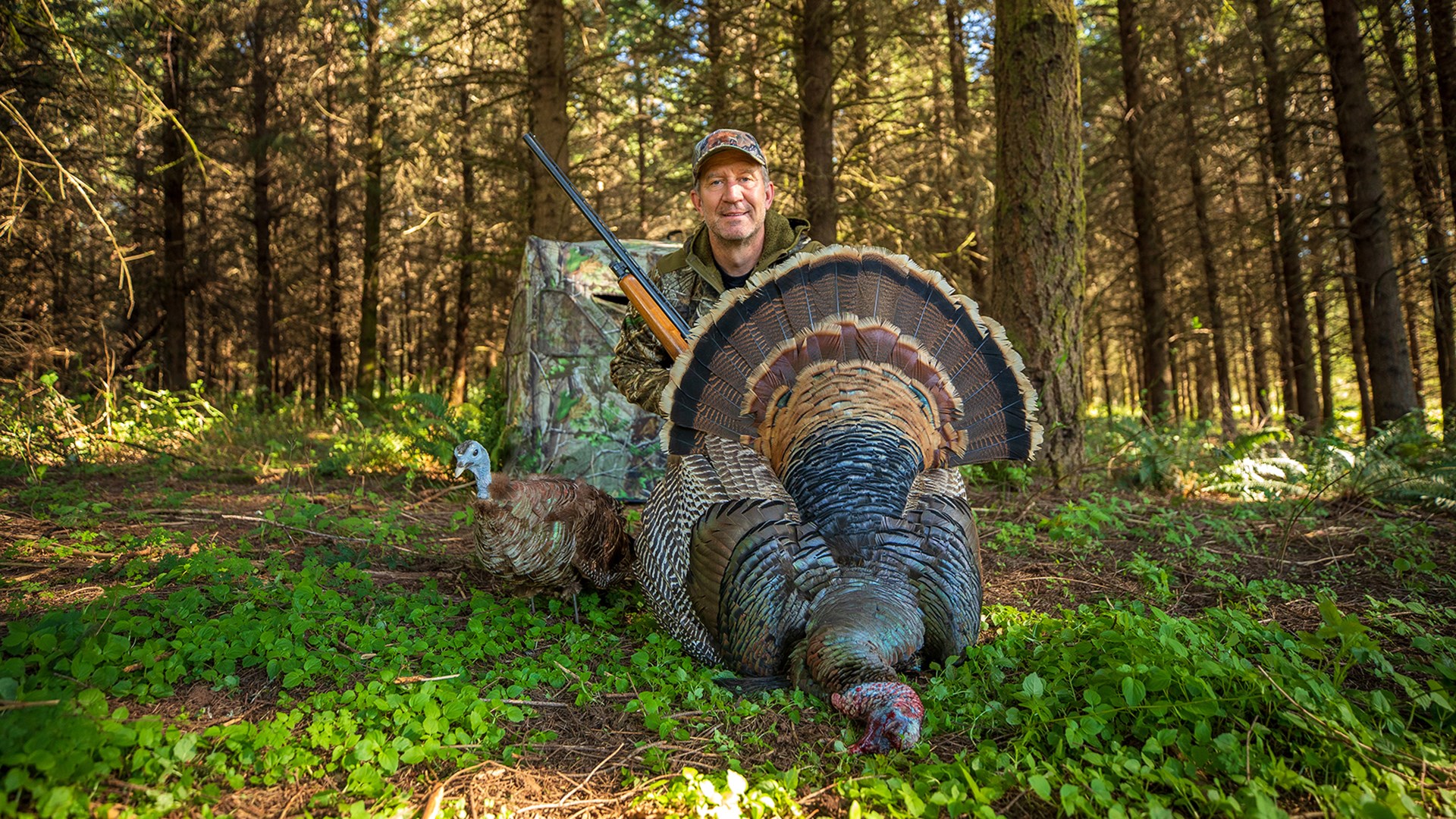
Over a seven-week span, the hen flock split up. Some stayed, nesting nearby. New toms also arrived on the timbered ridge. By the April 15 opener I knew where I wanted to be. Sitting in a blind in the forest, a hen stuffer decoy 20 paces away, I filled a tag before sunup. I did the same thing from the same spot the next morning. On the afternoon of day three, I filled my final tag with a lone tom that had been cruising the ridge, only in the afternoon hours; it had just shown up a few days prior.
Scouting was to thank for that memorable, brief season. And it began in mid-February, just as it does every year.
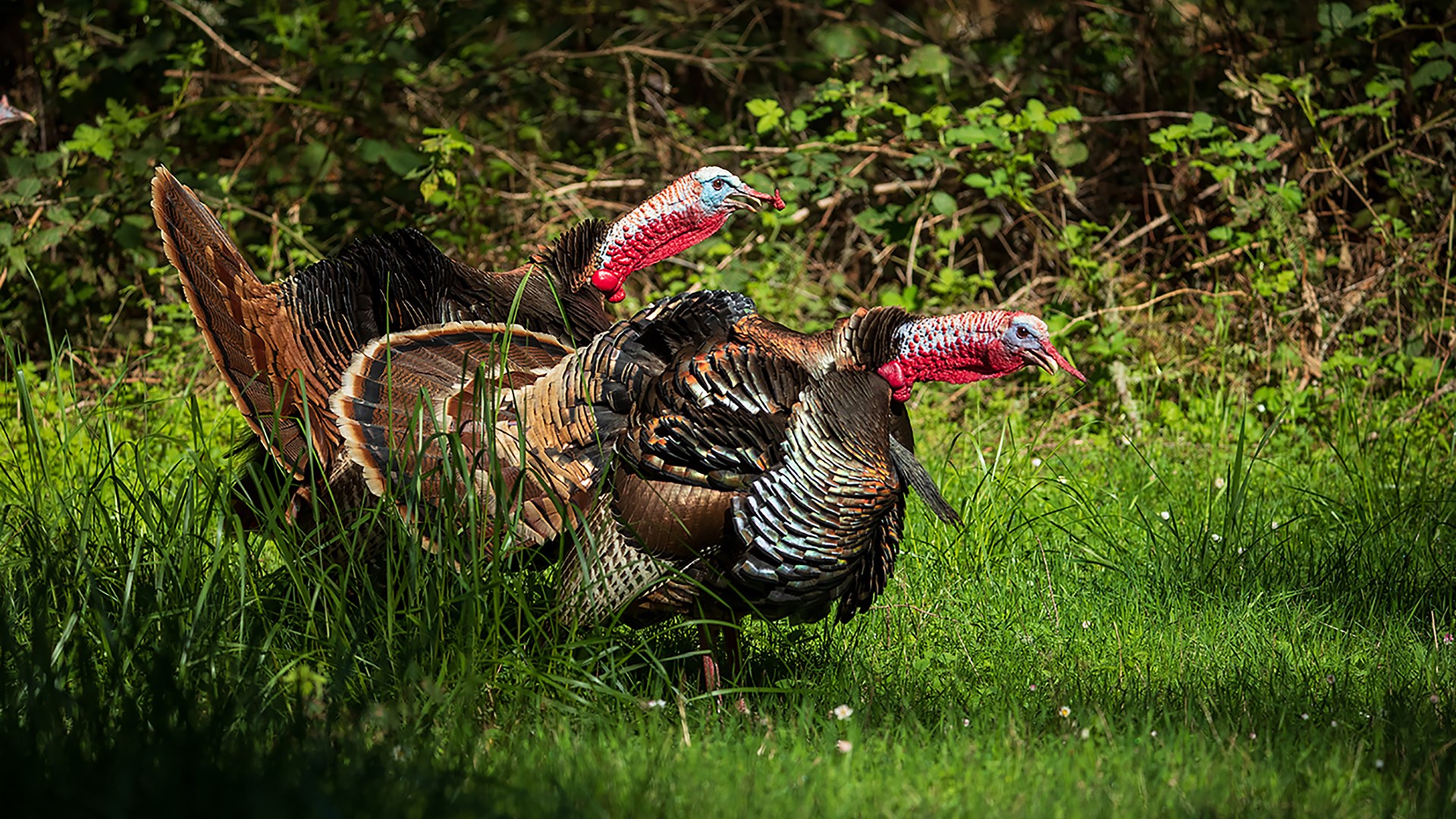
February marks two important occurrences in turkey behavior: winter flock break up and breeding. Monitoring hen flock break up can greatly increase your spring hunting opportunities. As hen flocks disperse, toms sometimes follow them. Much of the time, however, toms stay near their wintering grounds as spring approaches, meaning different toms seek the traveling hens. Knowing this allows you to hunt fresh toms in different places, eliminating the concern of killing too many birds in one area. It’s common for hens to travel 10 miles, even more, to reach nesting grounds.
If property lines or rough terrain keep you from tracking hens as they disperse, scout to find winter flocks. The more birds there are in a flock, the easier they are to locate this time of year and the better chance you have of increasing the number of areas to hunt. That goes for both hens and toms.
One February a buddy and I located five hen and three bachelor flocks. Flock size ranged from 20 to 80 beardless birds, while toms ranged from four to nine birds. With spotting scopes and binoculars we scouted every flock once a week. We had dozens of Moultrie cellular trail cameras set, monitoring flock behaviors.
Set trail cameras low to the ground for turkeys, less than 2 feet high. This allows vocalizations to be caught, along with up-close footage, which leads to individual birds being recognized. Some toms I’ve been watching for five seasons, some hens, eight years or more.
When areas of high bird activity are located, saturate trails with cameras. In places where multiple trails intersect, having more than a dozen cameras in a 100-square-yard span is not overkill. Continue scouting the place in person and you’ll discover trail cameras still haven’t captured all the action.
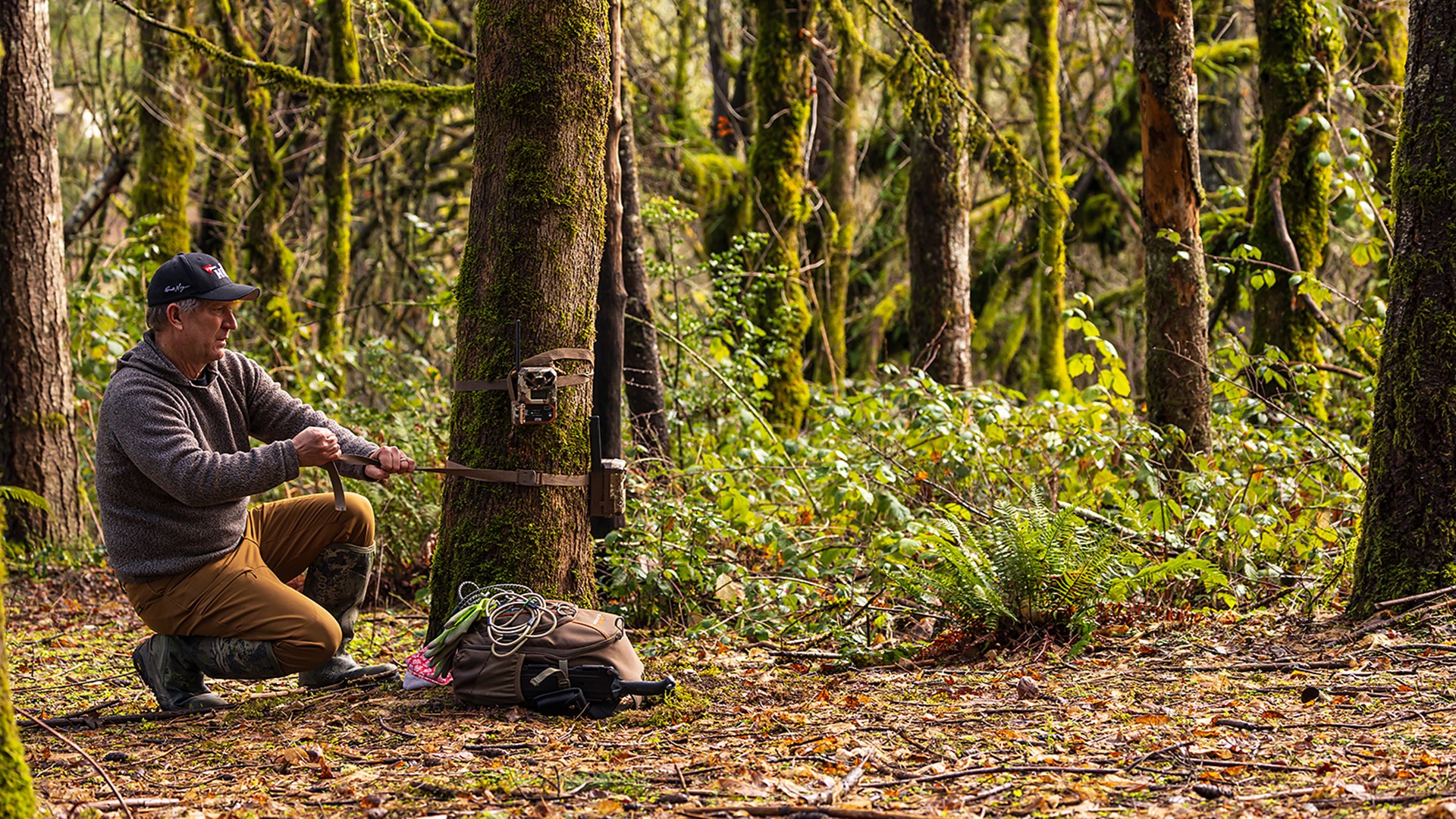
Hanging two trail cameras on one tree, pointing down different trails, is a good move to cover ground. Securing them to a rock, chunk of wood or a stand that you can locate where you want it works well.
Run trail cameras on video mode to see and hear what’s happening. A video reveals much more than a still image. You’ll often catch a lone hen on camera, only to hear multiple toms gobbling, spitting and drumming, out of frame. Sound is a vital tool of trail cameras when it comes to learning about turkeys.
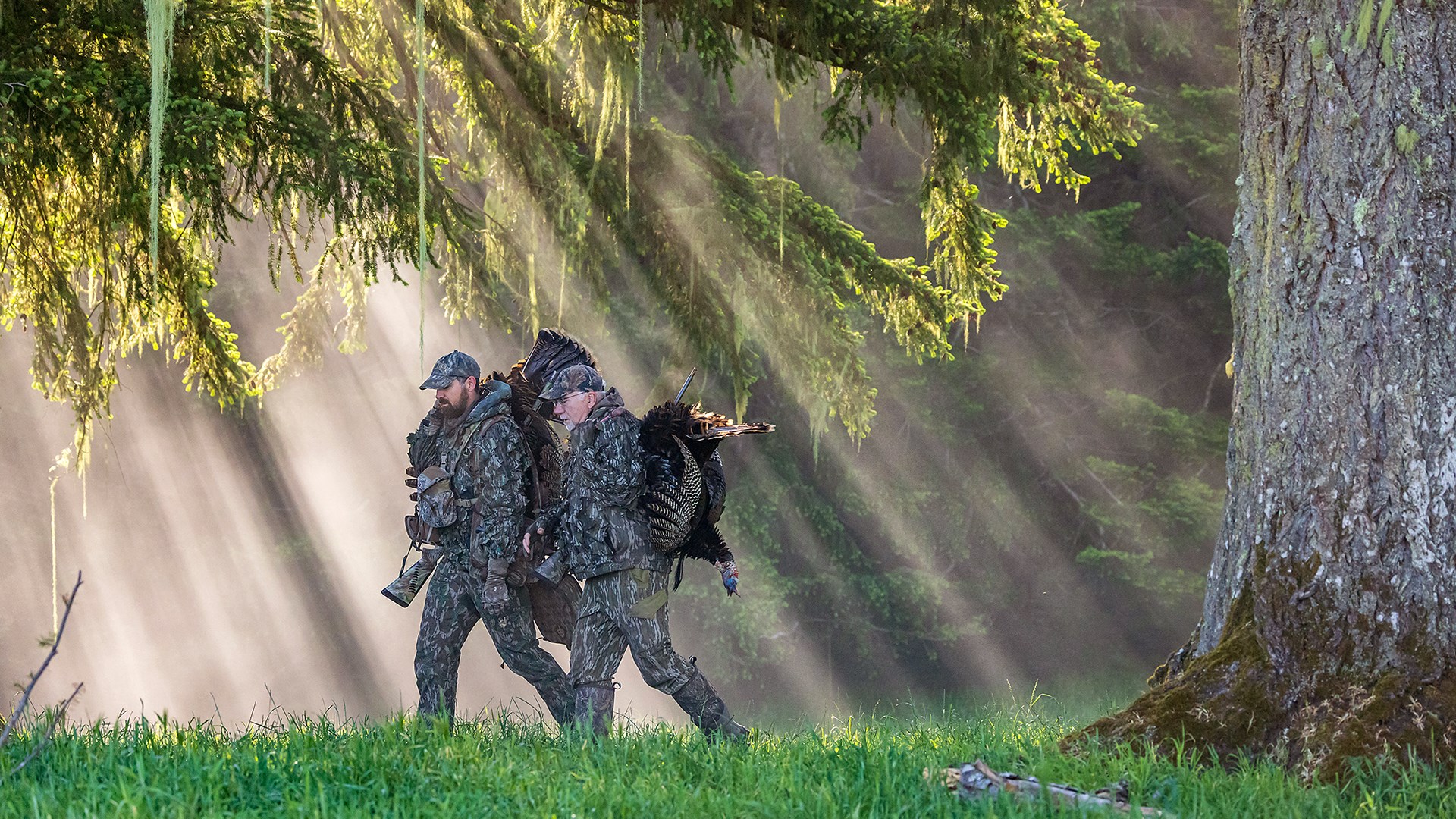
Last spring my turkey-hunting window was brief due to back surgery. Scouting began in January. It was a sunny day. Toms were strutting and gobbling as if it were spring. I found two new places to hunt. For the next several weeks I scouted multiple places. Come season, I shot three toms in four days. Had I not done the preseason scouting, I wouldn’t have filled those tags so efficiently.
Years of preseason scouting has opened my eyes as to how much toms move once breeding commences. Armchair science observations have revealed one or two dominant toms in a flock doing most—if not all—of the breeding. Some insubordinate toms often leave the bachelor flocks in late February or early March, seeking their own hens.
I see an increase in the number of lone toms showing up as the season nears. This is likely due to hens tending nests, and toms covering ground to seek breeding opportunities. Physically scouting and extending the reach of trail cameras have accounted for many toms in the early season, some I’d never seen until a few days before the opener.
The best part of preseason scouting is being in the woods, hearing and seeing turkey behaviors unfold before your eyes. The transition is surprisingly rapid.
To become a better turkey hunter, learning every aspect of the bird’s behavior is key. This marks my 40th year of turkey hunting. Turkeys still humble me, at times leaving me scratching my head as to what just happened. The learning never stops. That’s the true joy of it all.
For signed copies of Scott Haugen’s popular book, Turkey Hunting The West: Strategies For All Levels, visit scotthaugen.com.