By Pete Buist, Fairbanks, Alaska
Ordinarily it would be safe to assume an Alaska resident would have a pretty firm grasp of how to keep a firearm functioning in the cold, wouldn’t it? In my case, though, this would not be a safe bet. I travel south each year to hunt deer on our family property in northern New Jersey. It doesn’t get what I would normally consider “cold” there, but apparently I am wrong about that, too.
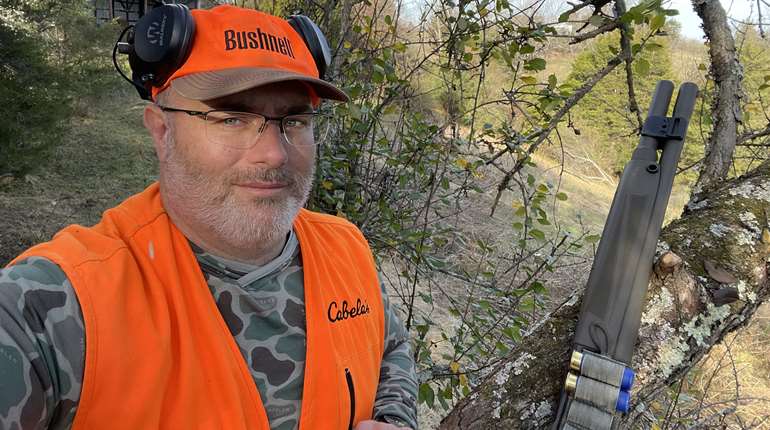
Monday, Dec. 9, opening day of the 2013 firearm deer and bear season, was ushered in by a nasty, freezing rain. My friends and I hunted all day in the lousy conditions. On Monday night I wiped down the exterior of my Browning A-Bolt 12-gauge slug gun. Not wanting to subject it to condensation issues, I locked it in a cold shed instead of taking it into the warm house.
The next morning I picked the shotgun up and headed to the woods. Still-hunting and making short pushes in the fresh snow did not produce any buck sightings. In the early afternoon, I climbed into a favorite ladder stand overlooking a little flat where deer had been feeding on white oak acorns and awaited further developments.
At about 4:15 p.m., I spotted several deer slipping my way. They came right to the white oak. One was a very respectable 8-point. I checked his antlers, counting the points several times. We have antler point restrictions in this zone, and he needed to have at least three points on at least one side to be legal.
The buck was indeed legal. Soon I had the sights on him, just waiting for him to turn fully broadside at just over 40 yards. When that moment arrived, I squeezed the trigger. My high-quality shotgun went click instead of bang.
Slowly, and as quietly as possible, I re-cocked the gun by lifting and then lowering the bolt handle. Again I squeezed the trigger. And again there was no bang. The buck continued eating acorns, but a nearby doe seemed to be focused on the overweight guy in the treestand—the guy with the now much higher blood pressure and a sweat breaking out.
I repeated this process two more times with the same frustrating results and was running out of potential solutions to the problem. I assumed something was frozen, but I didn’t know what. More to the point, with four deer within 50 yards of my tree, I did not have any brilliant ideas coming to me on how to thaw the interior of the bolt. I was afraid I was going to have to watch the biggest buck I had seen on the property in many years eat his fill and wander off unharmed.
With little to lose at this point, I once more lifted the bolt handle and slid it partway back so as not to eject the chambered round. Slowly I lowered my face and put my lips close to the bolt. With a vision of tongues on frozen flagpoles in my head, I began quietly blowing warm breath on the part of the bolt housing containing the firing pin and spring. At first, frost formed on the bolt. But after what seemed like a year and a half, the frost dissipated and water droplets began appearing. I might have rendered myself dangerous to deer once more!
A few more breaths, and I eased the bolt forward and closed it. With the sights again on the buck’s shoulder, I hoped, prayed and squeezed the trigger one last time.
The shotgun roared and I breathed a sigh of relief. The buck made a few explosive leaps and collapsed in a cloud of powdery snow. I never saw the does run off. I climbed down from my perch to start the short drag to the nearby skid trail.
My old heart can’t take that sort of pressure again anytime soon. Toward that end, I took the Browning into the house that night to clean it. I boiled and lightly relubricated the bolt with a dry lubricant, as I now realize I should have done the previous night. You are never too old to pay attention to detail.
Do you have an exciting, unusual or humorous hunting experience to share?
Send your story (800 words or less) to [email protected] or to American Hunter, Dept. MH, 11250 Waples Mill Road, Fairfax, VA. 22030-9400. Please include your NRA ID number. Good quality photos are welcome. Make sure you have permission to use the material. Authors will not be paid, and manuscripts and photos will not be returned. All material becomes the property of NRA.