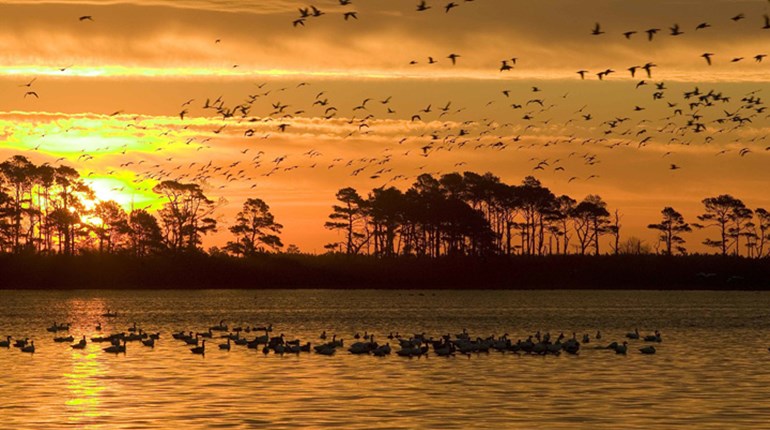
Part of the allure of hunting North American waterfowl is the sheer diversity of species. A trip to the deer stand will result in … a deer—if you’re lucky. But the duck hunter knows that any visit to the blind could result in wood ducks, teal, wigeon, pintails, canvasbacks and more. Many consider a limit of mallards the epitome of success, but in my book nothing beats a mixed bag, especially if it includes something unexpected or a duck I’ve never shot.
As this attitude may suggest, I really have a difficult time picking a favorite. I love them all. However, if you spend enough time in duck camps you’ll eventually be pressed to name one. The subject has come up enough that I’ve devised a system—albeit a subjective and non-scientific one—to rank the top 25 ducks in North America. Note that not all species made the list. One day you might get a crack at a Bahama pintail or Mandarin duck, but for now let’s focus on more realistic trophies. Points were awarded based on difficulty (10)—in terms of decoy shyness, reaching their preferred habitats, scarcity and actually hitting them with a load of steel; table quality (5); beauty (5); and style in flight (5).
So, here is Part I of our countdown, which lists ducks 25 to 18. As a point of clarification, I do not consider these initial ducks “trash.” Don’t believe me? Five are mounted on my wall so that I may admire them daily.
25. American Coot
• Difficulty: 1
• Table Quality: 3
• Beauty: 1
• Style: 1
OK, OK, Mr. Biologist, I realize the American coot is not truly a duck. In fact it is more closely related to rails and sandhill cranes than mallards and gadwalls. However, given that its season dates correspond with duck seasons and it’s most often shot by duck hunters (does anyone actually target coots?), it’s on the list. Given the coot’s odd white bill, red eyes, drably plumed body and labored flight, I wouldn’t describe it as particularly beautiful or stylish. Coots are also found practically everywhere and, well, if you want to shoot one go for it—though most hunters choose to save the shell. Coots do score fairly well in the taste category. Yes, I’ve eaten them, and they’re actually pretty good.
24. Merganser (Common, Red Breasted, Hooded)
• Difficulty: 2
• Table Quality: 1
• Beauty: 5
• Style: 3
Graceful in flight as well as underwater in pursuit of small fish and other prey, mergansers are a joy to watch buzz the decoys. The hooded is arguably the continent’s most beautiful duck, and its cousins are underrated in this regard as well. These days I generally pass on shooting them unless there’s a retriever in need of work, simply because I do not enjoy eating them. A buddy and I once stacked up a few that he combined with pork for sausage. It still tasted overwhelmingly like bad sardines.
23. Ruddy Duck
• Difficulty: 3
• Table Quality: 3
• Beauty: 3
• Style: 2
The most challenging aspect of bagging a ruddy is simply finding a flock amidst a large river or lake. They decoy readily—either by flying directly into the blocks or swimming in from afar—and they are no great challenge on the wing. Some rave about a fat ruddy’s possibilities on the table, but I must be doing something wrong. Frankly, I believe its flavor is the reason, for clarification, that “duck” is included in its name. The ruddy gets a middle-of-the-road score in terms of beauty. Its spring plumage is stunning, but sadly it remains a drab brown until most seasons have closed.
22. Northern Shoveler
• Difficulty: 4
• Table Quality: 3
• Beauty: 4
• Style: 2
The northern shoveler’s somewhat goofy appearance has led to such nicknames as “smiling” or “Hollywood” mallard, but in peak coloration you’d be hard-pressed to find a prettier duck. I find its oblong, black bill, black/green iridescent head, light blue shoulder patches and green speculum uniquely beautiful among waterfowl. And, though “spoonbills” tend to sift through shallow water for algae and animal matter, those that have feasted on rice or pond vegetation make for great eating. The spoonbill loses points in the difficulty category for its prevalence, especially among the Pacific and Central flyways, and its willingness to decoy.
21. Bufflehead
• Difficulty: 4
• Table Quality: 2
• Beauty: 5
• Style: 3
If I were asked to pick a favorite duck based simply on beauty, the bufflehead would certainly warrant consideration. Its lovely white and black pattern is gorgeous to begin with, but you have to admire one in your hands to appreciate the purple, green and crimson iridescence that adorns mature drakes. Buffleheads round out a diver limit nicely due to their willingness to decoy and strong numbers along coastal river systems, but they are swift, challenging targets. I actually really enjoy eating them stir-fried with a little garlic and teriyaki marinade.
20. Ring-necked Duck
• Difficulty: 5
• Table Quality: 3
• Beauty: 3
• Style: 3
The subtly beautiful ring-necked drake has a purplish black head, gentle purple neck ring (most easily seen on mature specimens) and unique bill coloration. Hunters in the Central and Mississippi flyways, especially, harvest quite a few of them due to their prevalence and eagerness to decoy. My favorite aspect of hunting ringnecks is that they’re almost diver/dabbler hybrids—they tend to be found in puddle-duck habitats, but challenge my shotgun with scaup-like speed and agility.
19. Gadwall
• Difficulty: 5
• Table Quality: 3
• Beauty: 3
• Style: 3
Gadwalls are more popular targets than ever thanks to a mysterious expansion into historic mallard strongholds, particularly across the Mississippi flyway. The “gray duck” is rather plainly colored, at least to the untrained eye, but boasts an attractive white speculum, black rump and rusty, almost gold-like wing coverts. In my experience it decoys more readily than many puddle ducks. Some argue it’s comparable to a mallard on the table, but I find it to be more finicky and less consistent.
18. Green-Winged Teal
• Difficulty: 5
• Table Quality: 5
• Beauty: 4
• Style: 3
Let the controversy ensue: If you haven’t already hurried to the comments section to set me straight, I suspect you will now over the popular greenwing’s relatively low ranking. Yes it’s a lovely bird that’s as elegant on the wing as when admired up close, but, it’s also the second most commonly harvested bird in the United States. And it’s a rather easy duck to decoy at that. The greenwing gains points for its lovely appearance, including its green-on-tan head coloration, and its stylish flight characteristics. It’s also perhaps the tastiest wild game you can hope to serve.
Check back soon for Part II!