I once had sole hunting access to this dying horse farm. The old lady who presided over the farm like the tyrant in decline she was hated hunters. She told me so with words we’ve all heard in rough company, but that took on the smell of dead rodents when they passed over her flapping dentures. But then, for some flippant reason of an unstable mind, she took pity on me. When I knocked on her door with a foolish grin offering to do chores for a chance to hunt, she looked me over with an expression that said she was wondering if I were stupid or brave and then said just before slamming the front door on me: “Just don’t shoot my horses.” I parked off a two-lane far from her home and stayed out of her sight, but boy was the emasculation worth it. Each year on the first sunrise of May, gobblers would come gullibly running to my calls with their heads so full of red passion you’d think they were about to pop.
The thing is we rarely find places like that. More often what we should be looking for are lonely gobblers, as even well-educated toms can be had when their hens go to nest. Here are four times and methods to catch them forlorn.
Subdominant Birds
Opening morning: The spring is so fresh the dew is still on it. It’s twilight now but it’ll be bright soon. You’re on the vantage you wanted to climb to before dawn. The gobblers are just starting to talk down the ridge and across the valley. You feel the crushing urge to move. They’ll fly down soon. But which bird do you target? Personally, I leave the jakes alone. What I listen for are lonely toms. Often these are subdominant 2-year-olds. They’ll often be roosted together or near each other. When one gobbles another one or two will gobble right after and alongside him, sounding like over-eager echoes. These birds won’t just gobble once. They’ll have a forsaken, even urgent, tone. Move on them before someone else teaches them a lesson they might not survive.
Second-Day Gobblers
Dawn again: You didn’t fill a tag on opening day or maybe you have another. When the second day of the season dawns on a weekday many of the hunters who elbowed in yesterday will go to work—planning to be out again Saturday. Sure, some of the most vocal birds were killed. This can affect the pecking order. Birds that might have been shy yesterday—for fear of getting thumped by the top bird—might now charge in boldly. So repeat what you did opening day and set up on the loneliest-sounding loudmouth. Get as close to his roost as you can and call sparingly and plaintively.
Midmorning Toms
The season has been on for a week or more. The humid air brings mosquitoes around your ears. Gobblers announce themselves triumphantly at dawn but soon shut their beaks and sashay away with their hens. A few hunters race toward those gobbles and then leave the woods with their heads hanging by 9 a.m. You might even pass them on the way in. “Heard one at dawn,” they’ll say demurely.
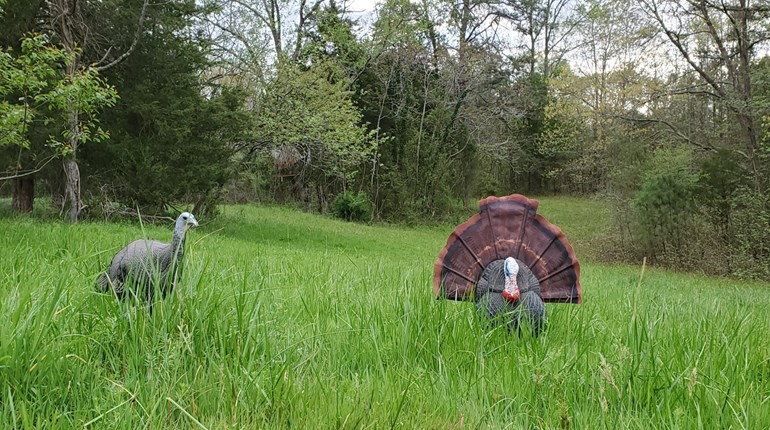
What you know is that when the hens begin laying eggs gobbling frequency increases in mid- to late morning. Hens typically lay one egg per day and an average of a dozen. They won’t incubate their eggs full-time until they’ve laid them all; as a result, a week or so before the hens incubate full-time they’ll begin leaving their gobblers lonely in late morning. Target these toms by moving slowly and quietly. Try a call not often used in your area—a wingbone yelper, maybe a high-pitched aluminum friction call … . Or set up a jake and hen decoy in a place where these now lonely gobblers go to strut. Gobble halfheartedly and yelp seductively. Be patient and wait through the late morning. Call-shy toms might sneak in now.
Last-Call Longbeards
Now the season has been on a while and most hunters are done. Studies show that toms begin gobbling again as hunting pressure disappears. During this time hens leave their man to incubate their eggs full-time.
By now you should have an idea where the turkeys are feeding and strutting. I don’t like the cutt-and-run approach this late in the season, as the gobblers have been taught not to be overeager loudmouths. Set up in areas you’ve heard those henned-up gobblers move through as they’ve left roosting areas for feeding areas. Be patient and call every 15-20 minutes. The mosquitoes are thick. The forest is greened up. It is hot early. It is difficult to be patient now, but that’s what it takes. Sit in places you’d stand hunt for a gobbler. Call-shy or subdominant birds will often slip in silently. The old boys who’ve lost their hens, however, might be surprisingly vocal. Move on them, but don’t over-call now.
Also, you can target nesting areas. Hens will get up briefly from their nest a few times a day to drink water, peck out some feed or possibly to breed, but they’ll soon return to their nest. Often gobblers will hang around nesting areas so they can respond to any hens taking a break from their eggs. Target these skulking toms by calling near the edges of stream bottoms, grown-up fields or wherever you guess the hens are nesting. If a gobbler answers you now, sit tight. Unless he calls in a hen he’ll likely be along.