“That’s turkey hunting,” I told a new hunter after he missed a very wise, old public-land tom I’d called in. The hunter wanted to know how I knew what that gobbler would do and why I changed tactics when I did. “You figure the bird’s age and experience and then add in as many variables as you can figure—the terrain, whether you heard hens and more,” I said. “It’s math mixed with a little psychology.”
He was intrigued. But how do you teach someone to call in turkeys when the only places he has to go are public lands with pressured birds? After some thought, I boiled down dealing with pressured turkeys to three tips that can kill any gobbler anywhere if a hunter has the patience to use them.
Don’t be too anxious.
Too many public-land hunters rip away on their calls as they anxiously saunter from place to place. Let them walk by you. I’ve heard suspicious gobblers shut up because of mouthy intrusions and then start talking again later, after the forest settles down. If you’ve done your scouting, you know where they are. Give them a chance to come in.
Pose as competition.
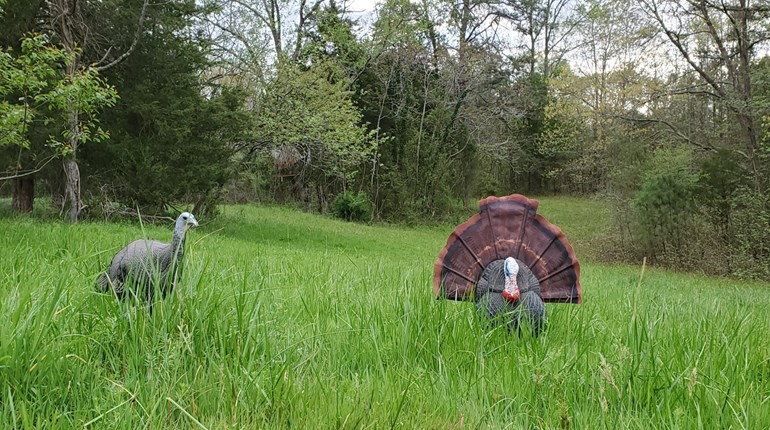
Use a jake decoy with a hen and make subdominant gobbles mixed with some hen talk. You can do this blind, or with any tom that hangs up out of range or has a habit of not committing. Don’t actually call to the gobbler. Mimic what a strutting bird would say to a hen in his company—your gobbles are talking to a hen (your decoy). This approach is designed to tick off a more dominant tom. It will also convince subdominant gobblers to sneak in.
Take a mid-morning seat.
If you’re the impatient or wandering type, use a blind, as there is something psychological about a blind that roots a hunter in a spot. Slip in to where you’ve seen strutting toms or found good sign of feeding turkeys. Scratch the leaves and call occasionally. Call as you’d imagine a lonely, but not overanxious, hen would sound. When hens—usually in mid-season—leave their gobblers mid-morning to go to nests, you’ll find that gobblers are suddenly receptive to this approach. If you stomp about impatiently, however, you’ll never have a chance at them.