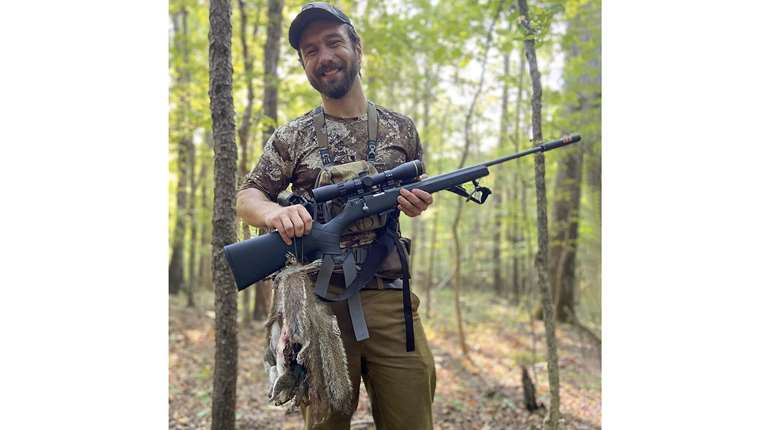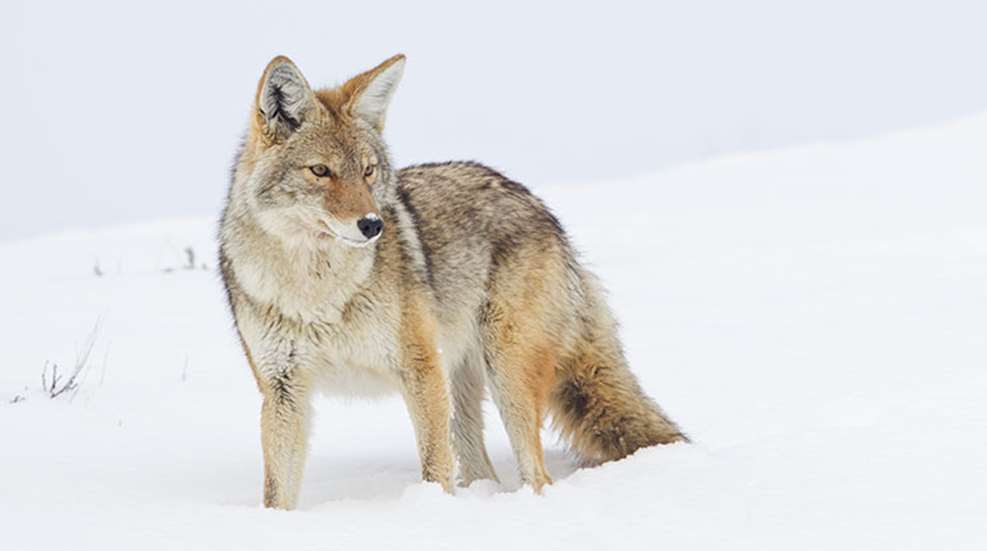
Like most other Americans today, I waste too much time messing around on Facebook. One of the groups I belong to is for hunters in Vermont, and soon after I joined I noticed one guy in particular posting a lot of photos of coyotes he had shot.
I am a native Vermonter and have done a lot of coyote hunting here. I know all too well the difficulties of hunting eastern coyotes, yet he seemed to have it figured out. We all know that everybody on the internet is an expert, right? So I called him and spent some time getting to know the guy. I concluded that he is the real deal and that he has indeed cracked the code on calling eastern coyotes.
Bobby Sholan is a busy guy. He drives a truck for a vending machine company that keeps him on the road at all hours. He’s a family man with a wife and three young kids, which puts various demands on his time, but he’s also as hardcore a hunter as I’ve encountered. He doesn’t make excuses, rather, he finds time to follow his passion. He’s smart and learns from his mistakes and successes.
The Setup
“The setup is the secret to success,” Sholan said with his heavy northern Vermont accent. “If you don’t set up perfectly and there’s not a coyote close, you aren’t going to succeed. You must be persistent; I’ve gone forty or fifty sets between coyotes. You have to stick with it. On the other hand, the next weekend you might kill five.”
Sholan said he learned much of what he knows about coyotes when he was running dogs because he was in the woods following tracks so much. “I found bedding areas for coyotes just like you find for deer. You get in one of those places, and there will be beds everywhere. It’s usually the thickest, nastiest swamp you can find. Obviously, calling close by places like that helps your success rate.”
He continued, “I find coyotes just like I find deer. When I’m at home watching the kids, I get on Google Maps and look for big swamps with fields nearby. I also look for farms where it’s possible that livestock has died. In the winter, the frost prevents burying them, so most farmers just drag the carcass into the woods with a tractor. That is perfect coyote bait. I don’t hunt early on though—a well fed coyote won’t come to the call. But coyotes will still hang around, even when it’s just bones left. That’s when you try to call them.”
Tracking
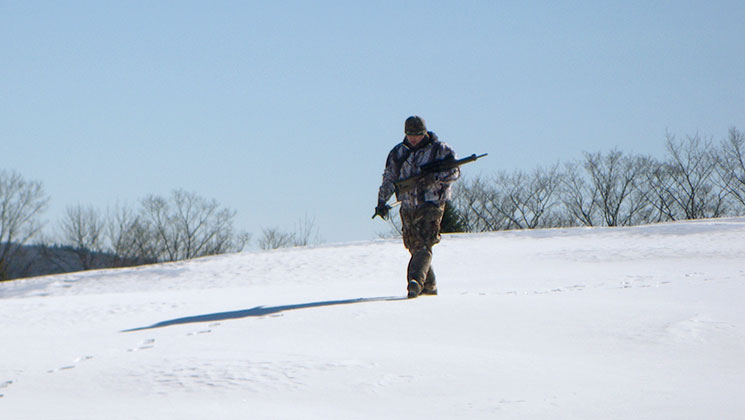
Another way Sholan learned about coyotes was by back-tracking dogs after calling them in to see where they came from and what they were doing before he started calling. “I’ll track them a mile or more, just to see what I can learn. It helps me understand the kinds of places they like to hang out, and I use that knowledge to find more coyotes.”
“Howling is a good way to locate coyotes, too,” said Sholan. “I’ll go out at night and howl and listen for a response. They may not be in that exact same place at sunrise, but they’ll be close.”
I asked about the most important thing when hunting, once you locate the coyotes. “You have to watch the wind when you’re hunting, particularly when you are approaching your calling site,” Sholan said. “I often walk a half mile or more out of my way to get the wind right for the approach. The wind is also important while you are calling. Eastern coyotes will circle downwind from you almost every time. You need to keep open areas downwind so you can see them. Otherwise, you will never know the coyote was there.”
Calling
When it comes to calling, Sholan says that eastern coyotes see a lot of hunting pressure, so you need to use a sound that’s different from what every other hunter is using. The populations are not all that high, therefore it’s important to call in a place you know has coyotes.
“I start out soft, something like a mouse. Then, I build up with a rabbit or something like that,” Sholan said. “I think that the best sounds are higher pitched and frantic—something with a sense of urgency. I often start with a lone howl, such as a female invitational to let them think there are other coyotes around. That kind of sets the stage and they think she found something to eat.”
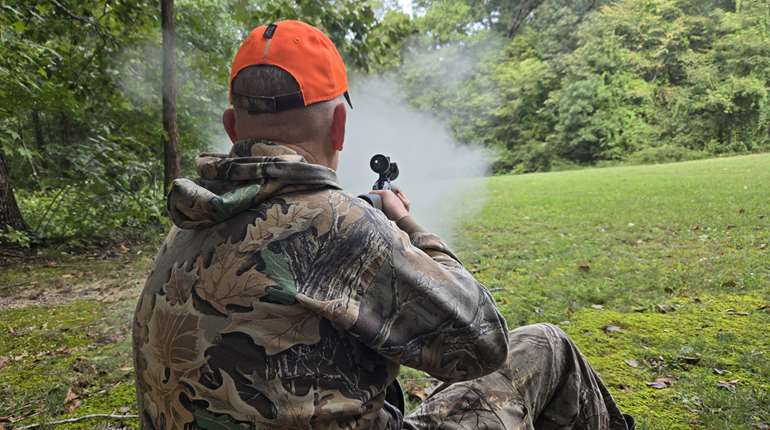
Sholan notes that he feels that electronic callers are important too. With a mouth blown call, the coyote focuses on your position. One little movement and it will see you. With the electronic caller, you can get the sound out away from you. If you have a decoy on the caller, all the better. The coyote will focus on the location of the sound, and you’ll have a better chance of getting your rifle up and shooting him.
“The bottom line, though, is to stick with it. Make as many sets as you can and keep at it, day after day. Don’t get discouraged—too many people quit if they don’t have success right away. This is not a high-volume game, stay with it and sooner or later it will happen.”
Time of Day
Finally, I asked Sholan about the best times to hunt eastern coyotes. “I kill most of my coyotes in the morning, almost always before 10:00 a.m.,” he said. “I shoot a few in the afternoon, but mornings are always the best.”
The number one secret, though, isn’t really a secret—it’s how you succeed at anything. “You must be dedicated. It’s hard to work all week, watch the kids all day, get hardly any sleep and then get up early on the weekends to hunt,” said Sholan “But that’s what you have to do if you want to shoot eastern coyotes. The guy who does that is successful—the guy who sleeps in gets nothing."