I’m a slow learner. Not only did I wade out amid the high-grass during springtime in Oklahoma without my snake boots, but also forgot my snake loads. Doh! And wouldn't you know it, in the middle of an overgrown trail headed toward the pond, I felt a squishy feeling under my foot. I immediately thought, “Oh lord, that’s a snake!” as I prepared to feel the venom enter the back of my knee.
Why I wasn’t bitten by the 6-foot western diamondback rattlesnake I’ll never know, because it was a warm day and the big fella wasn’t lethargic. Although not bitten, I still wasn’t out of the weeds. My dogs were following about 10 yards behind me, and I couldn’t do much to stop them with the snake between them and me, so I pulled my 9mm Smith & Wesson Shield and fired three rounds at the coiled, buzzing serpent. But that only served to ring my ears something fierce, because I missed the hovering head all three times. Luckily, the snake got the message as it slithered off unharmed to sink its fangs in me another day.
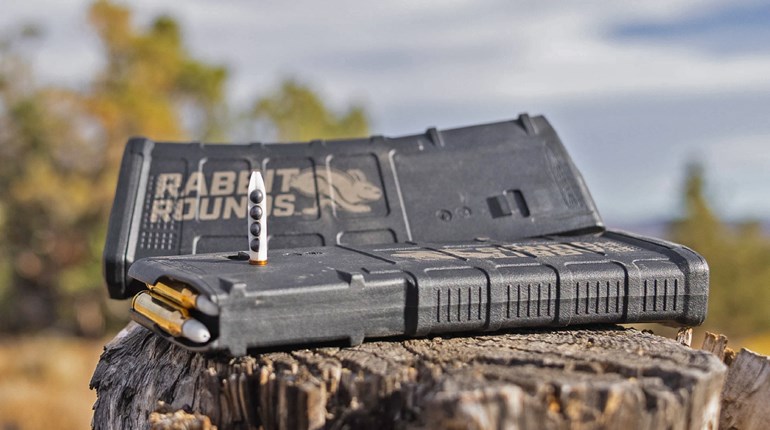
Now, I make a point to always carry a snake load second from the top of my handgun’s magazine while walking in the woods. One rack of the slide ejects a hollow point and chambers the snake load if I need it.
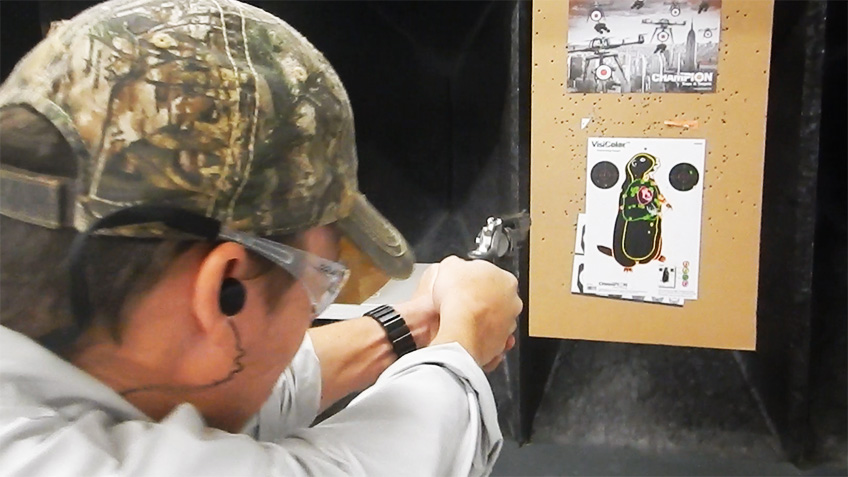
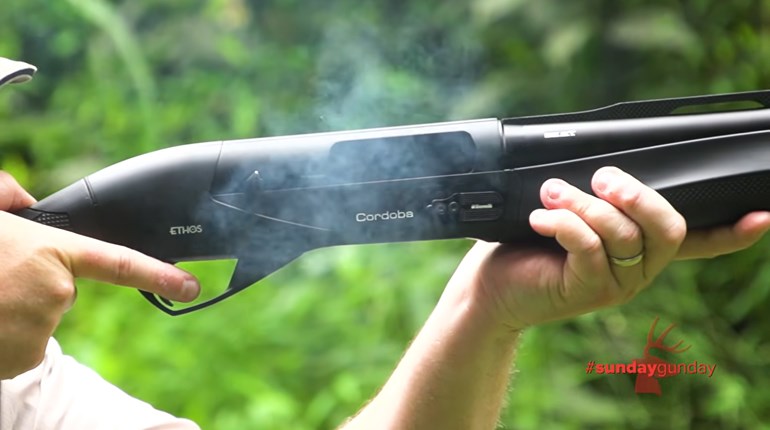
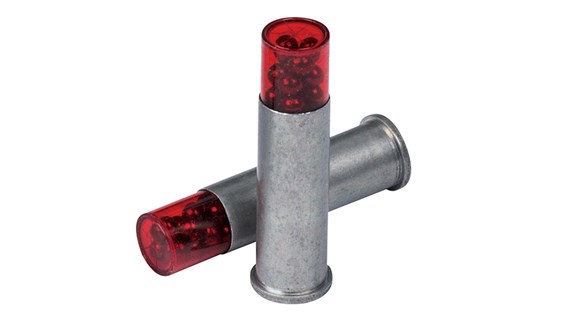
For those who aren’t exactly sure what a snake load is, I’ll tell you. Essentially, it’s a handgun cartridge—centerfire or rimfire—that fires a swarm of small pellets rather than one bullet. Basically it turns your handgun (or rifle) into a mini-shotgun. However, the payloads and shot sizes are naturally very small—typically No. 9 or No. 12 shot—so don’t expect to take them duck hunting, but one shot to a snake’s head is likely all you’ll need. As such, snake loads are perfect for small, close-range and fast-moving critters such as snakes, mice, pigeons, rats and unruly iguanas. I’ve known a few people with arachnophobia who’ve even used them for spiders, although doing so could be classified as overkill.
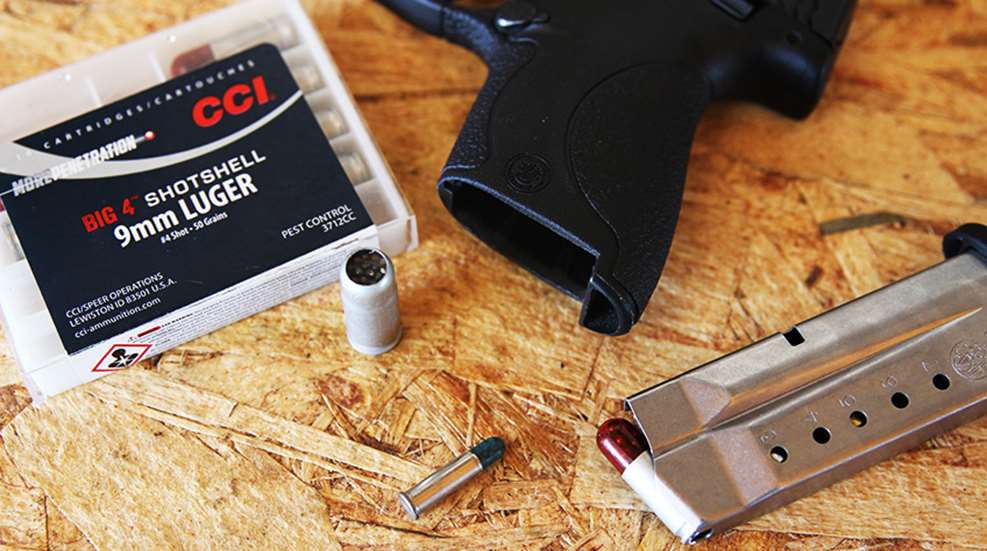
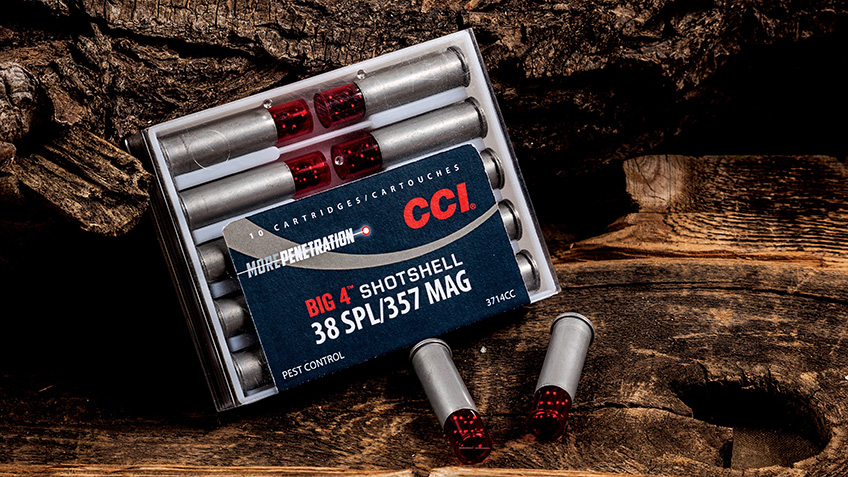
A few years ago, CCI introduced what it calls its Big 4 shotshell load that substitutes the tiny No. 9 or No. 12 shot with No. 4 lead pellets that gives each individual pellet more penetration power. In doing so, it will still kill snakes, but it also makes the load viable for larger critters like close-range skunks and vermin. However, due to the pellets’ larger diameter, the 9mm round only holds 15 pellets, and that’s exactly how many pellets my test shots put on a 15-inch target at 2, 3 and 5 yards. It only put 2.5 shots in the bullseye at 2 yards on average, and while this is enough to kill a big snake, its pattern was not overly impressive. It is available in larger calibers, however (see below) and these hold more pellets per cartridge and therefore display fuller patterns.
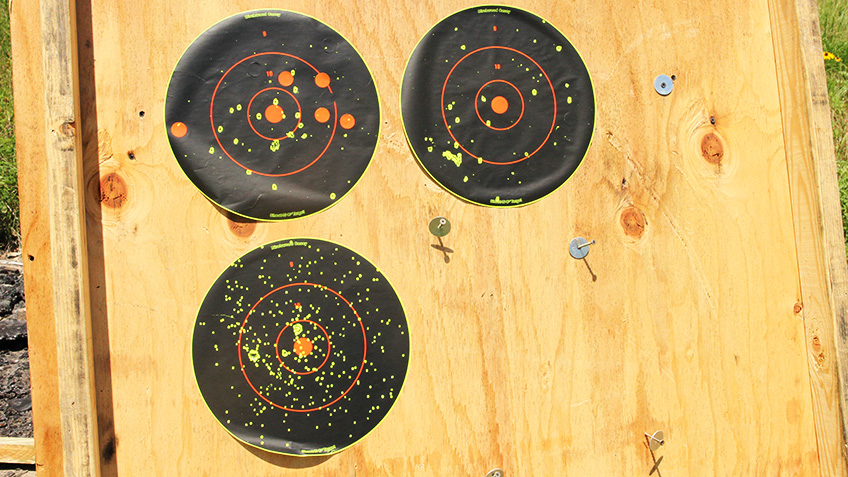
The CCI 9mm No. 12 shot load, on the other hand, obliterated the target with a dozen or more pellets on the bullseye. I was also surprised to find that it has a heavier payload compared to the Big 4 (53 grains vs. 45), and a much higher velocity of 1450 fps versus 1000 for a total energy calculation of 247-ft.lbs. of muzzle energy for the No. 12 shot load compared to 100 ft.-lbs. for the Big 4 load. This explains why the No. 12 shot load cycled my Smith & Wesson Shield with no problems, and why the Big 4 load did not. While the Big 4 load is still plenty viable—especially if you anticipate dealing with slightly larger critters such as pigeons in a barn where you do not wish to shoot through the barn with bullets—for my purposes of snake defense, the No. 12 load is perfect.
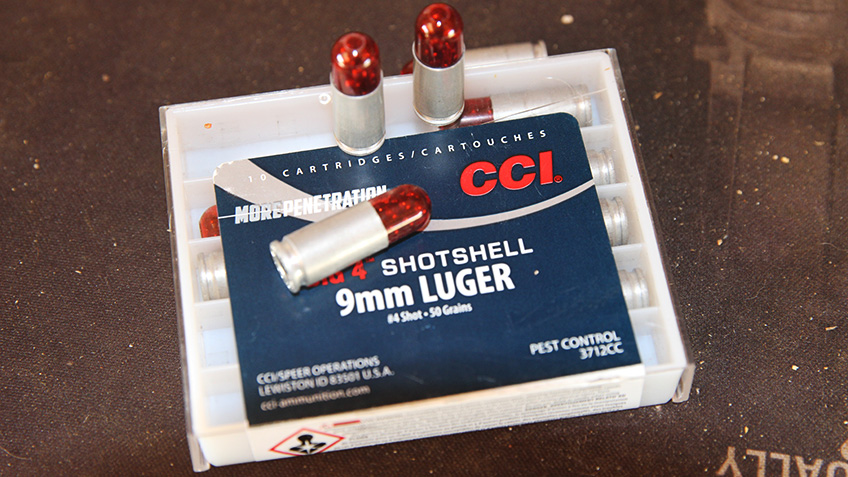
CCI offers snake load/handgun shotshell loads in the following shot sizes and calibers: No. 4 and No. 12 shot in .22 LR, .22 WMR and 9mm; No. 9 and No. 4 shot in .357 Mag./.38 Special, .44 Special/Mag., and .45 Colt; and No. 9 shot in .40 S&W and .45 ACP.
While I generally maintain a live-and-let-live policy toward snakes, I make exceptions for those that are aggressive, poisonous and near my house. That’s why I always carry a load of snake shot in the magazine—you never know when a rattler’s going to rear its deadly head.