Despite a recent interpretation of Montana state law that aerial hunting of wolves is not prohibited, doing so runs afoul of federal law.
Montana Fish, Wildlife & Parks argued in state District Court recently that state law does not prohibit aerial hunting of wolves. FWP’s arguments came as legal justification for the agency removing language from the state’s wolf regulations that had stated hunting wolves from aircraft was barred. The agency says that inclusion of that language in the regulations for a decade was an error.
In response to media reporting on the case, a number of readers pointed to federal law addressing aerial hunting. The Airborne Hunting Act of 1972 “prohibits shooting or attempting to shoot or harassing any bird, fish or other animal from aircraft except for certain specified reasons, including protection of wildlife, livestock and human life as authorized by a federal or state-issued license or permit.”
“It is accurate to say that, under the federal Airborne Hunting Act, hunting wolves or other animals from the air is prohibited in most circumstances,” Jessica Sutt, a spokesperson for the U.S. Fish and Wildlife Service, said in an email. “The law allows for permitted federal or state agents to shoot from aircraft for defined management purposes. The average person with a hunting license can’t shoot from an aircraft under AHA.”
In response to a question about the federal law, FWP spokesperson Greg Lemon wrote in an email, “The federal law that prohibits aerial hunting has an exception for state-permitted activities. We believe FWP (is) exempted from that law.”
In an effort to clarify the state’s position, the Montana State News Bureau asked the agency whether “permitted activities” meant licensed hunters could use aircraft. FWP spent more than a week in part doing legal analysis on the question, Lemon said, and replied on Wednesday: “Aerial recreational hunting of wolves is currently prohibited by federal law.”
Outside of state or federal agents shooting from the air, the federal law does come with exceptions that have led states to allow the public to shoot from the air under certain circumstances. Language in Montana and other state programs describes the activities as management for livestock or wildlife depredation.
The Montana Department of Livestock offers aerial hunting permits specifically for coyotes and foxes. Licensed pilots may purchase a permit via an application that includes a request from a livestock producer. The application specifies the permit does not allow shooting coyotes or foxes for recreational purposes.
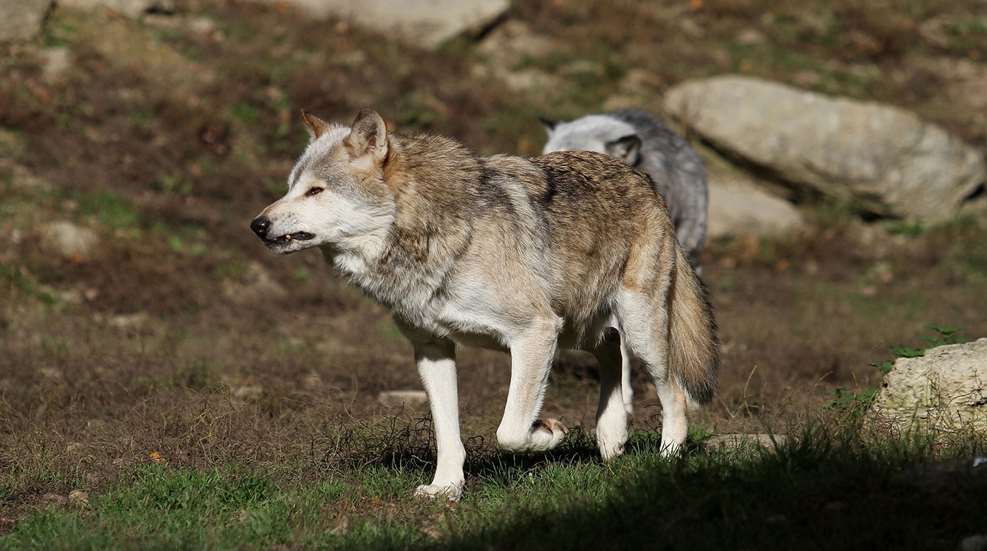
Alaska developed “intensive management” programs for certain areas where it has determined moose or caribou populations are below desired levels. The public may apply for permits that allow a pilot and gunner to shoot wolves, or bears in some cases, from the air in an effort to bolster ungulate numbers. In several places, however, Alaska states that aerial hunting is prohibited outside of the intensive management areas and without the permit.
“These permits allow for aerial shooting by a backseat gunner,” one management plan states, as well as spotting wolves from the air, landing and immediately hunting.
Idaho uses language stating that recent efforts to expand methods of take for wolves do not include aerial hunting, citing the federal law.
“These expanded methods do not currently include aerial shooting of wolves, which is subject to the Federal Airborne Hunting Act and not allowed in Idaho,” according to Idaho Fish and Game. “If Idaho should allow aerial hunting of wolves, it would be specific to designated control actions and by permit from the Idaho Department of Agriculture, which is authorized through the Federal Airborne Hunting Act.”
The issue with Montana’s wolf hunting laws and regulations arose as FWP and the Montana Fish and Wildlife Commission are facing a lawsuit from two wildlife advocacy groups. The groups say they were denied the right to participate when FWP removed language that had previously appeared in wolf hunting and trapping regulations stating that aerial hunting was prohibited by a rule made by the commission. The groups argue in part that regulation changes should have gone through the open commission process rather than be done unilaterally by FWP.
According to testimony from a former FWP attorney, an agency review found the commission had not passed such a rule and likely lacked the authority to do so. The review concluded that the state Legislature, rather than the commission, would need to make a change in order to prohibit aerial hunting of wolves under state law, according to testimony.
The Montana Legislature has enacted state bans on aerial hunting for “big game” animals, such as elk and mountain lions, as well as “furbearers” like as bobcats and beavers. But wolves are legally defined by the state as a “species in need of management,” and the Legislature has not enacted a similar prohibition for wolves, state wildlife officials said in testimony and court documents.
The current wolf regulations do not mention the federal prohibition on aerial hunting. FWP does not have authority to enforce federal law but in some cases has passed rules and regulations through the commission shaped by federal law, such as regulations for hunting migratory birds, or a game warden having authority to write a ticket for driving off road on federal land.