Here in the dead of winter is the perfect time to help many big game hunters understand why the meat they are getting back from the butcher this year tastes more like an old rubber tire than the finest meat on earth. Simply stated, the reason is often because they took horrid care of it in the field. This is especially true if animals are harvested early in the season, when hot weather intensifies the need for rapid and meticulous field care.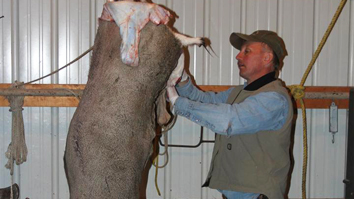
There is a direct correlation between the quality and flavor of wild meat to the way it is cared for in the field. The key is to make life harder for bacteria and flies by creating a cool, high-acid environment to slow their growth, limiting their food sources by bleaching out blood, making a protective glaze coating, and controlling flies.
I like to get my animals quartered as soon as possible, all blood and other bodily fluids removed either by washing it or wiping it down with paper towels, and then placed on ice. In a backcountry situation or remote hunting camp where this isn’t possible, however, you need to hang the meat to help it cool. Here’s what you need to do.
First, never use game bags made from plastic, as they hold in heat and don't permit proper air circulation. Better are heavy-duty cloth or cheesecloth-type game bags. The best are strong enough to carry meat yet allow for maximum air circulation, and are woven tightly enough keep out flies. I also like to treat my game bags with a citric acid blend, which discourages flies from landing on the bags and also inhibits bacteria growth.
“To understand how this works, you must understand that bacteria grow rapidly at a pH level of 7.0," Tommy Johnson, a professional butcher and avid deer hunter, told me. "The pH contained in lemons or limes is about 2.35. By using a citric acid solution on the game bag, the pH level drops dramatically, helping kill off bacteria."
You can make your own citric acid solution by combining the juice of three lemons, one large bottle of lemon juice concentrate, and one small bottle of Tabasco sauce. Soak your game bags in this solution for 20 minutes to one hour, then let them air dry completely (not in your dryer!), finally storing them in tightly-sealed plastic bags using them to encase a deer carcass.
The sooner your meat is cooled the better. It is important to quickly bleed, gut, and skin the animal as soon as possible. Next you should reduce the carcass temperature by hanging it so air can circulate around it. The key is to hang the meat in the shade where any breeze will gently blow across the carcass. (A walk-in meat cooler is ideal.) Once excess moisture has been removed from the meat, apply the same lemon juice mixture you soaked the game bags in lightly over the entire carcass. (A small plastic spray bottle is ideal for this task.) This will create a high acid protective glaze over the meat while it is drying. Once the meat is dry, it can be placed in game bags and re-hung.
If you hunt in areas where flies are a problem with game carcasses, the solution is to build a small fly trap near where you've hung the carcass to cool and glaze over.
"All it takes to build a fly trap is a can of Golden Malprin—available at many feed and mill stores—and a black garbage bag," Johnson said. "Eight to 10 feet away from the meat, lay a couple of branches on the ground. Pile meat scraps on and around the branches. Pour the Golden Malprin on and around the scraps of meat. Cut a slit in the center of the garbage bag, and place it loosely over the pile.
"The sun will heat up the plastic, which in turns heats the meat," Johnson said. "The flies are attracted to the whole mess, and crawl in through the slit in the plastic. The Golden Malprin kills the flies. When you're ready to leave the area, put the whole trap into a thick garbage bag and dispose of it properly."
Then all it takes is great care to keep the meat clean and chilled before delivering it to a local wild game processor. “The better quality meat we get in, the better quality we give you back,” Johnson said. “It’s that simple.”