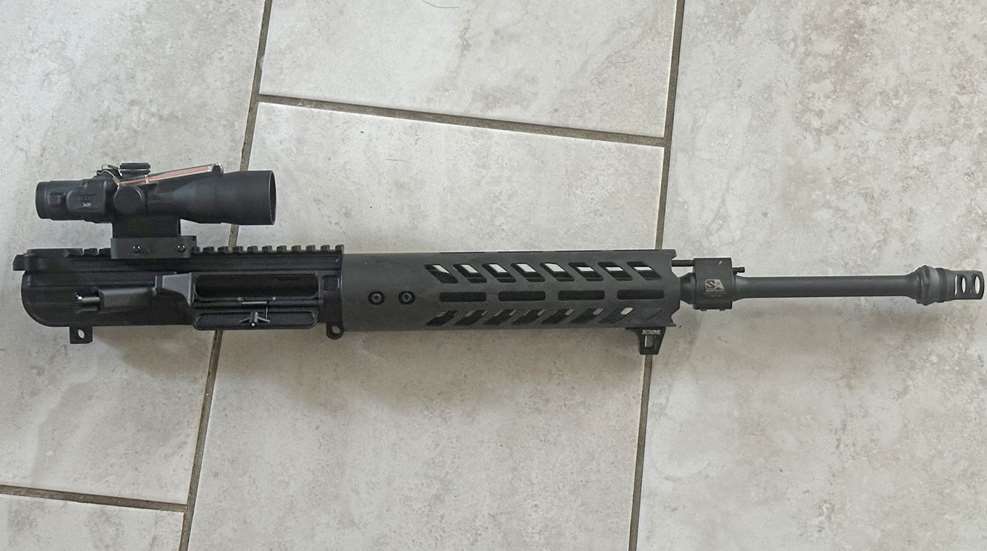
Welcome to Part 2 of the quest to build the lightest AR-10 possible. This section focuses on the upper (Part 1 featured the lower; Part 3 will focus on tuning the gun). No need to keep you waiting; if you want to see the premise or any qualifiers, check out Part 1. Let’s start the upper build.
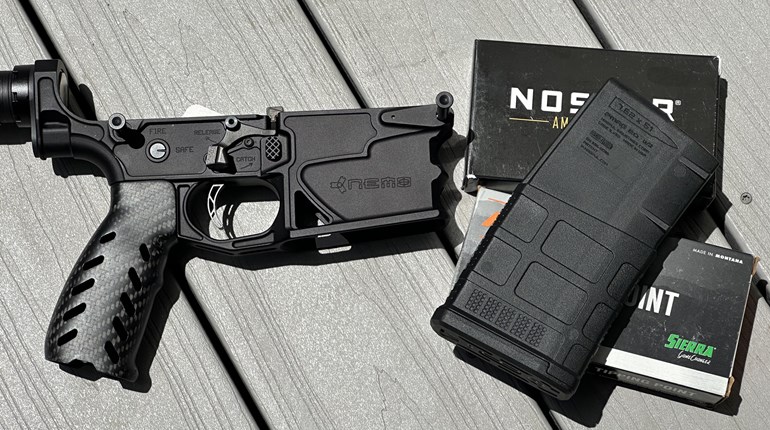
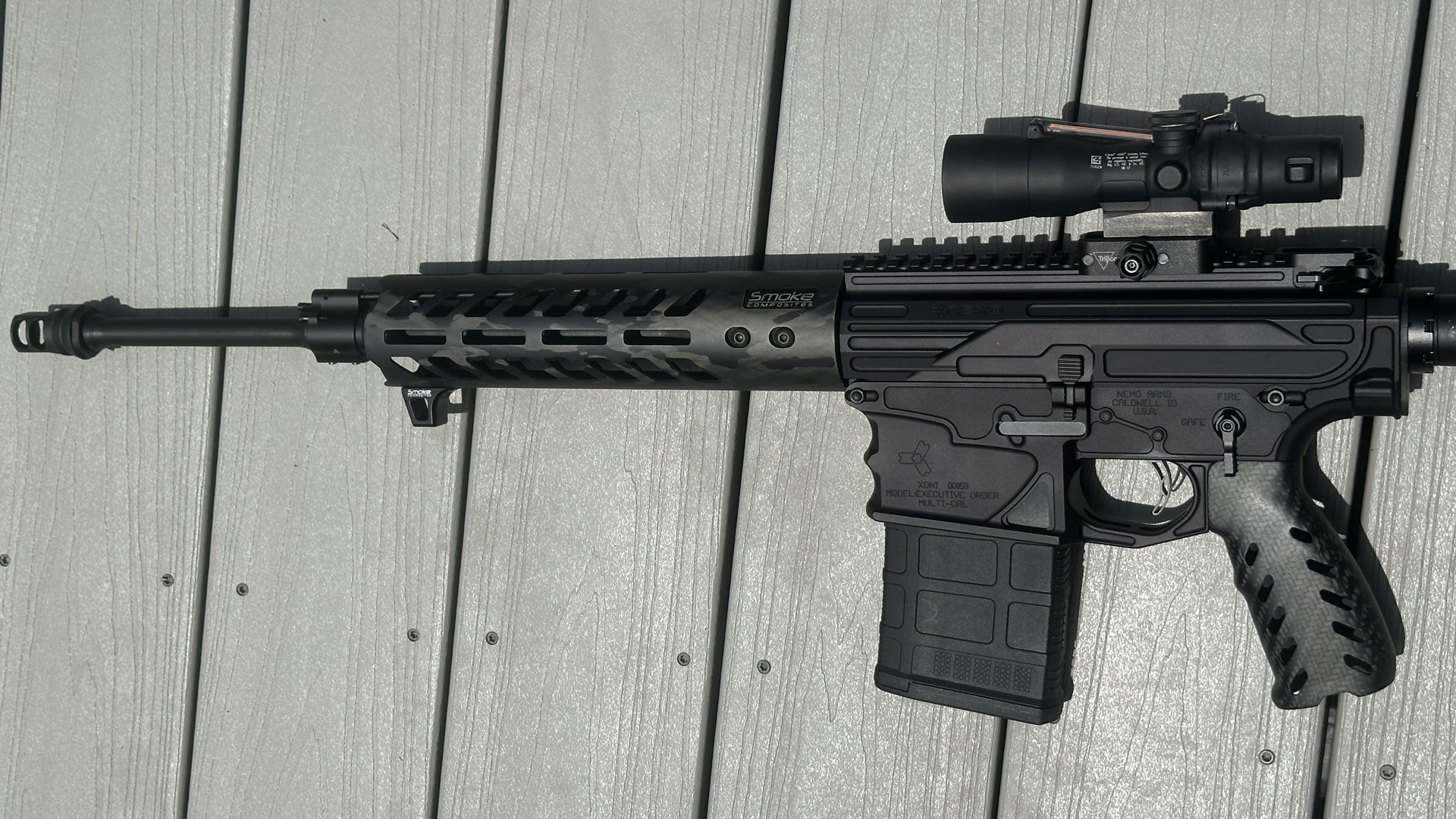
As I mentioned in Part 1, the upper, lower and a few other parts were all included in a set from Nemo Arms, which promotes the set as weighing just over 21 ounces. That’s heavier than some other options, but some of that extra weight comes with other included parts to minimize adding further weight. The upper itself has a forward assist and an ejection port door; I installed the former at first, but to save weight, I ended up taking it off, as it isn’t necessary. I won’t include the price here, as it’s already included in Part 1.
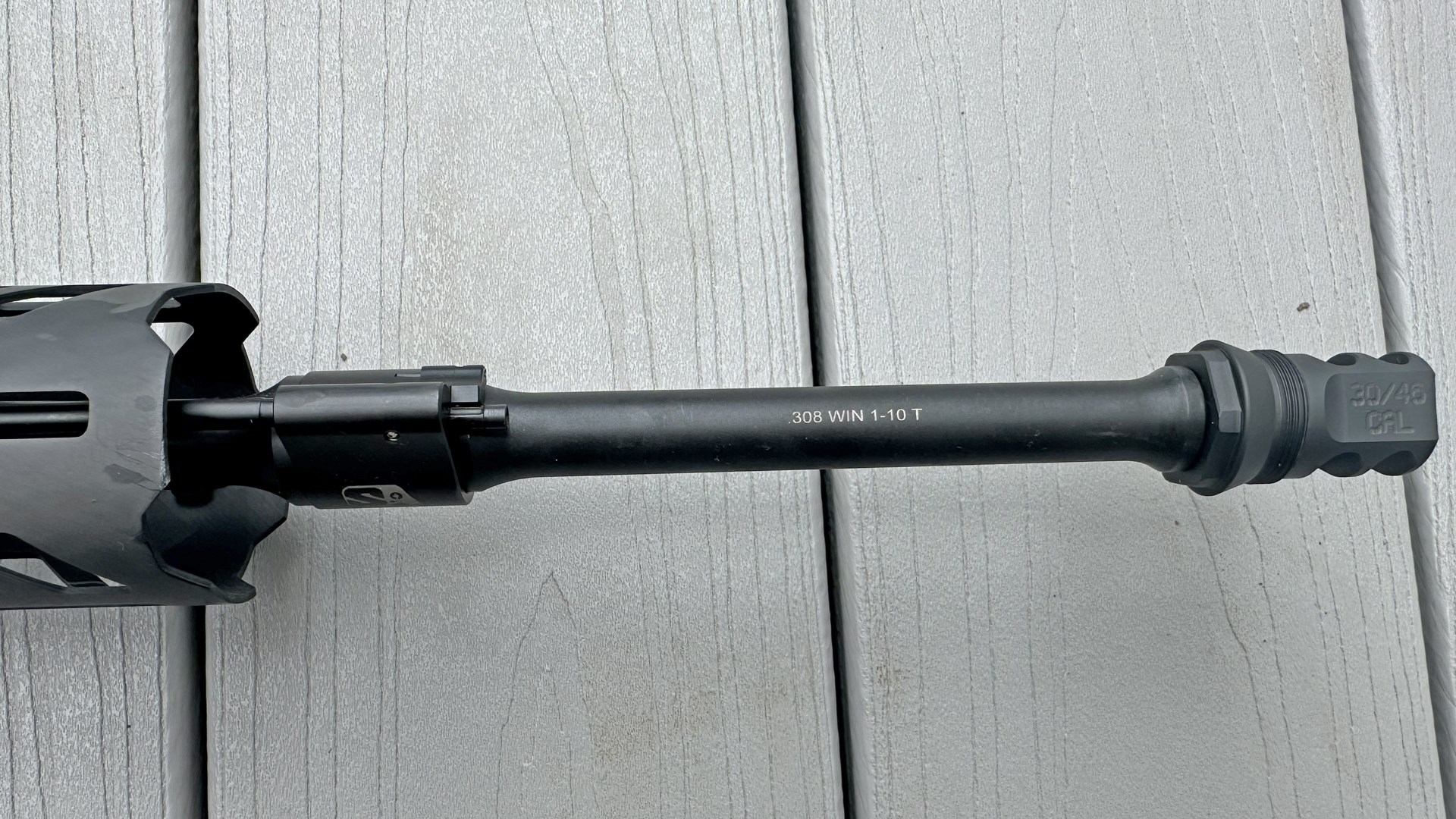
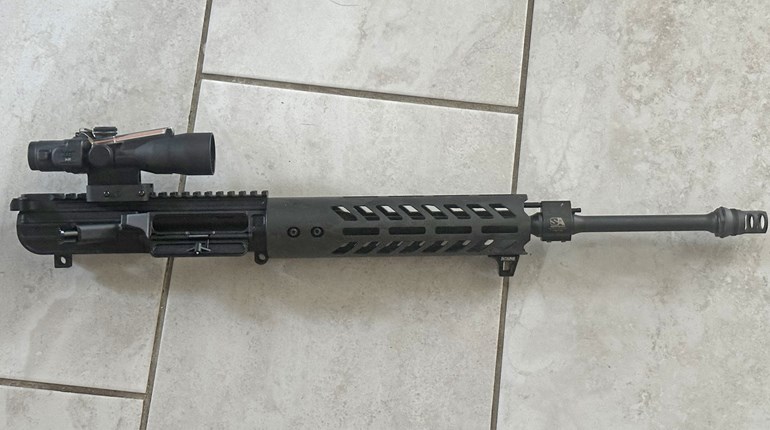
Of course, the barrel is the heart of any upper. The lightest one I’ve found—and it’s well priced at about $240, which is great for what you get—is Faxon Firearm’s pencil-profile, 16-inch barrel. By cutting length and diameter down you save weight, and according to Faxon, this barrel only weighs 1.78 pounds (28.5 ounces). The barrel has a .750-inch gas-block, is made from 4150 CMV steel, and features button rifling with a 1:10-inch twist; up front, the muzzle features an 11-degree target, non-recessed crown with a 5/8X24 TPI thread pattern. To round out the barrel, it’s finished with a QPQ finish, and a black oxide finish on the extension.
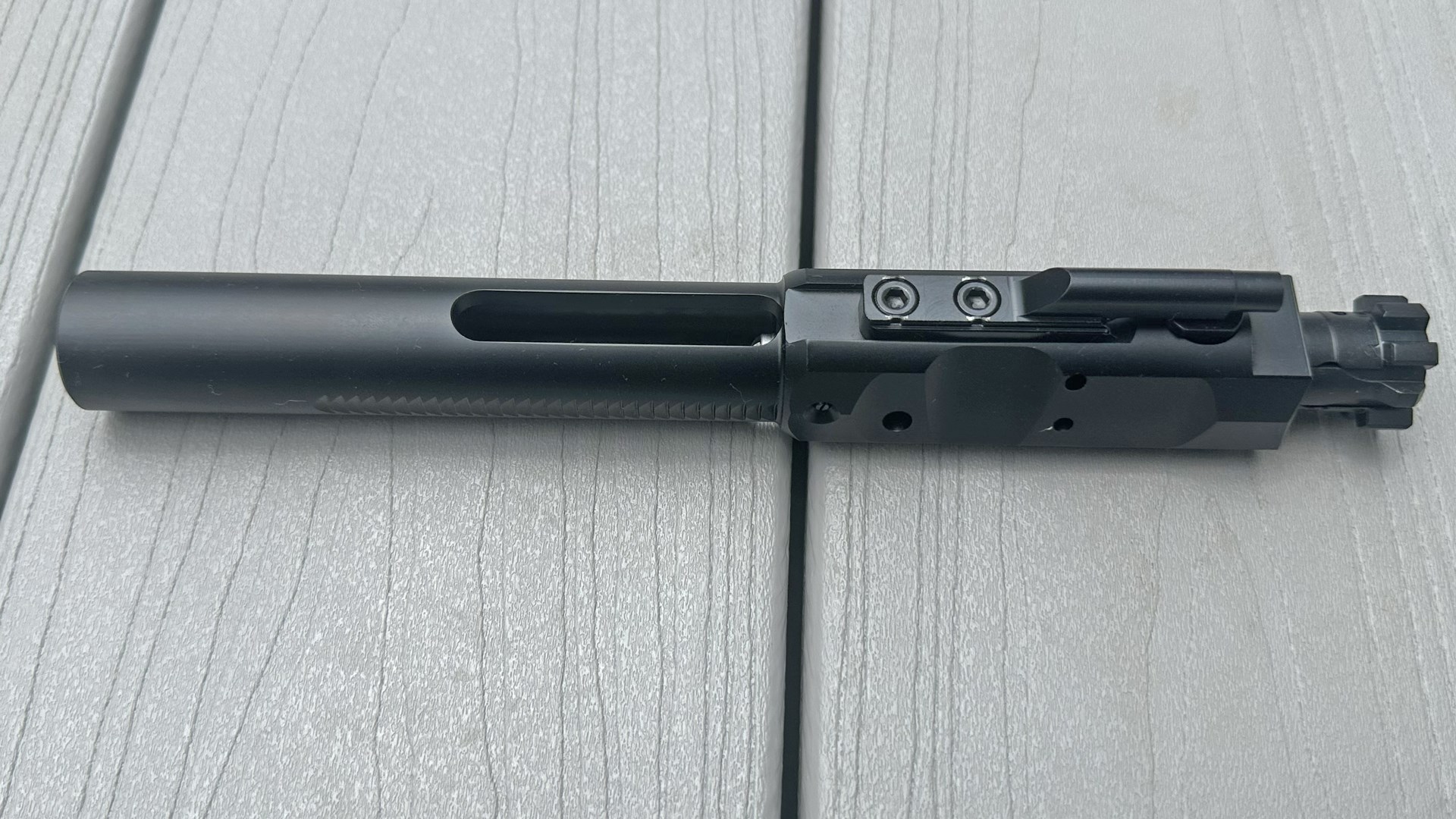
The next crucial part of any upper build is the BCG. There are a few companies out there that make titanium BCGs, and if you’re going lightweight, that’s your best option for this component (I covered why sometimes titanium may not be your best bet for some components in Part 1). Brownells offers a 12-ounce titanium BCG for about $300; compared to a standard AR-10 BCG, that’s roughly $50 more than many higher-end BCGs. The carrier is 6A1-4V titanium, and the bolt itself is 9310 tool steel. It’s MPI’d, just like the barrel, and wears a DLC finish. It’s fully assembled—to include a correctly torqued/staked gas key and installed O-ring on the extractor.
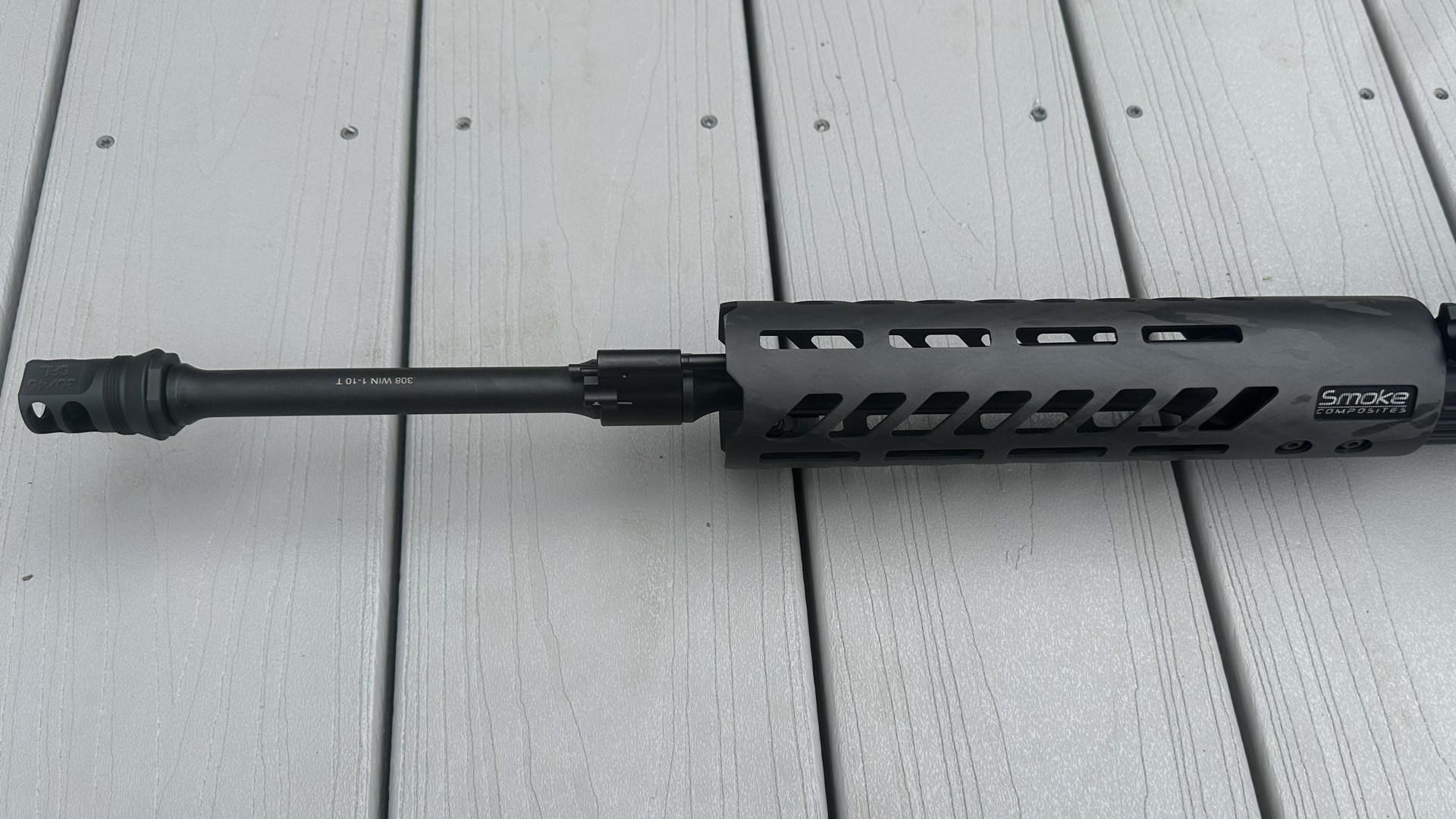
Those are the heaviest items on the list; everything else from here on out will be measured in grams. That said, the handguard—a custom 9-inch Smoke Composites carbon-fiber handguard—tips the scales at a measly 194 grams; this is about .75 ounces lighter than the shortest factory option, with the barrel nut and other hardware included. For reference, custom-length handguards can be made to customer specifications for an additional charge of $40 (other fees may apply), so this part cost about $360. The handguard’s carbon-fiber construction offers grade-A heat resistance, perfect for a pencil-barreled gun. It also features M-Lok cuts for accessory attachment.
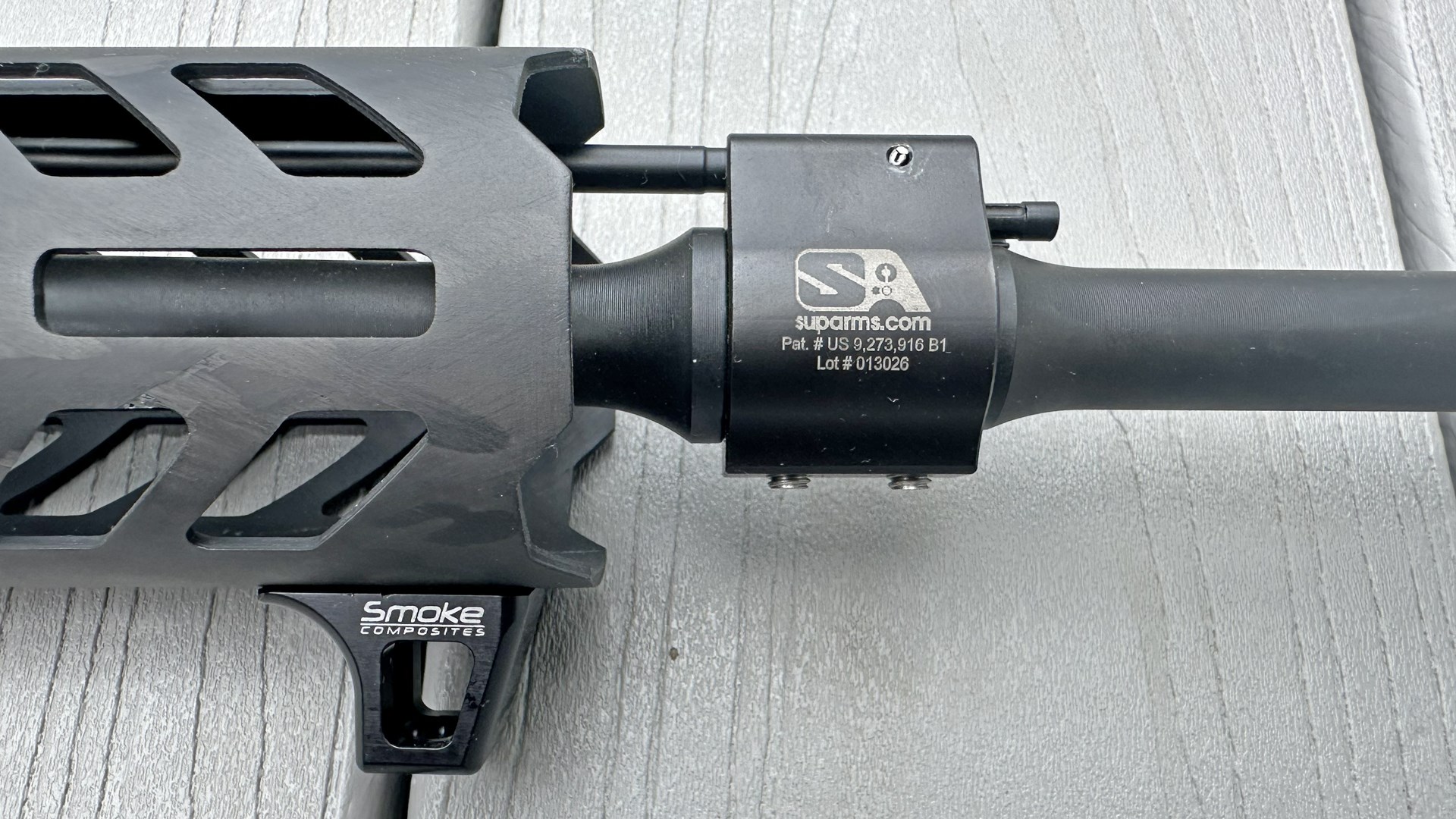
A Superlative Arms steel block was used rather than a Superlative Arms titanium block (we’ll cover this item more in depth in Part 3)—and because of the savings on the handguard in both weight and money (the titanium block weighs 0.6 ounces less than the steel block for an extra $110 dollars), the upper is just as light as it would have been with the longer factory handguard, while saving me a net value of about $50 overall ($100+$40 extra on the handguard vs $210), plus I know my gas block is easily accessible. Here’s another place where weight didn’t matter: in the gas tube and roll pin. No one makes a “lightweight” version, so go with whatever you want, similar to the buffer and buffer spring in Part 1.
The charging handle and forward assist are the other major parts for the upper. Both were V7 Weapon Systems options, and they totaled 39 grams and 9.2 grams respectively, and ate up $101 total ($65 and $36 respectively). The former features a lightweight extended latch, and the latter features Grade 5 titanium pawls. Both are finished in a black type III anodized hardcoat and are made from 7075 T6 aluminum.
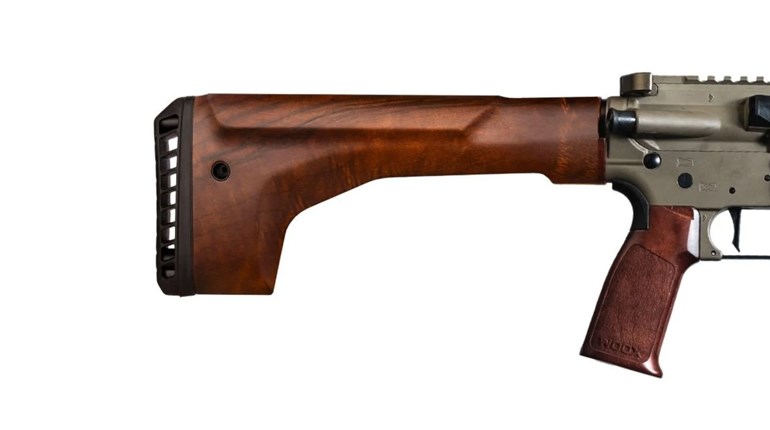
With the build complete, our AR-10, when fully assembled, came in at just over 91 ounces, right at 5.7 pounds. This weight puts it at just over a pound lighter than the Ruger SFAR I mentioned in Part 1. Granted, this build is significantly more expensive, but weight savings are never free, either.
Builder's Note
The barrel doesn't come with a thread protector. That said, much like the buffer system in Part 1, use what works best for you. I selected a brake because the rifle is light and will kick more than you're average .308-chambered AR-10. That, and I plan on using it in Part 3 of the series (which will be devoted to taming the recoil of such a light build).
Trijicon 3x30 ACOG
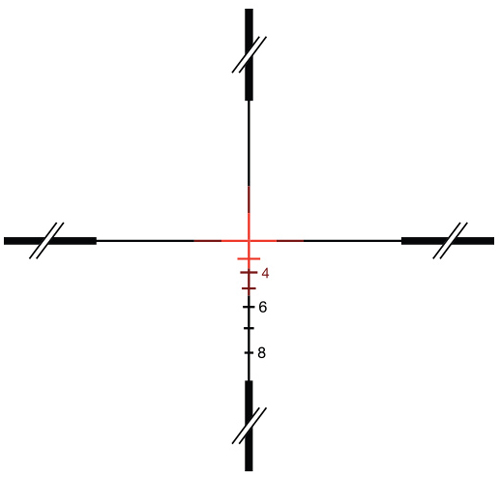
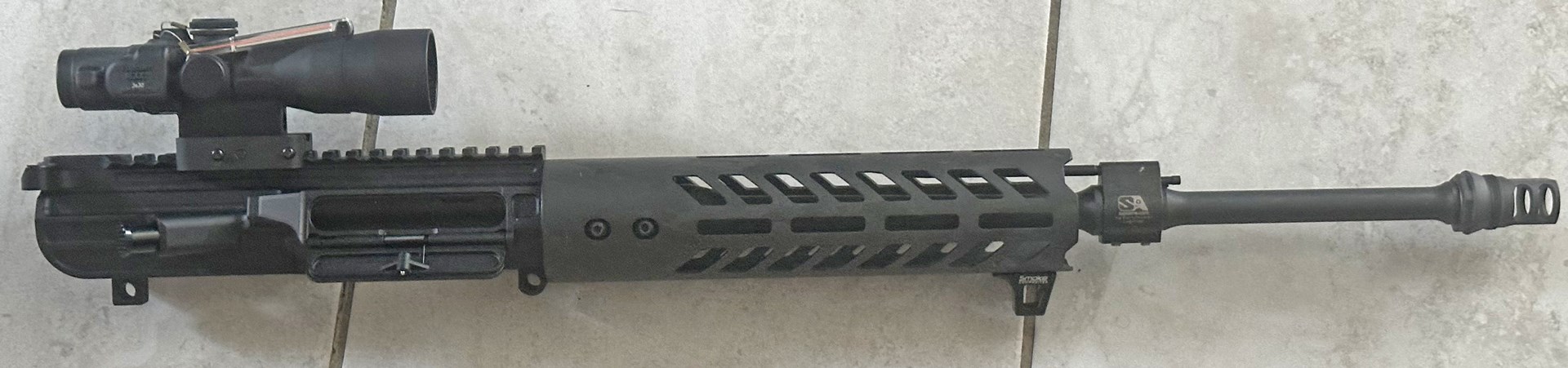
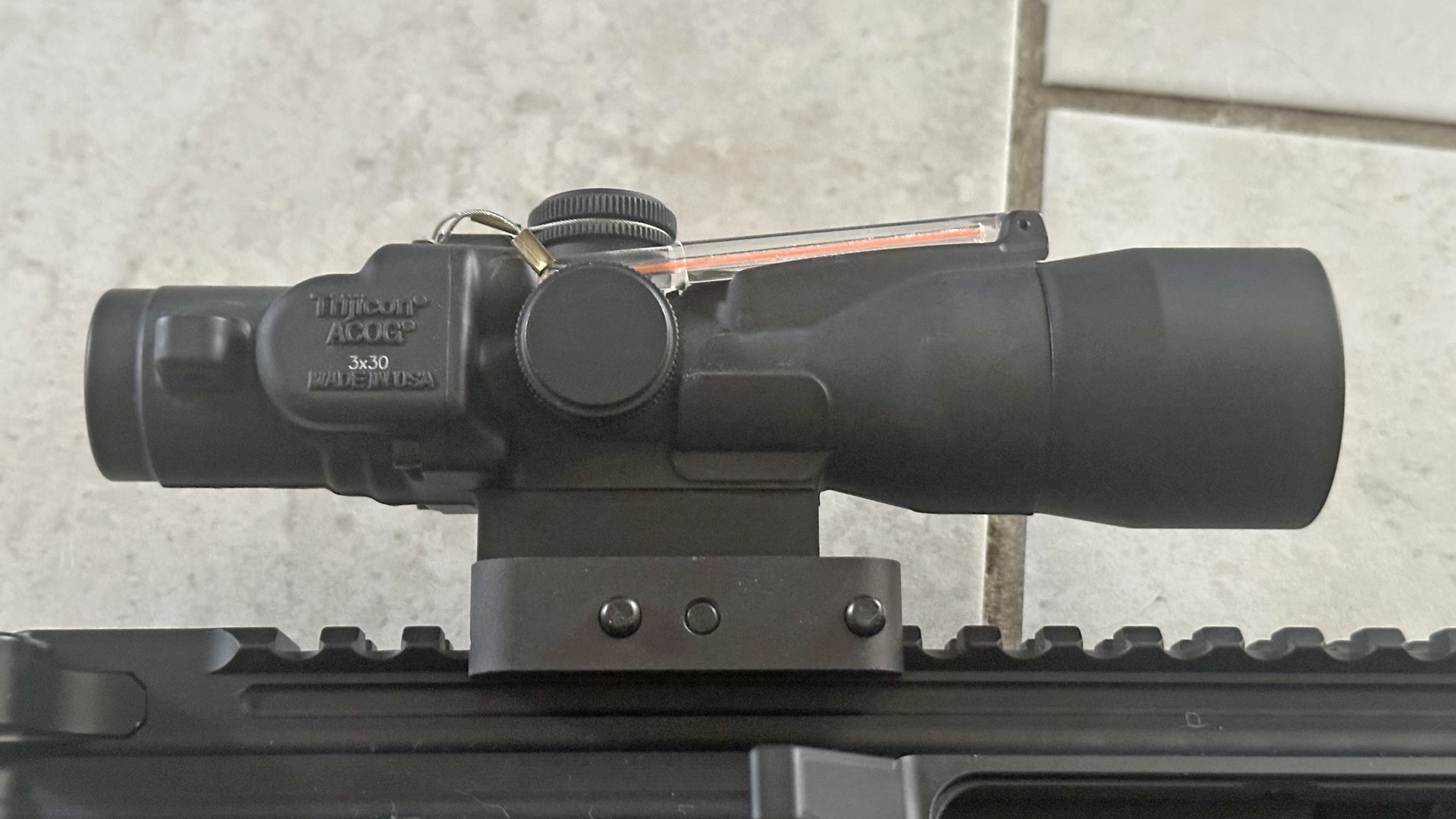
Technically, the upper is complete. However, no upper is actually finished without the accessory that’s almost a requirement: the optic. To keep the rifle nimble, a lightweight compact, with a BDC reticle for drop was selected; the Trijicon 3x30 ACOG. Because of its 6061-T6 aluminum construction, the optic weighs less than 10 ounces—including the Q-Loc mount, which sits on the rifle perfectly, no cheek riser necessary for eye alignment—yet it is incredibly durable. It’s got a simple drop reticle, which is highly visible in both day and night scenarios thanks to the tritium/fiber-optic illumination. Even better, that illumination doesn’t require the added weight of batteries. The one downside is the optic is somewhat pricey at about a grand and a half. But if lightweight is your goal, then this is the primo optic to get to round out a lightweight AR-10 in .308 Winchester.