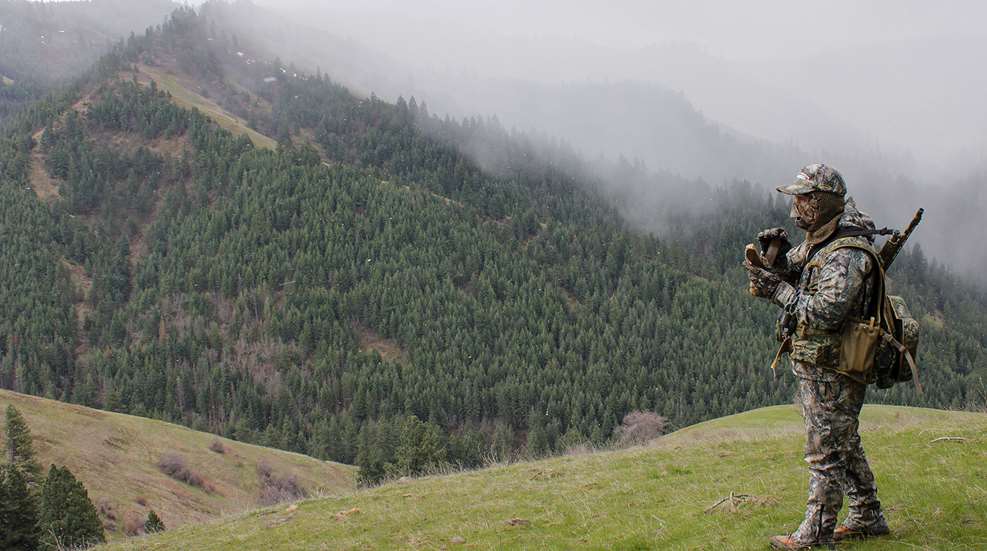
It poured rain all night. Morning temperatures were cold and the wind was howling. I almost went back to bed. I’m glad I didn’t.
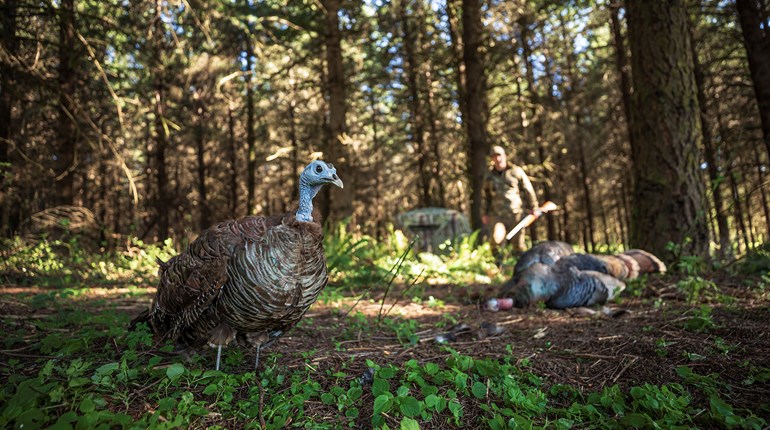
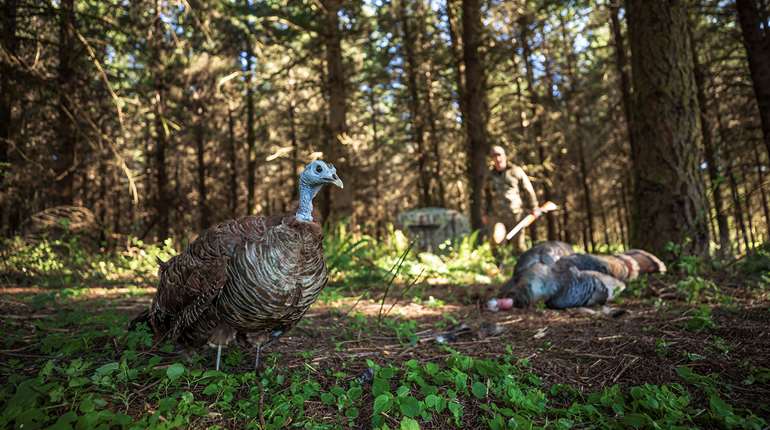
A 20-minute hike found me in the foothills of the Cascade Range. Tucked tight against a fat Douglas fir tree, I was in disbelief when multiple gobbles rang back to my hen yelps. Another set of loud yelps to pierce the driving sidewind was all it took. Three toms came sprinting down the hill, water flying off their armor-like plumage that gyrated on their prehistoric bodies. Only two birds left.
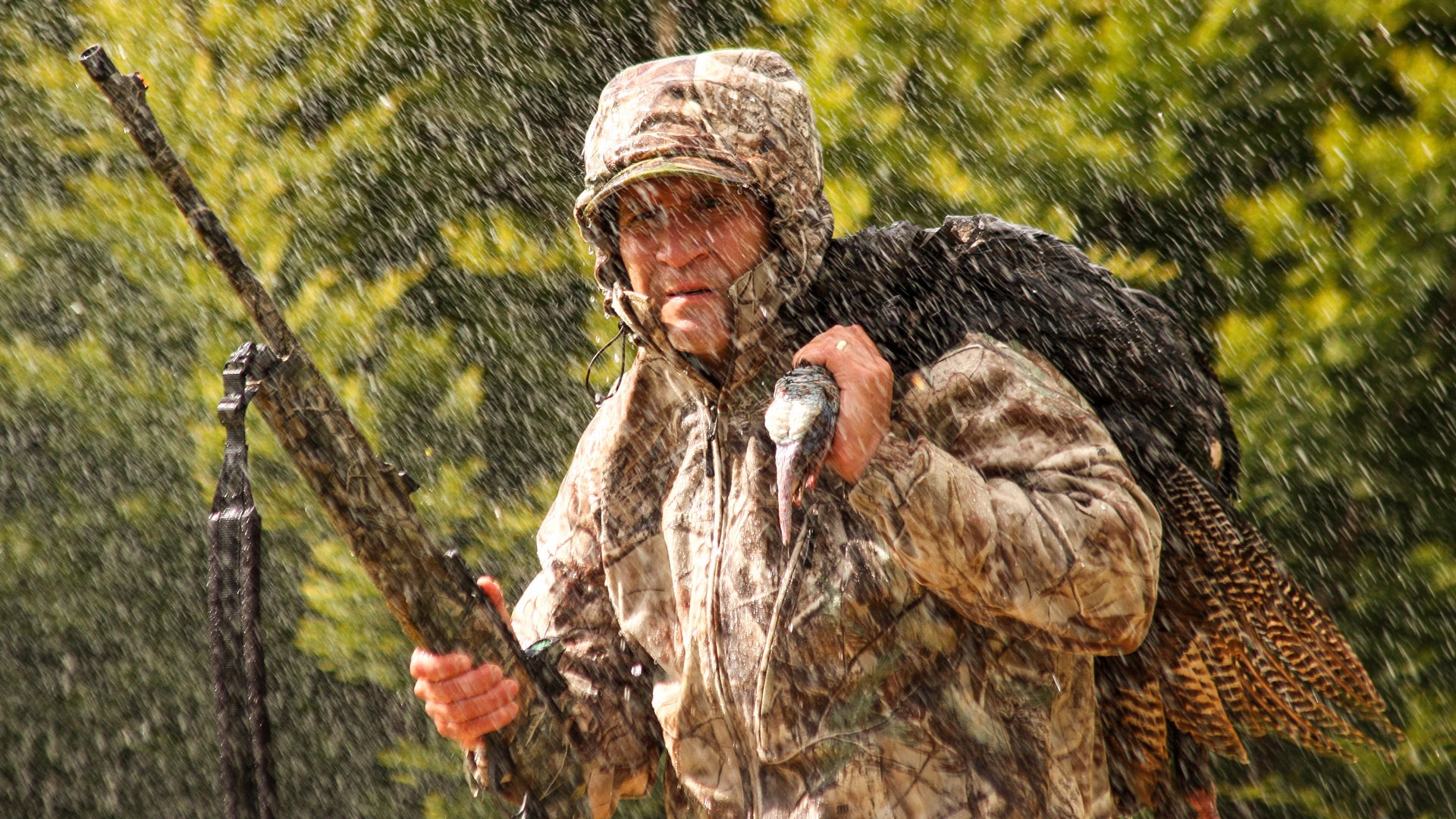
That hunt took place over 20 years ago. Not only did it change how I look at hunting turkeys in bad weather, but it also gave me a heightened respect for these tough birds and was an early step in shaping me into a better hunter. Since then, I’ve chased toms with success in multiple states throughout the West amid heavy snow, torrential downpours, freezing temperatures and winds so strong I struggled to stand upright.
To survive harsh conditions–even during spring hunting season–turkeys seek protection. The leeward side of hills, the bottom of draws and canyons, underneath trees with protective limbs and even against logs—all are places turkeys go to gain relief from wind, snow and rain. The more incessant the conditions, the more likely turkeys are to be in highly protected places. This narrows down where hunters should focus their efforts.
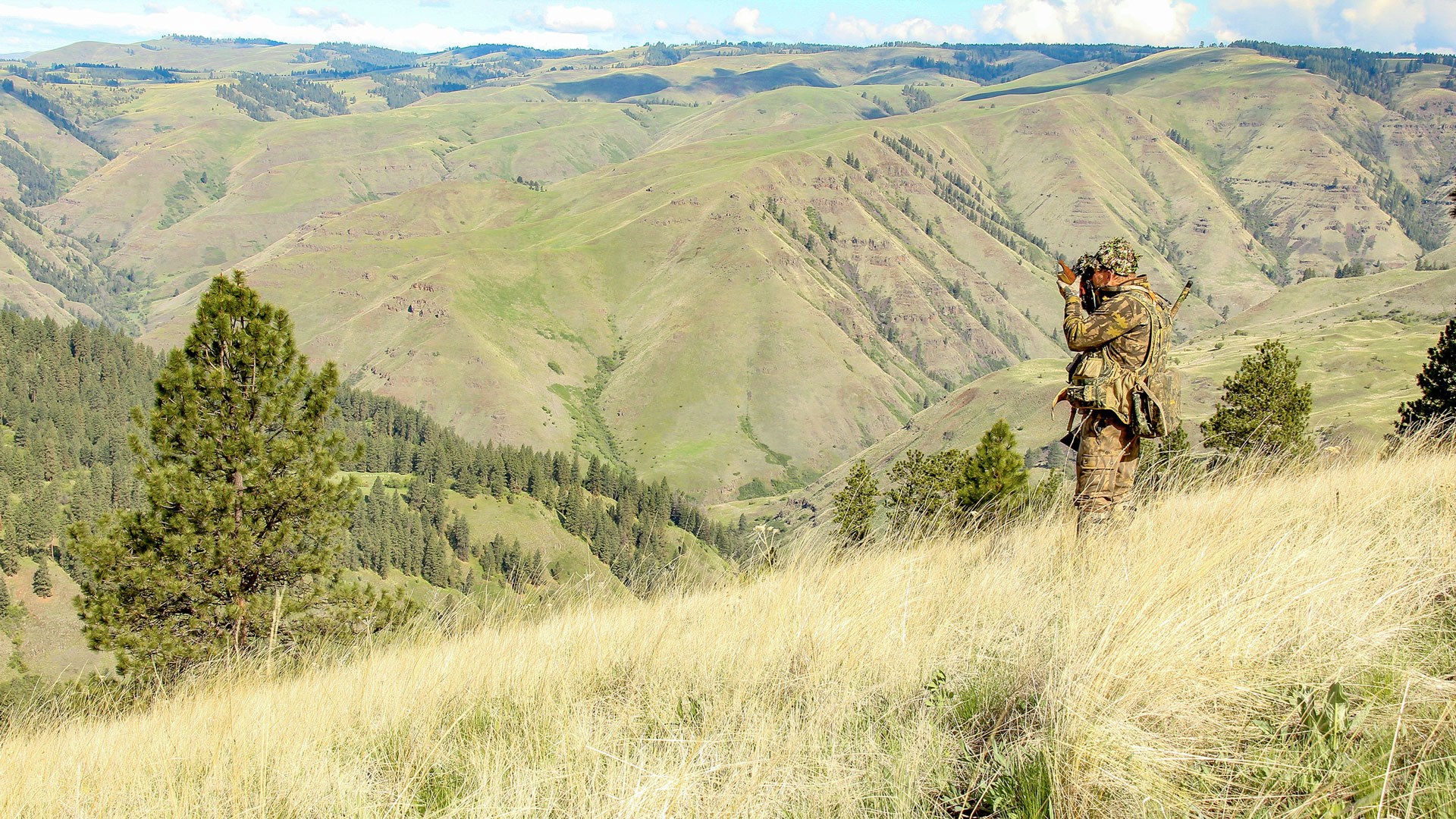
Finding turkeys amid harsh conditions is one thing; killing them is another. As with any wild animal, catching a tom in the right frame of mind is key to calling it in when it would rather not budge. If there’s a break in the weather, make your move. All that’s needed is a few minutes window to turn the tables in your favor.
On days when it’s pouring rain, the moment it lets up, get aggressive with the calls. Should the sun pop out for a brief moment, all the better. I prefer going without a decoy in these conditions as I’m often moving to within 100 yards during the heavy downpour, then waiting for a break to call. If these toms come in, it’s often because of the sounds, not the sight of a hen decoy.
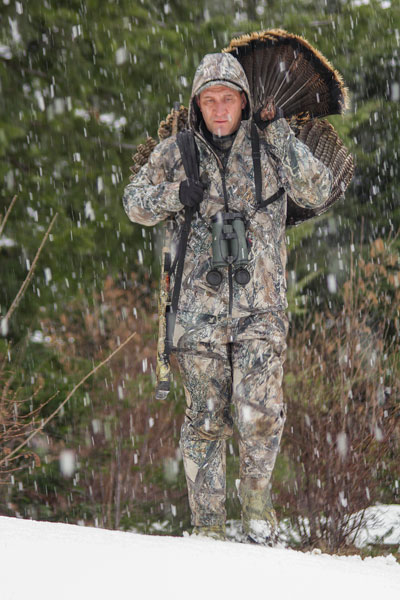
During windy conditions, hunt protected areas. If there’s no escaping the wind, hunt with it, not into it. Turkeys have a poor sense of smell. Calling with the wind ensures your sounds will carry farther. The downside is you likely won’t hear a tom respond. Even if you do hear a gobble, know the bird is closer than what you’d expect. They might sound 200 yards away, but often when you hear a tom gobble in high winds, it’s already within shooting range.
When hunting windy days–especially in thick cover or a forest–I like using a hen decoy. Because toms are leery of brush and tree limbs whipping in the wind, a hen decoy will calm them and help bring them within range. I’ve found toms sometimes hang up if a decoy is not used in high winds. Turkeys have acute hearing, and trust it. I’ve also found toms to routinely turn and run when they see a strutting tom decoy next to a hen in windy situations. Turkeys don’t like surprises in high winds.
I enjoy hunting turkeys in the snow, especially when there’s a slight breeze.
Wind keeps brush and limbs swaying, allowing more ground to safely be covered. This increases the likelihood of getting close to a tom before calling, which increases the chance of bringing it in.
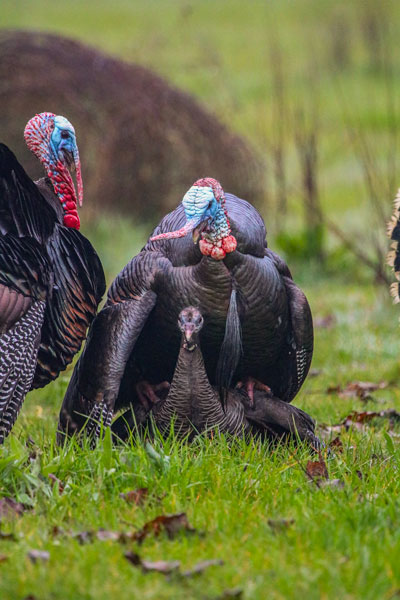
As with all rut-crazed animals, cold temperatures don’t dictate a tom’s ability to breed; that’s regulated by the production of testosterone through photoperiodism. But what cold temperatures do is reduce a tom’s body heat, meaning it can be active, even extra aggressive, in cold conditions. I’ve had toms travel surprising distances in rugged mountains and big timber to reach the sounds of my calls in shockingly cold conditions. On one hunt at 3,500 feet, I called in multiple toms in 16-degree temperatures throughout the morning. It was snowing and blowing all day, taking the windchill below zero, I’m sure.
I like using a hen decoy in the snow because I’m often targeting a tom or two that’s followed a hen to higher elevations to nest. It’s nothing for a hen to travel 15 miles to nest, and often it heads to higher elevations than where it spent the winter and early spring. A tom or two often follow the hens. When the hen starts incubating the nest–which happens once all the eggs have been laid–the nearby toms often remain in the area. Find these secluded toms and they can quickly respond to a call, no matter how cold or harsh the conditions. These toms are very tuned-in to their environment and often a decoy makes them drop their guard.
When hunting in bad weather, I like calling loudly and aggressively. This is because the window to convince a tom to come in can be short. A break in the rain might only be two minutes. The driving winds may slow down for only a moment.
That blinding snowstorm may only offer a narrow gap of visibility.
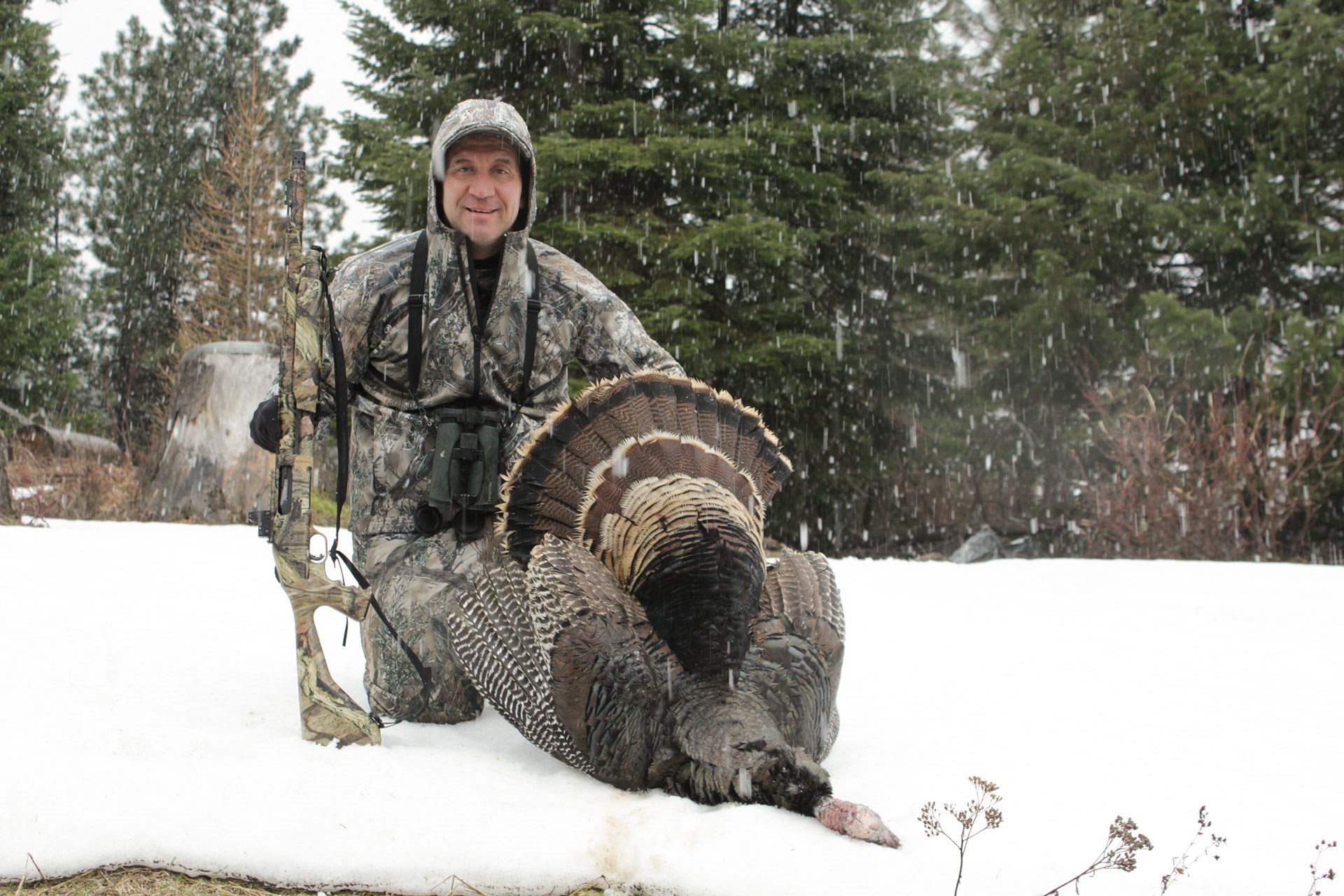
An all-weather box call and diaphragm calls are my go-to choices in bad weather. I carry two box calls and over a dozen diaphragm calls on bad weather hunts. If a tom doesn’t quickly respond, I change calls. I’ll also relocate more often than when calling on calm, warm days. Sometimes a change in sound direction motivates a tom to move in.
When turkey hunting in bad conditions, cover ground and don’t be afraid to call loudly. Sometimes, however, getting close to a reluctant tom and finding the sound it likes is the best way to fill a tag.
*For signed copies of Scott Haugen’s popular book, Western Turkey Hunting: Strategies For All Levels, visit scotthaugen.com.