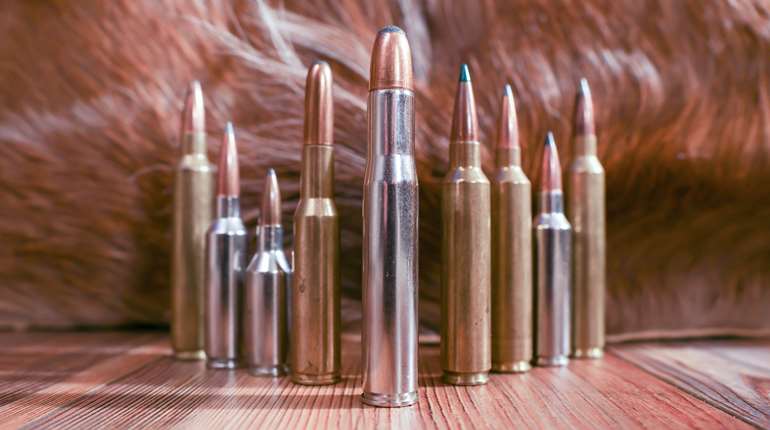
Most firearms enthusiasts and hunters familiar with the stately .357 Magnum can attest to its power on all sorts of predators and deer alike. Firing a .35-cal. bullet—usually weighing between 140 and 180 grains for recognized hunting projectiles—around 1,400 to 1,500 fps (in a handgun), it kills in short order. In fact, according to the dated-yet-relevant Cartridges of the World, 10th Ed., “It has been used successfully on deer, black bear, elk, and even grizzly.” Though not the best choice for the latter species, it can bring them to bag if the planets align.
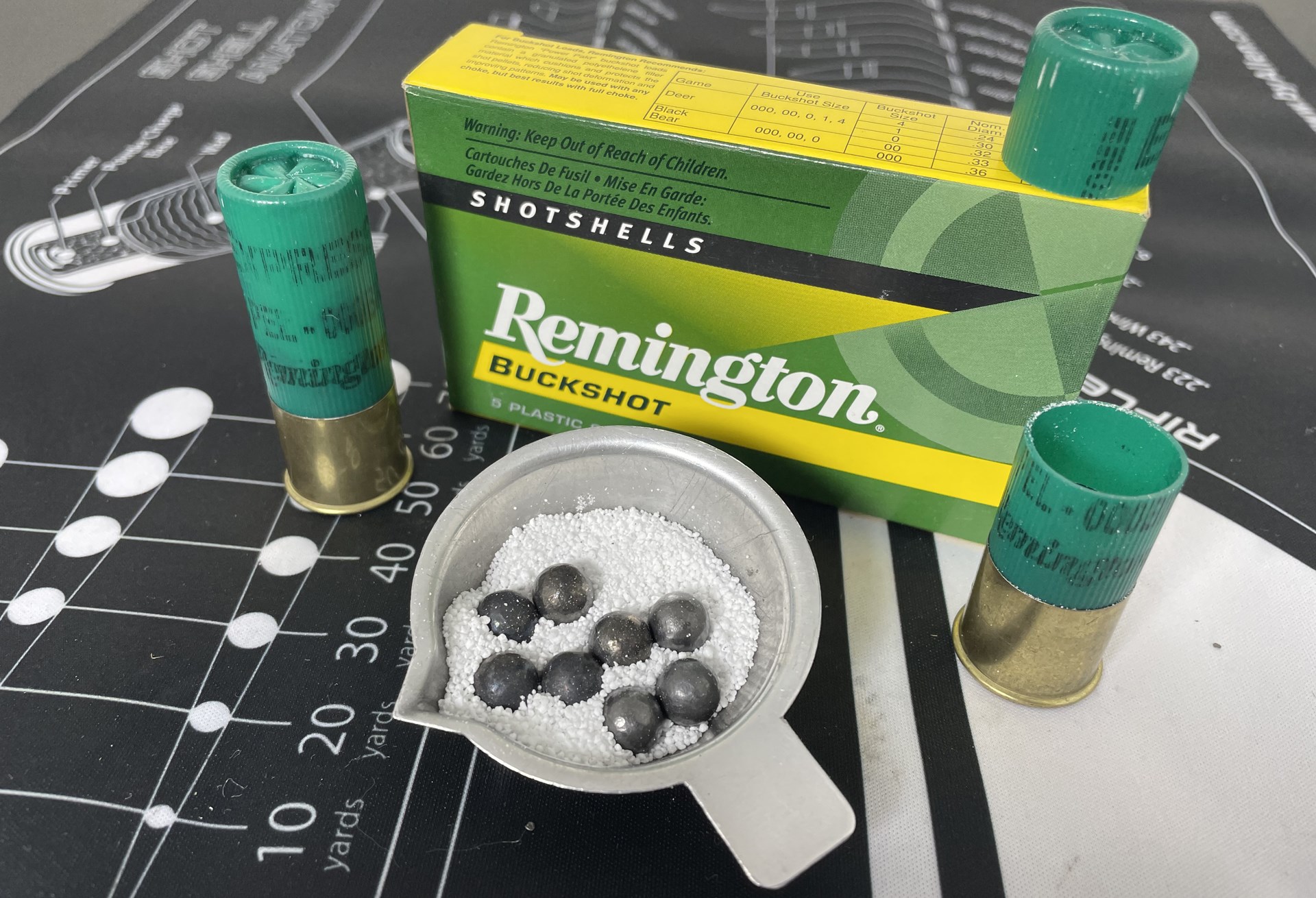
Now consider this. That 0.357-inch projectile fits nicely between 00-plus (0.350 inches) and 000 (0.360 inches) buckshot; however, instead of a single bullet, in a Remington Express Magnum 12-gaauge, 3-inch shell, for example, there are 10, 000 buck pellets—albeit at a reduced velocity and having less mass. When your total fingers’ worth of .36-caliber, lead-alloy spheres hit in a smallish area at more or less the same time, the result is devastating. That’s why, within its realm, nothing is better than buckshot—period.
That being said, like birdshot, patterns generated using buckshot are random; no two are alike. There are ways to improve its consistency, range and on-game effectiveness, and that the purpose of this article. Let’s begin.
Size Matters
Hunters are largely familiar with buckshot sizes that are most frequently encountered when scouring store shelves or pages of an online retailer. Namely, these are No. 4 , No. 3, No. 1, 0, 00 and 00—all buckshot, and not to be confused with “fine shot” often having the same number. “Buckshot” is considered to range from B (0.170 inches) to 0000 (quad-aught, 0.380 inches), though some consider several muzzleloader “roundballs” to also be in the mix. There are also half sizes, too, such and 00-1/2 (0.340 inches), as well as plus variants, as mentioned previously. Variety provides options.
The key to killing with buckshot is multiple lethal hits, so it’s preferable to select the correct pellet size to maximize count while maintaining lethality on the animal you’re pursuing at the greatest distance you’ll shoot. For instance, most consumers of buckshot gravitate to the omnipresent 00 buck, which is an all-around good choice; however, there can be better options. Here’s an example.
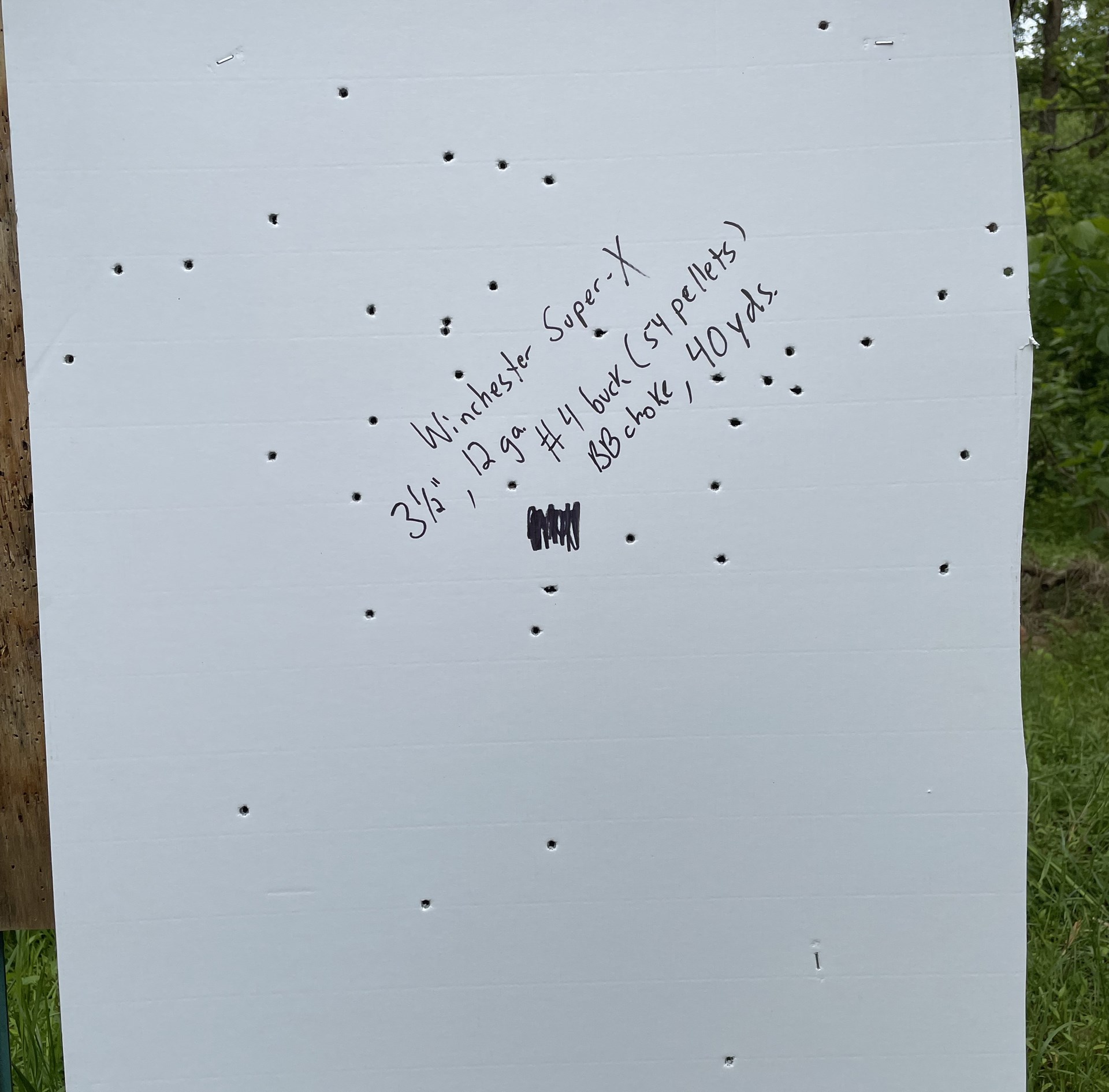
Suppose you’re posted where shots won’t exceed 30 yards, or a tad further. Number 4, 3, 2, 1 and 0 buck are equally lethal, if not better due to the increased pellet count. Case in point: a 12-gauge, 2¾-inch shell generally has 27 No. 4 buck pellets, and its 3-inch and 3½-inch counterparts have 41 and 54, respectively. Conversely, even Winchester’s Super-X 3½-inch 00 buck only has 18 pellets—a hard-hitting round to be sure. Single aught buck nicely splits the difference.
I must note here that, just because a load contains more pellets, doesn’t mean it’ll pattern better. On the contrary, I’ve found that 12 gauge, 2¾-inch, eight-pellet, 00-buck loads generally outperform their nine-pellet comrades. Why? Layering. Eight-pellet, 00-buck shells nicely layer in four layers of two pellets each, while the ninth pellet complicates things. Simply stated, stacking (or lack thereof for smaller buckshot) affects patterns, regardless of gauge, shell length and pellets size and quantity. There will be a standout in your shotgun.
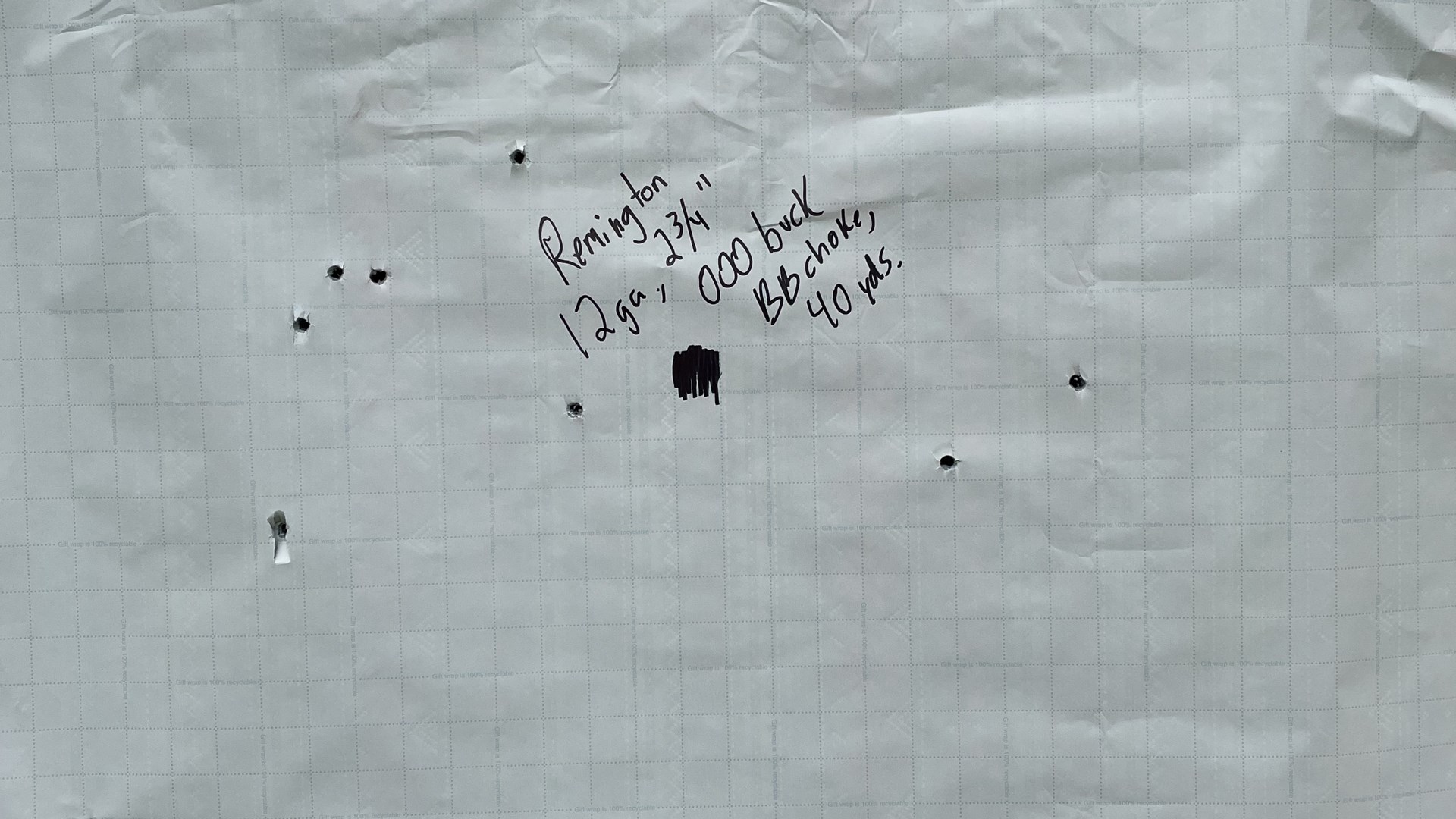
In addition to pellet size impacting quantity, penetration depth and wound channel(s), it also affects pattern diameter. As I learned at Thunder Ranch’s three-day Defensive Shotgun course, as a rule of thumb, buckshot spreads 1 inch for every one yard of travel. This can be influenced by pellet composition, wad type, choke design and myriad other factors, but it provides an easy-to-understand average. In general, though, larger pellets, such as 00 and 000 buck, tend to pattern more tightly than do smaller ones, including No. 4, 3, 2 and 1 buck.
Pellet Composition
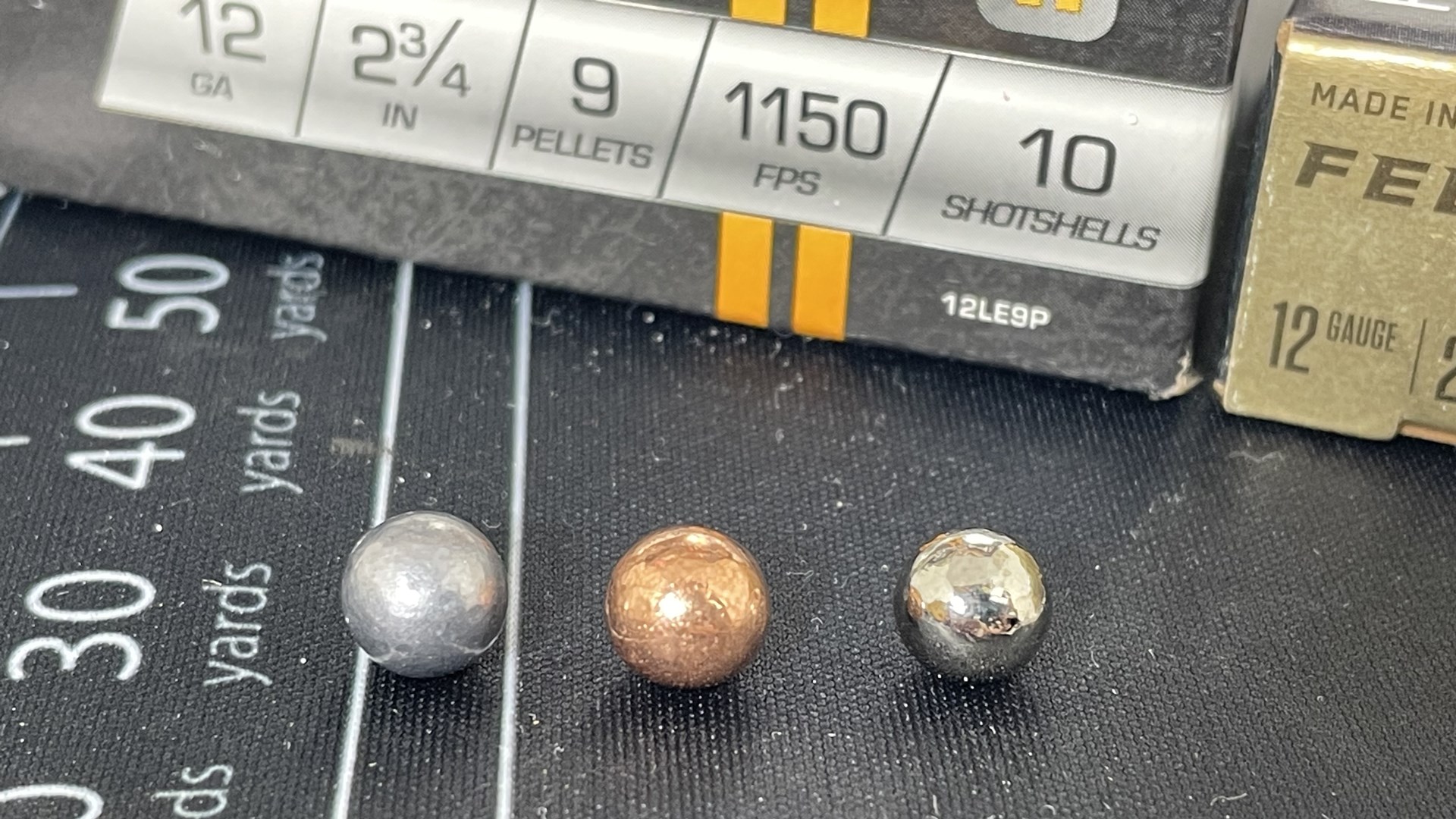
Just as there are “standard,” no frills rifle bullets, the same applies to buckshot. Inexpensive, bulk shells usually use low-antimony lead-alloy, which is often misshapen in the shell and becomes more so during the firing process. Not to mention, it can be inconsistent in size, too.
Does it matter? Yes. Non-spherical shot migrates to the pattern’s fringe (especially in smaller sizes), and it can lessen penetration, too. The only benefit is that soft, low-antimony pellets will more readily deform when hitting game, and thus imparting more energy and causing larger wound channels.
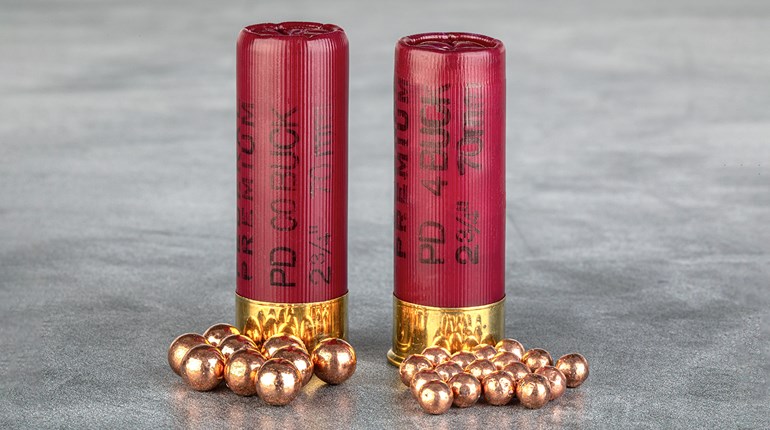
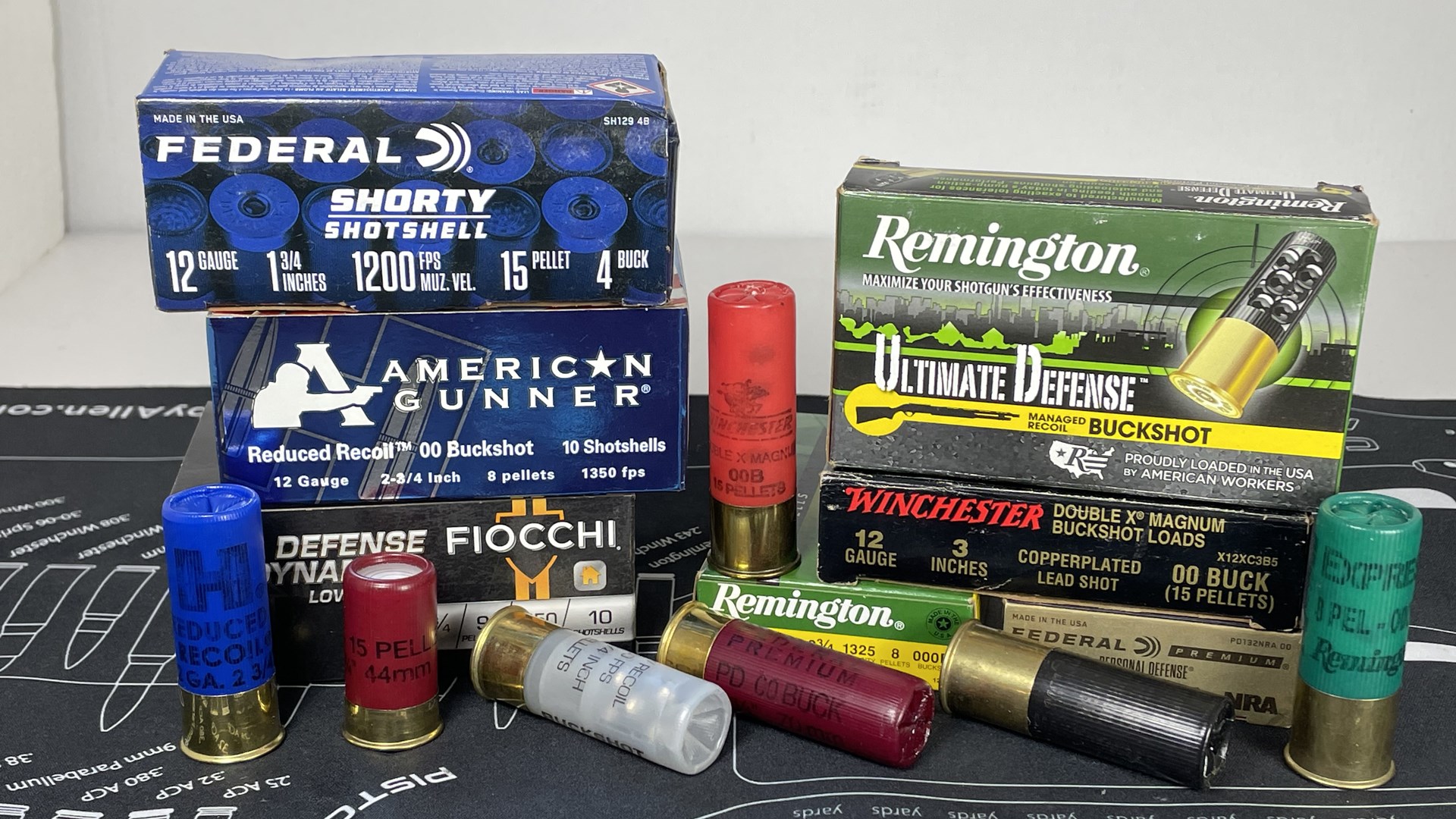
Better choices are found with “premium,” plated pellets. Copper and nickel-plated pellets, with the latter having a coating of the former before nickel is applied, are vastly superior to their Plain-Jane counterparts. The hardened lead-alloy, which has a smooth surface, better maintains its shape for improved patterns and, due to decreased friction, leads to deeper penetration. Factory loaded nickel-plated buckshot is a rarity, but it can be easily handloaded using supplies from Ballistic Products, Inc. Recognizing their clear advantage, copper-plated pellets are used by many manufacturers. You cannot go wrong by selecting them.
For states that require them, there are lead-free buckshot options available. As a factory load, Hevi-Shot’s Dead Coyote 12-gauge, 3-inch shell propels 12, 00-buck pellets to 1,350 fps. Made from a 12 g/cc tungsten-alloy, the extra-hard shot patterns tightly and drives deep. According to the company, it’s the USDA’s choice for predator and hog control. There is also compressed tungsten/copper pellets for handloaders at the abovementioned site. Whatever you use, don’t opt for frangible or pre-scored pellets when hunting big game.
Buffer & Wad
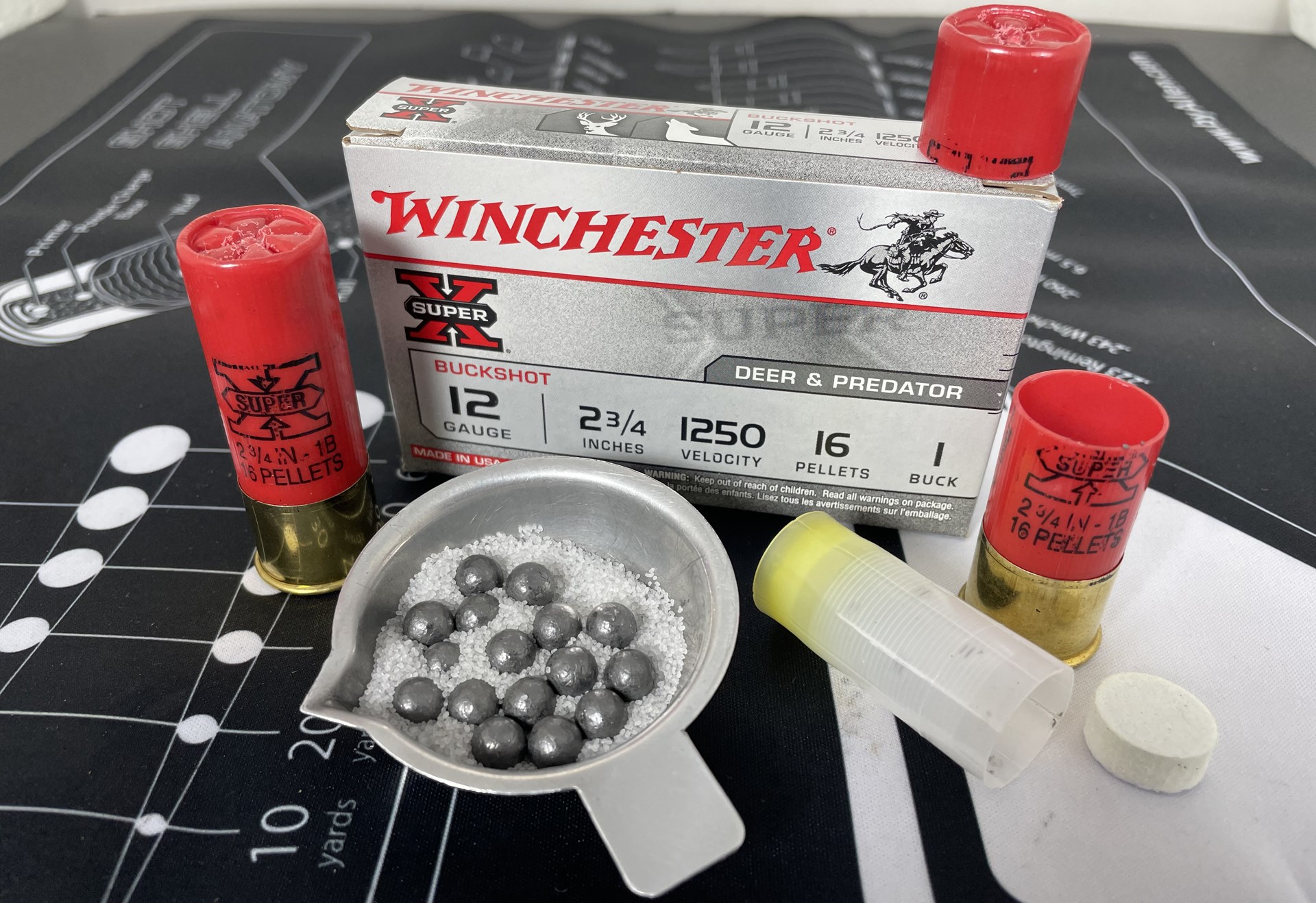
Buffer is more than a low-cost filler; rather, in packing the voids between the large pellets, buffer cushions them during the violent firing sequence. Doing so helps preserve their spherical shape for improved external and terminal ballistics downrange. Most hunting-specific buckshot incorporates buffer for that very reason. On the other hand, many self-defense loads omit buffer, due to the shells’ use in close quarters and being unnecessary; tight patterns aren’t necessary, or even desirable, in one’s abode. Hunting is altogether different in its requirements.
Wad design plays a major role in patterning and the effective range of buckshot. Economy loads utilize stacked-card or traditional-type wads in which the petals (usually four) roll back onto themselves, like a blooming flower. The blossoming action slows the wad and facilitates a clean release of the payload. Stacked card wads, though, provide the poorest patterns due to the pellets’ direct contact with the bore and choke. This causes deformation of the pellets and coats the bore/choke with lead. Do not use such loads for hunting unless very, very close.
Depending on the wad’s characteristics, tradition-type wads can still provide excellent patterns. In fact, in Remington’s Ultimate Defensive load, the wad dependably produces mind-boggling, dense patterns. But most such wads won’t. Only through testing will your know.
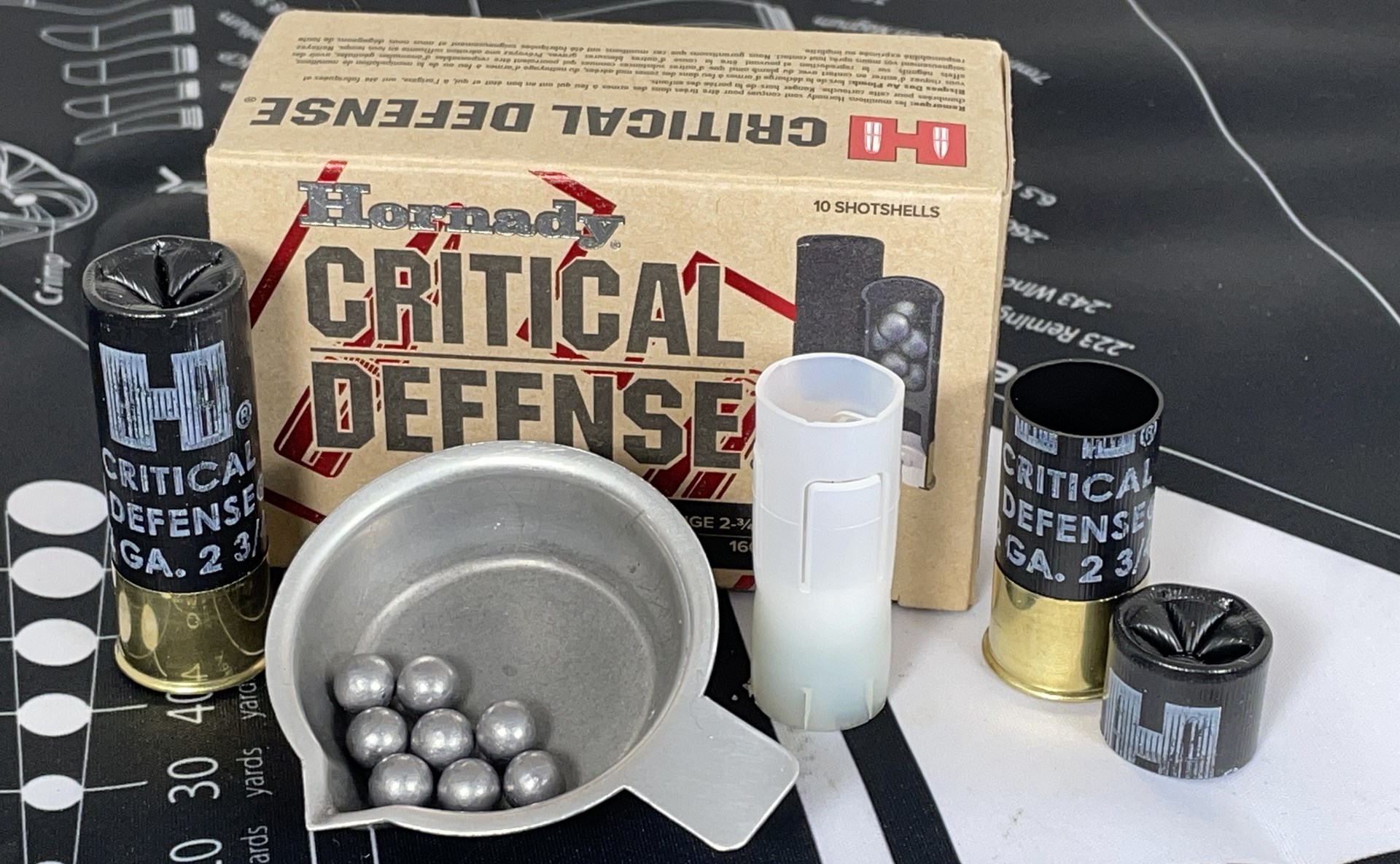
Frankly, the best wad is that from Federal, along with Hornady’s near-clone. Federal’s FliteControl, known in Hornady’s shells as the Versa-Tite, is an atypical-yet-established wad respected by waterfowlers and turkey hunters. It’s also incredibly adept at improving the performance of buckshot. As for function, instead of the typical “blooming” action of traditional-type wads, the FliteControl employs flaring side and rear flaps to slow its forward momentum and thus facilitate payload release. Because the pellets are contained longer, tighter patterns can be expected at-distance. This extends buckshot’s reach. What’s more, Federal also uses copper-plated pellets and buffer in its premium loads—the ideal coupling.
It’s worth noting that wad thickness can affect patterns, too. Think of the plastic’s thickness as adding to whatever constriction of choke (if any) you’re using. So, if you’re unwilling or unable to change chokes, look into a load with thicker pellets, as it could tighten the pattern a bit.
Choke
Like birdshot, buckshot is influenced by choke constriction. Whereas guidance and “rules of thumb” were once easily accomplished, that no longer applies. You must use what your selected load likes for optimal performance.
Traditionally, for conventional buckshot loads a modified or, preferably, full, choke has long been considered the go-to. Said thinking aligns with “fine” lead-alloy shot, such as is used for turkeys. But that doesn’t work across the board anymore. For instance, tungsten-based Hevi-Shot doesn’t need “tight” constriction to produce dense patterns; in fact, as when using steel shot, too much choke can cause damage because the material doesn’t “give” when passing through the choke. For tungsten-based shot, less is often more.
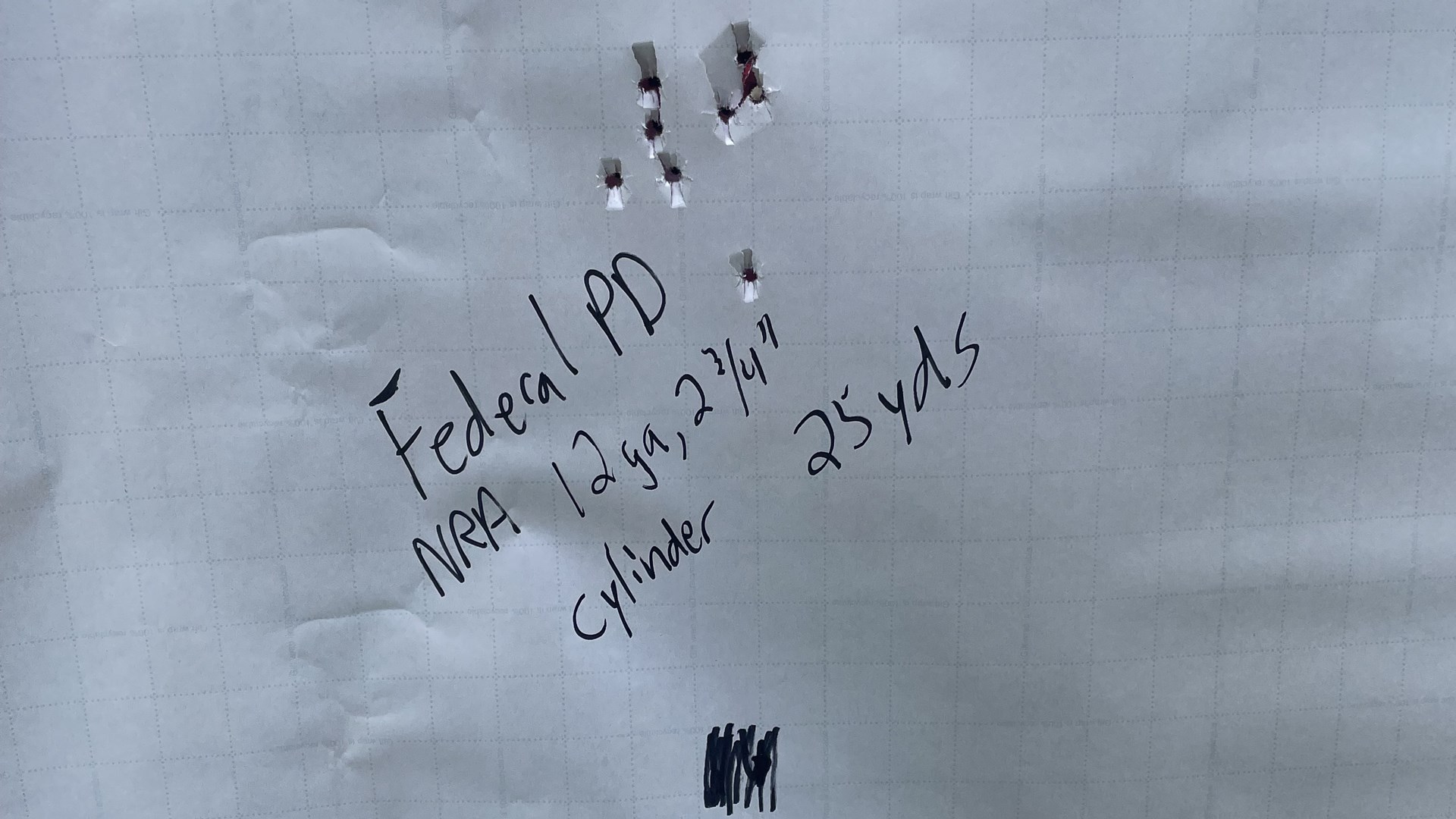
Similarly, FliteControl and Versa-Tite wads produce the best patterns when fired through fairly open chokes, including cylinder, skeet, improved-cylinder and light-modified. Why? The wad’s design serves to influence the pattern. That’s the beauty of the wad design. The original wad (non-Flex version) doesn’t work so well with ported chokes but the new variant does.
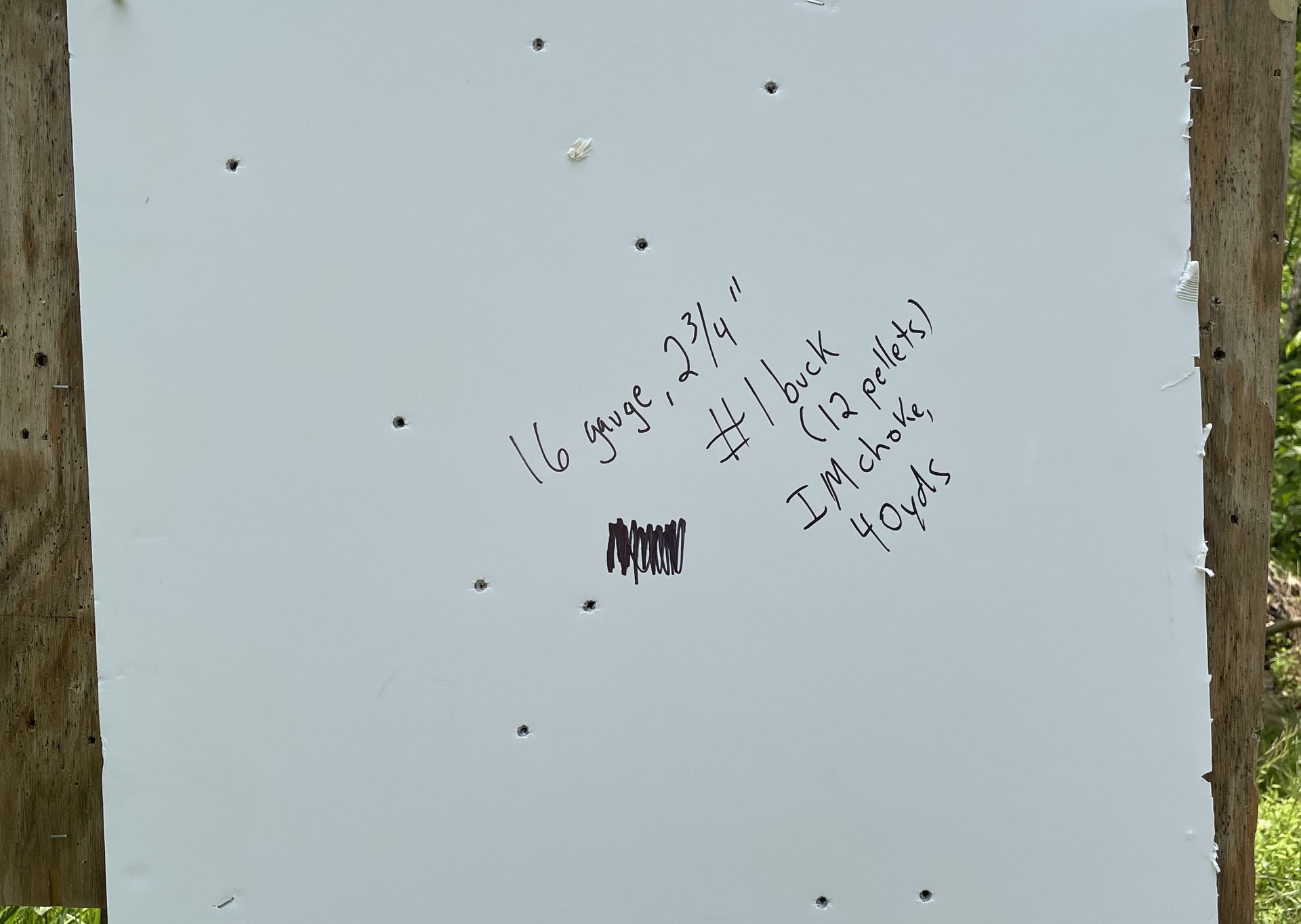
Buckshot-specific chokes are available, but ensure that the model selected is compatible with the pellet-making material you’re using. Moreover, some companies have identified complementary pellet size and choke constriction pairings. For instance, for Kick’s Buck Kicker ported, extended tubes, the company has found that light-full constriction is best employed with 000 buck, while 3½- and 3-inch 00 buck are best paired with the full version. Extra-full is reportedly pairs with 2¾-inch 00 buck (3” can still be used) and all No. 1 and 4 buck. Anomalies exist, but using a company’s findings to guide your decision could save you time, money, and discomfort.
Carlson’s Choke Tubes and Trulock also make chokes optimized for 00 and 000 buck. The latter’s Boar Blaster produces excellent patterns, and is the preferred choke for my Benelli SBE2.
Testing
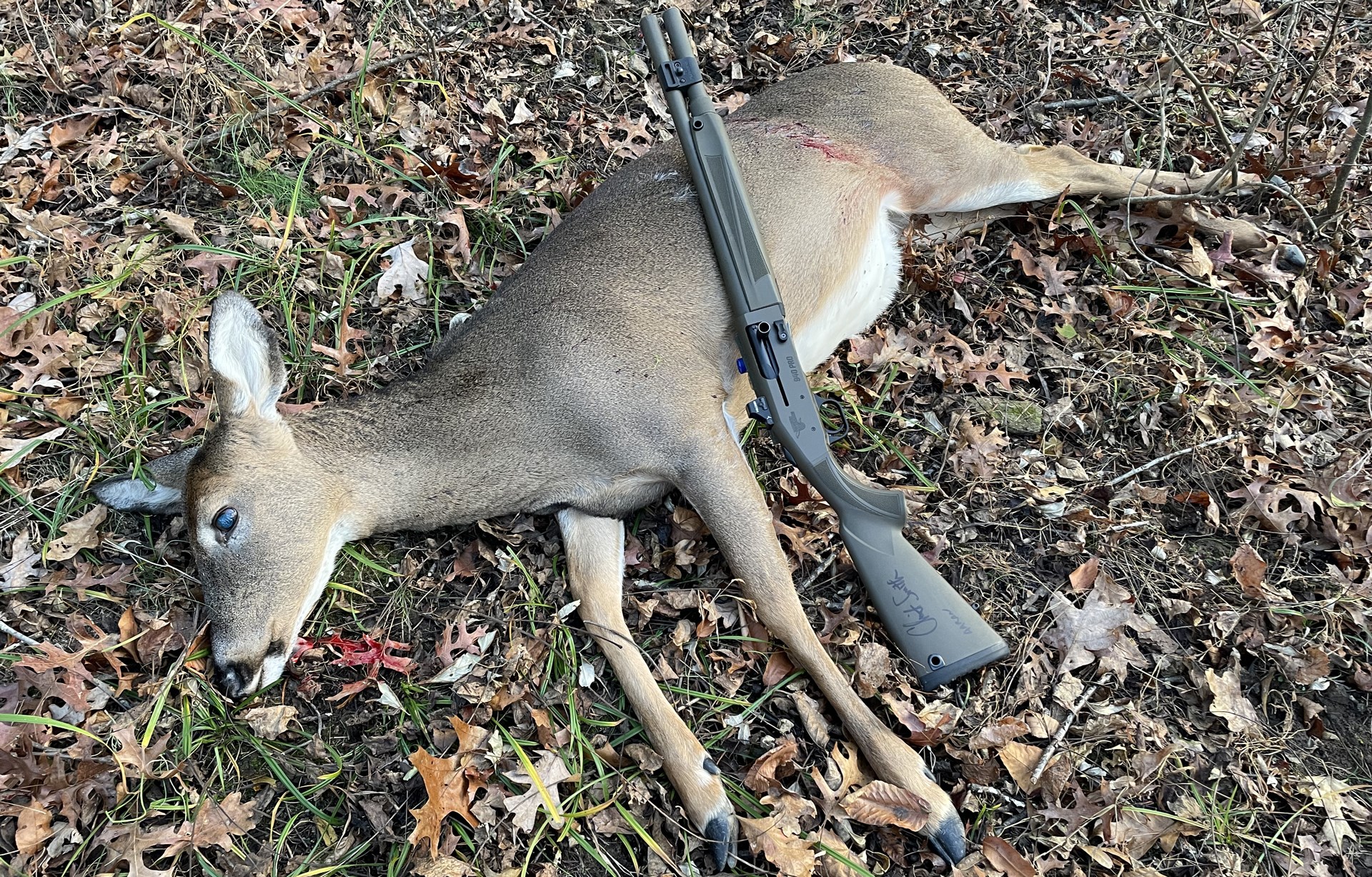
Pursing big game with buckshot requires time at the range before hitting the field—exactly like turkey hunting. I cannot stress enough that, before sending buckshot downrange at a whitetail deer, feral hog, bear, or other large animal, you must know your setup’s effective range. Skipping this step not only could cause you to come home empty handed, but frankly, it’s unethical, too.
Being a Virginian, where the southern half of the state uses a lot of buckshot, I’d surmise that more whitetails are unrecovered with buckshot than any other legal hunting load. Why? Many hunters wrongly assumed that any shotgun, choke and load will work, and thus have unrealistic expectations of its reach. Having tested hundreds of combinations through three-plus decades, some combos produced wretched patterns and others are stellar.
Sure, there are multiple pellets and it only takes one, but the question remains, will you find that animal? Probably not. I’ve even had deer hit with a full load of 00 buck at 35 yards cover more than 100 yards before dropping. Don’t count on one pellet to do the job. Similarly, abstain from buckshot beyond your established range for 100-percent lethal hits; doing so only permits one or more pellets to hit non-lethal areas, or ones that take an extended period for the animal to expire. Most buckshot loses its effectiveness between 40 and 55 yards—sometimes closer, and in a few instances, a tad further. Don’t push it. Instead, get closer or switch to slugs (if legal).
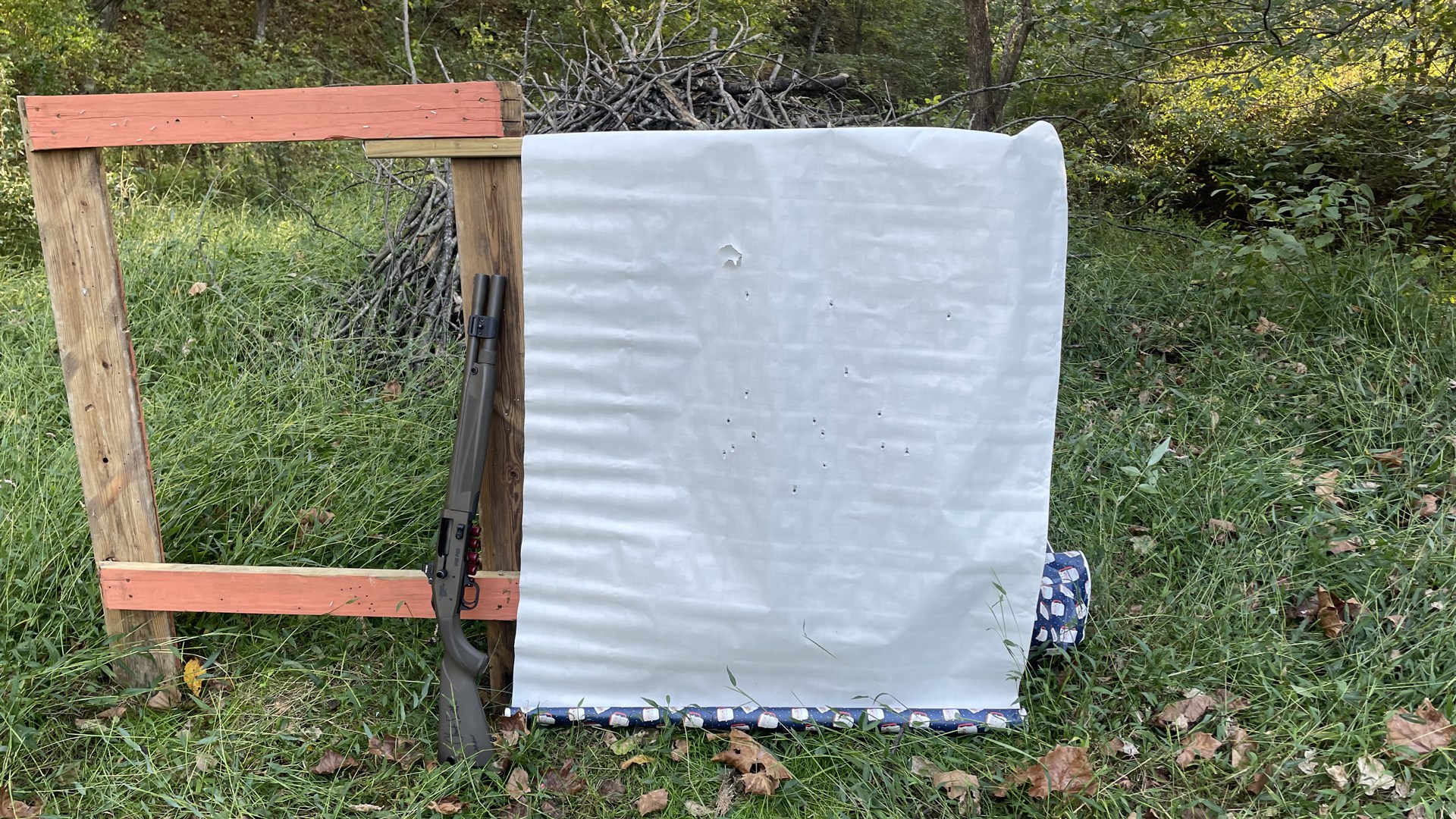
When patterning at 25, 35, 45 and 55 yards, or splitting those distances, relying on single-shell patterns can provide a false sense of reality. It’ll get costly, but fire multiple rounds to get a better idea of the shotgun/choke/load’s true performance. More is better, and you’ll never regret entering the field knowing exactly what to expect.
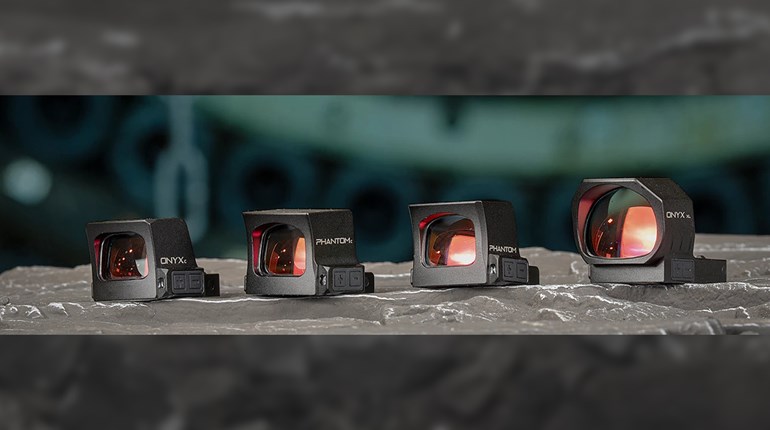
When patterning buckshot, I don’t look at 30-inch circles, but rather 8- to 10-inches surrounding the point of aim, or outlined deer vitals, as I’m not wingshooting. An optic, and especially a red-dot-style sight, will help deliver the buckshot where they need to be on a more consistent basis. I now prefer one over a simple bead, which is often off-center and/or imprecise at-distance.
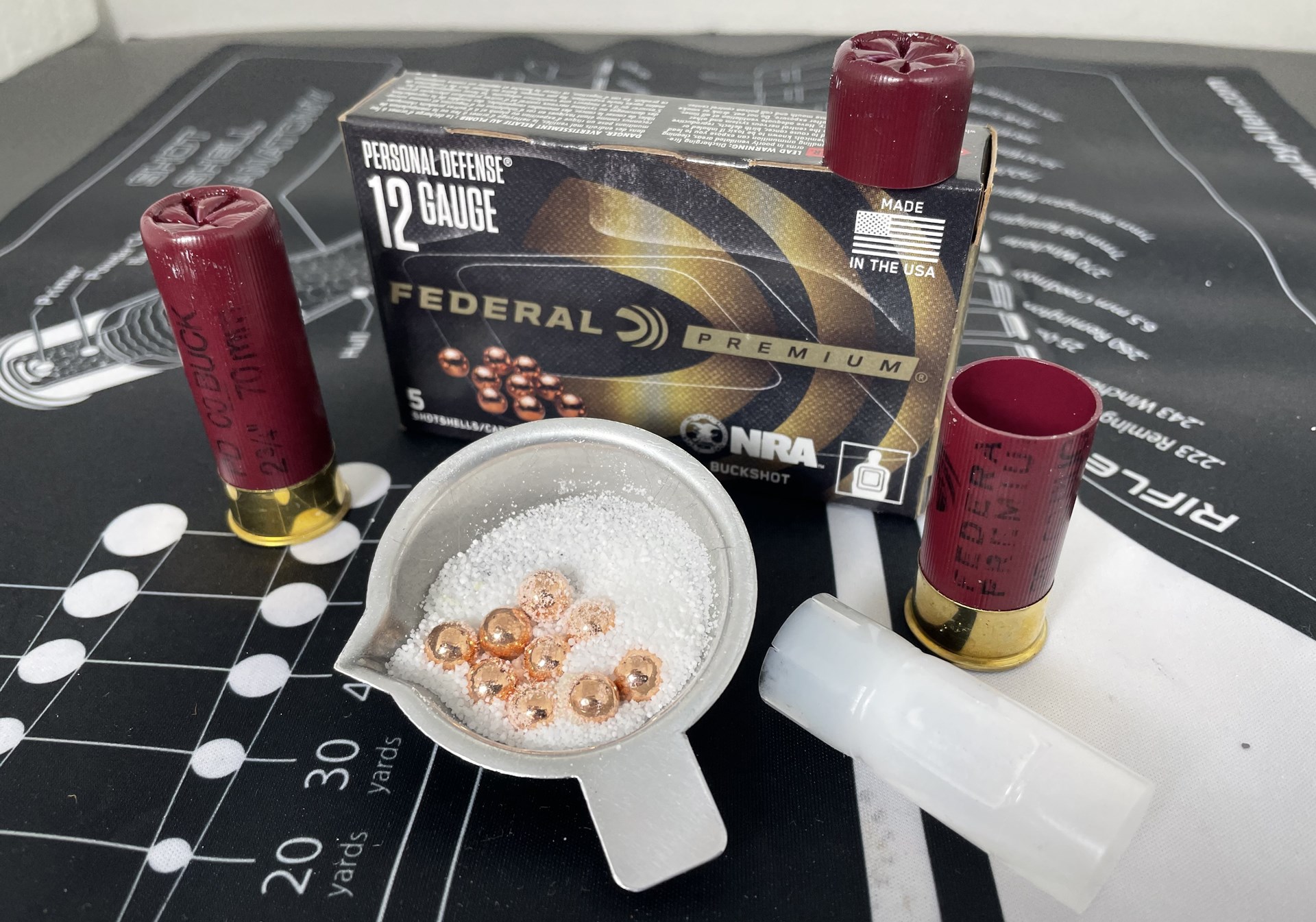
Lastly, don’t discount buckshot marketed for defense, as it could be the best one for you. Case in point: Federal’s Personal-Defense 00 buck with nine, copper-plated pellets deliver tight patterns as far as I’ll use buckshot and has proven to be highly lethal on Virginia whitetail deer. Sure, it’s not marketed for hunting, but it works just the same.
Buckshot is among a hunter’s greatest tools when the big game is close. To fully extract the most from it, though, requires forethought with regard to pellet size and composition, buffer use, wad design, and choke constriction. Once you find the one, you’ll automatically grab the shotgun for certain hunts—even if not restricted to by law.